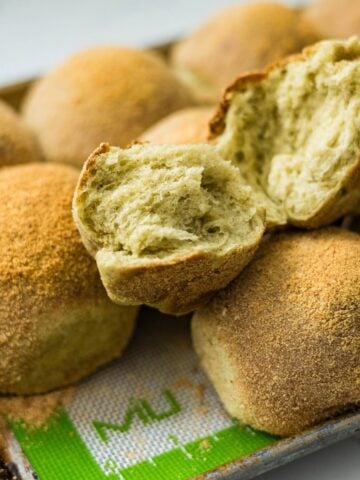
Filipino ube pandesal is what happens when you take the most beloved breakfast bread in the Philippines and add purple yam to the dough.
It's not an old recipe. Ube pandesal took off during the pandemic, when home bakers started experimenting and posting their results online, and it's been a staple ever since.
Once you taste it, it's easy to see why: soft, slightly sweet rolls with a nutty ube flavor and a purple color that makes them look like they came from a bakery.
They're not difficult to make. The dough comes together in one bowl, the shaping is simple, and the whole process takes about two hours start to finish, most of that is hands-off rising time.
If you're deep into ube baking, the cinnabon-style ube rolls and ube pancakes are worth making next.

Save This Recipe 💌
Pandesal is a Morning Tradition
Back in the day, my wakeup call was the jingle of bells and the vendor's shout of "PAN-DE-SALLLLLLL" outside, the signal to scramble to the door and get the freshly baked rolls before they sold out. Those warm, golden rolls were the start of breakfast most mornings.
You could get creative with fillings: cheese, peanut butter, spam, egg, bacon. But there was something about keeping it simple and eating one plain, still warm from the bag. A pandesal with hot chocolate or coffee on the side. That's the memory.
Pandesal means "salt bread" in Spanish, though the rolls are actually faintly sweet rather than salty, a holdover from the Spanish colonial period when bread-baking was introduced to the Philippines. The breadcrumb coating is what makes it distinctly Filipino, giving each roll a slightly crisp exterior that contrasts with the soft, pillowy inside.
If you want to keep experimenting with pandesal beyond ube, my malunggay pandesal swaps in moringa powder for a green, slightly earthy version, closer in spirit to this one than a sweeter filled version would be.
Jump to:
- Pandesal is a Morning Tradition
- What is Ube?
- Ube Powder vs. Ube Extract. Which Do You Need?
- Ingredients You'll Need
- How to Make Filipino Ube Pandesal
- Make-Ahead and Overnight Method
- Variations
- What Do You Eat With Pandesal?
- Storage and Reheating
- Recipe FAQs
- More Ube Recipes To Try
- Pinoy Breakfast Ideas
- Did you try this recipe?
- Ube Pandesal (Filipino Purple Yam Bread Rolls)
What is Ube?
Ube is a purple yam from the Philippines, loved for its vibrant color and lightly sweet, nutty flavor. It's commonly used in desserts, breads, and jams.
It's often confused with taro, another purple-ish root vegetable, but they're not the same thing. Ube is sweeter and more vanilla-like; taro has a more subtle, slightly nutty flavor and a starchier texture. If a recipe calls for one, the other won't give you the same result.
Ube Powder vs. Ube Extract. Which Do You Need?
Ube powder is real dehydrated ube. It adds starch that keeps bread soft and moist, plus true ube flavor. You can’t replace it with more extract because it affects texture.
Ube extract is a flavoring (often with coloring). It boosts the ube taste and deepens the purple color, but it doesn’t add the starch or softness.
Best result is both. Powder for texture, extract for stronger flavor and color.
Ingredients You'll Need
- All-Purpose Flour: Provides the structure and base for these soft, fluffy rolls. Bread flour works too if you prefer a slightly chewier roll, it has more protein, which develops more gluten.
- Sugar: White sugar adds sweetness and helps activate the yeast.
- Active Dry Yeast: Helps the dough rise, making the pandesal light and airy.
- Lukewarm Milk: Whole milk or 2%, at 110°F. Warm milk activates the yeast and gets fermentation going.
- Egg: Adds richness and tenderness to the dough.
- Butter: Adds moisture and a rich, buttery taste.
- Ube Powder and Ube Extract: See the section above for how each one works and why you want both.
- Breadcrumbs: The classic pandesal coating. Fine, plain breadcrumbs, not panko, give the characteristic slightly crisp exterior.
For the Cheese Filling (Optional)
Quick melt cheese is the most traditional choice - Eden brand or Velveeta-style cheese melts completely inside the rolls. Cheddar gives a sharper flavor. Cream cheese works for a milder, creamier filling. Cut whatever you use into roughly 1-inch cubes.
Ube halaya (purple yam jam) can be added alongside the cheese for an extra layer of ube flavor inside each roll. A small teaspoon per roll is enough.
How to Make Filipino Ube Pandesal

- In a measuring cup, dissolve the yeast in lukewarm milk with 1 tablespoon of sugar. Allow it to sit until frothy, indicating that the yeast is active and ready to work its magic. Add ube extract and mix.

- Combine the flour, sugar, salt, egg, melted butter, ube powder and the activated yeast mixture.

- Using a spatula, mix the dough.

- The dough will look shaggy and sticky.

- Knead the dough on a lightly floured surface for about 10 minutes. To prevent sticking, rub a bit of oil on your hands. Shape the dough into a ball, place it in an oiled bowl, cover, and let it rise until it doubles in size.

Gently press the dough to release any air, then give it a light knead.

- Divide the dough into 12 equal size. You can use a weighing scale to do this. Each should be about 70 grams.

- Roll the balls in breadcrumbs.

- Arrange the Ube-filled dough balls on a baking sheet, leaving enough space for them to rise.

- Bake at 360 degrees Fahrenheit for 15 minutes or until golden brown and delightfully fragrant.
Make-Ahead and Overnight Method
Ube pandesal is best fresh, but two options let you break up the process for morning baking without starting from scratch.
Option 1, Refrigerate After First Rise: After the dough has doubled, punch it down, cover tightly, and refrigerate overnight. In the morning, let it come to room temperature (about 1 hour), then shape, do the second rise, and bake.
Option 2, Refrigerate Shaped Rolls: After shaping and coating in breadcrumbs, arrange on the baking sheet, cover tightly, and refrigerate overnight. In the morning, remove from the fridge, let them complete the second rise (about 1 to 1.5 hours), then bake.
Option 2 is slightly more convenient in the morning since the rolls are already shaped and just need to rise and bake.
Variations
- Ube Cheese Pandesal: The most popular version. Fill each roll with a cube of quick melt cheese or cheddar. The cheese melts completely during baking, serve warm while it's still gooey.
- Ube Halaya Filled: Fill with a teaspoon of ube halaya instead of cheese. Sweeter, with a more intense purple yam flavor.
- Ube Cheese and Halaya: The combination that started the whole trend, a small cube of cheese plus a small dollop of ube halaya inside each roll. Sweet jam, salty melted cheese, soft purple bread.
- Plain Ube Pandesal: No filling. Let the ube dough speak for itself and serve with butter, coconut jam, or peanut butter.
- Cream Cheese Filling: Substitute cream cheese cubes for quick melt cheese. Milder, creamier, slightly tangy. Works especially well combined with ube halaya.
- Pandesal with Malunggay: Boost the nutritional content by adding malunggay (moringa) leaves to the dough for a healthy, green version.
What Do You Eat With Pandesal?
- Champorado: The rich chocolate flavor balances the sweet, fluffy texture of ube pandesal well. Or, if you prefer, try ube champorado.
- Butter: Slather it on while the roll is still warm enough to melt it.
- Arroz Caldo (Filipino Rice Porridge): Savory arroz caldo offers a nice contrast to the sweet, soft ube pandesal, good for dipping.
- Filipino Corned Beef: A spoonful stuffed inside a warm pandesal is a classic Filipino breakfast combination.
- Peanut Butter and Condensed Milk: Spread peanut butter on the cut roll and drizzle condensed milk over the top. Very Filipino, very good.
- Coconut Jam (Matamis na Bao): Sweet toasted coconut spread that pairs naturally with the ube flavor.
- Kesong Puti: Filipino fresh white cheese, slightly salty, that contrasts nicely with the sweet ube bread.
Storage and Reheating
- Room temp: Airtight up to 2 days. If cheese-filled, refrigerate after day 1.
- Fridge: Airtight up to 5 days (they firm up but reheat well).
- Freezer: Up to 1 month. Cool fully, freeze in a single layer, then bag.
Reheat: Toaster/toaster oven at 350°F for a few minutes until warm. Skip the microwave, it makes pandesal tough. Frozen rolls can go straight into the toaster.
Recipe FAQs
For the best result, yes. Powder contributes the starch that keeps the bread moist and soft - it's structural, not just flavoring. Extract deepens the color and intensifies the ube flavor. The powder cannot be replaced with more extract.
All three are different plants with different flavors. Taro is earthier and more neutral. Purple sweet potato is sweeter and more intensely flavored. Ube is nutty and mildly sweet with a subtle vanilla-like quality. They look similar when colored but taste distinct.
Almost certainly the yeast. Check that it foamed during proofing. If it didn't, the yeast is dead or the liquid temperature was off. Also check that the dough rose in a warm enough spot - a cold kitchen slows or prevents rising significantly.
Yes. Use about ¾ of the amount called for and skip the proofing step - add directly to dry ingredients. You may need a little extra liquid.
Yes - refrigerate the dough after the first rise, or refrigerate shaped rolls overnight. Full details in the make-ahead section above.
Toaster or toaster oven at 350°F. Never microwave. Frozen rolls go straight from freezer to toaster with no thawing.
More Ube Recipes To Try
Pinoy Breakfast Ideas

Did you try this recipe?
Share how it turned out in the comment box below, and if you loved it, share it on Facebook, Pinterest & Instagram.
Thank you!


Ube Pandesal (Filipino Purple Yam Bread Rolls)
Equipment
- 1 mixing bowls
- 1 baking tray
- 1 weighing scale optional
Ingredients
- 3 cups All-purpose flour
- ¼ cup white sugar
- 1 tablespoon white sugar
- 1½ teaspoon active dry yeast
- 1 cup warm milk 110 degrees Fahrenheit
- 1 whole egg
- 2 tablespoon butter softened
- 1 tablespoon ube powder
- 2 teaspoon ube extract Add more if needed (color varies depending on the brand you're using)
- 1 teaspoon salt
- ¾ cup Breadcrumbs for coating
Instructions
- In a measuring cup, dissolve the yeast in lukewarm milk with 1 tablespoon of sugar. Allow it to sit until frothy, indicating that the yeast is active and ready to work its magic. Add ube extract and mix.1 tablespoon white sugar, 1½ teaspoon active dry yeast , 1 cup warm milk, 2 teaspoon ube extract
- Combine the flour, sugar, salt, egg, melted butter, ube powder and the activated yeast mixture.3 cups All-purpose flour, ¼ cup white sugar, 1 whole egg, 2 tablespoon butter softened, 1 teaspoon salt, 1 tablespoon ube powder
- Using a spatula, mix the dough. The dough will look shaggy and sticky.
- Knead the dough on a lightly floured surface for about 10 minutes. To prevent sticking, rub a bit of oil on your hands. Shape the dough into a ball, place it in an oiled bowl, cover, and let it rise until it doubles in size.
- Gently press the dough to release any air, then give it a light knead.
- Divide the dough into 12 equal size. You can use a weighing scale to do this. Each should be about 70 grams.
- Roll the balls in breadcrumbs for that perfect crust.¾ cup Breadcrumbs for coating
- Arrange the Ube-filled dough balls on a baking sheet, leaving enough space for them to rise.
- Bake at 360 degrees Fahrenheit for 15 minutes or until golden brown and delightfully fragrant.
Save This Recipe 💌
Notes
- Don't skip the kneading — 10 to 12 minutes by hand (or 8 minutes in a stand mixer) develops the gluten for a soft, pillowy roll
- The dough should be slightly sticky but not wet; resist adding too much flour or the rolls will be dense
- For the best rise, let the dough proof in a warm, draft-free spot. If your kitchen is cold, place the bowl in an oven with just the light on
- Rolling the dough balls in breadcrumbs before the second rise is what gives pandesal its signature crust — don't skip this step
- Rolls are done when they're lightly golden on top
- Best eaten fresh and warm, ideally with a slice of cheese tucked inside (a classic pairing!)
- Store leftovers in an airtight container at room temperature for up to 2 days
- To reheat, wrap in a damp paper towel and microwave for 15–20 seconds, or warm in the oven at 300°F for 5 minutes
- Freeze baked rolls in a zip-lock bag for up to 1 month; thaw at room temperature before reheating