
Ube is having a moment - but if you grew up Filipino, you know it always has been. Long before the purple croissants and ube lattes took over every coffee shop grid, ube was just what dessert smelled like at birthday parties. Spooned into halo-halo, spread thick on pandesal on Saturday mornings, churned into ice cream for every fiesta.
Now that it's everywhere, there's real confusion about what it actually is, which form to buy, and how to use it without your baked goods turning gray. I've developed dozens of ube recipes on this site and tested all of them with real ube - fresh, frozen, powder, and extract. This is everything I know.
Start with ube halaya if you want to jump straight into baking. It’s four ingredients and the base for so many classic desserts. You can also explore more ube halaya recipes for different ways to use it, or browse the full collection of Filipino ube desserts to see where ube can take you.
Jump to:
What Is Ube?
Ube (pronounced oo-beh) is a purple yam native to the Philippines. It grows underground, has rough brown skin, and when you slice it open, the flesh is a deep, vivid purple.
In the Philippines, ube has been a dessert staple for generations - in halo-halo, steamed kakanin, ube halaya, ice cream, pandesal, layer cakes. It's the flavor most Filipinos associate with celebrations and home.
The color comes from anthocyanins, the same natural pigments found in blueberries and red cabbage. The flavor is mildly sweet, faintly nutty, with a vanilla-like warmth and a natural creaminess. It's a dessert ingredient first and foremost.
What Does Ube Taste Like?
Think of it as vanilla's earthier, nuttier cousin with a subtle sweetness that doesn't take over. It's not aggressively sweet on its own. It plays beautifully with coconut milk, condensed milk, and butter - the classic halaya combination - and it pairs surprisingly well with cheese, which is why ube with grated cheese on top is a Filipino classic, not a quirky fusion twist.
Ube vs. Purple Sweet Potato vs. Taro
These three get mixed up constantly. At Asian grocery stores they often share the same shelf. They are not the same, and they are not interchangeable in Filipino desserts.
Ube - Deep, vivid purple flesh that intensifies when cooked. Sweet, nutty, vanilla-like flavor. Naturally the creamiest of the three. This is what every recipe on this site is built around.
Purple sweet potato (Okinawan or Stokes) - Fades to pale lavender or dull gray-purple when cooked. Milder and sweeter than ube, closer to regular sweet potato. Denser and drier texture. You can substitute it in a pinch, but add ube extract to compensate for the missing flavor and color.
Taro (gabi) - White or light lavender flesh with purple specks. Earthy, starchy, savory-adjacent. Not naturally sweet. Not a substitute for ube. If you've had "taro" boba that tasted like ube, it almost certainly had ube extract added.
Quick test: if the purple is deep and vivid after cooking, it's likely ube. Pale lavender or gray means taro or purple sweet potato.
The 4 Forms of Ube
This is the section most ube recipes skip, and it's where the most confusion lives. Fresh ube, frozen grated ube, ube powder, and ube extract are four different ingredients that do different jobs. Here's exactly what each one is and when to use it.
Fresh Ube

The whole ube root. Large, rough-skinned, heavy - it looks like a dark brown log. The flesh inside is that signature deep purple.
Flavor: The richest, most complex of any form. Earthy, nutty, naturally sweet, and genuinely creamy in a way frozen and powder can't fully replicate. If you want the best possible ube halaya or ube ice cream, fresh ube is the gold standard.
How to prepare it:
- Scrub the skin thoroughly under running water
- Cut into large chunks - no need to peel first, the skin slips off easily after cooking
- Boil or steam until fork-tender, about 25-40 minutes
- Let cool, peel, then grate finely or mash smooth
- Use immediately, refrigerate up to 3 days, or freeze up to 3 months
Best for: Ube halaya, ube ice cream, ube pandesal, ube cassava cake - any recipe where ube is the main event.
Where to buy: Filipino grocery stores (Seafood City, Island Pacific, local Fil-Am stores), some 99 Ranch and specialty Asian markets. Season peaks October through February.
Watch out for: Ube flesh oxidizes quickly once cut and turns grayish. Work fast or keep cut pieces submerged in cold water until ready to cook.
Swap note: If a recipe calls for 2 cups frozen grated ube, freshly cooked and grated ube is a direct 1:1 swap.
Frozen Grated Ube
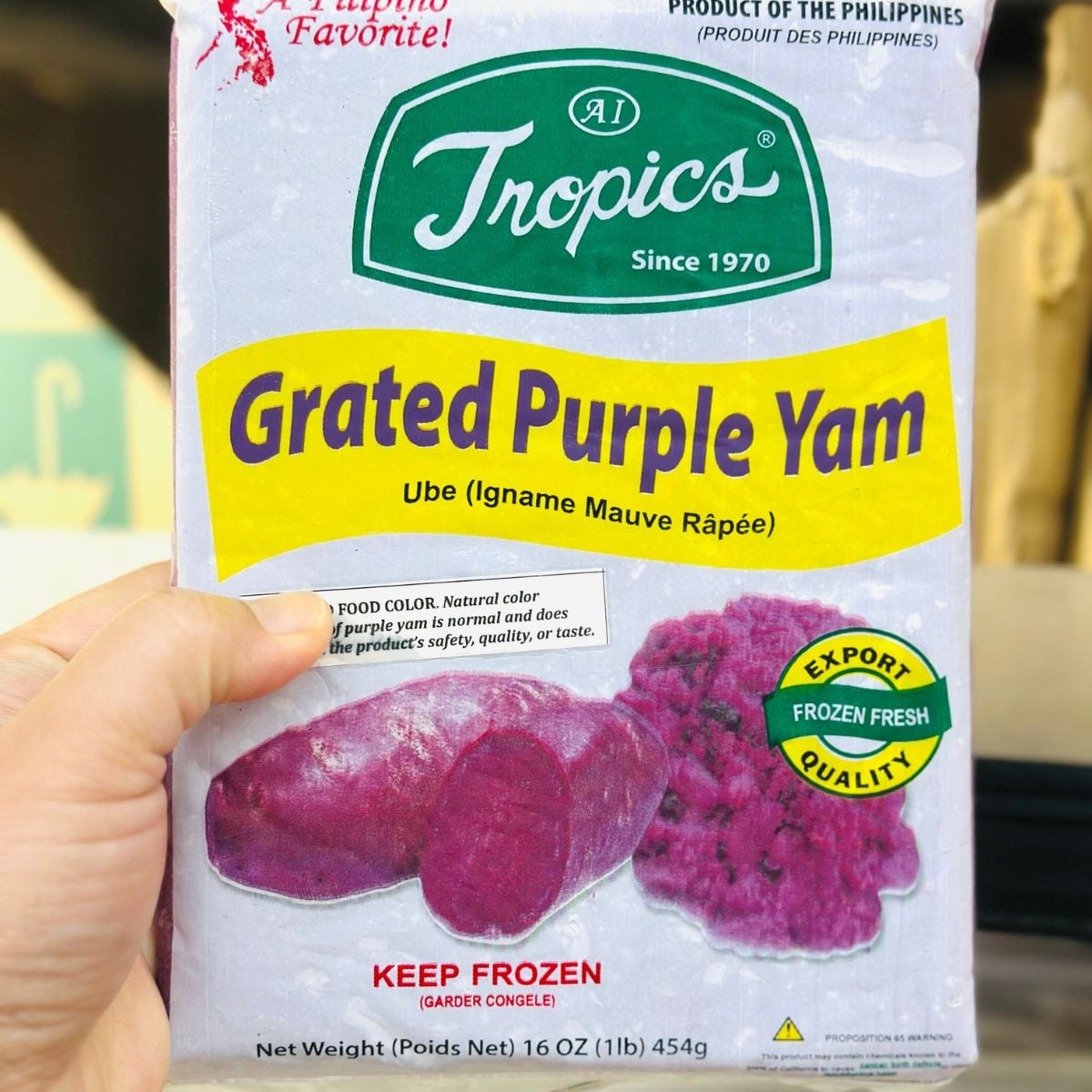
Pre-cooked, shredded purple yam in vacuum-sealed bags from the freezer aisle. This is the form I use most often and what I recommend for anyone new to ube baking.
Flavor: Very close to fresh. Slightly less complex from the blanching process, but the difference is subtle enough that for most baked goods you won't notice.
How to use it: Thaw completely before using - overnight in the fridge or 30 minutes on the counter. If it seems watery after thawing, give it a gentle squeeze before adding to baked goods. For halaya, the extra moisture cooks off anyway.
Best for: Everything - halaya, muffins, cakes, cupcakes, pandesal, cassava cake, pancakes, ice cream. If a recipe on this site calls for ube without specifying a form, frozen grated ube is the default.
Where to buy: Frozen aisle at Filipino grocery stores, H Mart, some 99 Ranch locations. Common brands: Tropics, Fiesta.
Watch out for: Color loss is normal. Frozen ube often cooks to a muted grayish-purple, especially in baked goods. This is exactly why most recipes pair it with a small amount of ube extract - the extract brings the color back.
Storage tip: Keep two or three bags in your freezer if you bake Filipino desserts regularly. It thaws in 30 minutes and keeps up to 12 months frozen.
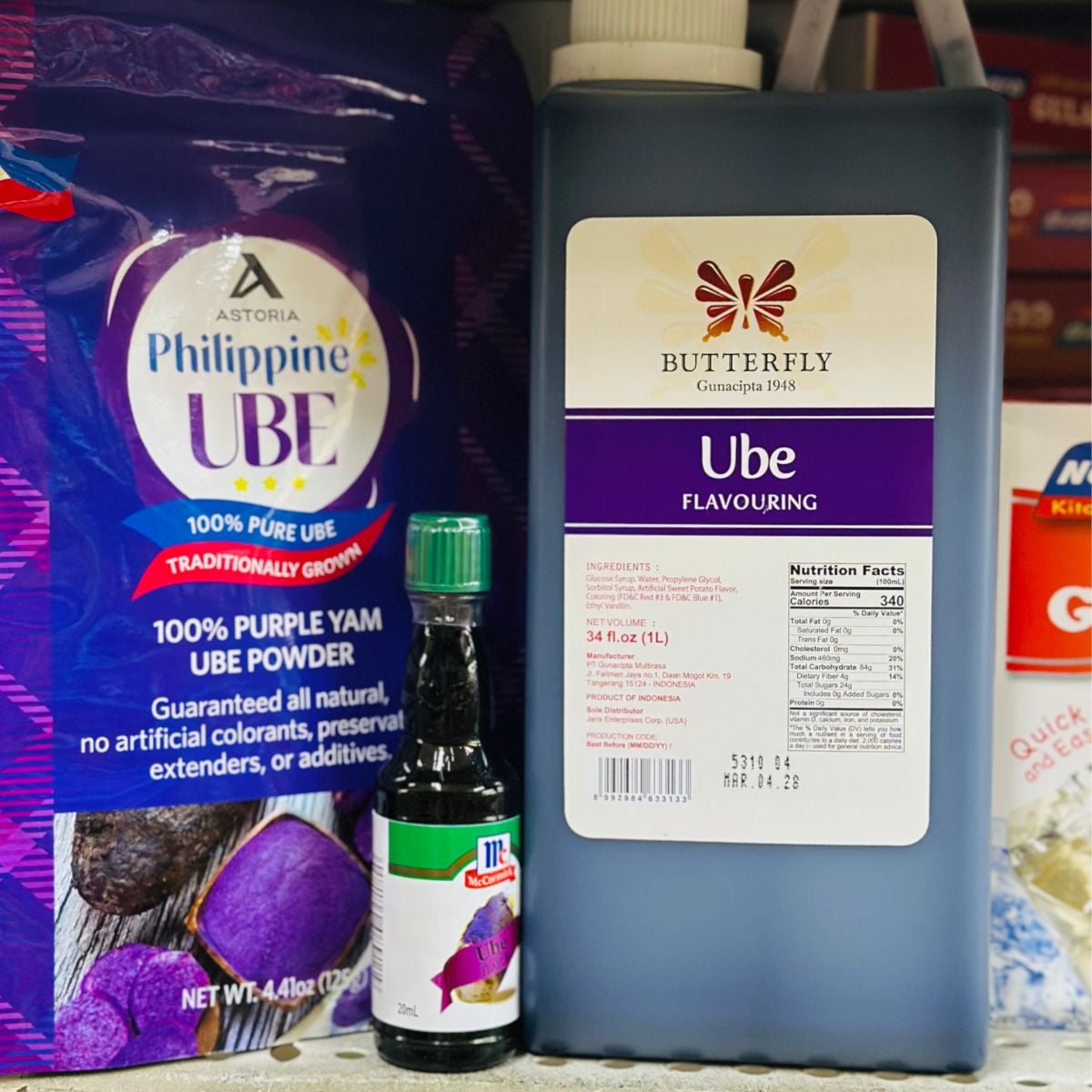
Ube Powder
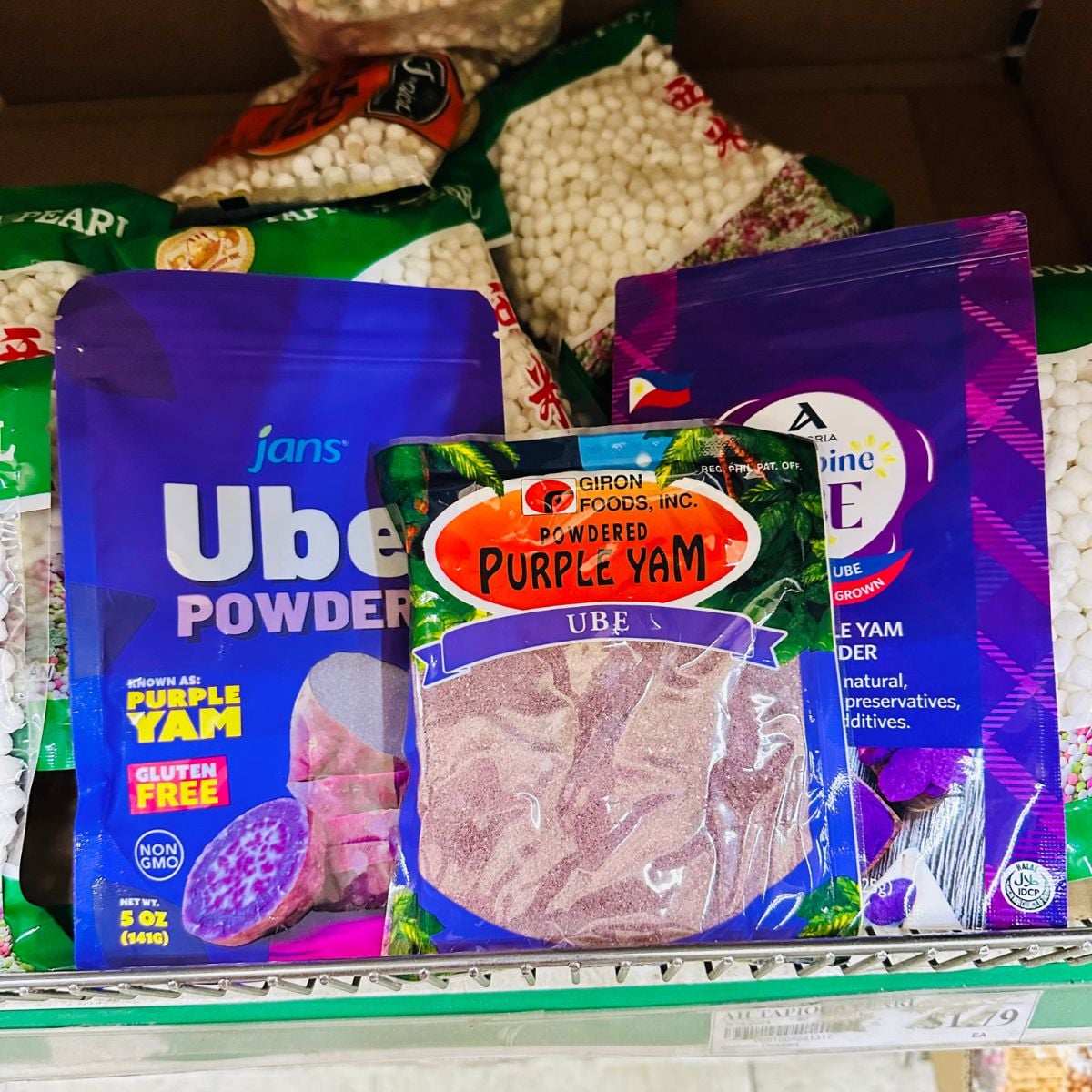
Dehydrated, finely ground ube. Some brands sell pure dehydrated purple yam powder; others blend in milk powder and sugar. Always read the label before using - the formulation matters.
Flavor: Lighter and less complex than fresh or frozen. You get the color and a hint of the nutty-sweet flavor, but not the creaminess or depth of real cooked ube. Think of it as a supporting ingredient, not a hero.
How to rehydrate it: Mix 1 part ube powder with 2-3 parts warm water or coconut milk. Stir until smooth, let sit 3-5 minutes. It should look like thick mashed yam before you use it. To replace 1 cup frozen grated ube, start with ¼ cup powder + ½ cup warm liquid and adjust from there.
Best for: Frostings, glazes, and whipped cream - anywhere you want color and mild ube flavor without adding extra moisture.
Where to buy: Amazon, FilStop, and the baking aisle at Filipino grocery stores. Common brands include Ube King and various Philippine-import options.
Watch out for: Sweetened blends will throw off your recipe's sugar balance. If your powder contains added sugar or milk powder, reduce the sweetener in the recipe.
Rose's tip: Ube powder stirred into cream cheese frosting gives you gorgeous color without thinning it out. No rehydrating needed in that case - just stir it in dry.
Ube Extract
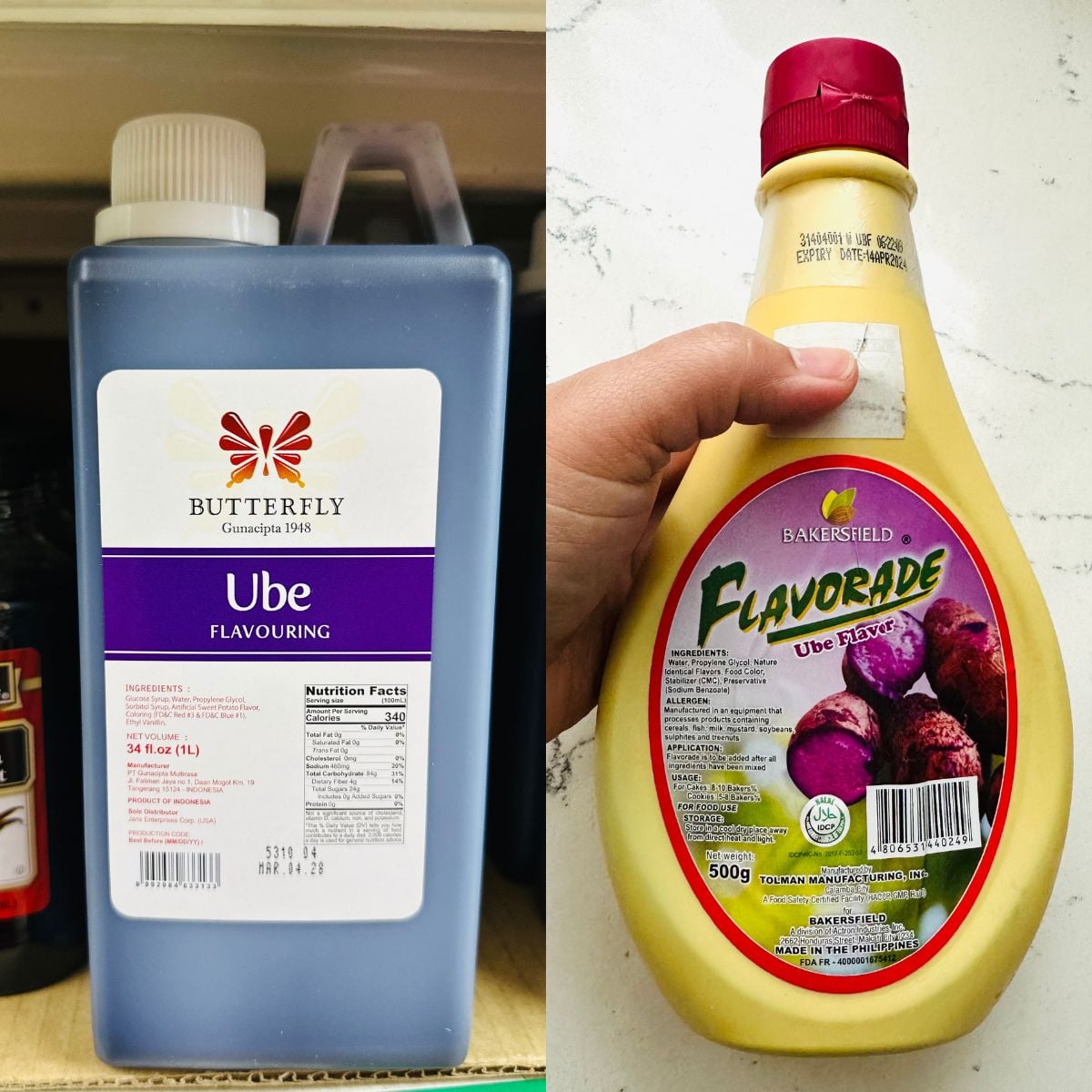
A concentrated liquid flavoring - usually alcohol-based - that gives you ube flavor and intense purple color in just one or two teaspoons. Not a substitute for real ube on its own, but one of the most useful tools in ube baking.
Flavor: Strong, concentrated, and sweeter than real ube. On its own it can taste a little artificial. But paired with frozen or fresh ube, it amplifies and brightens the real ube flavor underneath. The two together taste more ube-like than either does alone.
How to use it: Add to your wet ingredients. Start with 1 teaspoon, taste, and add more if needed. For halaya or ice cream where you want deep color, 1 ½ to 2 teaspoons. A little goes a long way.
Can it replace frozen ube entirely? For small-batch recipes like muffins or pancakes, yes in a pinch - use 2 teaspoons and expect lighter flavor. For halaya, ice cream, or cassava cake, no. You need actual ube for the body, creaminess, and authentic flavor. Extract is a supporting player.
Best for: Color restoration in baked goods, flavor amplification alongside real ube, frostings, glazes, no-bake desserts.
Where to buy: Baking aisle at Filipino or Asian grocery stores, Amazon, FilStop. Most widely available brand: McCormick Ube Flavor (Philippine-market version, different from US McCormick). Butterfly brand is also excellent. Both come in small purple bottles.
Watch out for: Store in a cool, dark place. Color and flavor degrade with heat and light. Most bottles last 1-2 years unopened, 6-12 months once opened.
My ube basque cheesecake uses both frozen ube and extract together - frozen for real flavor, extract for that vivid color. Neither alone gets you all the way there.
Quick Reference: Which Form Should You Use?
Fresh or frozen ube = gives more real ube taste and body
Ube extract = gives stronger purple color and boosts flavor
Ube powder = useful when you want flavor without adding much moisture
Why Does Ube Turn Gray When You Bake It?
This is one of the most common ube baking frustrations, and the answer is chemistry. Anthocyanins are pH-sensitive. They're most vivid in slightly acidic environments and shift toward blue, gray, or even green in alkaline ones.
Baking soda is alkaline. Most baked goods contain baking soda. So vivid purple batter goes into the oven and comes out gray-purple. This is completely normal and has nothing to do with the quality of your ube.
How to keep ube purple:
- Add ube extract - the concentrated pigment helps counteract fading
- Use baking powder instead of baking soda where the recipe allows
- Add a small amount of acid - a teaspoon of lemon juice or cream of tartar helps stabilize color
- Don't overbake - longer time in the oven means more color loss
- Expect some shift - even with all these steps, baked ube goods are rarely as vivid as halaya or ice cream
If you want to see this color science in action with a recipe that nails the balance, my ube crinkle cookies are a good place to start. They use both extract and a bit of acid to hold that purple all the way through the bake.
FAQ
Start at a Filipino grocery store - Seafood City, Island Pacific, and local Fil-Am stores typically carry all four forms in one place. H Mart and 99 Ranch usually carry frozen grated ube and sometimes extract. For powder and extract, Amazon and FilStop ship nationwide.
Ube halaya is a classic Filipino dessert made by slowly cooking grated ube with coconut milk, condensed milk, and butter until it thickens into a rich, spreadable jam. It's eaten on its own, spread on pandesal, used as a filling in baked goods, and swirled into other desserts.
In a pinch, yes - but add ube extract to compensate for the missing flavor and color. The result will be good, but it won't taste or look quite like the real thing.
No. Taro is earthy and starchy and has none of the sweet, vanilla-nutty flavor of ube. They are not interchangeable.
It depends on the recipe. Halaya adds flavor, sweetness, moisture, and body. Extract adds only flavor and color. For baked goods like pancakes or muffins, the swap can work with adjustments. For cheesecake, ice cream, or anything where ube is the main ingredient, use actual ube.
Fresh, frozen, and pure ube powder are naturally gluten-free. Ube extract is typically gluten-free too, but check your specific brand. Whether a recipe is gluten-free depends on every other ingredient in it.
Whole uncut ube keeps at room temperature in a cool, dark place for 1-2 weeks. Once cut, wrap tightly and refrigerate, use within 2-3 days. Cooked and mashed ube keeps in the fridge for up to 5 days or frozen for up to 3 months.
More Ube Recipes You'll Love



Did you try this recipe?
Share how it turned out in the comment box below, and if you loved it, share it on Facebook, Pinterest & Instagram.
Thank you!
