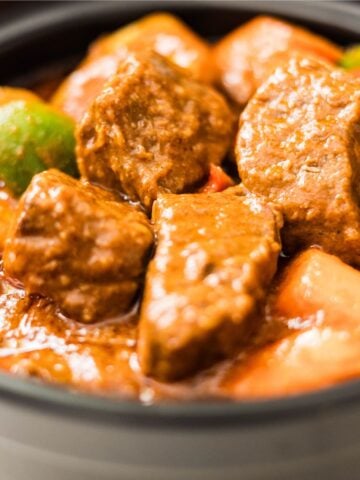
If I bring home oxtail from Costco, kare-kare is probably happening. It never lasts long in my house, and even my kids, who claim they don't like peanut butter, always clean their plates.
Beef kare-kare has a reputation as one of the most labor-intensive dishes in the Filipino kitchen, and that's fair. But none of it is hard. Each step has a purpose: pressure cooking gets you tender oxtail and a clean broth, toasted rice flour deepens the peanut sauce, and blanching keeps the vegetables bright instead of gray. Break it into stages and you get fall-off-the-bone oxtail in a rich peanut sauce, with bagoong on the side to bring it together.
If you love cooking oxtail, try my Chinese Braised Oxtail or Instant Pot Oxtail Beef Nilaga too.

Save This Recipe 💌
Jump to:
What is Kare Kare?
Kare-kare is a Filipino oxtail and vegetable stew in a thick, golden peanut sauce. The sauce is mild on purpose, because it's meant to be eaten with bagoong alamang, a salty fermented shrimp paste served on the side. If you stir the bagoong into the pot instead, go easy on the fish sauce.
It's often linked to Pampanga and shows up at fiestas and family gatherings, always with plenty of rice.
Ingredients You'll Need

- Oxtail: The classic cut for kare-kare. It has a lot of collagen, which turns into gelatin as it cooks and gives the sauce that rich, silky texture. The fat also adds a lot of flavor. Find it at Asian and Latin grocery stores. Beef shank, short ribs, or tripe also work if needed. A mix of oxtail with another cut gives you both a rich sauce and plenty of meat.
- Peanut Butter and Rice Flour: These two are what give kare-kare its signature sauce. Unsweetened peanut butter adds the creamy, nutty base. Toasted rice flour thickens the sauce and adds a light toasted flavor. Toast the rice flour first so it doesn't taste raw. Don't use glutinous rice flour, it will make the sauce gummy.
- Annatto Powder: Gives kare-kare its golden color. The flavor is mild, so it's mostly there for color. Powder is the easiest option, but annatto seeds work too if you want to make annatto oil.
- Aromatics and Seasoning: Garlic and onion build the base, while fish sauce adds seasoning. Beef broth, especially the broth from cooking the oxtail, gives the sauce more depth. Since most households finish with bagoong at the table, the sauce itself is usually kept a little mild.
- Vegetables: Eggplant, string beans, and bok choy are the most common. Fry the eggplant first for better texture, then blanch the beans and bok choy so they stay bright and tender. Banana heart is also traditional if you want a more classic version.
- Bagoong Alamang: Fermented shrimp paste, and a big part of what makes kare-kare taste like kare-kare. Traditionally served on the side so everyone can add their own amount, though some stir it directly into the sauce instead.
See recipe card for quantities.
Substitution and Addition
- No Oxtail? Beef shank, short ribs, or tripe all work. A mix of oxtail and one of these gives you a richer sauce with more meat to go around.
- No Rice Flour? A cornstarch slurry (1 tablespoon cornstarch mixed with 2 tablespoons water) thickens the sauce in a pinch, though you'll lose the toasted flavor rice flour adds.
- Want More Peanut Flavor? Stir in a handful of ground roasted peanuts along with the peanut butter for extra texture and depth.
- No Bok Choy? Chinese cabbage or napa cabbage work as a substitute, blanched the same way.
- Vegetarian Version: Skip the oxtail and use mushrooms, tofu, and banana heart instead. The sauce stays rich and flavorful on its own.
How to Make Beef Kare Kare

- Cook the Oxtail. Place the oxtail in a large pot, cover with water, and bring to a boil. Reduce the heat and simmer for 2 to 3 hours, or until the meat is tender, skimming off any impurities that rise to the surface. To save time, use a pressure cooker or Instant Pot on high pressure for 1 hour. If you're cooking on the stovetop and want deeper flavor, sear the oxtail in a hot pan before adding water; this step doesn't fit well if you're pressure cooking.

- Blanch the Vegetables. Boil water and cook the string beans or green beans for 3 minutes, then transfer to ice water to stop the cooking. Repeat the same process for the bok choy.

- Fry the Eggplant. Heat oil in a frying pan and fry the eggplant until golden. Set aside.

- Sauté the Aromatics. Once the oxtail is tender, sauté garlic and onion in a pot until fragrant and translucent.

- Add the Oxtail and Broth. Add the oxtail and about 3 cups of the reserved broth, leaving any impurities behind. Let it simmer gently.

- Make the Peanut Sauce. In a small bowl, whisk together peanut butter, toasted rice flour, annatto powder, and 1 cup of warm broth until it forms a thick sauce. Pour the mixture into the pot.

- Simmer and Season. Let the mixture simmer for 10 to 15 minutes until it thickens. Add fish sauce to taste and adjust seasoning as needed. To speed up thickening, whisk together 1 tablespoon cornstarch and 2 tablespoons water and stir it into the pot.

- Add the Vegetables. Add the eggplant, string beans, and bok choy to the pot. Simmer for another 5 minutes, until tender.
What to Serve With It
Kare-kare is traditionally served with bagoong alamang on the side, that salty, savory contrast is what completes the dish, whether you're dipping into it or stirring some into the sauce. Steamed white rice is the other must, since the sauce really needs something to soak into.
For a fuller Filipino spread, pancit bihon makes a good side.
Variations
- Pork Kare-Kare: Swap oxtail for pork hocks or pork belly. Cooks faster than oxtail and gives a different, slightly milder richness.
- Chicken Kare-Kare: A lighter version using bone-in chicken thighs. Simmering time drops significantly, closer to 30-40 minutes instead of hours.
- Kare-Kareng Tuwalya: The classic version made with tripe alongside or instead of oxtail. Tripe needs a longer simmer to become tender, but it's a traditional favorite in many households.
- Seafood Kare-Kare: Shrimp or crab in place of the meat, added toward the end so they don't overcook. A popular coastal variation.
- Kare-Kareng Gulay: An all-vegetable version built around eggplant, string beans, bok choy, and banana heart, no meat at all, for those who want the peanut sauce without any protein.
How to Store
Store kare-kare in an airtight container in the fridge for up to 4 days. The sauce will thicken as it sits, so add a splash of water or broth when reheating over low heat.
If you can, store the vegetables separately, they keep their texture better that way. If not, they'll still taste good, just a little softer the next day.
To freeze, cool completely and store in a freezer-safe container for up to 2 to 3 months. Thaw overnight in the fridge, then reheat gently with a little extra broth. For the best texture, freeze the meat and sauce, then make fresh vegetables when serving.
Rose's Top Tips
- Toast the Rice Flour. Dry toast until golden and nutty before adding. This gives the sauce real depth.
- Use Unsweetened Natural Peanut Butter. Peanuts and salt only. For extra flavor, add ground roasted peanuts too.
- Prevent Lumps. Whisk peanut butter with warm broth first, and add broth to the rice flour mixture slowly while whisking.
- Blanch Vegetables Separately, Add Last. Keeps them bright and crisp instead of gray and mushy.
- Make Ahead if You Can. Cook the oxtail the day before, chill it, then lift off the solid fat for a cleaner sauce.
- Sear the Oxtail for Deeper Flavor. If you're using the stovetop method instead of a pressure cooker, searing the oxtail before simmering adds a richer, more browned flavor to the broth.
- Keep the Pot Seasoning Mild if Serving Bagoong on the Side. If you're stirring bagoong into the sauce instead, season more conservatively from the start since the bagoong itself is salty.
- Rest 15 Minutes. The sauce thickens slightly and the flavors settle.
Recipe FAQs
Kare-kare is rich, nutty, and mildly savory, with tender oxtail in a thick peanut sauce. On its own it's gentle and comforting. The bagoong on the side adds the salty punch that completes it, and that contrast between mild sauce and salty shrimp paste is what makes kare-kare taste like kare-kare.
Bagoong alamang is a fermented shrimp paste used as a condiment with kare-kare. It is salty, savory, and very important to the dish. You can usually find it at Filipino grocery stores, and the sautéed version, often labeled ginisang bagoong or bagoong guisado, is the easiest one to serve.
Yes. Beef shank, short ribs, and tripe are all common options. Pork belly also works. Oxtail is the classic choice because it gives the sauce a richer texture, but a mix of oxtail and another cut works really well too.
Mix the rice flour with warm broth before adding it, and do the same with the peanut butter. This helps everything blend in smoothly and keeps lumps from forming.
If it is too thick, add a little warm broth or water until it loosens up. If it is too thin, let it simmer a bit longer so it can reduce.
Yes, and it is actually even better the next day. The sauce has time to settle and the flavors deepen. If you can, keep the vegetables separate and add them fresh when serving.
Yes. You can use vegetables like eggplant, string beans, bok choy, mushrooms, tofu, and banana heart. The sauce will still be rich and flavorful, even without the oxtail.
More Easy Beef Recipes to Make for Dinner
Looking for other recipes like this? Try these:

Did you try this recipe?
Share how it turned out in the comment box below, and if you loved it, share it on Facebook, Pinterest & Instagram.
Thank you!


Beef Kare Kare (Filipino Oxtail Stew in Peanut Sauce)
Equipment
- 1 medium pot
- 1 small frying pan
- 1 pressure cooker/ Instant Pot
Ingredients
- 2 pounds Oxtails
- 2 tablespoon olive oil
- 1 tablespoon Garlic minced
- 1 cup Onion chopped
- 1 cup Peanut Butter or ground peanut
- 2 teaspoon Annatto Powder or annatto water or annatto oil
- ¼ cup rice flour (toasted)
- 1 tablespoon fish Sauce
- 1 Tablespoon Beef powder or beef bouillon
- 6 cups oxtail broth
- 1 whole eggplant sliced
- 12 pieces green beans / String beans or long beans
- 3 bunches Bokchoy/ baby bokchoy
- ½ cup Shrimp Paste bagoong alamang, for serving
Instructions
- Place the oxtail in a large pot, cover with water, and bring to a boil. Reduce the heat and let it simmer for 2-3 hours, or until the meat is tender. Skim off any impurities that rise to the surface. You can use a pressure cooker to speed up this process. If using an Instant Pot, set it on high pressure for 1 hour.2 pounds Oxtails
- Boil water and cook the string beans or green beans for 3 minutes, then transfer them to ice water to stop the cooking process. Set aside. Repeat the same process for the bok choy.12 pieces green beans / String beans or long beans, 3 bunches Bokchoy/ baby bokchoy
- Heat oil in a frying pan and fry the eggplant until golden. Set aside.1 whole eggplant, 2 tablespoon olive oil
- Once the oxtail is tender, sauté garlic and onion in a pot until they become fragrant and translucent.1 tablespoon Garlic, 1 cup Onion
- Add the oxtail and about 3 cups of oxtail broth, making sure to exclude any impurities. Let it simmer gently.2 pounds Oxtails, 6 cups oxtail broth
- In a small bowl, whisk together peanut butter, ground rice flour, annatto powder, beef buillion and 1 cup of warm broth until it becomes a thick peanut sauce. . Pour the mixture into the pot.1 cup Peanut Butter or ground peanut, 2 teaspoon Annatto Powder, ¼ cup rice flour, 6 cups oxtail broth, 1 Tablespoon Beef powder
- Let the mixture simmer until it thickens. Add fish sauce to taste and adjust the seasoning as needed.1 tablespoon fish Sauce
- Add the eggplant, string beans, and bok choy to the pot. Continue simmering for another 5 minutes, until the vegetables are tender. Serve with Bagoong and rice.½ cup Shrimp Paste
Save This Recipe 💌
Notes
- Instant Pot is the move. Oxtail on the stovetop takes 2 to 3 hours of simmering. The Instant Pot gets you there in 1 hour on high pressure. Either works, but the pressure cooker makes this a realistic weeknight-ish dish.
- Whisk peanut butter with warm broth first so it blends smooth, not clumpy, before adding it to the pot.
- Annatto is for color, not flavor. It gives kare-kare that signature deep orange hue. No annatto powder? A few drops of annatto water or oil work the same way. Skipping it entirely won't change the taste, just the color.
- Season lightly at first. Whether you're serving bagoong on the side or stirring it into the sauce, it's easier to add more salt than to fix an oversalted pot.
- Reheat on low with a splash of broth or water. Peanut sauce thickens and can scorch over high heat.
- Make ahead if you can. Cook the oxtail a day early, chill it, then lift off the solid fat before finishing the sauce.