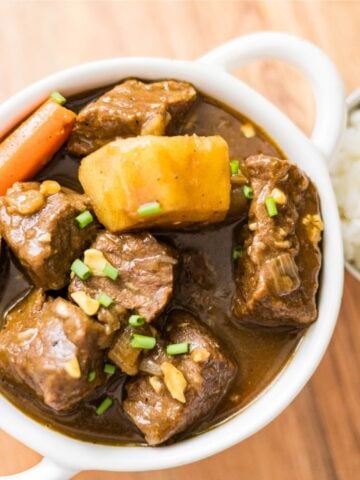
Beef shank is one of the most underrated cuts at the butcher counter. It's affordable, rich in collagen, and made for slow cooking. A lot of people skip it because they're not sure what to make with it, but braised beef shank is one of the best ways to use it.
As it cooks with soy sauce, oyster sauce, star anise, and brown sugar, the connective tissue softens, the marrow adds richness, and the sauce turns glossy and deeply savory. This recipe came from a craving for beef pares, that Filipino street food favorite with sweet-savory braised beef, garlic rice, and clear broth. It gives you that same flavor with very little hands-on work.

Save This Recipe 💌
Jump to:
- Why You'll Love This Recipe
- Braised Beef Shank vs. Classic Osso Buco-Style Braises
- Ingredients
- Substitutions and Additions
- How to Make Braised Beef Shank
- Instant Pot and Slow Cooker Methods
- What to Serve with Braised Beef Shank
- How to Store Braised Beef Shank
- Rose's Tips
- Recipe FAQs
- More Filipino Beef Recipes to Try
- Did you try this recipe?
- Braised Beef Shank
Why You'll Love This Recipe
- Fork-Tender, Deep Flavor: The kind of tenderness you only get from a long, slow braise.
- Mostly Hands-Off: The oven does the work while you do something else.
- Goes with Almost Anything: Rice, mashed potatoes, crusty bread, whatever you've got.
- Great Make-Ahead Dish: Tastes even better the next day.
- Simple Ingredients, Restaurant-Level Result: Nothing fancy, but it doesn't taste that way.
Braised Beef Shank vs. Classic Osso Buco-Style Braises
Most braised beef shank recipes lean Western, red wine, tomato, rosemary, closer to Italian osso buco. This version goes a different direction: soy sauce, oyster sauce, star anise, and brown sugar, the same flavor base behind Filipino beef pares. The technique is nearly identical either way, sear, braise low and slow, reduce the liquid into a glossy sauce, but the finish is completely different: savory-sweet and warmly spiced instead of wine-forward and herbal.
If you want to go the more traditional Western route instead, swap the broth for a splash of dry red wine. Either way, the shank itself does the same job: breaking down into fork-tender meat with a rich, collagen-thickened sauce.
Ingredients
- Beef Shank: A cross-cut from the leg of the cow, one of the most exercised muscles on the animal, which makes it tough, collagen-rich, and ideal for braising. Each slice comes with a round marrow bone in the center that melts into the liquid as it cooks, adding richness you can't get from boneless cuts, while the collagen converts to gelatin and naturally thickens the sauce. It's widely available at Asian and Latin grocery stores year-round (Seafood City, Island Pacific, 99 Ranch, and most Latin mercados stock it reliably) and is typically one of the cheaper cuts at the counter. Pat it completely dry before searing, wet meat steams instead of browns, and that single step makes the biggest difference between a deeply browned crust and a grey, steamed exterior.

- Garlic and Onion: The savory base. Ten cloves of garlic isn't too many here, the long braise mellows it completely, turning it sweet and soft rather than sharp.
- Star Anise: What connects this dish to the beef pares flavor profile, that warm, slightly licorice-adjacent note that works well with soy and brown sugar. Two pods is the right amount for a subtle background note; more can overpower.
- Cloves: Add a warm, almost floral depth.
- Bay Leaves: Round out the aromatics with an earthy, herbal note.
- Soy Sauce: The backbone of the sauce, providing salty, umami depth so the liquid tastes layered rather than flat.
- Oyster Sauce: Adds a second hit of savory richness with a slight sweetness.
- Brown Sugar: Balances the salt and acid, and gives the final sauce its caramel quality and gloss.
- Beef Broth: Use instead of water if you have it, it adds another layer of meaty depth. The soy, oyster sauce, and brown sugar combination is essentially the flavor base of Filipino beef pares and Chinese red-braised beef, and it works well with the collagen-rich shank. If you'd rather go a more Western route, a splash of dry red wine in place of some of the broth adds a different kind of depth, closer to a classic osso buco style, though it'll shift the dish away from the beef pares flavor profile.
- Cornstarch and Water: The shank releases enough collagen to partially thicken the sauce on its own, but a small slurry at the end brings it to the right glossy, spoonable consistency. One tablespoon of cornstarch whisked with one tablespoon of cold water is all you need. Add it to the simmering liquid gradually and stop when you reach the texture you want.

Substitutions and Additions
- No Beef Shank? Bone-in short ribs are the closest swap. Beef chuck or oxtail also work well. Avoid lean cuts, they won't braise the same way.
- No Star Anise? A pinch of Chinese five-spice powder gets you close to the same flavor direction.
- No Oyster Sauce? Hoisin sauce works in a pinch, though it's sweeter, so cut back slightly on the brown sugar.
- Want More Vegetables? Carrots added near the end of cooking stay tender without falling apart.
- Want More Heat? A sliced chili or a pinch of chili flakes added with the aromatics gives it a spicy edge.
How to Make Braised Beef Shank

- Sauté Garlic and Onion: Heat olive oil in a Dutch oven over medium heat. Add garlic and onion, cooking until soft and fragrant.

- Sear the Beef Shanks: Push the aromatics to the side and add the beef shanks. Sear them on both sides until browned. Remove and set aside.

- Deglaze and build the sauce: Stir in soy sauce, oyster sauce, and brown sugar directly into the pot. Add star anise, cloves, bay leaves, and enough water or broth to mostly submerge the meat.

- Braise low and slow: Cover and transfer the Dutch oven to a preheated oven at 325°F. Braise for about 2.5 to 3 hours until the meat is fork-tender.

- Thicken the Sauce: Remove the beef shanks and bring the braising liquid to a simmer on the stovetop. Stir in a slurry made from 1 tablespoon of cornstarch and 2 tablespoon of water. Simmer for a few minutes until the sauce thickens.
- Serve and Enjoy: Spoon the rich sauce over the meat and serve hot.
Instant Pot and Slow Cooker Methods
- Instant Pot: Sear the shanks using Sauté mode, then add the aromatics and braising liquid. Cook on High Pressure for 45 to 50 minutes, then let the pressure release naturally for 15 minutes. Use Sauté mode again to thicken the sauce with the cornstarch slurry.
- Slow Cooker: Sear the shanks in a skillet first for better flavor, then transfer everything to the slow cooker. Cook on Low for 8 to 10 hours or High for 4 to 5 hours. Thicken the sauce on the stovetop after removing the shanks.
What to Serve with Braised Beef Shank
- Garlic Fried Rice (Sinangag): The most natural choice if you want that classic beef pares feel.
- Plain Steamed Rice: Lets the sauce shine on its own.
- Egg Noodles or Mashed Potatoes: A good alternative to rice.
- A Small Bowl of Broth on the Side: Thin the braising liquid with extra broth, how beef pares is traditionally served at Filipino carinderia stalls.
- Atchara: A spoonful cuts through the richness.
How to Store Braised Beef Shank
- Refrigerate: Store leftovers in an airtight container for up to 4 days. The flavor gets even better overnight, and the sauce will thicken as it chills.
- Reheat: Gently on the stovetop with a splash of water or broth, or microwave covered until warmed through.
- Skim the Fat First. Before reheating, spoon off the layer of fat that firms up on top in the fridge for a cleaner, richer sauce.
- Freeze: Cool completely and store in a freezer-safe container for up to 3 months. Thaw in the fridge overnight, then reheat gently on the stovetop.
Rose's Tips
- Pat the Meat Dry Before Searing. This helps it brown properly instead of steaming. Better browning means better flavor.
- Sear in Batches. If the pot gets crowded, the meat will steam instead of forming a crust. A little extra time here makes a big difference.
- Deglaze the Pot. After searing, scrape up the browned bits from the bottom. That's flavor you want in the sauce, not stuck to the pot.
- Keep the Braise Gentle. A lower oven temperature gives the beef time to soften properly. Too much heat can make the meat tough.
- Go by Tenderness, Not Just Time. Start checking when the meat looks close. It should give easily when pierced with a fork.
- Still Tough? Keep Cooking. Beef shank sometimes just needs more time. Add a little more broth if needed, cover, and keep going.
- Skim the Fat Before Thickening the Sauce. This gives you a cleaner, richer finish.
- Don't Waste the Marrow. Scoop it out and stir it into the sauce, spread it on bread, or eat it as is.
- It Tastes Even Better the Next Day. The sauce thickens, the flavors settle in, and it reheats really well.
Recipe FAQs
Beef shank comes from the leg, so it is a tougher cut with a lot of connective tissue and collagen. That is exactly why it works so well for braising. With enough time, the meat turns tender and the cooking liquid becomes rich and glossy. The marrow in the bone adds even more flavor.
Beef pares is a Filipino dish usually made with braised beef, garlic fried rice, and a bowl of clear broth. This braised beef shank uses a similar sweet savory flavor base with soy sauce, oyster sauce, star anise, and brown sugar, but the shank gives it a richer sauce from the bone and collagen.
It usually needs either more time or gentler heat. Beef shank has to cook long enough for the collagen to break down. If it still feels tough, add a little more broth, cover it, and keep cooking until it softens.
Yes, and it is even better the next day. The sauce thickens, the flavors deepen, and the fat is easier to remove after chilling in the fridge. Reheat gently with a splash of broth.
Bone in short ribs are the closest swap. Beef chuck also works well, and oxtail is another good option. Try to avoid lean cuts because they do not braise as well and can dry out.
Yes. Sear the shanks first using Sauté mode, then pressure cook until tender. The flavor is a little different from the oven version, but it is still very good and much faster.

More Filipino Beef Recipes to Try

Did you try this recipe?
Share how it turned out in the comment box below, and if you loved it, share it on Facebook, Pinterest & Instagram.
Thank you!


Braised Beef Shank
Equipment
- 1 Cast iron braiser or Dutch oven Essential for even heat and moisture retention
Ingredients
- 5 pounds beef shanks
- 3 tablespoon olive oil
- 10 cloves garlic minced
- 1 large onion chopped
- ¼ cup soy sauce
- 3 tablespoon oyster sauce
- 3 tablespoon brown sugar
- 2 pods star anise
- 4 pieces cloves
- 1 pieces bay leaf
- 4 cups beef broth or water
- 1 tablespoon cornstarch
- 2 tablespoon water for slurry
- 2 carrots optional
Instructions
- Sauté Garlic and Onion: Heat olive oil in a Dutch oven over medium heat. Add garlic and onion, cooking until soft and fragrant.
- Brown the Beef Shanks: Push the aromatics to the side and add the beef shanks. Sear them on both sides until browned. Remove and set aside.
- Build the Flavor: Stir in soy sauce, oyster sauce, and brown sugar directly into the pot. Add star anise, cloves, bay leaves, carrots and enough water or broth to mostly submerge the meat.
- Slow Braise in the Oven: Cover and transfer the Dutch oven to a preheated oven at 325°F. Braise for about 2.5 to 3 hours until the meat is fork-tender.
- Thicken the Sauce: Remove the beef shanks and bring the braising liquid to a simmer on the stovetop. Stir in a slurry made from 1 tablespoon of cornstarch and 1 tablespoon of water. Simmer for a few minutes until the sauce thickens.
- Serve and Enjoy: Spoon the thickened sauce over the meat and serve hot. Spoon the rich sauce over the meat and serve hot.
Save This Recipe 💌
Notes
- Pat the shanks completely dry before searing, wet meat steams instead of browns, and this is the biggest difference between a deep crust and a grey exterior.
- Sear in batches if the pot feels crowded. Overcrowding causes steaming instead of browning.
- Go by tenderness, not just time. The meat should give easily when pierced with a fork; if it's still tough, keep cooking.
- Don't skip skimming the fat before thickening the sauce, it gives you a cleaner, richer finish.
- Save the marrow. Stir it into the sauce, spread it on bread, or eat it as is.
- Store leftovers in the fridge for up to 4 days, or freeze for up to 3 months. The flavor improves overnight.
- No beef shank? Bone-in short ribs, beef chuck, or oxtail all work as substitutes, avoid lean cuts, which won't braise the same way.