

Most peanut sauce recipes online are peanut butter, soy sauce, rice vinegar, and ginger. That version is good and it takes five minutes. It also isn't what you get with satay at a Thai restaurant.
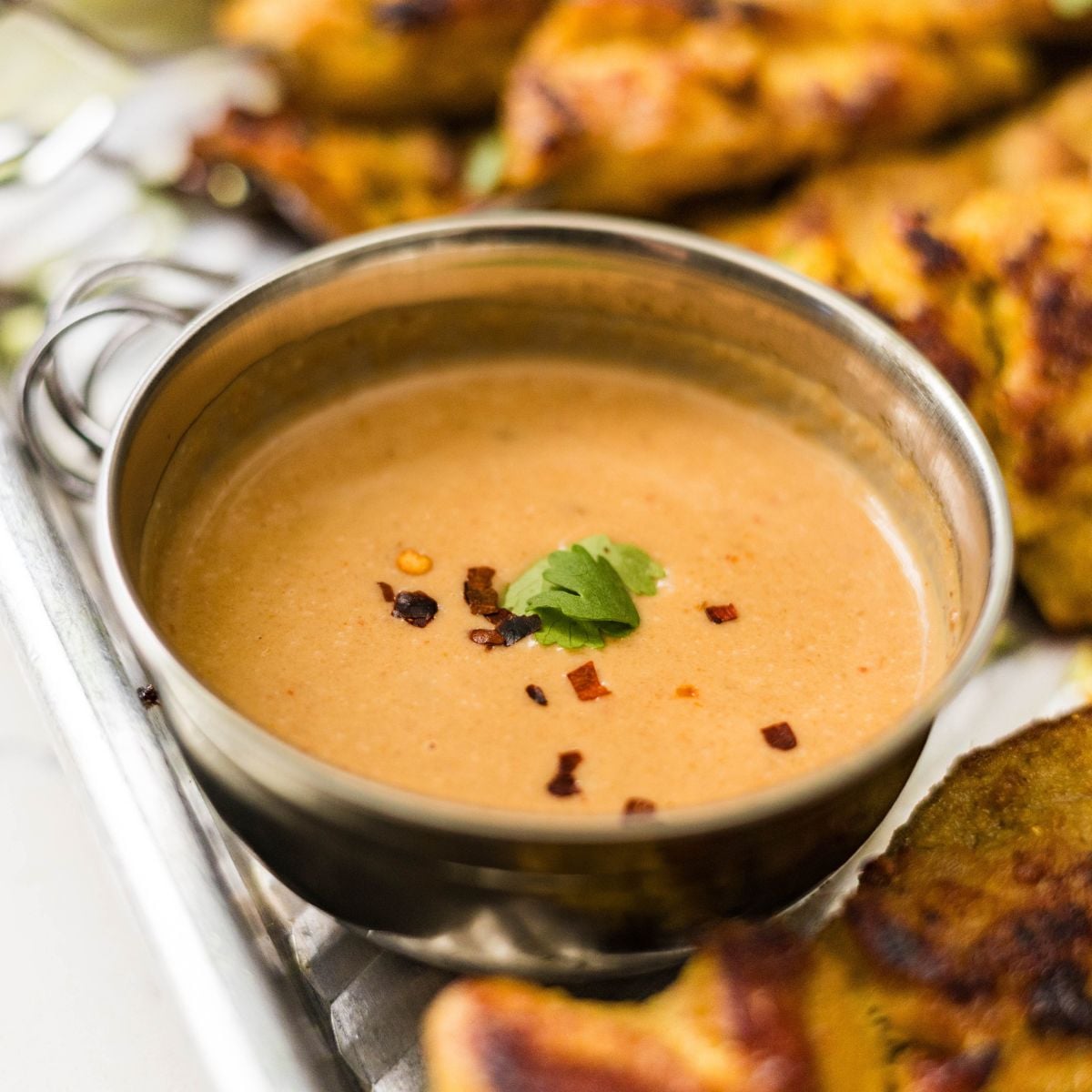
This one uses coconut milk, red curry paste, and tamarind instead. Thicker, rounder, a little tangy underneath, and it clings to a skewer instead of running off.
It's still five minutes and one bowl. No cooking, no blender. The only thing that takes effort is the shopping, and once you have a jar of tamarind and a tub of curry paste they last for months.
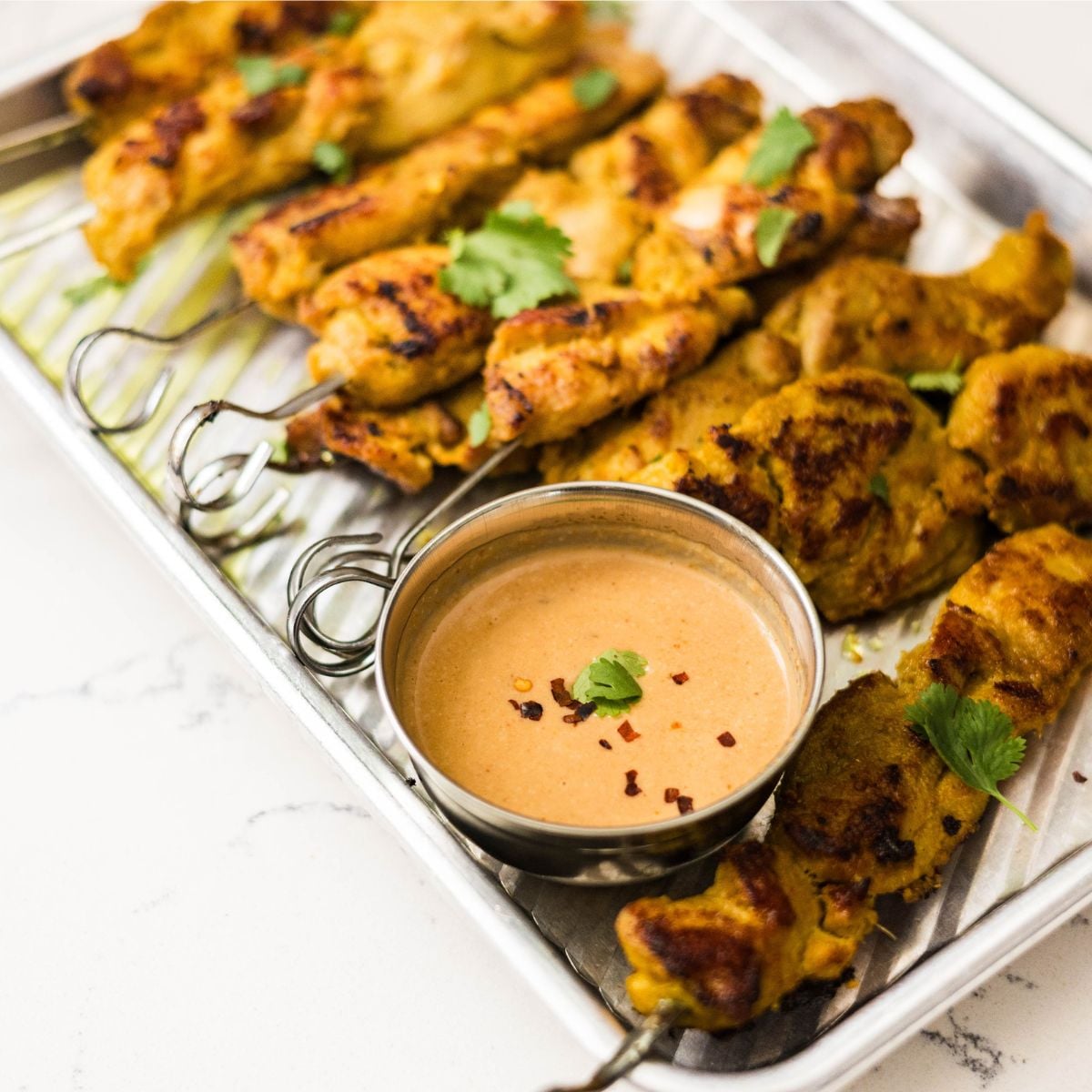
I use it for chicken satay most often, but it goes on spring rolls, cold noodles, and grilled anything.
Save This Recipe 💌
Jump to:
What Makes This Different From Most Peanut Sauces
Search for peanut sauce and you'll get roughly the same recipe ten times: peanut butter, soy sauce, rice vinegar, ginger, garlic, water. It's quick, the ingredients are easy, and it tastes good on noodles and salads. Nothing wrong with it.
This is the other kind. Coconut milk instead of water, red curry paste instead of ginger and garlic, tamarind instead of rice vinegar, and fish sauce instead of soy.
The differences you'll notice:
It's richer. Coconut milk gives it body that water can't. It coats a skewer instead of sliding off.
The tang is deeper. Tamarind is fruity and slightly bitter where rice vinegar is just sharp. It sits underneath the peanut butter rather than on top of it.
The heat is built in. Red curry paste brings chili, lemongrass, galangal, and shrimp paste all at once, so you get aromatics without chopping anything.
Which one you want depends on the job. For a quick noodle dressing on a Tuesday, the soy and vinegar version is easier and probably better. For satay or spring rolls, this is the one.
Why You'll Love This
- Five minutes, one bowl. No cooking, no blender. Everything goes in together and you whisk until it's smooth.
- It clings. Coconut milk gives it enough body to stay on a skewer or a spring roll instead of pooling at the bottom of the plate.
- You control the thickness. Thick for dipping, thinner for noodles, thinner still for salad dressing. Same sauce, different amounts of water.
- Better the next day. The curry paste and tamarind settle into the peanut butter overnight. Make it the night before if you're feeding people.
- One batch stretches. About ¾ cup, which covers satay for four with sauce left over for noodles later in the week.
Ingredients
Here's what you'll need:
- Red curry paste: Brings chili, lemongrass, and galangal and usually shrimp paste in one spoonful, so you're not chopping aromatics. Two tablespoons is a good starting point. Start with one if you're sensitive to heat, since brands vary a lot in how hot they run.
- Peanut butter: Creamy blends smoothest. Natural works but stir it well first so the oil is fully incorporated, or the sauce comes out greasy rather than creamy.
- Full-fat coconut milk: The canned kind, not the carton. This is what gives the sauce body and makes it cling. Light coconut milk works but you'll get a thinner result.
- Tamarind paste: Fruity and slightly bitter, which is different from the sharp tang of vinegar or lime. It sits underneath the peanut butter rather than cutting across it.
- Fish sauce: The savory salt. Soy sauce or tamari works if you're keeping it vegetarian, though you'll lose some depth.
- Brown sugar: Balances the fish sauce and the tamarind. Not enough to make the sauce sweet, just enough that the salty and sour edges round off.
- Warm water: Thin to whatever consistency you need, a tablespoon at a time. Warm rather than cold, since it loosens the peanut butter and helps everything emulsify.
See recipe card for quantities.
How To Make Thai Peanut Sauce
- Whisk the base. Add the coconut milk, red curry paste, peanut butter, fish sauce, brown sugar, and tamarind paste to a bowl. Whisk until smooth. It'll look thick and a little clumpy at first, which is normal. Keep going until the peanut butter has fully disappeared into the coconut milk.
- Thin it with warm water. Add a tablespoon at a time, whisking after each. Warm water loosens the peanut butter and helps everything emulsify, where cold water can leave it grainy. Stop when it coats the back of a spoon for dipping, or keep going for a pourable noodle sauce.
- Taste and adjust. This is the step that matters. More tamarind for tang, more brown sugar for sweetness, more fish sauce for salt, more curry paste for heat. Curry paste brands vary enough that no fixed measurement lands the same twice.
That's it.
Optional: bloom the curry paste
If you have five more minutes, warm two tablespoons of the coconut milk in a small pan, add the curry paste, and stir for about 30 seconds until it smells fragrant. Then whisk in everything else off the heat.
Raw curry paste in a cold sauce tastes sharper and a little flat. Heating it first rounds it out. This is what a Thai kitchen would do, and it's the one upgrade worth the extra pan if you're serving this to people.
How Thick Should It Be?
Depends what you're doing with it. Same sauce, different amounts of water.
- For dipping (satay, spring rolls): Thick enough to coat the back of a spoon and stay there. When you pull a skewer out, sauce should cling rather than run back into the bowl. This is where the sauce starts before you add any water at all, or close to it.
- For noodles: Pourable but still heavy. It should ribbon off the whisk rather than drip. Usually two to three tablespoons of warm water gets you there.
- For salad dressing: Thin enough to drizzle. Four or more tablespoons of water, and taste again once you're there, since thinning dilutes the seasoning along with the texture.
One thing worth knowing: it thickens in the fridge no matter which consistency you land on. Stir in a splash of warm water before serving and it comes right back.
Ways to Use This Sauce
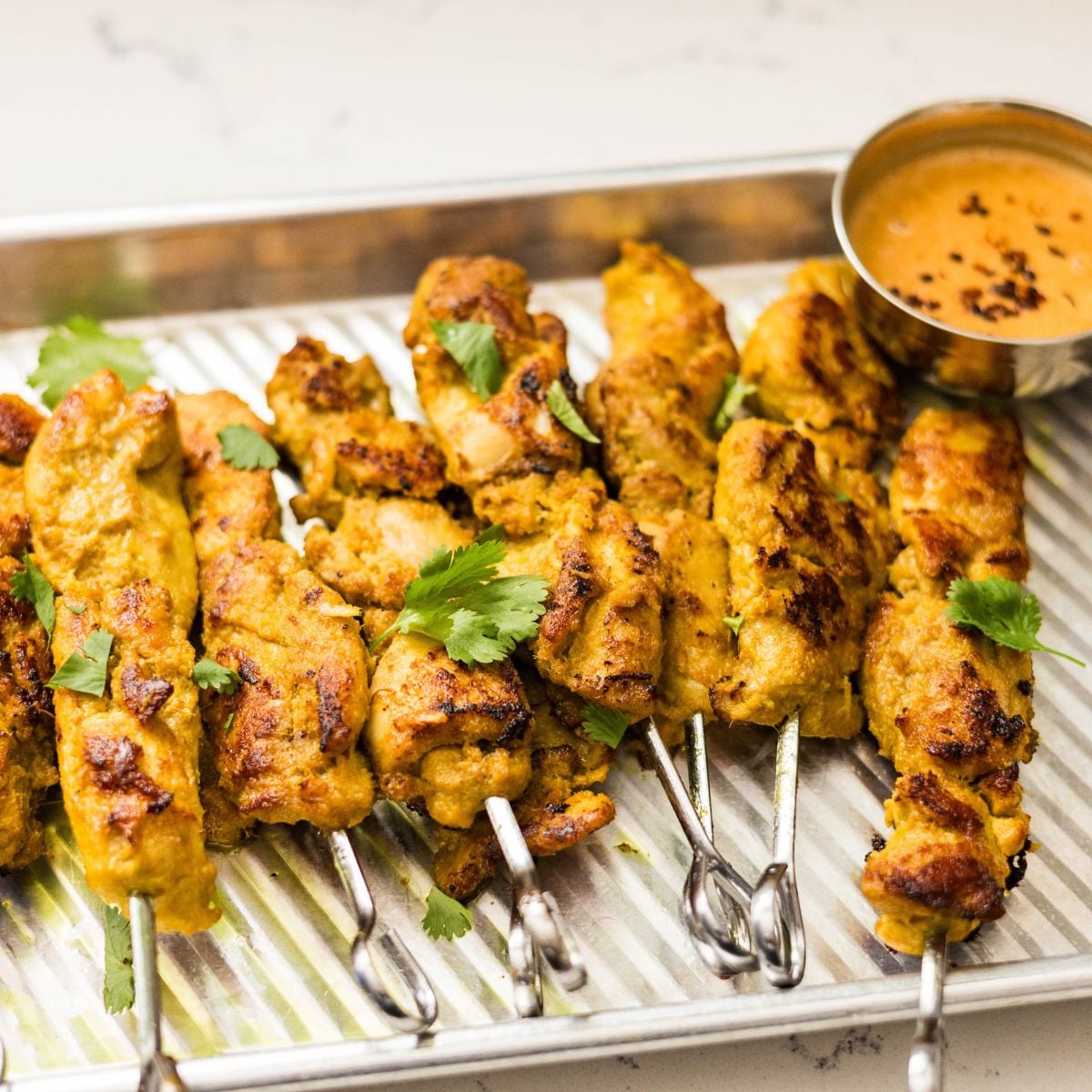
- Chicken satay: What it's built for. Keep it thick so it clings to the skewer.
- Spring rolls: Same thickness as satay. Fresh rolls especially, where the sauce is doing most of the flavor work.
- Cold noodle salad: Thin it to pourable, toss with rice noodles, and finish with lime and scallions. Good the next day out of the fridge, which is rare for a noodle dish.
- Grilled chicken or pork: Spoon it over after cooking rather than using it as a marinade. The coconut milk and sugar burn before the meat is done.
- Stirred into a stir-fry at the end: Off the heat, so it coats rather than splits. Two or three tablespoons is enough for a pan.
- Roasted vegetables: Broccoli, cauliflower, or sweet potato. Drizzle after they come out of the oven, not before.
Rose's Top Tips
- Use warm water, not cold. Cold water tightens the peanut butter and you end up whisking a lot longer for a grainier result. Warm loosens it and everything comes together smoothly.
- Stir natural peanut butter before it goes in. If the oil is sitting on top of the jar, that oil ends up as a slick on your sauce instead of blended into it. Give it a proper stir first.
- Taste at the end, not along the way. The sour, sweet, salty, and spicy only make sense together. Adjusting individual ingredients before everything is combined is guessing.
- Add the water last and slowly. Easy to thin, impossible to thicken back. A tablespoon at a time with a whisk in between.
- Make it a few hours ahead. The curry paste and tamarind settle into the peanut butter and the whole thing tastes rounder. The night before is better still.
- If it stiffens up, warm it briefly. Twenty seconds in the microwave and a stir usually loosens it. This happens most with cold peanut butter straight from the fridge.
Storage
Fridge: Airtight container for up to a week. It thickens as it sits, so stir in a splash of warm water before serving and it loosens right back up.
Freezer: I don't recommend it. Coconut milk separates when it thaws and the texture never fully comes back. The sauce takes five minutes, so it's easier to make it fresh.
Make ahead: Better made in advance than at the last minute. A few hours in the fridge lets the curry paste and tamarind settle into the peanut butter, and overnight is better still.
Yield: About ¾ cup, which is enough for satay for four with some left over.
Recipe FAQs
A teaspoon of lime juice or rice vinegar gives you tang, but not the same tang. Tamarind is fruity and slightly bitter where lime and vinegar are sharp. The sauce still works, it just lands closer to the standard peanut sauce than the satay version.
At two tablespoons of red curry paste it's warm rather than hot. Brands vary a lot, though, so start with one tablespoon if you're unsure and add more after tasting.
Almond butter, sunflower seed butter, or tahini all work. Tahini is the biggest change since it's more bitter, so add a little extra brown sugar with it.
The sauce is, as long as your fish sauce and curry paste are. If you're swapping in soy sauce, use tamari or coconut aminos instead, since regular soy sauce contains wheat.
Swap the fish sauce for soy sauce or tamari. One thing to check: most red curry pastes contain shrimp paste. Look for a vegetarian brand, or use a Thai curry paste labeled vegan.
Thin it with warm water until it's pourable, then toss with warm or cold rice noodles. Add lime and sliced scallions on top. Taste after thinning, since diluting the sauce dilutes the seasoning too.
Yes, just stir the jar well first so the oil is fully mixed in. Otherwise you get an oily slick on the finished sauce rather than a smooth one.
More Thai and Asian Sauces You'll Love
- Shrimp and Avocado Spring Rolls with Thai Peanut Sauce
- Easy Unagi Eel Sauce
- Chili Garlic Oil
- Easy Sriracha Mayo Sauce

Did you try this recipe?
Share how it turned out in the comment box below, and if you loved it, share it on Facebook, Pinterest & Instagram.
Thank you!

Thai Peanut Sauce with Coconut Milk
Equipment
- MIxing Bowl
- whisk
Ingredients
- ½ cup coconut milk
- 2 tablespoons red curry paste
- ¼ cup creamy peanut butter
- 1 tablespoon fish sauce
- 1 tablespoon brown sugar
- 1 tablespoon tamarind paste
- 1 to 3 tablespoons water optional, to thin as needed
Instructions
- Add the coconut milk, red curry paste, peanut butter, fish sauce, brown sugar, and tamarind paste to a mixing bowl.½ cup coconut milk, 2 tablespoons red curry paste, ¼ cup creamy peanut butter, 1 tablespoon fish sauce, 1 tablespoon brown sugar, 1 tablespoon tamarind paste
- Whisk until smooth and creamy.
- Add water 1 tablespoon at a time until the sauce reaches your preferred consistency. Keep it thicker for dipping or thin it more for noodles, salads, or drizzling.1 to 3 tablespoons water
- Taste and adjust as needed. Add more tamarind for tang, brown sugar for sweetness, fish sauce for saltiness, or red curry paste for more heat.
- Serve with chicken satay, spring rolls, grilled shrimp, noodles, or grilled meats.
Save This Recipe 💌
Notes
- Use full-fat coconut milk for the creamiest sauce.
- If your peanut butter is very thick, microwave the sauce for about 15 to 20 seconds, then whisk again until smooth.Start with 1 tablespoon of red curry paste if you prefer a milder sauce.
- For a vegetarian version, replace the fish sauce with soy sauce or tamari.
- The sauce will thicken in the fridge. Stir in a splash of water before serving.
Lee says
Made a double batch to keep in the fridge, lasted about 4 days before we finished it
Rose Sioson says
Hello Lee! Good to know it holds up that long, glad it got put to good use.