

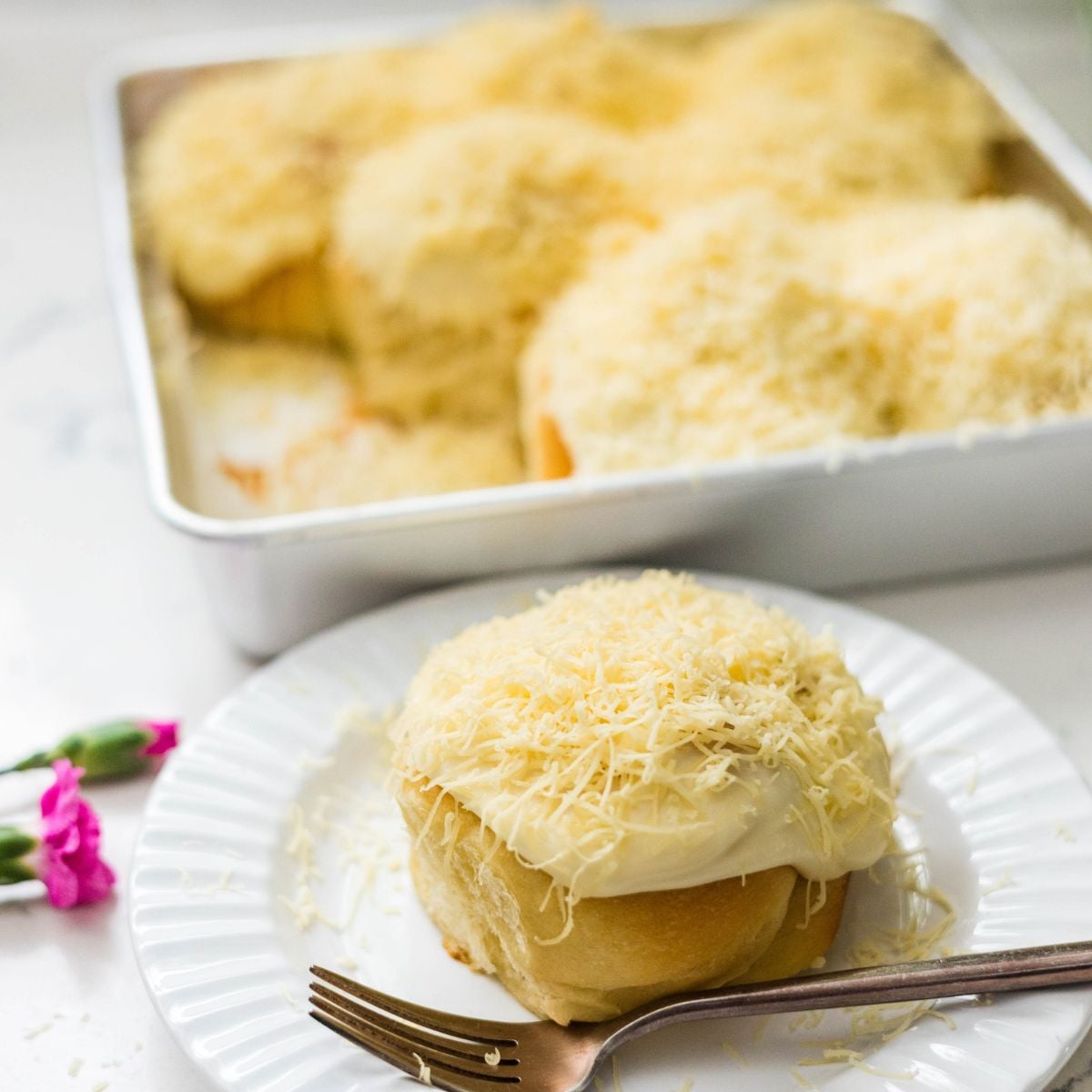
Most homemade cheesy Filipino ensaymada turns out great on day one and dry by the next morning. That's exactly the problem this recipe solves.
The tangzhong method keeps the dough pillowy and soft for days, the same trick I use in all my tangzhong cinnamon roll recipes. A pour of heavy cream right before baking keeps every roll rich and tender all the way through.
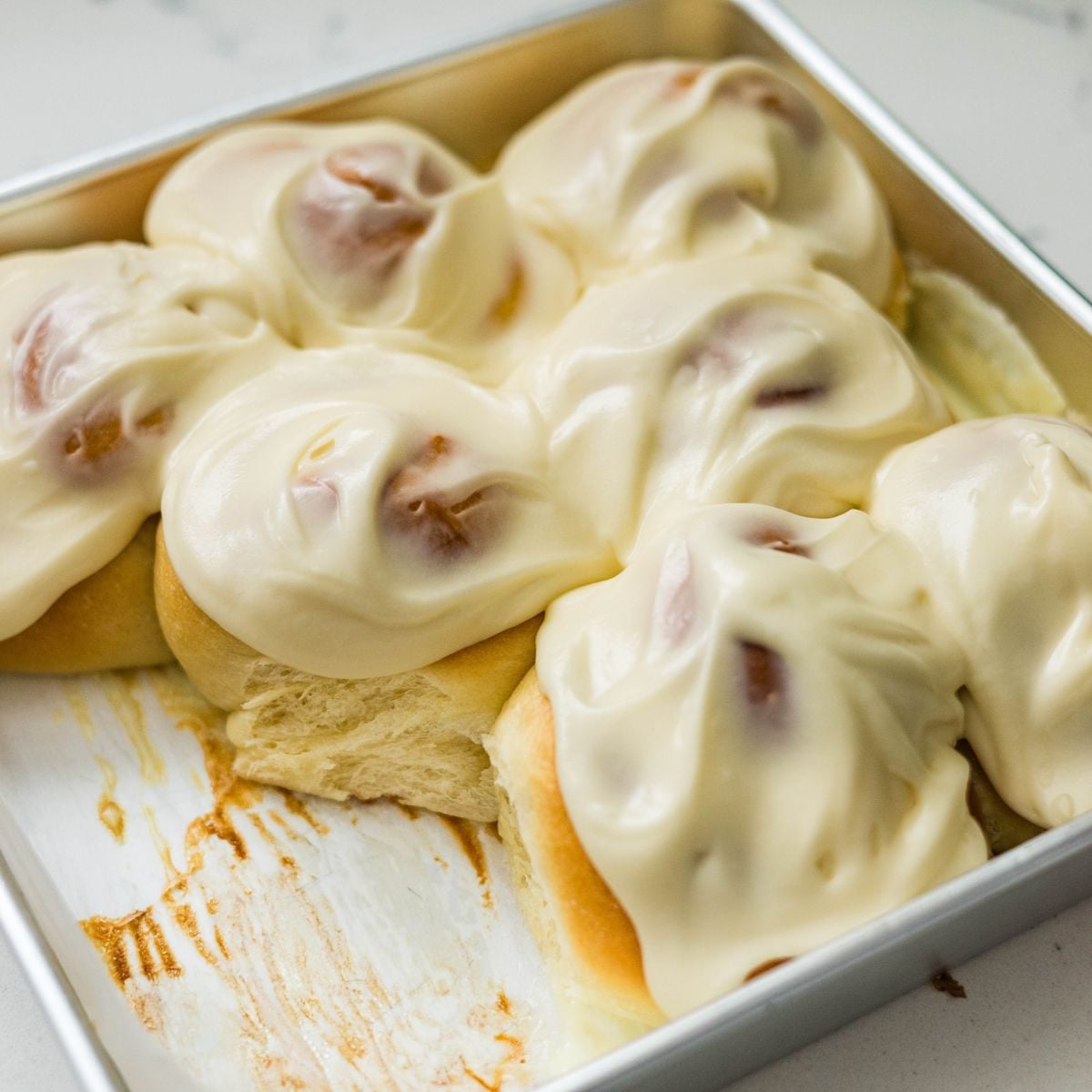
And instead of plain buttercream, this version gets a cream cheese frosting that brings just enough tang to balance the soft, lightly sweet bread.
No special mold needed. Just any baking pan and a little patience while the dough rises.
Save This Recipe 💌
Jump to:
What Is Ensaymada?
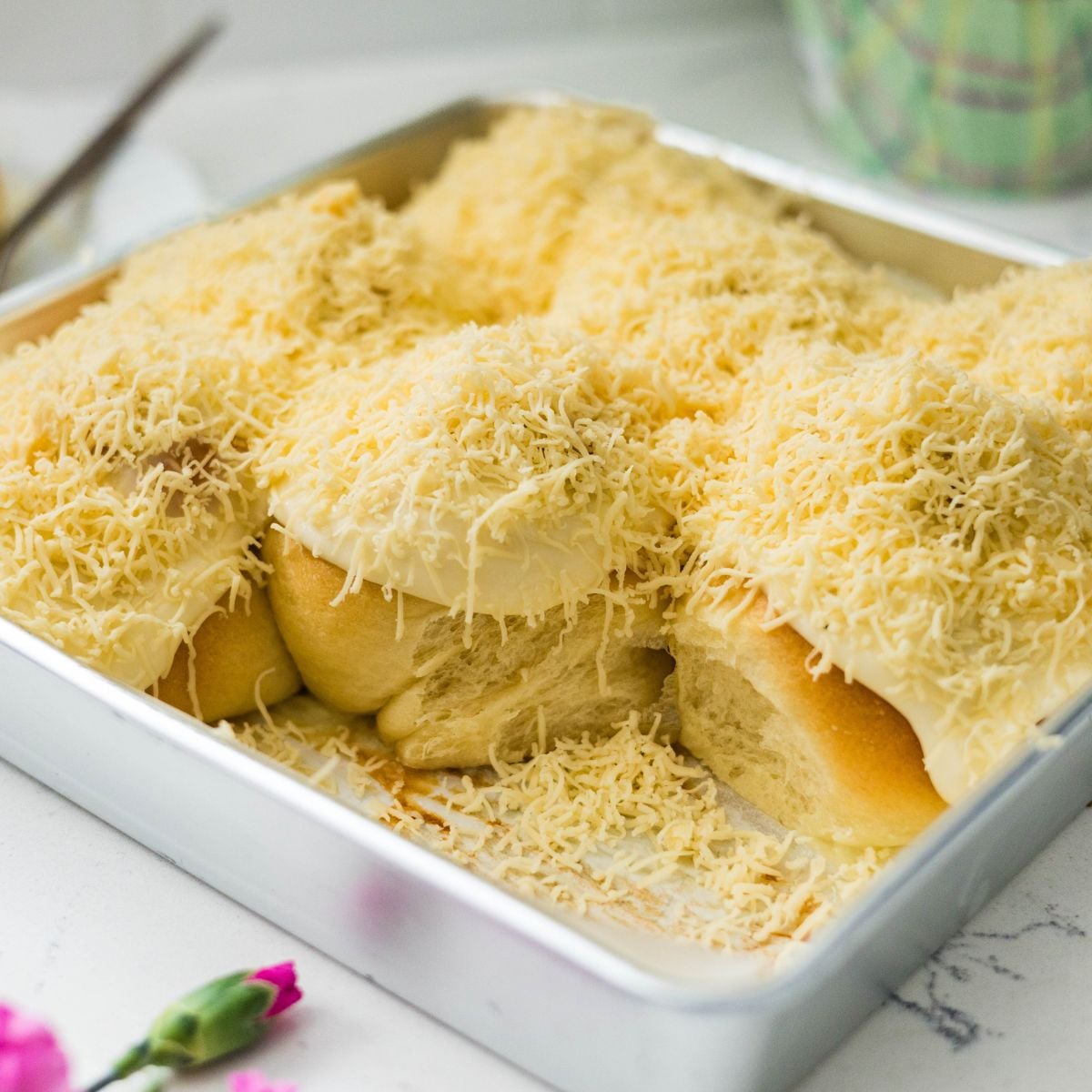
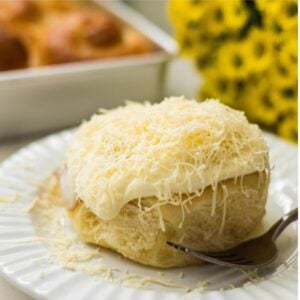
Ensaymada is a Filipino sweet bread, soft and buttery with a generous layer of frosting and a pile of grated cheese on top. Sweet and salty in the best possible way, and the kind of thing that disappears fast at any family gathering.
You might also see it spelled ensaimada, the original Spanish spelling from the Mallorcan pastry it descended from. The Filipino version evolved into something richer, sweeter, and topped with that signature cheese. Filipinos eat it as merienda, the afternoon snack that's its own ritual, usually with coffee or hot chocolate, though honestly it works any time someone puts one in front of you.
Why This Recipe Works
A lot of homemade ensaymada recipes turn out soft from the oven but dense by the next morning. Three things here work against that.
- Tangzhong: Pre-gelatinizes the starches so the dough holds onto more moisture from the start, the same technique used in Japanese milk bread. More on this below.
- The Heavy Cream Pour: Most recipes skip this step. Poured over the shaped rolls right before baking, it soaks in and keeps every roll rich and moist the next day too, not just fresh from the oven. I use this same trick in all my cinnamon roll recipes.
- Cream Cheese Frosting: Slightly tangy and a little denser than plain buttercream, which holds up better against the saltiness of the grated cheese on top.
Three Ways to Make the Dough
This recipe is written using the tangzhong method, but you have options. All three have been tested.
Option 1: Tangzhong (Main Recipe). A small amount of flour and milk gets cooked into a paste before it goes into the dough. This pre-gelatinizes the starches so the dough holds onto more moisture. The result is the softest, most pillowy crumb, the same technique used in Japanese milk bread.
Option 2: Mashed Potato. Skip the tangzhong. Add 60g of plain mashed potato, no seasoning, to the dough instead. The starch does similar work, and the rolls turn out just as soft. Good option if you want to skip the extra cooking step.
Option 3: Base Dough Only. Skip both. Make the dough as written without either addition. You'll still get soft, cheesy ensaymada. The heavy cream pour carries a lot of weight on its own.
Ingredients
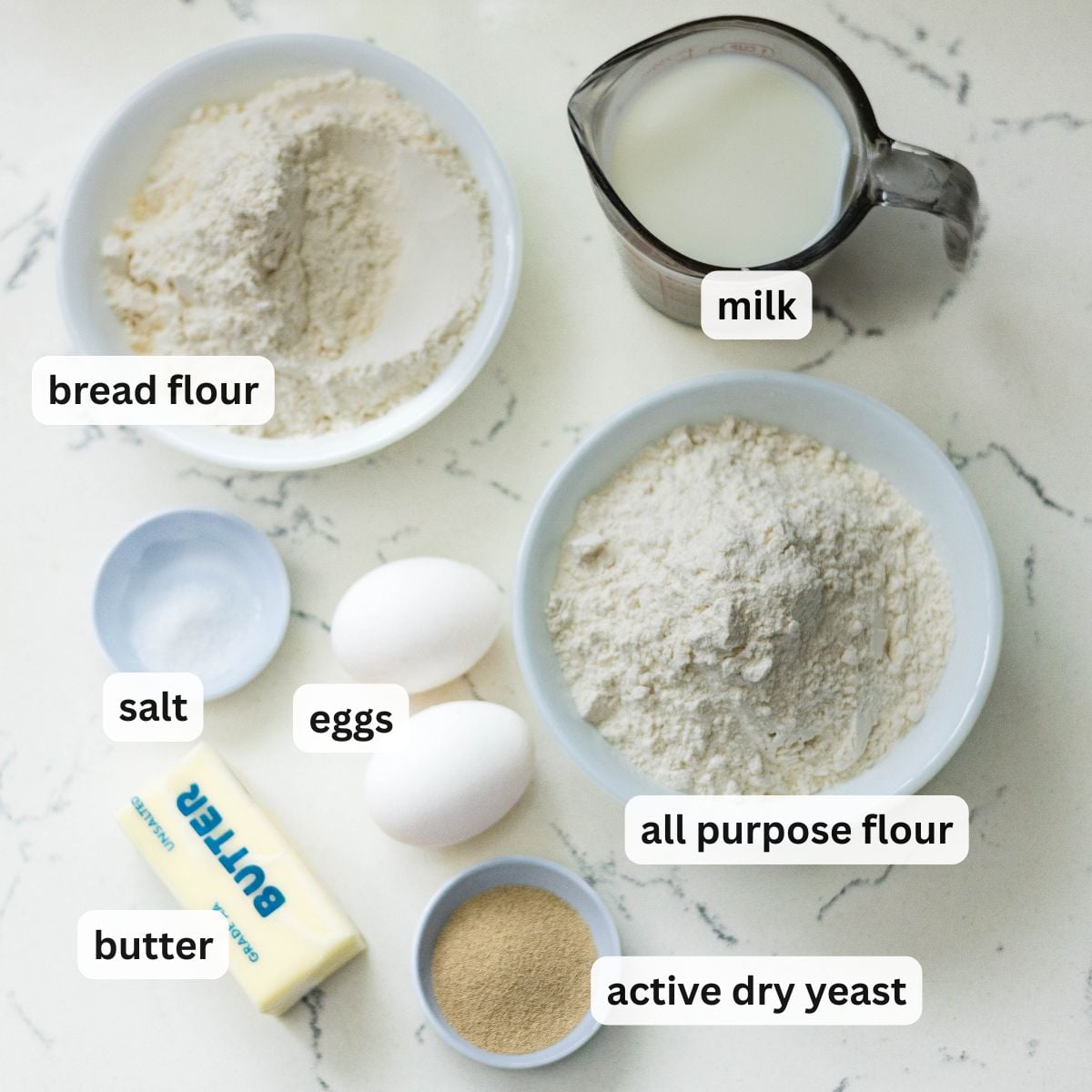
Here's what you'll need:
Tanzhong
- Whole Milk and All-Purpose Flour: A small amount of each, cooked together into a thick paste before going into the dough. This is what gives the rolls their extra soft, pillowy texture. It takes about 5 minutes, and the difference is noticeable.
For the Dough
- All-Purpose Flour and Bread Flour: I use both, and here's why. All-purpose alone gives you the softest, most tender crumb, but the rolls are more delicate. Bread flour alone gives you more structure and a slight chew, but the crumb is denser. Using both is the sweet spot, soft inside with enough strength to hold the coil shape and stand up to the frosting on top.
- Active Dry Yeast: The leavening agent. Proof it in warm milk before adding it to the dough. Five minutes tells you whether it's alive before you commit to the whole batch.
- Whole Milk: Warm it to 110°F before using. Too hot kills the yeast, too cold and it won't activate. Stick your finger in, it should feel like warm bathwater, not hot.
- White Sugar: Sweetens the dough and feeds the yeast. A tablespoon goes into the yeast mixture first, the rest goes into the dough.
- Eggs: Room temperature. They mix in more easily and help with structure. Cold eggs can tighten the dough.
- Unsalted Butter: Softened, not melted. This is what makes ensaymada rich and tender. Melted butter changes the texture of the dough, so make sure it's just soft enough to press a finger into.
- Salt: Balances the sweetness and strengthens the gluten. Don't skip it.
For Pouring
- Heavy Whipping Cream: Poured directly over the shaped, proofed rolls right before they go into the oven. This is the step most recipes don't have. It soaks in as the rolls bake and keeps them moist and rich not just warm out of the oven, but the next day too. I use this same trick in all my cinnamon roll recipes.
Cream Cheese Frosting
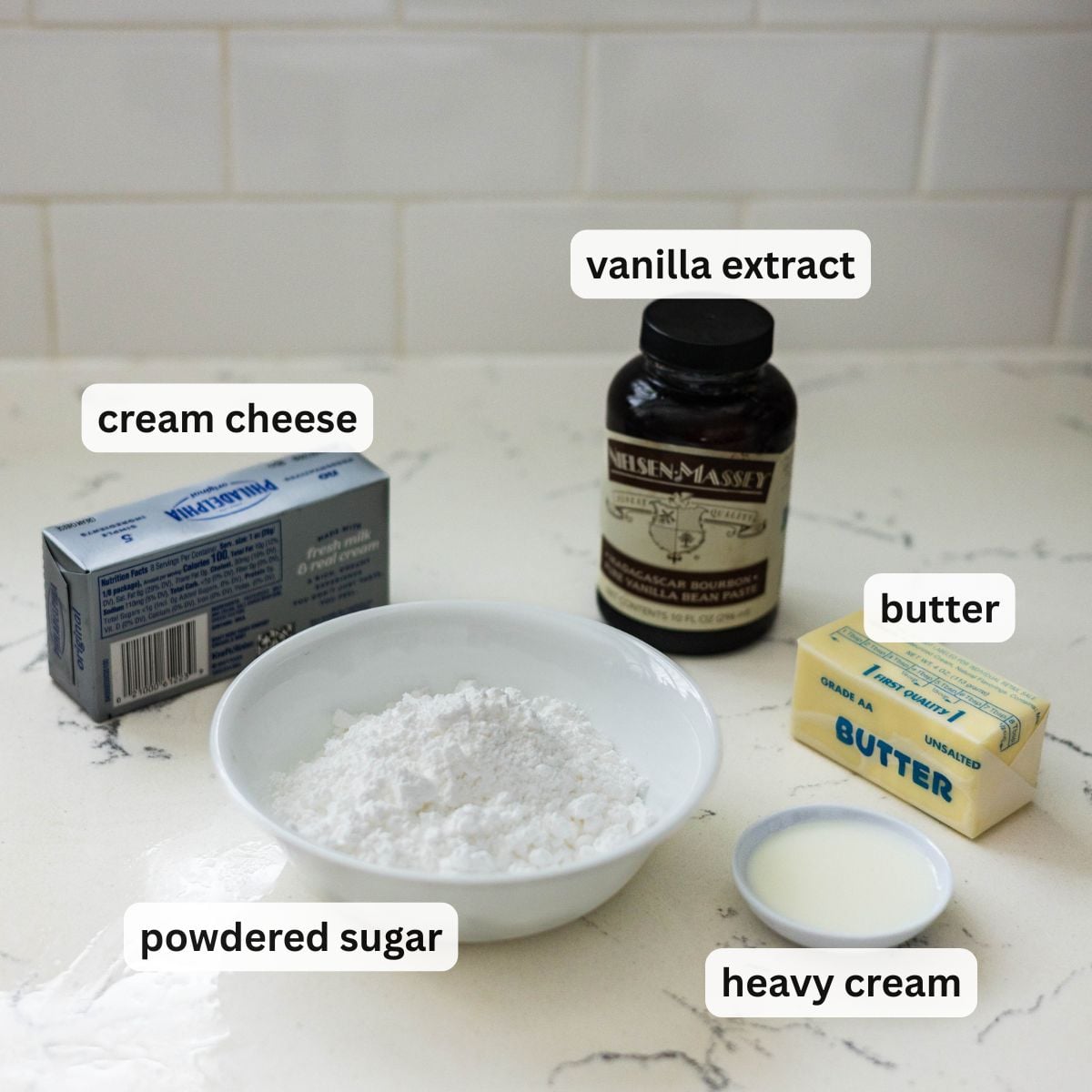
- Cream Cheese: Room temperature so it beats smooth without lumps. This is what makes the frosting tangier and more interesting than plain buttercream. It also holds up better against the salty cheese on top.
- Unsalted Butter: Room temperature. Beaten together with the cream cheese as the base of the frosting.
- Powdered Sugar: Sweetens the frosting and gives it body. Sift it if yours tends to clump.
- Vanilla Extract: Rounds out the flavor.
- Salt: A small amount keeps the frosting from tasting flat.
- Heavy Cream: A splash at the end to loosen the frosting to a spreadable consistency.
Topping
- Processed Cheese: Eden or Mr. Queso are the classic choices, and for good reason. The saltiness of processed cheese against the sweet frosting is what makes ensaymada taste like ensaymada. Cheddar works too. Queso de bola is great if you can find it. Grate it fresh and be generous.
See recipe card for quantities.
How To Make Filipino Ensaymada
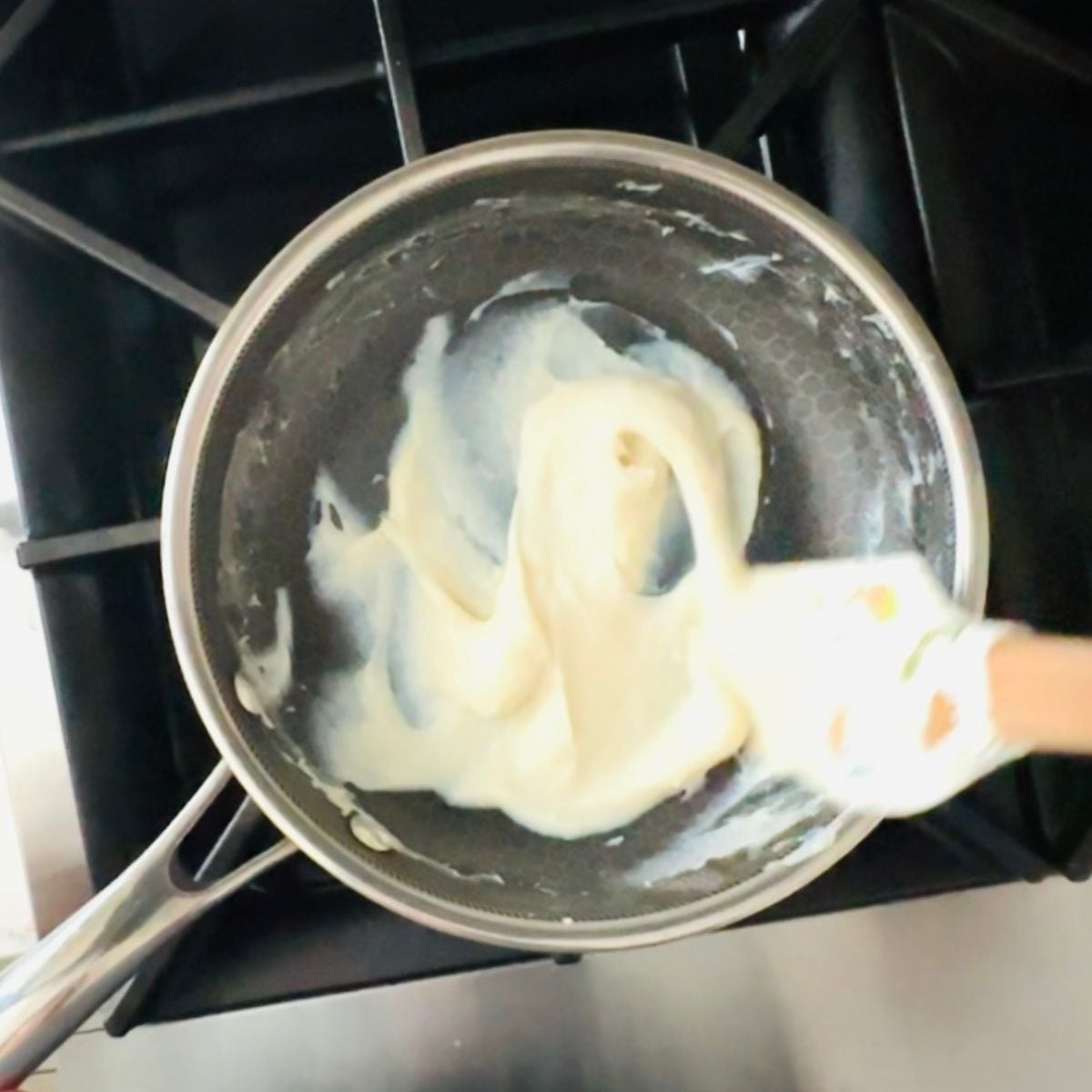
- Make the Tanzhong. Whisk milk and all-purpose flour together in a small saucepan over low heat. Stir constantly until the mixture thickens into a paste, about 3 to 5 minutes. Transfer to a bowl and let it cool completely before using.

- Activate the Yeast. Combine warm milk (110°F), the yeast, and sugar. Stir and set aside for 5 minutes. It should bubble and foam. If it doesn't, your yeast is likely expired - start with a fresh packet before adding it to the dough.
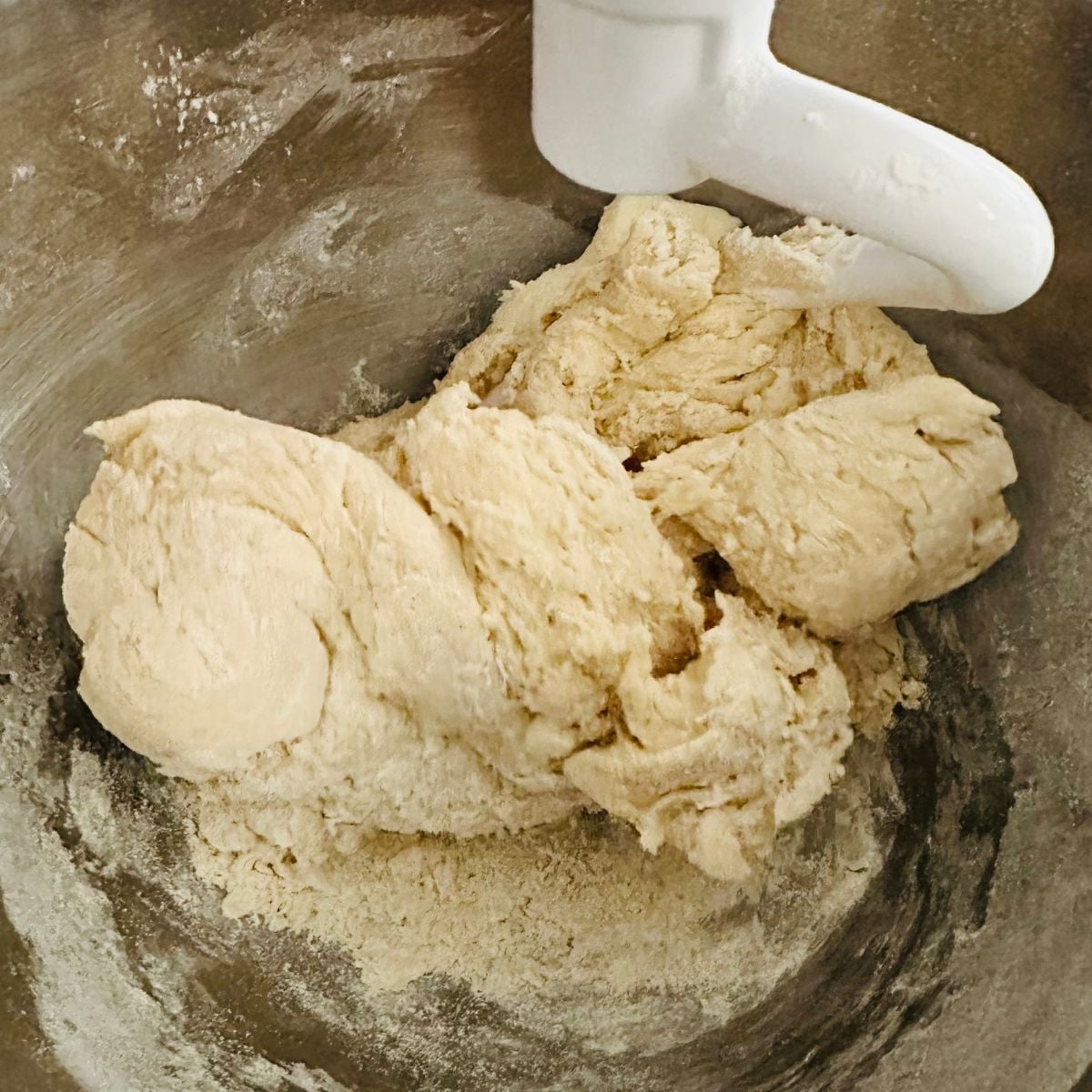
- Make the Dough - In a large bowl or the bowl of a stand mixer, whisk together the remaining sugar, salt, all-purpose flour, and bread flour. Add the yeast mixture, eggs, and cooled tanzhong. Mix until a shaggy dough forms, then add the butter. Knead for about 10 minutes on medium speed using a stand mixer, or about 15 minutes by hand, until the dough is smooth, soft, and elastic. It will feel slightly tacky - that's normal for an enriched dough and it's what keeps the rolls soft. Avoid adding too much extra flour.
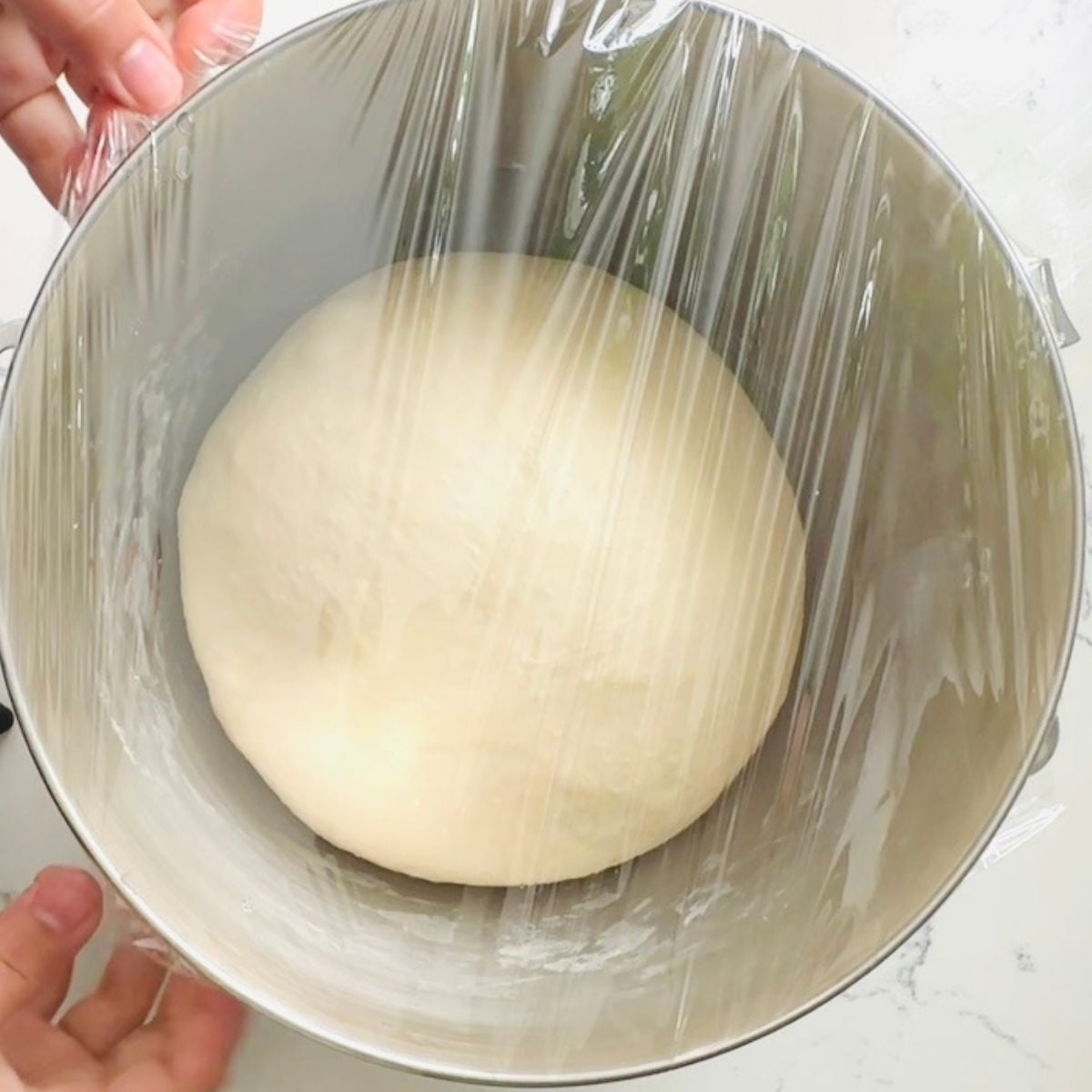
- First Proof - Shape the dough into a ball and place in a lightly greased bowl. Cover with plastic wrap or a clean kitchen towel and let it rise somewhere warm until doubled in size, about 1 to 1.5 hours.
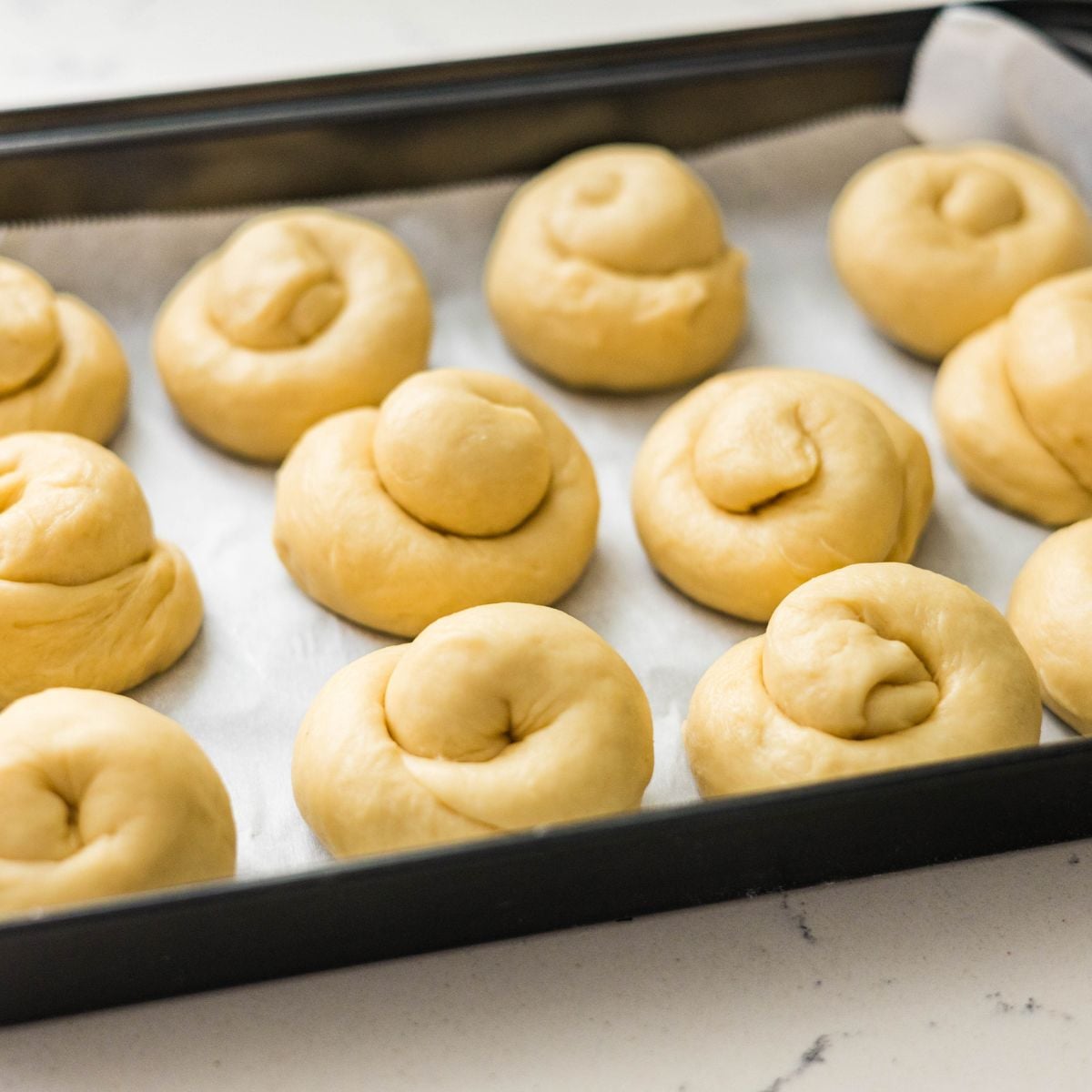
- Shape the Ensaymada - Punch down the dough to release the air. Turn it out onto a lightly floured surface and divide into 12 equal pieces - a kitchen scale makes this easy, about 60-70g each. Working one piece at a time, roll the dough into a log about 10 to 12 inches long. Coil it into a spiral and tuck the end underneath. Place on a parchment-lined 9x13 baking tray with even spacing.
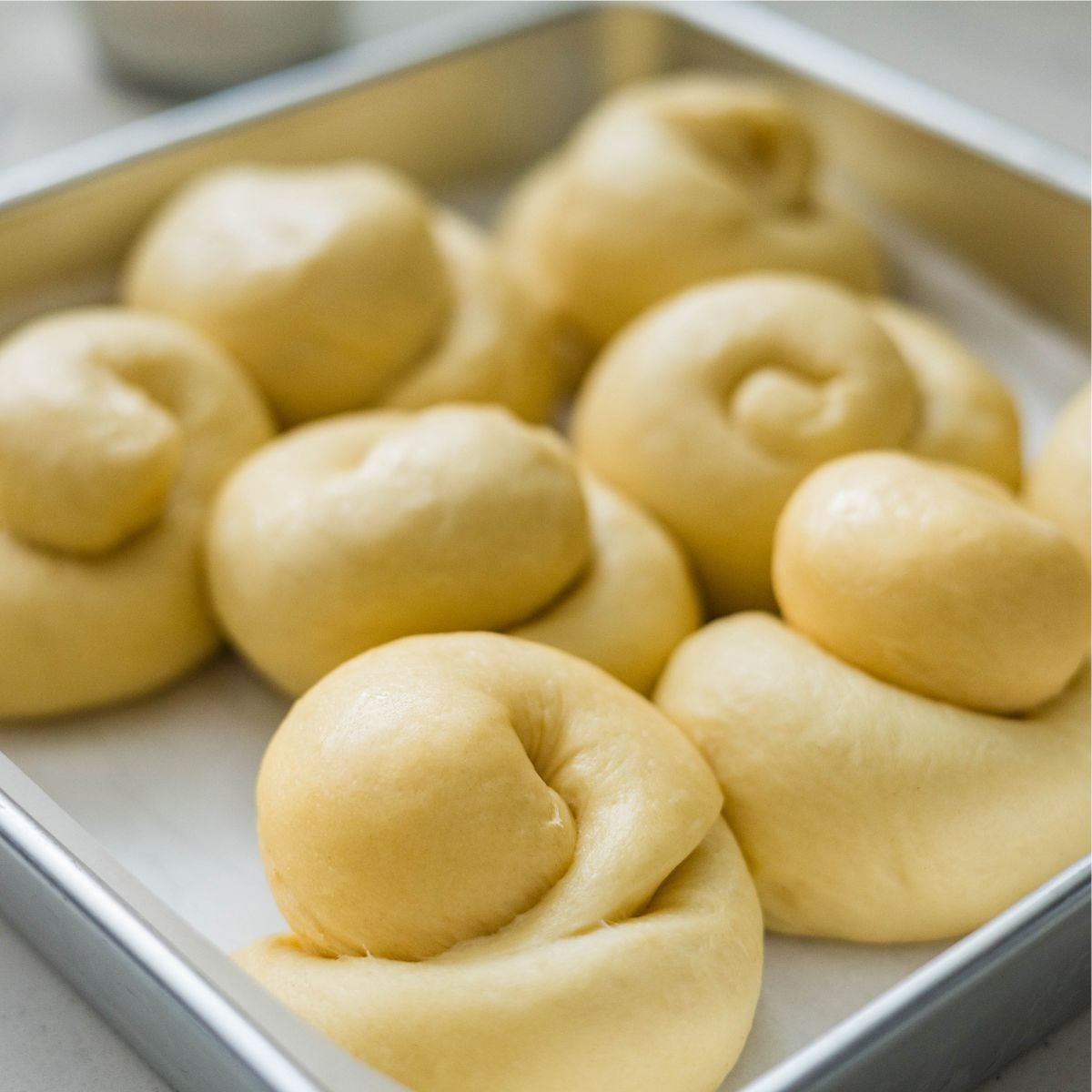
- Second Proof - Cover loosely and let rise for 45 minutes to 1 hour until the rolls look visibly puffier. They won't double like the first proof but they should look noticeably airier.
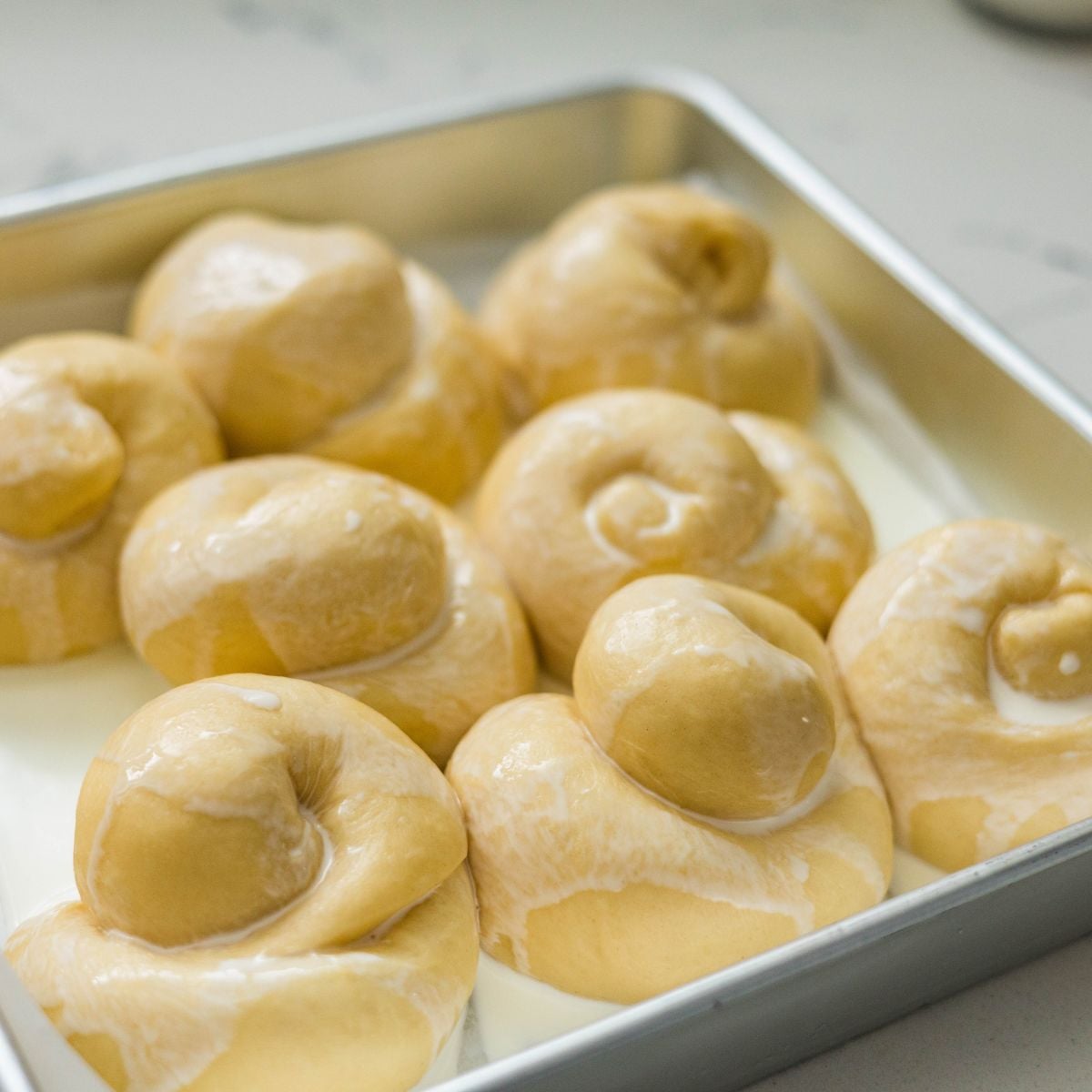
- Pour the Heavy Cream - Pour the heavy whipping cream evenly over the proofed rolls, letting it settle around and between them. It will look like a lot. That's the point.
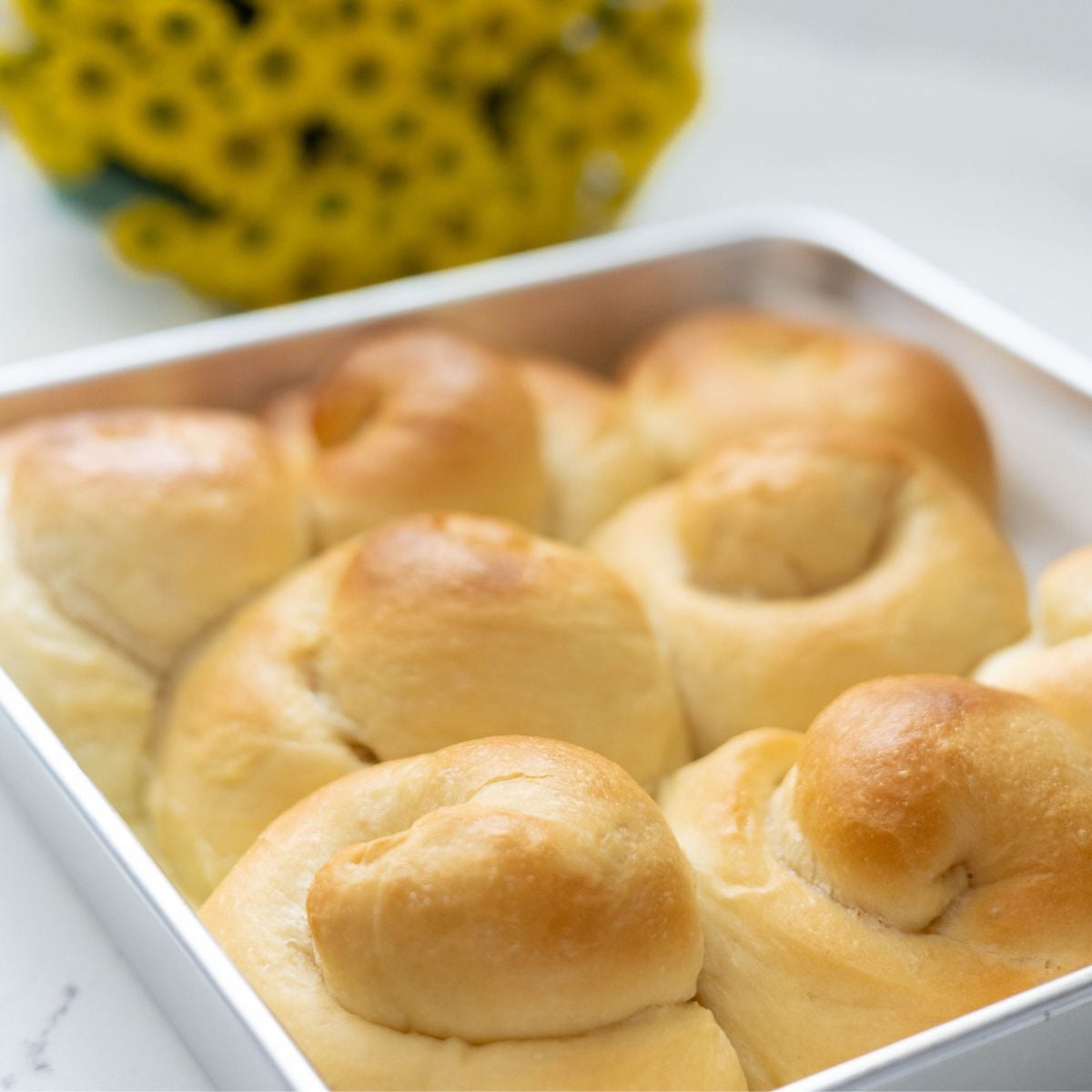
- Bake - Preheat your oven to 325°F. Bake for 20 minutes, but start checking at the 18-minute mark. You're looking for a light golden top, not deeply browned. The internal temperature should read 180°F to 190°F on an instant-read thermometer. Pull them on the lighter side. The cream soaking in means they can look slightly underdone and still be perfectly baked inside.
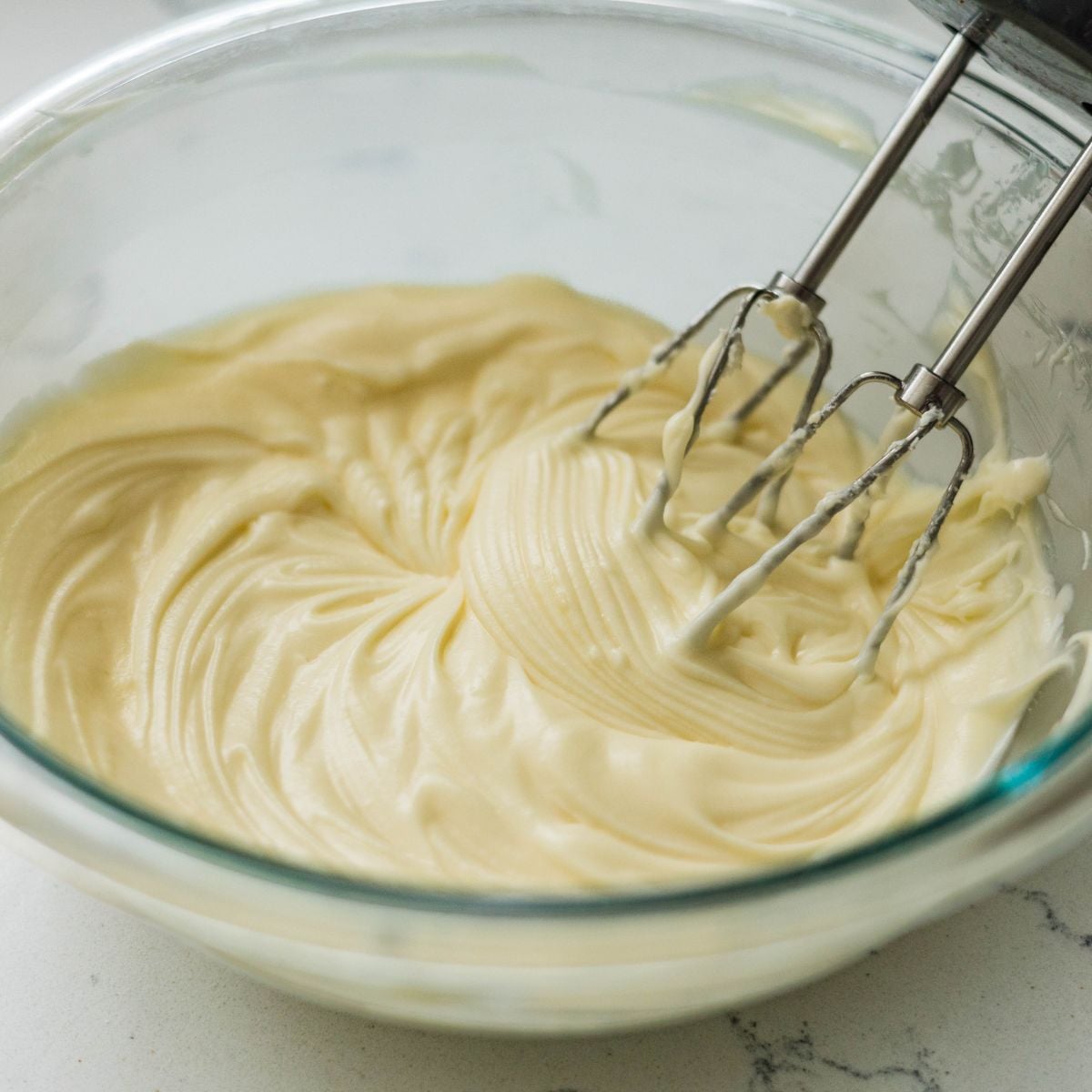
- Make the Cream Cheese Frosting - While the rolls cool slightly, beat the cream cheese and butter together until smooth. Add vanilla, salt, and powdered sugar and mix to combine. Add the heavy cream and beat until the frosting is light and spreadable.
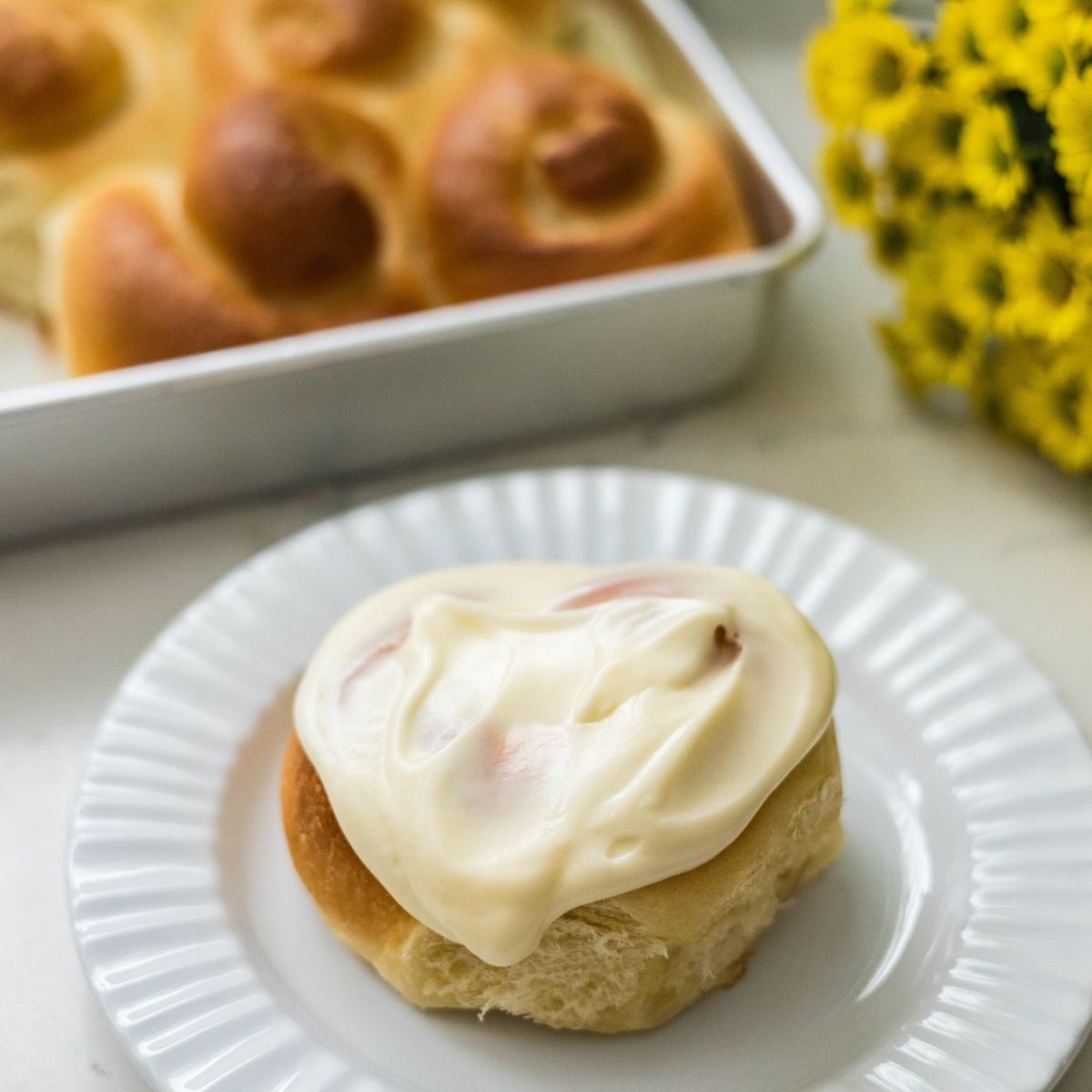
- Top and Serve - Spread the cream cheese frosting generously over each warm roll. Top with a pile of grated processed cheese. Eden and Mr. Queso are the classic choices- their saltiness against the sweet frosting. Serve warm.
Getting the Dough Right
Ensaymada dough is stickier than most bread doughs and that's by design. The high butter and egg content is what makes the rolls rich and tender. Here's what to know before you start.
- Sticky dough is normal. Resist the urge to add more flour. A slightly tacky dough bakes into soft, pillowy rolls. A heavily floured dough bakes into something closer to a dinner roll.
- Cold ingredients slow everything down. Make sure your butter and eggs are fully at room temperature before you start. Cold butter won't incorporate properly and cold eggs can tighten the dough.
- Hot kitchens speed things up. If it's warm in your kitchen, keep an eye on the first proof. The dough can double in under an hour on a hot day.
- Sticky dough that won't come together? Keep kneading. Once the butter is fully worked in, the dough will smooth out and start pulling away from the sides of the bowl. You'll hear it slap against the bowl as it comes together. That's the sign it's ready.
- Shaping is easier cold. If your dough feels too soft and sticky to coil neatly, wrap it and refrigerate for 30 minutes after the first proof. The butter firms up slightly and the dough becomes much easier to handle.
Make-Ahead and Storage
Make-ahead: After the first proof, cover the dough tightly and refrigerate overnight. The next day, let it sit at room temperature for 20 to 30 minutes before shaping.
Freezer option: This is what I usually do. After shaping and coiling, place the rolls on a tray or in the baking pan and freeze until solid. Once frozen, transfer them to a zip top bag or vacuum seal them. When ready to bake, place them in a baking pan, thaw, and let them finish the second proof until puffy before baking.
Storage: Store frosted ensaymada in an airtight container at room temperature for up to 2 days, or refrigerate for up to 5 days.
Reheating: Microwave for 15 to 20 seconds. The frosting gets slightly melty, which is not a bad thing.
Freezing baked rolls: Freeze unfrosted baked rolls, wrapped individually, for up to 1 month. Thaw at room temperature, then frost before serving.
Recipe FAQs
Yes. The rolls will be softer and slightly more cake-like rather than chewy. Still delicious. Use the same amount.
Yes. Use the same amount and skip the blooming step. Add it directly to the dry ingredients. Rising time may be slightly shorter.
Processed cheese like Eden or Mr. Queso is the classic choice. The saltiness is part of what makes it ensaymada. Cheddar works too. Queso de bola (Edam) is great if you can find it.
Enriched doughs with butter and eggs are supposed to be a little tacky. If it's very sticky, add flour one tablespoon at a time and knead it in. But don't over-flour, you can add up to 30 grams of all-purpose flour. The stickiness is what keeps the rolls soft.
Yes. See the three dough options above. The heavy cream pour still does a lot of work on its own.
No. Kneading by hand works fine, just plan for about 15 minutes of kneading instead of 10.
More Filipino Bread to Try
If you liked making this, here are a few more from the same corner of the kitchen.

Did you try this recipe?
Share how it turned out in the comment box below, and if you loved it, share it on Facebook, Pinterest & Instagram.
Thank you!

Ensaymada (Filipino Cheese Bread)
Equipment
- 1 Stand mixer with dough hook (or large bowl for hand kneading)
- 1 Small saucepan (for tanzhong)
- 1 9x13 baking tray
- 1 parchment paper
- 1 Instant-read thermometer
- 1 Kitchen scale (recommended)
Ingredients
Tanzhong
- 100 grams whole milk
- 24 grams all-purpose flour
Dough
- 140 grams whole milk room temperature
- 2½ teaspoons active dry yeast
- 10 grams white sugar for acivating the yeast
- 100 grams white sugar for the dough
- 2 pieces eggs room temperature
- ½ cup unsalted butter room temperature
- 1 teaspoon salt
- 216 grams all purpose flour sifted
- 240 grams bread flour
- 30 grams all purpose flour additional as needed
For Pouring
- ½ cup heavy whipping cream
Cream Cheese Frosting
- 8 ounces cream cheese room temperature
- ½ cup unsalted butter room temperature
- 2 cups powdered sugar
- 1 teaspoon vanilla extract
- ½ teaspoon salt
- 2 tablespoons heavy cream
Topping
- Processed cheese such as Eden or Mr. Queso grated, to taste
Instructions
Make the Tanzhong
- Whisk milk and all-purpose flour in a small saucepan over low heat.24 grams all-purpose flour, 100 grams whole milk
- Stir constantly until thickened into a paste, about 3 to 5 minutes.
- Transfer to a bowl and let cool completely.
Make the Dough
- Combine 140g warm milk, yeast, and 1 tablespoon of sugar. Stir and set aside for 5 minutes until bubbly.140 grams whole milk, 10 grams white sugar, 2½ teaspoons active dry yeast
- Combine remaining sugar, salt, all-purpose flour, and bread flour in a large bowl or stand mixer.100 grams white sugar, 1 teaspoon salt, 216 grams all purpose flour, 240 grams bread flour
- Add the yeast mixture, eggs, and cooled tanzhong. Mix until a shaggy dough forms.2 pieces eggs
- Add the butter and knead for 10 minutes on medium speed, or 15 minutes by hand, until the dough is smooth and elastic. The dough will be slightly tacky. If it feels too wet or overly sticky, add the extra flour 1 tablespoon at a time until it is easier to handle.½ cup unsalted butter, 30 grams all purpose flour
- Place dough in a lightly greased bowl, cover, and let rise until doubled in size — about 1 to 1.5 hours.
- Punch down the dough. Divide into 12 equal pieces (about 75 to 80g each).
- Roll each piece into a log about 10 to 12 inches long. Coil into a spiral and tuck the end underneath.
- Place on a parchment-lined 9x13 baking tray, evenly spaced.
- Cover loosely and let rise for 45 minutes to 1 hour until visibly puffy.
- Pour heavy whipping cream evenly over the proofed rolls.½ cup heavy whipping cream
- Bake at 325°F for 20 minutes. Check at 18 minutes. Pull when lightly golden and internal temperature reads 180°F to 190°F.
Frost and Top
- Beat the cream cheese, butter, vanilla extract, and salt together until smooth and creamy. Add the powdered sugar and mix until fully combined, then add the heavy cream and beat until light and spreadable.8 ounces cream cheese, ½ cup unsalted butter, 2 cups powdered sugar, 1 teaspoon vanilla extract, ½ teaspoon salt, 2 tablespoons heavy cream
- Spread frosting generously over each warm roll.
- Top with a generous amount of grated processed cheese. Serve warm.Processed cheese such as Eden or Mr. Queso
Ali says
Made these for a family gathering and they were gone in ten minutes, the cheese on top is everything! Next time i'll maybe try ube.
Rose Sioson says
Hi Ali! That's such a nice compliment, the cheese on top really does the most. Ube would be such a fun twist, can't wait to hear how that turns out if you try it.