

I keep two frostings in rotation. Cream cheese when I want tang and richness, and this one when I don't.
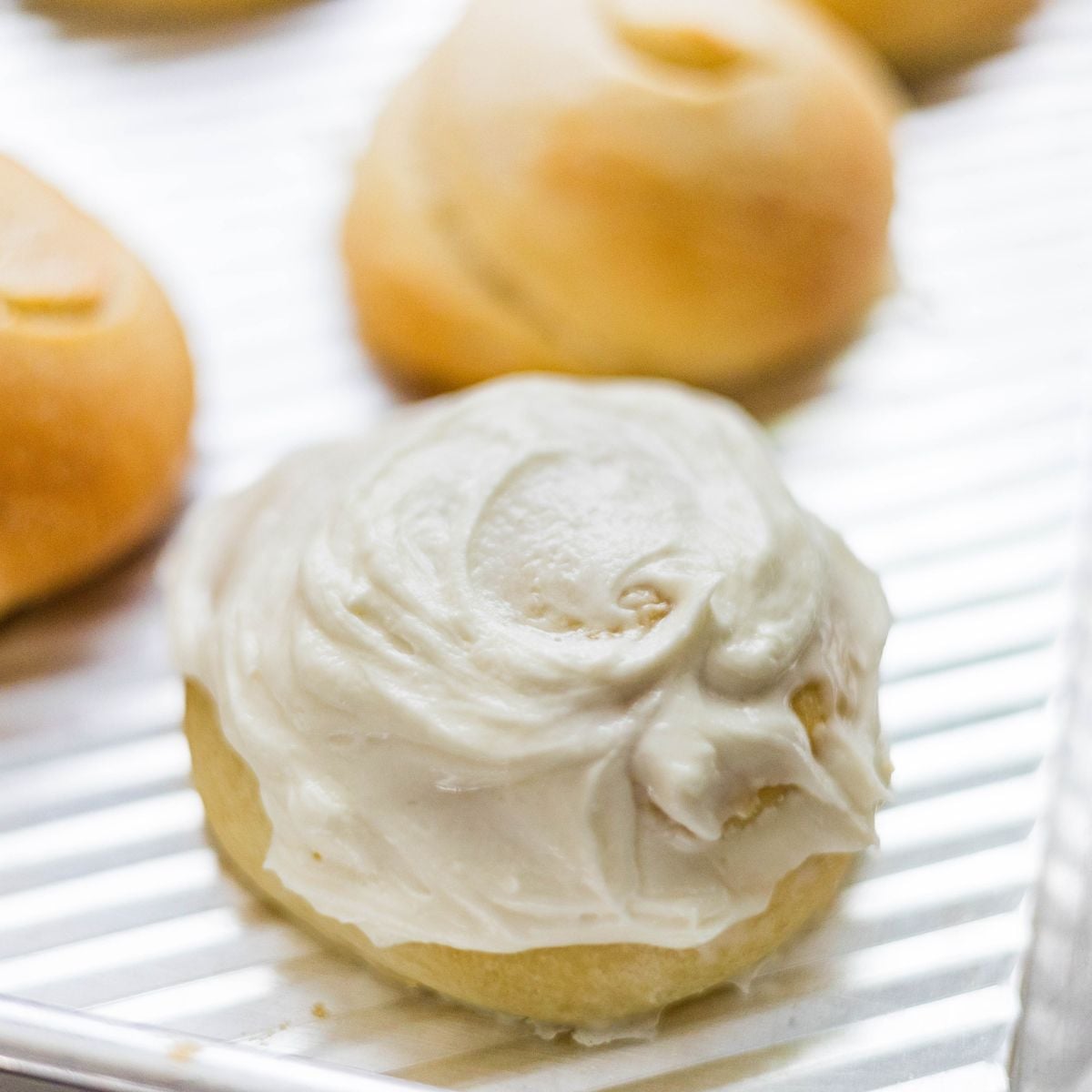
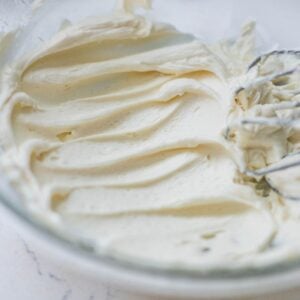
Vanilla buttercream is what I reach for when the thing I'm frosting already has enough going on. Four ingredients, one bowl, and the consistency is entirely up to you: a little more cream and it spreads over warm rolls, a little less and it holds a piped edge.
The two things that decide whether it comes out smooth or grainy are the temperature of your butter and whether you sifted the sugar. Everything else is forgiving.
Save This Recipe 💌
Jump to:
Ingredients
Here's what you'll need:
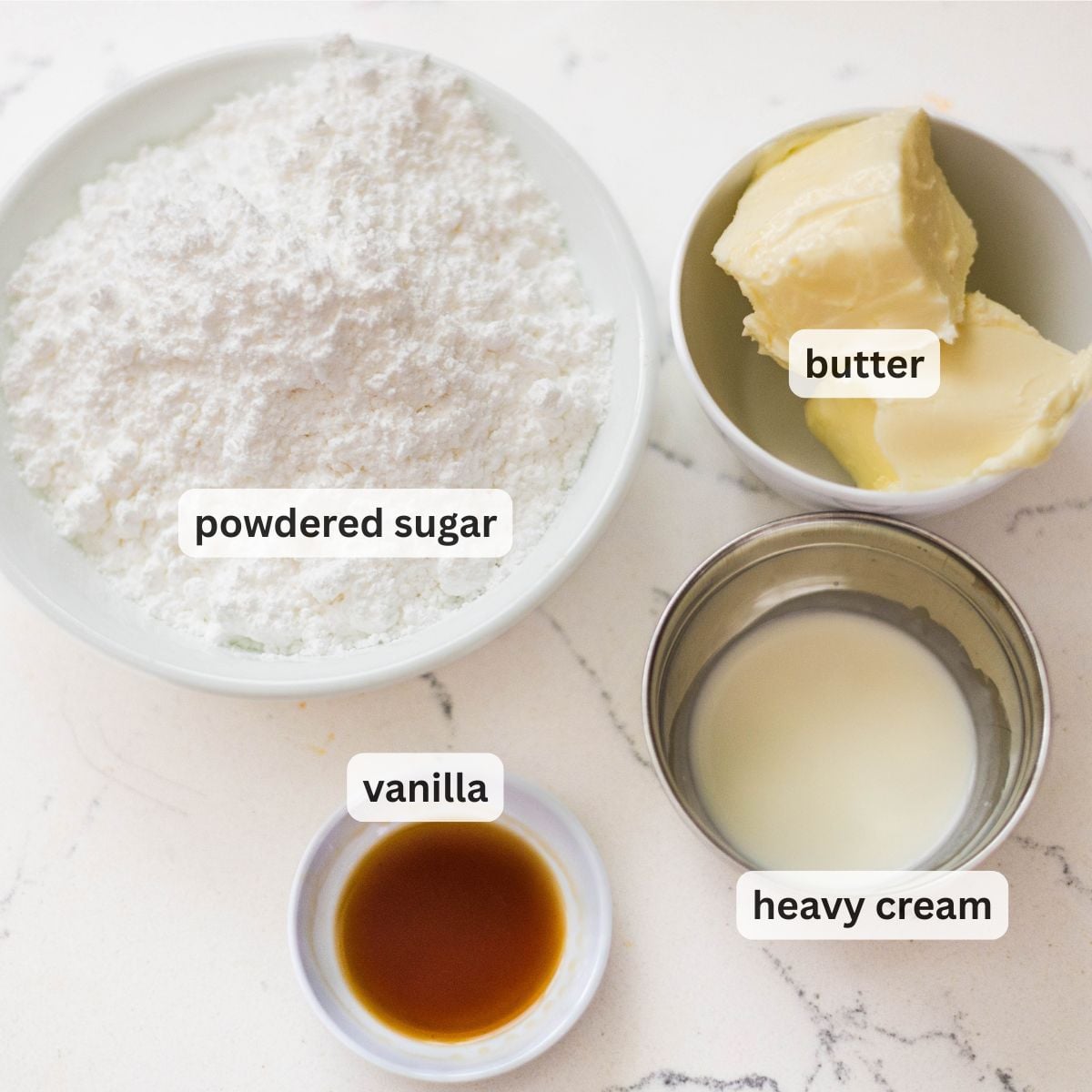
- Butter - Unsalted, at room temperature. Room temperature means it gives slightly when you press a finger in but still looks matte, not shiny or greasy. This is the single thing that decides how your frosting turns out. Cold butter won't hold air, so you get dense and lumpy instead of light. Butter that's gone too soft can't hold structure either, and the frosting turns oily and slides off whatever you're frosting. Unsalted lets you control the salt yourself.
- Powdered sugar - Also sold as confectioner's sugar or icing sugar. Sift it, even if the bag looks fine. The lumps that form in powdered sugar don't dissolve, they just get pushed around by the mixer, and what you taste at the end is grit. Sifting takes 30 seconds and it's the difference between smooth frosting and the kind people politely scrape off.
- Vanilla - Pure extract gives you the flavor this recipe is named for. Imitation vanilla works and nobody will refuse the cake, but the flavor reads flatter and slightly chemical next to the real thing. Vanilla bean paste is a straight swap for extract and adds visible flecks, which is worth it when the frosting is the finish rather than a layer inside a cake.
- Salt - A pinch. Without it the frosting is sweet and nothing else, and that one-note sweetness is why people say buttercream is too much. Salt doesn't make it taste salty, it just keeps the sugar from being the only thing on your tongue. If you only have salted butter, use it and skip this.
- Cream or milk (optional) - One to two teaspoons, added at the very end. This is your consistency dial, not a required ingredient. Add none and the frosting stays stiff enough to pipe and hold an edge. Add a teaspoon or two and it loosens into something that spreads over warm rolls without tearing them. Heavy cream gives a slightly richer result than milk, but either works. Add it a teaspoon at a time, because you can always loosen frosting and you can't easily tighten it back up without throwing off the sugar balance.
See recipe card for quantities.
How To Make Vanilla Buttercream Frosting
- Beat the butter alone. Add the softened butter to a large bowl and beat on medium with a hand mixer or stand mixer for 2 minutes, until it looks pale and noticeably fluffier than when it went in. Don't shortcut this. You're forcing air into the butter, and that trapped air is what makes the finished frosting light instead of heavy and pasty. Sugar added to under-beaten butter will never get airy later, because by then the fat is coated and can't hold much more.
- Add the powdered sugar, one cup at a time. Mixer on low. Add a cup, let it disappear into the butter, then add the next. Going slow keeps sugar from clouding up out of the bowl, and more importantly it lets each addition actually incorporate instead of sitting in dry pockets that you'll find later as lumps. Once all the sugar is in, bring the speed up to medium and mix for another minute.
- Step 3: Add the vanilla and salt. Both go in at the end rather than the beginning. Extract added early gets partially absorbed by the butter and reads weaker, and salt added early doesn't distribute as evenly through a stiff mixture as it does through a loosened one. Mix on medium for one minute.
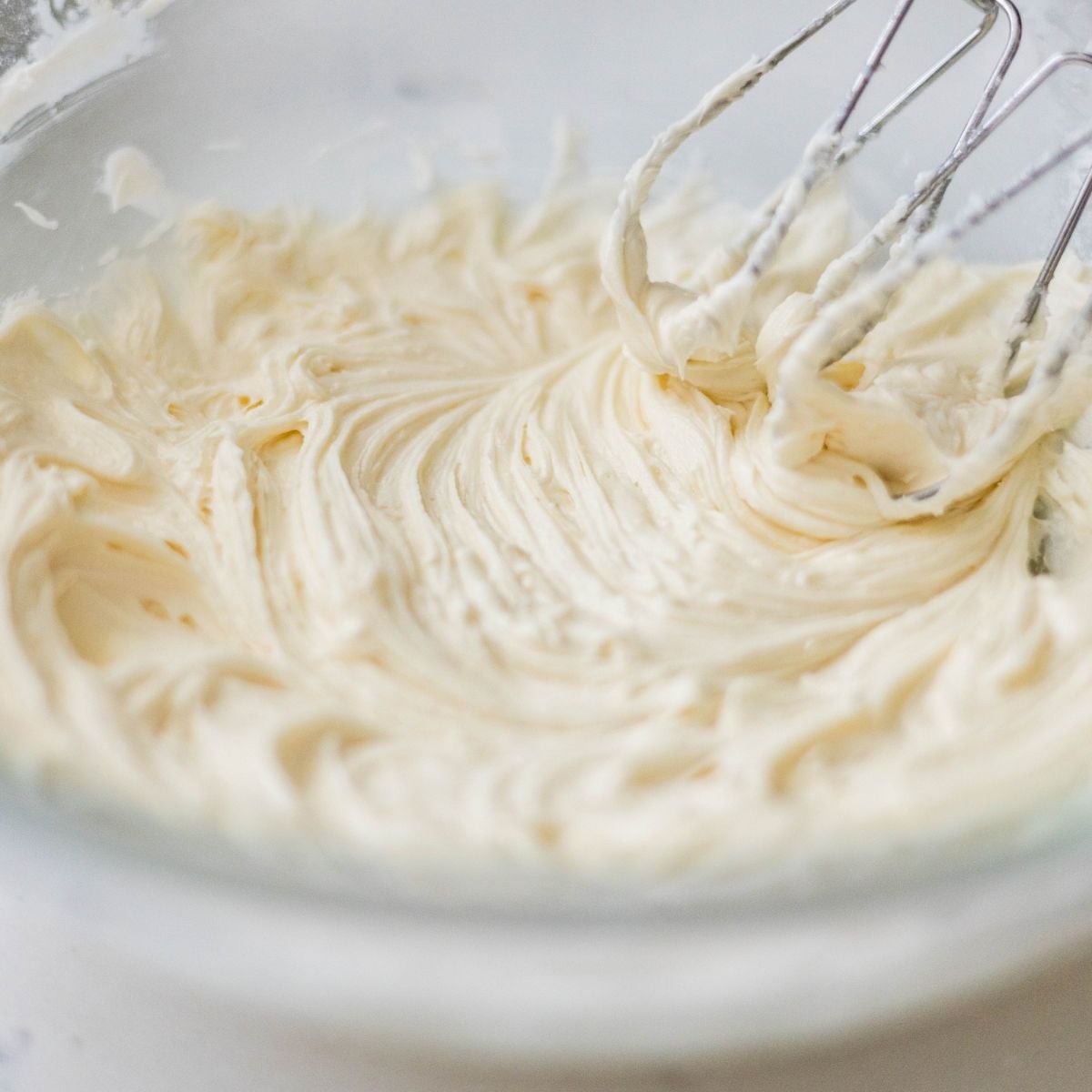
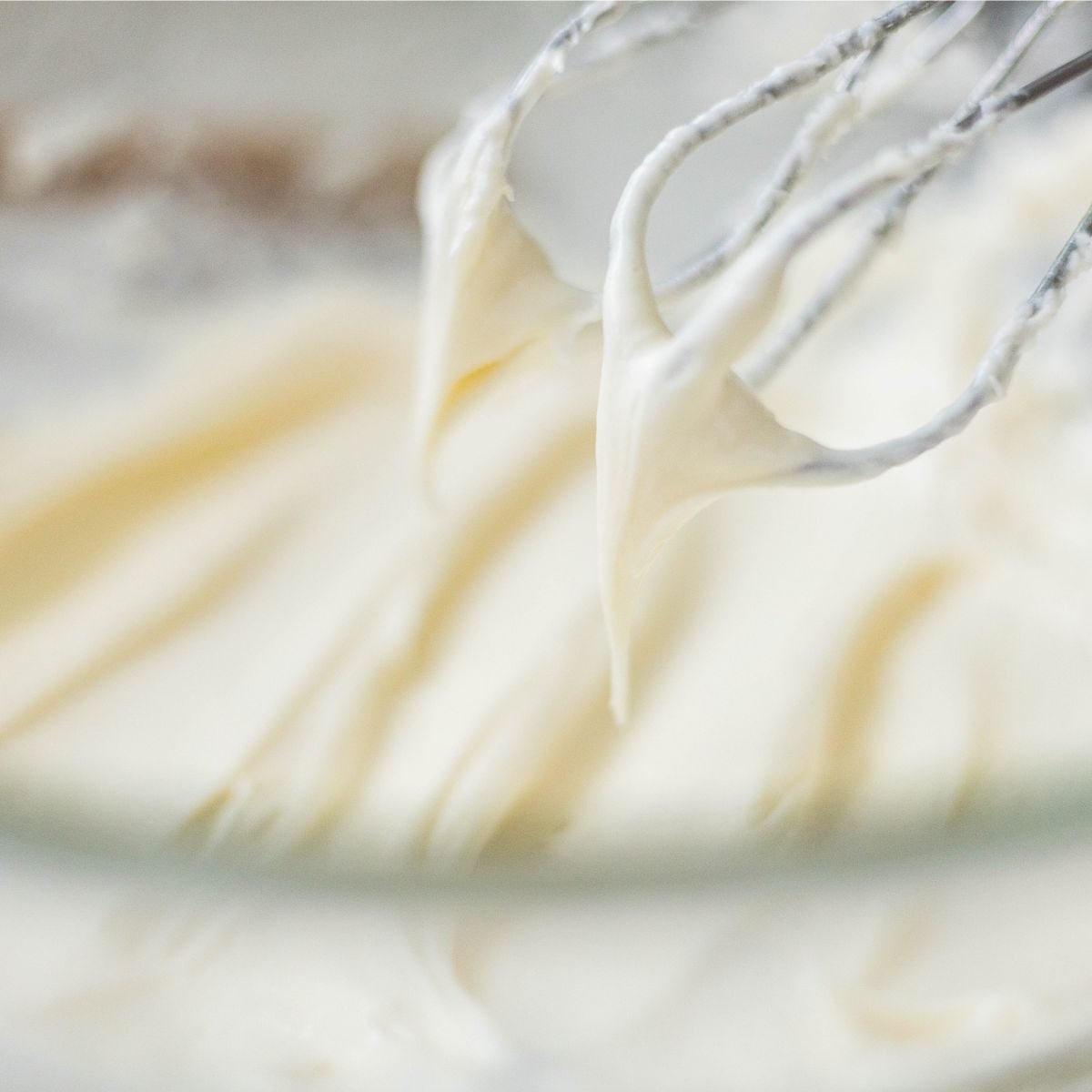
- Adjust the consistency. Too stiff? Add cream or milk one teaspoon at a time and mix between additions. Too loose? Add powdered sugar a tablespoon at a time. Go slowly in both directions, because it's easy to overshoot and end up chasing the texture back and forth while the frosting gets warmer and softer from all the extra mixing. What you're aiming for depends on what you're frosting, which is covered in the next section.
- Stir out the air bubbles. Turn the mixer off and switch to a rubber spatula. Press the frosting against the side of the bowl and stir by hand for 2 to 3 minutes. Everything you just did on medium speed whipped air into the frosting, and those bubbles are why buttercream can look smooth in the bowl and come out pocked and streaky on the cake. Hand-stirring pushes them out without deflating the texture you built in step 1. Skip this if you're spreading it over warm rolls, where it doesn't show. Don't skip it if you're frosting a cake or piping.
Rose's Top Tips
- Butter temperature decides everything else. Too cold and it won't hold air, so you get dense frosting with lumps that no amount of extra mixing will fix. Too warm and the fat starts to separate, which is what's happening when frosting looks oily and won't hold shape. If your kitchen runs warm and the frosting starts to look greasy partway through, put the whole bowl in the fridge for 10 minutes and beat it again. It comes back.
- Sift the powdered sugar even when the bag looks fine. Powdered sugar clumps as it sits, and those clumps don't dissolve in butter the way granulated sugar dissolves in liquid. The mixer just relocates them. Thirty seconds with a sieve is the whole fix.
- Give the butter its full two minutes alone. This is the step that gets rushed most, and it's the one you can't go back and correct. Once the sugar is in, the fat is coated and it won't take on much more air. Whatever lightness you built in the first two minutes is what you're stuck with.
- Taste before you add more vanilla. If the frosting reads flat, it's usually short on salt rather than short on vanilla. Extra vanilla in an all-butter frosting mostly adds liquid, which loosens the texture, and past a point it starts tasting sharp instead of rounder. A pinch more salt fixes flatness without touching the consistency.
- No mixer is fine, it just takes longer. A sturdy spoon or spatula works, and this is a small enough batch to do by hand. Beat the butter until it lightens, which takes closer to 5 minutes by hand than 2, then work the sugar in a half cup at a time. It won't get as light as machine-beaten frosting. For spreading over rolls, you won't notice the difference.
- Warm rolls need looser frosting than cake does. Frosting spread on rolls that are still warm will slump and partly melt into them, which is usually the point. Frosting on a cooled cake needs to hold its own shape. Same batch, different amount of cream, so decide which one you're doing before you set the consistency.
I use this same frosting on my cookies and cream cinnamon rolls when I want a topping that doesn't compete with the filling.
Variations
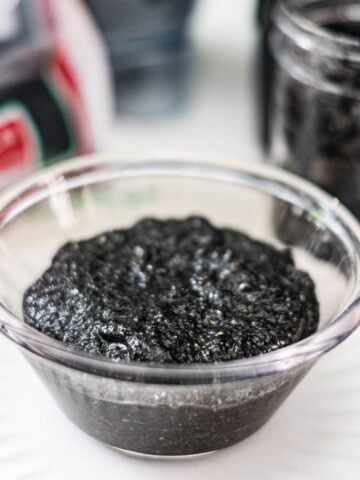
- Ube buttercream - Beat 2 to 3 tablespoons of ube halaya into the finished frosting, or add a small amount of ube extract if you want the color without the extra moisture. Halaya gives you real flavor and a softer set, so hold back the cream at the end since the jam is already loosening things. This is the version I'd put on ube rolls or ensaymada.
- Calamansi buttercream - Swap half the vanilla for fresh calamansi juice and add a little zest. Calamansi is sharper and more floral than lemon, and it cuts the sweetness harder, which is useful in a frosting this sugar-forward. Add the juice a half teaspoon at a time, because acid plus liquid will loosen the texture faster than you expect. Regular lemon works the same way if calamansi isn't in the freezer.
- Brown butter buttercream - Brown the butter first, then chill it until it's solid again and back at room temperature before you start. Do not skip the re-solidifying step. Melted butter can't hold air, so frosting made with warm browned butter comes out thin and greasy no matter how long you beat it. Worth the extra hour for spice cakes and anything with oats.
- Chocolate buttercream - Add 2 to 3 tablespoons of unsweetened cocoa powder along with the powdered sugar. Sift it with the sugar rather than adding it separately, since cocoa clumps worse than powdered sugar does. Cocoa is a drying ingredient, so expect to need an extra teaspoon of cream.
- Coconut buttercream - Use coconut extract in place of the vanilla. A little goes further than vanilla does, so start with half the amount and taste.
- Tinted frosting - Add gel food coloring after everything else is mixed. Gel is concentrated, so you get the color without adding enough liquid to thin the frosting. Liquid coloring will loosen the texture before it gets the shade you want.
Storage
Room temperature: Covered, up to 2 days. Keep it away from the stove, a sunny counter, or anywhere warm, since the butter will start to soften and separate before the frosting actually goes bad. If it looks oily when you come back to it, it's temperature, not spoilage. Chill it briefly and beat it again.
Refrigerator: Airtight container, up to a week. Cold buttercream sets hard, so pull it out 1 to 2 hours ahead and let it come fully to room temperature before you try to do anything with it. Beating cold frosting just breaks it up into lumps. Once it's soft, give it a minute on medium and it comes back to the texture it had on day one.
Freezer: Up to 3 months in an airtight container with as little air space as possible, since buttercream picks up freezer smells. Thaw overnight in the fridge, then bring it to room temperature and re-beat. Frosting straight from the freezer to the counter will sweat as it thaws unevenly, and that condensation thins it out.
Already-frosted cakes, cupcakes, and rolls: This frosting sets up firm at room temperature and forms a light skin on the surface after a few hours, which is what lets a frosted cake sit out covered overnight without sliding. In a warm kitchen, or if you've piped anything that needs to hold its shape, refrigerate instead and bring it back to room temperature before serving. Cold buttercream tastes waxy and flat, so the hour on the counter matters more than people expect.
A note on the cream: Adding a teaspoon or two of cream or milk doesn't change any of the above. The proportion of dairy is small enough that the sugar content is still doing the preserving.
What to Frost With This
This frosting works on just about anything that needs a simple, sweet topping. A few favorites:
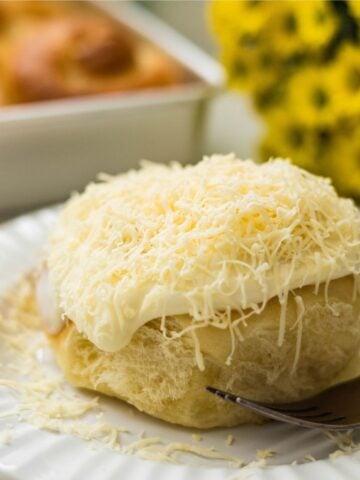
- Ensaymada for that soft, buttery Filipino bakery-style finish
- Cinnamon rolls (this and cream cheese frosting take turns on my roll trays)
- Vanilla or yellow cake layers
- Cupcakes
- Sugar cookies
- Brownies when you want something a little extra
If you're already in a baking mood, my apple cinnamon rolls with cream cheese and salted caramel use a different frosting entirely, but this vanilla buttercream would be a great swap if you want something more straightforward.
There are so many ways to use a great frosting - browse the quick and easy desserts section for more ideas on what to bake next.
Recipe FAQs
Almost always the powdered sugar. Lumps that form in the bag don't dissolve in butter, they just get pushed around by the mixer. Sift before you add it, and give each cup time to fully incorporate before the next one goes in.
As a rule, plan on about 2 tablespoons per cupcake for spreading and double that for piped swirls. An 8 or 9-inch two-layer cake needs 3 to 4 cups. If you're piping anything tall, make a batch and a half.
Because it's butter. All-butter frosting will always carry some yellow, and how much depends on your brand of butter and how long you beat it, since more air lightens the color. Beating an extra minute or two helps. There's a limit though, and if you need a true white you'd have to swap in shortening, which changes the flavor enough that I'd rather leave it yellow.
Turn the mixer off and stir by hand with a rubber spatula for 2 to 3 minutes, pressing the frosting against the side of the bowl. The last minute of medium-speed mixing whips air in, and those bubbles are what make frosting look pocked on a cake even though it looked smooth in the bowl.
Yes, it just takes longer. Beat the butter with a sturdy spoon or spatula for about 5 minutes instead of 2, then work in the sugar a half cup at a time. It won't get as light as machine-beaten frosting. For spreading over rolls you won't notice.
Start with the salt, since flatness and over-sweetness are usually the same problem. If it's still too much, a teaspoon of cream cheese or a small squeeze of calamansi or lemon juice cuts it without changing the texture much.
Yes. Up to a week in the fridge in an airtight container, or 3 months in the freezer. Bring it fully to room temperature before you re-beat it. Beating cold buttercream just breaks it into lumps.
Yes. Skip the added pinch of salt and taste before you decide whether it needs any. Salt levels vary a lot between brands.
Add cream or milk one teaspoon at a time, mixing between additions. Go slowly, because loosening is easy and tightening back up means more sugar, which throws off the balance.
Add powdered sugar a tablespoon at a time. If your kitchen is warm, the problem may be temperature rather than ratio, so chill the bowl for 10 minutes and re-beat before you add more sugar.
More Recipes You'll Love
- Cinnamon Roll Cream Cheese Frosting
- Classic Cinnamon Rolls
- Apple Cinnamon Rolls with Cream Cheese and Salted Caramel
- Cookies and Cream Cinnamon Rolls

Did you try this recipe?
Share how it turned out in the comment box below, and if you loved it, share it on Facebook, Pinterest & Instagram.
Thank you!

Easy Vanilla Buttercream Frosting
Equipment
- large mixing bowl Provides enough room to beat the frosting until fluffy
- Hand mixer or stand mixer Helps whip the butter and combine the frosting smoothly.
- measuring cups and spoons
- Fine-mesh sieve or sifter Helps remove lumps from the powdered sugar
- Rubber spatula
Ingredients
- 1 cup unsalted butter softened to room temperature
- 3 cups powdered sugar sifted
- 2 teaspoons pure vanilla extract
- 1 pinch salt
- Milk or heavy cream 1 teaspoon at a time, as needed if frosting is too thick
Instructions
- Beat the softened butter in a large mixing bowl with a hand mixer or stand mixer on medium speed for 2 minutes, until pale and fluffy.1 cup unsalted butter
- Add the sifted powdered sugar 1 cup at a time, mixing on low speed after each addition until incorporated.3 cups powdered sugar
- Increase the mixer speed to medium and beat for 1 minute once all of the powdered sugar has been added.
- Mix in the vanilla extract and pinch of salt on medium speed for 1 minute, until the frosting is smooth and creamy.2 teaspoons pure vanilla extract, 1 pinch salt
- Adjust the consistency as needed: add milk or heavy cream 1 teaspoon at a time if the frosting is too thick, or add powdered sugar 1 tablespoon at a time if it is too thin.Milk or heavy cream
- Use immediately for spreading or piping, or store until ready to frost cakes, cupcakes, cinnamon rolls, cookies, or brownies.

Jer says
Do you have to use heavy cream or does milk work just as well?
Rose Sioson says
Hello Jer! Milk works, but heavy cream gives you a richer, slightly thicker frosting. If you use milk, add it a little at a time since it thins the frosting out faster than cream does.