

Camote cue recipe failures are almost always the same story: sugar that burns before it caramelizes, potatoes that fall apart in the pan, or a coating that stays sticky instead of hardening into that glassy shell. I've been there, and I've fixed every one of those problems so you don't have to.
Three ingredients. One pan. Thirty minutes. That's all it takes to get this classic Filipino merienda right at home.
If you love this kind of Filipino sweet snack, my minatamis na saging hits the same sweet spot and is just as quick to pull together.
Save This Recipe 💌
Jump to:
What Is Camote Cue?
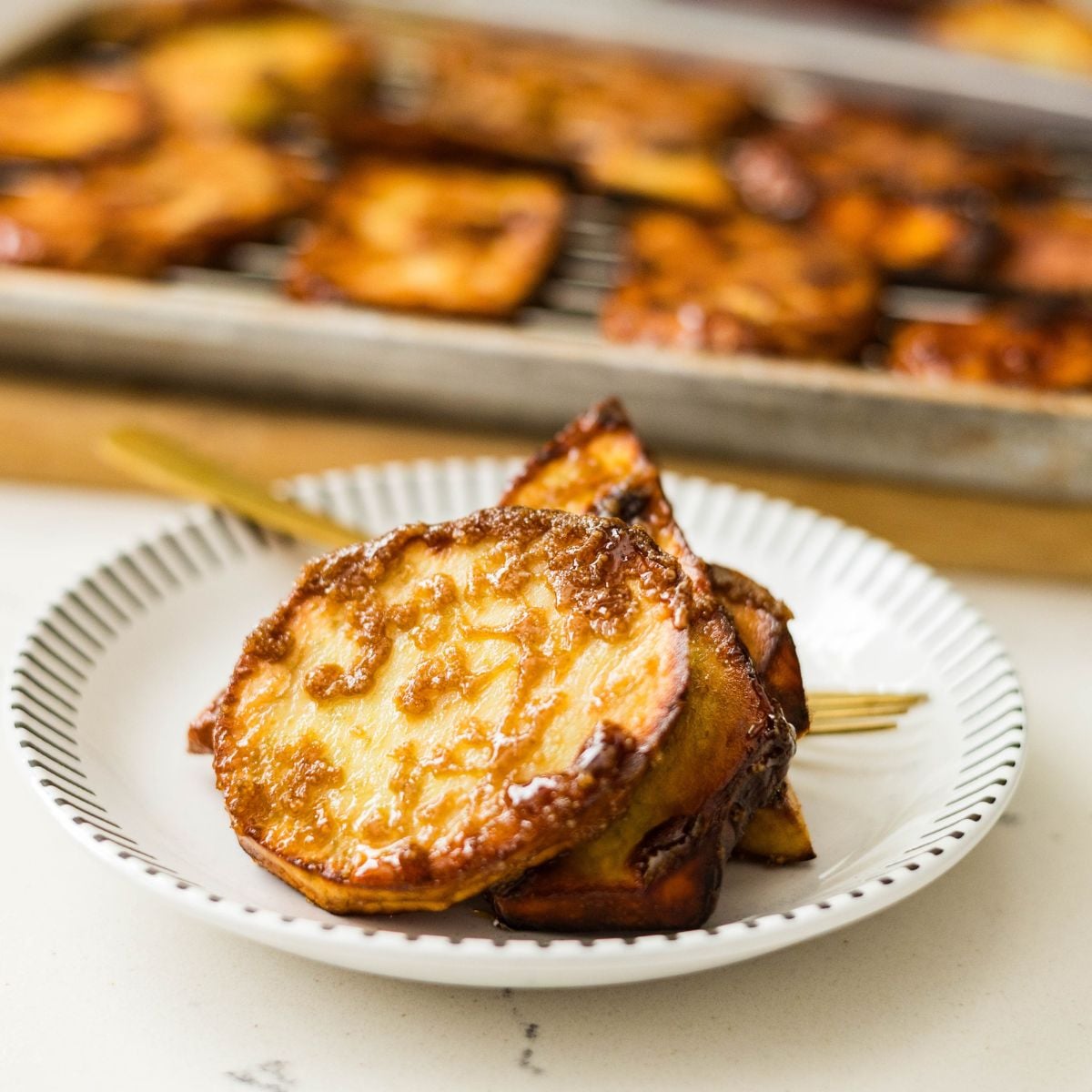
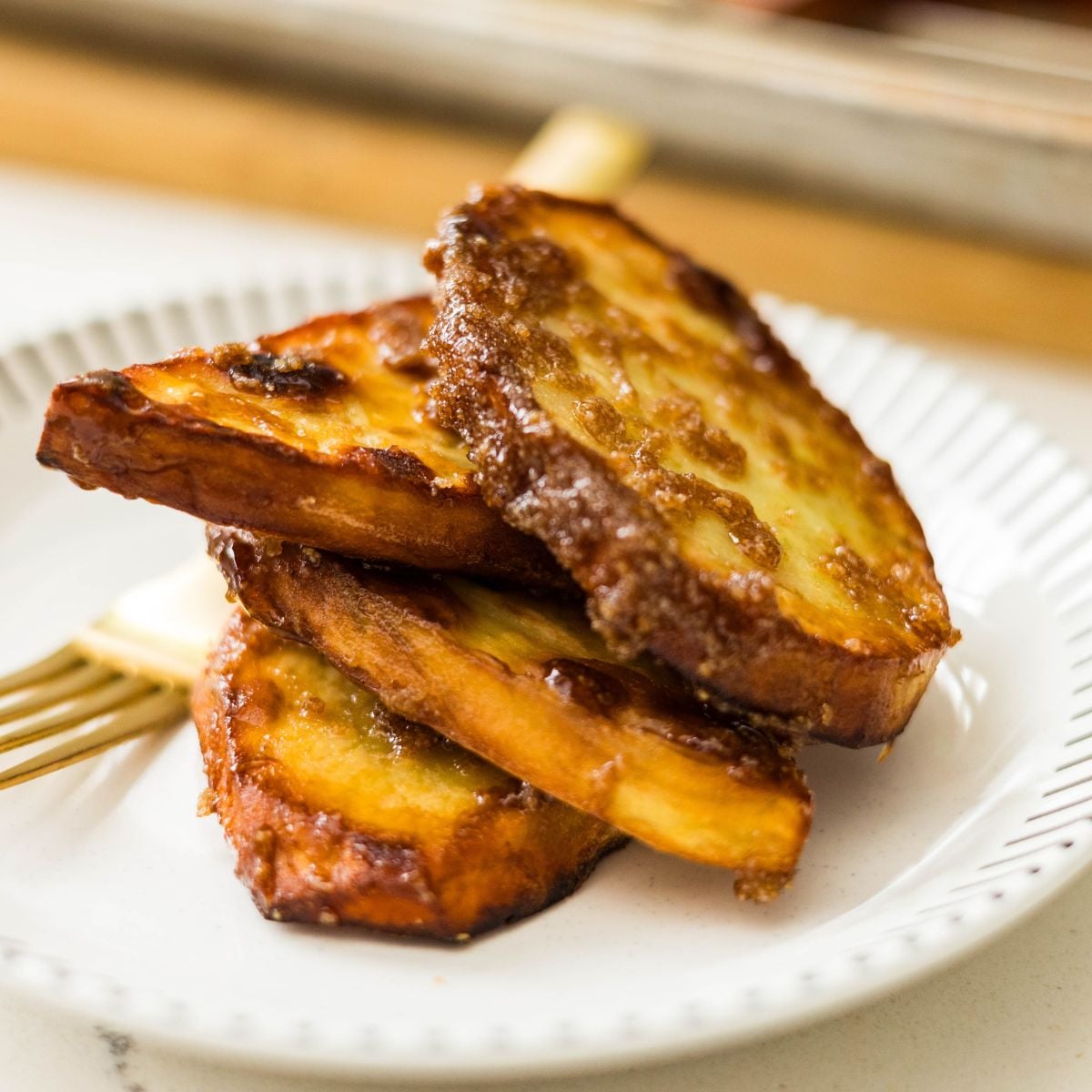
Camote cue is sliced sweet potato (kamote) that's deep-fried, coated in brown sugar, and threaded onto bamboo skewers. The sugar caramelizes directly in the hot oil and forms a glossy, crackling shell around each piece.
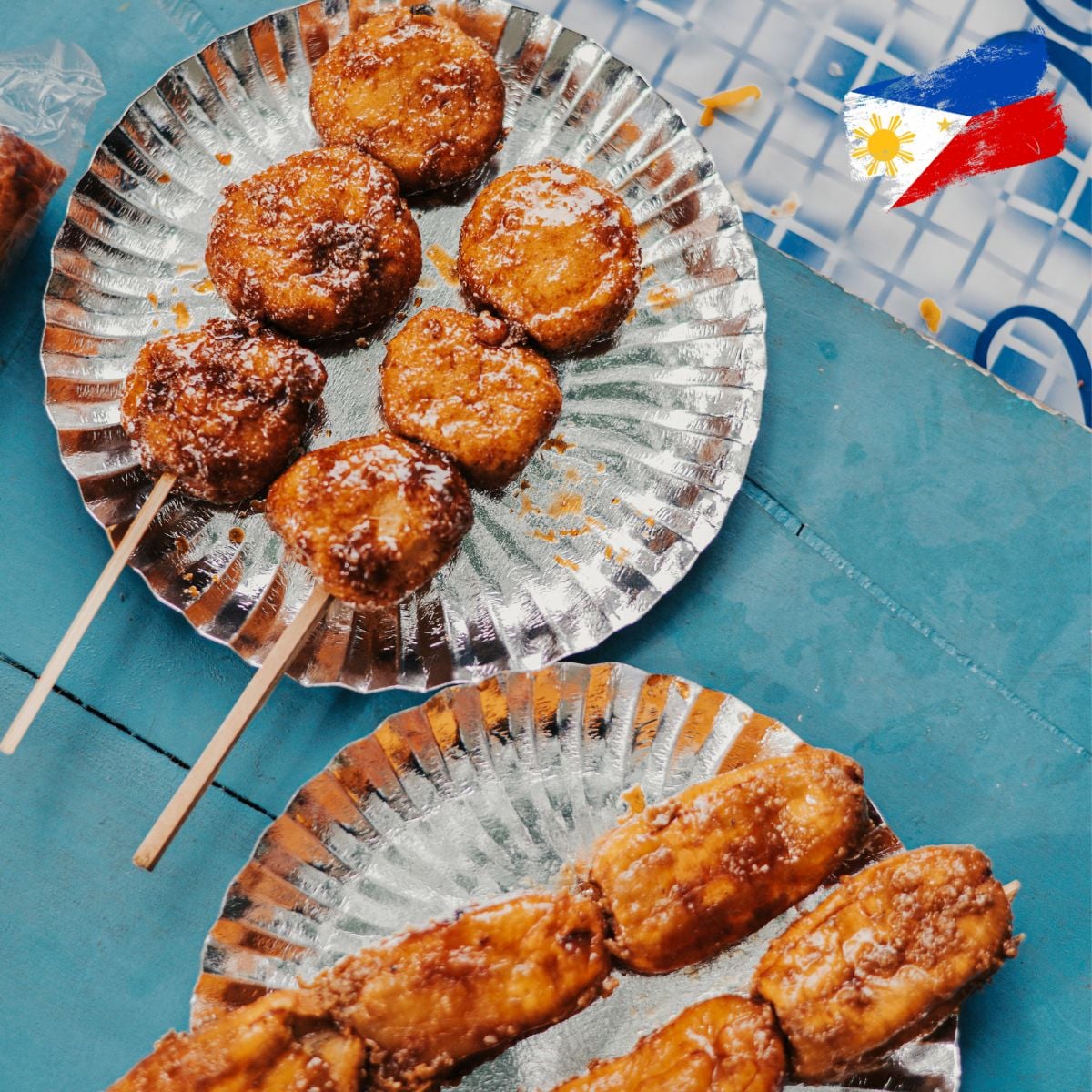
It's classic Filipino merienda sold by street vendors across the Philippines every afternoon for as long as anyone can remember.
The name breaks down simply: camote means sweet potato, and cue is short for "barbecue," the same root as banana cue. The skewer is how it's traditionally served, not what the word itself means.
Why You'll Love This
- Only 3 ingredients. Sweet potato, oil, and brown sugar. That's it.
- Ready in 30 minutes. No marinating, no complicated prep.
- Crispy caramel coating. That crackling brown sugar shell is the whole point.
- Tastes like real street food. Not a watered-down home version.
- Budget-friendly. Sweet potatoes are affordable and this recipe stretches them far.
- Naturally vegan. No dairy, no eggs, nothing to swap out if that's what you're looking for.
Ingredients
Here's what you'll need:
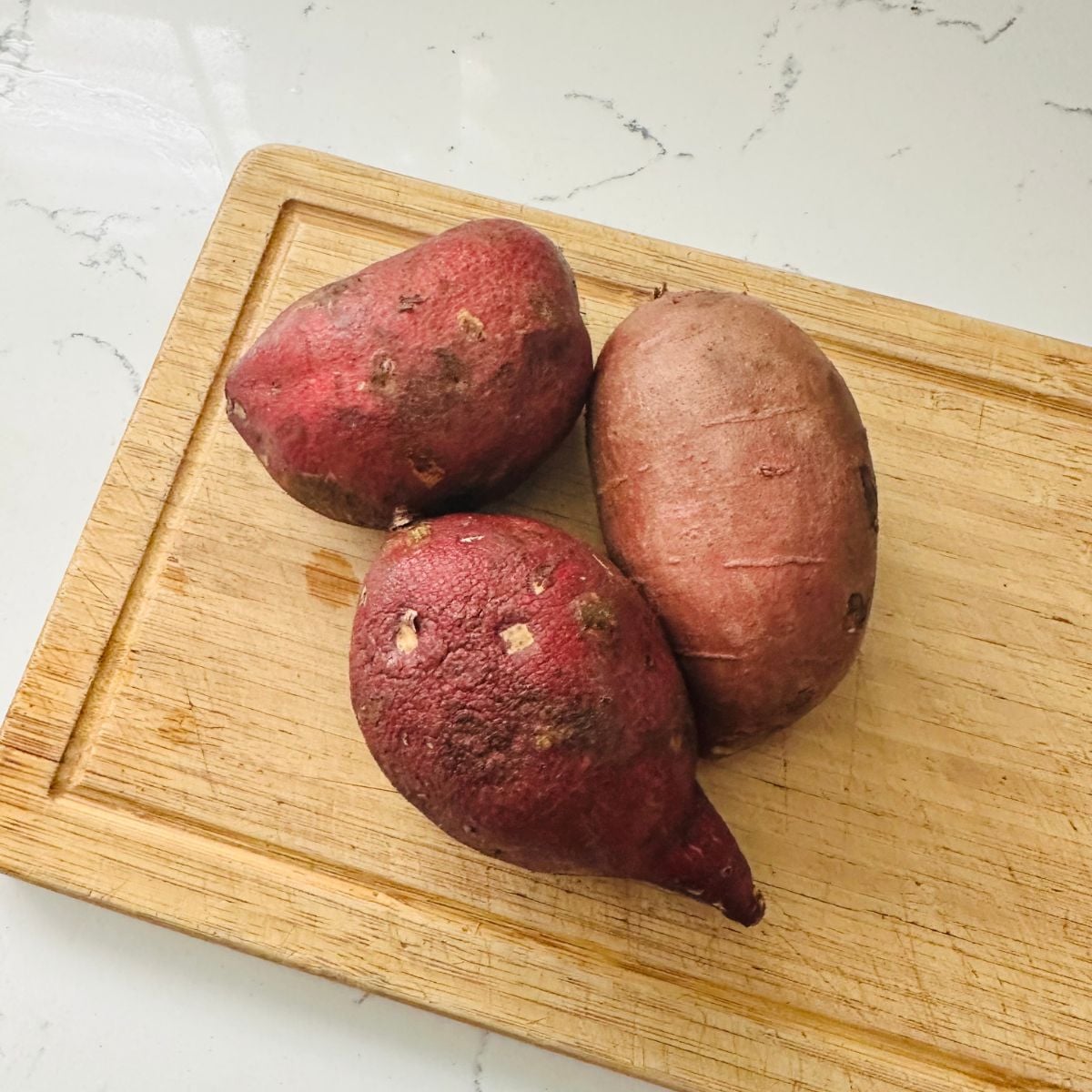
- Sweet potato (camote/kamote): Filipino sweet potatoes are typically yellow-fleshed with pale or pinkish skin. They're starchier and less sweet than the orange-fleshed varieties common in the US, which helps them hold up better in hot oil. If you're in the Philippines, grab what you see at the palengke. Abroad, look for them at Asian grocery stores. Japanese sweet potatoes, with purple skin and yellow flesh, are the closest substitute and work really well here. Orange sweet potatoes will work in a pinch, but they're softer and more likely to break apart.
- Brown sugar: Regular brown sugar is what you want. It melts into the hot oil and caramelizes into that deep amber coating. Don't swap it for white sugar, it caramelizes differently and won't give you the same rich golden-brown color the dish is known for.
- Oil for frying: Use a neutral oil with a high smoke point, vegetable, canola, or sunflower oil all work. You need enough to submerge the sweet potato slices, so don't go light on it.
See recipe card for quantities.
How to Make Camote Cue
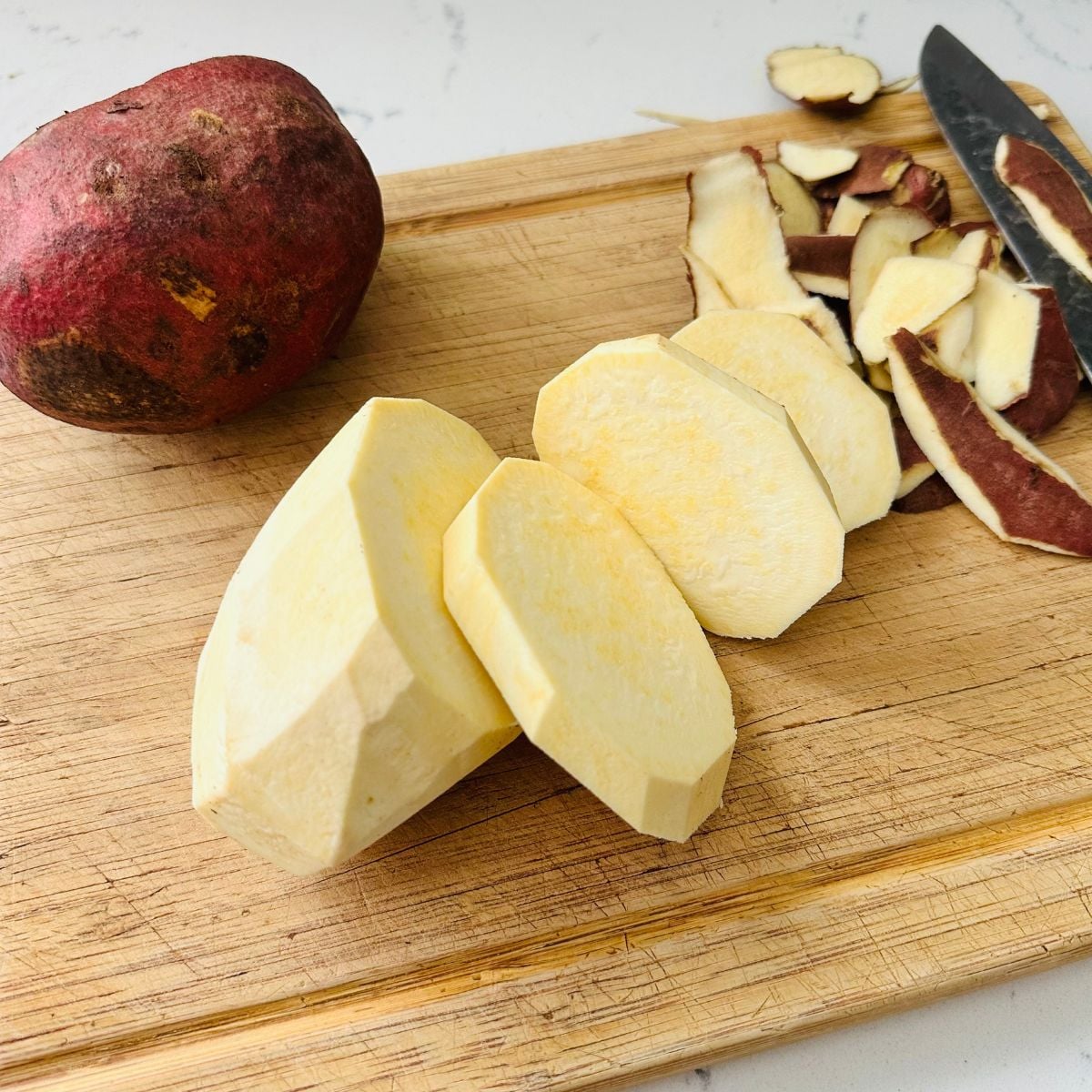
- Prep the sweet potatoes - Peel and slice the sweet potatoes into rounds about ½ inch thick. Thick enough to stay intact during frying, not so thick they take forever to cook through. Pat them dry with a paper towel before they go in the oil - moisture is the enemy of good caramelization.
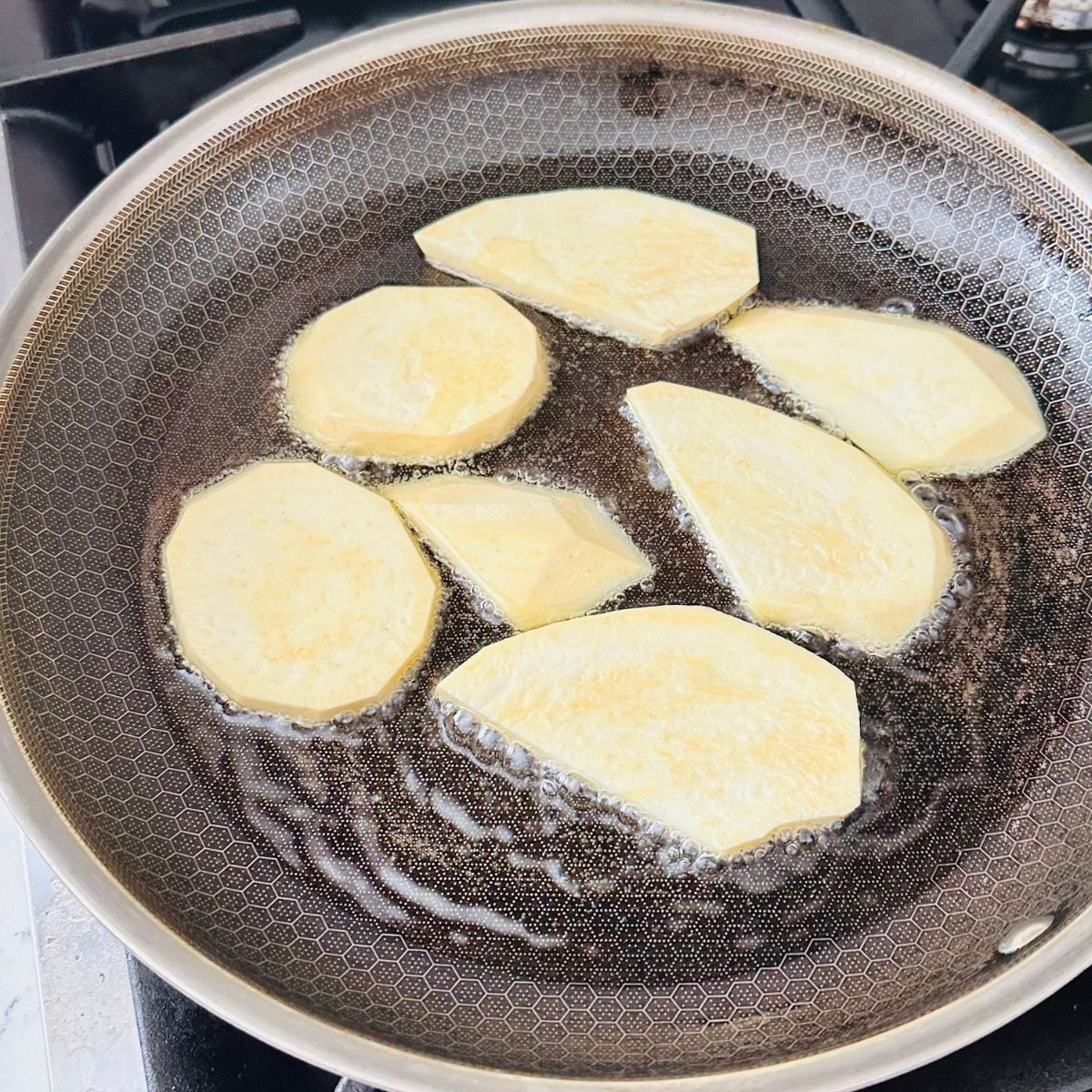
- Heat the oil and fry- Pour enough oil into a wide, deep pan or wok to submerge the sweet potato slices. Heat over medium to medium-high. You want the oil around 325°F to 350°F. No thermometer? Drop a small piece of sweet potato in - it should sizzle immediately but not violently. Add the slices in a single layer and fry for about 3 to 4 minutes per side until just starting to soften and turn lightly golden. Don't crowd the pan or they'll steam instead of fry. They don't need to be fully cooked through yet - they'll finish once the sugar goes in.
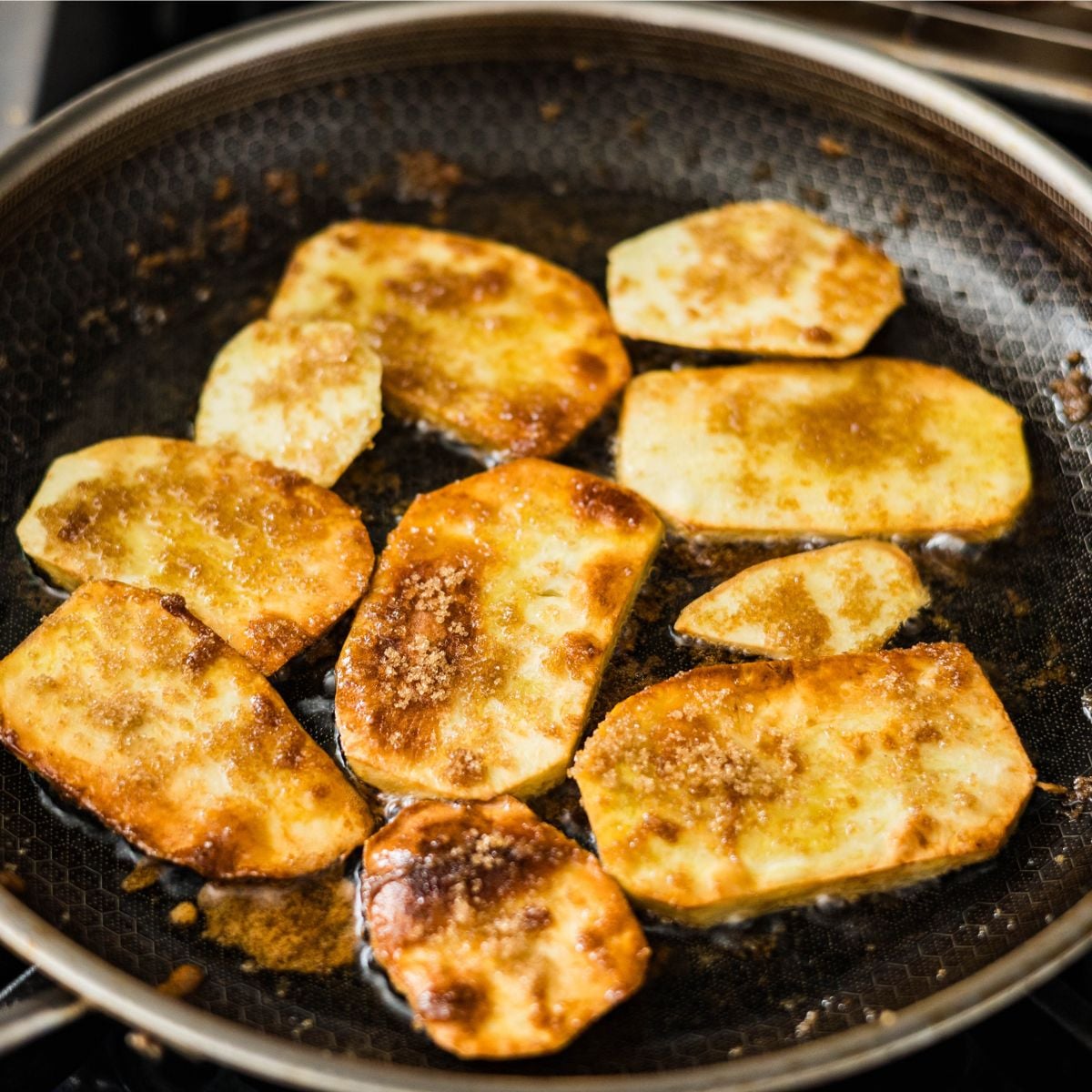
- Add the brown sugar - Sprinkle brown sugar directly over the sweet potato slices while they're still in the oil. Let it melt without stirring too much. Gently turn the pieces to coat them evenly. You'll watch it go from grainy to glossy - that's exactly what you're looking for.
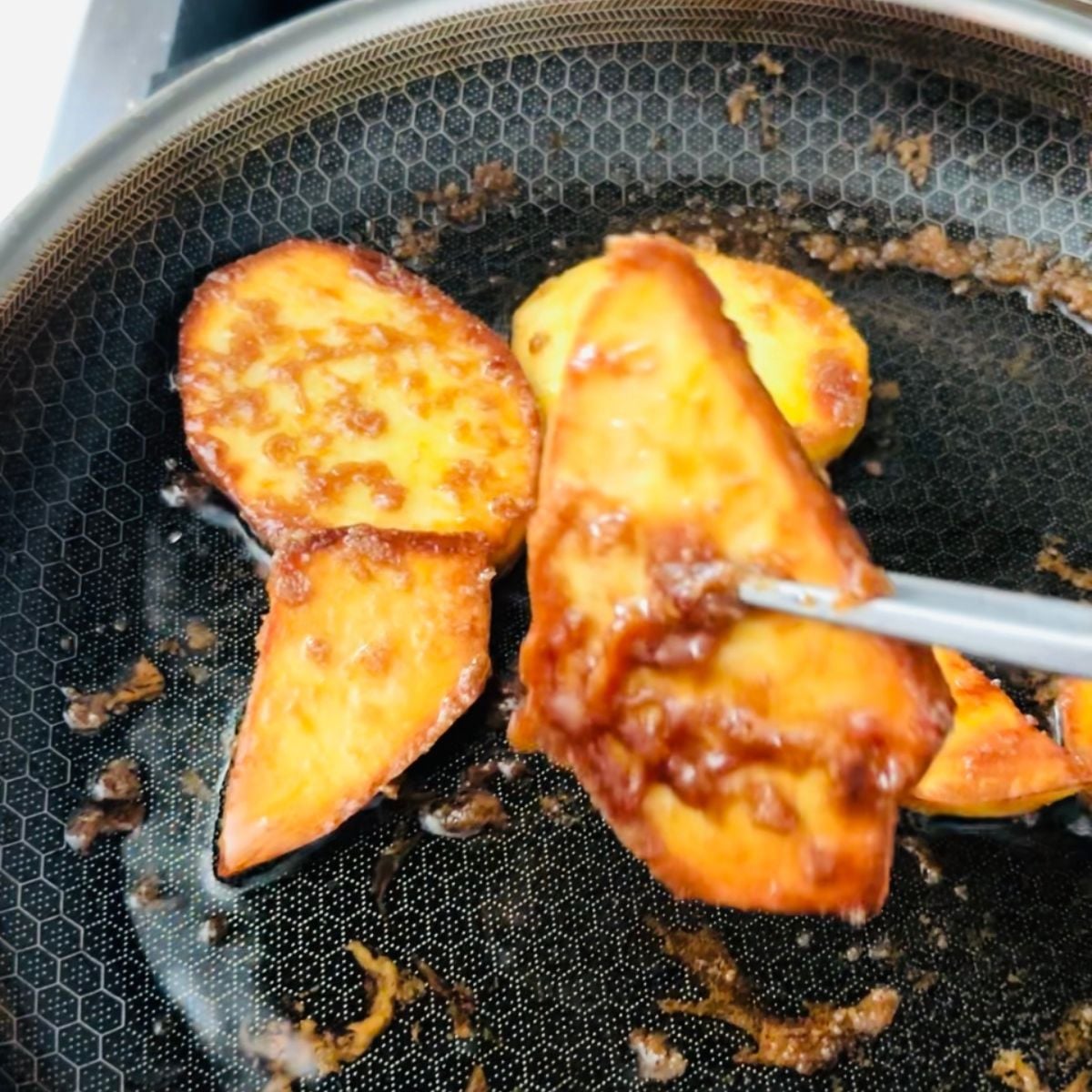
- Caramelize and finish -Keep the heat at medium. Cook another 4 to 6 minutes, turning carefully until the pieces are deep golden-amber all over and the coating looks glassy and set. Watch the heat - too high and the sugar burns and turns bitter fast.
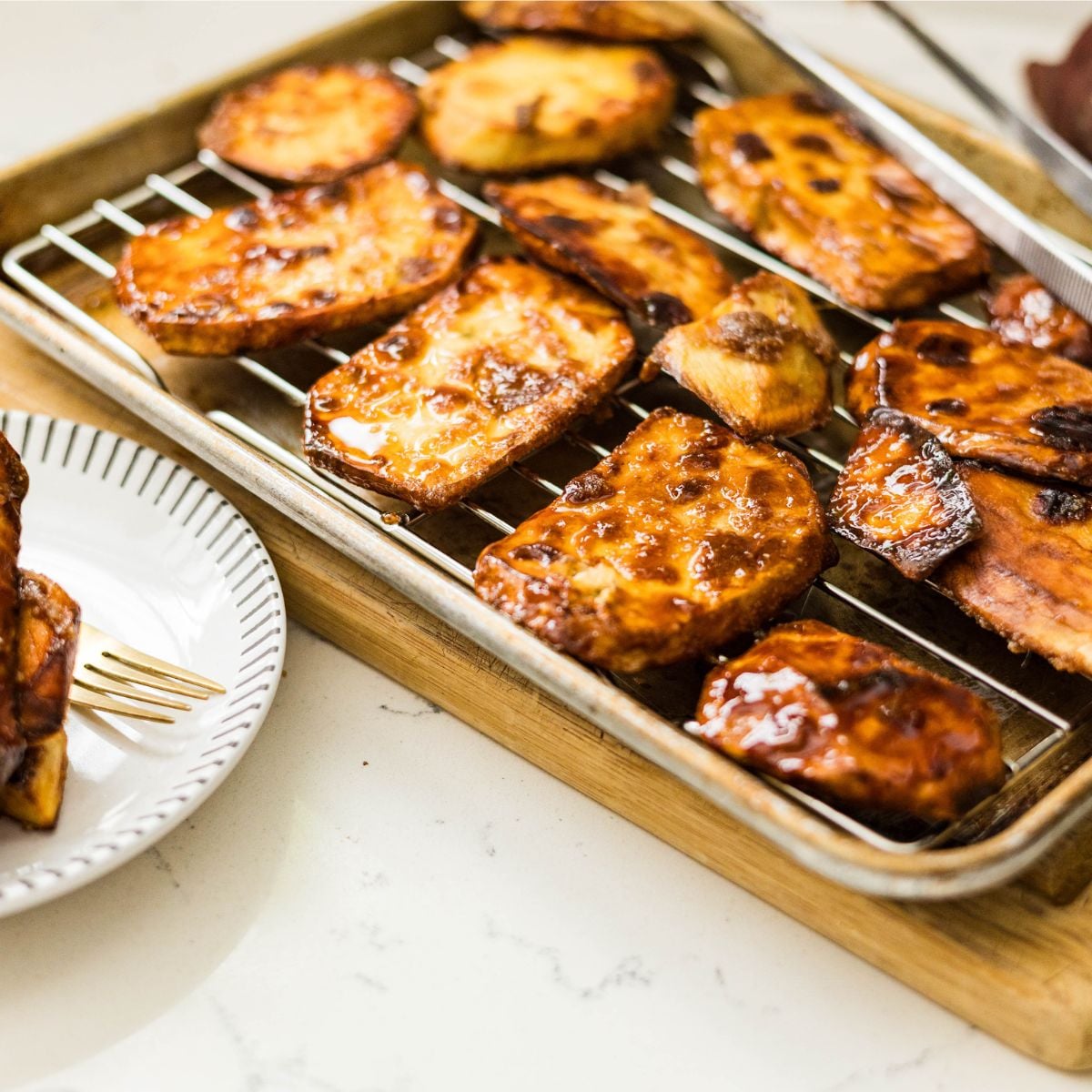
- Drain and serve - Lift the pieces out with a slotted spoon or tongs and set them on a wire rack or parchment-lined plate. Thread onto bamboo skewers if you'd like - it's the traditional way to serve them - but they're just as good served straight on a plate. Let them sit for a few minutes before eating so the sugar shell can harden.
Variations
- Banana cue version: Swap the sweet potato for saba bananas and you've got banana cue, same method, same caramel coating, equally classic Filipino merienda. My fried saba post walks through that version and how it compares to this one.
- Add a pinch of cinnamon: Mix a little cinnamon into the brown sugar before it goes in the oil. Not traditional, but it adds a warm spiced note that works really well with the sweet potato.
- Mixed kamote: Use a combination of yellow and purple sweet potato (the Japanese variety mentioned in the ingredients) for a platter that looks as good as it tastes.
- Bite-sized pieces: Cut into cubes or thick wedges and skewer smaller pieces for a merienda table or party spread. Works great alongside other Filipino desserts and sweet snacks.
What to Serve With Camote Cue
Camote cue is a complete merienda on its own. But if you're putting together a full spread:
- Hot salabat (ginger tea) or barako coffee. The classic pairing.
- A dipping sauce. Sweetened condensed milk or a simple coconut caramel (latik) both work well if you want something to dip each piece into.
- Puto or Bibingka alongside for a rice cake and sweet potato combo.
- Taho for something warm and soft to contrast the crunch. If you want a twist on the classic, my ube version is worth trying too.
- Champorado if you want something more filling to round out the table.
For more merienda and snack ideas, browse the full Filipino recipes collection.
Storage
Camote cue is best eaten the same day, ideally within an hour or two of making it. The caramel shell softens as it sits and loses that satisfying crunch.
If you have leftovers: Store in a single layer in an airtight container at room temperature for up to 1 day. Don't refrigerate, the moisture makes the coating sticky and soft.
To re-crisp leftovers: Reheat in an air fryer at 350°F for 3 to 4 minutes, or in a dry pan over medium heat. This works for reheating already-cooked camote cue, though it can't replicate the original caramelization process (see FAQ). Not as good as fresh, but close.
Freezing: Skip it. The texture breaks down completely after freezing and thawing.
Tips for Getting The Caramel Right
This is the one part of camote cue that takes a little practice. A few things that actually help:
- Dry the sweet potato before frying. Water causes hot oil to splatter and prevents the sugar from coating evenly. A quick pat with a paper towel before they go in makes a real difference.
- Don't rush the oil temperature. Oil that's too cool makes the sweet potatoes greasy and heavy. Oil that's too hot burns the sugar before it has a chance to coat properly. Medium heat the whole way through.
- Add the sugar when the potatoes are halfway cooked. Too early and it burns. Too late and the potatoes are already done before the coating forms. Halfway through is the sweet spot.
- Resist stirring constantly. Once the sugar goes in, let it melt and start to coat before you start turning things. Constant movement stops the sugar from forming that smooth, glassy shell.
- Work in batches. Crowding the pan drops the oil temperature and ruins the texture. Two or three smaller batches always beats one crowded pan. My fried saba uses the same batching method and caramel technique if you want to try a banana version first.
Recipe FAQs
Cue" is short for barbecue, the same root as banana cue. It doesn't mean skewer, the skewer is just the traditional way it's served, not the source of the name.
Same method, different base. Camote cue uses sweet potato (kamote), banana cue uses saba bananas. Both are fried in oil with brown sugar caramelized directly in the pan and served on bamboo skewers. If you've made one, you already know how to make the other.
Yes, but they're softer and have more moisture, which makes them more likely to fall apart during frying. If that's what you have, slice them thicker - closer to ¾ inch - and be gentle when turning.
Your heat is too high. Brown sugar in hot oil moves fast from golden to burnt. Keep it at medium and watch it closely. If it starts smoking and smelling bitter, lower the heat immediately.
No. Skewers are traditional and make it easier to eat without getting caramel on your fingers, but camote cue without skewers is still camote cue. Serve it on a plate and it's just as good.
Not really. The caramelization happens because the brown sugar melts directly into the hot oil in the pan. An air fryer can't recreate that environment. Stick to the stovetop for this one.
Merienda is the Filipino afternoon snack break, usually between 3 PM and 5 PM. It's a proper part of the daily eating rhythm in the Philippines - not just a handful of crackers but a real snack moment. Camote cue is one of the most classic merienda foods there is.
It's not traditional, camote cue is usually eaten as-is, but condensed milk or a simple coconut caramel (latik) both work well if you want to dip it.
It's not traditional, camote cue is usually eaten as-is, but condensed milk or a simple coconut caramel (latik) both work well if you want to dip it. A sprinkle of toasted sesame seeds on top is a nice touch too. Just keep in mind condensed milk on top of the already-caramelized sugar can push it into very sweet territory, so it's more of an occasional indulgence than something to do every time.
More Filipino Merienda You'll Love
Looking for other recipes like this? Try these:



Did you try this recipe?
Share how it turned out in the comment box below, and if you loved it, share it on Facebook, Pinterest & Instagram.
Thank you!

Camote Cue (Filipino Caramelized Sweet Potatoes)
Equipment
- skillet or wok
- Slotted spoon or tongs
- Wire rack or parchment-lined plate
- Paper towels
- Knife and cutting board
- Bamboo skewers (optional)
Ingredients
- 3 medium Sweet potato (kamote), peeled and sliced about half inch
- ¾ cup Brown sugar
- 1-2 cups Neutral oil (vegetable or canola) for frying
Instructions
- Peel and slice sweet potatoes into rounds about ½ inch thick. Pat dry with paper towels.
- Pour oil into a wide deep pan or wok. Heat over medium to medium-high until the oil reaches 325°F to 350°F.1-2 cups Neutral oil (vegetable or canola)
- Add sweet potato slices in a single layer. Fry for 3 to 4 minutes per side until lightly golden and just starting to soften. Work in batches - do not crowd the pan.3 medium Sweet potato (kamote), peeled and sliced
- Sprinkle brown sugar directly over the sweet potato slices in the oil. Let it melt without stirring too much, then gently turn the pieces to coat evenly.¾ cup Brown sugar
- Continue cooking over medium heat for 4 to 6 minutes, turning carefully, until the pieces are deep golden-amber and the coating looks glassy and set.
- Remove with a slotted spoon or tongs and place on a wire rack or parchment-lined plate. Thread onto bamboo skewers if desired. Let sit for a few minutes to allow the sugar shell to harden before serving.
Save This Recipe 💌
Notes
- Cut even slices. Uneven slices cook unevenly - thinner pieces burn before thicker ones are done. Take an extra minute to keep them close to ½ inch all the way through.
- Dry the sweet potato well. This is the step most people skip. Moisture makes the oil splatter and stops the sugar from coating evenly. A quick pat with paper towels before frying makes a real difference.
- Don't add the sugar too early. Wait until the sweet potato slices are halfway cooked and lightly golden before adding the brown sugar. Too early and it burns. Too late and the coating won't stick properly.
- Medium heat is everything. High heat burns the sugar fast. Low heat makes the sweet potatoes greasy. Stay at medium once the sugar goes in and don't walk away.
- Work in batches. Crowding the pan drops the oil temperature and steams the sweet potatoes instead of frying them. Two to three rounds in the pan always beats one crowded mess.
- Let them rest before eating. The caramel shell needs a few minutes to harden after you pull them from the oil. They'll look set before they actually are - give them at least 3 to 5 minutes on the rack before biting in.
- Skewers are optional. Traditional camote cue is served on bamboo skewers, but they taste exactly the same on a plate. Skip the skewers if you want to keep it simple.
Alexis says
Why does mine stay sticky instead of forming that glassy shell
Rose Sioson says
Hi Alexis! Likely the sugar mixture didn't cook long enough to caramelize. It needs to actually bubble and darken before you add the sweet potatoes back in, otherwise it stays syrupy instead of setting into that glassy coating. Give it another minute or two next time and watch for the color to deepen.