

Sinigang sa miso is faster than pork or beef sinigang, and that matters on a Tuesday night. Fish doesn't need time to get tender. It just needs a good broth and about 10 minutes. That's it.
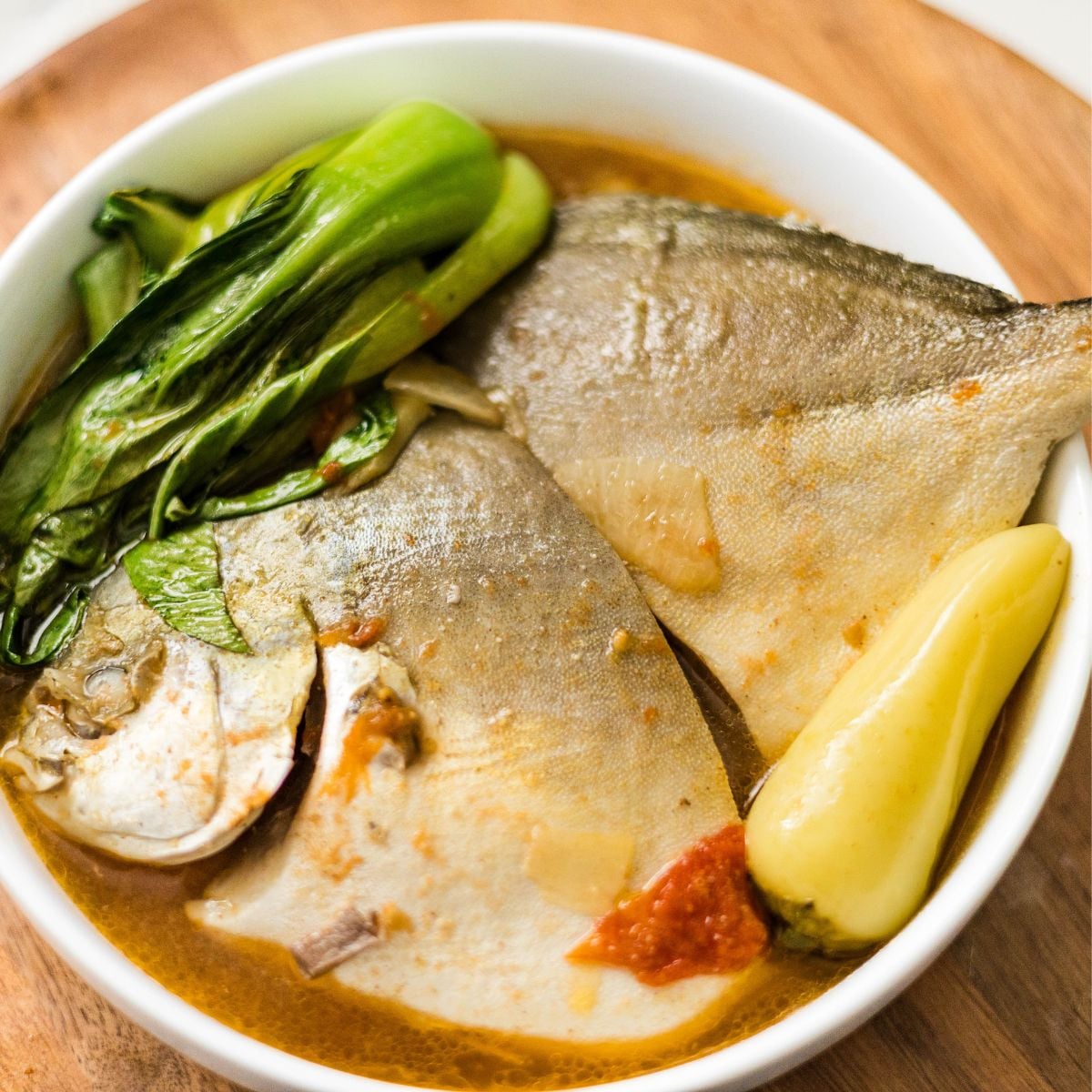
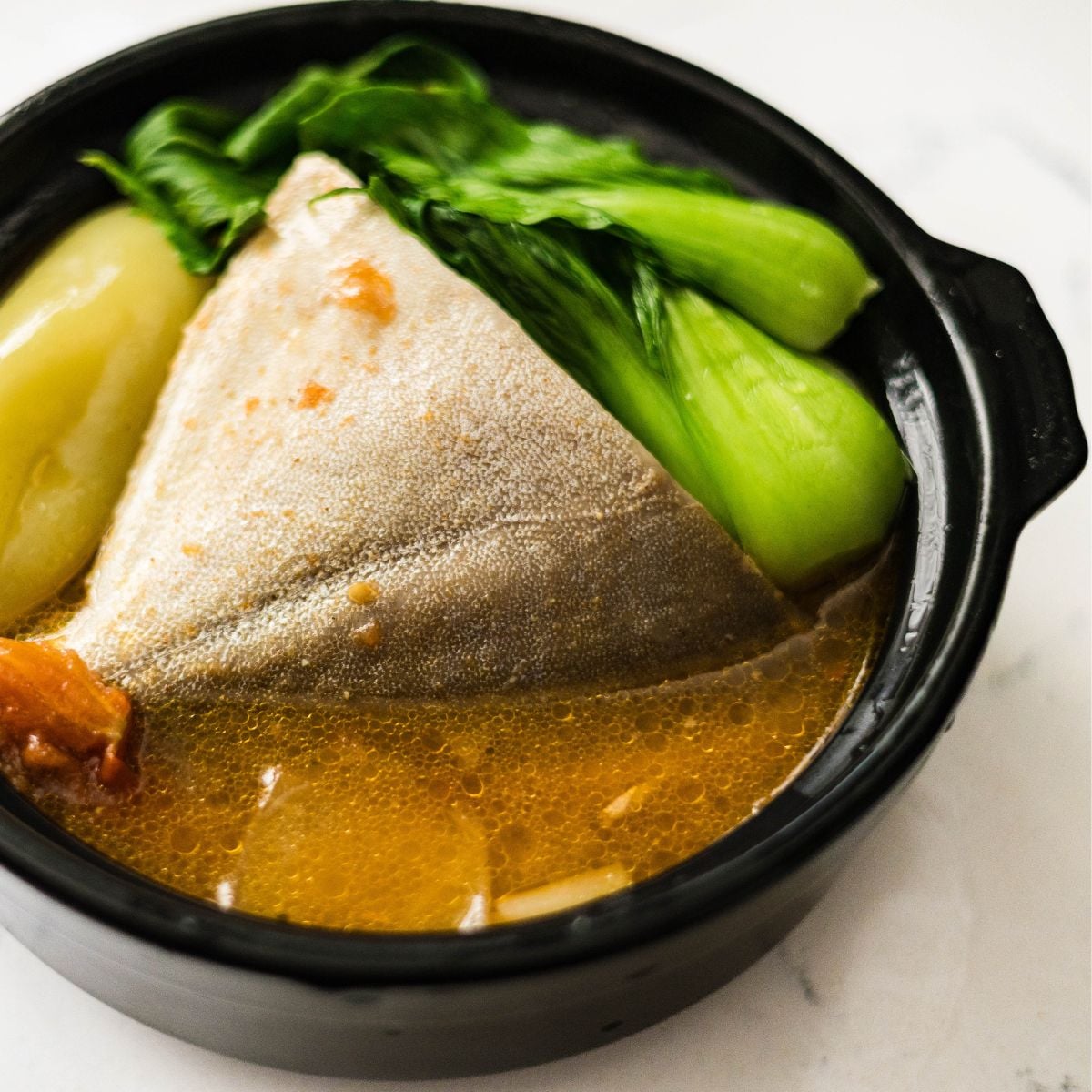
I switched to pompano for my sinigang na bangus a while back and haven't looked back. It's meatier than most fish you'd use in soup, and it doesn't have the fine bones that make bangus a little more work to eat. The flesh is rich, it holds up in the broth, and it pairs really well with miso. This is the bowl I want when the weather turns and I need something warm on the table fast.
Save This Recipe 💌
The miso is what takes this from good to really good. It rounds out the tamarind sourness and adds a savory, slightly earthy depth that plain sinigang doesn't have. It's still tangy and bright, just with more going on underneath. And because you're using a sinigang mix packet, the whole broth comes together without any extra effort.
This is also one of those soups that works with whatever vegetables you have around. Bokchoy is the base, but eggplant, sitaw, and labanos all belong here too. The recipe is forgiving. Make it as written or add what you have. Either way, it's the kind of meal that makes the kitchen smell like home. If you're looking for more Filipino recipes to add to your weeknight rotation, there's plenty to explore.
Jump to:
What Is Sinigang sa Miso?
Sinigang is a Filipino sour soup built on a tamarind base. It's one of the most classic dishes in Filipino cooking, right alongside adobo and kare-kare. The sour broth is the whole point - tangy, savory, warming, and deeply satisfying over steamed rice.
The miso version, sinigang sa miso, adds fermented soybean paste to the broth. It doesn't make it taste Japanese - it makes it taste more Filipino in the best way. The miso adds a savory, slightly earthy depth that smooths out the sharp edges of the tamarind. The result is a broth that's sour and savory at the same time, with more layers than the plain version.
Why You'll Love This
- One pot - Everything cooks in a single pot, minimal cleanup
- 30 minutes - Start to finish, no long simmering required
- Full of flavor - Miso adds depth that makes the broth taste like it cooked for hours
- Flexible - Use whatever vegetables you have on hand
- Classic Filipino comfort - The kind of soup that fixes a rough day
Ingredients
Here's what you'll need:
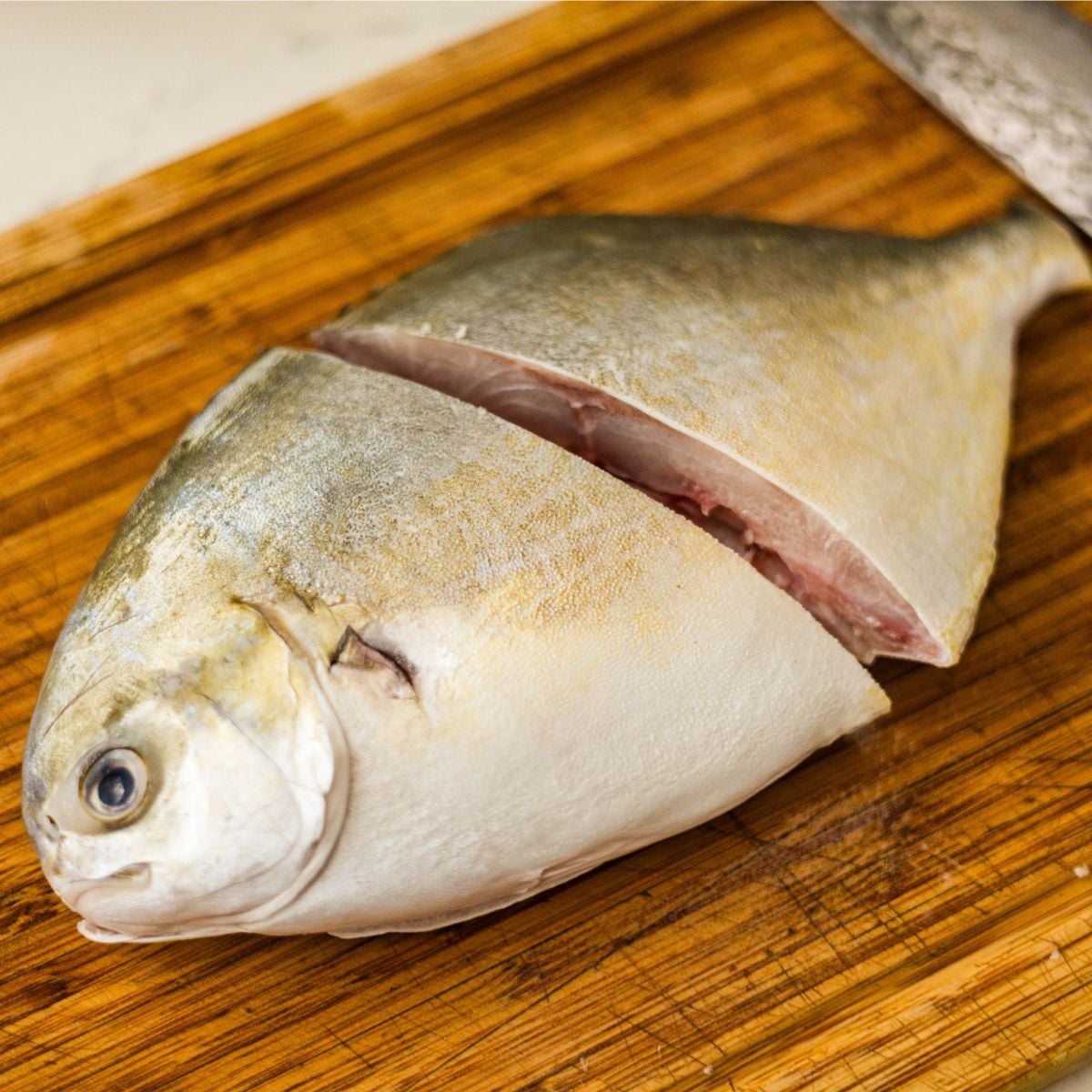
- Pompano: Cleaned whole pompano fish, cut into large pieces so it fits comfortably in the pot. Pompano is great for sinigang sa miso because it has a mild, slightly sweet flavor and a rich, tender texture that holds up well in the broth. It also has enough natural fattiness to make the soup taste fuller without being too fishy. Just handle it gently once it’s in the pot so the pieces don’t break apart.
- Miso: This is what makes it sinigang sa miso and not just regular sinigang. White or yellow miso both work well here. White miso is milder and slightly sweet. Yellow miso has a stronger, saltier flavor. Either is good - use what you can find. Dissolve it in a little broth before adding it to the pot so it incorporates smoothly.
- Sinigang mix: The shortcut that makes this a 30-minute meal. One packet is usually right for the amount of water in this recipe, but taste the broth before you serve and adjust. Some packets are more sour than others.
- Ginger: Three thumbs is generous, and that's intentional. The ginger adds warmth and a slight sharpness that works really well with the miso. Don't skip it.
- Patis (fish sauce): This is your salt. Add it gradually and taste as you go. It brings the broth together and adds that savory backbone that sinigang needs.
- Sili (green chili): For heat and that slightly grassy, fresh flavor. Add more or less depending on how spicy you want it.
- Bokchoy: Goes in at the very end so it stays bright green and slightly crisp. Overcooked bokchoy is sad. Give it just 2 minutes in the hot broth.
- Optional vegetables: Eggplant, sitaw (string beans), and labanos (daikon radish) all work beautifully here. Add harder vegetables like labanos and eggplant with the fish. Sitaw can go in a couple minutes before the bokchoy.
See recipe card for quantities.
How To Make Sinigang na Pompano sa Miso
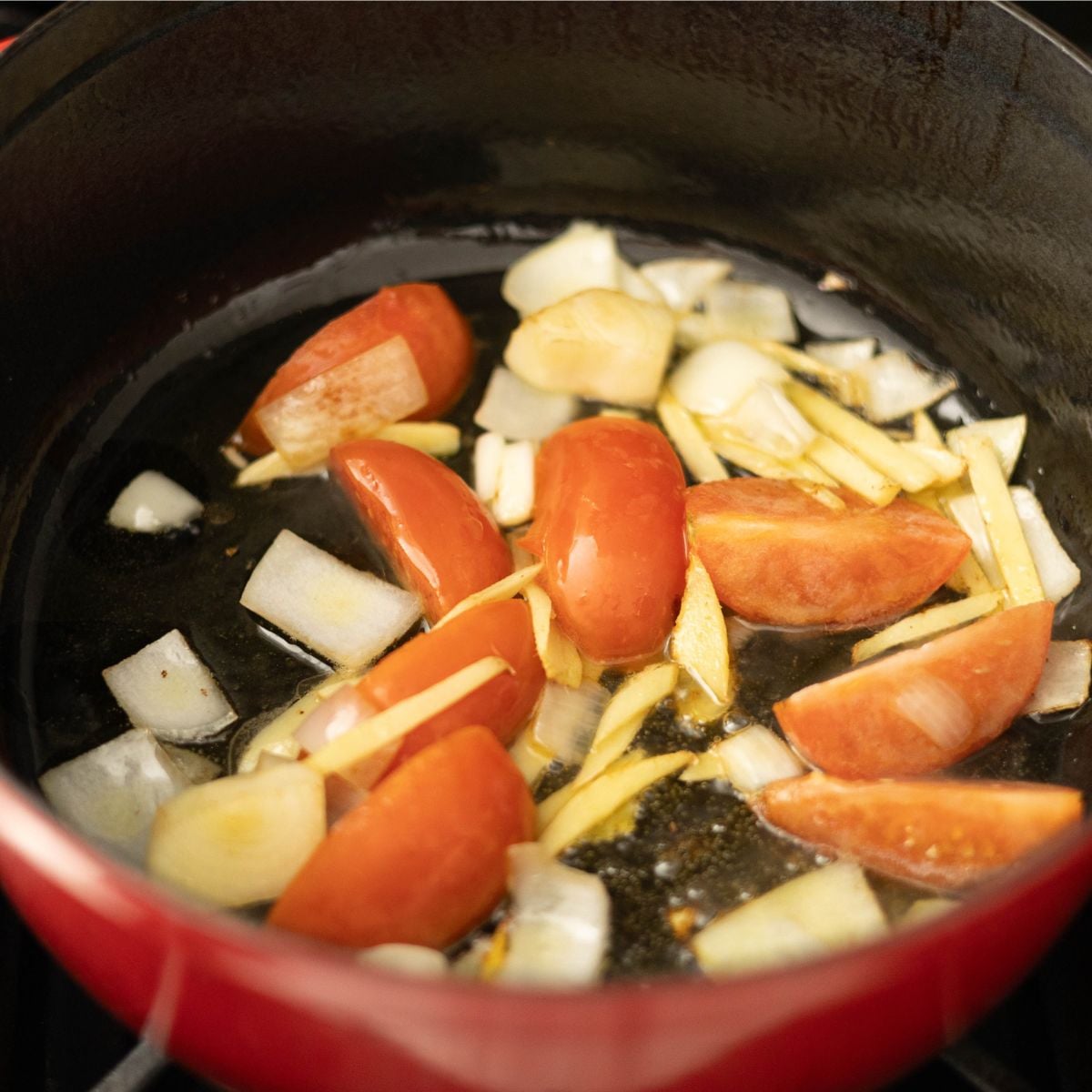
- Build the base. Heat a thin layer of oil in a large pot over medium heat. Add the onion and cook for 2 minutes until softened. Add the ginger and tomatoes and cook for another 3-4 minutes, pressing the tomatoes down a little so they start to break apart and release their juice. This base is where the flavor starts, so don't rush it.
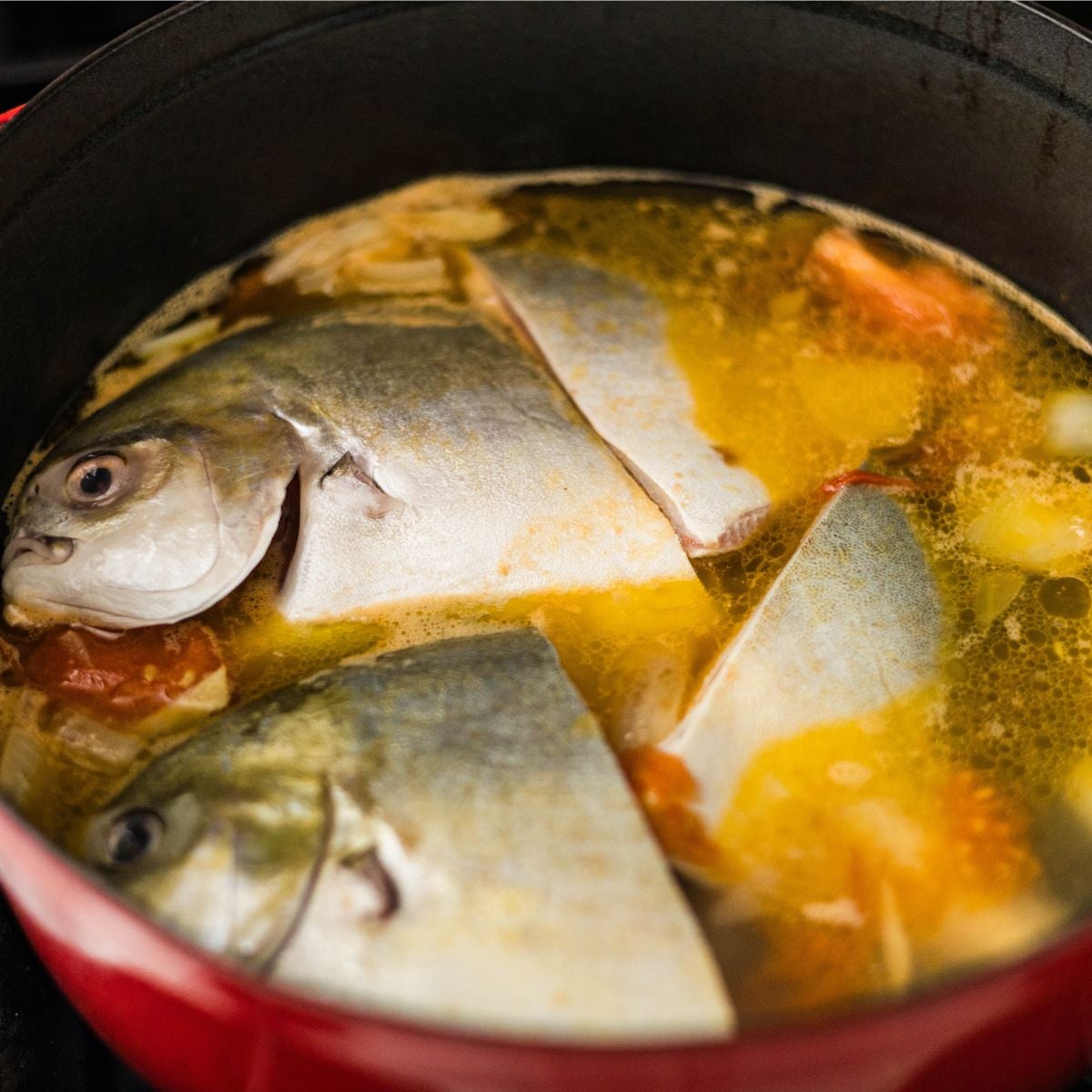
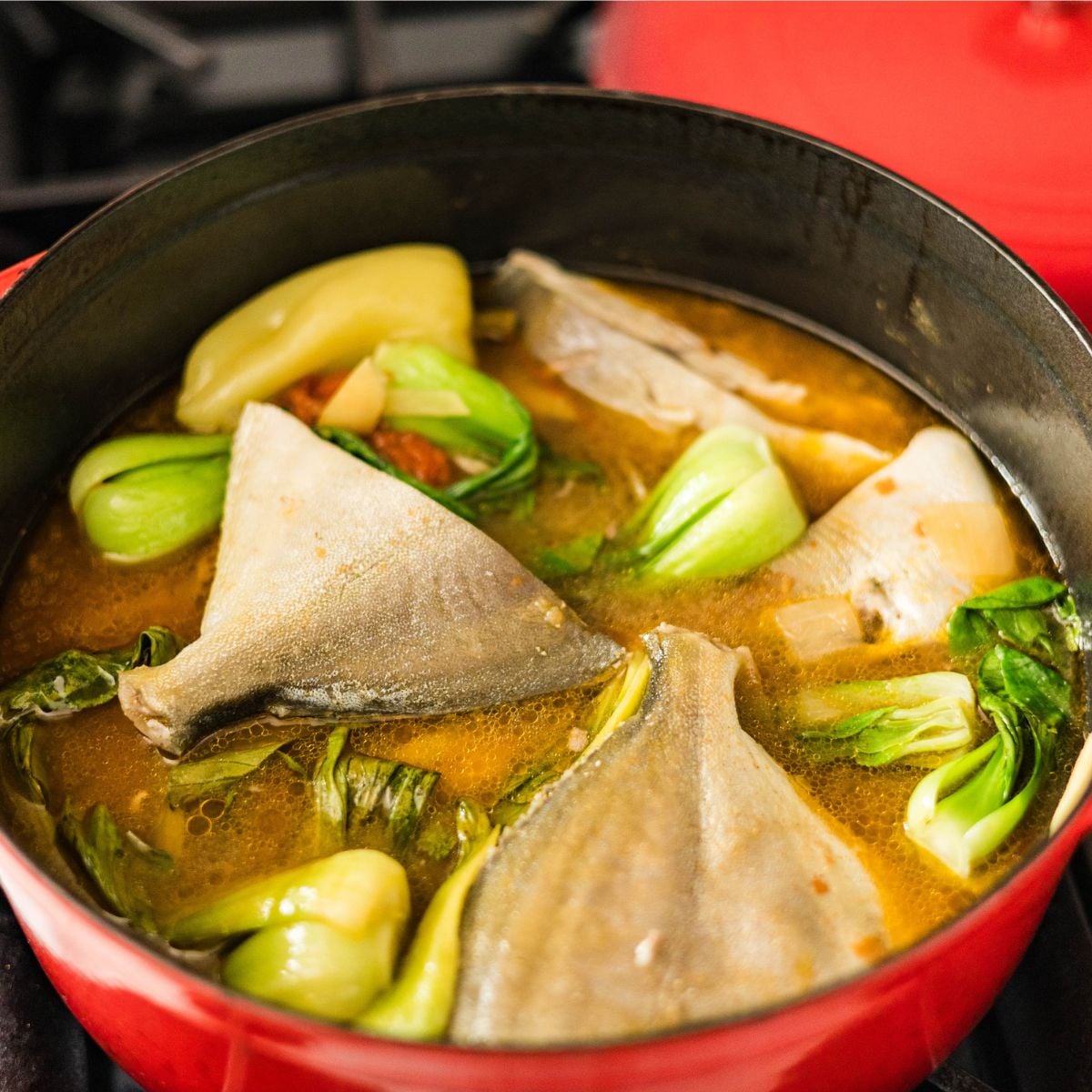
- Add water and bring to a boil. Add the water and bring the broth to a boil. Pour in enough water to comfortably cover the fish, about 6 to 8 cups depending on your pot. Once it reaches a full boil over medium-high heat, gently lower in the pompano. Add the patis and sili, then let the fish cook for 8 to 10 minutes, or until the flesh turns opaque and pulls away from the bone easily. Try not to stir too much once the fish is in so the pieces stay intact.
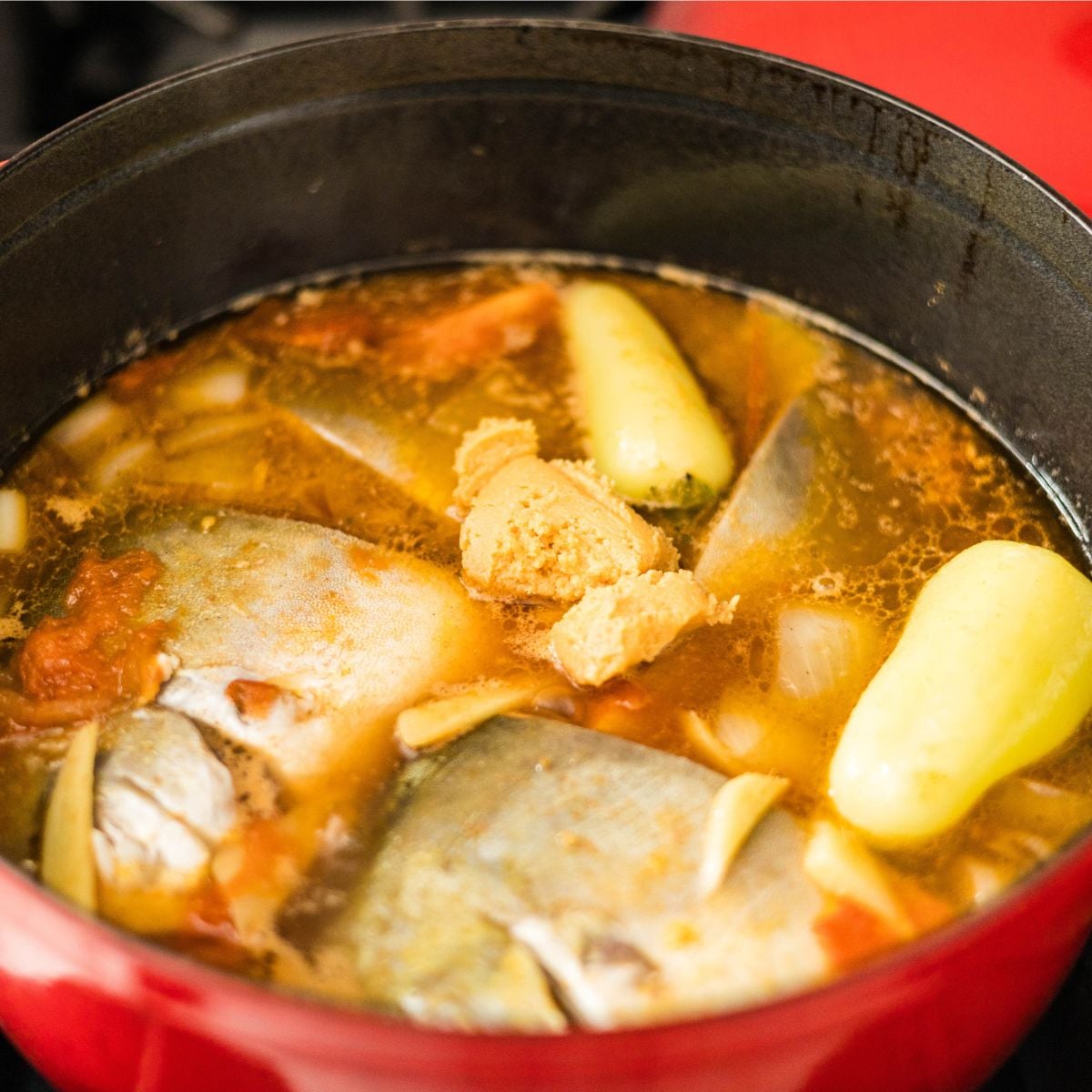
- Add miso and sinigang mix. Scoop out a small ladle of broth and dissolve the miso in it separately before adding it back to the pot. Add the sinigang mix. Stir gently and taste the broth. Adjust with more patis if it needs salt, more sinigang mix if you want it more sour.
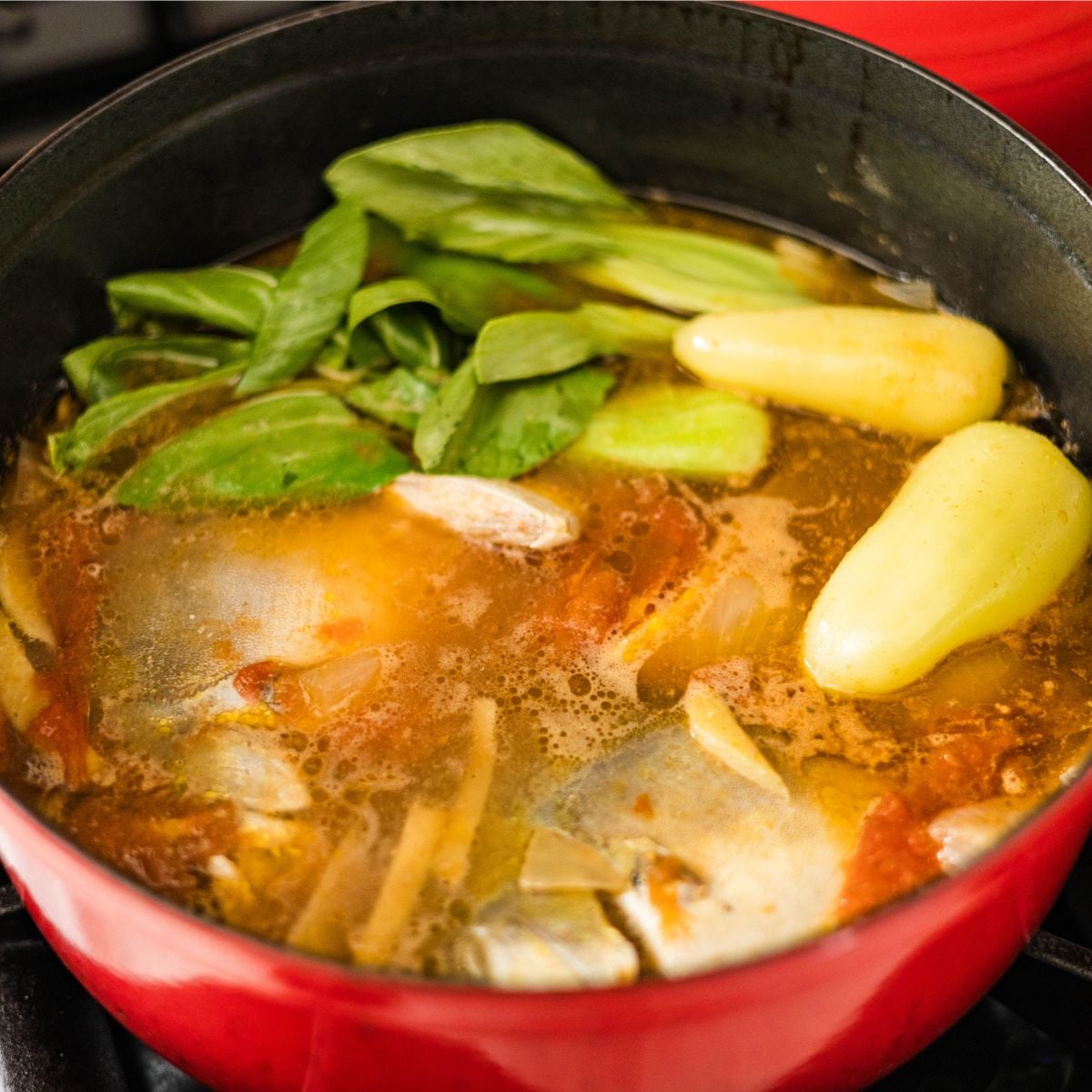
- Add the vegetables. If you're using eggplant, sitaw, or labanos, they should already be in by now (add them with the fish in Step 3). Add the bokchoy last. Push it down into the broth and let it cook for just 2 minutes until wilted but still green.
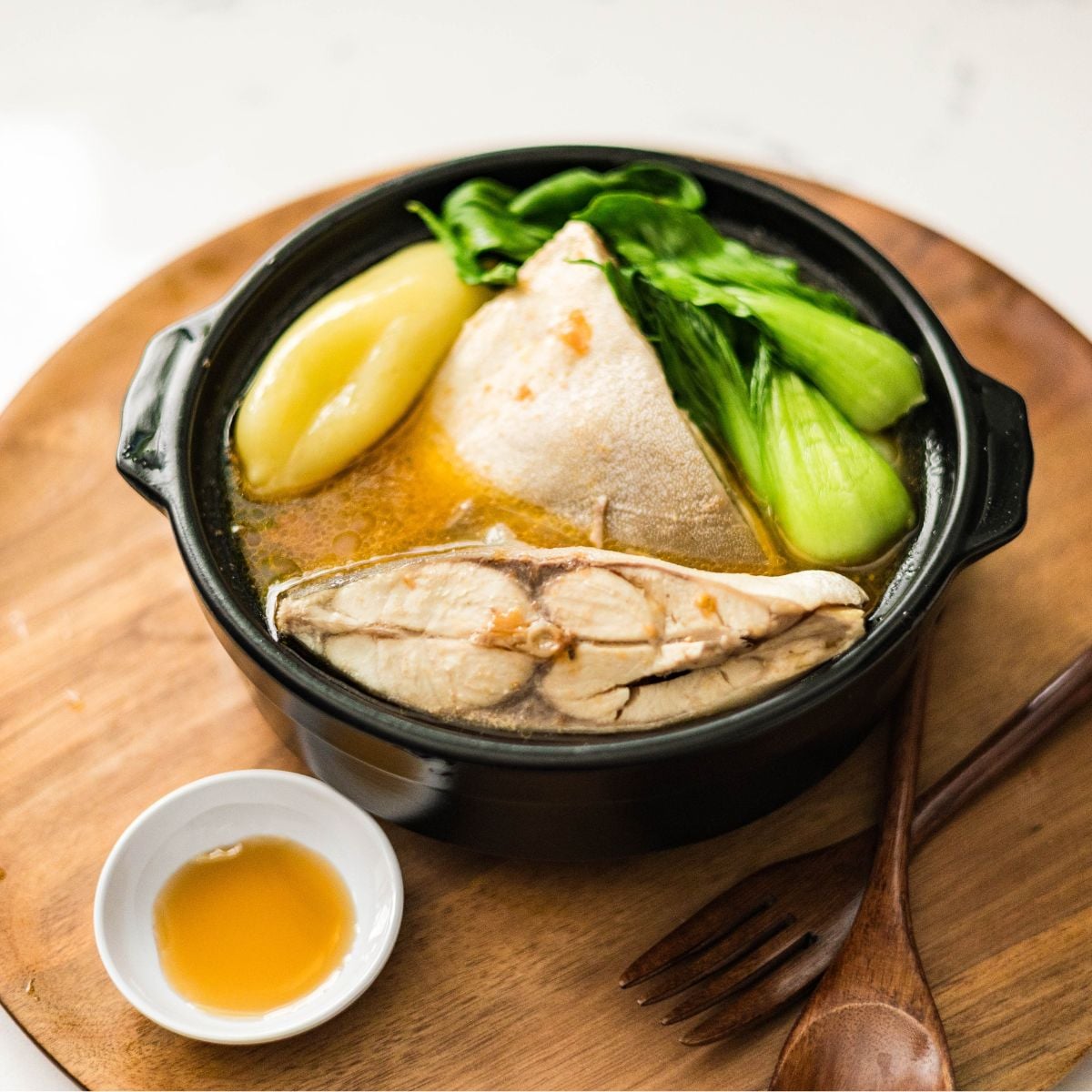
- Serve. Ladle into deep bowls over steamed white rice. Serve with extra patis and sliced sili on the side for those who want more heat or salt.
Tips for the Best Broth
- Dissolve the miso first. Dropping miso paste straight into the pot can leave clumps. Take a small ladle of hot broth, whisk the miso into it until smooth, then pour it back in. Takes 30 extra seconds and makes a difference.
- Cook the tomatoes down. The more you break the tomatoes apart in the base, the more body and natural sweetness the broth gets. Let them go until they're almost falling apart before adding water.
- Taste before you season. Sinigang mix packets vary in saltiness and sourness. Add it, taste, then decide if you need more. Same with the patis. Season in layers, not all at once.
- Don't overcook the fish. Pompano only needs 8-10 minutes. Overcooked fish gets dry and falls apart in a way that isn't great. Check it at 8 minutes - if the flesh near the bone looks opaque, it's done.
- Add vegetables in order. Harder vegetables go in early, leafy greens go in at the very end. This is the difference between vegetables that are perfectly cooked and a pot full of mush.
- If you enjoy building bold broths, my pork sinigang uses the same base technique with a longer simmer. Totally different from the fish version but the broth-building process is the same, and once you know it, all your sinigang gets better.
Variations
Different fish: Maya-maya (red snapper), bangus (milkfish), and tilapia all work in this recipe. Pompano is the richest option, but bangus is more widely available and also delicious.
More vegetables: Okra, kangkong (water spinach), and taro root are all traditional additions. Add okra with the eggplant. Kangkong goes in with the bokchoy at the very end.
Adjust the sourness: If you want it more sour, add a second half-packet of sinigang mix. If you want it milder, use half a packet and taste from there. You can also add calamansi juice at the end for a brighter, fresher sourness.
More ginger-forward: If you love ginger the way I do, add a fourth thumb and let it steep in the water before you add the fish. The broth gets noticeably more fragrant and warming. My hoisin fish and ginger recipe leans hard into that ginger-forward flavor too, if that's your thing.
What to Serve With Sinigang na Pompano sa Miso
- Steamed white rice - Non-negotiable. The rice soaks up the broth and that's the whole meal.
- Garlic fried rice - If you're eating this for lunch the next day, sinangag alongside leftover sinigang is genuinely one of the best things you can do with leftovers.
- Patis and calamansi on the side - Set them out on the table. Everyone seasons their own bowl.
- Grilled or fried fish on the side - For bigger gatherings where the soup is one of several dishes.
Storage
Refrigerator: Store leftover sinigang in an airtight container for up to 3 days. The broth actually deepens in flavor overnight. Keep the fish and broth together.
Reheating: Reheat gently on the stove over medium-low heat. Don't boil it hard or the fish will overcook and fall apart. Just warm it through.
Recipe FAQs
White or yellow miso both work. White miso is milder and slightly sweet, which blends well with the tamarind. Yellow miso is stronger and saltier. Either is good - use what you have.
Yes. Bangus, maya-maya, and tilapia all work in this recipe. Pompano has a richer, fattier flesh that holds up especially well in the acidic broth, but any firm white fish will work.
Sinigang is supposed to be noticeably sour - that's the whole point. Start with one packet of sinigang mix and taste before adding more. It should be tangy and bright but not so sharp it makes you wince.
Yes, but it takes more work. You'd need fresh tamarind, boiled and strained, to get the right sourness level. The packet is the practical weeknight shortcut and it works well. No shame in using it.
The broth gets better overnight. The fish is best fresh, but if you're reheating it the next day, do it gently and it's still very good. For meal prep, you can make the broth ahead and cook fresh fish in it when you're ready to serve.
More Filipino Recipes You'll Love

Did you try this recipe?
Share how it turned out in the comment box below, and if you loved it, share it on Facebook, Pinterest & Instagram.
Thank you!

Sinigang sa Miso with Pompano
Equipment
- Large pot or Dutch oven
Ingredients
- 2 whole pompano fish cleaned and cut into large pieces
- 2 tablespoon olive oil
- ½ cup chopped onion
- 3 thumbs ginger sliced into thin strips
- 2 tomatoes quartered
- 6 to 8 cups water enough to cover the fish comfortably
- 2 tablespoons miso white or yellow
- 1 packet sinigang mix
- 2 to 3 tablespoons patis plus more to taste
- 1 to 2 green chilies or sili pangsigang
- 2 cups bok choy trimmed
- 1 small eggplant sliced, optional
- 1 cup sitaw cut into 2-inch pieces, optional
- 1 cup labanos sliced, optional
Instructions
- Heat the oil in a large pot over medium heat. Add the onion and cook for about 2 minutes, or until softened.2 tablespoon olive oil, ½ cup chopped onion
- Add the ginger and tomatoes. Cook for 3 to 4 minutes, pressing the tomatoes down slightly so they start to soften and release their juices.3 thumbs ginger, 2 tomatoes
- Pour in 6 to 8 cups of water, or enough to comfortably cover the fish. Bring the broth to a boil over medium-high heat.6 to 8 cups water
- Gently lower the pompano into the boiling broth. Add the patis and sili. If using labanos, eggplant, or sitaw, add them at this point too.2 whole pompano fish, 2 to 3 tablespoons patis, 1 to 2 green chilies or sili pangsigang, 1 small eggplant, 1 cup sitaw, 1 cup labanos
- Let the fish cook for 8 to 10 minutes, or until the flesh turns opaque and pulls away from the bone easily. Avoid stirring too much so the fish stays intact.
- Scoop out a small ladle of hot broth into a bowl. Add the miso and stir until smooth, then pour it back into the pot.2 tablespoons miso
- Add the sinigang mix and stir gently. Taste the broth and adjust with more patis if it needs more salt, or more sinigang mix if you want it more sour.1 packet sinigang mix
- Add the bok choy last. Push it gently into the broth and cook for about 2 minutes, just until wilted but still bright green.2 cups bok choy
- Serve hot with steamed white rice, extra patis, and sliced sili on the side.
Save This Recipe 💌
Notes
- Dissolve the miso in hot broth before adding it to the pot so it blends smoothly and does not clump.
- Do not overcook the pompano. Fish cooks fast, and 8 to 10 minutes is usually enough.
- Use 6 cups of water for a stronger broth and closer to 8 cups if you want more soup.
- Add patis slowly and taste as you go since sinigang mix and miso already add saltiness.
- Bok choy should go in last so it stays bright green and slightly crisp.
- If using labanos or eggplant, add them with the fish so they have time to soften.
- Sitaw cooks faster, so you can add it a few minutes before the bok choy if you want it more crisp.
- For a more sour broth, add more sinigang mix little by little until it tastes right to you.
- For a richer broth, use yellow miso. For a milder broth, use white miso.
- Serve right away for the best fish texture. Leftovers are still good, but reheat gently so the fish does not fall apart.


Catherine says
Can I use bangus instead? that's what my grocery store has