

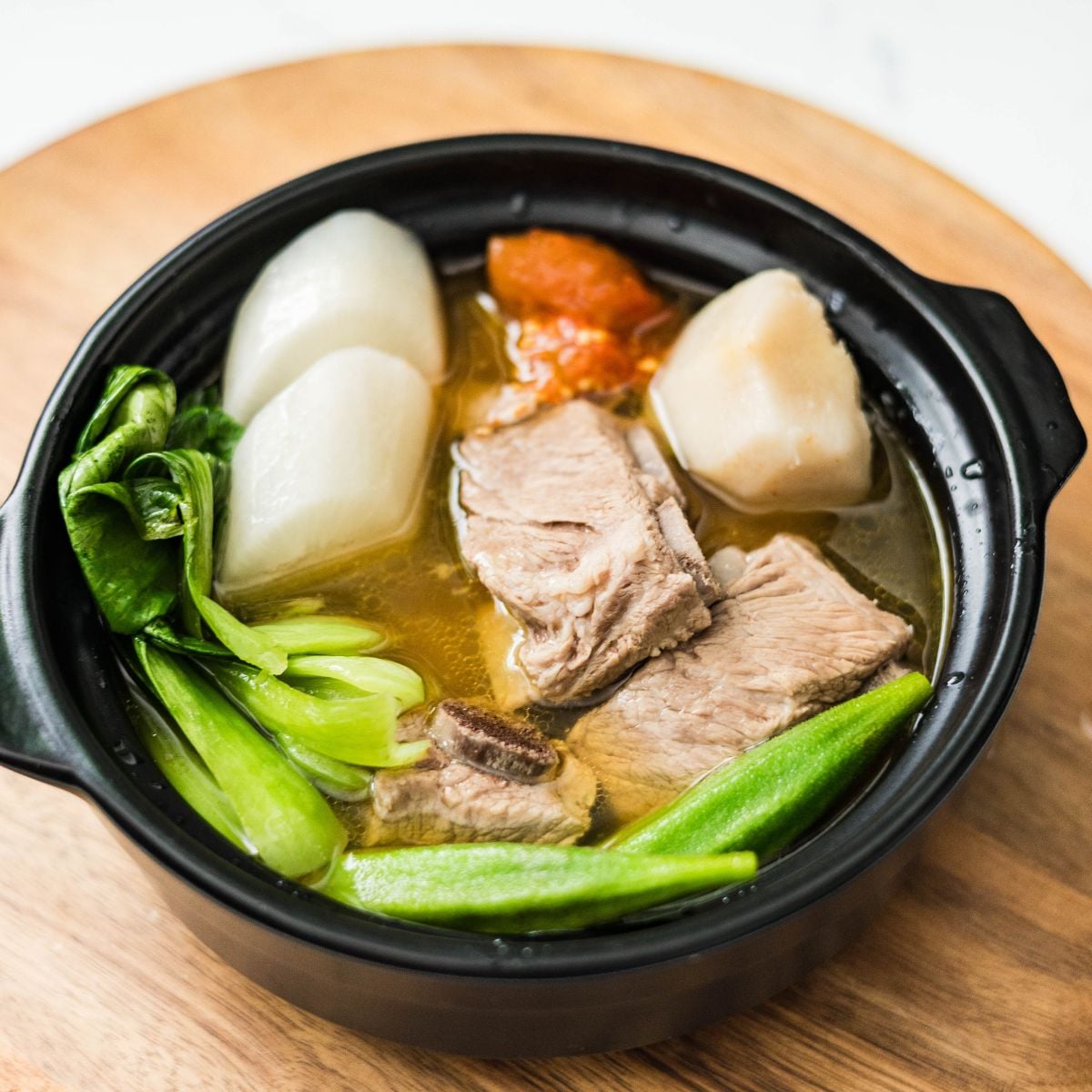
Pork sinigang is one of those soups that fixes everything. Long day? Sinigang. Cold night? Sinigang. Nothing sounds good for dinner? Still sinigang.
Most people assume it takes all afternoon. It doesn't. St. Louis spareribs get you fall-off-the-bone pork and a richer broth in about an hour of simmering, most of it hands off.
Save This Recipe 💌
I use the packet. Not as a shortcut I need to explain away, but because sinigang mix is a real ingredient in Filipino kitchens and it gets the sourness right every time. If you want the breakdown on brands and how much to use, my guide to sinigang mix covers all of it.
The part worth slowing down for is the vegetables. They go in by stage, densest first, leafy greens last with the heat already off. That's the difference between a bowl where the radish and okra still have bite and one where everything has gone soft and dark.
Then taste it before you serve. Sinigang should be sour enough to make you pucker a little, not sharp enough to make you flinch. Half a packet more at a time until it's where you want it.
If you want the lighter Filipino soup for a night when you don't want something this rich, easy chicken tinola soup is the ginger-forward one.
Jump to:
What Is Sinigang na Baboy?
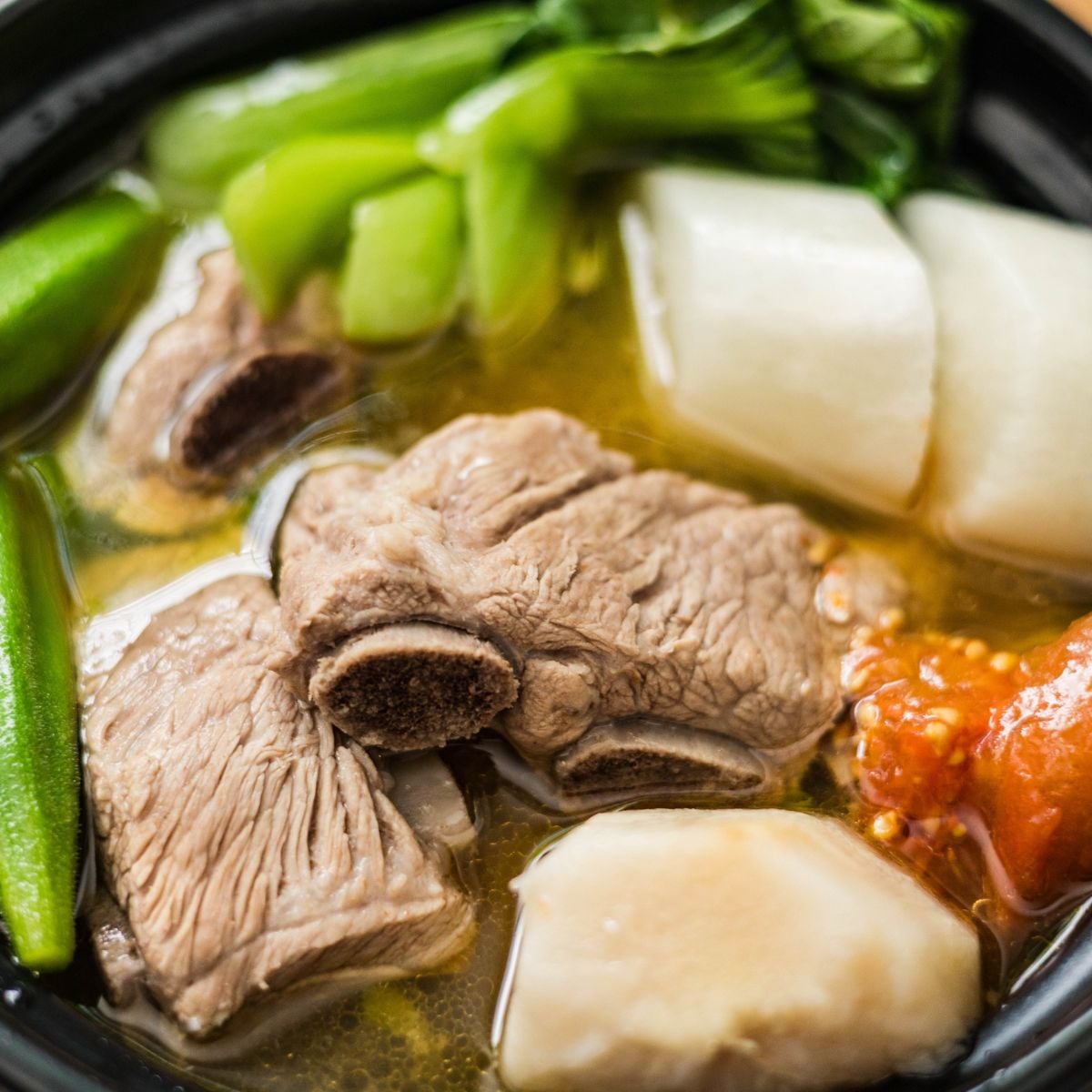
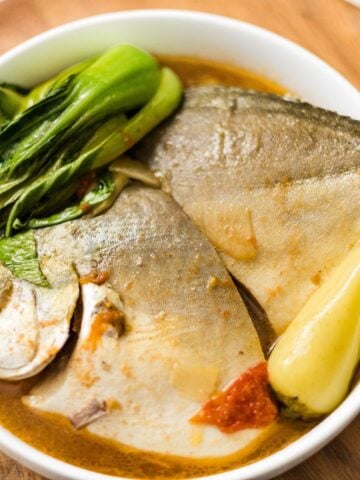
Sinigang na baboy is a Filipino sour soup: pork simmered in a tamarind broth with vegetables added in stages near the end. Sour and savory at the same time, closer to a hot-and-sour soup than to anything creamy or heavy. The sourness sits in the background of every spoonful rather than hitting you up front, and it's what makes the whole bowl taste lighter than the amount of pork in it should allow.
Sinigang is really a method more than one dish. Swap the pork for fish, shrimp, or beef and it's still sinigang. Baboy just means pork, and it's the version most Filipinos mean when they say sinigang without saying which kind.
Why You'll Love This Recipe
- One pot - The parboil water gets dumped and refilled, but it's the same pot start to finish. One thing to wash.
- Mostly hands off - About 75 minutes total, and roughly an hour of that is the pot simmering while you do something else.
- Richer broth from the spareribs - The belly-side cut renders more fat into the water than baby backs or a lean shoulder, so the broth has body without anything added to it.
- Vegetables that still have bite - They go in by stage instead of all at once, so the radish and okra hold up and the greens never turn dark and slippery.
Sour Options Beyond the Packet
The mix is what I reach for, but sinigang has never been a one-souring-agent dish. What you use changes the broth more than you'd expect.
- Fresh tamarind pods (sampalok) - Boil 8 to 10 with the pork, fish them out once soft, mash the pulp through a strainer, and stir the liquid back in. More work and worth doing once so you know what the packet is imitating. The sourness is rounder and a little fruity where the mix is sharper.
- Tamarind paste or concentrate - Start with 2 tablespoons and add from there. Easier than the pods, but brands vary a lot in strength and some are salted, so taste before you add fish sauce.
- Green mango - Simmer a few peeled slices with the pork. Sharp and bright, with none of the tamarind depth. This one leans acidic rather than sour.
- Kamias (bilimbi) - If you can find it frozen at a Filipino market, it's the sourest of the bunch. A small handful goes a long way and it's easy to overshoot.
- Guava (bayabas) - Makes sinigang na bayabas, which is a different soup in the best way. Sweeter, cloudier, gentler. Worth knowing about even if you never make it.
Whichever one you use, add it after the pork is tender rather than at the start. Acid slows down how quickly meat softens, so souring early means a longer simmer.
For brand comparisons and how much mix to use per pot, the guide to sinigang mix goes through all of it.
Ingredients
Here's what you'll need:
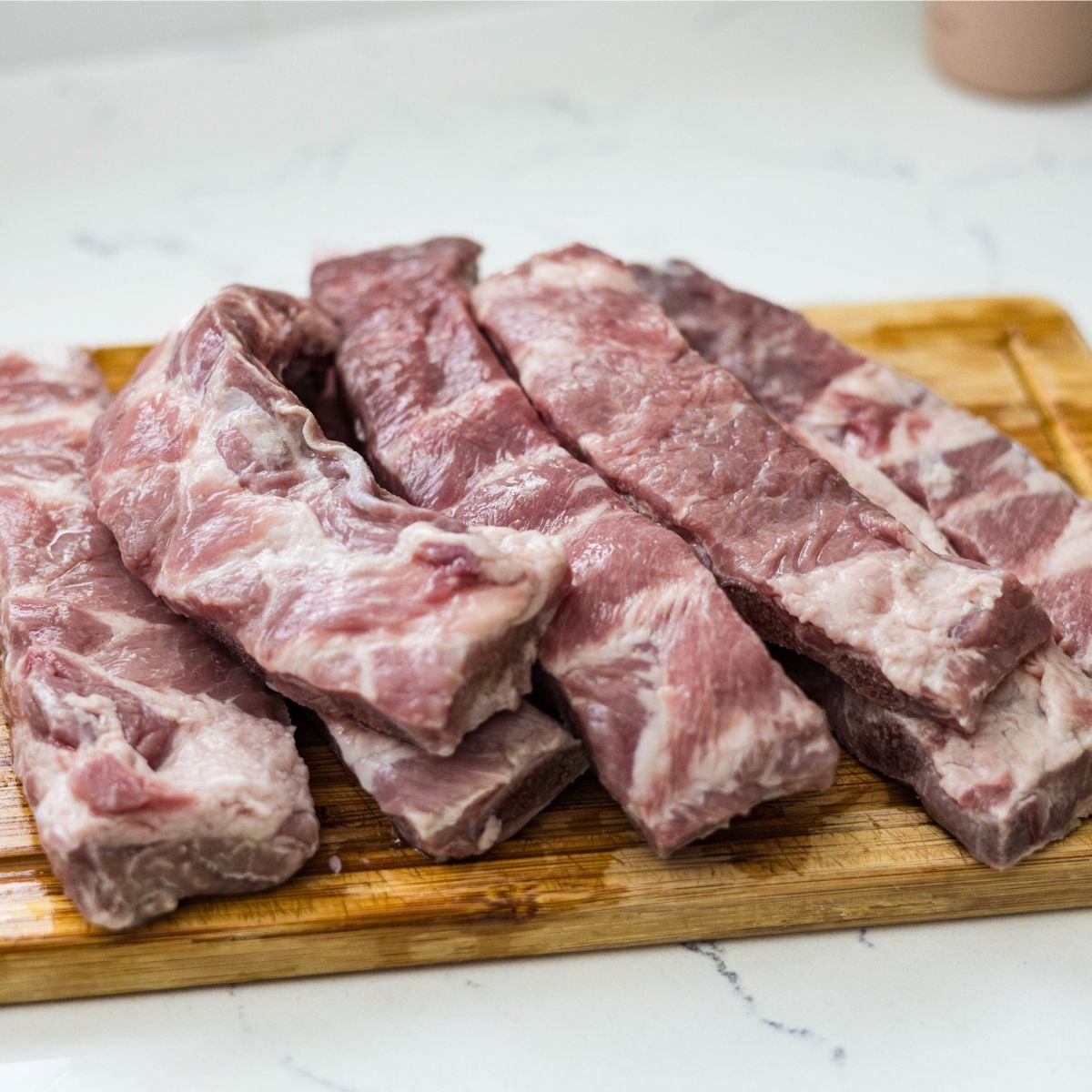
- St. Louis pork spareribs - Cut from the belly side of the rib, so there's more fat rendering into the water than you'd get from baby backs. Ask the butcher to cut them into serving pieces or do it at home with a heavy knife. Pork belly, shoulder, or neck bones all work, but keep it bone-in if you can. The bones are doing most of the work on the broth, and a boneless shoulder gives you tender meat in water that never quite becomes broth.
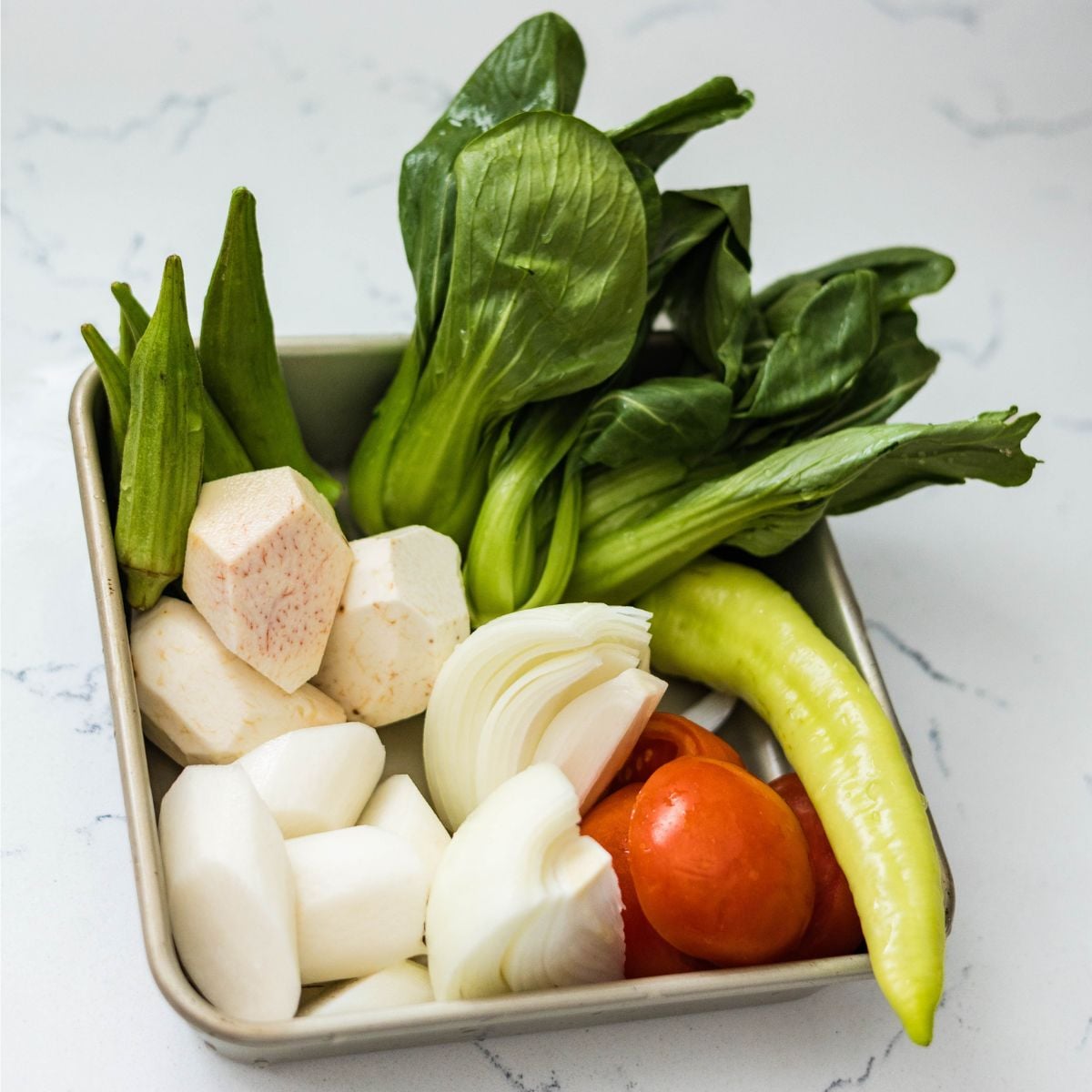
- Onion and tomatoes - Quartered, both of them, and they go in early with the pork rather than at the end. They're not garnish. Over 45 minutes they collapse into the broth and give it a sweet, faintly acidic base that the sinigang mix then sits on top of. Use ripe tomatoes if you can. Underripe ones just add sourness without the sweetness underneath.
- Sinigang mix - One packet is a starting point, not an instruction. Brands run different strengths, so taste the broth and add half a packet at a time until it's where you want it. Adding it all at the start is how you end up with something too sharp to fix.
- Fish sauce - Your main seasoning, not a background note. Start with 2 tablespoons and taste before adding more, especially if your mix is already salted. Salt works instead in a pinch, but you lose the savory depth that makes the broth taste finished.
- Gabi (taro) - Peel it and cut it into chunks about the size of your radish pieces so the two cook evenly. It goes in ahead of the other vegetables because it takes the longest, and the edges break down as it softens and thicken the broth slightly. Skip it and the soup is thinner and sharper. Frozen cubed taro is a fine shortcut and saves you the peeling, which matters since raw taro can leave your hands itchy.
- Labanos (daikon radish) - Peel and cut into rounds about a quarter inch thick. First of the vegetables in because it's the densest, and it needs a five-minute head start on everything else. Cut it much thicker and it's still crunchy when the rest is done.
- Eggplant and sitaw (long beans, optional) - Both go in together after the radish. Slice the eggplant into thick rounds and cut the sitaw into two-inch pieces. Thin eggplant slices fall apart into the broth, so keep them chunky.
- Okra - Leave them whole and trim just the very top of the cap without cutting into the pod. Cut okra releases its mucilage into the broth and turns the whole pot slippery. Whole okra stays firm and picks up the sour broth instead.
- Bok choy - Goes in with the heat already off. It wilts in about two minutes and overcooking turns the leaves dark and slippery. Kangkong is the traditional green for sinigang if you can find it at a Filipino or Asian market. Pechay or spinach also work the same way.
- Long green chili (siling haba) - Mild, grassy heat that rounds out the sourness rather than making the soup spicy. If you want actual heat, siling labuyo is the one to reach for.
See recipe card for quantities.
How to Make Pork Sinigang
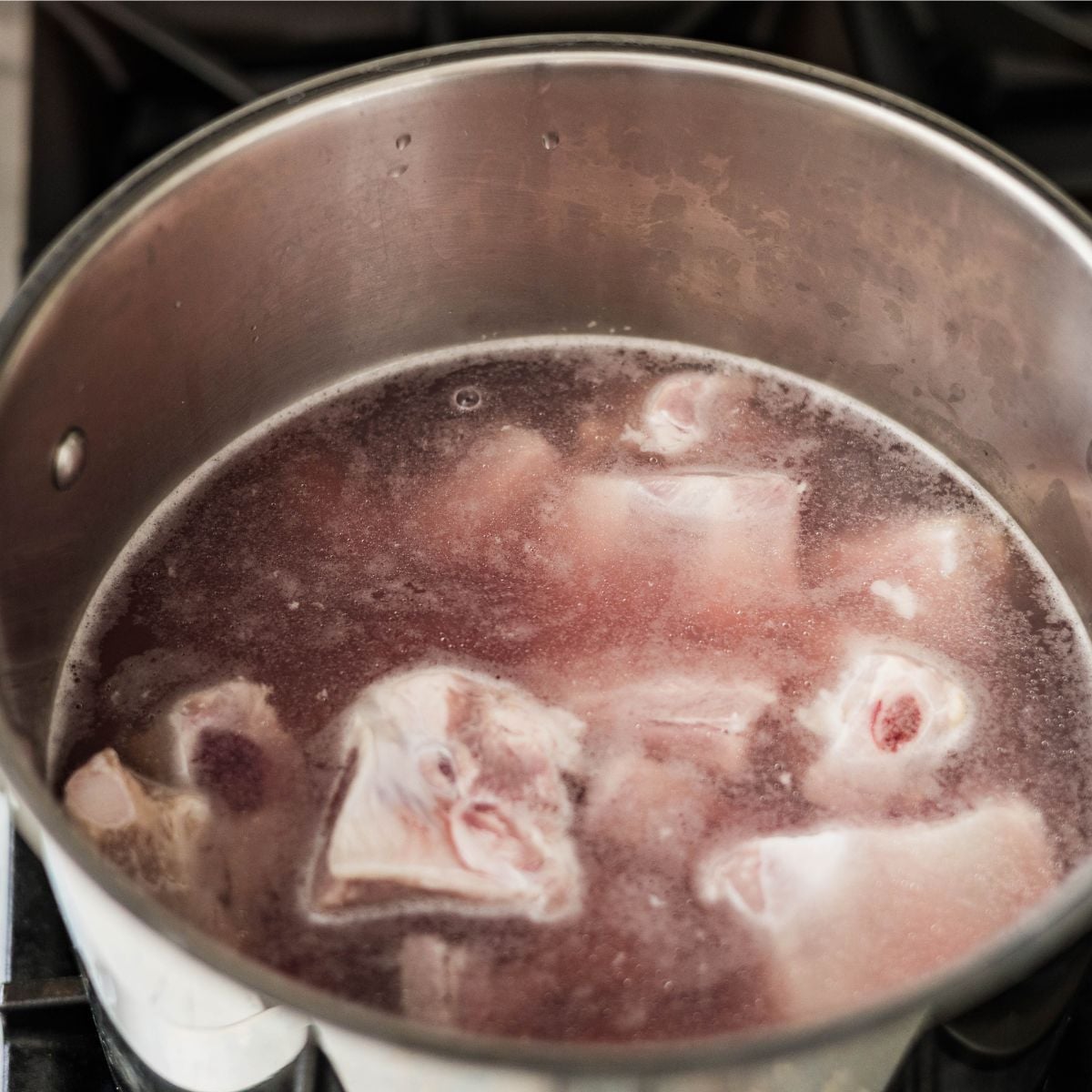
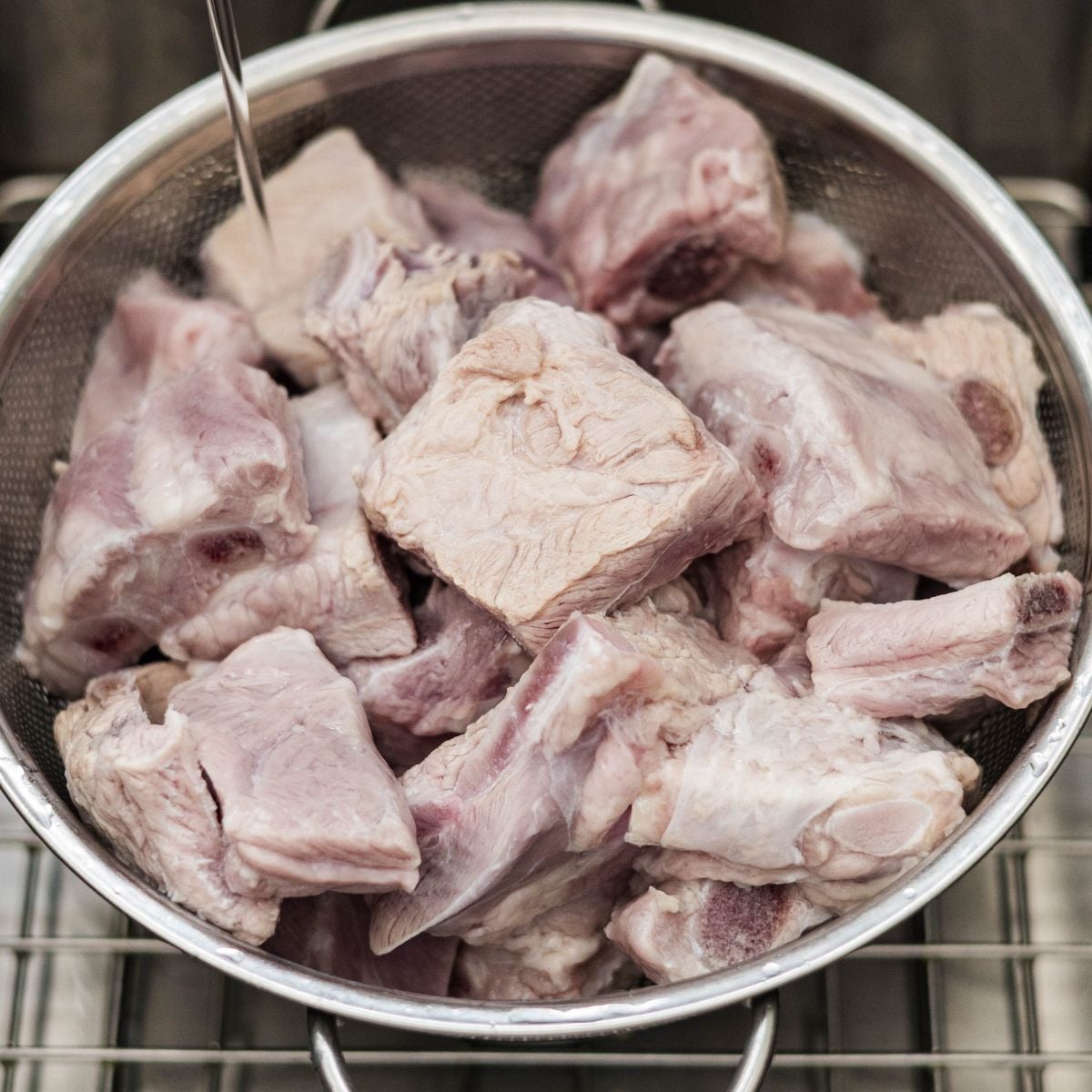
- Parboil the pork Put the spareribs in a large pot and cover with water. Bring to a boil and let it go 5 to 10 minutes until scum rises to the surface. Drain, rinse the pork well, and rinse out the pot. This is the step that gets you a clear broth instead of a murky one, and it takes five minutes.
- Boil the pork Return the pork to the pot and add fresh water, enough to cover by a couple of inches. Bring to a boil over medium-high. If more foam surfaces, skim it off.
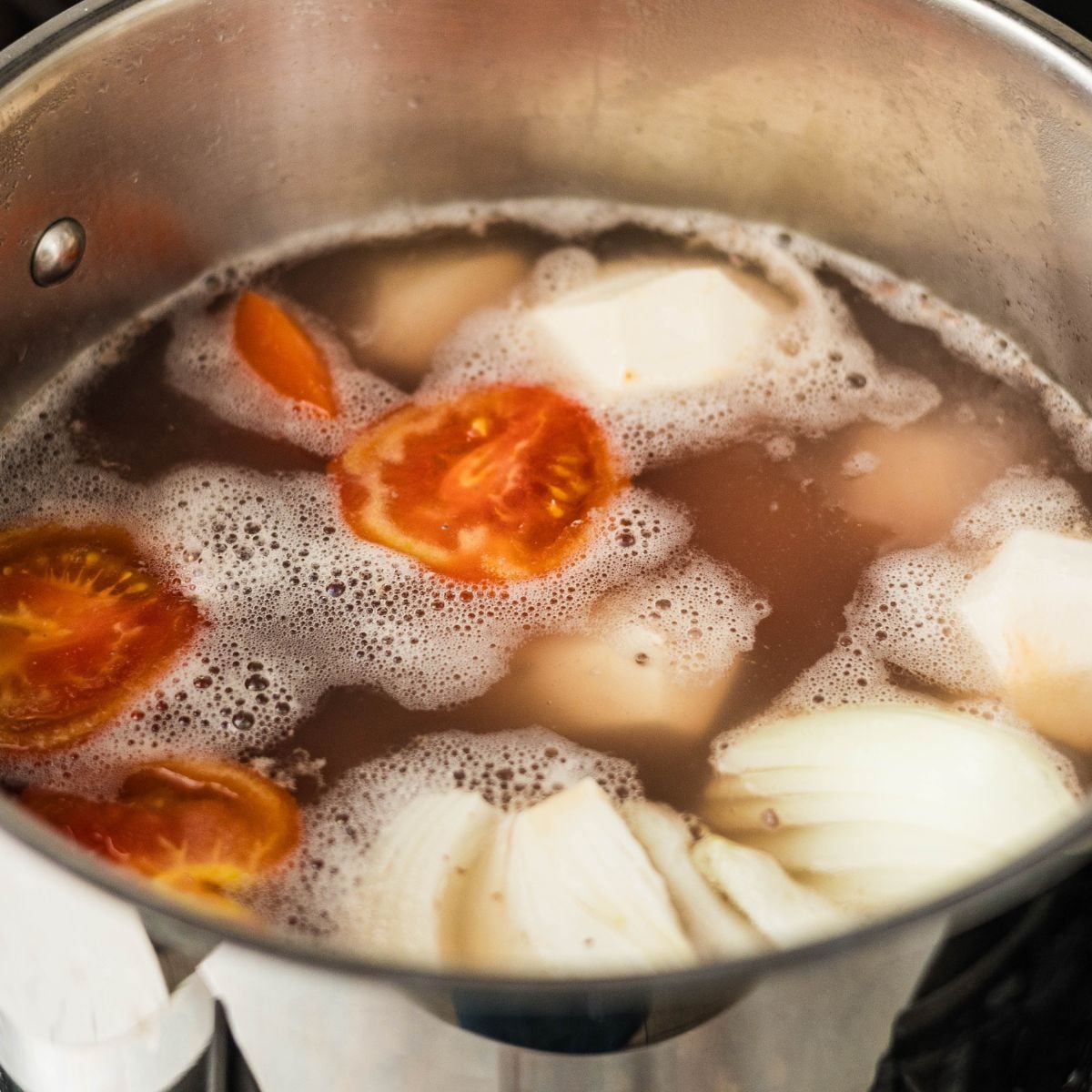
- Add the aromatics Once the foam has mostly cleared, add the quartered onion and tomatoes. Lower to medium, cover, and simmer 45 minutes to an hour until the pork is tender. The onion and tomato collapse into the broth over that time and build the base the sourness sits on. Check at 45 minutes. The meat should give easily when you press it.
- Add the gabi Peel and cube the taro and add it to the pot. Simmer about 15 to 20 minutes until it's fork tender. The edges break down as it cooks and thicken the broth slightly, which is what gives sinigang its body.
- Add the vegetables Radish first since it's the densest, about 5 minutes. Then the whole okra and the long green chili for another 3 minutes. If you're adding eggplant or sitaw, they go in with the okra. Leave the okra whole so it doesn't turn the broth slippery.
- Season the broth Add the sinigang mix and fish sauce. Stir and taste. This is where you adjust. Too flat? More fish sauce. Not sour enough? Another half packet. Add the sour late rather than early, since acid slows down how fast the pork softens.
- Add the bok choy Drop it in last. Stir, cover the pot, and turn off the heat. Let it sit 2 minutes. The residual heat wilts it without turning the leaves dark.
- Serve Ladle into bowls and serve hot with steamed white rice. Fish sauce on the side for dipping the pork, with a squeeze of calamansi if you have it.
Rose's Top Tips
- Don't skip the parboil. Those first minutes of boiling pull a lot of impurities out of the pork, and dumping that water is the difference between a clear broth and a cloudy one. Skimming as you go gets you partway there, but starting over with fresh water is what actually works.
- Cut the gabi and radish the same size. This is the one people get wrong. Taro needs longer than radish to go fork tender, so if the taro pieces are bigger you'll end up with mushy radish waiting on hard taro. Matching the sizes lets the staged timing do its job.
- Give the pork the full time. Forty-five minutes is a minimum, not a target. If your ribs are thick or still feel firm, give them another 15 before the vegetables go in. Once the sour hits the pot the pork stops softening much, so anything still tough at step 4 is going to stay that way.
- Season after the vegetables. Radish and gabi release water as they cook, so a broth that tastes right before they go in will taste flat after. Add the mix once the vegetables are in and you're tasting the pot at its finished volume.
- Keep it soupy. If the liquid reduces too far during the simmer, add hot water a cup at a time. Cold water drops the temperature and stalls the pork. You want enough broth left to pour generously over rice, since that's most of the point.
Variations
The recipe above is the version I make most often. A few directions worth knowing:
- Sautéed version - Sear the pork in a little oil, then sauté the onion and tomato before adding water. The broth comes out richer and less clean-tasting, since you're browning instead of skimming. Some cooks swear by it, some think it muddies what sinigang is supposed to be. Worth trying once to see which side you land on.
- Sinigang sa miso - Stir 2 to 3 tablespoons of white miso in with the sinigang mix. It adds a savory backbone under the sourness that works particularly well with pork. More common with fish than pork, but it's good either way.
- Fresh tamarind - Boil 8 to 10 tamarind pods with the pork, then strain and press the pulp into the broth. More work and a rounder, fruitier sourness than the packet. Doing it once tells you a lot about what the mix is imitating.
- Sinigang na baboy sa bayabas - Swap the tamarind for guava. Sweeter, cloudier, gentler on the sour end. A different soup rather than a variation, and one worth making when you want something softer.
- Spicier - Add sliced siling labuyo to the broth. The long green chili in the main recipe is mild by design, so this is the one to reach for if you want real heat.
Sinigang works with almost any protein. Sinigang na corned beef is the one I make when there's no fresh pork in the house, and there are more Filipino soups in the Filipino recipe collection.
What to Serve With Pork Sinigang
Rice, and not much else. Sinigang is a full meal already, and the broth is meant to be spooned over a bowl of hot rice rather than sipped on its own. Plain steamed white rice is the right call. Anything seasoned competes with the sourness.
The other thing you want on the table is a small dish of fish sauce for dipping. Pull the pork off the bone, dunk it, eat it with rice. A squeeze of calamansi into the fish sauce brightens it, and a crushed siling labuyo turns it into something with heat. This is sawsawan, the dipping sauce you mix at the table to your own taste, and it's as much a part of the meal as the soup.
If you're feeding a crowd and want a second dish, keep it dry and salty to play against the broth. Fried fish, longganisa, or crispy pork belly all work. What doesn't work is another soup or anything else sour.
Storage
Refrigerator: Cool it to room temperature within two hours, then store in an airtight container for up to 3 days. A big pot of soup holds heat for a long time, so ladle it into shallow containers rather than putting the whole pot in the fridge. The vegetables keep softening as it sits, which is fine for leftovers but not what you want if you're serving it again to company. Some people pull the greens out before storing and add fresh ones when reheating.
Freezer: Freeze the broth and pork without the vegetables for up to 2 months. Radish and gabi both turn grainy after freezing and the greens disintegrate, so they're better added fresh. Thaw overnight in the fridge, bring the broth back to a boil, and cook the vegetables in it the same way you did the first time.
Reheating: Reheat on the stove over medium until it comes to a simmer. Add a splash of water if the broth thickened in the fridge, which it will if there's gabi in it. Sinigang is often better the second day, since the sourness settles and the pork keeps absorbing broth. Taste before serving and add a little fish sauce if it's gone flat.
Recipe FAQs
No, but it's the most consistent way to get the sourness right and it's what most Filipino households actually use. Fresh tamarind pods work if you'd rather: boil 8 to 10 with the pork, strain, and press the pulp back into the broth. Tamarind paste or concentrate is the middle option, starting at 2 tablespoons and adjusting from there.
You can season with salt instead and the soup will still work, but you'll lose the savory depth that makes the broth taste finished rather than just sour. If it's a fish allergy, soy sauce gets you closer than plain salt does. If it's the smell putting you off, it cooks off almost entirely and the finished broth doesn't taste fishy.
Add more mix, half a packet at a time, tasting between each addition. Calamansi or lime juice stirred in at the end is the faster fix and gives you a brighter sourness rather than a deeper one.
It was probably cut. Okra releases mucilage from the cut surface, and in a pot of liquid that spreads through the whole broth. Leave the pods whole and trim only the very top of the cap without cutting into the pod itself. Overcooking makes it worse, so add them near the end.
Yes. Cook the pork with the onion, tomato, water, and fish sauce on high pressure for 25 minutes, then quick release. Add the sinigang mix and gabi and simmer on sauté for about 10 minutes, then the radish, okra, and chili for another 5. Greens go in last with the heat off. You're saving about 25 minutes on the simmer, not on the vegetables.
Skipping the parboil is usually the reason. Boiling the pork in fresh water after draining the first batch is what gets you a clear broth, and skimming alone doesn't fully replace it. It doesn't hurt the flavor at all, so if it's already cloudy, serve it anyway.
More Filipino Soups You'll Love
- Sinigang na bangus - The fish version, made with milkfish. Lighter, faster, and the one for a night when pork feels like too much.
- Instant Pot oxtail beef nilaga - Sinigang's clear-broth counterpart. No sour element at all, just beef, corn, and cabbage in a clean broth.
- Almondigas - Pork meatballs and miswa noodles with patola. Comes together in about 30 minutes, so it covers the weeknight slot this one doesn't.
- Sinigang na corned beef - Same sour broth, canned corned beef, ready in a fraction of the time.

Did you try this recipe?
Share how it turned out in the comment box below, and if you loved it, share it on Facebook, Pinterest & Instagram.
Thank you!

Sinigang na Baboy (Pork Sinigang with Spareribs)
Ingredients
- 2½ pounds St. Louis pork spare ribs cut into serving pieces
- 6 cups water or more as needed
- 1 cup onion quartered
- 2 pieces medium tomatoes quartered
- 2 tablespoons fish sauce plus more to taste
- 3 pieces small gabi
- 1 small radish sliced
- 1 packets sinigang mix adjust to taste
- 2 long green chili peppers
- 2-3 bunches bokchoy
- 6 pieces okra
- 1 small eggplants sliced (optional)
- 1 cup sitaw cut into 2-inch pieces (optional)
Instructions
- Parboil the pork: Place the ribs in a large pot and cover with water. Boil 5 to 10 minutes until scum rises. Drain, rinse the pork, and rinse the pot.2½ pounds St. Louis pork spare ribs
- Boil the pork: Return the pork to the pot with fresh water. Bring to a boil and skim any foam.6 cups water
- Add the aromatics: Add the onion and tomatoes. Lower the heat, cover, and simmer 45 minutes to 1 hour until the pork is tender. Add water if needed.1 cup onion, 2 pieces medium tomatoes
- Add the gabi: Add the taro and simmer 15 to 20 minutes until fork tender.3 pieces small gabi
- Add the vegetables: Add the radish and cook 5 minutes. Add the whole okra and simmer 4 to 5 minutes more. Add eggplant and sitaw here if using.1 small radish, 6 pieces okra, 1 small eggplants, 1 cup sitaw
- Season the broth: Stir in the fish sauce and sinigang mix. Taste and add more mix, half a packet at a time, if you want it more sour.2 tablespoons fish sauce, 1 packets sinigang mix
- Add the chilies and greens: Add the long green chilies and bok choy. Cover, turn off the heat, and let sit 2 minutes until the greens wilt.2 long green chili peppers, 2-3 bunches bokchoy
- Serve: Taste and adjust with fish sauce or more mix. Serve hot with steamed rice and fish sauce on the side.


Mariel says
Do you have to parboil the ribs first or can I skip that step if I'm in a rush?
Rose Sioson says
Hello Mariel ! You can skip it, but parboiling helps get rid of some of the scum and gives you a cleaner broth. If you're short on time, just skim the pot a bit more while it simmers to catch what rises to the top.