

I made this dough four different ways before I settled on one. All-purpose flour, straight bread flour, mashed potato in the dough, and tangzhong. Tangzhong won, and it wasn't close.
Tangzhong is a cooked paste of flour and milk, about two minutes on the stove. It sounds like a fussy extra step for a Sunday morning. What it actually does is let the dough hold more moisture, so the rolls are still soft on day three instead of turning into something you have to microwave to enjoy.
The other thing that matters here is temperature. I bake these at 350°F uncovered for the first 10 minutes, then loosely tent them with foil so the tops don't brown too quickly while the centers finish baking. Since every oven runs a little differently, I check the center of a middle roll with an instant-read thermometer and pull the pan at about 185°F.
There's a pour of heavy cream over the rolls right before they go in, which soaks into the bottom layer as they bake.
It's the same dough I use for ensaymada, so if you've made those, this will feel familiar. Cream cheese frosting on top, and I use this one every time.
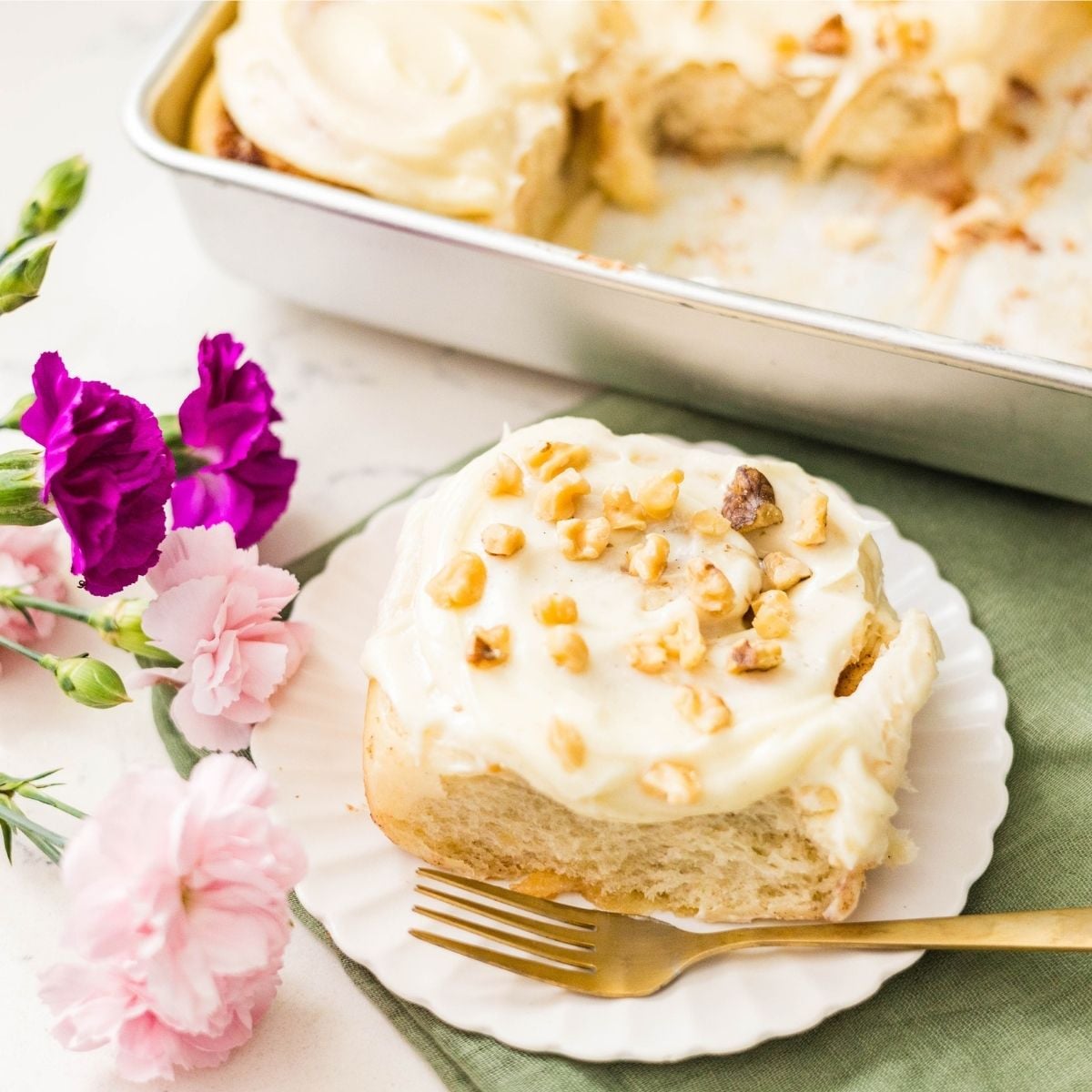
Save This Recipe 💌
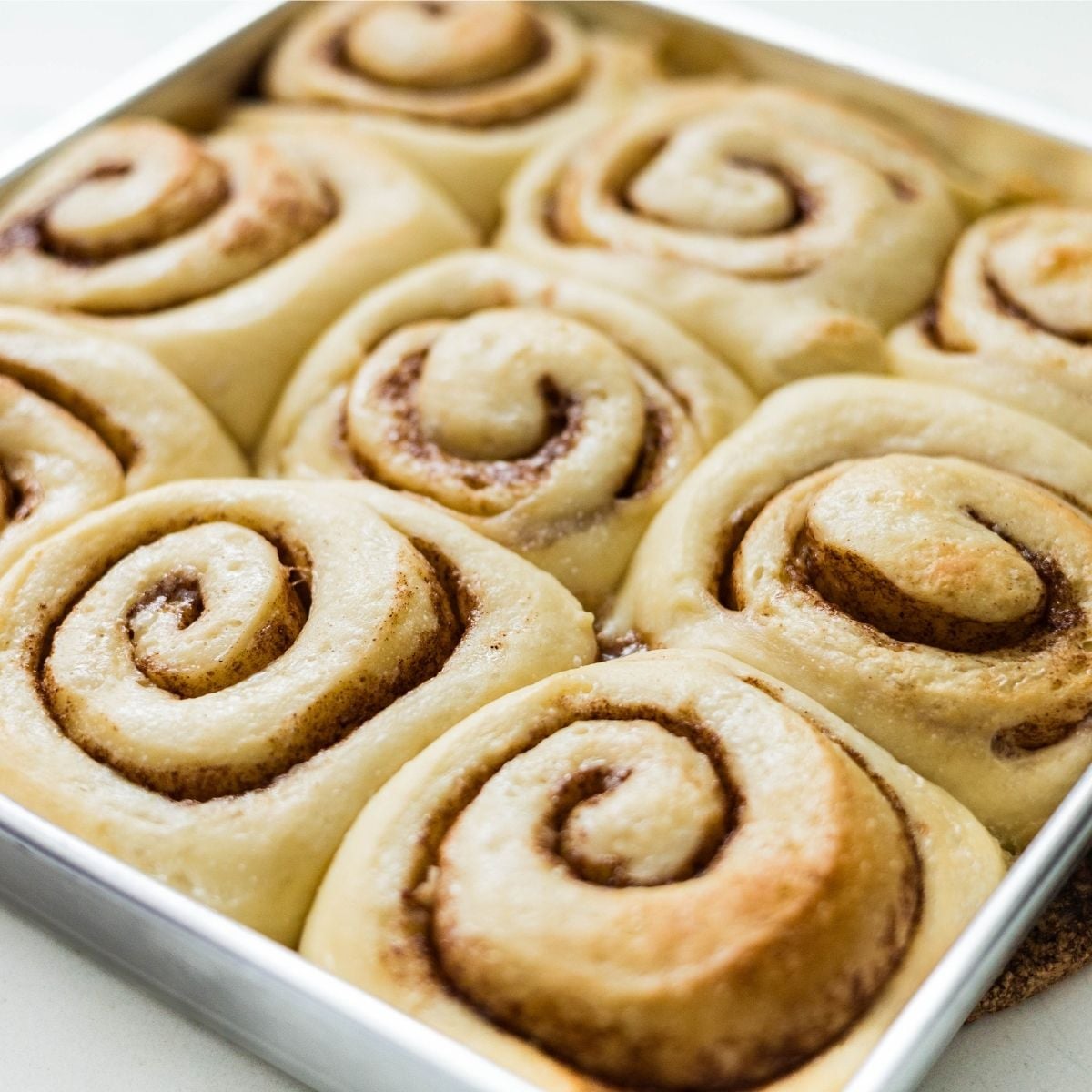
Jump to:
What Is Tangzhong and Why Does It Matter?
Tangzhong is a cooked paste of flour and milk. You whisk them in a small saucepan over medium heat for two to three minutes until it thickens to about the consistency of pudding. That's the whole thing.
Cooking the starch first lets it absorb more liquid than raw flour can. That extra moisture stays in the dough through baking, which is why the rolls come out softer and, more importantly, stay that way for days instead of hours.
Most cinnamon roll recipes get their softness a different way, usually bread flour or a spoonful of yogurt or sour cream. Those work. Tangzhong just holds up better past day one, and I know that because I baked all four versions and left them on the counter to find out.
Why You'll Love This Recipe
- Still soft on day three. Tangzhong holds moisture in the dough through baking, so these don't go stale on the counter overnight the way most cinnamon rolls do.
- Temperature, not guesswork. Every oven bakes a little differently, so I use the baking time as a guide and check the center of a middle roll. Around 185°F tells me they're baked through without letting them dry out.
- Tested four ways. All-purpose, bread flour, mashed potato, and tangzhong. I baked all four and kept the leftovers to see which held up.
- 9 rolls with room to spread. Three by three in an 11x11 pan gives each roll enough space to rise and expand while still baking up soft and pull-apart.
Ingredients
Four parts, none of them complicated. A quick tangzhong, an enriched dough, a cinnamon filling, and cream cheese frosting.
Tangzhong
- All-purpose flour and milk: Cooked together for two to three minutes into a paste. Two minutes of work, and it's the reason these are still soft three days later.
Dough
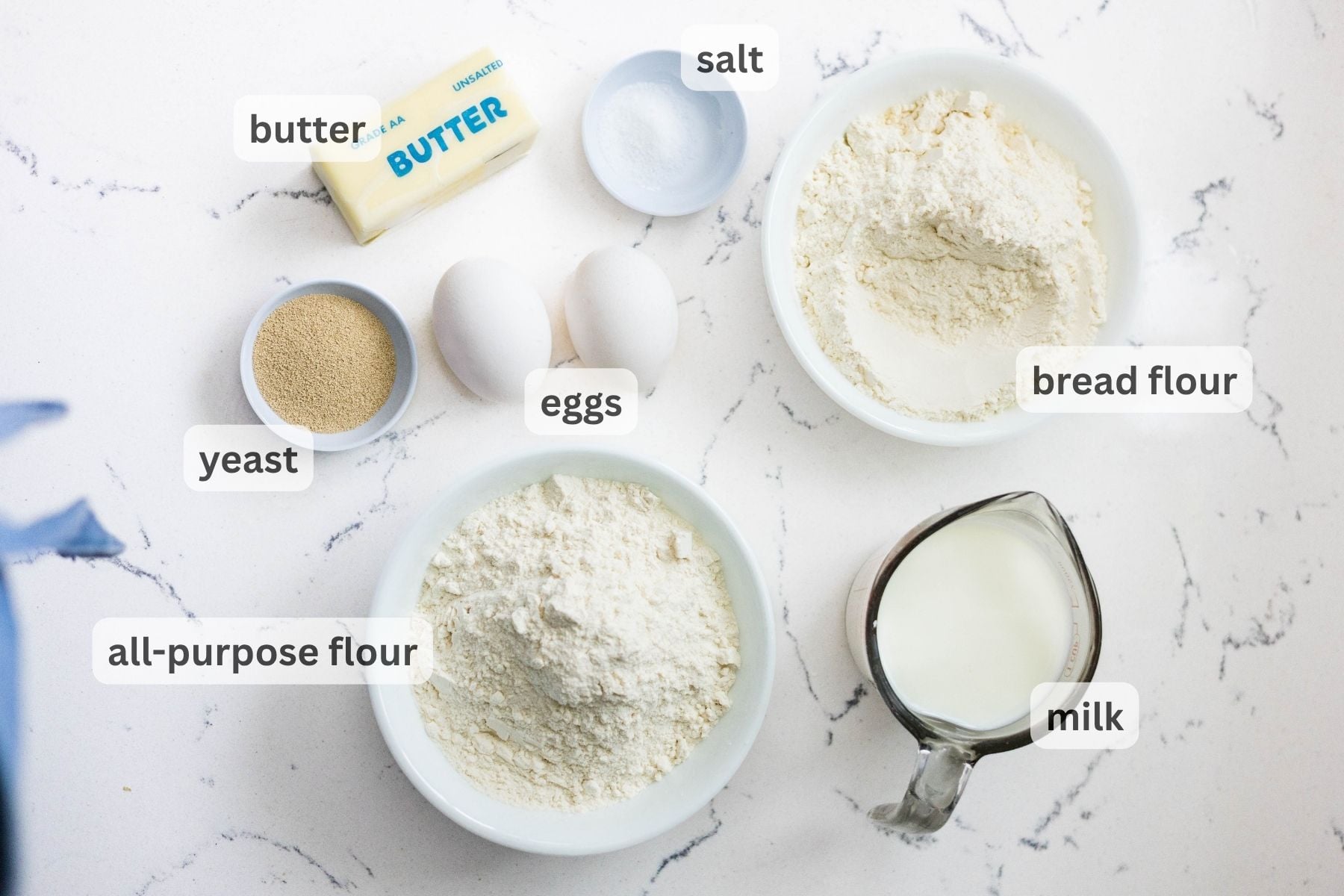
- Bread flour and all-purpose flour: Bread flour builds structure and chew, all-purpose keeps it tender. Bread flour alone comes out dense, all-purpose alone comes out slack. The combination is what I landed on after testing both on their own.
- Active dry yeast: Bloom it in warm milk with a little sugar before you commit. If it doesn't foam in five to ten minutes it's dead, and you'll have wasted the flour finding out.
- Milk: Warm to about 110°F for blooming, warm to the touch but not hot. Hot milk kills yeast.
- Butter: Softened, worked into the dough. Use good butter, since it's in the dough, the filling, and the frosting, and the flavor carries through all three.
- Eggs: Room temperature. Cold eggs bring the dough temperature down and slow the first rise.
- Sugar and salt: Sugar feeds the yeast and sweetens the dough itself. Salt balances it and keeps the yeast from running away.
Filling
- Brown sugar: Deeper flavor than white and it stays soft as the rolls bake, which is what gives you the gooey swirl rather than a crunchy one.
- Cinnamon: The whole point. Use a cinnamon you like, since there's nowhere for it to hide.
- Butter: Softened, not melted. Melted butter runs out of the roll during baking and pools in the pan.
Cream Cheese Frosting
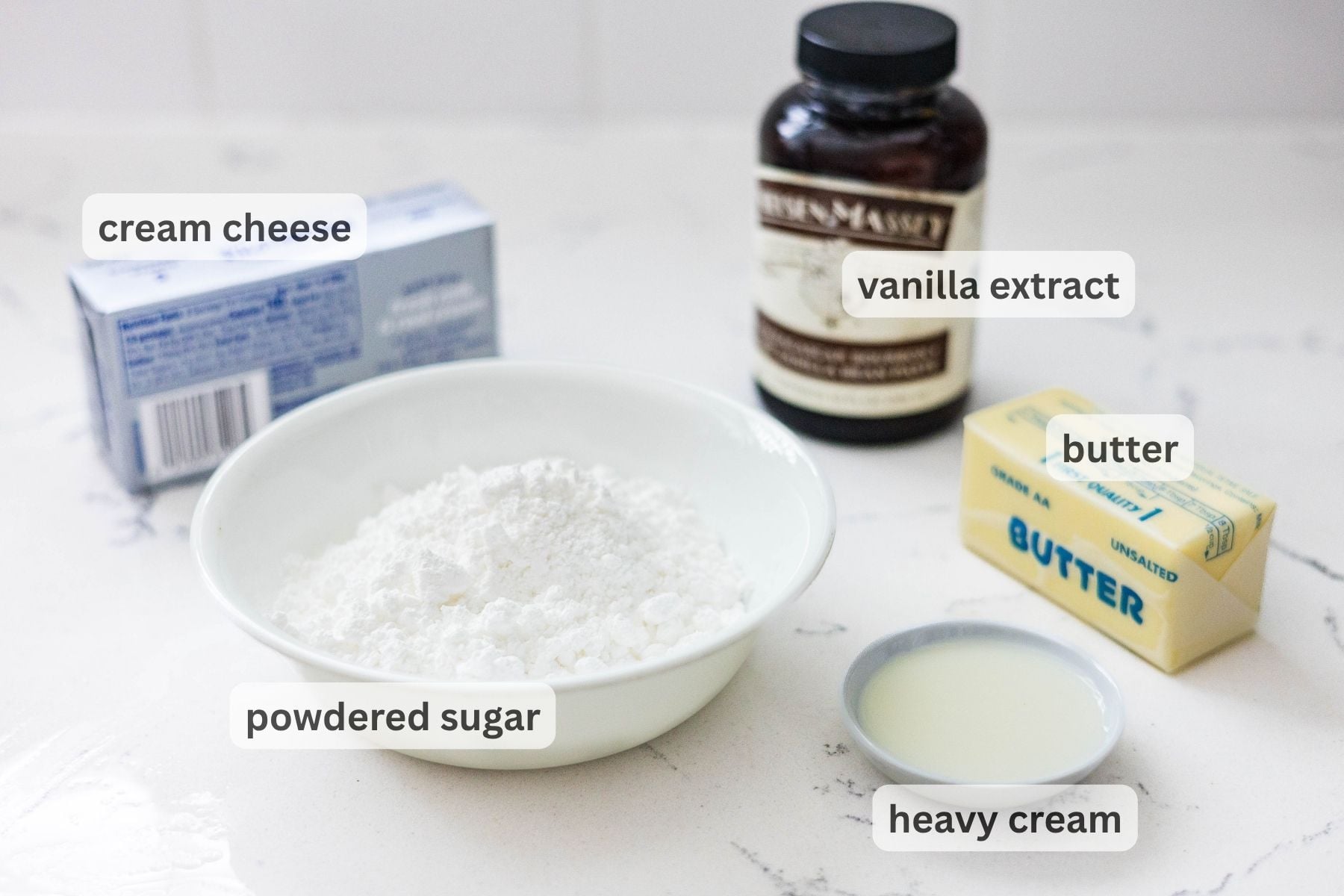
- Cream cheese: Full-fat block, not the tub kind. Tub cream cheese has more water in it and the frosting comes out loose.
- Butter: Softened. Makes the frosting smoother and less sharp.
- Powdered sugar: Sweetens without the grit you'd get from granulated.
- Heavy cream: A splash to loosen it to spreadable.
- Vanilla and salt: Vanilla rounds it out, salt keeps it from tasting flatly sweet.
For Baking
Heavy whipping cream: Poured over the rolls right before they go in the oven. It soaks into the bottom layer as they bake and keeps the base tender rather than dry.
See the recipe card for measurements.
How to Make the Tangzhong
Whisk 25 grams of all-purpose flour and 100 grams of milk together in a small saucepan over medium heat. Stir constantly for two to three minutes until it thickens to about the consistency of pudding. Take it off the heat and let it cool to room temperature before it goes into the dough.
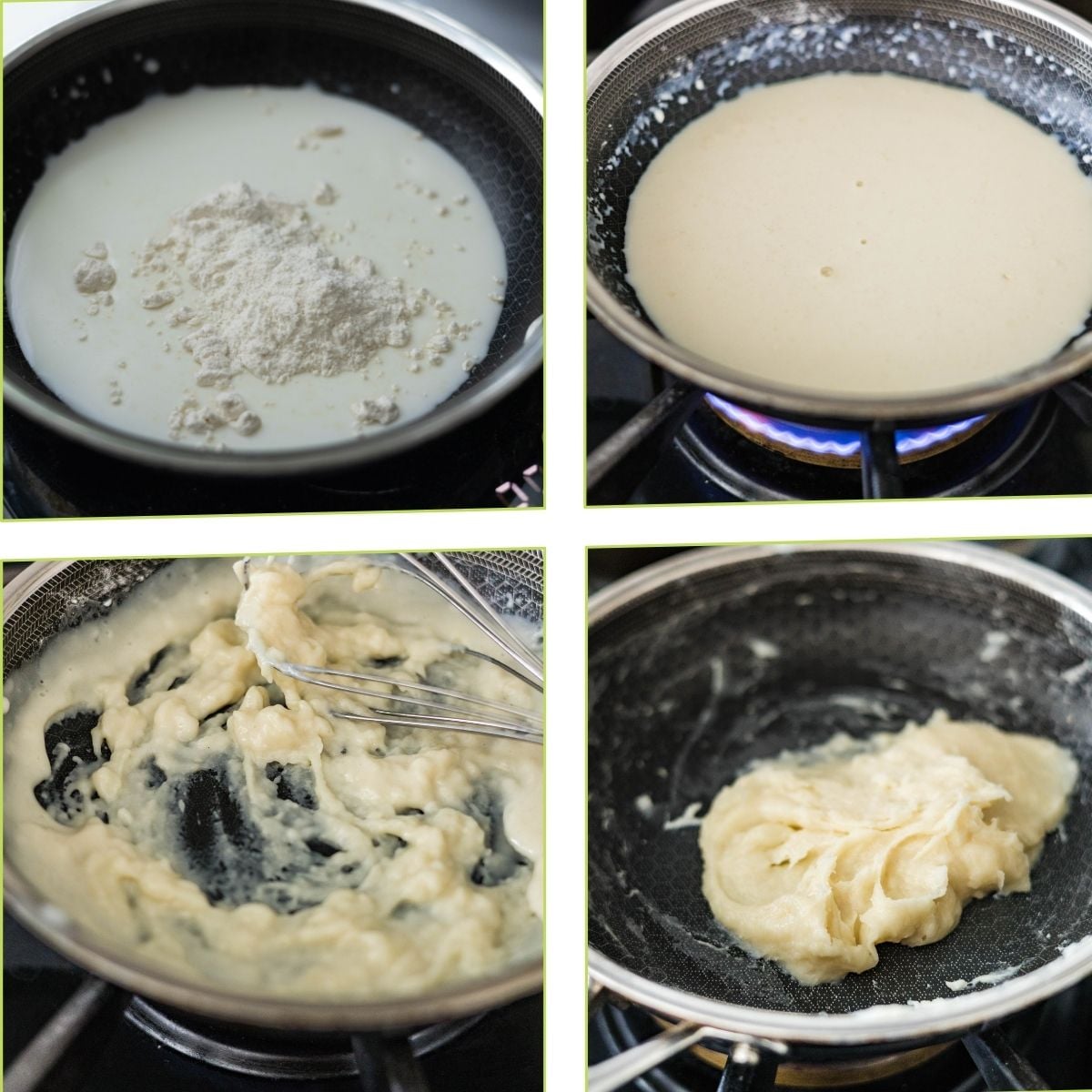
You can make this a day or two ahead and keep it in the fridge. Bring it back to room temperature before using it, since cold tangzhong slows the yeast.
How to Make Classic Cinnamon Rolls
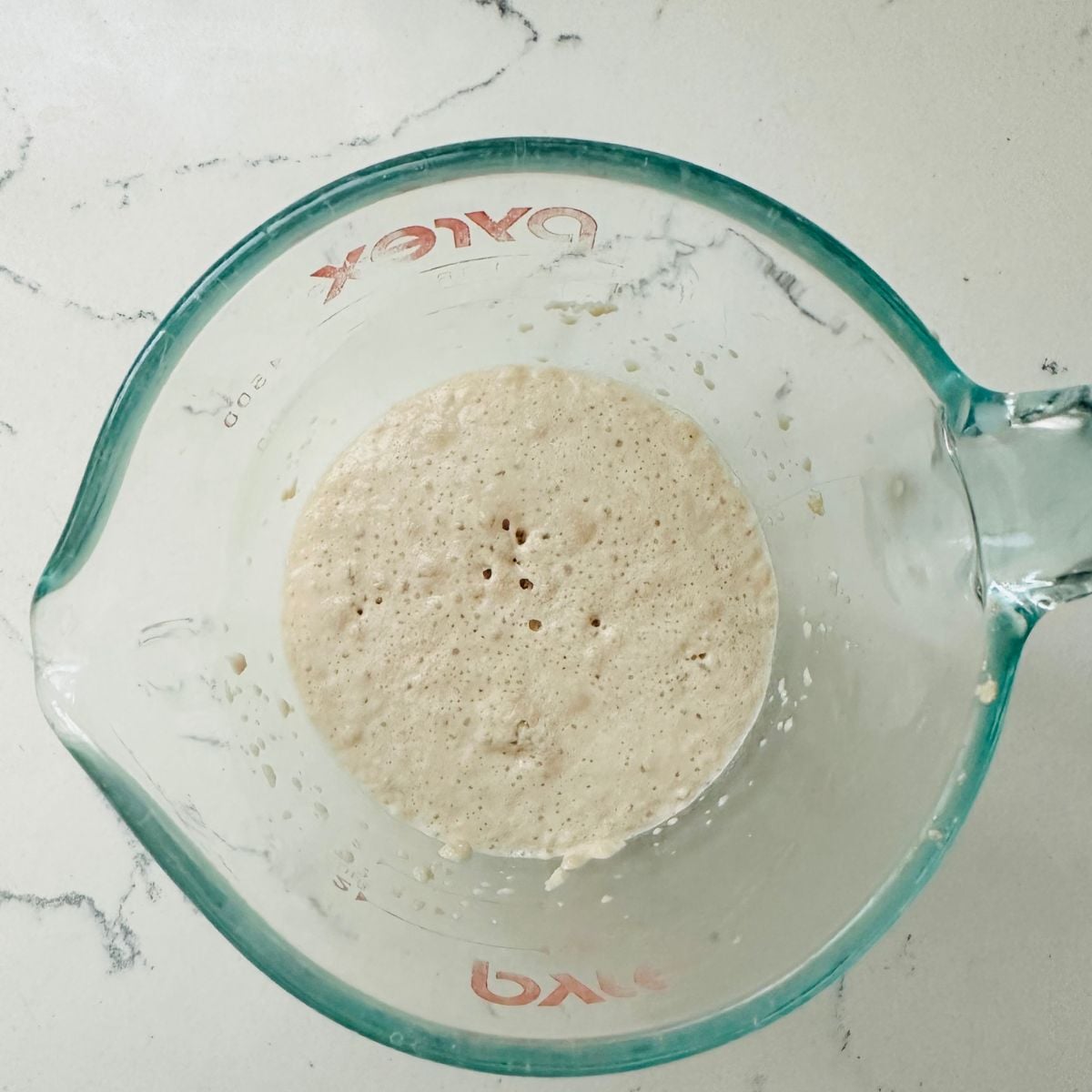
- Bloom the yeast. Warm the milk to about 110°F, warm to the touch but not hot. Stir in the yeast and 15 grams of sugar. Let it sit five to ten minutes until foamy. If it doesn't foam, the yeast is dead and it's worth starting over now rather than after you've added the flour.

- Mix and knead. In a large bowl, combine the sugar, salt, eggs, softened butter, bloomed yeast mixture, and cooled tangzhong. Add the all-purpose and bread flour. Mix to a shaggy dough, then knead for 8 to 10 minutes until smooth, elastic, and slightly tacky. It will feel sticky at first. Don't add more flour, that's what makes the rolls heavy. The dough is ready when you can stretch a small piece thin without it tearing easily.
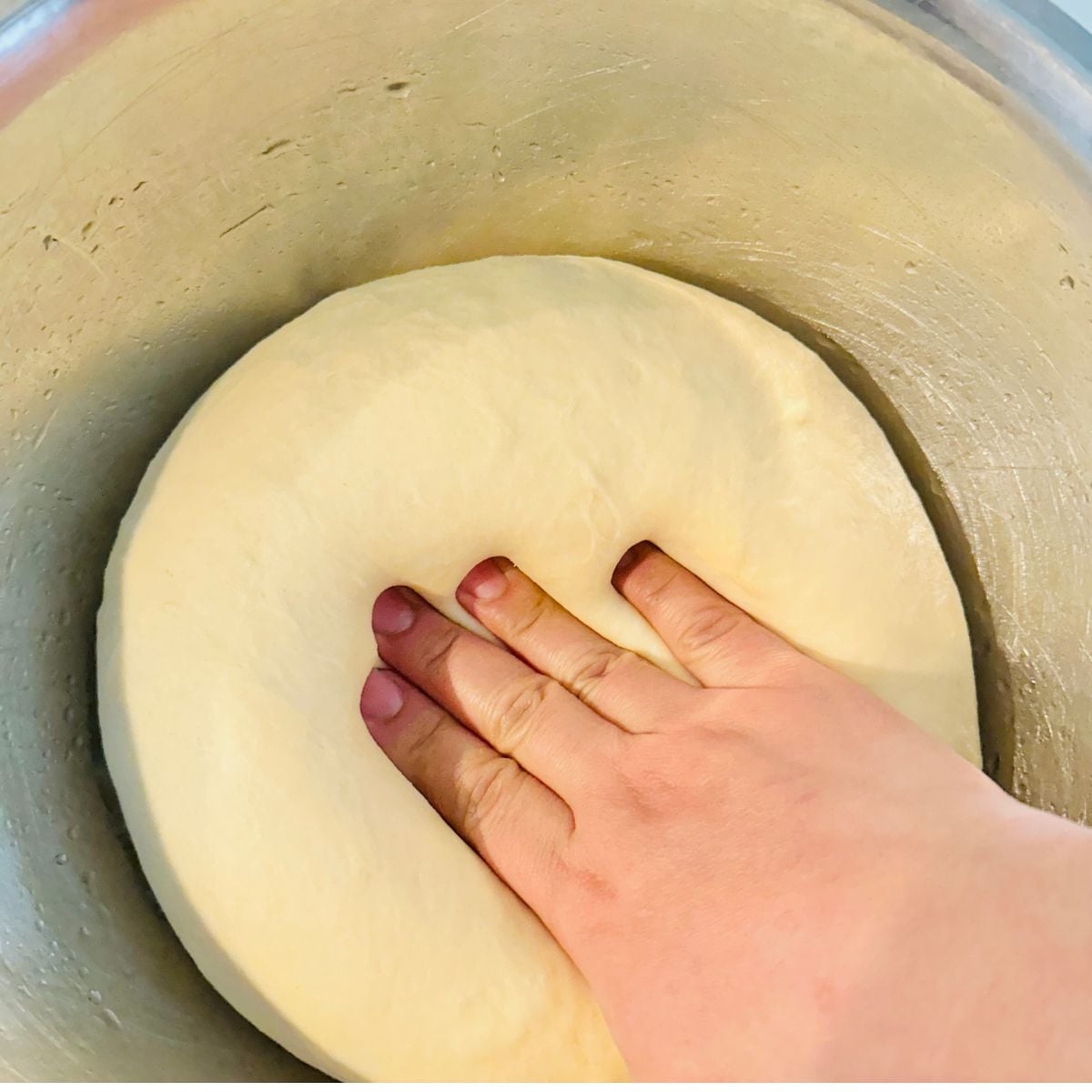
- First rise. Place in a greased bowl, cover, and let rise somewhere warm for one to one and a half hours, until doubled.

- Make the filling and roll. Mix the softened butter, brown sugar, and cinnamon into a spreadable paste. Roll the dough into a large rectangle and spread the filling all the way to the edges. Roll it up tightly from the long side, pulling gently toward you as you go for a tighter spiral. Cut into 9 equal rolls.
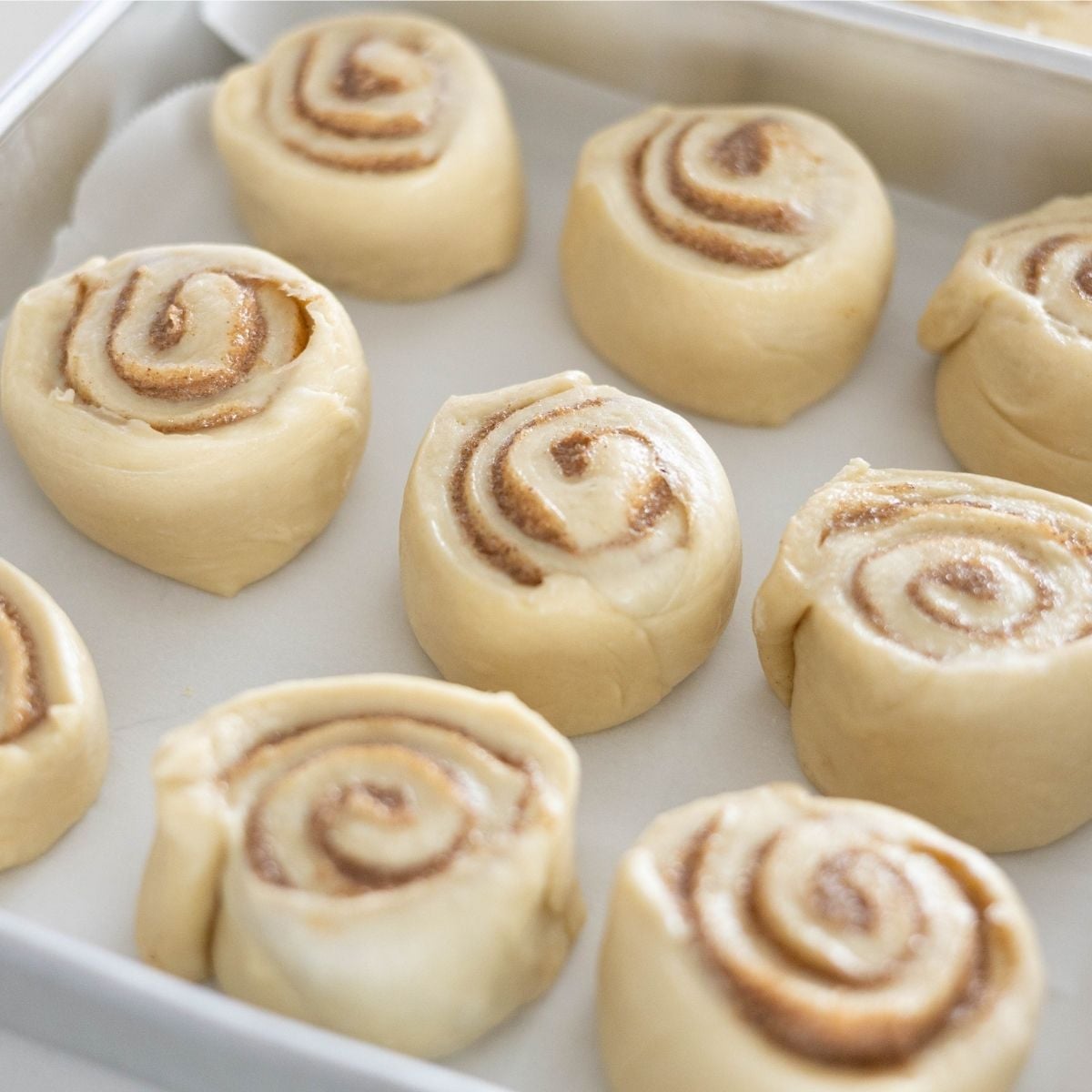
- Second rise. Arrange the rolls in a greased 11x11 pan, three by three. Cover and let rise 45 minutes to an hour, until puffed and just touching.
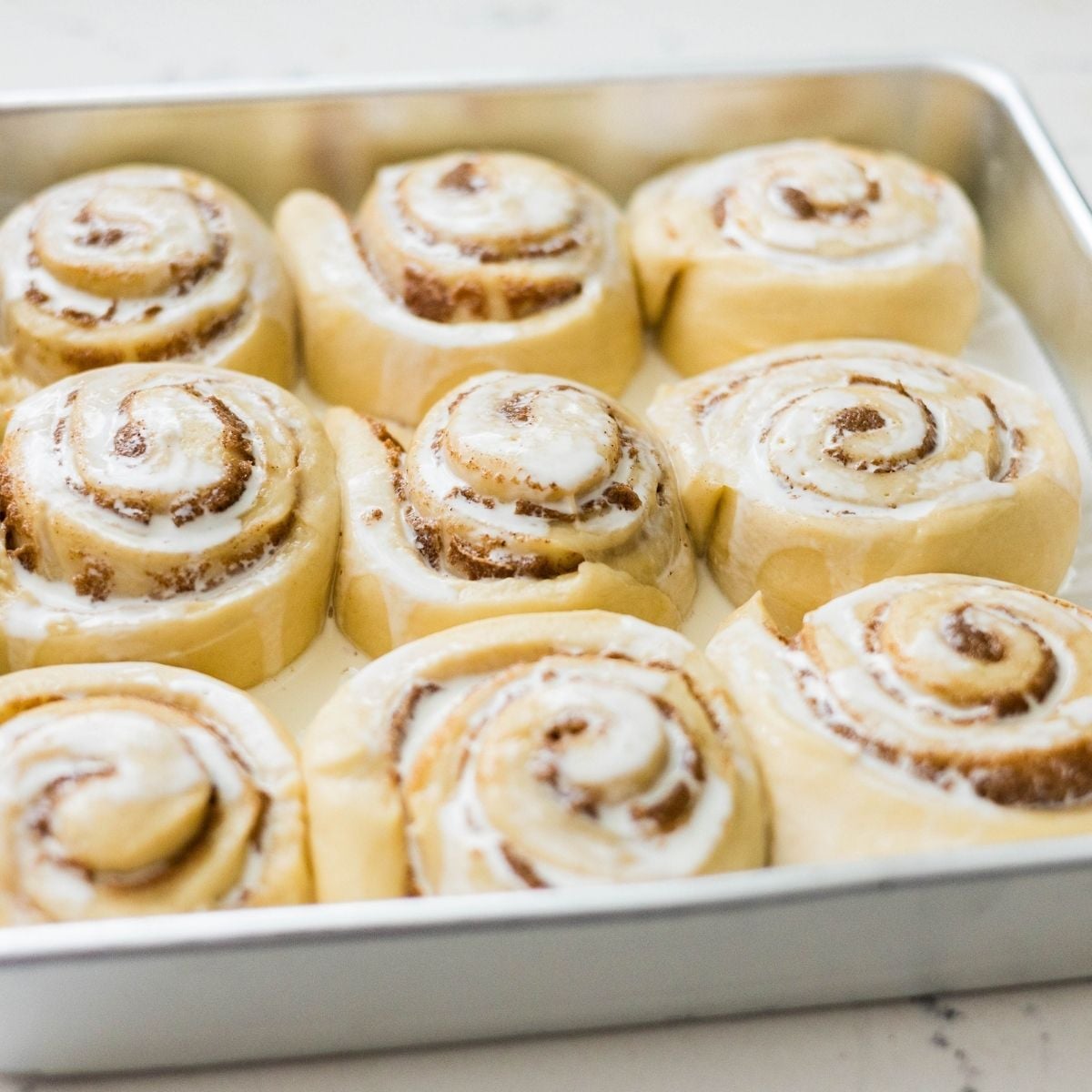
- Add the cream and bake. Pour the heavy cream evenly over the rolls. Bake uncovered at 350°F for 10 minutes, then loosely tent the pan with foil to keep the tops from browning too quickly. Continue baking until the center of a middle roll reaches about 185°F. Every oven is different, so use the baking time as a guide and let the internal temperature tell you when they're done.
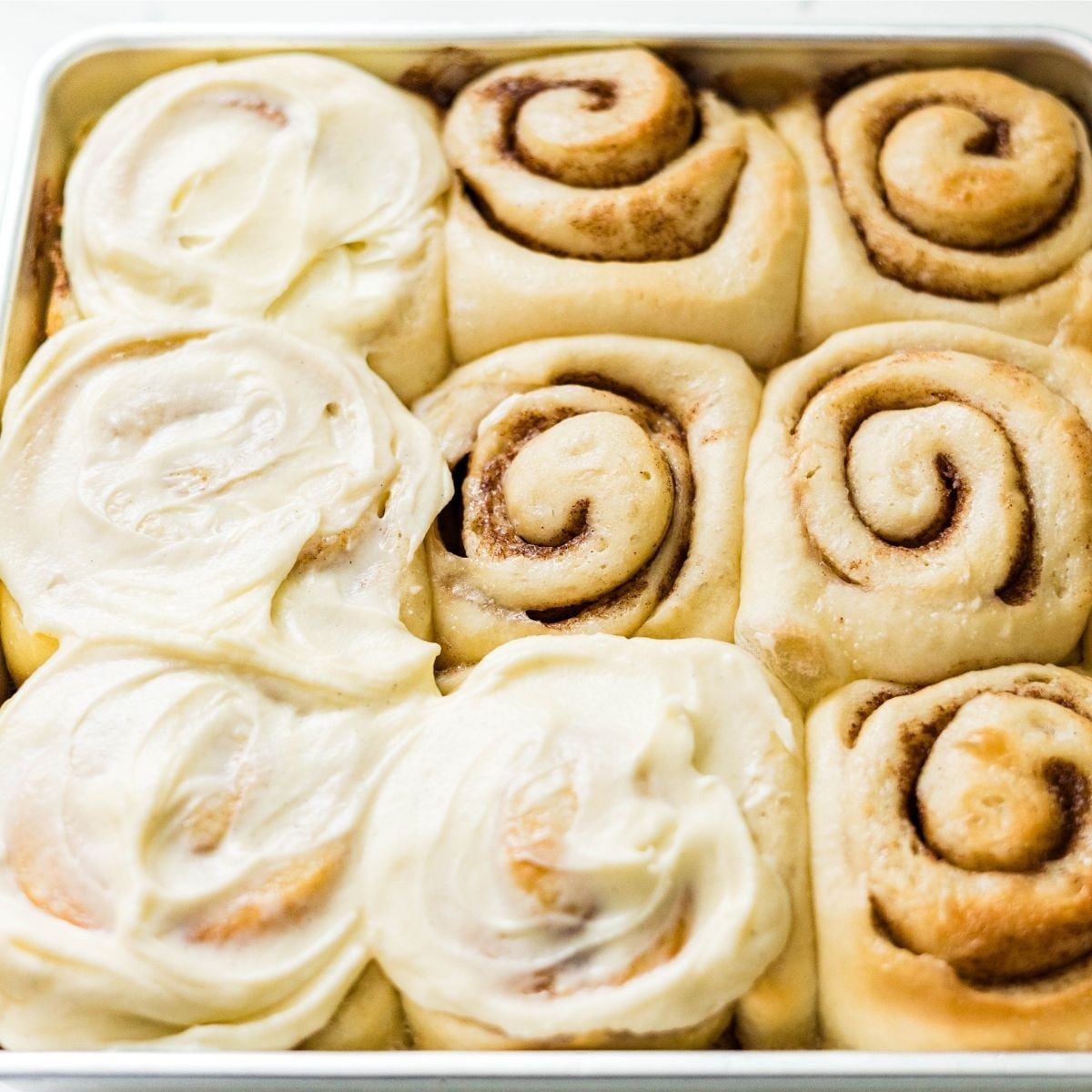
- Frost and serve. Cool five to ten minutes, then spread the cream cheese frosting over the tops while they're still warm so it melts into the layers.
Rose's Top Tips
- Check the temperature, not just the color. Every oven runs differently, so check the center of a middle roll with an instant-read thermometer. I look for about 185°F. Always check a middle roll rather than one along the edge, since the outside rolls tend to bake faster.
- Room temperature everything. Butter, eggs, and the tangzhong all need to be at room temperature before they go in. Cold ingredients drop the dough temperature and slow the first rise.
- Don't add more flour. This dough is sticky and that's correct. Every extra spoonful of flour costs you softness. Lightly flour your hands and the counter, and leave it at that.
- Don't rush either rise. The first builds the structure, the second gives you the pull-apart texture. A dough that hasn't doubled won't get there in the oven.
- Roll the log tightly. Pull the dough gently toward you as you roll. A loose log gaps and unravels as the rolls bake, and the swirl won't hold.
- Cut with floss, not a knife. Slide a length of dental floss under the log, cross the ends over the top, and pull. A knife compresses the roll and squeezes the filling out one side.
- Cool five to ten minutes before frosting. Too hot and the frosting slides straight off. Too cool and it sits on top instead of melting into the layers.
Variations
- Overnight rolls: Shape the rolls and arrange them in the pan, then cover tightly and refrigerate before completing the second rise. In the morning, let them sit at room temperature until noticeably puffed and soft, usually 45 to 90 minutes depending on your kitchen. Pour the cream over the rolls and bake as directed.
- Extra gooey filling: A tablespoon of corn syrup in the filling keeps it caramel-like even after the rolls cool. Without it the filling firms up as they sit.
- Chocolate filling: Swap the cinnamon sugar for cocoa powder, brown sugar, and butter. My cookies and cream cinnamon rolls take the same idea further if you want the full version.
- Half batch: Cut the recipe in half for 4 or 5 rolls in an 8x8. Same temperature, and start checking the internal temperature around 15 minutes since a smaller pan runs faster.
Troubleshooting
- They didn't rise. The yeast was dead or the milk was too hot and killed it. Milk should be warm to the touch, around 110°F, not steaming. This is why step 1 has you bloom the yeast first, so you find out before the flour is in.
- They came out dry. They were most likely overbaked. Since every oven runs differently, start checking the center of a middle roll rather than relying only on the baking time. I pull them at about 185°F. Also make sure you used the full amount of heavy cream.
- The filling leaked out. The butter was melted rather than softened. Melted butter runs as soon as it hits the oven and pools in the pan instead of staying in the swirl. A loose roll does it too.
- The dough is too sticky to work with. That's how it should be. It's an enriched dough with tangzhong in it, so it will feel tackier than a lean bread dough. Flour your hands and the counter lightly, but adding flour to the dough itself is how you end up with heavy rolls.
- They're dense rather than fluffy. Usually a rise that was cut short, or extra flour worked in during kneading. The dough should genuinely double on the first rise and spring back when poked before you shape it.
- The centers are still doughy. The outside can look finished before the middle is fully baked. Bake uncovered for the first 10 minutes, then loosely tent with foil and continue baking until the center of a middle roll reaches about 185°F. If the tops are browning quickly, make sure the foil is loosely covering the pan.
Storage and Reheating
Room temperature: Covered, up to two days. They stay genuinely soft, which is the whole reason for the tangzhong. Day two out of the pan is still good without reheating.
Fridge: Up to five days if you want them to last longer, though the cold firms them up. These need reheating.
Reheating: 20 to 30 seconds in the microwave for a single roll. If you're warming several, 300°F in the oven for about 10 minutes, loosely covered with foil so the frosting doesn't scorch.
Freezing: Wrap unfrosted rolls individually and freeze up to two months. Thaw overnight at room temperature, warm briefly, and frost fresh. Frosting doesn't freeze well, so it's worth making it the day you serve them.
Freezing unbaked: Shape the rolls, arrange them in the pan, cover tightly, and freeze before the second rise. When you want them, thaw in the fridge overnight, then let them come to room temperature and finish rising, about two hours. Pour the cream over and bake as usual.
Recipe FAQs
Technically no, but it's the reason these stay soft past day one. It takes two to three minutes and one small saucepan. If you skip it you'll have decent cinnamon rolls, just not ones that hold up on the counter.
Yes, up to two days in the fridge. Bring it back to room temperature before it goes into the dough, since cold tangzhong slows the first rise.
You can, and they'll still be good. The rolls come out a little softer and slacker without the bread flour, so they may spread more in the pan and hold their spiral less tightly.
Yes. Same amount, and you can skip the blooming step and add it with the dry ingredients. Rise times run a bit shorter. The tradeoff is you won't find out the yeast is dead until the dough fails to rise.
It soaks into the base as they bake, so the bottom layer stays tender instead of firming up. It works from below the same way the foil tent works from above.
185°F in the center of a middle roll is my guide. Every oven runs differently, so use baking time as an estimate and check the internal temperature rather than relying only on how the tops look.
Yes. Shape the rolls and arrange them in the pan, then cover and refrigerate before completing the second rise. In the morning, let them sit at room temperature until noticeably puffed and soft, usually 45 to 90 minutes depending on your kitchen. Pour the cream over and bake as directed.
No. Eight to ten minutes of hand kneading gets you there. The dough is sticky, so a bench scraper helps more than a mixer does.
Cream cheese is the classic and it's what I use every time. My cinnamon roll cream cheese frosting is thick and tangy enough to cut the sweetness. If you want something lighter and sweeter, vanilla buttercream works too.
More Baked Goods You'll Love
- Filipino Spanish Bread: The same enriched dough rolled around a sweet buttery filling. My biggest bread post and the closest relative to these.
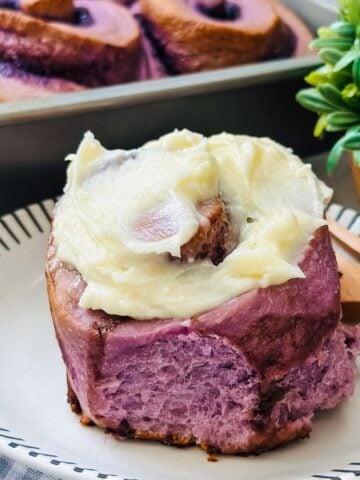
- Ube Cinnamon Rolls: Same shape, same soft dough, purple yam in the swirl instead of cinnamon sugar.
- Apple Cinnamon Rolls with Salted Caramel: For fall, with cooked apples in the filling and caramel over the frosting.
- Malunggay Pandesal: Softer and less sweet, and the roll I'd make if I wanted something for breakfast that isn't dessert.
Did you try this recipe?
Share how it turned out in the comment box below, and if you loved it, share it on Facebook, Pinterest & Instagram.
Thank you!

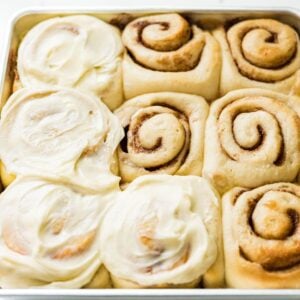
Classic Cinnamon Rolls with Tangzhong
Equipment
- 11 x 11 x 2 inch aluminum baking pan
- Small saucepan
- large mixing bowl
- Stand mixer with dough hook or hands for kneading
- Rolling Pin
- measuring cups and spoons
- Kitchen scale
- Pastry brush or offset spatula
- Sharp knife or unflavored dental floss
- Instant-read thermometer
Ingredients
Tangzhong
- 25 grams all-purpose flour
- 100 grams milk
Dough
- 140 grams milk (about 110°F)
- 7 grams active dry yeast
- 15 grams sugar for blooming the yeast
- 118 grams eggs 2 medium eggs
- 110 grams butter ½ cup
- 95 grams sugar
- 6 grams salt
- 215 grams all-purpose flour
- 240 grams bread flour
Filling
- 6 tablespoons butter softened
- 1 to 2 tablespoons cinnamon powder
- 1 cup brown sugar
For Baking
- ½ cup heavy whipping cream for pouring over the rolls before baking
Cream Cheese Frosting
- 1 ½ cups confectioners’ sugar
- ¼ cup butter softened
- 8 ounces cream cheese softened
- 1 teaspoon vanilla extract
- ¼ teaspoon salt
- 2 tablespoons heavy whipping cream plus more as needed
Instructions
- Make the tangzhong. In a small saucepan, whisk together all-purpose flour and milk. Cook over medium heat, stirring constantly, for 2 to 3 minutes until it thickens into a smooth paste. Remove from heat and let it cool.25 grams all-purpose flour, 100 grams milk
- Bloom the yeast. Warm milk until warm but not hot, about 110°F. Stir in the 15 sugar and active dry yeast. Let it sit for 5 to 10 minutes until foamy.7 grams active dry yeast, 15 grams sugar, 140 grams milk (about 110°F)
- Make the dough. In a large bowl, combine the bloomed yeast mixture, cooled tangzhong, eggs, softened butter, sugar, and salt. Add the all-purpose flour and bread flour. Mix until a shaggy dough forms.118 grams eggs, 110 grams butter, 95 grams sugar, 6 grams salt, 215 grams all-purpose flour, 240 grams bread flour
- Knead the dough. Knead for 8 to 10 minutes, until smooth, elastic, and slightly tacky. The dough should stretch thin without tearing easily. It will feel a little sticky, which is normal.
- First rise. Place the dough in a greased bowl, cover, and let rise in a warm spot for 1 to 1 ½ hours, or until doubled in size.
- Prepare the filling. In a bowl, mix together softened butter, brown sugar, and cinnamon powder until spreadable.6 tablespoons butter, 1 cup brown sugar, 1 to 2 tablespoons cinnamon powder
- Shape the rolls. Roll the dough into a large rectangle on a lightly floured surface. Spread the filling evenly over the dough. Roll it up tightly from the long side into a log, then cut into 9 big rolls.
- Second rise. Arrange the rolls in the prepared pan. Cover and let rise for 45 minutes to 1 hour, or until puffed and touching.
- Add the cream. Pour ½ cup heavy whipping cream evenly over the rolls right before baking.½ cup heavy whipping cream
- Bake. Bake uncovered at 350°F for 10 minutes, then loosely tent the pan with foil to prevent the tops from browning too quickly. Continue baking until the center of a middle roll reaches about 185°F. Every oven bakes differently, so use the baking time as a guide and check the internal temperature for doneness.
- Make the frosting. While the rolls cool slightly, beat together confectioners’ sugar, butter, cream cheese, vanilla extract, salt, and heavy whipping cream until smooth. Add a little more cream if needed for a spreadable texture.1 ½ cups confectioners’ sugar, ¼ cup butter, 8 ounces cream cheese, 1 teaspoon vanilla extract, ¼ teaspoon salt, 2 tablespoons heavy whipping cream
- Frost and serve. Let the rolls cool for 5 to 10 minutes, then spread the cream cheese frosting over the warm rolls and serve.
Save This Recipe 💌
Notes
- These rolls stay extra soft because of the tangzhong and the heavy cream poured over the rolls before baking.
- Use room temperature eggs, butter, and cream cheese so the dough and frosting come together smoothly.
- Warm the milk for the yeast to about 110°F. It should feel warm, not hot. If the yeast does not foam after 5 to 10 minutes, start over.
- For slightly smaller rolls, divide the dough into 12 pieces and bake them in a 9x13 pan instead of 9 rolls in an 11x11 pan. This is a great option if you want more evenly sized rolls for sharing. Keep an eye on bake time since slightly smaller rolls may finish a little sooner.
- This is a soft, slightly sticky dough, so try not to add too much extra flour or the rolls can turn out heavy.
- Bake uncovered for the first 10 minutes, then loosely tent with foil to keep the tops from browning too quickly while the centers finish baking.
- Do not overbake. Overbaking is the fastest way to dry out cinnamon rolls.
- Let the rolls cool just a little before frosting so the frosting melts into the layers without completely sliding off.
- Use an instant-read thermometer to check a middle roll for doneness. Look for an internal temperature of about 185°F. Since ovens vary, the internal temperature is a more reliable guide than baking time or color alone.


Danilyn says
DO you have to use the heavy cream pour or can i just skip that part?
Rose Sioson says
Hello Danilyn, You can skip it, but the pour is what keeps them soft and adds a bit of extra richness. If you skip it, they'll still bake up fine, just slightly less gooey.