Every party we throw has two kinds of noodles. Pancit is a given. The second is carbonara or spaghetti, depending on the mood. Noche Buena, a fiesta, a birthday, it doesn't matter.
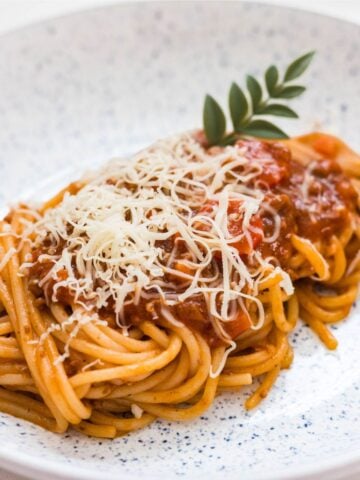
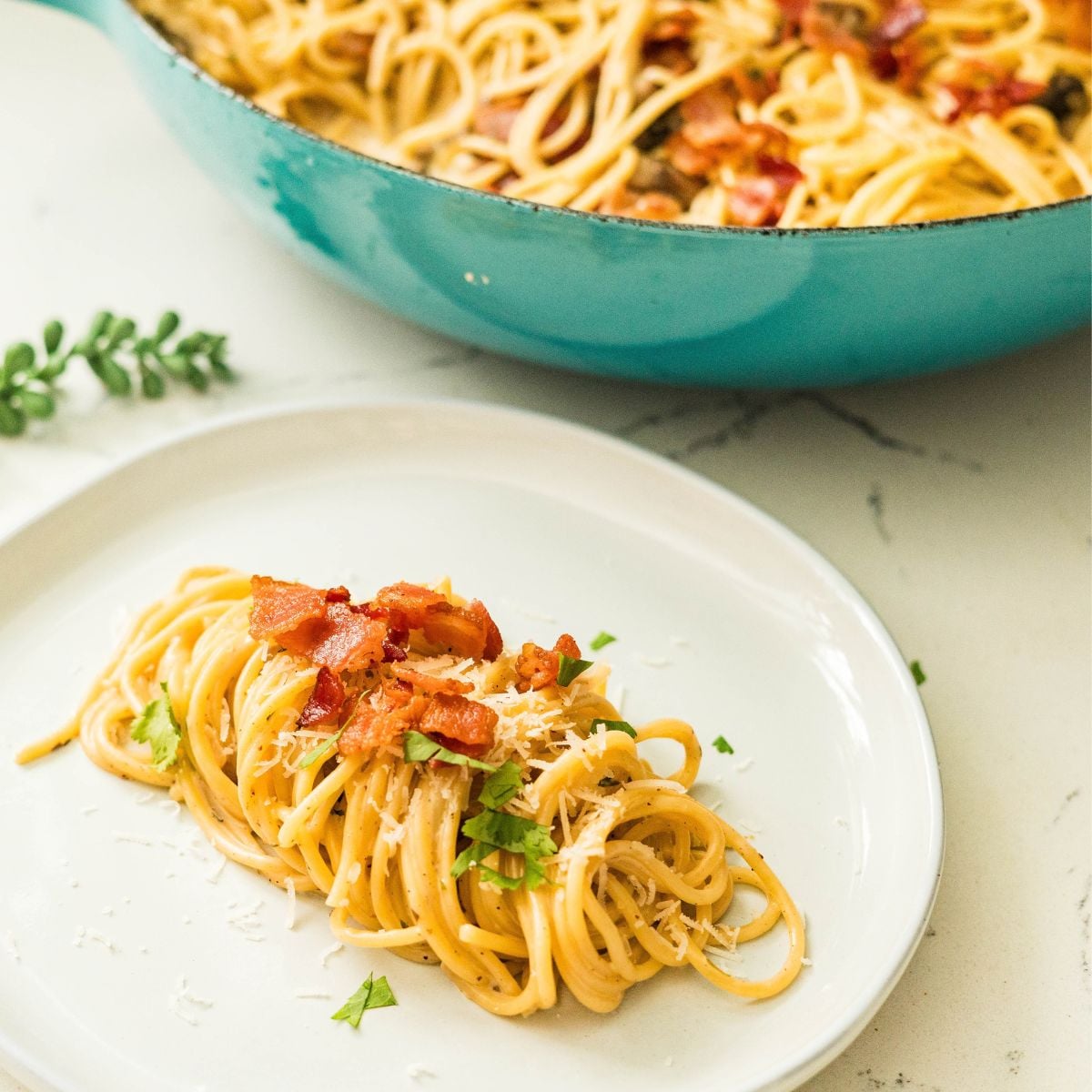
When it's carbonara's turn, this is the Filipino carbonara I make. No eggs, just a creamy sauce of evaporated milk, cream, Parmesan, and Ques-O, with crispy bacon and browned mushrooms. A beef bouillon cube is my secret for that savory depth.
The only rule: keep the heat low once the milk goes in, so the cheese melts smooth.
Serve it next to my pancit with chicken, or make my Filipino spaghetti when the mood calls for sweet.
Save This Recipe 💌
Jump to:
- Why You'll Love This Filipino Carbonara
- What Is Filipino Carbonara
- Filipino Carbonara Ingredients
- How to Keep the Sauce Smooth
- How to Make Filipino Carbonara
- Tips for Making Filipino Carbonara
- Variations
- Storage and Reheating
- Recipe FAQs
- More Filipino Party Food
- Did you try this recipe?
- Filipino Carbonara Recipe
Why You'll Love This Filipino Carbonara
- No eggs to scramble. Italian carbonara depends on tempering eggs with hot pasta, and it's easy to end up with scrambled bits. This sauce is evaporated milk, cream, and cheese, so there's nothing to curdle as long as the heat stays low.
- Ingredients you can find anywhere. Evaporated milk, a bouillon cube, and quick-melt cheese are pantry staples in the Philippines, and all of them are easy to find in US grocery stores too.
- It works with the cream you have. All-purpose cream gives the classic Filipino texture, while heavy cream makes it a little richer. Both work in the same amount.
- Crispy bacon on top. Setting some bacon aside before the sauce goes in keeps it crunchy for topping, so it doesn't go soft in the cream.
- Feeds a party. One pound of spaghetti makes about 6 main dish servings, or up to 8 smaller ones on a buffet table next to the pancit.
What Is Filipino Carbonara
Filipino carbonara is a creamy pasta made with spaghetti, bacon, and mushrooms in a sauce of evaporated milk, cream, and cheese. Unlike Italian carbonara, it doesn't use eggs. The sauce gets its body from the milk and cream instead.
Italian carbonara is made with eggs, cured pork like guanciale, and Pecorino or Parmesan, with no cream at all. Filipino style carbonara took the name and went its own way, using what was in Filipino kitchens: canned evaporated milk, all-purpose cream, bacon, and quick-melt cheese. Some versions add ham or a bouillon cube for extra savory flavor.
It's a party pasta in the Philippines. You'll see it at Noche Buena, fiestas, and birthdays, usually sitting next to a tray of pancit.
Filipino Carbonara Ingredients
- Spaghetti. It's the classic noodle for Filipino party pastas. Cook it just to al dente, since it softens a little more once it's tossed in the warm sauce.
- Bacon. It's both the main protein and the base of the sauce. Cooking it until crispy renders the fat that the onion, garlic, and mushrooms cook in, and some of it gets set aside to stay crunchy on top.
- Butter. It goes in with a little of the bacon fat, adding richness and keeping the onion and garlic from scorching.
- Onion and garlic. They build the savory base. Cook the onion until it's soft so it blends into the sauce instead of staying crunchy.
- Mushrooms. Sliced button mushrooms add an earthy flavor and a meaty bite. Cook them until browned, not just softened, so they don't release water into the sauce.
- Evaporated milk. It's the backbone of the sauce and the ingredient that makes this Filipino style. It's thicker and slightly richer than regular milk, so the sauce turns creamy without needing as much cream. Make sure you don't grab sweetened condensed milk by mistake.
- All-purpose cream or heavy cream. All-purpose cream, like the Nestlé cans common in the Philippines, gives the classic Filipino carbonara texture. Heavy cream works the same way and makes the sauce a little richer.
- Beef bouillon cube. This is the savory backbone. It seasons the whole sauce at once and adds depth that milk and cheese can't give on their own.
- Parmesan. It adds a sharp, salty, nutty flavor. Use it finely grated so it melts evenly into the sauce.
- Ques-O or other quick-melt cheese. This is the Filipino part. Quick-melt cheese is made to melt smoothly, so it makes the sauce silky and helps keep it from turning grainy. If you can't find Ques-O, use another quick-melt cheese or cheddar.
- Reserved pasta water. The starch in it loosens the sauce while helping it cling to the noodles. It's a better way to thin the sauce than adding more cream.
- Black pepper and parsley. The pepper adds a little heat to the rich sauce, and parsley brings color and something fresh to finish.
- Salt, only if needed. The bacon, cheese, and bouillon are all salty, so taste the sauce first. Most of the time, it won't need any.
You'll find the exact amounts in the recipe card below.
How to Keep the Sauce Smooth
A cream and cheese sauce only goes wrong one way: it turns grainy or oily when it gets too hot. Cheese proteins tighten up and squeeze out their fat under high heat, so instead of a silky sauce, you get clumps floating in grease.
Here's how to keep that from happening:
- Turn the heat down before the milk goes in. The evaporated milk should barely simmer, with small bubbles at the edges and no rolling boil.
- Add the cheese while the heat is low. Stir it gently for 2 to 3 minutes, just until it melts. Once it's smooth, stop cooking it.
- Use quick-melt cheese with the Parmesan. Quick-melt cheese is made to melt evenly, and it helps hold the sauce together while the Parmesan adds flavor.
- Grate the Parmesan finely. Fine shreds melt fast and evenly. Big chunks need more heat and time, which is when the sauce can split.
- Add the cream last, and just warm it through. It's going into a sauce that's already hot, so it only needs to heat up. Don't let it come back to a boil.
- Thin it with pasta water, not more cream. The sauce keeps thickening as it sits. A splash of starchy pasta water loosens it and helps it cling to the noodles without making it heavier.
If your sauce does start to look grainy, take the pan off the heat right away and stir in a splash of pasta water. It often comes back together.
How to Make Filipino Carbonara
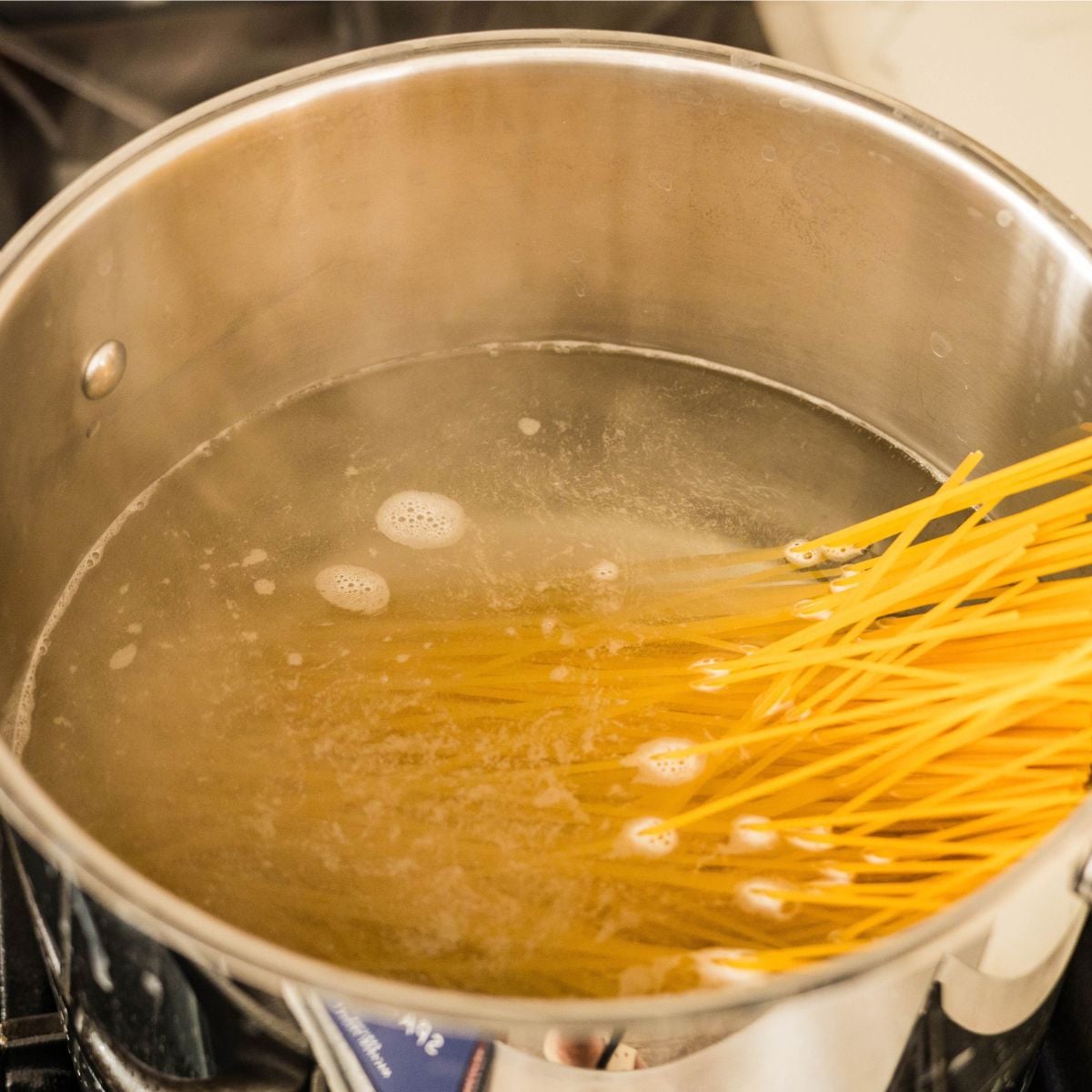
- Cook the spaghetti. Boil the spaghetti in salted water until al dente. Before draining, scoop out about 1 cup of the pasta water and set it aside for thinning the sauce later.
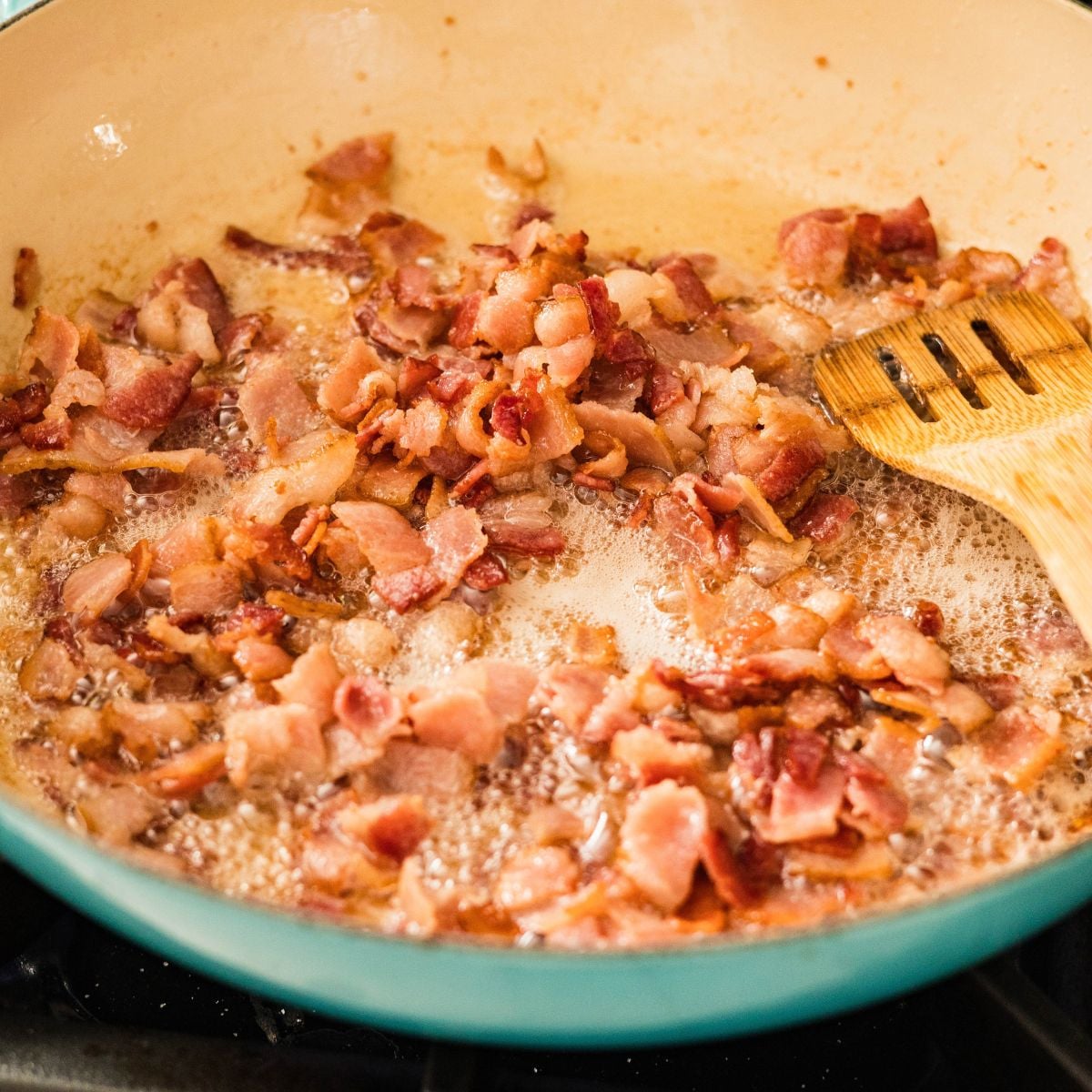
- Crisp the bacon. In a large pan, cook the bacon over medium heat for about 10 minutes, until crispy. Transfer it to a plate, setting aside a handful for topping. Taking it out keeps it crispy while the sauce cooks.
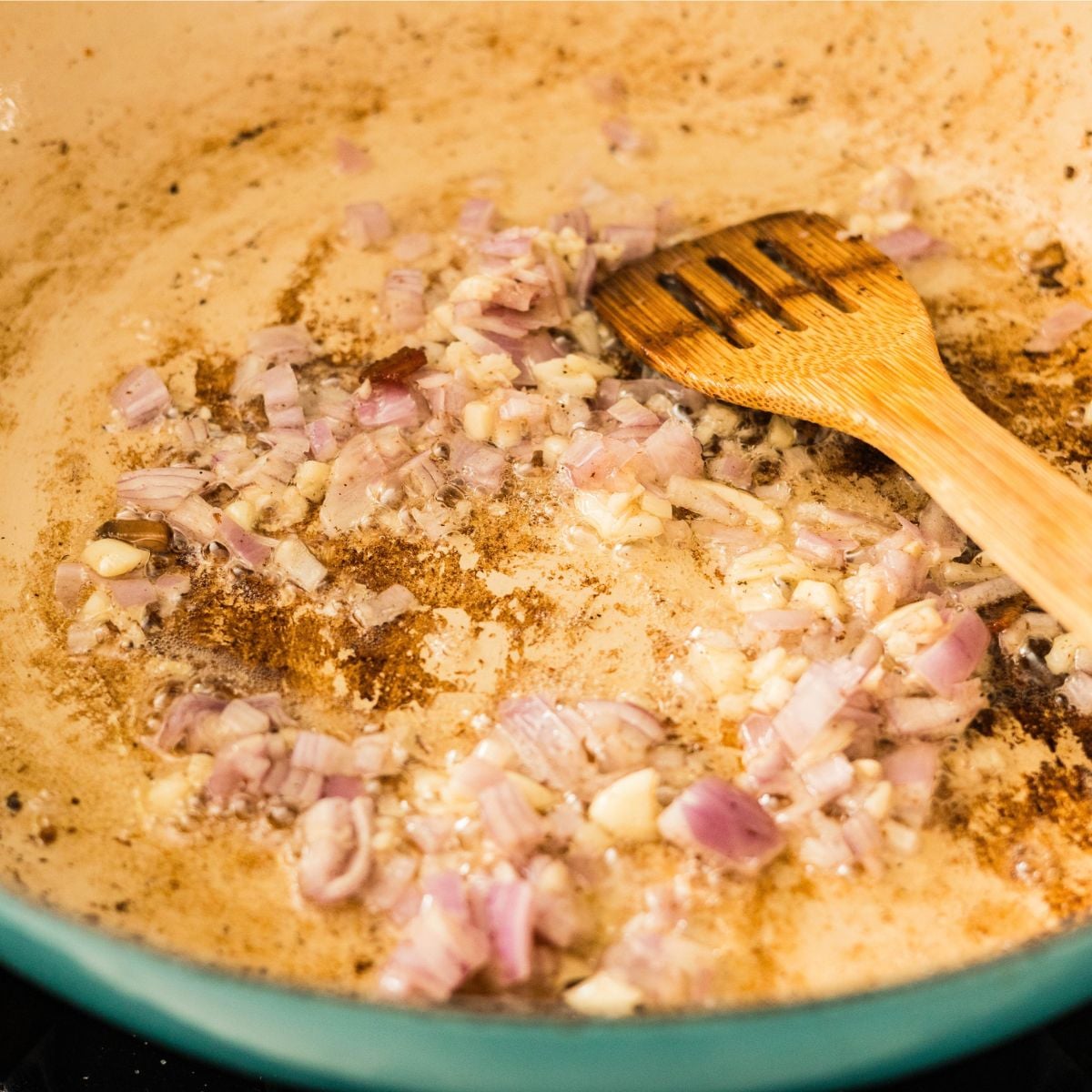
- Cook the onion and garlic. Leave a little bacon fat in the pan and add the butter. The bacon fat brings flavor, and the butter keeps the aromatics from scorching. Add the onion and cook until it's soft, then add the garlic and cook until fragrant.
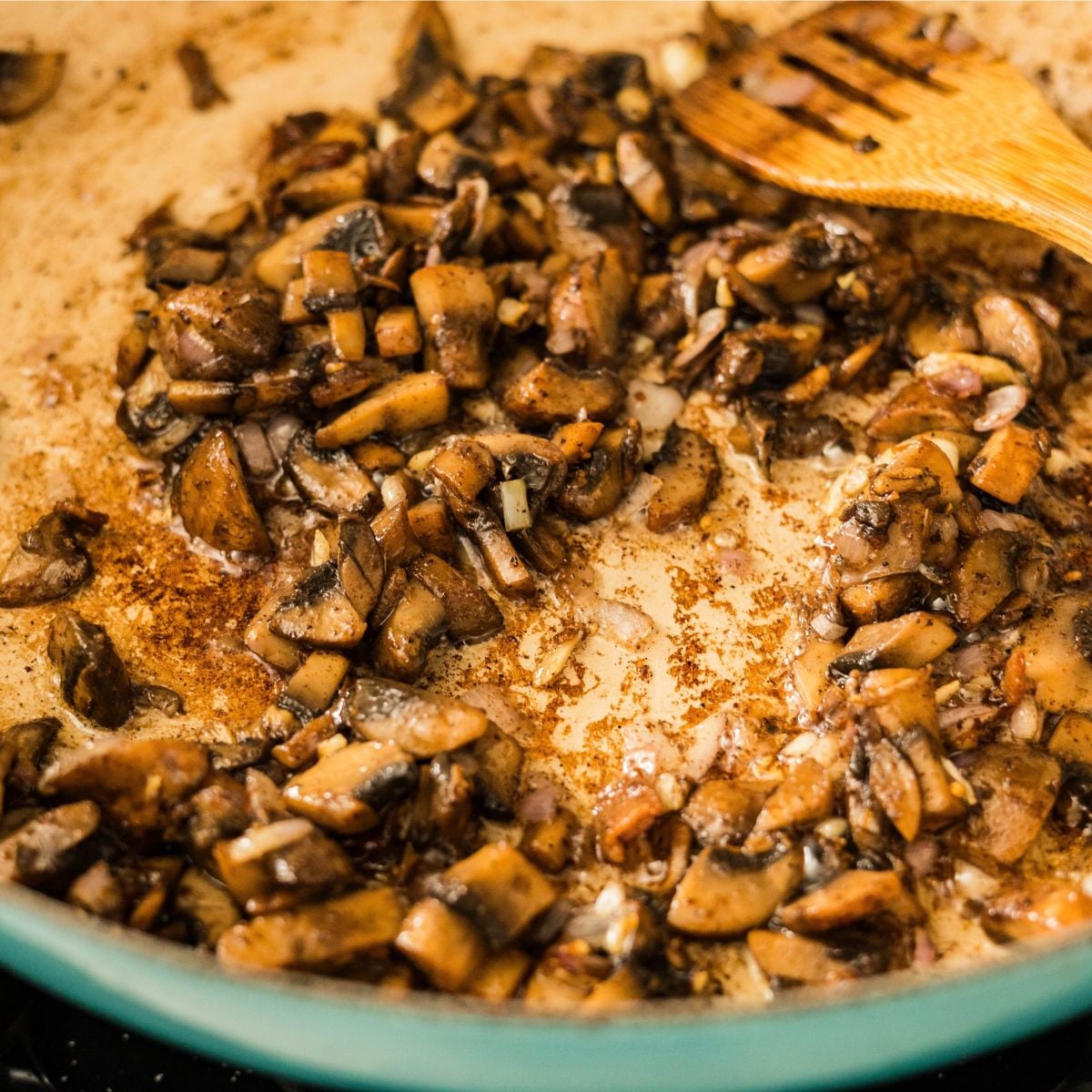
- Brown the mushrooms. Add the mushrooms and cook until browned. Browning drives off their moisture, so they don't water down the sauce.
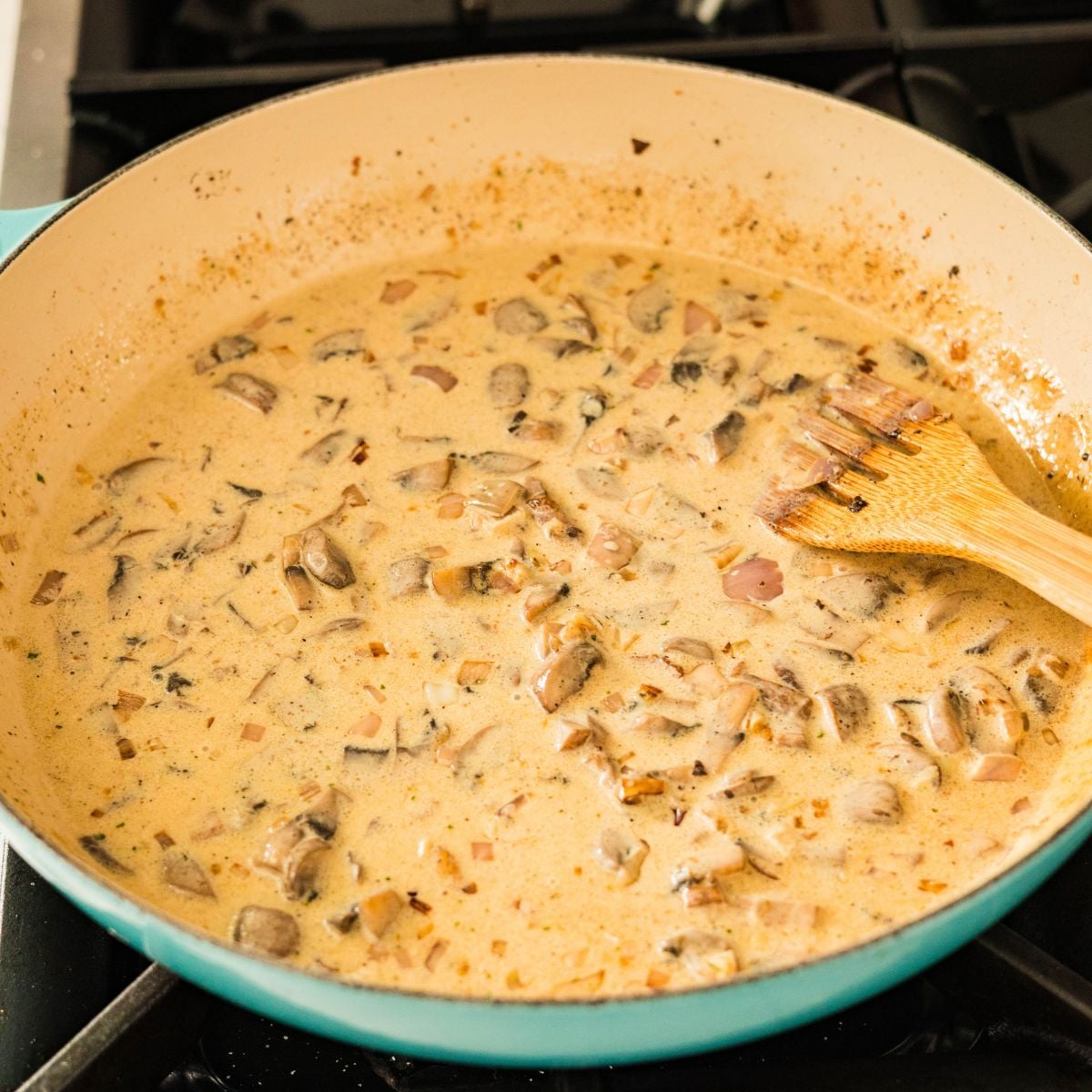
- Simmer the milk and bouillon. Lower the heat and pour in the evaporated milk. Let it gently simmer for 3 to 5 minutes, with small bubbles at the edges and no full boil. Then crumble in the beef bouillon cube and stir until it's completely dissolved.
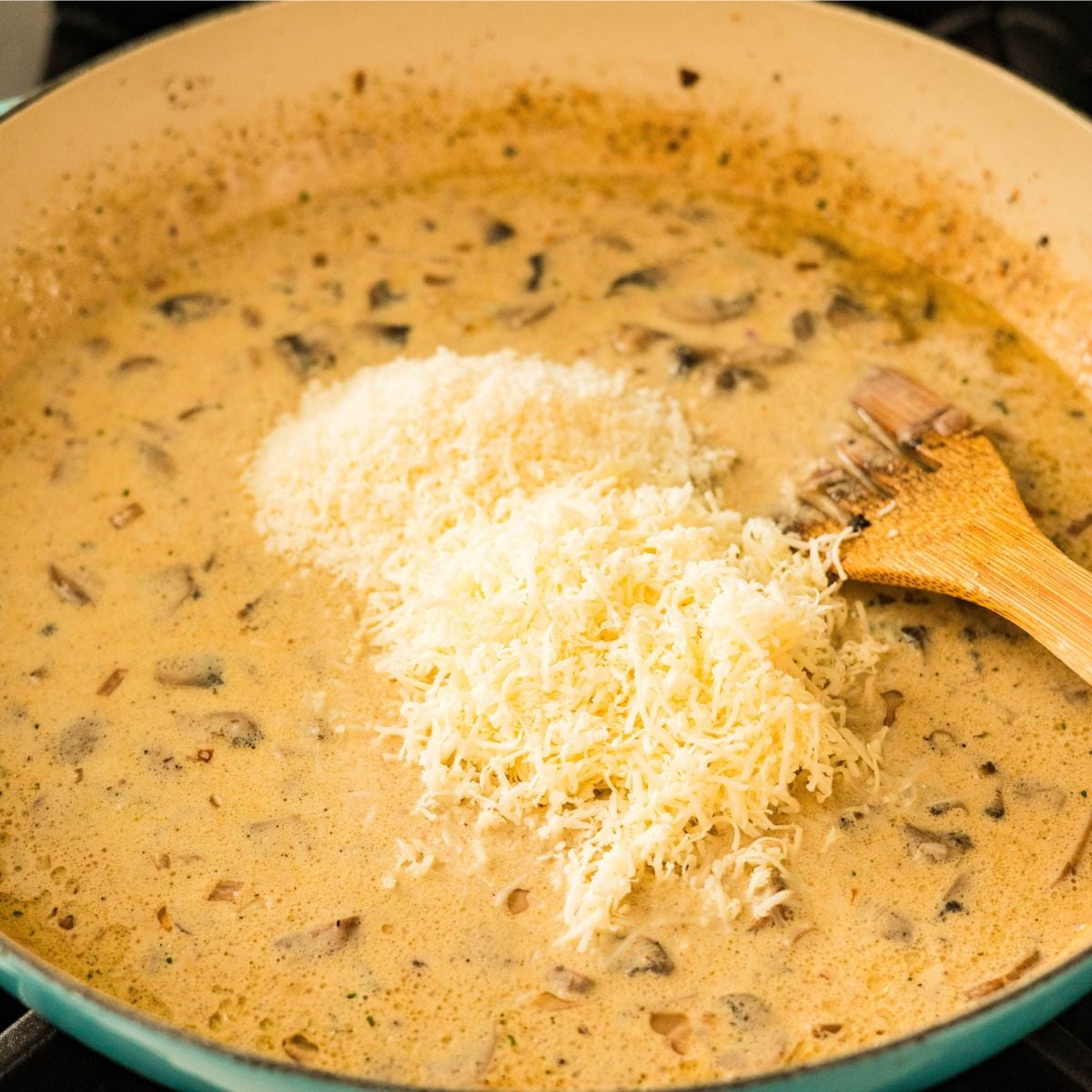
- Melt in the cheese. Add the Parmesan and Ques-O. Stir gently for 2 to 3 minutes, just until the cheese melts and the sauce is smooth.
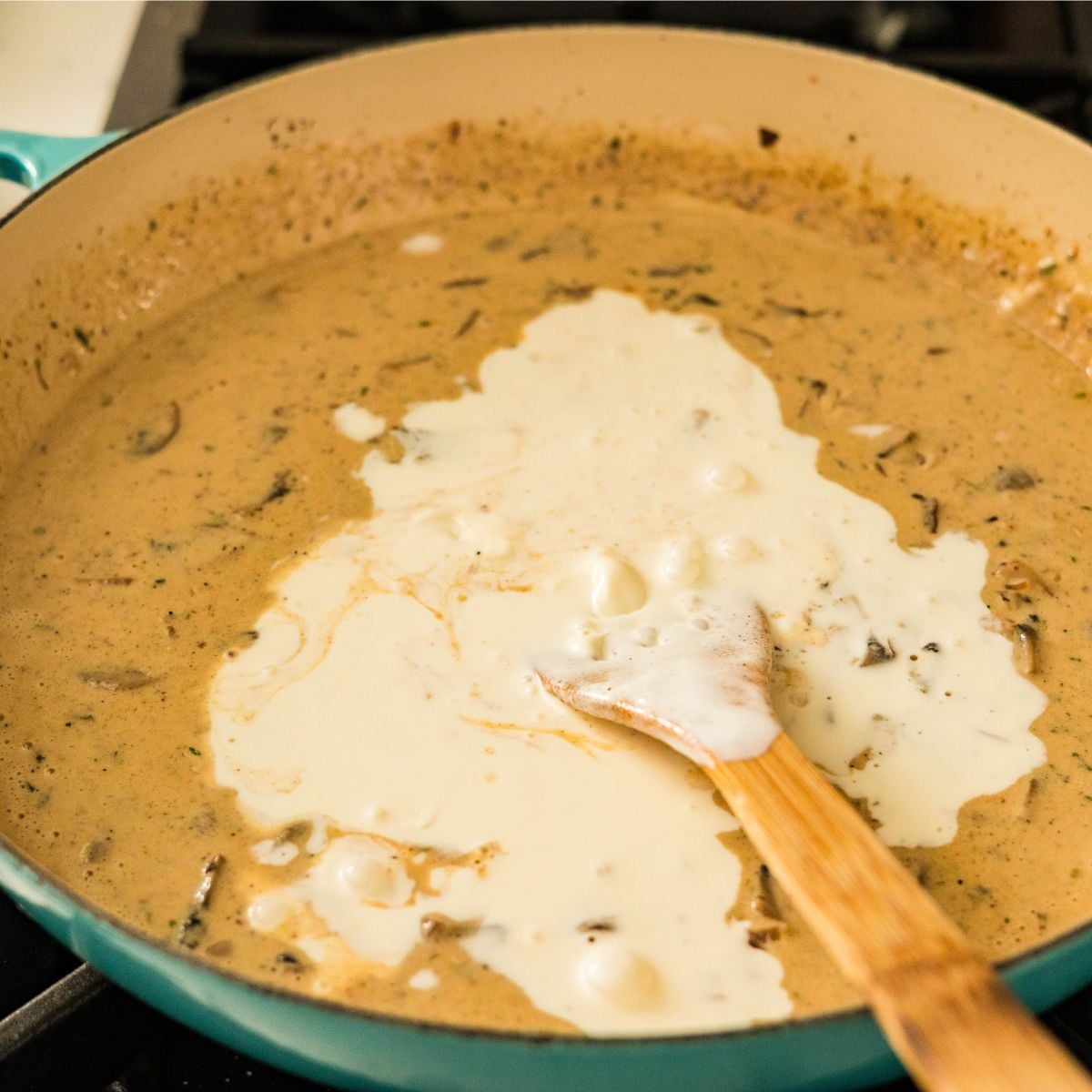
- Add the cream, bacon, and seasoning. Pour in the cream and stir until it's combined and heated through. Don't let it boil. Stir the bacon back in. Add the black pepper, then taste before adding any salt, since the bacon, cheese, and bouillon are already salty.
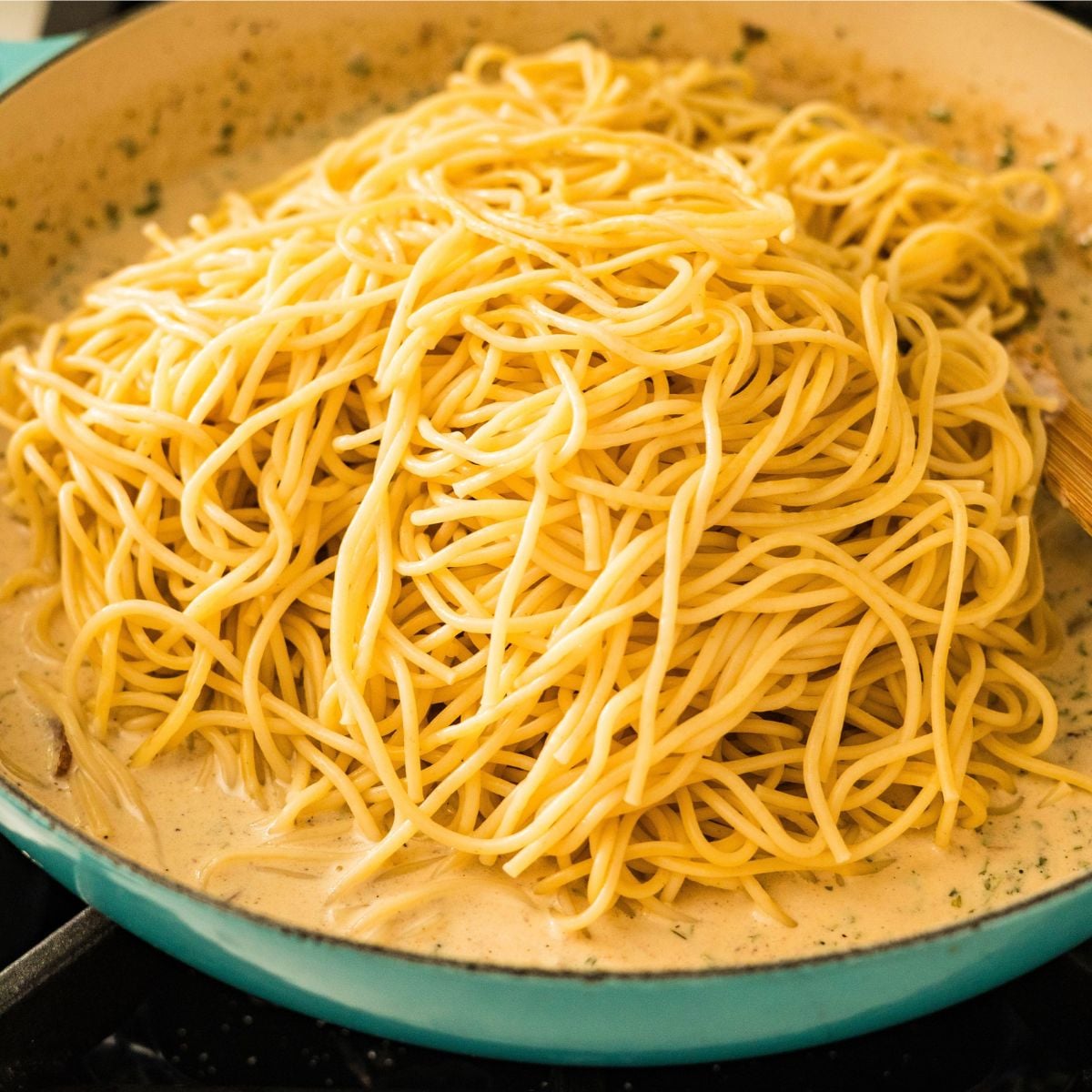
- Toss with the pasta. Add the spaghetti and toss until it's evenly coated. If the sauce is too thick, add the reserved pasta water a little at a time until it's the consistency you like.
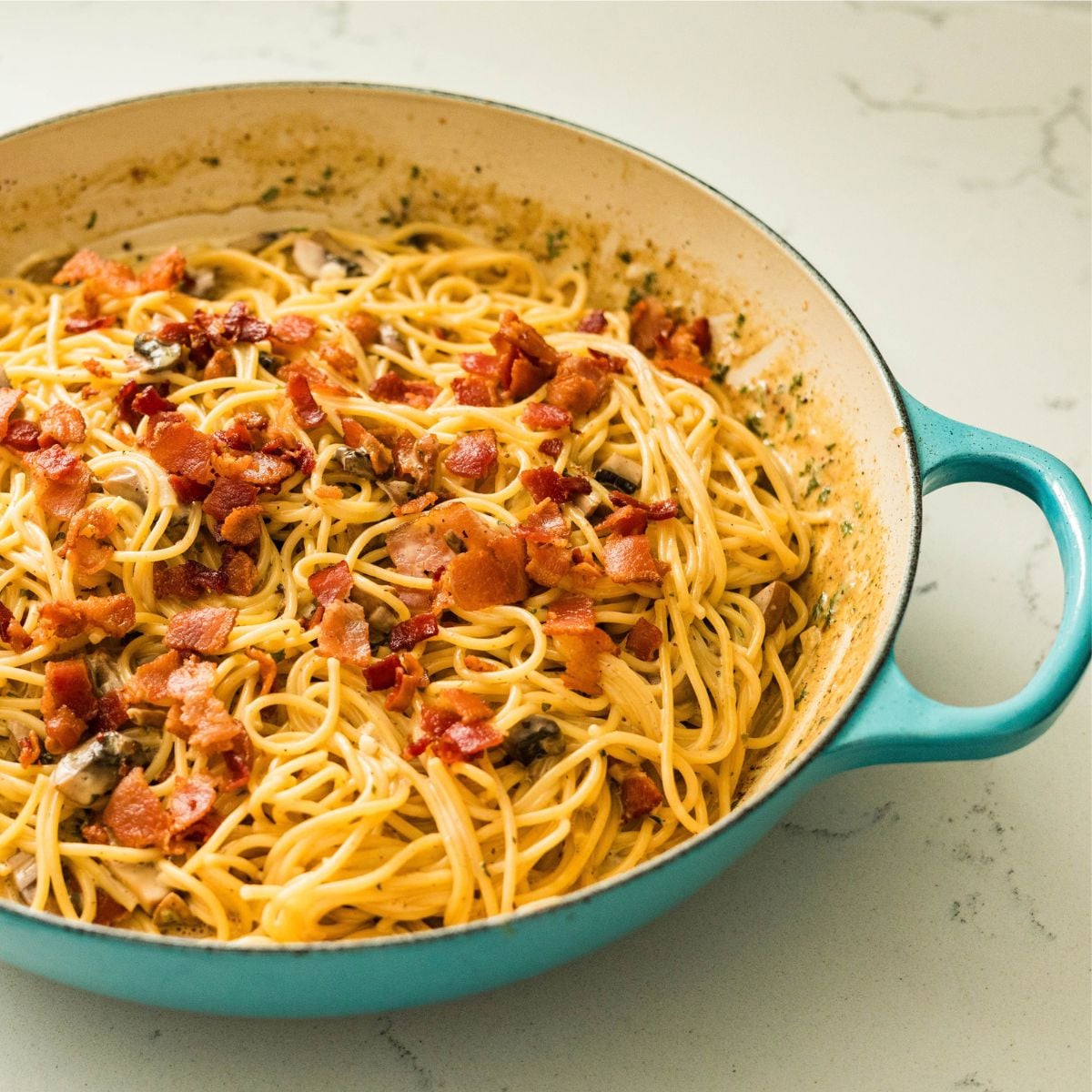
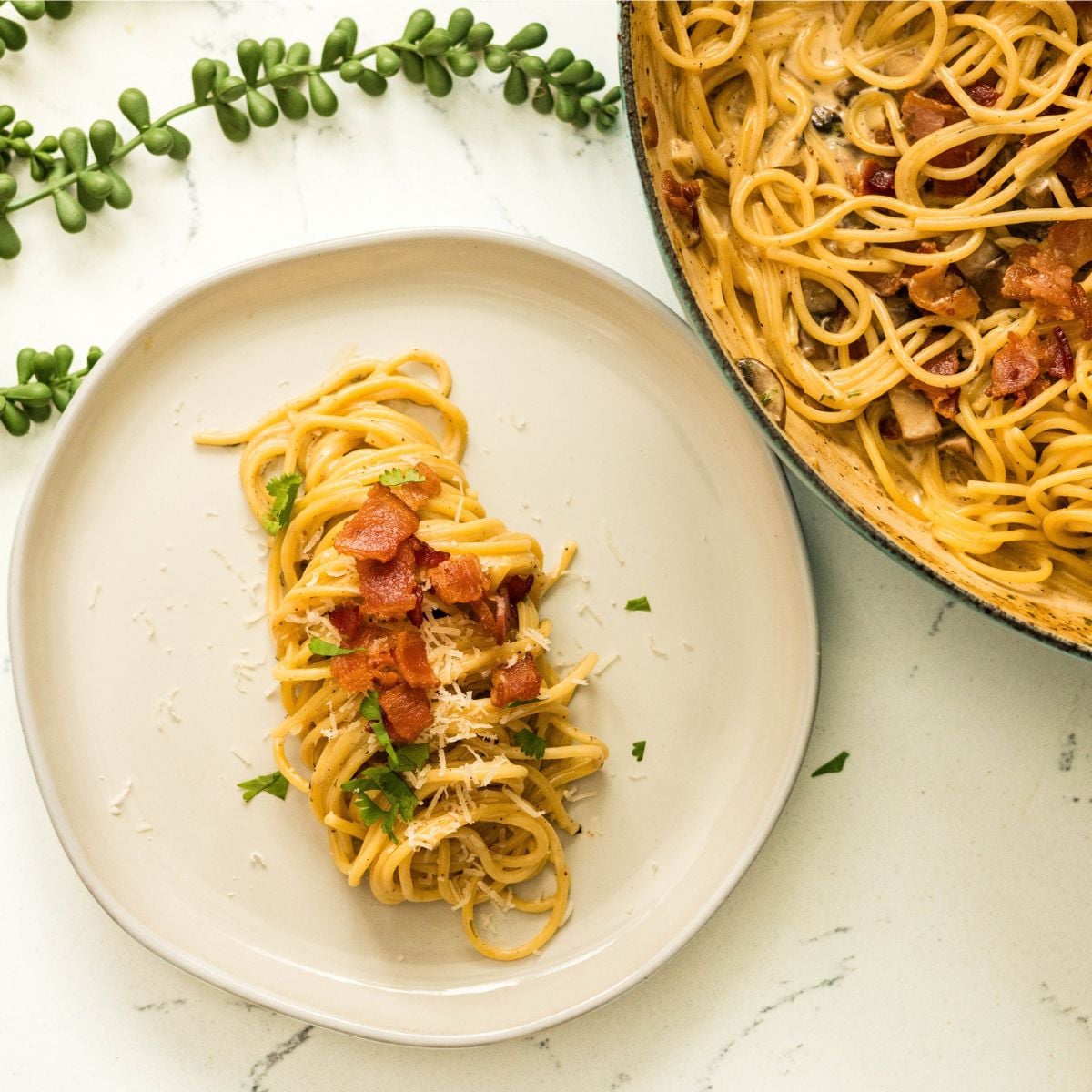
- Finish and serve. Stir in most of the parsley. Serve right away, topped with the reserved bacon, the rest of the parsley, and extra Parmesan if you like.
Tips for Making Filipino Carbonara
- Save the pasta water before you drain. It's easy to forget once the pot is in the sink. That starchy water is how you loosen the sauce later without diluting the flavor.
- Cook the spaghetti just to al dente. It keeps cooking a little once it's tossed in the warm sauce. Fully cooked pasta can turn soft by the time you serve it.
- Take the bacon out before making the sauce. If it sits in the cream the whole time, it goes soft. Stirring it back in at the end, with a handful saved for the top, keeps it crispy.
- Brown the mushrooms all the way. Mushrooms release water as they cook. If you add the milk before that water cooks off, the sauce turns thin and gray.
- Have everything ready before the milk goes in. From the evaporated milk to the pasta takes only 5 to 8 minutes, so measure out the cheese, cream, and bouillon ahead of time. You won't have time to grate cheese while the sauce simmers.
- Keep the heat low once the milk is in. High heat is what makes cheese sauces turn grainy or oily. A gentle simmer keeps it smooth.
- Taste before you salt. The bacon, Parmesan, quick-melt cheese, and bouillon are all salty. Most of the time, it won't need any extra.
- Serve it right away. The sauce keeps thickening as it sits. If it gets too thick before serving, stir in a splash of reserved pasta water to loosen it.
Variations
- Use ham instead of bacon. Diced ham is a common swap in Filipino carbonara, especially around Christmas when there's leftover holiday ham. Brown it lightly in the butter, since it won't render fat the way bacon does.
- Add chicken. Shredded cooked chicken, like leftover rotisserie chicken, stirs in with the bacon at the end and turns this into a heartier main dish.
- Make tuna carbonara. Drained canned tuna is a budget-friendly Filipino version. Fold it in gently at the end so it stays in flakes.
- Skip the mushrooms. If you have picky eaters, leave them out. The sauce stays the same, just without the earthy bite.
- Use cheddar instead of quick-melt. Cheddar adds a sharper flavor. It's a little more likely to turn grainy, so keep the heat especially low when you add it.
- Swap the noodle. Fettuccine and penne both hold the sauce well. Penne is easier to serve from a big tray at a party.
- Add a little heat. A pinch of red pepper flakes with the garlic cuts through the richness.
Storage and Reheating
- Fridge: Let the carbonara cool, then store it in an airtight container in the fridge for up to 3 to 4 days. The sauce thickens a lot once it's cold, which is normal.
- Reheating on the stove: Warm it in a pan over low heat with a splash of milk or water, stirring gently until the sauce loosens and coats the noodles again. Low heat keeps the cheese from separating.
- Reheating in the microwave: Add a splash of milk or water, cover it, and heat in short bursts of about 30 seconds, stirring in between. Heating it all at once can make the sauce oily.
- Freezing: I don't recommend it. Cream and cheese sauces tend to separate and turn grainy after freezing and thawing.
Recipe FAQs
Yes, but keep the sauce and the pasta separate until you're ready to serve. Rewarm the sauce gently over low heat, loosening it with a splash of milk or pasta water, then toss in the pasta and the reserved bacon just before serving. If you toss everything together too early, the pasta soaks up the sauce and turns dry and soft.
Whole milk works in a pinch, but the sauce will be thinner and less rich. To make up for it, use a little more cream and let the milk simmer a few minutes longer. I haven't tested this swap, so expect a slightly different texture.
Yes. Chicken bouillon gives a lighter, milder savory flavor, while beef bouillon adds deeper flavor that stands up to the bacon and cheese. Either way, taste before adding any salt, since both are salty.
You can, but freshly grated Parmesan melts more smoothly. Pre-grated Parmesan in a shaker usually has anti-caking agents that can make the sauce slightly gritty. If that's all you have, add it slowly over low heat and stir until it melts.
At our parties, it sits next to the pancit, but it also goes with lumpiang shanghai, fried chicken, or garlic bread for a full party table.
More Filipino Party Food
Looking for other recipes like this? Try these:
- Filipino Macaroni Salad: The sweet, creamy macaroni salad every Filipino party table has.
- Chicken Embutido: Filipino meatloaf, steamed and sliced for serving.
- Beef Caldereta: Tender beef in a rich tomato stew, a fiesta classic.
- Pork Menudo: Pork and potatoes in tomato sauce, made by the potful for gatherings.
- Mango Glazed Ham: A sweet glazed ham for the Noche Buena table.
- Buko Pandan Salad: Young coconut and pandan jelly in a sweet cream dressing.

Did you try this recipe?
Share how it turned out in the comment box below, and if you loved it, share it on Facebook, Pinterest & Instagram.
Thank you!

Filipino Carbonara Recipe
Equipment
- large pot
- Colander
- Large, deep pan or braiser
- Wooden spoon
Ingredients
- 1 pound spaghetti
- 8 ounces bacon chopped
- 2 tablespoons butter
- 1 small onion finely chopped
- 4 cloves garlic minced
- 8 ounces sliced mushrooms about 2 ½ to 3 cups
- 1 12 ounce can evaporated milk or whole milk
- 1 cup all-purpose cream or heavy cream
- 1 beef bouillon cube
- 1 cup grated Parmesan cheese
- 1 cup shredded Ques-O or other quick-melt cheese
- ½ to 1 cup reserved pasta water
- ½ teaspoon black pepper
- 2 to 3 tablespoons chopped fresh parsley
- Salt only if needed
Instructions
- Cook the spaghetti in salted water until al dente. Before draining, reserve about 1 cup of the pasta water.1 pound spaghetti
- In a large pan, cook the bacon over medium heat for about 10 minutes, until crispy. Transfer it to a plate, setting aside a handful for topping.8 ounces bacon
- Leave a little bacon fat in the pan and add the butter. Add the onion and cook until soft, then add the garlic and cook until fragrant.2 tablespoons butter, 1 small onion, 4 cloves garlic
- Add the mushrooms and cook until browned.8 ounces sliced mushrooms
- Lower the heat and pour in the evaporated milk. Gently simmer for 3 to 5 minutes, without letting it boil. Crumble in the beef bouillon cube and stir until dissolved.1 12 ounce can evaporated milk, 1 beef bouillon cube
- Add the Parmesan and Ques-O. Stir gently for 2 to 3 minutes, just until the cheese melts and the sauce is smooth.1 cup grated Parmesan cheese, 1 cup shredded Ques-O or other quick-melt cheese
- Pour in the cream and stir until heated through, without letting it boil. Stir the bacon back in. Add the black pepper, then taste before adding any salt.1 cup all-purpose cream or heavy cream, ½ teaspoon black pepper, Salt
- Add the spaghetti and toss until evenly coated. If the sauce is too thick, add the reserved pasta water a little at a time.1 pound spaghetti, ½ to 1 cup reserved pasta water
- Stir in most of the parsley. Serve right away, topped with the reserved bacon, the rest of the parsley, and extra Parmesan if you like.2 to 3 tablespoons chopped fresh parsley
Save This Recipe 💌
Notes
- Cream: All-purpose cream gives the classic Filipino texture. Heavy cream makes it a little richer.
- Cheese: If you can't find Ques-O, use another quick-melt cheese or cheddar. Cheddar is more likely to turn grainy, so keep the heat especially low.
- Low heat: Keep the sauce at a gentle simmer from the moment the milk goes in. High heat makes cheese sauces grainy or oily.
- Salt: The bacon, cheeses, and bouillon are all salty, so taste before adding any.
- Pasta water: Use it to thin the sauce instead of adding more cream. The sauce thickens as it sits.
- Storage: Refrigerate leftovers in an airtight container for 3 to 4 days. Reheat over low heat with a splash of milk or water.