Growing up in the Philippines, salad never meant lettuce. When someone said they were bringing the salad, they meant dessert: cold, sweet, spooned into a bowl at the end of the meal, and usually the first thing to run out.
There were really only two options. Either it was fruit salad, or it was buko pandan salad. Birthdays, fiestas, Christmas Eve, a graduation. One of the two was in the refrigerator, and if a house had both, you knew it was a big occasion.
Save This Recipe 💌
Jump to:
Why You'll Love This Buko Pandan Salad
- No oven required. The only stovetop work is dissolving the gulaman, which matters in December when every burner and rack is already spoken for by the rest of the menu.
- It has to be made ahead. The gulaman needs time to set and the whole bowl needs to chill through, so this is a dessert you finish the night before and carry to the party already done.
- It stretches. Gulaman, and canned coconut are all cheap and all expand, so scaling up for twenty people costs a fraction of what most party desserts do.
- It keeps. Leftovers hold in the refrigerator for days without falling apart, which is more than most cold desserts manage.
- It's hard to get wrong. The gulaman is the only step that decides whether this works, and the rule is simple: use three-quarters of the water the package calls for, so if it says four cups, use three. Less water means a firmer set, and firm cubes hold their shape in the cream instead of breaking down.
What Is Buko Pandan Salad
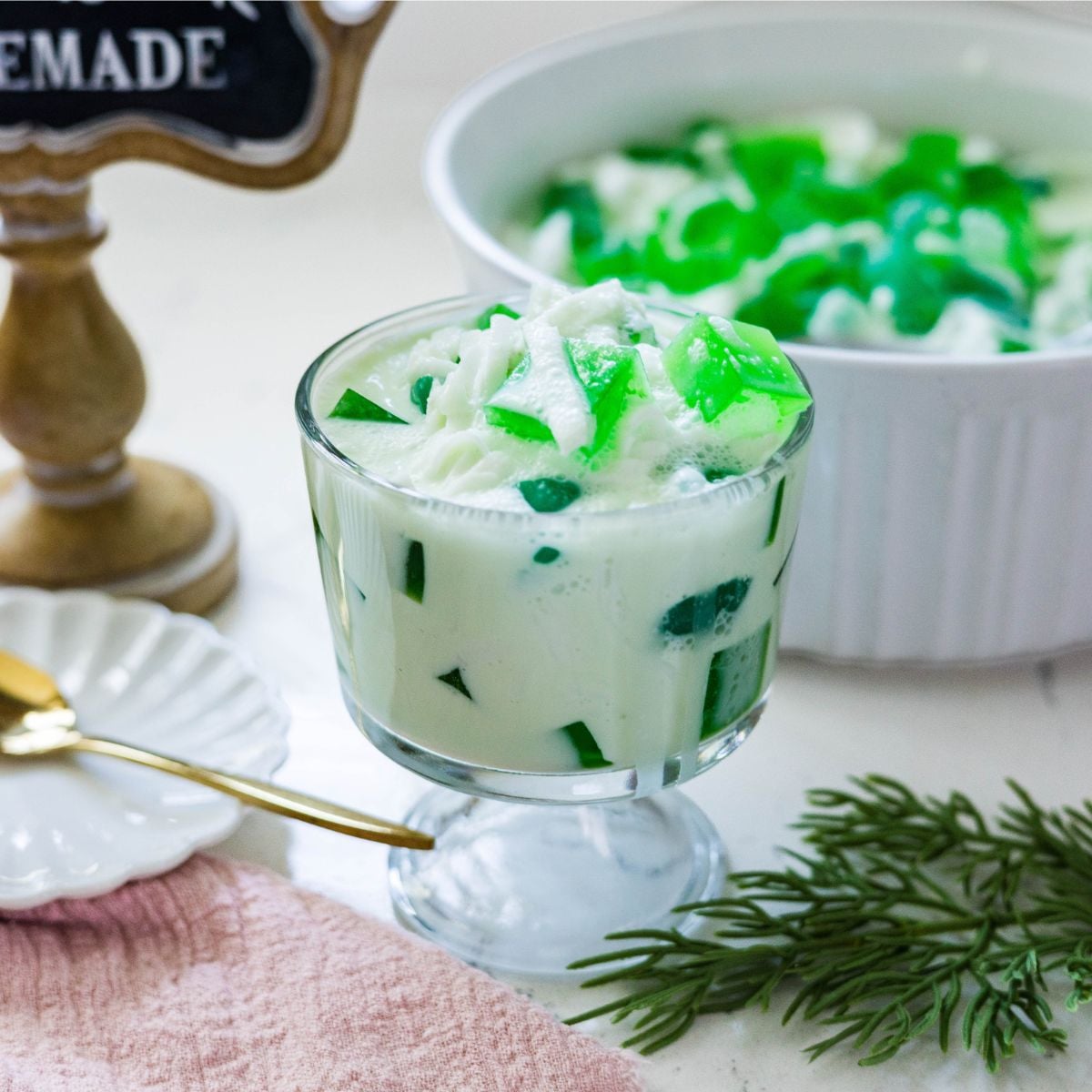
Buko pandan salad is a chilled Filipino dessert made from strips of young coconut, pandan-flavored gulaman cut into cubes, and sweetened cream. "Buko" is Tagalog for young coconut and "pandan" refers to screwpine leaves, which give the jelly its green color and grassy vanilla scent. Most versions also include sago pearls, kaong, or nata de coco for texture.
It's usually traced back to Bohol, though like most party dishes it spread far enough that every family now makes it a little differently.
The salad part throws people off, and it should. There's nothing green in it in the way an American salad is green. Filipino cooking uses the word for anything mixed and served in a bowl alongside the main spread, sweet or savory, which is how you end up with a table holding both this and a Filipino macaroni salad made with condensed milk.
Ingredients You'll Need
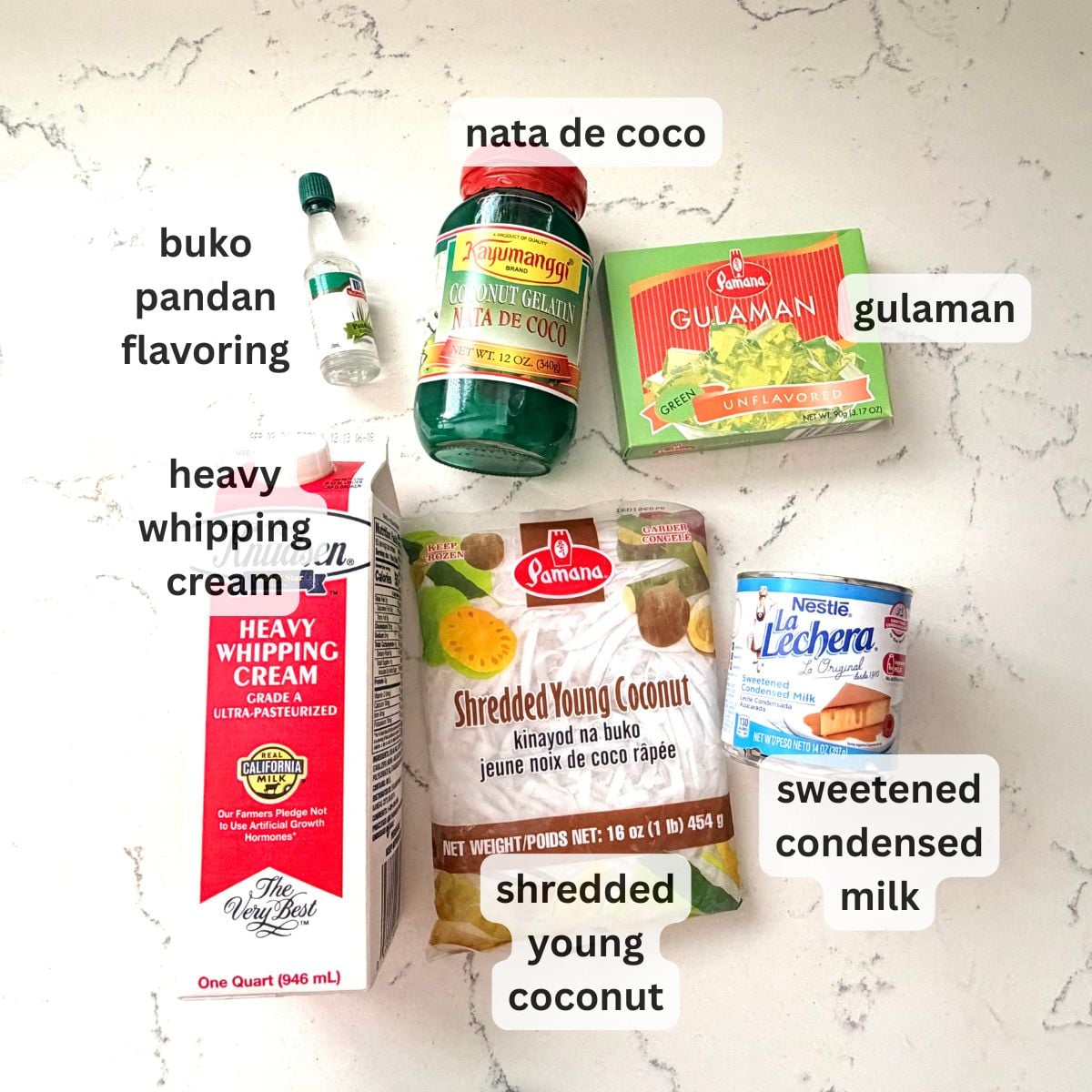
- Gulaman powder: this is the backbone of the salad and the only ingredient that decides whether the whole thing works. Cook it according to your package directions, then cut the water by a quarter: if it calls for four cups, use three. Powder dissolves faster than bars and needs no soaking, but it also sets softer if you follow the box exactly, which is why the water reduction matters. Firm cubes hold their edges in the cream, while a soft set breaks down and turns the bowl watery. If jelly desserts are new to you, black grass jelly dessert works on the same principle.
- Buko pandan flavoring: a few drops carry the grassy vanilla scent that gives the dish its name. Fresh pandan leaves work too, but they need a long simmer to release much flavor, and the bottled extract is what most Filipino households actually reach for.
- Green food coloring: purely cosmetic, and worth saying out loud. Pandan extract alone gives a pale, murky tint, so the color everyone recognizes comes from a few drops of green. Leave it out if you prefer and the taste is unchanged.
- Shredded young coconut: buko is soft and mildly sweet, which is what balances the firmer jelly. Frozen shredded buko from a Filipino or Asian market is closer to fresh than canned, which tends to be packed in heavy syrup and comes out too sweet. Thaw and drain it well, because trapped water thins the cream.
- Nata de coco: these coconut gel cubes stay firm and chewy no matter how long the salad sits, so they hold up where softer ingredients don't. Drain off the packing syrup or the salad ends up sweeter than you intended.
- Heavy whipping cream: this is the body of the dressing, and it goes in straight from the carton with no whipping. Filipino recipes traditionally use canned table cream or all-purpose cream, which is thicker and already set, so unwhipped heavy cream starts looser than you might expect. It firms up as the salad chills, so resist the urge to add more or whip it to compensate.
- Sweetened condensed milk: it sweetens and thickens at the same time, which is why there's no sugar in the recipe. Adjust it to taste, since your coconut and nata de coco already bring sweetness of their own. It plays the same role in avocado with condensed milk.
See recipe card for quantities.
Gulaman vs Gelatin vs Agar Powder
All three get called "gelatin" in everyday Filipino kitchen talk, which is where the confusion starts.
Gulaman powder is agar, made from seaweed, and it's what boxes like Mr. Hat, Alsa, and Ferna contain. It's pre-portioned and often already sweetened, so one box is rated for a set number of cups. This is what you want.
Agar powder sold in Japanese, Korean, or health food stores is the same seaweed gel, but unsweetened and far more concentrated. It is not a one-to-one swap for a box of gulaman.
Gelatin is animal collagen, sold in envelopes like Knox. It behaves differently in almost every way that matters here.
| Gulaman powder | Pure agar powder | Gelatin | |
|---|---|---|---|
| Needs boiling | Yes | Yes | No, boiling weakens it |
| Sets at | Room temperature | Room temperature | Refrigerator only |
| Texture | Firm, clean bite | Firm, can turn brittle | Soft, melts in the mouth |
| Holds on a party table | Yes | Yes | Softens and weeps |
| Vegetarian | Yes | Yes | No |
Gulaman wins because the cubes have to survive stirring into cream and then sitting out for a few hours. Agar holds its shape at room temperature. Gelatin melts near body temperature, so the cubes round off, release liquid, and give you the watery bowl nobody wants.
Whichever you use, cut the liquid to three-quarters of what the package calls for. Four cups becomes three. That one change is what separates cubes that hold from cubes that dissolve.
How to Make Buko Pandan Salad
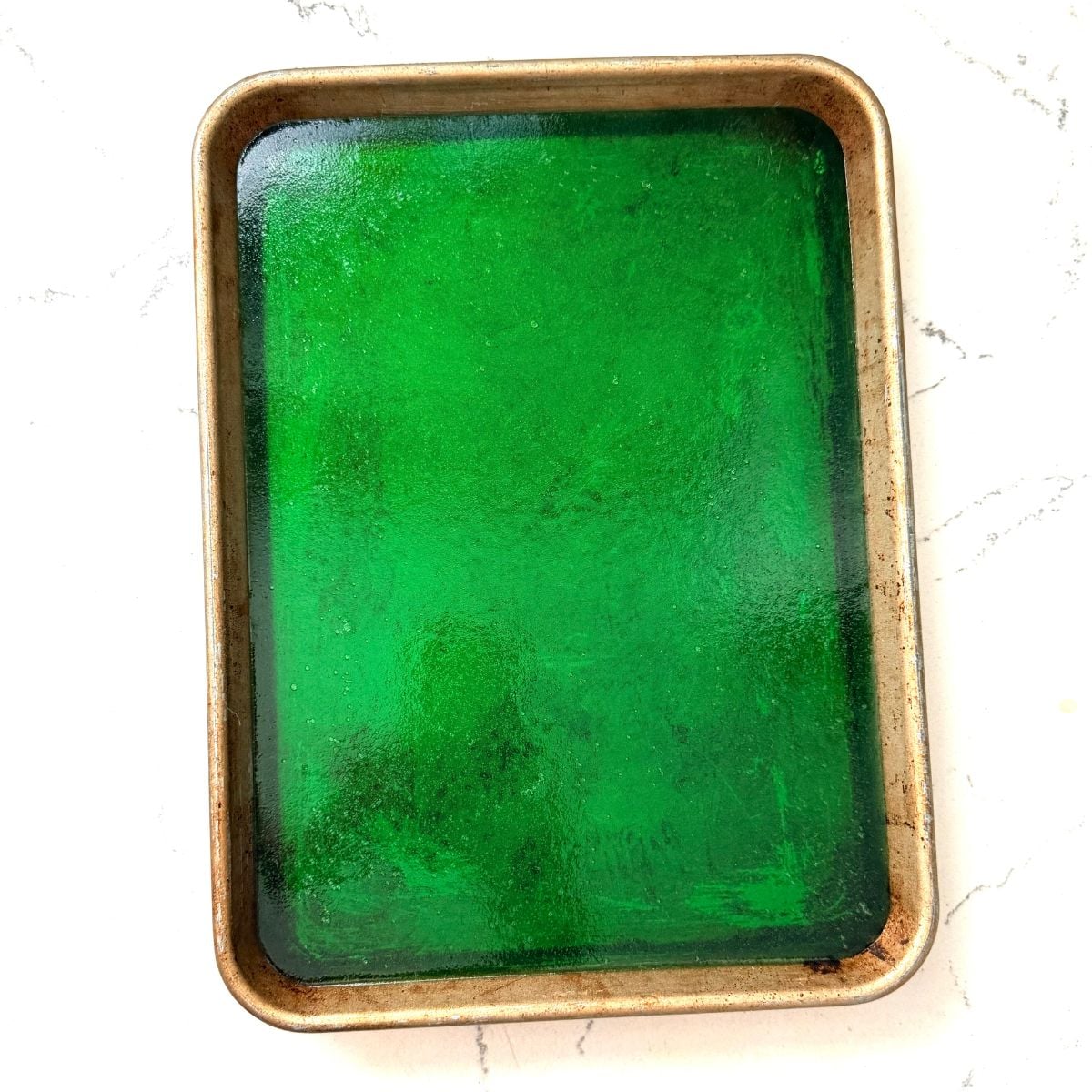
- Make the Buko Pandan Jelly. Follow your package directions, but use three-quarters of the water called for. If the box says four cups, use three. Stir in the buko pandan flavoring and green food coloring, bring it to a full boil so the powder activates, then pour into a shallow pan.
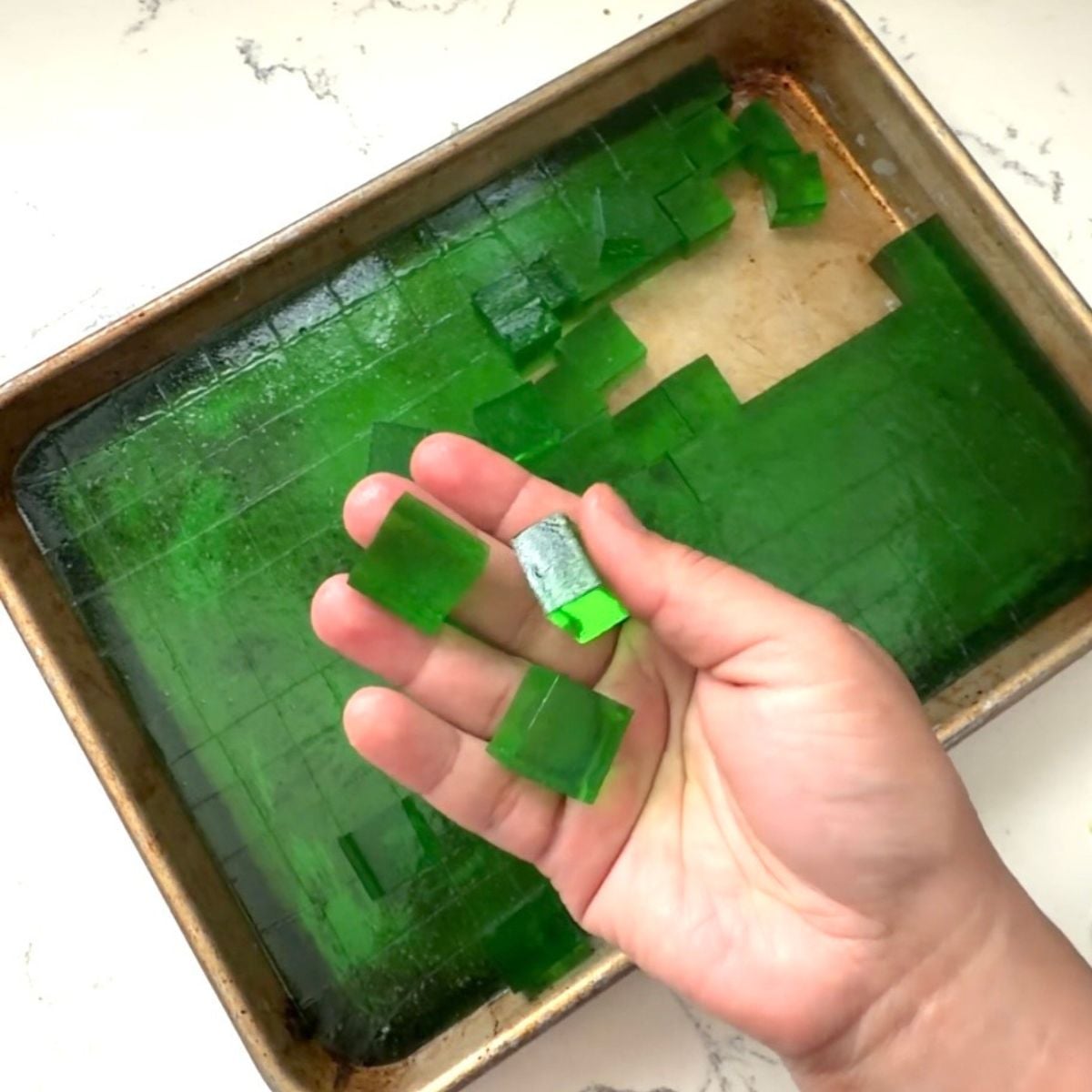
- Chill and cube. Refrigerate 1 to 2 hours until firm. A shallow layer sets faster and cuts cleaner than a deep one. It's ready when a knife goes through without dragging. Cut into small cubes.
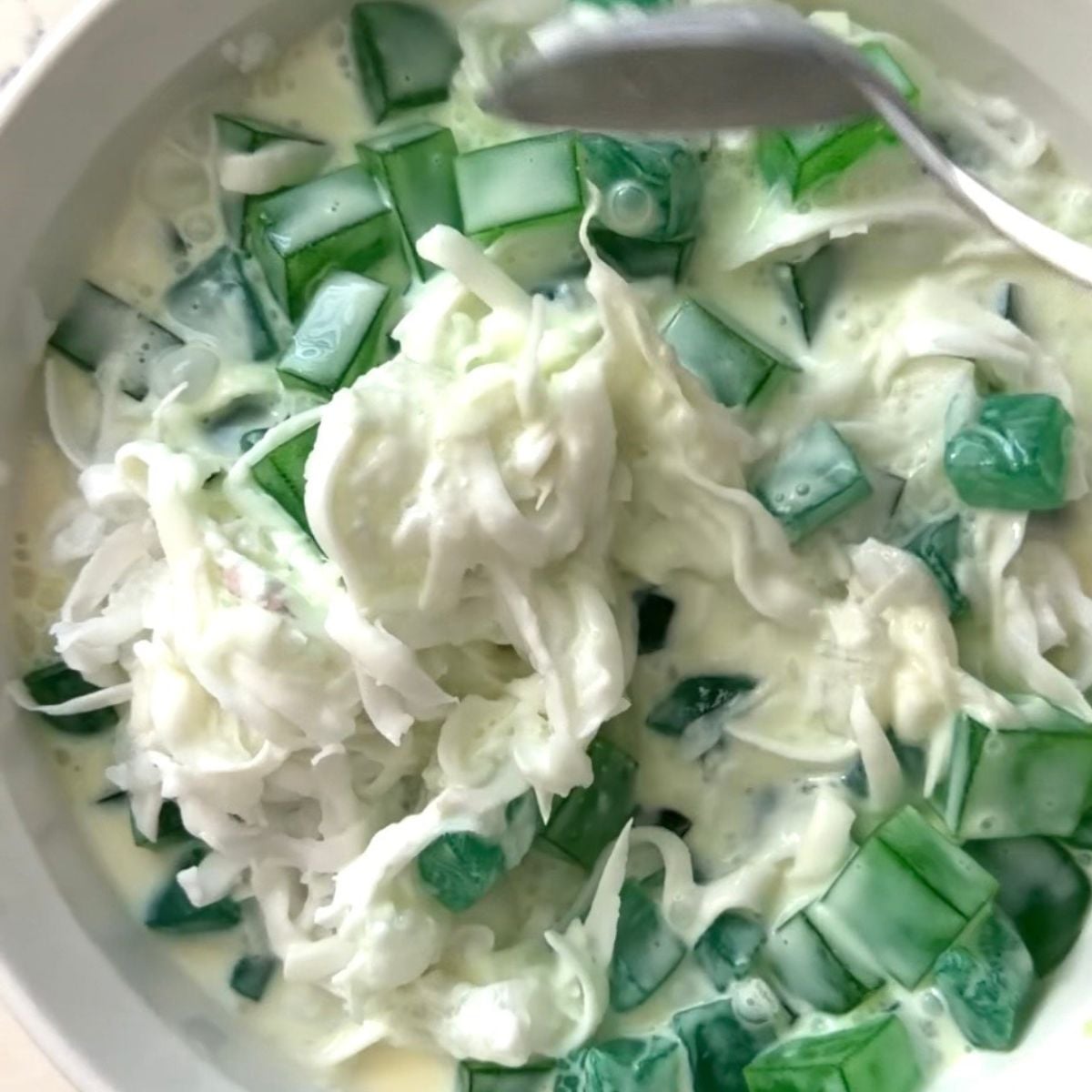
- Mix. Stir the heavy cream and condensed milk together first, then fold in the drained young coconut, nata de coco, and gulaman cubes. Combining the cream and milk before anything else keeps you from over-stirring later, which is what breaks the cubes.
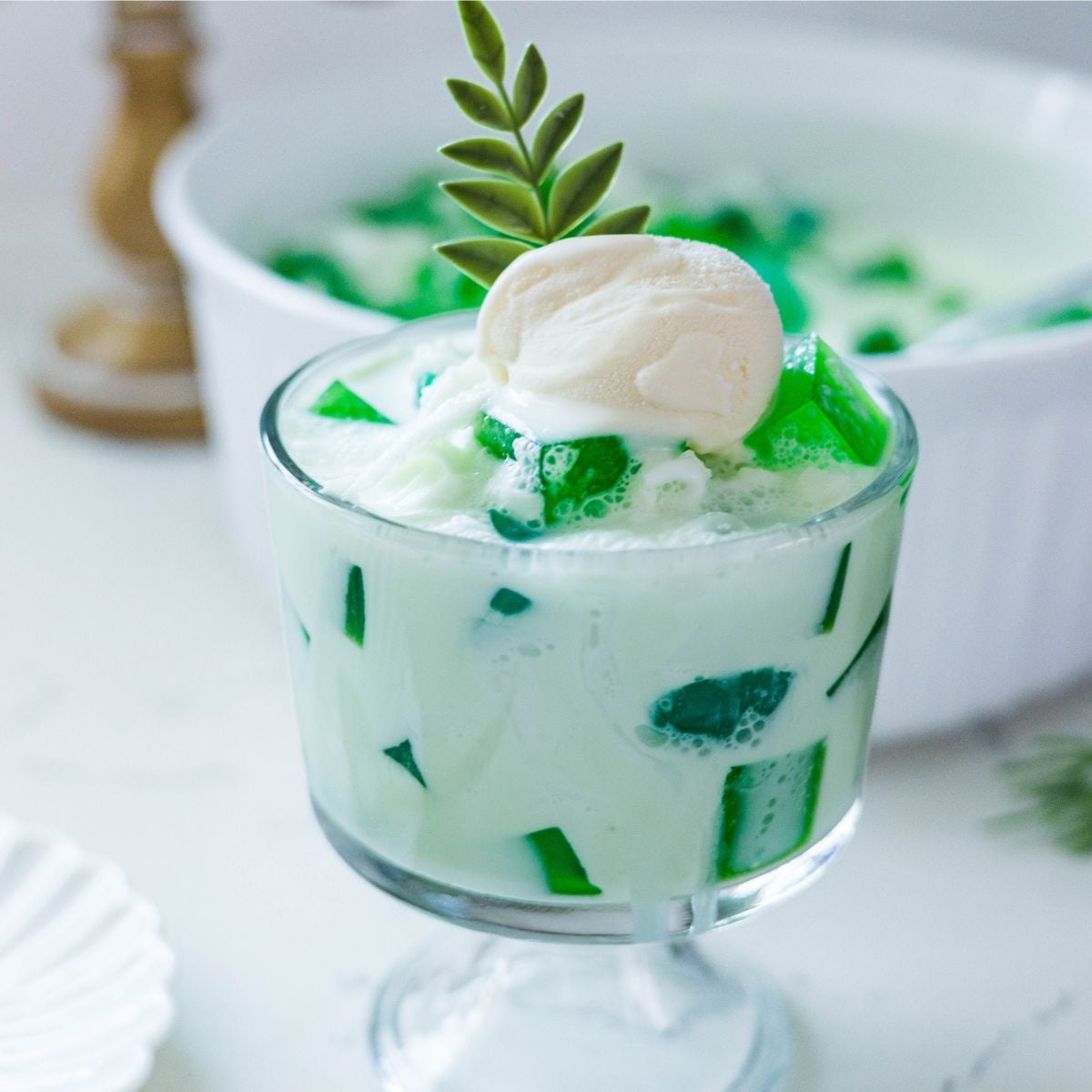
- Chill again and serve. Refrigerate 4 to 6 hours before serving. The cream looks loose at this stage and that's normal, since it thickens as it chills. Serve cold.
Why Your Buko Pandan Gets Watery
Four causes, all fixable before you mix.
- The gulaman set too soft. Following the box exactly gives you cubes that break down in the cream. Cut the water to three-quarters and the cubes hold.
- The coconut wasn't drained. Frozen and canned buko both carry a lot of liquid. Drain it well, and press gently if it still looks wet.
- The nata de coco went in with its syrup. That packing liquid thins the cream and pushes the salad sweeter than you intended. Drain it.
- It was over-mixed. Every extra stir breaks cube edges, and broken gulaman releases water. Fold until just combined and stop.
If it's already watery, drain off the liquid and stir in a little more condensed milk. It won't be as good as getting it right the first time, but it's serviceable.
Make It Ahead for Parties
This dessert wants to be made ahead. The full timeline runs 4 to 8 hours, but almost all of that is the refrigerator working, not you.
- The night before. Cook the gulaman and let it set overnight instead of the 1 to 2 hours. It holds fine and gets one job off your morning.
- The morning of. Cube and mix, then let the assembled salad chill 4 to 6 hours until serving. Assembling in the morning for an evening party is the easiest version of this.
- Scaling up. The recipe makes 12 servings, so double it for a crowd of 24 and triple it from there. Nothing about the method changes, though a bigger batch of gulaman needs a bigger pan or two pans, since a deep layer sets slower and cuts messier.
- Transporting. Chill it in the container you're carrying it in so you're not moving it between bowls. Keep it cold on the drive, and it'll sit out on a table for a few hours without falling apart, which is the whole reason gulaman is used instead of gelatin.
Variations
- Add sago. Small tapioca pearls give a chewier bite alongside the coconut and jelly, and this is how a lot of restaurant versions are made. Cook them until there's no white dot left in the center, or they turn chalky once the salad chills. Leftover pearls keep in water overnight and work in mango bango or strawberry sago, which both use the same thing.
- Add kaong. Sugar palm fruit comes in jars, usually dyed red or green, and adds a firmer chew than nata de coco. Drain and rinse it, since the syrup is heavy.
- Use macapuno. Jarred macapuno strings are sweeter and softer than young coconut. Swap in part of the coconut rather than all of it, or the salad loses its bite.
- Swap the cream base. Canned all-purpose or table cream is what's used in the Philippines, and it makes a lighter, less rich salad. Use it in place of the heavy cream if you want the version closer to what you'd eat there.
- Skip the food coloring. The green is cosmetic. Without it the salad comes out pale and off-white, but the flavor is identical.
- Make it a creamy buko salad. Add drained fruit cocktail to the mix and you've moved into buko salad territory, which is the fruit-heavy version served at the same parties. Cut back on the nata de coco so the bowl doesn't get crowded, and drain the fruit well, since canned syrup thins the cream faster than anything else in the recipe.
Storage
Keep it in an airtight container in the refrigerator for 3 to 5 days. The coconut and gulaman soften a little each day, so it's best in the first two.
If liquid pools at the bottom, pour it off and give the salad a gentle stir. That's normal after a few days, not a sign it's gone bad.
I don't recommend freezing it solid. Thawed gulaman turns spongy and weeps, and the cream separates. What I do sometimes is put the bowl in the freezer just long enough to get icy at the edges without freezing through. My kids like it that way, somewhere between a salad and a halo-halo.
Recipe FAQs
Buko salad is a mixed fruit salad with young coconut, fruit cocktail, and cream. Buko pandan salad drops the fruit and builds around pandan-flavored gulaman cubes instead. Same cream base, different center of gravity.
You can, but the result is softer and has to stay refrigerated. Gelatin melts near body temperature, so the cubes break down in the cream and won't survive sitting out on a party table. Gulaman holds at room temperature.
No. Bottled buko pandan flavoring is what most Filipino households use, and it gives a stronger, more consistent result. Fresh leaves need a long simmer to release much flavor.
Yes, but drain it well. Canned buko is usually packed in syrup, so the salad comes out sweeter, and the extra liquid thins the cream. Frozen shredded young coconut is closer to fresh.
The gulaman can be cooked and set the night before. The assembled salad needs 4 to 6 hours in the refrigerator, so mixing in the morning for an evening party works well.
Three to five days refrigerated in an airtight container, best in the first two. Don't freeze it: the gulaman turns spongy and the cream separates on thawing.
More Filipino Desserts
Looking for other recipes like this? Try these:
- Mango Bango (Mango Sago Dessert): the same cold, creamy, spoonable format built on ripe mangoes and sago instead of coconut and jelly.
- Black Grass Jelly Dessert: closest relation to this one, since it's jelly cubes in sweetened milk. Worth reading if you want more practice getting a jelly set right.
- Avocado with Condensed Milk: two ingredients and no cooking at all, for when you want something cold in five minutes.
- Creamy Ube Taho: silken tofu, sago, and arnibal syrup, and another one where the sago technique carries over.
- Ube Leche Flan: the other dessert that shows up on every Filipino holiday table.
- Classic Polvoron: shelf-stable and giftable, which makes it the natural partner to a make-ahead salad during Christmas.

Did you try this recipe?
Share how it turned out in the comment box below, and if you loved it, share it on Facebook, Pinterest & Instagram.
Thank you!

Buko Pandan Salad
Equipment
- Medium saucepan
- whisk
- large mixing bowl
- 9x13 pan
- Airtight container for storage
- Sharp knife and cutting board
Ingredients
- 3.17 oz gulaman powder Mr. Hat, Alsa, or Ferna
- Water per package directions minus one quarter
- Buko pandan flavoring to taste
- Green food coloring a few drops
- 1 pound shredded young coconut buko, thawed and drained
- 12 ounce nata de coco drained
- 1 cup heavy whipping cream
- ¾ cup sweetened condensed milk
Instructions
- Cook the gulaman powder according to your package directions, using three-quarters of the water called for. If the box says four cups, use three. Stir in the buko pandan flavoring and green food coloring, then bring to a full boil so the powder activates.3.17 oz gulaman powder, Water, Buko pandan flavoring, Green food coloring
- Pour into a 9x13 pan and refrigerate 1 to 2 hours, until firm enough that a knife cuts through without dragging.
- Cut the set gulaman into small cubes.
- In a large bowl, stir the heavy cream and sweetened condensed milk together until smooth.1 cup heavy whipping cream, ¾ cup sweetened condensed milk
- Fold in the drained young coconut, nata de coco, and gulaman cubes. Fold gently and stop as soon as everything is coated, since over-mixing breaks the cubes and makes the salad watery.1 pound shredded young coconut, 12 ounce nata de coco
- Cover and refrigerate 4 to 6 hours before serving. The cream looks loose at this stage and thickens as it chills. Serve cold.
Save This Recipe 💌
Notes
- The water reduction is the whole recipe. Cutting the liquid to three-quarters of what the package calls for gives cubes that hold their edges in the cream instead of dissolving.
- Drain everything well. Undrained coconut and nata de coco syrup are the two most common reasons this turns watery.
- Make ahead: the gulaman can be cooked and set overnight. Mix in the morning for an evening party.
- Storage: airtight in the refrigerator for 3 to 5 days, best in the first two. Freezing is not recommended, since gulaman turns spongy and the cream separates.
- Substitutions: gelatin works but sets softer and must stay refrigerated. Add cooked sago pearls or drained kaong for extra chew.