I used to buy macapuno balls every time I came back from the Philippines. Most of them were a letdown. They were either way too sweet, or I couldn't feel any macapuno in them at all. It was like eating a ball of sweet paste.
So I started making my own.
The difference is the macapuno. I chop the strings roughly instead of blending them, so every ball has soft, chewy bits of coconut you can actually bite into. I also drain and rinse the macapuno so its heavy syrup doesn't add even more sugar. If you like them less sweet, use ¾ of the can of condensed milk.
They take about 20 minutes on the stove and an hour or two in the fridge.
If you like making Filipino candy at home, my classic polvoron is just as easy.
Jump to:
Why You'll Love These Macapuno Balls
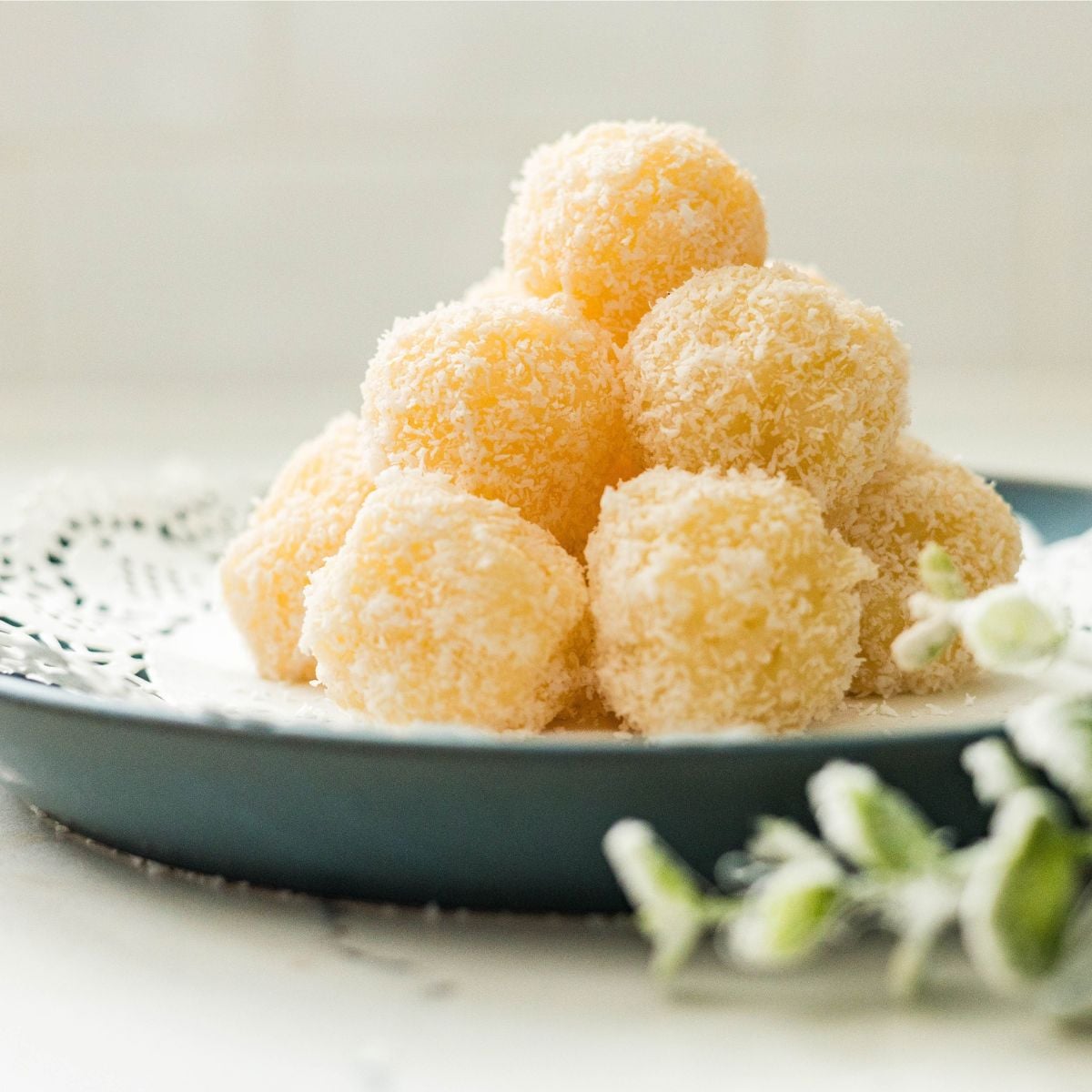
- You can actually taste the macapuno. The strings are chopped roughly, not blended, so every ball has soft, chewy pieces of coconut instead of a smooth paste.
- You control the sweetness. Draining and rinsing the macapuno takes off some of the heavy syrup, and you can use ¾ of the can of condensed milk if you want them even less sweet.
- A short ingredient list. Macapuno, condensed milk, cornstarch, water, salt, and desiccated coconut for coating. Everything comes from one stop at an Asian grocery store.
- About 20 minutes on the stove. Most of the remaining time is hands-off chilling in the fridge.
- Every ball is the same size. A #40 scoop portions about 26 grams each, so all 17 look even on the plate.
- They keep for a week. Stored in the fridge, they last 5 to 7 days, so you can make them ahead for a party or a weekend of snacking.
What Are Macapuno Balls
Macapuno balls are a Filipino candy made from macapuno strings cooked with condensed milk and a little cornstarch until the mixture becomes a thick, chewy dough. The dough is rolled into bite-size balls and coated in desiccated coconut or powdered milk.
Macapuno is a naturally occurring type of coconut whose flesh is soft and jelly-like instead of firm and white. It's usually sold in jars as macapuno strings or coconut sport in syrup.
In the Philippines, you'll find macapuno balls boxed up at bakeries and pasalubong shops, often wrapped one by one in colored cellophane. Homemade ones let you decide how much macapuno goes in and how sweet they are.
Ingredients You'll Need
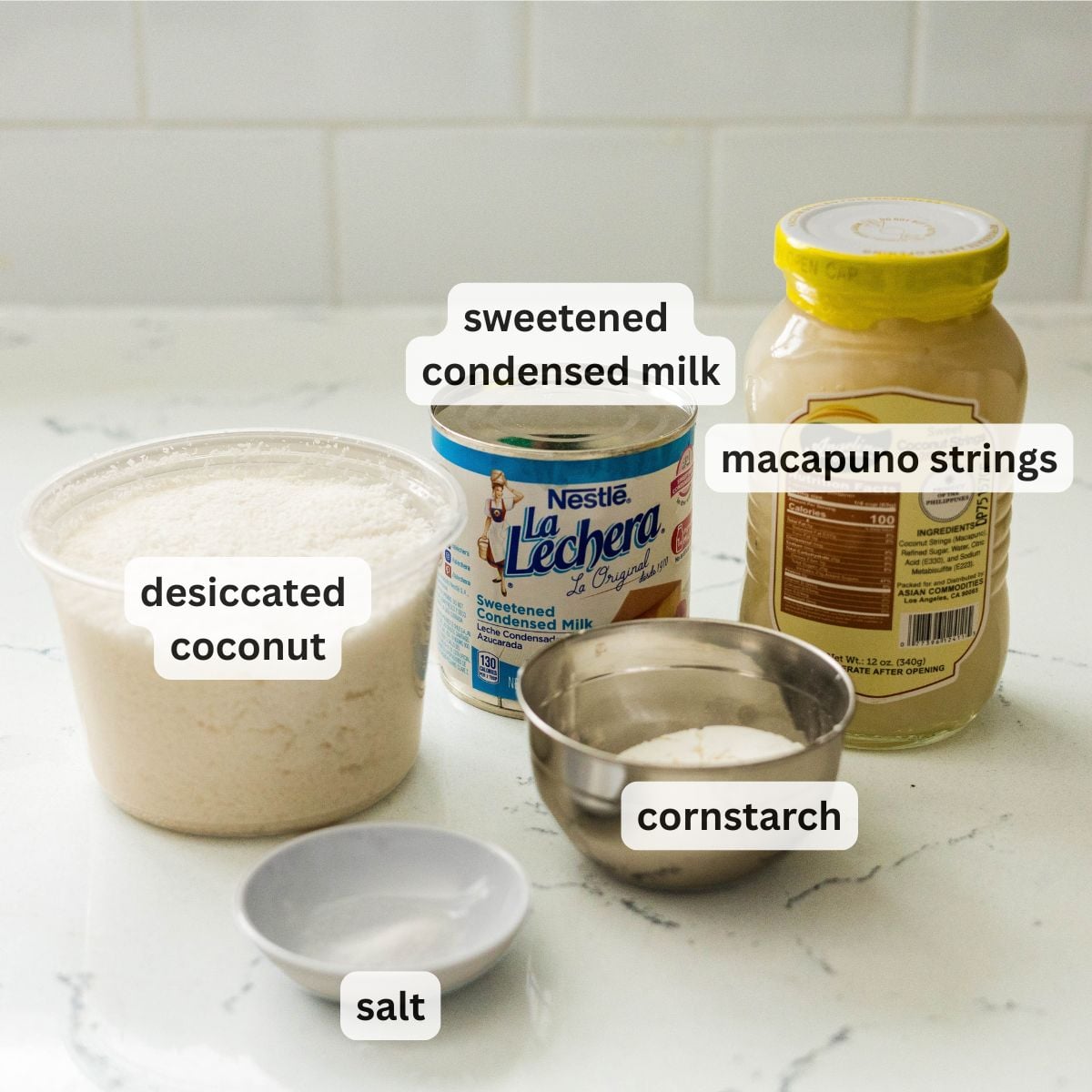
- Macapuno strings. These are the whole point, so they should be easy to find in every bite. Drain them well and give them a quick rinse to take off some of the heavy syrup. Extra syrup makes the candy sweeter and wetter, and a wetter mixture takes longer to firm up. Chop them roughly instead of blending them, so you get chewy pieces instead of a smooth paste.
- Sweetened condensed milk. It sweetens the candy and cooks down into the thick, milky base that holds the macapuno together. Use a full can for a classic sweet candy, or ¾ of the can if you want them less sweet. Don't swap in evaporated milk. It has no sugar and won't thicken the same way.
- Cornstarch. It's what turns the mixture into a dough firm enough to roll. Without it, the balls stay too soft and lose their shape.
- Water. It's only for the slurry. Mixing the cornstarch with cold water first lets it dissolve smoothly, so it doesn't form lumps when it hits the hot pan.
- Salt. Just a pinch. It keeps the condensed milk from tasting flat and brings out the coconut flavor.
- Desiccated coconut, for coating. It keeps the balls from sticking to your hands and to each other, and it adds a little texture on the outside. Powdered milk works too, if you prefer a softer, milkier coating.
See recipe card for quantities.
Where to Find Macapuno
Look for jars labeled "macapuno strings" or "coconut sport in syrup" in the Filipino section of Asian grocery stores. They're usually about 12 ounces, which is exactly one batch.
You might also see jars of "macapuno balls" on the same shelf. Those are scoops of macapuno preserved in syrup, not the candy. For this recipe, buy the strings.
Desiccated coconut is finely shredded, dry, and usually unsweetened. Asian grocery stores carry it, often near the baking supplies. The sweetened flaked coconut from a regular US baking aisle is moister and sweeter, so it won't give you the same dry coating.
How to Make Macapuno Balls
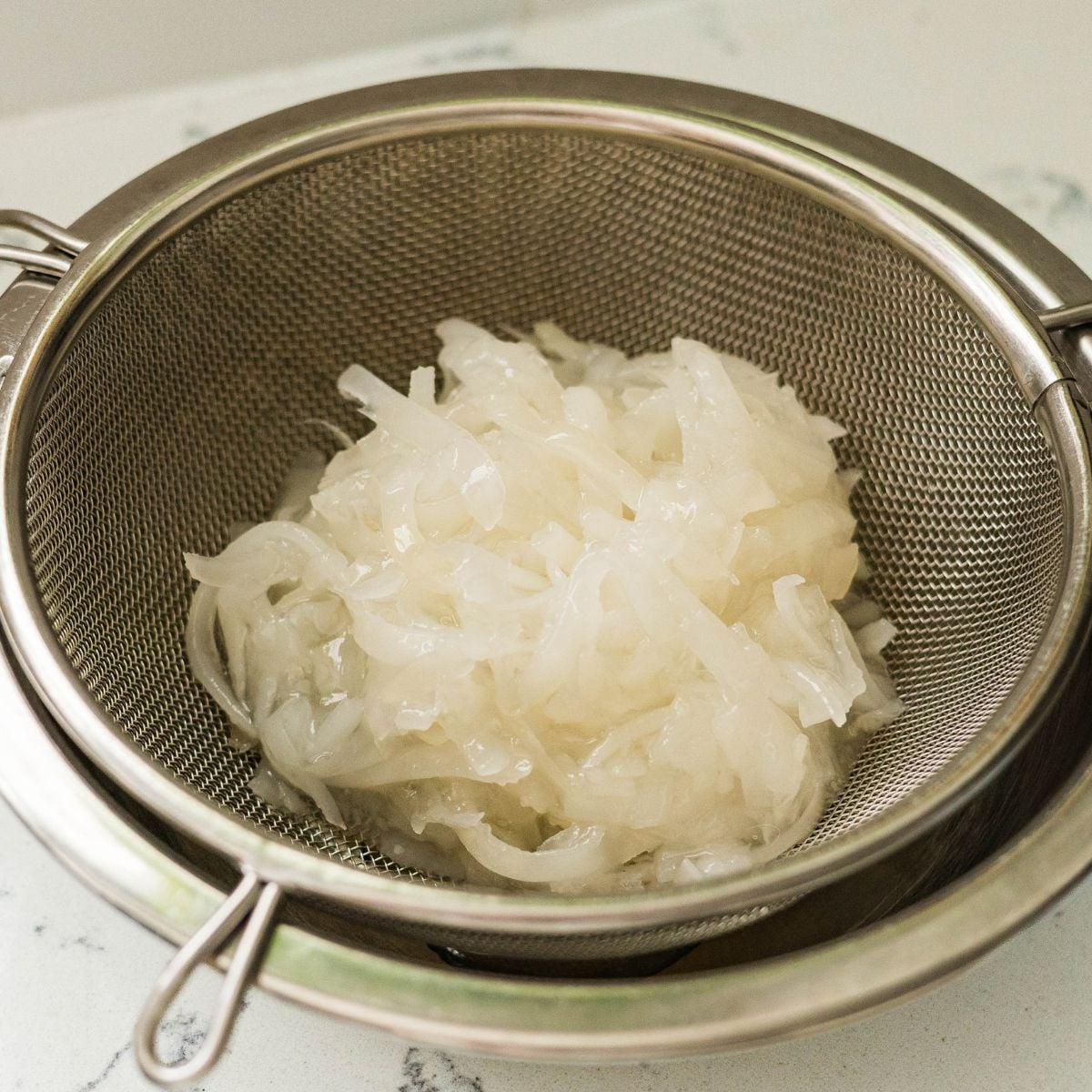
- Prep the macapuno. Drain the macapuno strings in a sieve and give them a quick rinse under running water. Let them drain well, then chop them roughly. You want small pieces you can still see and bite into, not a paste.
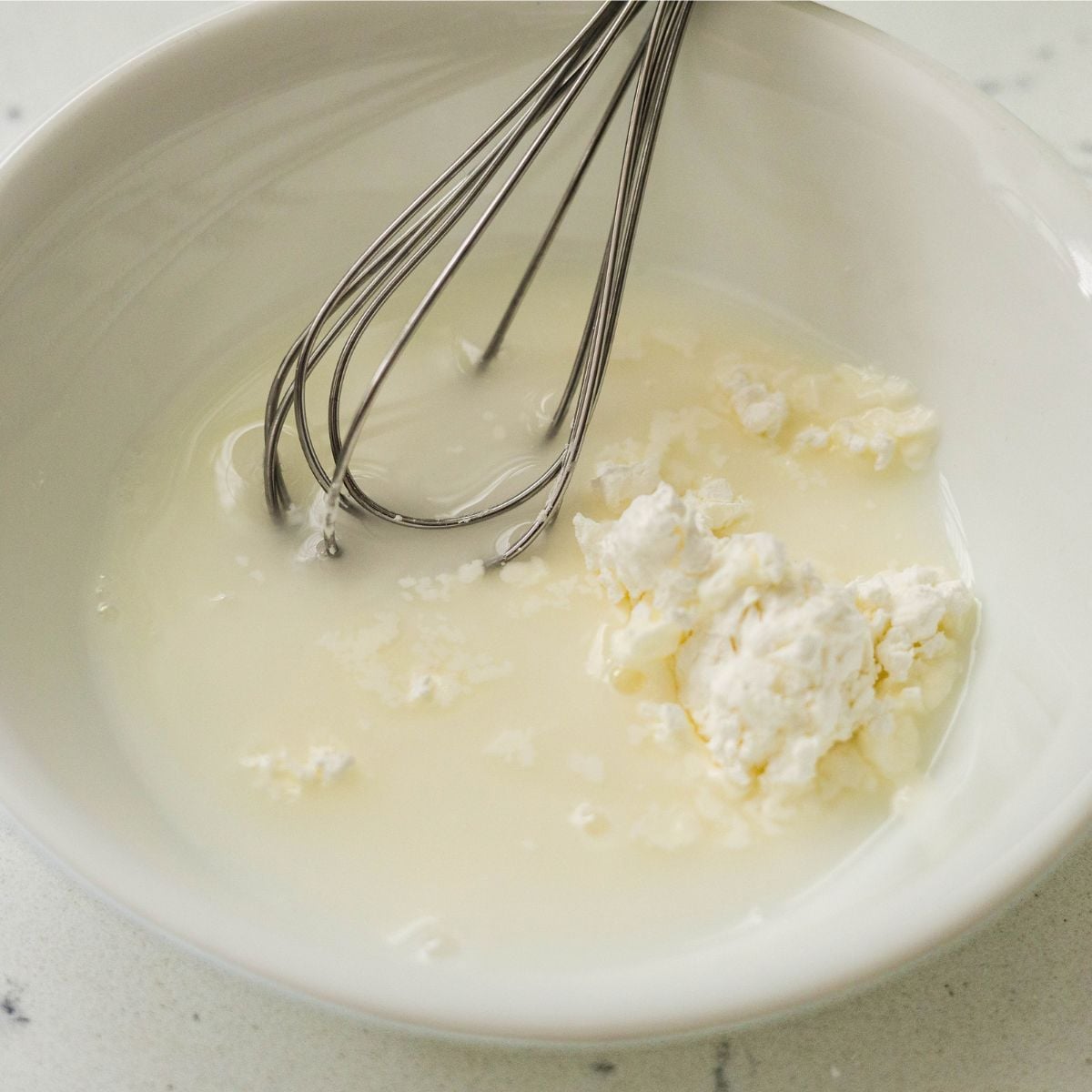
- Make the slurry. In a small bowl, whisk the cornstarch and water together until there are no lumps. Set it aside.
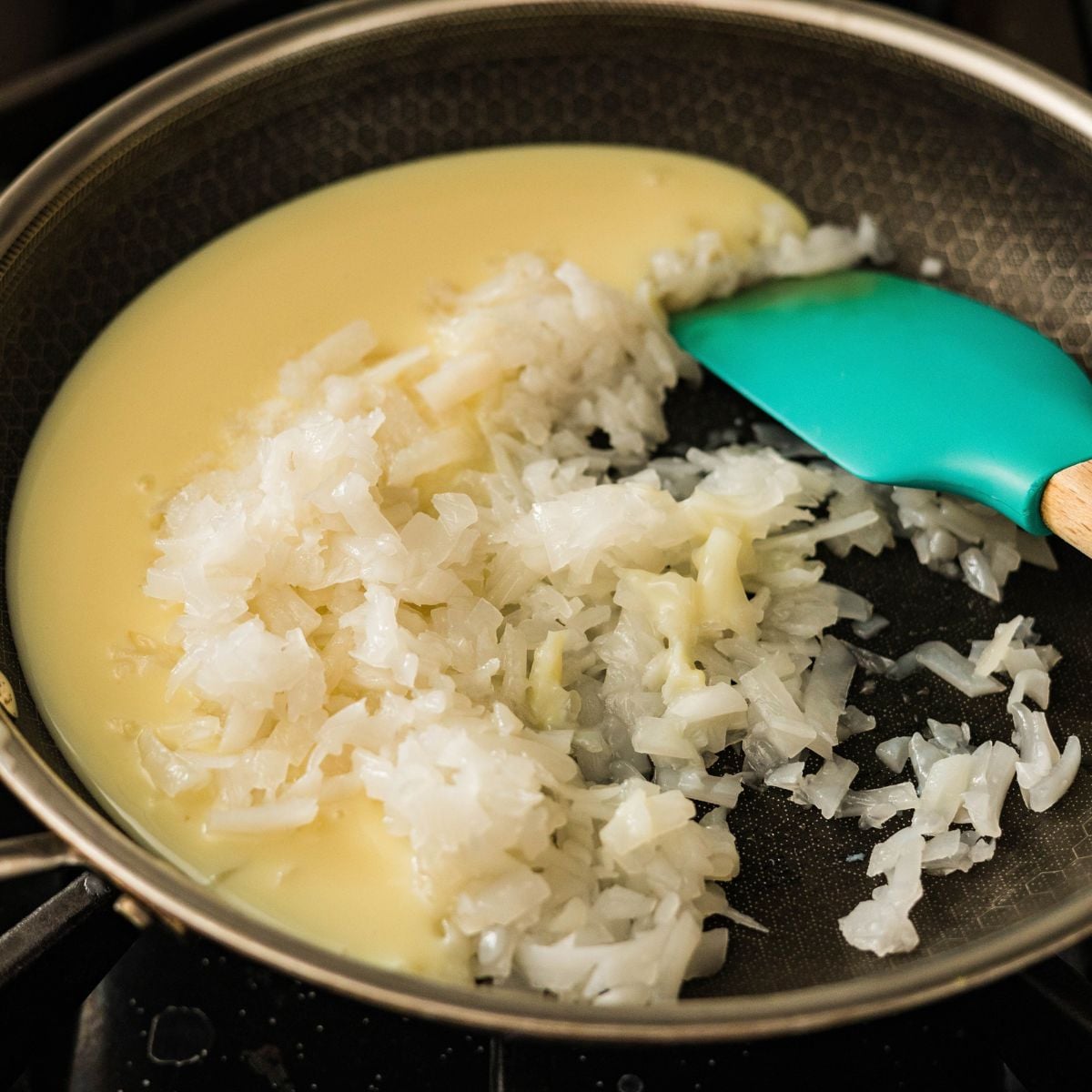
- Heat the macapuno and condensed milk. Add the chopped macapuno, condensed milk, and salt to a nonstick pan. Cook over low to medium heat for about 5 minutes, stirring, until the mixture is hot.
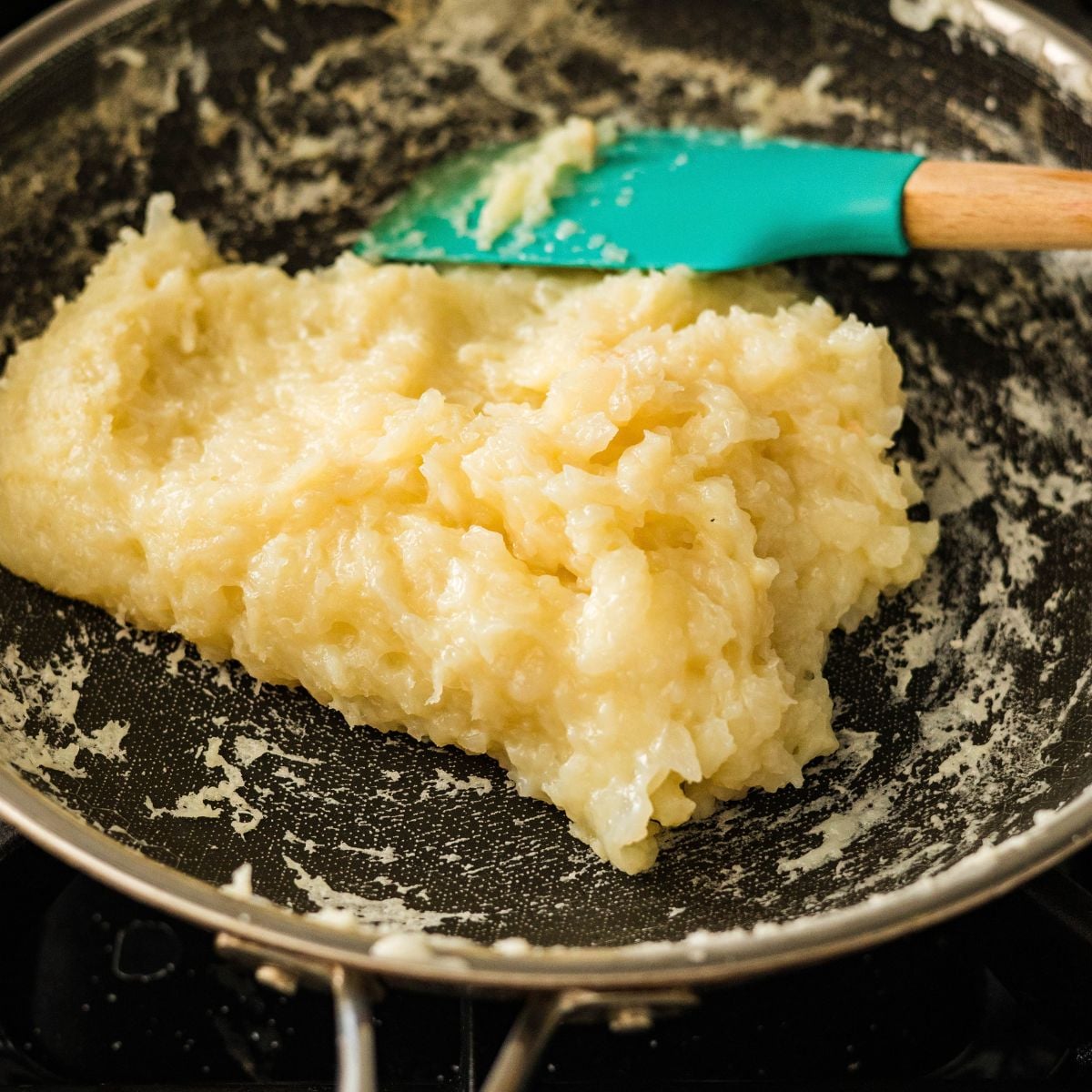
- Add the slurry and cook until thick. Give the slurry a quick stir, since the cornstarch settles, then pour it in slowly while stirring constantly. Lower the heat to low or medium-low and keep stirring for 8 to 12 minutes. It's done when the mixture is very thick and starts pulling away from the sides of the pan as one mass.
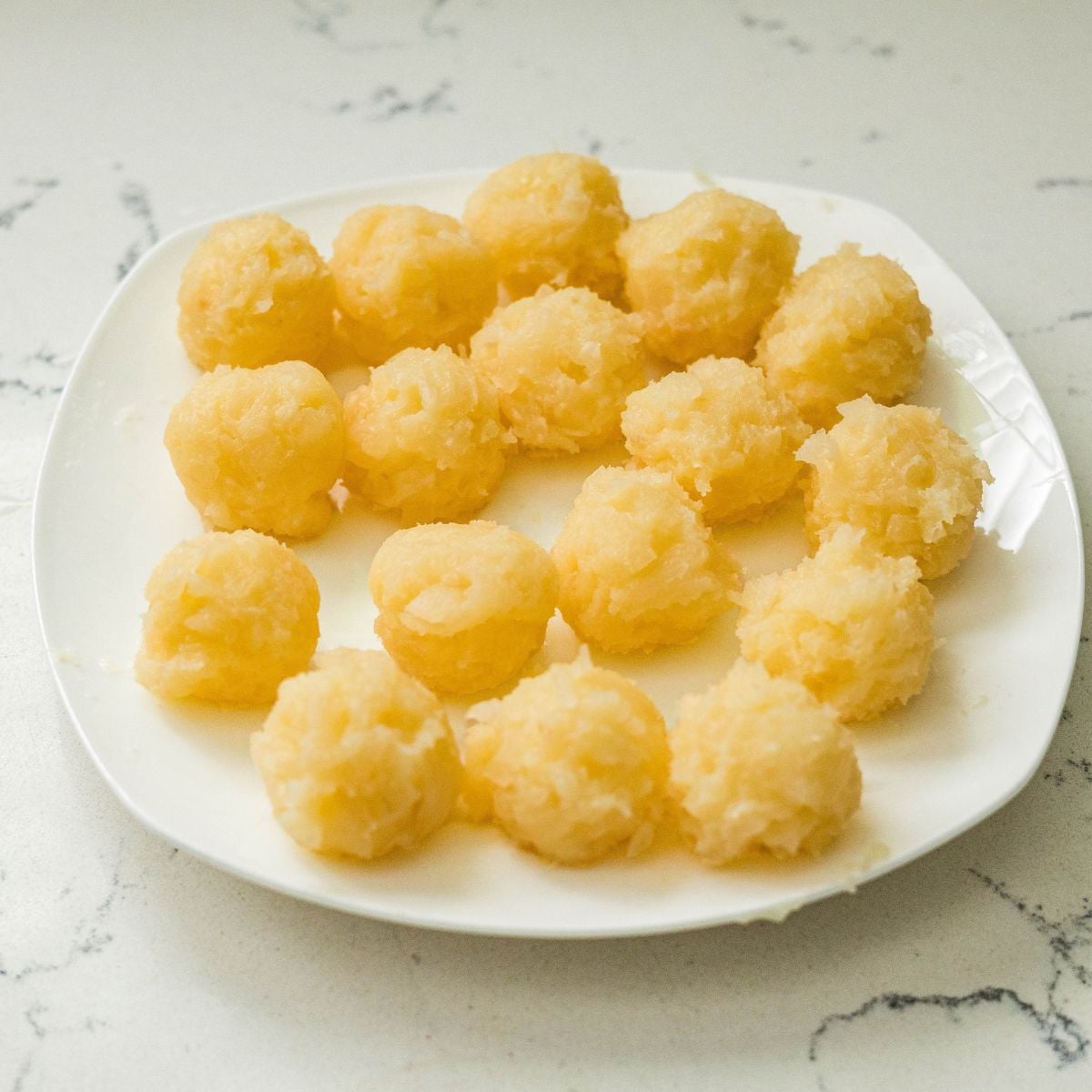
- Chill. Transfer the mixture to a bowl and refrigerate it for 1 to 2 hours, until it's cool and firm. Cold dough holds its shape and is much easier to roll.
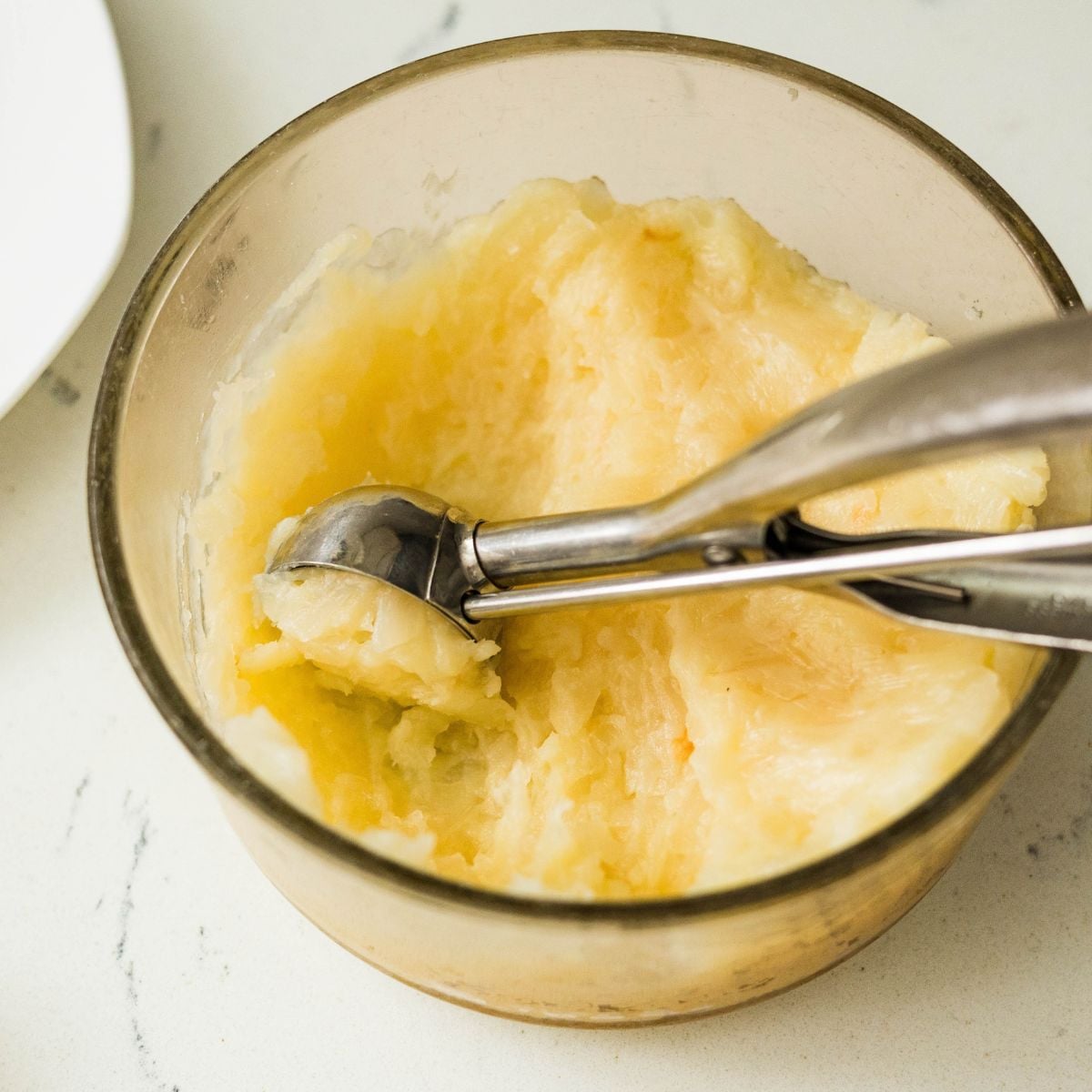
- Scoop and roll. Put on food-safe gloves, since the dough is sticky even after chilling. Use a #40 scoop (about 26 grams) to portion it, then roll each portion into a ball between your palms. You should get 17 balls.
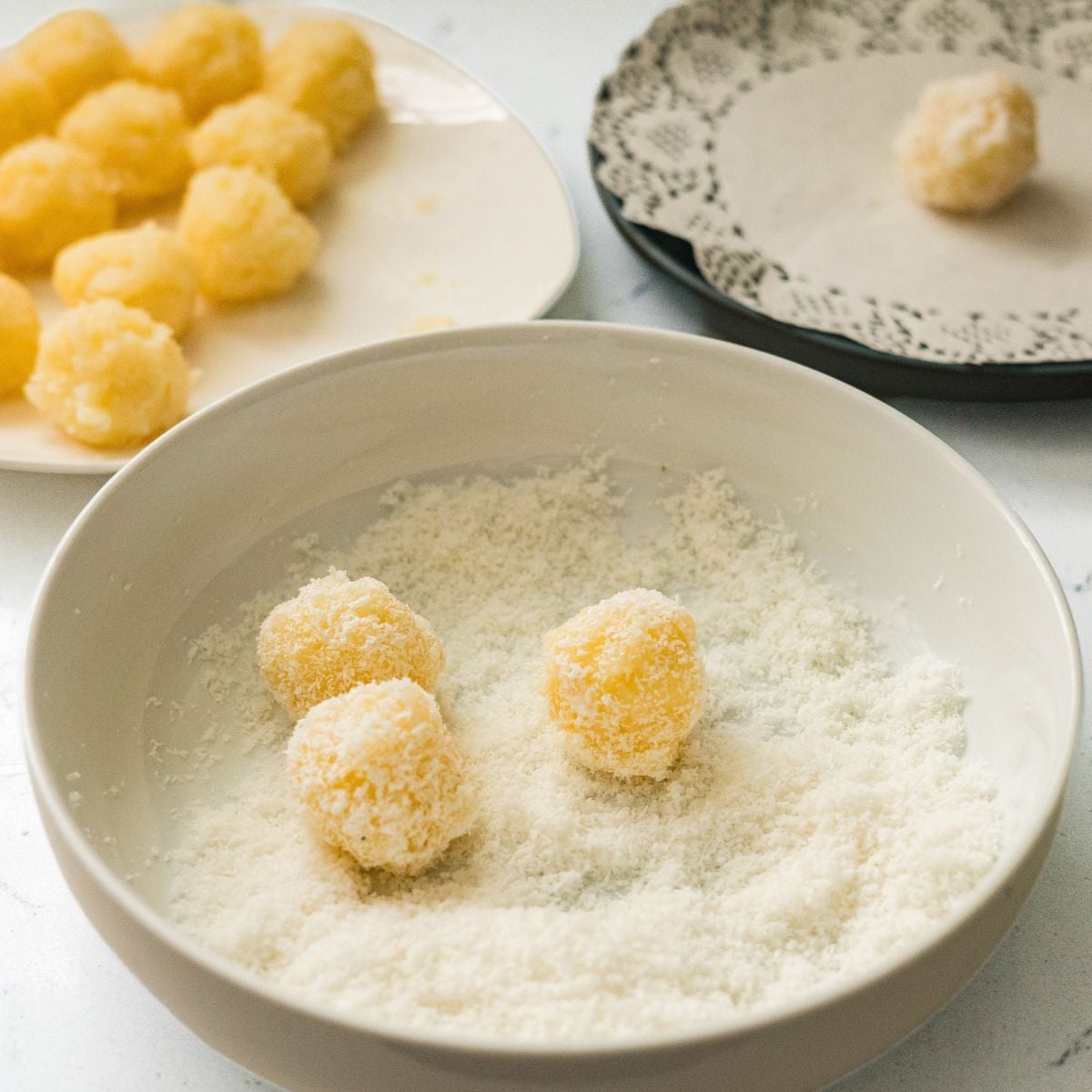
- Coat. Roll each ball in desiccated coconut until it's fully covered.
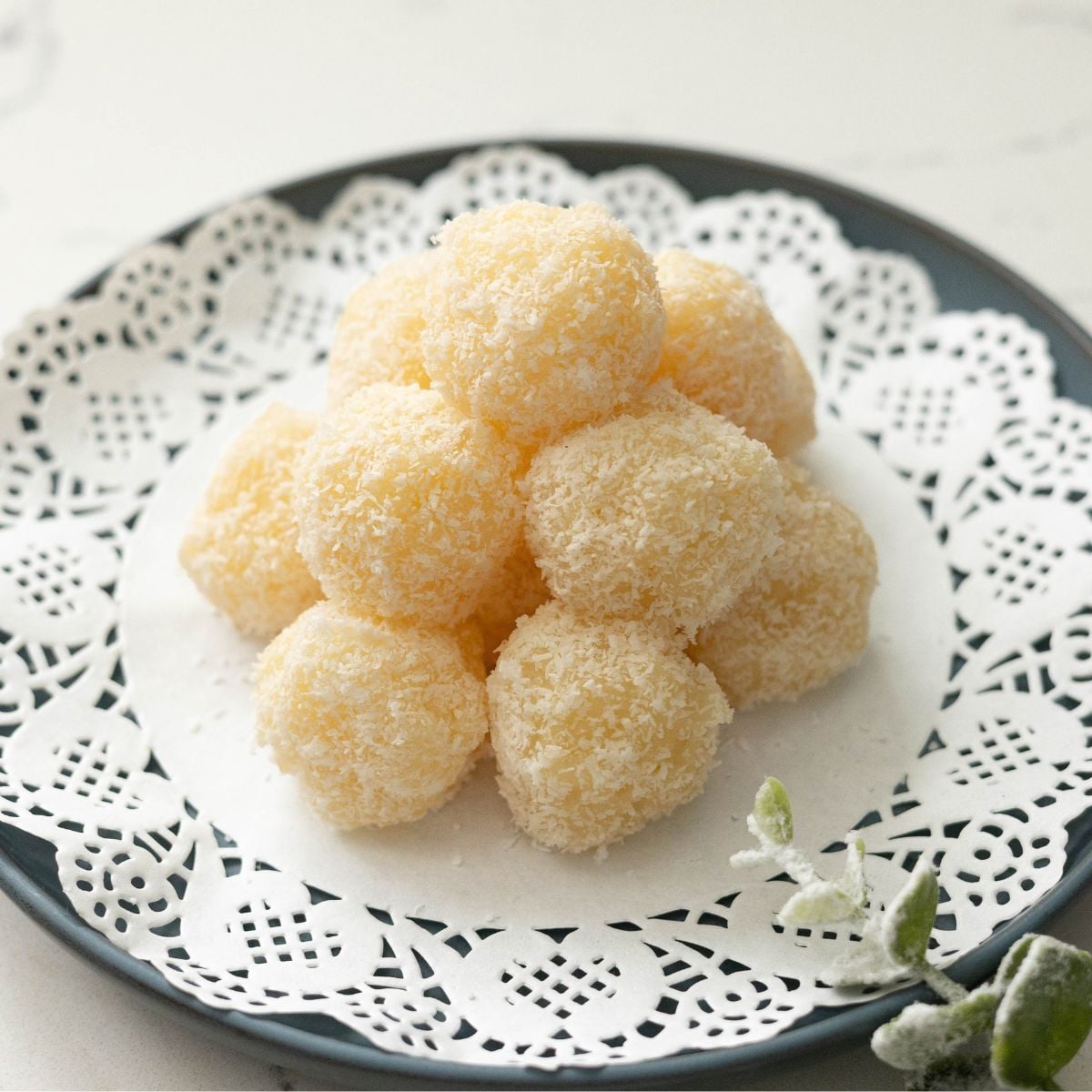
- Serve. If they've been in the fridge, let them sit at room temperature for 10 to 15 minutes before eating, so they soften back up and taste chewy instead of firm.
Rose's Tips
- Drain the macapuno well. Extra syrup adds moisture, and a wetter mixture takes longer to thicken and is harder to roll. A quick rinse also takes the edge off the sweetness.
- Chop, don't blend. Rough pieces keep the chewy macapuno texture. Blending turns it into the paste-like candy you'd get from a store.
- Stir the slurry right before adding it. Cornstarch settles to the bottom of the bowl as it sits. Pour it in slowly while stirring constantly, so it thickens evenly instead of forming lumps.
- Keep the heat low once the slurry goes in. Condensed milk scorches easily on the bottom of the pan. Low or medium-low heat with constant stirring keeps the mixture pale and smooth.
- Don't stop cooking too early. The mixture should be very thick and pull away from the sides of the pan as one mass. If it's still loose, the balls will be too soft to hold their shape.
- Chill before rolling. One to two hours in the fridge firms up the dough, so it rolls into neat balls instead of sticking to everything.
- Wear gloves. The dough stays sticky even when cold, and gloves let you roll it smoothly without oiling your hands.
- Let them warm up a little before eating. Straight from the fridge, they're firm. After 10 to 15 minutes at room temperature, they're soft and chewy again.
Variations
- Coat them in powdered milk. Instead of desiccated coconut, roll the balls in powdered milk for a softer, milkier outside. It's the same coating many store-bought macapuno balls use.
- Make them less sweet. Use ¾ of the can of condensed milk instead of the whole can. The mixture still thickens the same way, but the candy tastes more like coconut than sugar.
- Add ube. Stir a few spoonfuls of ube halaya into the mixture with the condensed milk for purple, ube-flavored macapuno balls. Since ube halaya adds moisture, plan on cooking it a few minutes longer.
- Add pandan. A few drops of pandan extract stirred in at the end gives them a light, grassy, vanilla-like aroma and a pale green color.
- Toast the coconut. Toast the desiccated coconut in a dry pan until it's golden before using it as a coating. It adds a nuttier flavor and a little crunch.
- Wrap them for gifts. Wrap each ball in a square of colored cellophane and twist the ends, the way they're sold in the Philippines.
Storage and Serving
- Fridge: Store the macapuno balls in an airtight container in the fridge for 5 to 7 days. The container keeps the coconut coating from picking up fridge smells and stops the balls from drying out.
- Before serving: Take them out 10 to 15 minutes before eating. Cold from the fridge, they're firm. At room temperature, they soften back into a chewy candy.
- Serving: Pile them on a plate for dessert or a party table, or put out a few with coffee for merienda.
Recipe FAQs
Usually the mixture came off the stove too early. It should be very thick and pull away from the sides of the pan as one mass before you take it off the heat. If it's already chilled and still too soft, putting it back in the pan over low heat and stirring until it thickens is usually the fix. Chilling it longer in the fridge can also help.
Buko is young coconut, with thin, tender white meat and coconut water inside. Macapuno is a naturally occurring type of coconut whose soft, jelly-like flesh fills most of the shell. That's why it's sold as sweet, chewy strings in syrup.
I've only tested this recipe with jarred macapuno strings. Frozen macapuno is often unsweetened, so you'd likely need more sugar and a different cook time. For consistent results, stick with the jar.
I haven't tested freezing them yet, so I can't say how the texture holds up. They keep for 5 to 7 days in the fridge.
Each ball has roughly 110 calories, based on 17 balls coated in desiccated coconut. The exact number depends on your brand of macapuno and condensed milk, and on how much coating sticks. Check the recipe card for the full nutrition estimate.
The ingredients are naturally gluten free, since cornstarch, macapuno, condensed milk, and coconut don't contain gluten. If you're cooking for someone with celiac disease, check the labels on each product for cross-contamination warnings.
More Filipino Desserts
Looking for other recipes like this? Try these:
- Suman Malagkit: Sweet rice cooked in coconut milk and steamed in banana leaves. Add the link once that post is live.
- Buko Pandan Salad: Young coconut and pandan jelly in a sweet cream dressing.
- Ube Cassava Cake: Grated cassava and coconut milk baked into a chewy cake with ube.
- Ube Leche Flan: Classic leche flan made with ube.
- Minatamis na Langka: Jackfruit simmered in syrup, another sweet preserve that goes into halo-halo.

Did you try this recipe?
Share how it turned out in the comment box below, and if you loved it, share it on Facebook, Pinterest & Instagram.
Thank you!

Macapuno Balls Recipe
Equipment
- Fine mesh sieve
- Small bowl and whisk
- Nonstick pan
- Silicone spatula
- #40 scoop (about 26 grams)
- Food-safe gloves
- Airtight container
Ingredients
- 1 12 ounce jar macapuno strings, drained, rinsed, and roughly chopped
- 1 14 ounce can sweetened condensed milk, or ¾ can for less sweetness
- ¼ cup cornstarch
- ¼ cup water
- ⅛ teaspoon salt
- ¾ cup desiccated coconut or powdered milk for coating
Instructions
- Drain the macapuno strings in a sieve and give them a quick rinse under running water. Let them drain well, then chop them roughly.1 12 ounce jar macapuno strings, drained, rinsed, and roughly chopped
- In a small bowl, whisk the cornstarch and water together until smooth. Set it aside.¼ cup cornstarch, ¼ cup water
- Add the chopped macapuno, condensed milk, and salt to a nonstick pan. Cook over low to medium heat for about 5 minutes, stirring, until the mixture is hot.1 12 ounce jar macapuno strings, drained, rinsed, and roughly chopped, 1 14 ounce can sweetened condensed milk, or ¾ can for less sweetness, ⅛ teaspoon salt
- Stir the slurry again, then pour it in slowly while stirring constantly. Lower the heat to low or medium-low and keep stirring for 8 to 12 minutes, until the mixture is very thick and pulls away from the sides of the pan as one mass.
- Transfer the mixture to a bowl and refrigerate it for 1 to 2 hours, until it's cool and firm.
- Put on food-safe gloves. Use a #40 scoop to portion the dough, then roll each portion into a ball. You should get 17 balls.
- Roll each ball in desiccated coconut or powdered milk until it's fully coated.¾ cup desiccated coconut or powdered milk
- If they've been in the fridge, let them sit at room temperature for 10 to 15 minutes before serving.
Save This Recipe 💌
Notes
- Sweetness: Use ¾ of the can of condensed milk for a less sweet candy. The mixture still thickens the same way.
- Doneness: Don't take the mixture off the heat until it pulls away from the pan as one mass. If it's still loose, the balls will be too soft to roll.
- Chopping: Chop the macapuno roughly instead of blending it, so you get chewy pieces in every ball.
- Rolling: The dough stays sticky even after chilling, so gloves make rolling much easier.
- Storage: Keep them in an airtight container in the fridge for 5 to 7 days.
- Serving: Let them sit at room temperature for 10 to 15 minutes before eating, so they soften back up and taste chewy.