Every weekend, my mom came home from the palengke, the open-air market back home, with suman malagkit and puto. If you want the other half of that weekend pairing, my puto recipe is here too.
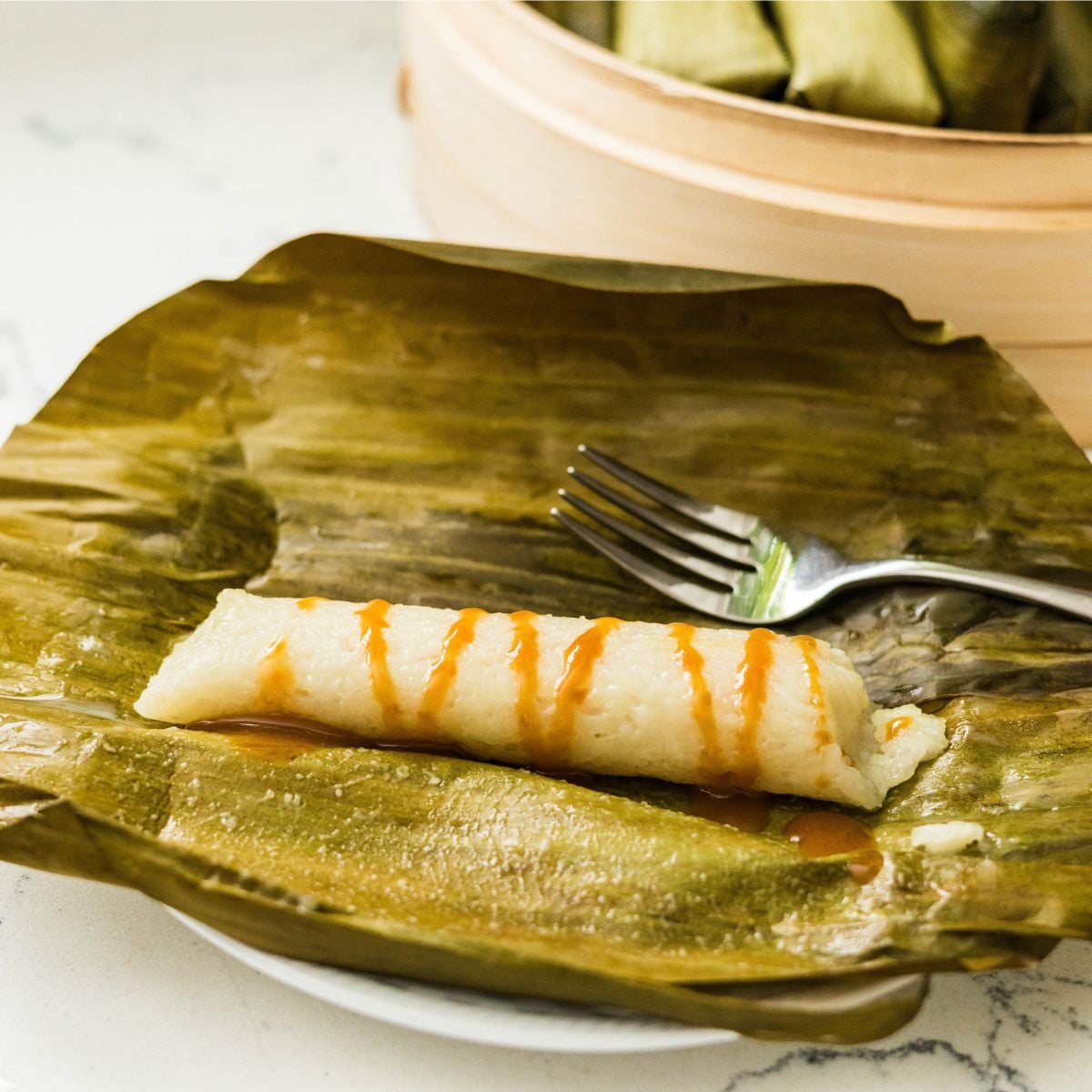
Suman malagkit is glutinous rice cooked in coconut milk, rolled in banana leaves, and steamed until soft and chewy.
This version keeps it simple. The rice cooks in the coconut milk before it's wrapped, so steaming only has to finish the job. A #20 scoop portions every roll the same size, which means all 15 come out of the steamer done at the same time.
You don't need twine or banana leaf strips, either. Each portion gets rolled in a round of banana leaf with the ends folded under, and it holds its shape in the steamer.
Then it all gets a spoonful of coconut caramel sauce over the top.
Save This Recipe 💌
Jump to:
- Why You'll Love This Suman Malagkit
- What Is Suman Malagkit
- Ingredients You'll Need
- Where to Find Banana Leaves
- Why You Cook the Rice Before Wrapping
- How to Make Suman Malagkit
- The Coconut Caramel Sauce
- Variations
- Storage and Reheating
- Tips for Making Suman Malagkit
- Recipe FAQs
- More Filipino Merienda
- Did you try this recipe?
- Suman Malagkit Recipe
Why You'll Love This Suman Malagkit
- Every roll cooks the same. A #20 scoop portions the rice evenly, so all 15 suman are the same size and finish steaming at the same time. You won't end up with one soft roll next to one that's still firm in the middle.
- No tying required. Each portion rolls up in a round of banana leaf with the ends folded under. No twine, no fiddly leaf strips, and no extra step slowing down the wrapping.
- The rice is cooked before it's wrapped. Cooking the rice in coconut milk first means the steamer only has to finish it. That's what keeps the texture soft and chewy all the way through instead of leaving a hard center.
- A short pantry list. Glutinous rice, coconut milk, sugar, and salt make the suman. The banana leaves are the only thing you might need a special trip for, and most Asian grocery stores keep them in the freezer section.
- Coconut caramel sauce on top. The suman itself is only lightly sweet, so the sauce is where the richness comes in. Spoon on as much or as little as you like.
- Made to be handheld. Wrapped in their leaves, they travel well for merienda, a packed snack, or breakfast with coffee.
What Is Suman Malagkit
Suman malagkit is a Filipino rice cake made from glutinous rice cooked in coconut milk, wrapped in banana leaves, and steamed. It's soft, chewy, and lightly sweet, and it's usually eaten as merienda or breakfast with a sweet topping like coconut caramel, sugar, or ripe mango.
Malagkit means "sticky" in Tagalog, which is also what Filipinos call glutinous rice. Suman is the name for a whole family of rice cakes wrapped in leaves, and suman malagkit is one of the simplest. In the Visayas, you'll often hear it called budbud.
It belongs to kakanin, the broad group of Filipino snacks and desserts made from rice, along with puto, bibingka, and biko.
Ingredients You'll Need
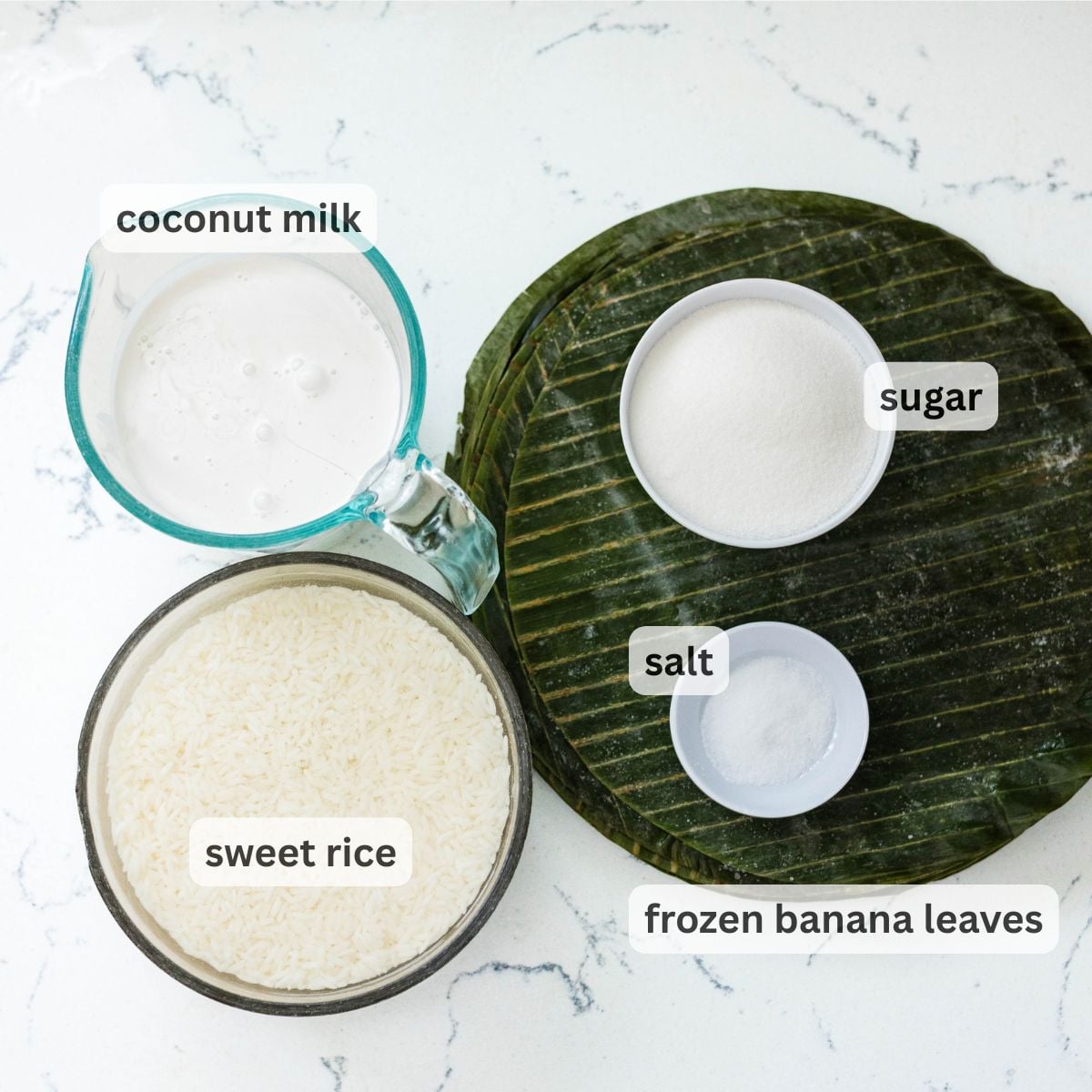
For the suman:
- Sweet rice. It's also sold as glutinous rice or malagkit, and it's what gives suman its sticky, chewy texture. Regular long grain or jasmine rice won't hold together once it's rolled, so this is the one ingredient you can't swap.
- Full fat coconut milk. The rice cooks in it instead of water, so it carries most of the flavor and richness. Full fat gives the suman a soft, rich chew. Light coconut milk or coconut milk beverage from a carton is too thin and leaves the rice tasting watery.
- Granulated sugar. The amount is a range on purpose. Use the lower end if you're serving the suman with coconut caramel sauce, since the sauce brings its own sweetness, and the higher end if you're eating them plain.
- Salt. A small amount keeps the coconut milk and sugar from tasting flat. You won't taste it as salty, but you'll notice it if it's missing.
- Banana leaves. They hold the rice together while it steams and give the suman its light, grassy aroma. They're for wrapping only, so you don't eat them.
For the coconut caramel sauce (optional):
- Coconut milk. It cooks down into a thick, glossy sauce. Use another can, separate from the one for the rice.
- Brown sugar, light or dark. Either one works. Dark brown sugar has more molasses, which gives the sauce a deeper color and a stronger caramel flavor. Light brown sugar keeps the sauce a little milder and lighter in color. Pick the one you already have.
- Salt. It balances the sweetness, the same way it does in salted caramel.
- Vanilla extract. This is optional. It adds a little warmth to the sauce, but it doesn't change the texture, so skip it if you don't have it.
You'll find the exact amounts in the recipe card below.
Where to Find Banana Leaves
Most Asian and Filipino grocery stores carry banana leaves in the freezer section, usually folded in one pound packages. That's what I use for this recipe.
Frozen leaves are already soft enough to roll, so there's no need to pass them over a flame. I leave the package on the counter for 1 to 2 hours to thaw, then rinse each leaf under running water to clean it.
Cut the leaves into rounds, one per suman, and trim off any tough center rib so the leaf folds cleanly.
If you can only find fresh leaves, they're stiffer and more likely to split. Most cooks pass them briefly over a low flame or dip them in hot water to soften them first.
Why You Cook the Rice Before Wrapping
Once raw rice is rolled inside a banana leaf, there's no liquid for it to cook in. Steaming it raw gives you suman that's hard and dry in the middle. That's why the rice cooks in the coconut milk first, but only partway.
Cook it over medium-low heat for 12 to 15 minutes, stirring often and scraping gently from the bottom. Stirring roughly breaks the grains and turns the suman pasty. It's ready when:
- It's very sticky and holds together as one mass.
- Most of the coconut milk is absorbed. A little left in the pan is fine.
- The grains are still a little firm in the center when you bite one.
The steamer finishes the job. Rice that goes in fully soft comes out mushy. Stopped partway, it finishes cooking inside the leaf and comes out chewy all the way through.
As the rice cools, it soaks up the leftover liquid and gets easier to roll.
How to Make Suman Malagkit
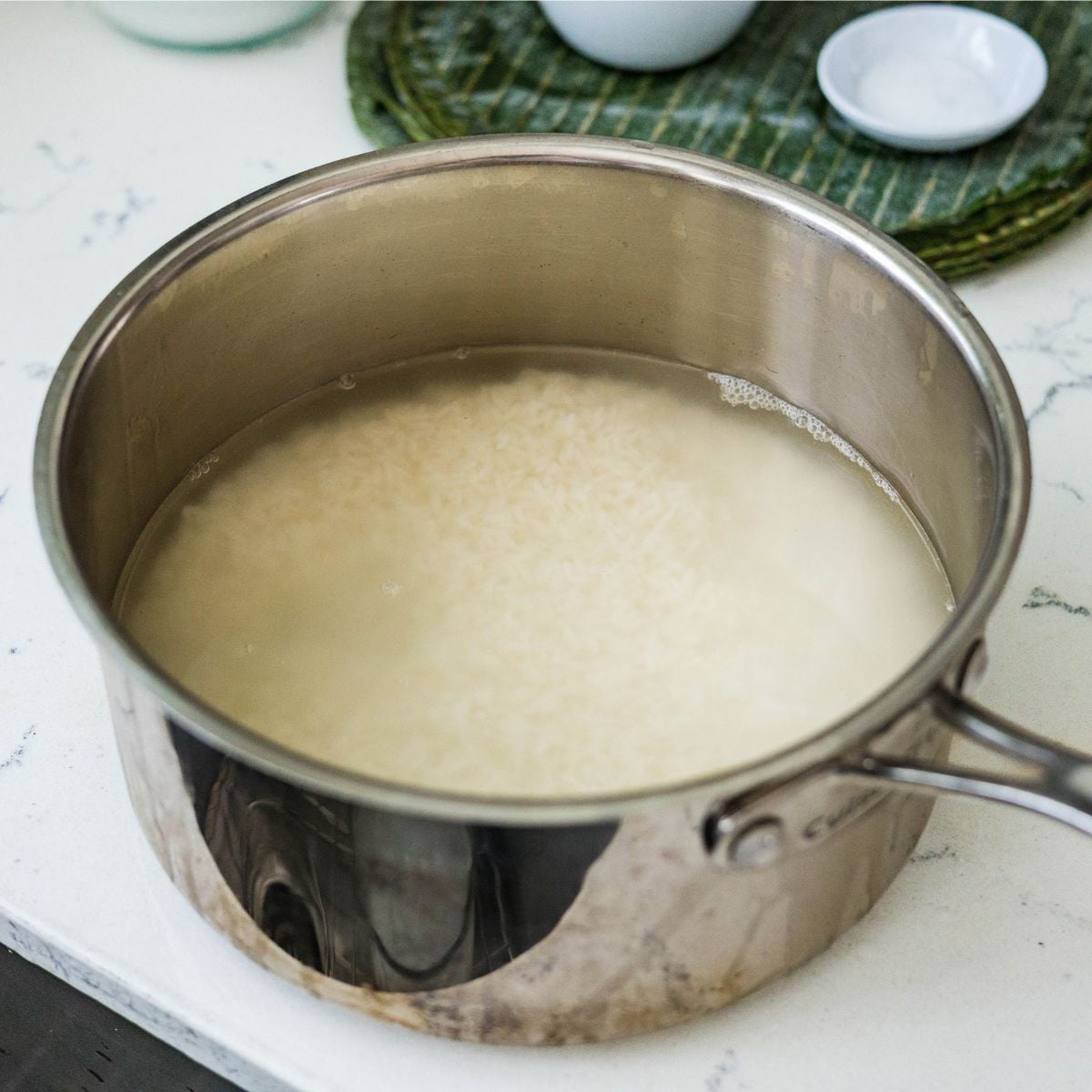
- Rinse and soak the rice. Rinse the sweet rice, then cover it with water and soak it for 2 hours. Soaking lets water into the grains so they cook evenly in the coconut milk instead of staying hard in the center. Drain it well before cooking.
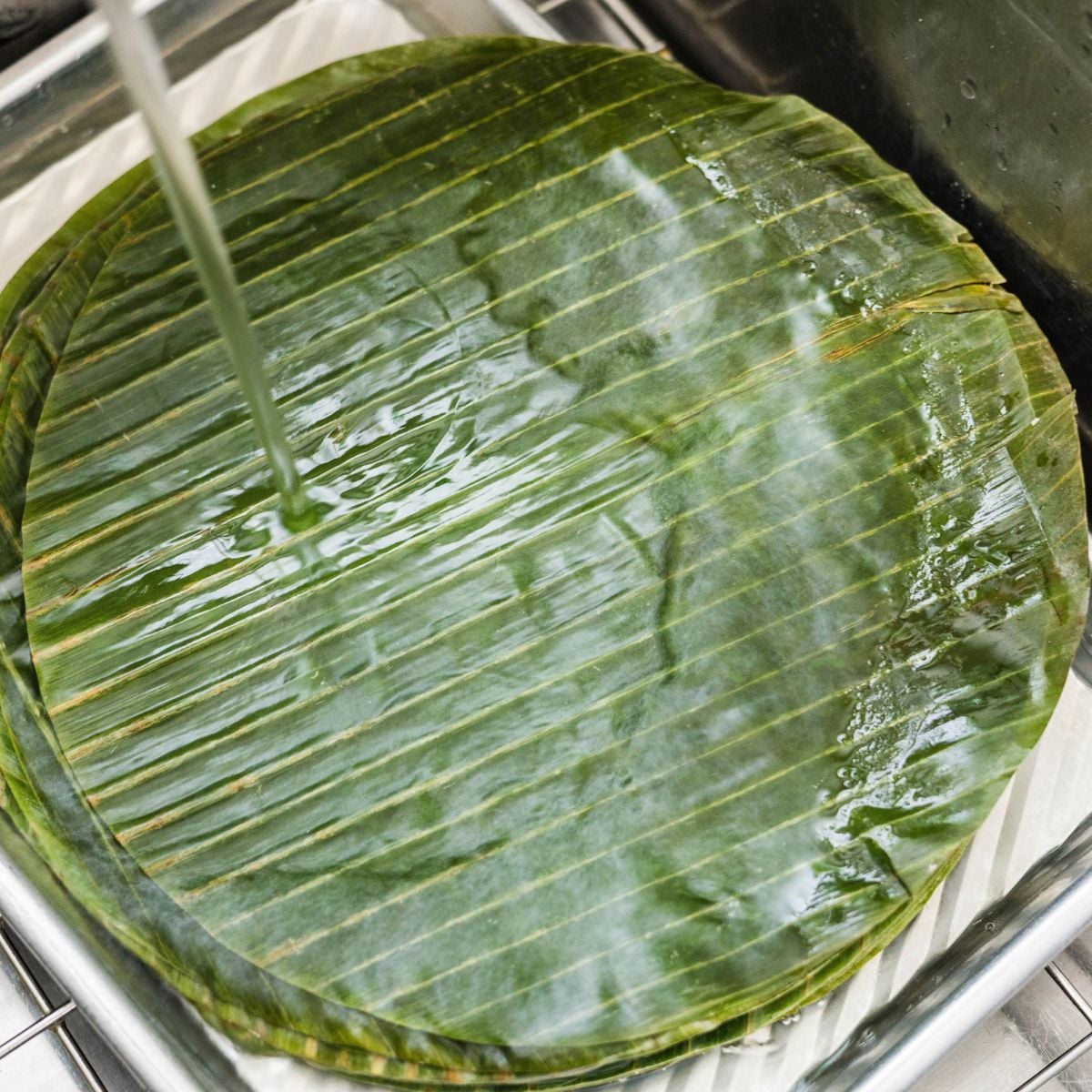
- Thaw the banana leaves while the rice soaks. Leave the frozen package on the counter. The 1 to 2 hours it needs to thaw lines up with the soaking time, so both are ready together.
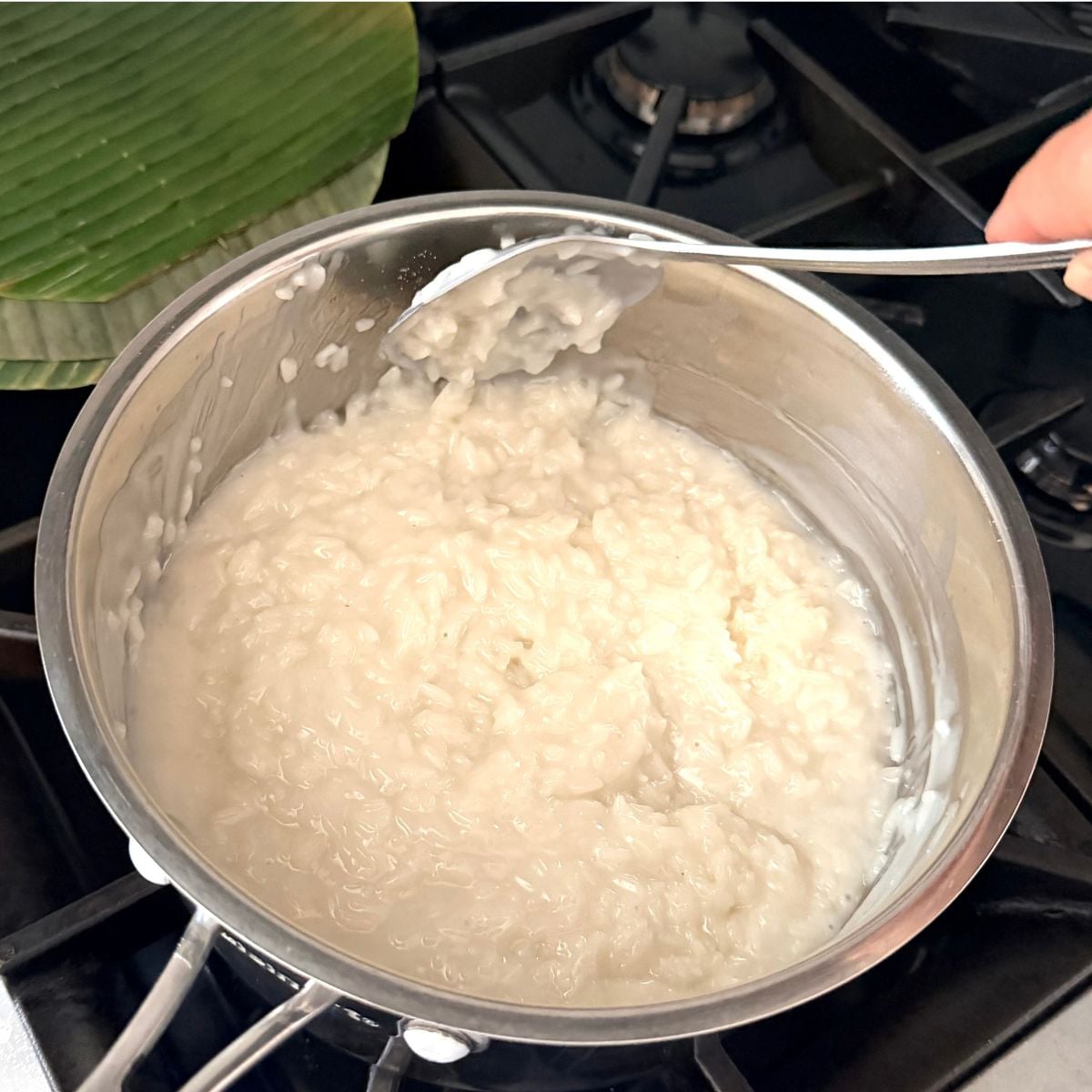
- Cook the rice in the coconut milk. Combine the coconut milk, drained rice, sugar, and salt in a pot. Cook over medium-low heat for 12 to 15 minutes, stirring often and scraping gently from the bottom so the rice doesn't stick or break. Stop when the rice is very sticky, most of the coconut milk is absorbed, and the grains are still a little firm in the center.
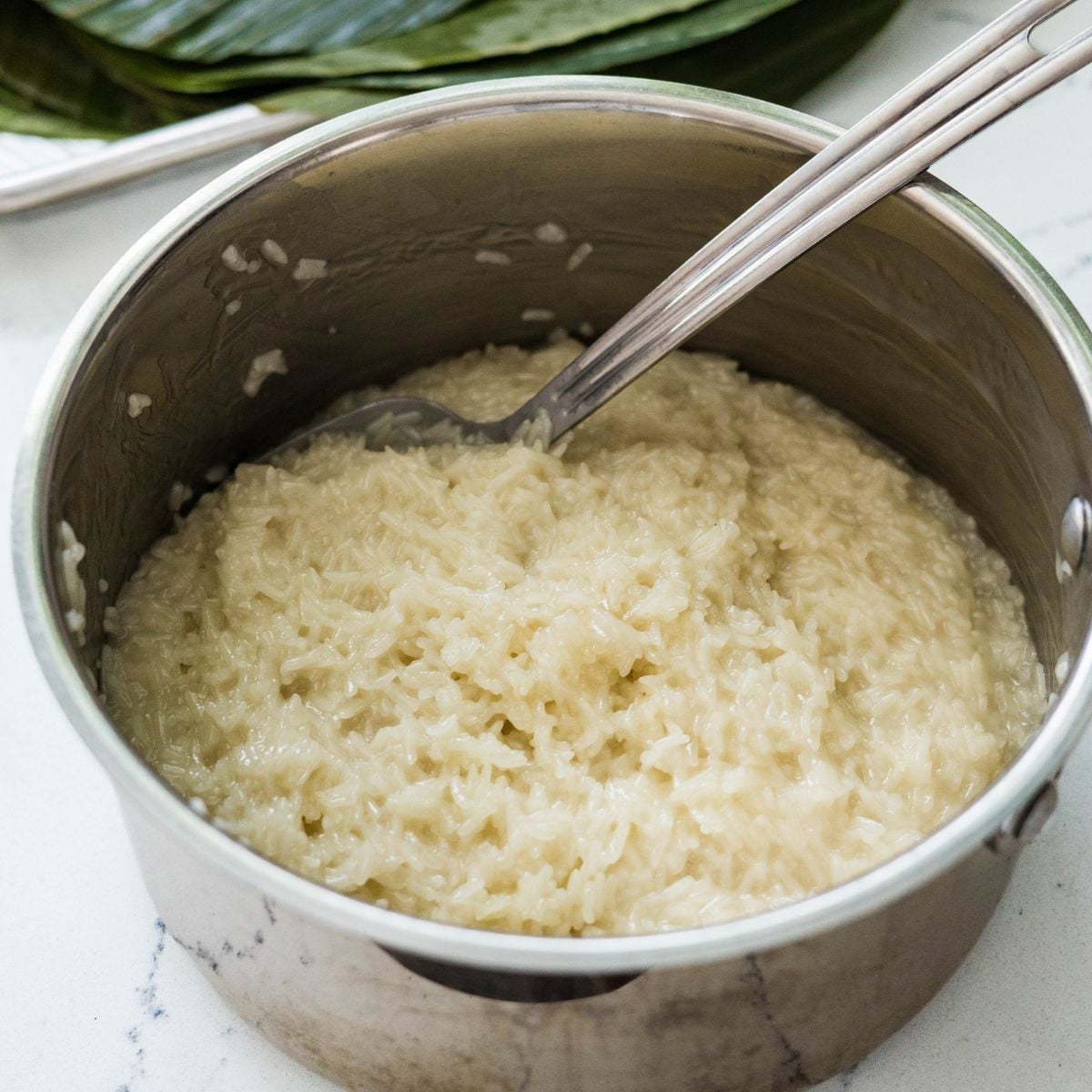
- Let the rice cool for about 10 minutes. It will absorb the rest of the liquid as it sits, and it becomes easier to handle. Use this time to rinse the banana leaves under running water and cut them into 9 to 10 inch rounds.
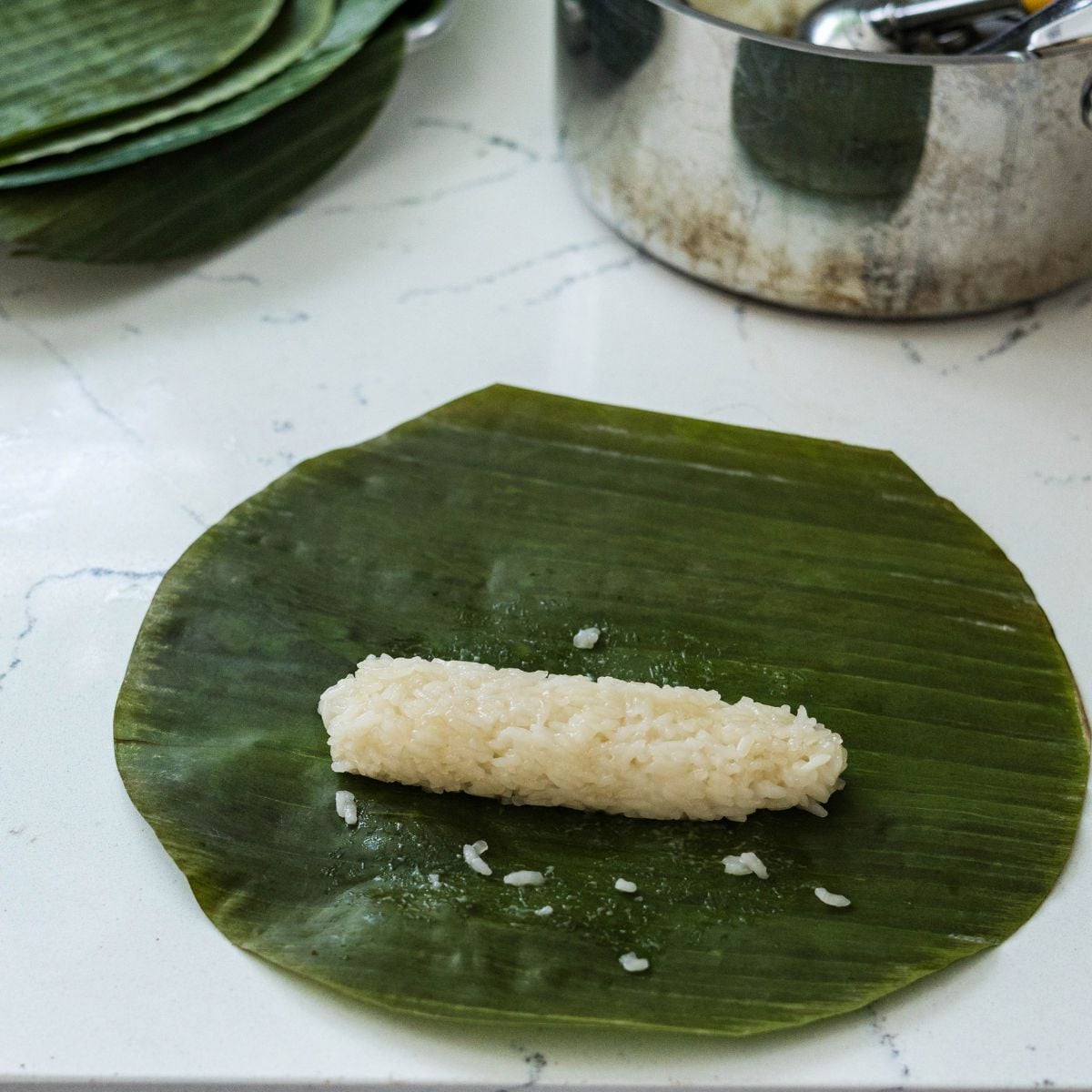
- Scoop and roll. Use a #20 scoop (about 3 tablespoons) to place a portion of rice near one edge of a leaf round. Roll the leaf around the rice into a log, then fold both ends under to close it. Repeat with the rest of the rice. You should get 15 suman.
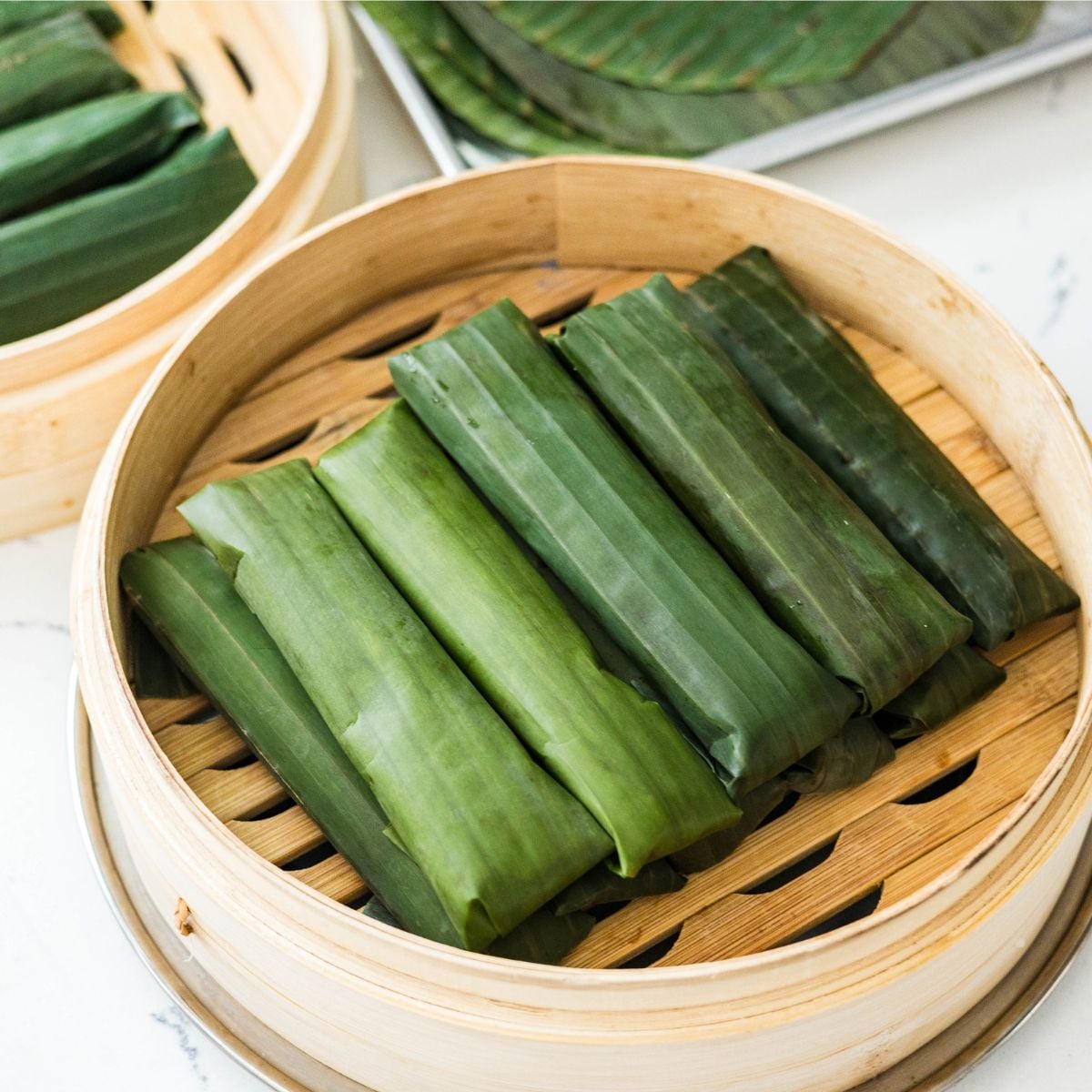
- Steam. Bring the water in your steamer to a full boil over medium heat. Arrange the suman fold side down in the bamboo steamer, stacking tiers as needed, so the folded ends stay closed under their own weight. Steam for 20 to 25 minutes, until the rice is soft and chewy all the way through. One pot of water lasts the whole time, so you don't need to top it up.
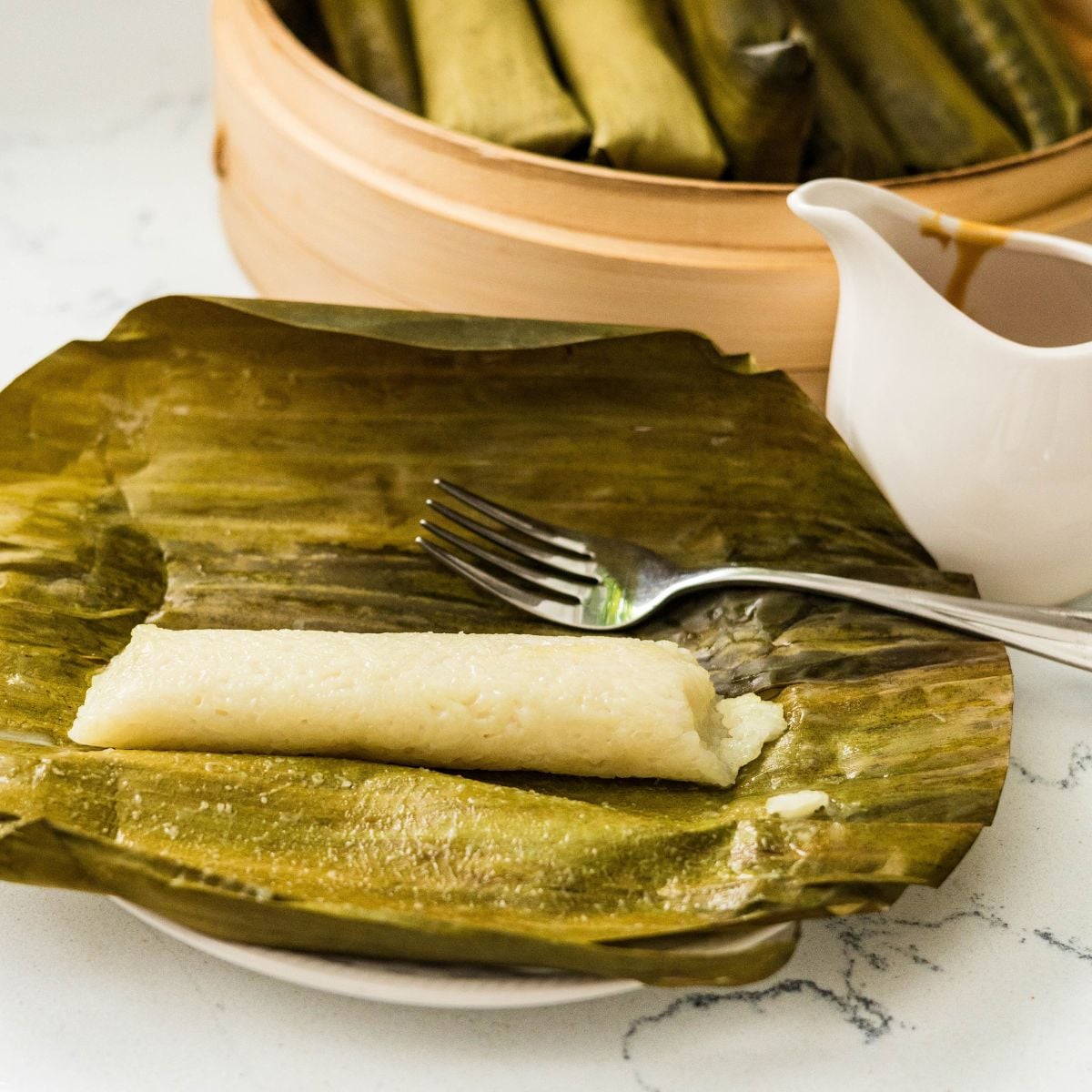
- Serve. Let the suman cool slightly, unwrap them, and spoon the coconut caramel sauce over the top. They're best warm. If they've cooled down, a short time in the microwave brings them back.
The Coconut Caramel Sauce
The suman is only lightly sweet, so the sauce brings the richness. It's coconut milk and brown sugar simmered into a thick, glossy caramel. In some parts of the Philippines, it's called latik.
- Make it while the suman steam. Both finish in about the same time.
- Pull it when it lightly coats a spoon. It thickens as it cools, so if it looks thick in the pan, it'll be too sticky to pour later.
- Keep the heat low. Coconut milk and sugar scorch easily, and scorched sugar tastes bitter.
- Light or dark brown sugar both work. Dark gives a deeper color and a stronger caramel flavor.
Variations
This recipe keeps suman malagkit plain, the way my mom brought it home from the palengke. Once you've made the basic version, here are a few easy ways to change it up:
- Swap the topping. Instead of coconut caramel sauce, try a sprinkle of white sugar, ripe mango slices, or toasted grated coconut. All of them are common ways to eat suman in the Philippines.
- Add pandan. Tying a pandan leaf into a knot and simmering it with the coconut milk and rice gives the suman a light, grassy, vanilla-like aroma. Remove the leaf before rolling.
- Make it ube. Stirring ube halaya or ube extract into the cooked rice turns the suman purple and gives it a sweet, earthy flavor. Ube suman deserves its own recipe, so I'll share that one separately.
- Try suman sa lihiya. This version is cooked with lye water, which makes it bouncier and slightly translucent. It's a different technique entirely, and latik is the traditional topping.
Storage and Reheating
- Fridge: Keep leftover suman wrapped in their banana leaves and store them in an airtight container for 3 to 5 days. They have the best texture within the first 3 days. After that, they're still good, but the rice gets firmer. The leaves help keep the rice from drying out.
- Reheating: Cold suman firms up in the fridge, which is normal for sticky rice. Microwave them still wrapped for 30 to 45 seconds, until they're soft and chewy again. The leaf traps the steam, so the rice softens without drying out.
- Coconut caramel sauce: Store it separately in a sealed jar in the fridge. It thickens when cold, so warm it briefly before spooning it over the suman.
Tips for Making Suman Malagkit
- Start the leaves and rice together. Set the frozen banana leaves on the counter to thaw when you start soaking the rice. Both take about 2 hours, so they're ready at the same time and you aren't waiting on one or the other.
- Undercook the rice on the stove. Pull it when it's still a little firm in the center. The steamer finishes the cooking, and rice that goes in fully soft comes out mushy.
- Stir gently. Scrape from the bottom to keep the rice from sticking, but don't stir hard. Broken grains make the suman pasty instead of chewy.
- Use a scoop. A #20 scoop keeps every roll the same size, so they all finish steaming at the same time.
- Place them fold side down. The weight of the suman keeps the ends closed, which is why you don't need to tie them.
- Adjust the sugar to how you'll serve them. Use the lower end of the range if you're adding coconut caramel sauce, and the higher end if you're eating them plain.
Recipe FAQs
No. Suman needs sweet rice, also sold as glutinous rice or malagkit, to get its sticky, chewy texture. Regular long grain or jasmine rice won't stick together, so the rolls fall apart once you unwrap them.
I soak mine for 2 hours, and I recommend it. Soaked rice cooks more evenly in the coconut milk. If you skip it, the grains take longer to soften and are more likely to stay hard in the center after steaming.
Put them back in the steamer for a few more minutes and check again. This usually means the rice came off the stove a little too early, or the rolls were larger than a #20 scoop.
Some cooks boil suman by submerging the wrapped rolls in simmering water, but I steam mine. Steaming keeps the folded ends closed without tying. Boiled suman needs to be tied so the leaves don't unroll in the water.
You can wrap the rice in parchment paper or foil to steam it, but you'll lose the light, grassy aroma that banana leaves add. I haven't tested this version, so the banana leaves are worth the trip to an Asian grocery store.
Both are made with sweet rice and coconut milk. Suman is rolled in banana leaves and steamed into individual pieces. Biko is cooked with brown sugar in a pan, then spread into a tray, usually topped with latik, and cut into squares.
Yes. Despite the name, glutinous rice doesn't contain gluten. "Glutinous" refers to its sticky texture. If you're cooking for someone with celiac disease, check the labels on your coconut milk and vanilla extract.
I haven't tested freezing these yet, so I can't say how the texture holds up. For now, I'd stick to the fridge, where they keep for 3 to 5 days.
More Filipino Merienda
Looking for other recipes like this? Try these:
- Filipino Puto: Soft steamed rice cakes, and the other half of the weekend palengke haul.
- Ube Cassava Cake: Grated cassava and coconut milk baked into a chewy cake with ube.
- Royal Bibingka Cornbread: Bibingka flavors in a cornbread you can make in a regular oven.
- Chocolate Champorado: Sweet rice cooked into a chocolate porridge, using the same rice as suman.
- Maja Blanca Pancakes: The coconut and corn flavors of maja blanca, made as pancakes.

Did you try this recipe?
Share how it turned out in the comment box below, and if you loved it, share it on Facebook, Pinterest & Instagram.
Thank you!

Suman Malagkit Recipe
Equipment
- medium pot
- Small saucepan
- bamboo steamer set over a pot or wok
- #20 cookie scoop (about 3 tablespoons)
- Kitchen shears or a knife
Ingredients
Suman
- 2 cups sweet rice glutinous rice
- 2 13.5 ounce cans full fat coconut milk
- ¾ - 1 cup granulated sugar
- ¾ teaspoon salt
- Frozen or fresh banana leaves cut into 15 rounds about 9 to 10 inches across
Coconut caramel sauce (optional)
- 1 13.5 ounce can full fat coconut milk
- ¾ cup brown sugar light or dark
- ½ teaspoon salt
- ½ teaspoon vanilla extract optional
Instructions
Suman
- Rinse the sweet rice, cover it with water, and soak it for 2 hours. While it soaks, leave the frozen banana leaves on the counter to thaw.2 cups sweet rice
- Drain the rice well. In a medium pot, combine the coconut milk, rice, sugar, and salt.2 13.5 ounce cans full fat coconut milk, ¾ - 1 cup granulated sugar, ¾ teaspoon salt, 2 cups sweet rice
- Cook over medium-low heat for 12 to 15 minutes, stirring often and scraping gently from the bottom so the rice doesn't stick or break. Stop when the rice is very sticky, most of the coconut milk is absorbed, and the grains are still a little firm in the center.
- Take the pot off the heat and let the rice cool for about 10 minutes. It will absorb the remaining liquid. Meanwhile, rinse the banana leaves under running water and cut them into 9 to 10 inch rounds.Frozen or fresh banana leaves
- Use a #20 scoop (about 3 tablespoons) to place a portion of rice near one edge of a leaf round. Roll the leaf around the rice into a log, then fold both ends under. Repeat with the rest of the rice to make 15 suman.
- Bring the water under your steamer to a full boil over medium heat. Arrange the suman fold side down in the bamboo steamer, stacking tiers as needed. Steam for 20 to 25 minutes, until the rice is soft and chewy all the way through.
- Let the suman cool slightly, then unwrap them and serve warm with coconut caramel sauce.
Coconut caramel sauce:
- While the suman steam, add the coconut milk, brown sugar, and salt to a small saucepan. Cook over medium heat, stirring until the sugar dissolves.1 13.5 ounce can full fat coconut milk, ¾ cup brown sugar, ½ teaspoon salt, ½ teaspoon vanilla extract
- Lower the heat and simmer for 15 to 20 minutes, stirring occasionally, until the sauce lightly coats the back of a spoon.
- Remove it from the heat and stir in the vanilla, if using. Let it cool for a few minutes. It will thicken as it cools.
Save This Recipe 💌
Notes
- Sugar: Use ¾ cup if you're serving the suman with coconut caramel sauce, and up to 1 cup if you're eating them plain.
- Rice doneness: Don't cook the rice until it's fully soft. The steamer finishes it, and rice that goes in fully cooked comes out mushy.
- Banana leaves: Frozen leaves are soft enough to roll once they're thawed, so there's no need to heat them. If you're using fresh leaves, pass them briefly over a low flame or dip them in hot water to soften them first.
- No tying needed: Placing the suman fold side down in the steamer keeps the ends closed.
- Storage: Keep leftover suman wrapped in their leaves in an airtight container in the fridge for 3 to 5 days. They have the best texture within the first 3 days.
- Reheating: Microwave them still wrapped for 30 to 45 seconds.
- Sauce: Store leftover sauce separately in a sealed jar in the fridge. Warm it before serving.