

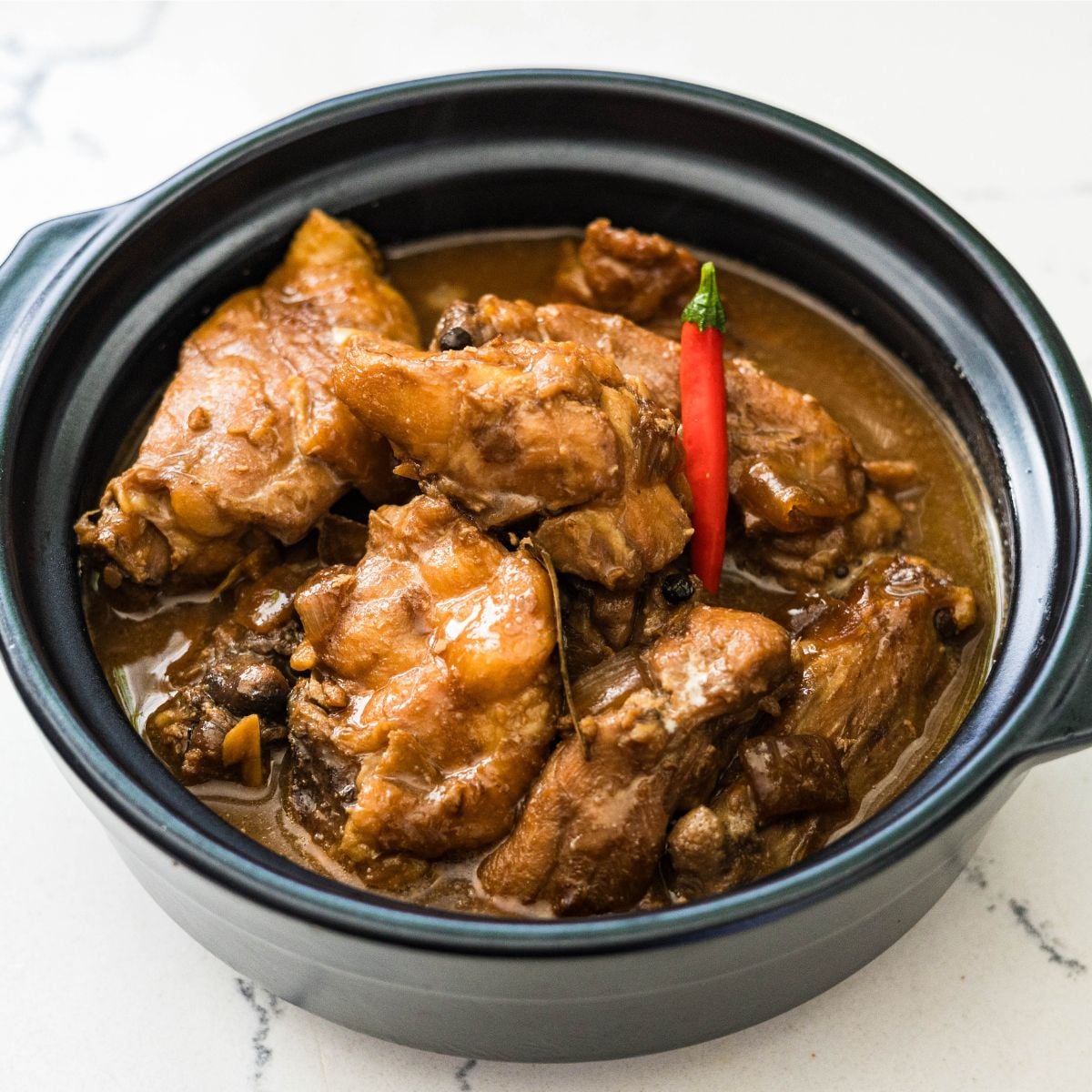
Some nights the usual adobo just isn't what you're after. You want the same vinegar and soy sauce base, but softer. Creamier.
That's adobo sa gata. Coconut milk goes in and takes the sharp edge off the vinegar, and the sauce turns rich instead of tangy. Add chilies and you get heat on top of that creaminess.
Mine is spicy, but not so spicy my kids won't eat it. That's the line I cook to. If you want it hotter, I'll show you where to push it.
The one thing that trips people up is the coconut milk. Add it at the wrong time and it splits on you, or the vinegar never cooks off and you're left with a thin sauce. I'll tell you exactly when it goes in.
Want other ways to change up adobo? There's yellow adobo if you like turmeric, and chicken adobo with pineapple if you want it sweet. This one's for when you want it rich.
Save This Recipe 💌
Jump to:
Why This Recipe Works
- The sauce comes out creamy, not broken. Timing the coconut milk right is the whole game, and I'll show you exactly when it goes in.
- Spicy, but kid-friendly. Whole Thai chilies warm the sauce without overwhelming it. Split them open if you want more heat.
- Nothing sharp or raw-tasting. The vinegar cooks off properly, so you get tang without the bite.
- One pan. Everything goes in the same pot. One thing to wash.
Ingredients
Here's what you'll need:
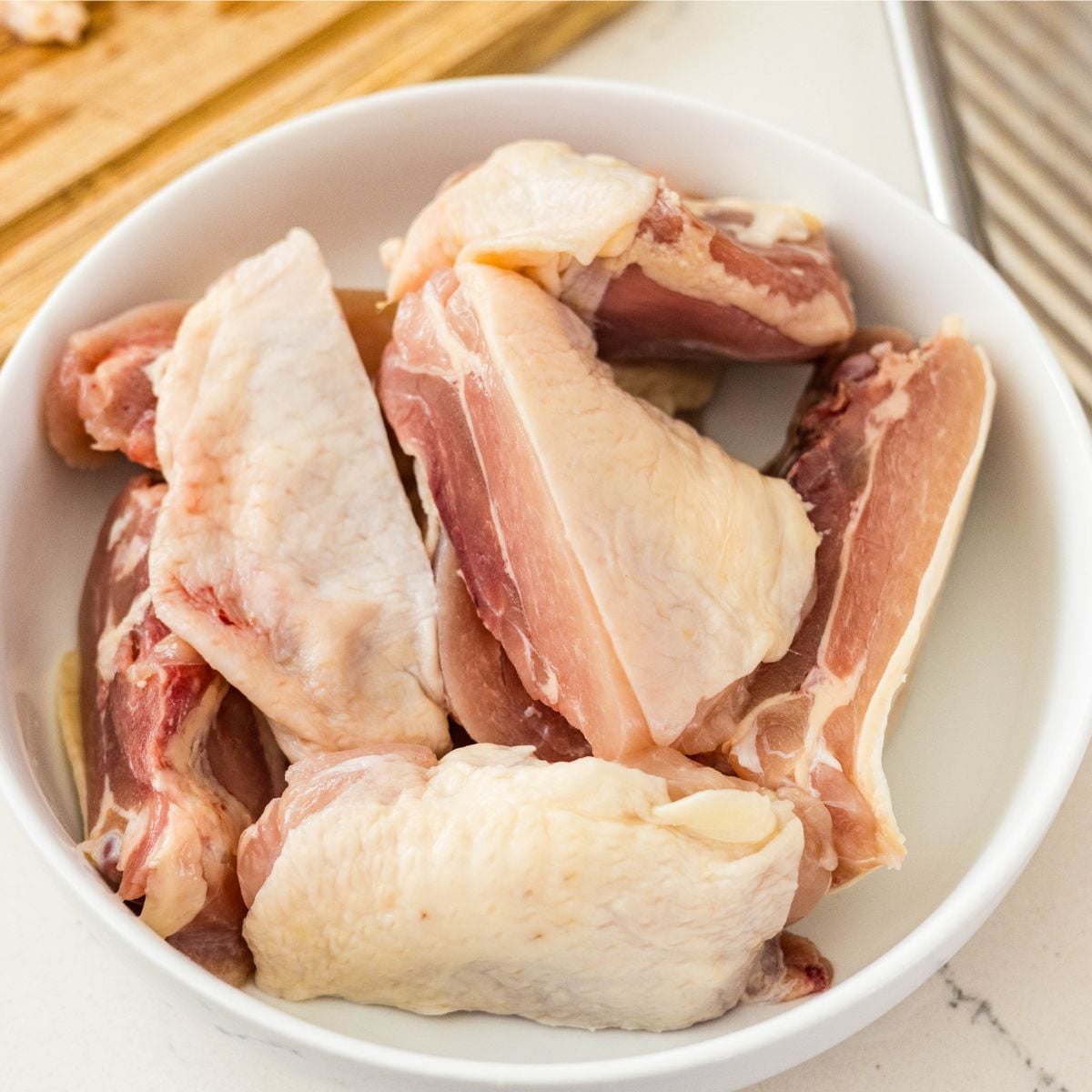
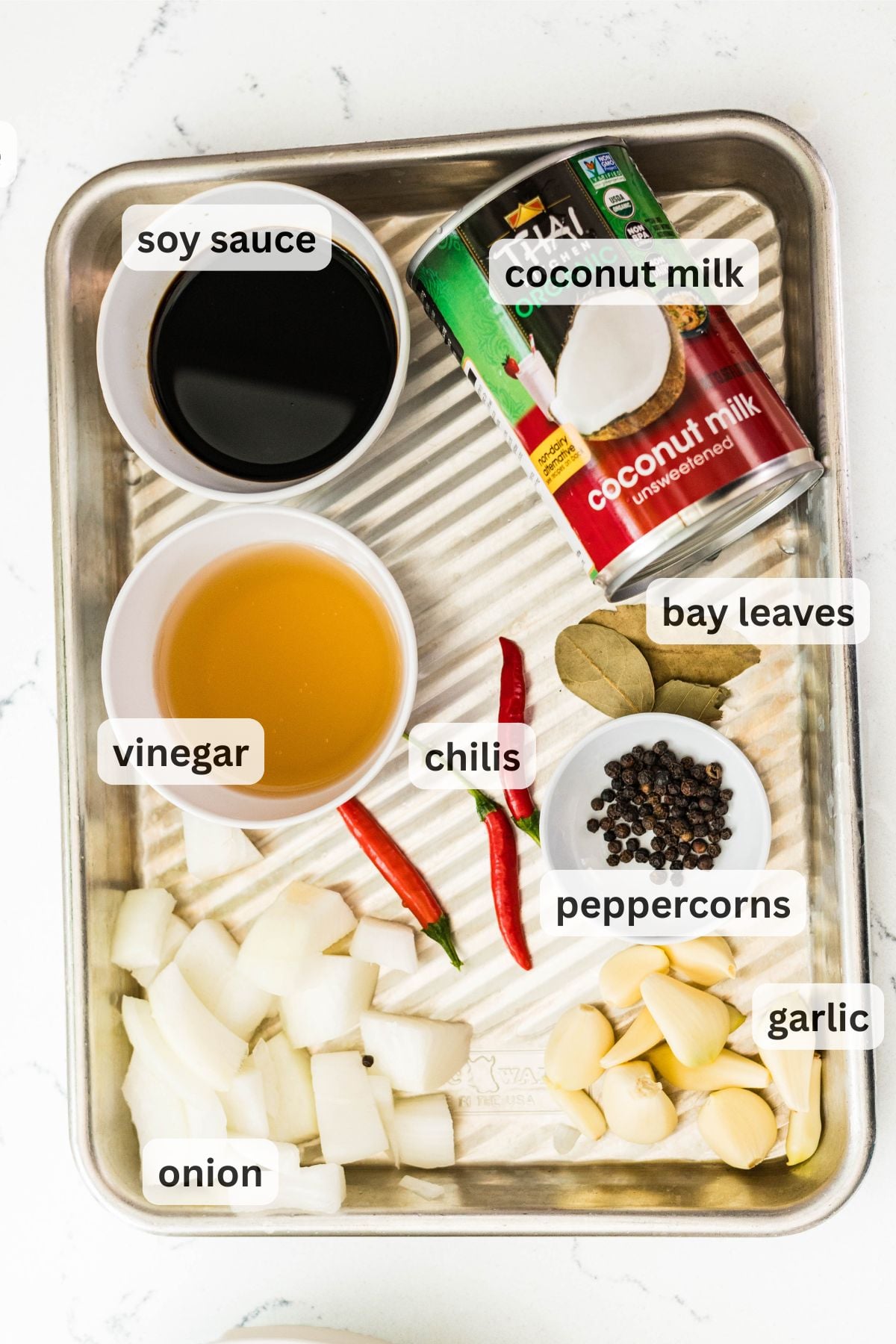
- Chicken thighs. Bone-in or boneless both work, but thighs are the right call here. Breast meat dries out in the time it takes the sauce to reduce, and thighs hold up to the simmer without going stringy. The fat they release also helps carry the coconut milk.
- Coconut milk. Full fat, not lite. Lite has too much water in it and the sauce stays thin no matter how long you reduce it. Shake the can before opening, or if it has separated, scoop the thick cream and the liquid in together.
- Soy sauce. This is the salt in the dish, so the brand matters more than people expect. Filipino soy sauce like Silver Swan is saltier and thinner than Japanese soy sauce. If you're using Kikkoman, go lighter and taste before adding more.
- Vinegar. Cane vinegar is what I use. White vinegar works and is sharper. Coconut vinegar is softer if you want less bite. Whatever you use, don't stir the pot right after it goes in. Letting it boil off for a minute or two before stirring keeps the sauce from tasting raw and sour.
- Water. Gives the chicken enough liquid to simmer in before the coconut milk goes in. Without it the soy sauce and vinegar reduce too fast and the chicken hasn't finished cooking.
- Garlic. A lot of it. Adobo takes more garlic than most people expect, and this version needs enough to stand up to the coconut milk, which rounds everything off and mutes sharper flavors.
- Onion. Adds sweetness and body to the sauce. Classic adobo often skips it, but with coconut milk in the pot the onion helps fill out the base.
- Bay leaves. Dried, not fresh. They go in early so they have time to release into the liquid.
- Whole peppercorns. Whole, not ground. Ground pepper turns the sauce cloudy and gives you a flat heat all the way through. Whole peppercorns soften as they simmer and you get little bursts of it instead.
- Brown sugar. Balances the vinegar. You won't taste it as sweetness, you'll notice its absence as sharpness if you skip it.
- Thai chilies. This is where the heat comes from. Leave them whole for gentle heat, or split them open if you want it hotter. Take them out entirely and the dish still works, it just loses the contrast against the creamy sauce.
- Oil. For sautéing the garlic and onion. Neutral oil is fine.
- Fish sauce and salt. Added at the end, after the coconut milk has gone in. The sauce changes as it reduces, so seasoning early usually means overshooting.
See recipe card for quantities.
Substitution and Additions
- Pork instead of chicken. Pork belly or kasim both work, and this is how a lot of families make it. The trade-off is time: pork needs a longer simmer to get tender, so the sauce reduces further before the meat is ready. Add a bit more water at the start and hold the coconut milk until the pork is close to done, or it'll cook down too far.
- Coconut cream instead of coconut milk. Richer and thicker, and you'll want to thin it with water or the sauce turns heavy. If you're using both, the milk goes in first and the cream goes in at the very end, off a hard simmer, so it stays smooth.
- Bouillon or seasoning cubes. A lot of Filipino recipes use a Knorr chicken cube or Magic Sarap here, and if that's how you grew up eating it, add one along with the coconut milk. It deepens the savoriness quickly. Cut back on the fish sauce and salt at the end, since the cube already brings plenty. Beef, pork or chicken buillion works.
- No Thai chilies. Serrano is the closest swap by heat. Jalapeño is milder and you'll need more of it. Dried chili flakes work in a pinch, but they give you an even heat all through the sauce instead of the sharper heat you get from whole chilies.
- Different vinegar. White vinegar is sharper, so start with a little less. Apple cider vinegar brings a fruitier note that isn't traditional but isn't bad. Rice vinegar is too mild here and the coconut milk will flatten it completely.
- Coconut aminos instead of soy sauce. Works if you need it gluten free, but it's noticeably sweeter and less salty. Cut the brown sugar and season with more fish sauce or salt at the end to make up the difference.
- No fish sauce. Salt alone will do it. You'll lose some depth, so taste more carefully at the end.
- Chicken breast. Possible, but cook it separately and add it back once the sauce is done. Simmering it the whole time will dry it out.
How to Make Chicken Adobo sa Gata
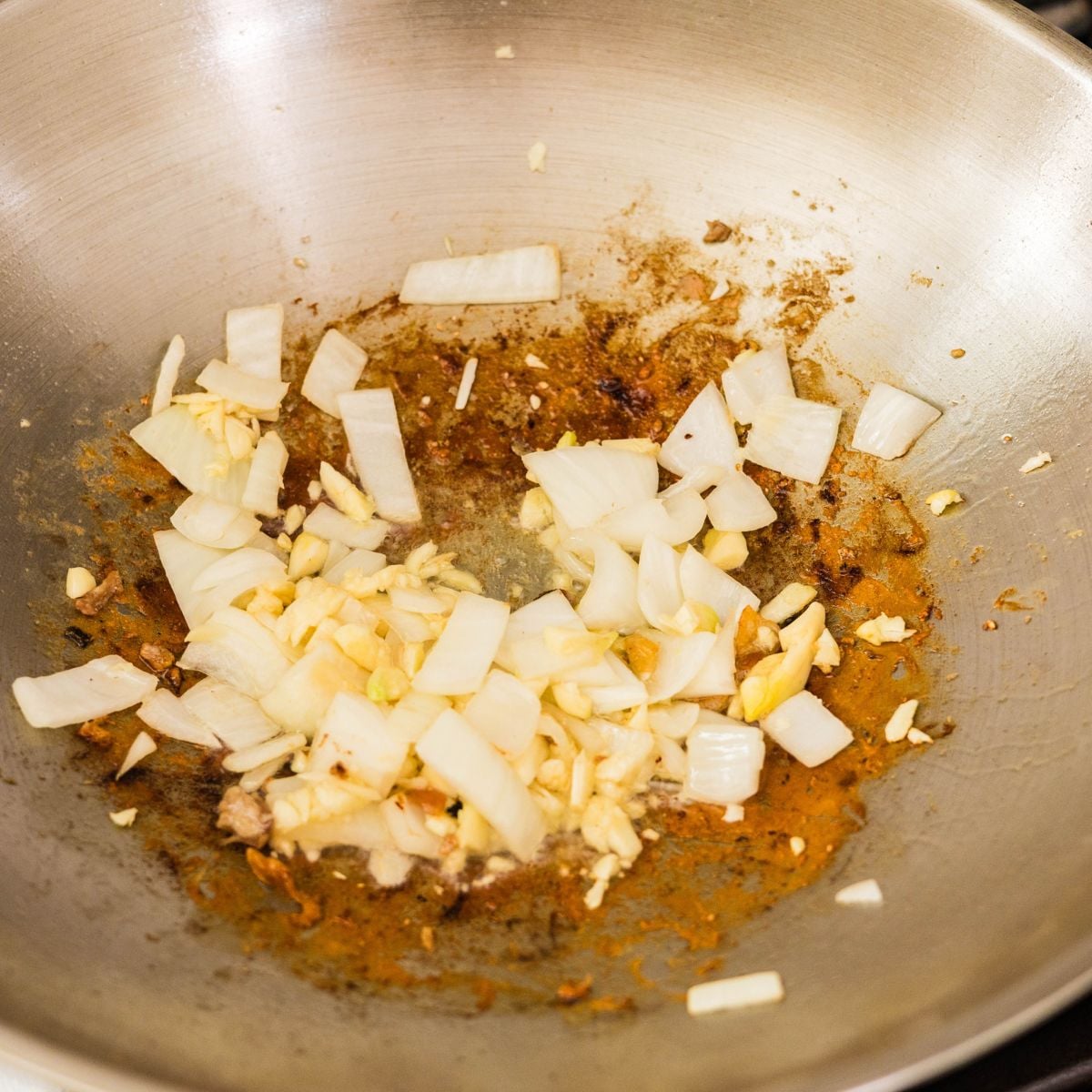
- Sauté the garlic and onion. Heat the oil over medium, then cook the garlic and onion until soft and fragrant. Don't let the garlic get dark. It'll keep cooking in the sauce and burnt garlic turns the whole pot bitter.
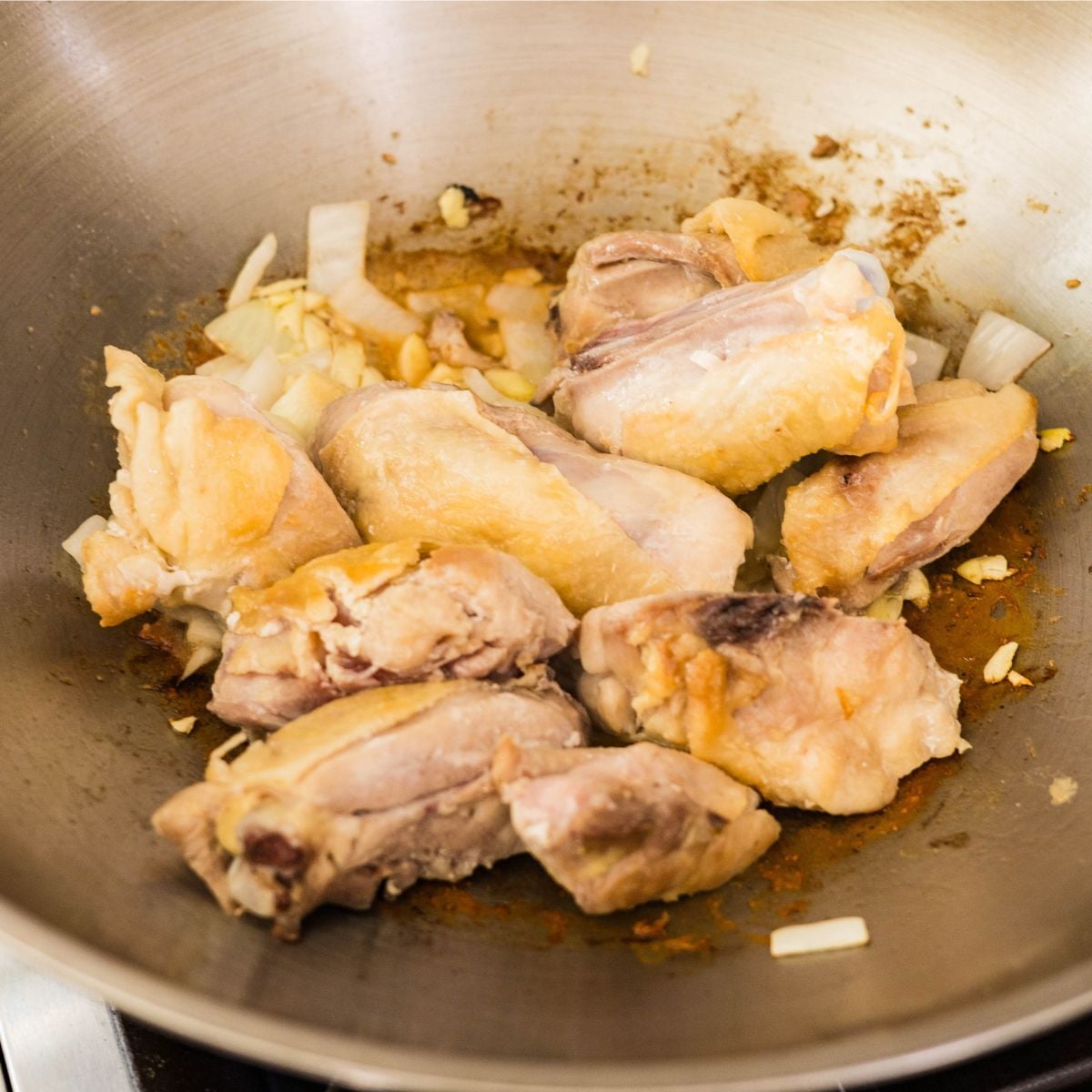
- Add the chicken. Let it sit in the pan for a few minutes so the outside picks up some color before you move it around. That color turns into flavor in the sauce later.
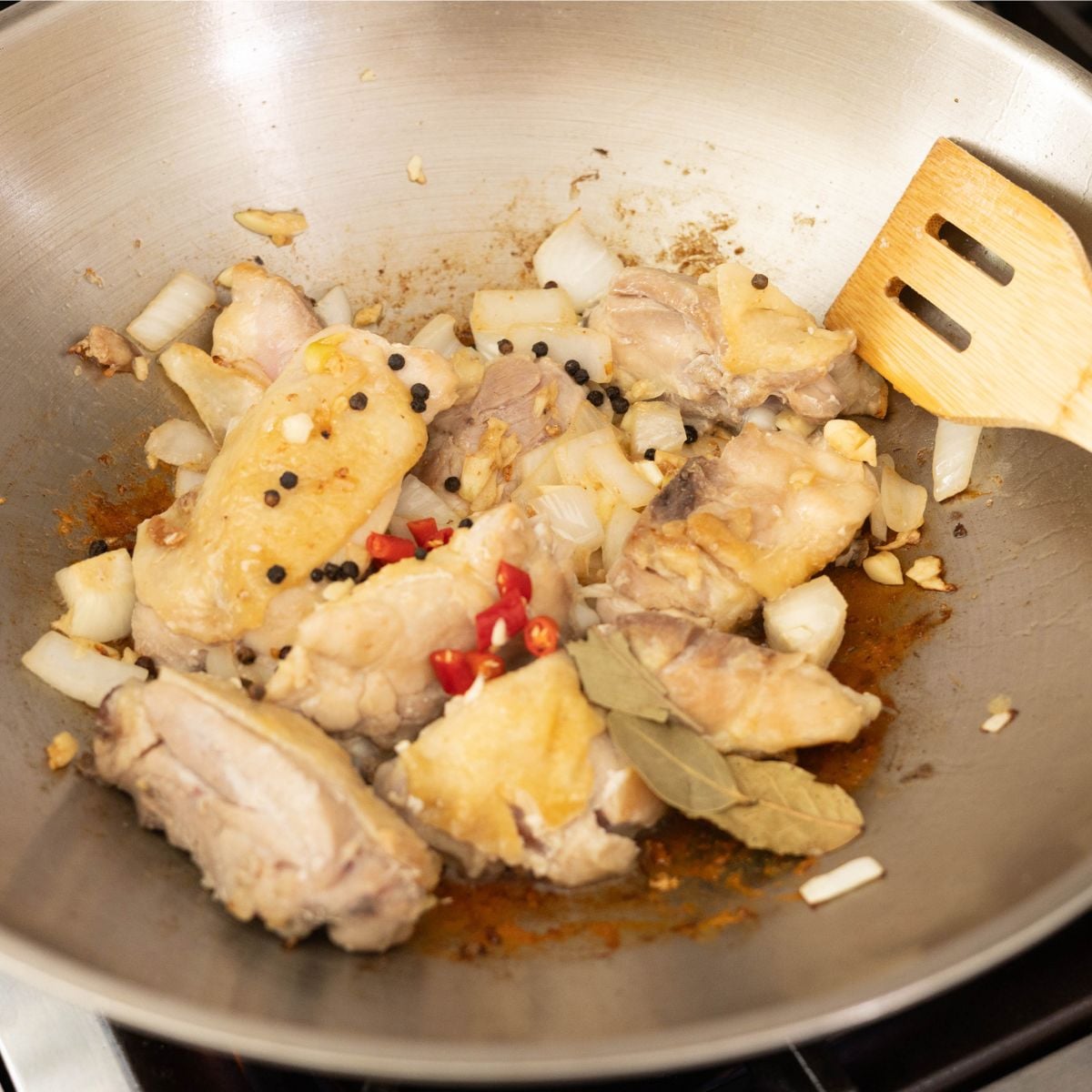
- Add the peppercorns, chilies, and bay leaves. Going in this early gives them time to release into the liquid. Leave the chilies whole for gentle heat.
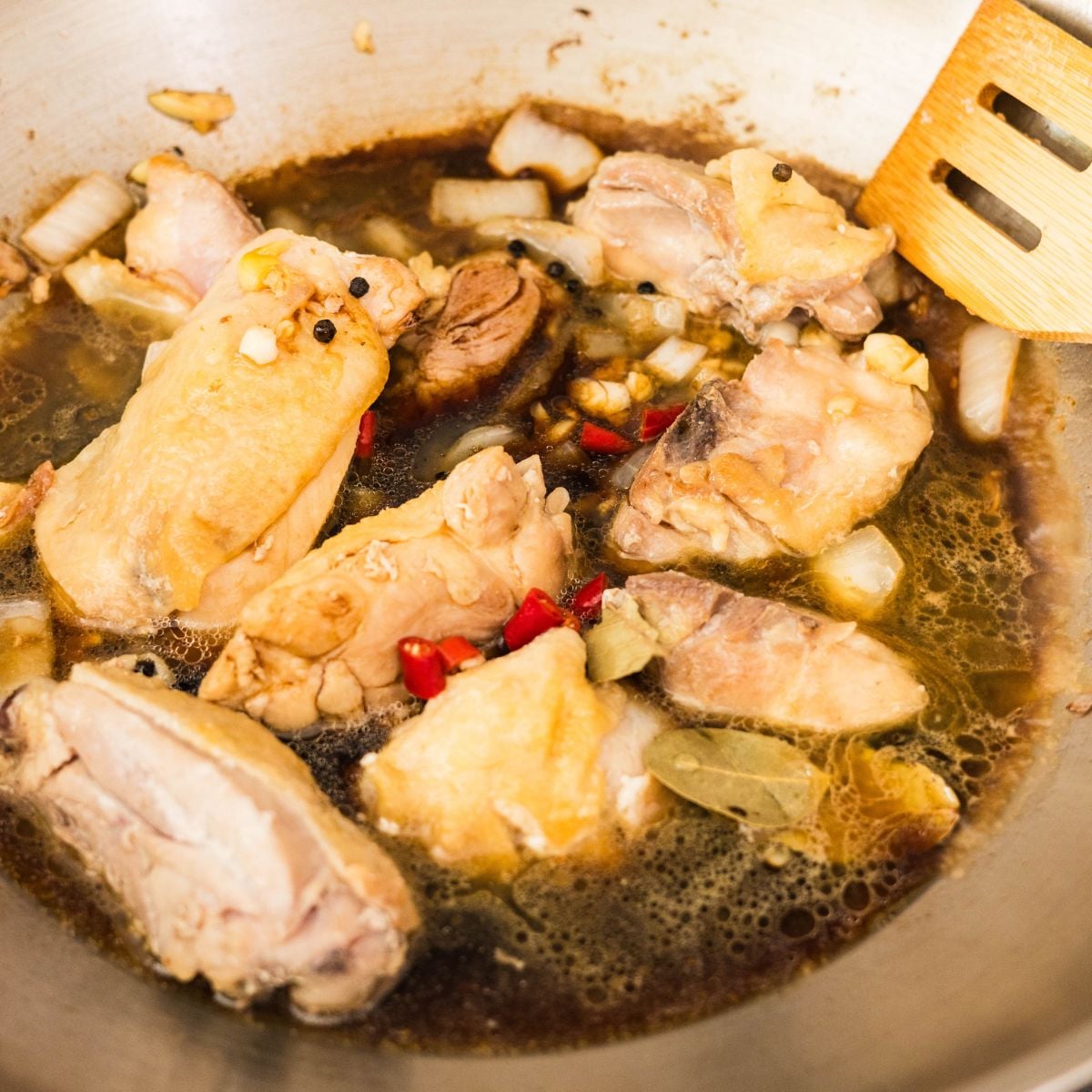
- Pour in the soy sauce, vinegar, and water. Bring it to a boil and leave it alone for a minute or two. No stirring. Then cover, lower the heat, and simmer over low to medium-low for 25 to 30 minutes, until the chicken is tender.
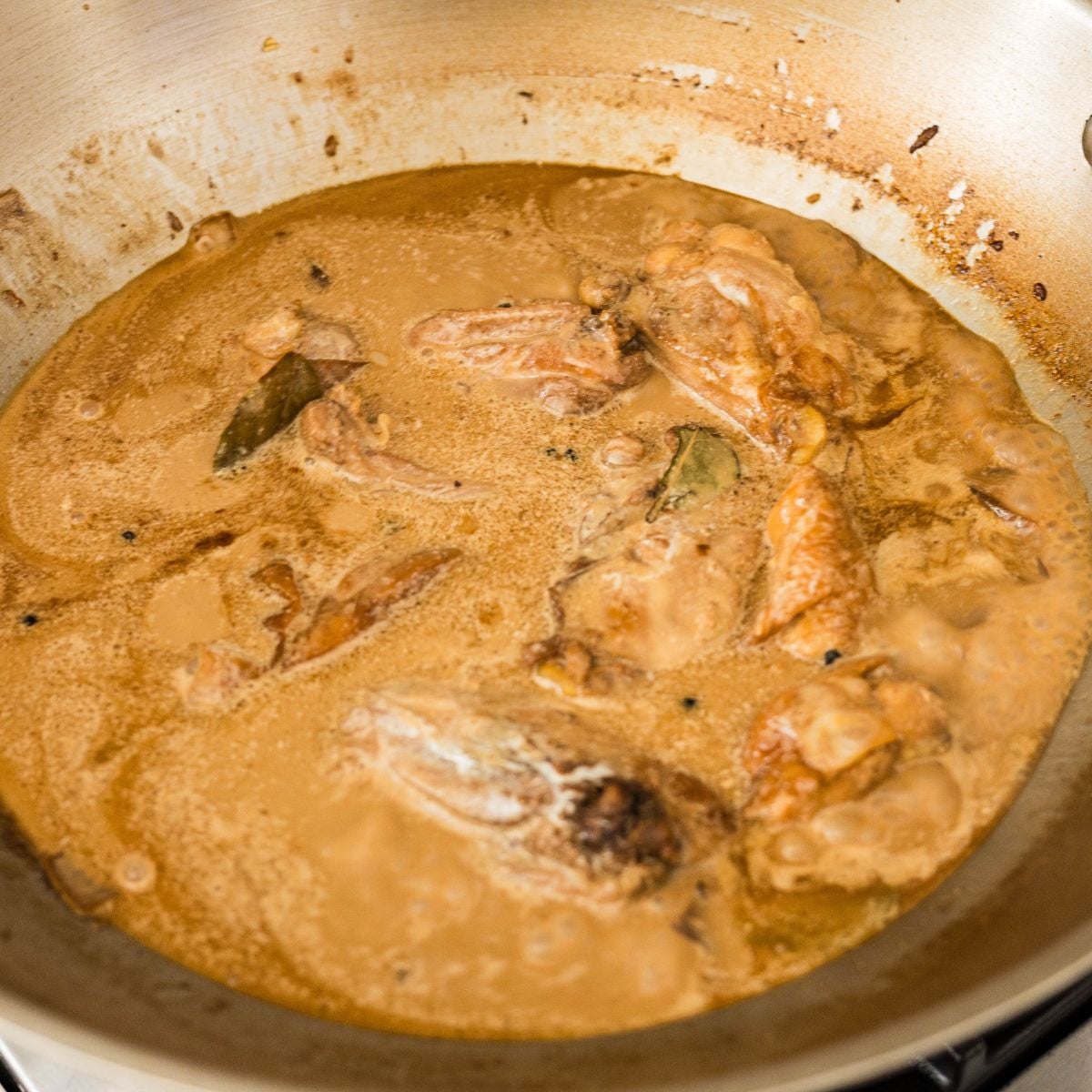
- Add the coconut milk. Stir it in and simmer uncovered for 10 to 15 minutes, keeping it gentle the whole time. Never let it reach a hard boil or the sauce will split. It's ready when it thickens enough to coat the chicken.
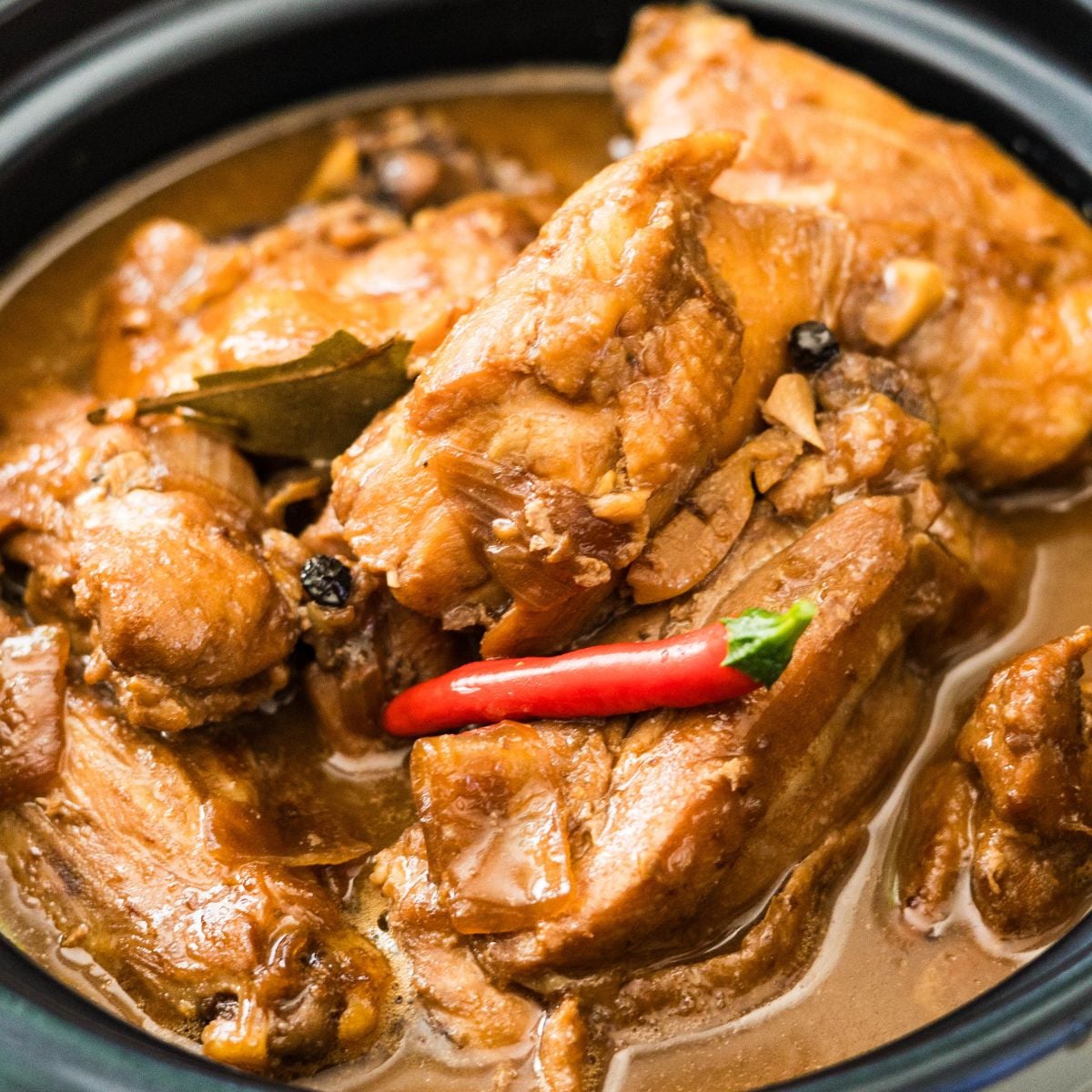
- Taste and season. Add fish sauce first, then salt if it still needs it. The sauce has reduced by now, so what tasted right earlier will be saltier than you expect. Take the bay leaves out before serving. Serve hot over rice.
Why Coconut Milk Curdles (and How to Stop It)
Coconut milk is fat suspended in water. Two things break it apart, and adobo has both: high heat pushes the fat out as oil, and vinegar makes the proteins clump into that grainy look.
How to stop it
Add the coconut milk after the vinegar has already simmered a while, once the sharpness has cooked off. Then keep the pot at a gentle simmer, small bubbles at the edge, never a rolling boil. Use full fat coconut milk, since lite has more water and breaks more easily. And stir gently, not constantly.
If it already split
It's still fine to eat. Pull it off the heat for a few minutes and some of it will come back on its own. If not, stir in a spoonful of fresh coconut milk off the heat. Worst case you've got adobo with a little oil on top, which is how traditional adobo often looks anyway.
Variations
- Ginataang adobo with vegetables. Long beans, eggplant, or kabocha go in with the coconut milk so they cook in the sauce. Kabocha breaks down as it softens and thickens things noticeably.
- Adobo sa gata with ginger. Sauté it alongside the garlic and onion. It cuts the richness and pushes the dish toward ginataang territory.
- Yellow version. Turmeric with the aromatics turns the sauce golden and adds a little earthiness. If you like it that way, my yellow adobo goes further in that direction.
- With potatoes. Add them with the water so they have time to soften. They soak up sauce, so make extra liquid if you want it saucy for rice.
- With hard-boiled eggs. Drop them in for the last few minutes so they pick up color without the whites turning rubbery.
- Saucier for rice. Increase the water and coconut milk together. More coconut milk alone makes it rich rather than saucier, and more water alone thins the flavor.
What to Serve With It
Rice, first and foremost. This is a saucy dish and the sauce is the point, so plain steamed rice does more for it than anything fancy. Garlic fried rice works too if you want something with more going on.
Something green and simple alongside helps cut the richness. Adobong sitaw keeps it in the same flavor family, or steamed vegetables with nothing on them at all.
For more options, I put together a full list of what to serve with adobo.
Storage and Reheating
Fridge. Keeps 3 to 4 days in an airtight container. The sauce firms up and the fat sets on top when it's cold. That's normal and it melts back in as it warms.
Reheating. Low heat on the stove, with a splash of water to loosen the sauce. Coconut sauces are more likely to split on reheat than on the first cook, so keep it gentle and don't walk away. The microwave works if you're in a hurry, but go in short bursts and stir between them.
Freezing. Coconut milk sauces change texture in the freezer. The sauce can turn grainy when thawed even if it was smooth going in. It's still fine to eat and the flavor holds, so freeze it if you need to, just expect the sauce to look different.
Leftovers. Like most adobo, it tastes better the next day once the garlic and vinegar have settled into the sauce.
Rose's Top Tips
- Don't stir the vinegar right away. Let it boil undisturbed for a minute or two before you touch it. Stirring too early leaves that raw, sharp bite in the sauce that never fully cooks out.
- Keep the coconut milk at a gentle simmer. Small bubbles at the edge of the pot, not a rolling boil. This is where most split sauces come from, usually when someone's trying to reduce it faster.
- Season at the end, not the beginning. The sauce reduces by a good amount in that last 10 to 15 minutes, so what tasted balanced early will be too salty by the time it's done.
- Leave the chilies whole for kids. Whole chilies give you warmth through the sauce. Split them open and the heat goes up fast, so that's the adjustment to make if you're cooking for adults only.
- Watch the garlic in step 1. It keeps cooking once the sauce goes in, so pull back before it darkens. Burnt garlic doesn't hide in a coconut sauce.
Recipe FAQs
Either it boiled too hard or the coconut milk went in too early, while the vinegar was still sharp. Keep it at a gentle simmer and add the coconut milk after the vinegar has cooked down. If it's already split, pull it off the heat for a few minutes and it may come back on its own.
Yes, but thin it with water or the sauce turns heavy. If you're using both, the milk goes in first and the cream goes in at the very end, off a hard simmer.
Mild to medium with the chilies left whole. My kids eat it. Split the chilies open if you want real heat, or leave them out and the dish still works.
No. Some adobo recipes marinate, this one doesn't. The chicken simmers in the soy sauce and vinegar for 25 to 30 minutes, which does the same job.
Yes, pork belly or kasim both work. Pork needs a longer simmer, so add a little more water at the start and hold the coconut milk until the meat is close to tender.
Yes, and it's better the next day. Reheat gently on the stove with a splash of water, since coconut sauces split more easily on the reheat than the first cook.
Coconut milk. It rounds off the vinegar and turns the sauce creamy instead of sharp, and it's a common way to cook adobo in the Bicol region and other parts of the country where coconut is everywhere.
Full fat canned coconut milk, not lite and not the carton kind from the refrigerated section. Lite has too much water and the sauce won't thicken. Carton coconut milk is a drink and it's far too thin for this. Check the label for coconut extract and water with nothing else added.
Fat content varies a lot between brands, anywhere from 10 to 22 grams per serving, and that's what determines how rich your sauce gets. Asian grocery brands like Chaokoh and Aroy-D are thicker than most supermarket brands. Shake the can before opening. If it's separated inside, scoop the solid cream and the liquid in together.
More Filipino Adobo Recipes
Looking for other recipes like this? Try these:
- Chicken Adobo with Pineapple for a sweeter version
- Filipino Yellow Adobo made with turmeric
- Adobong Sitaw for a vegetable adobo
- Chicken Liver Adobo (Adobong Atay ng Manok)
- Chicken Adobo Fried Rice for leftovers

Did you try this recipe?
Share how it turned out in the comment box below, and if you loved it, share it on Facebook, Pinterest & Instagram.
Thank you!

Chicken Adobo sa Gata (Filipino Adobo in Coconut Milk)
Equipment
- Large skillet or pot with a lid
Ingredients
- 2 tablespoons cooking oil
- 8 cloves garlic crushed
- 1 onion sliced
- 2 pounds chicken thighs
- 1 teaspoon whole black peppercorns
- 3 Thai chili peppers
- 2 dried bay leaves
- ½ cup soy sauce
- ⅓ cup vinegar
- ½ cup water
- 1 can 13.5 oz full fat coconut milk
- 1 tablespoon brown sugar
- Fish sauce and salt to taste
Instructions
- Heat the oil in a large skillet or pot over medium heat. Add the garlic and onion and sauté until soft and fragrant, about 2 to 3 minutes. Don't let the garlic darken.2 tablespoons cooking oil, 8 cloves garlic, 1 onion
- Add the chicken thighs. Let them sit undisturbed for a few minutes to pick up some color, then turn them over.2 pounds chicken thighs
- Add the peppercorns, Thai chilies, and bay leaves.1 teaspoon whole black peppercorns, 3 Thai chili peppers, 2 dried bay leaves
- Pour in the soy sauce, vinegar, and water. Add the brown sugar. Bring to a boil and let it cook undisturbed for 1 to 2 minutes without stirring.½ cup soy sauce, ⅓ cup vinegar, ½ cup water, 1 tablespoon brown sugar
- Cover, reduce the heat to low or medium-low, and simmer for 25 to 30 minutes, until the chicken is tender.
- Add the coconut milk and stir. Simmer uncovered for 10 to 15 minutes at a gentle simmer, never a hard boil, until the sauce thickens enough to coat the chicken.1 can 13.5 oz full fat coconut milk
- Season with fish sauce and salt to taste. Remove the bay leaves and serve hot over rice.Fish sauce and salt


Rose Sioson says
Quick tip on the sauce: add the coconut milk after the chicken has simmered in the vinegar and soy sauce, then keep it at a gentle simmer instead of a hard boil. High heat can make the coconut milk split and turn grainy. If it gets too thick, a splash of water loosens it back up. Let me know how yours turned out.