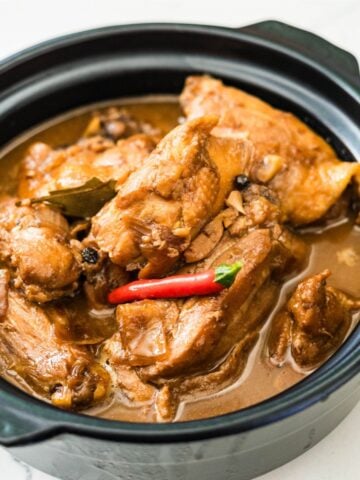
Chicken adobo with pineapple is the sweet-savory version of the Filipino classic. Same soy sauce, vinegar, garlic, and bay leaf base, but with pineapple chunks added to soften the vinegar's sharpness with a little natural sweetness.
It's a good pick if you find classic chicken adobo a bit too tangy, or if you just have a can of pineapple sitting in the pantry. One pot, about 30 minutes of active time, and like all adobo, it tastes even better the next day once the sauce has had time to soak into the chicken.

Save This Recipe 💌
Jump to:
What Is Filipino Adobo?
What Is Filipino Adobo?
Adobo (from the Spanish adobar, "to marinate") is the dish most Filipinos would name first if asked what Filipino food is. At its core, it's meat braised in vinegar, soy sauce, garlic, bay leaves, and black peppercorns. The vinegar wasn't just for flavor, it was a preservative. Cooking meat in acid kept it from spoiling before refrigeration existed. The technique predates Spanish colonization, which is why Filipino adobo shares almost nothing with Spanish or Mexican adobo beyond the name.
Some use coconut milk (adobo sa gata), some use turmeric (adobong dilaw), and some, like this one, add pineapple for sweetness.
Why Pineapple in Adobo?
Pineapple does three things in this dish:
- Balances the vinegar. Its natural sweetness softens adobo's sharp tang without erasing it, so the sauce comes out rounder instead of just less acidic.
- Builds the braising liquid. The juice brings natural sugar and acidity into the pot as it reduces, giving the sauce more depth and a slightly thicker body.
- Tenderizes the chicken. Pineapple contains bromelain, an enzyme that breaks down protein. The chicken comes out noticeably more tender, especially by day two.
Ingredients

- Chicken thighs (bone-in or boneless): Thighs are the standard here. They hold up through the long simmer and soak up the sauce better than breast meat, which dries out fast in that acidic braising liquid. Bone-in gives you more flavor, and the collagen helps thicken the sauce as it reduces. Boneless cooks faster and is easier to eat straight off the fork. Drumsticks work too. Skip the chicken breast, it'll be dry long before the sauce is ready.
- Dark soy sauce: Gives the sauce its deep color and a slightly rounder, less sharp saltiness than regular soy sauce. I use Filipino soy sauce, Datu Puti or Silver Swan, which is thinner and saltier than Kikkoman. Either works, just taste as you go and adjust.
- Kecap manis (sweet soy sauce): Indonesian sweet soy sauce made with palm sugar, thick and almost molasses-like. It adds sweetness and body to the sauce. Find it at Asian grocery stores or online. No kecap manis? A tablespoon of regular soy sauce plus a teaspoon of brown sugar gets you close.
- Oyster sauce: Rounds out the umami and gives the finished sauce a little shine.
- Cane vinegar: The traditional choice for adobo, milder than white distilled vinegar. Look for sukang maasim or sukang Iloko at Filipino grocery stores. Coconut vinegar works the same way if that's what you can find. White vinegar is a fine substitute too, just use a little less since it's sharper.
- Pineapple chunks: Canned, in juice, is what most Filipino home cooks reach for. Don't drain it, that juice is doing real work in the braising liquid. Fresh pineapple works too, though it has more active enzymes and can keep softening the chicken the longer it sits. Just want the flavor without the chunks? Swap in ½ cup pineapple juice for the water.
- Garlic: Goes into the marinade first, then half gets sautéed later as the aromatic base.
- Onion: Builds out that base alongside the garlic.
- Black peppercorns: Whole, not ground. They bring heat and aroma as they simmer without making the whole pot spicy.
- Bay leaves: This is where a lot of that classic adobo flavor comes from. Two to three dried leaves, removed before serving.
- Sugar: Just a small amount, enough to back up the pineapple's sweetness and take the edge off the soy sauce's saltiness.
See recipe card for quantities.
How to Make Chicken Adobo with Pineapple

- Marinate the chicken. In a bowl, combine the chicken with dark soy sauce, kecap manis, oyster sauce, and half the garlic. Toss to coat. Marinate at room temperature for at least 30 minutes, or up to overnight in the fridge. The longer it sits, the deeper the flavor.

- Sauté the aromatics. Heat oil in a pot over medium heat. Add the remaining garlic and the onion, and cook until fragrant, about 2 minutes.

- Brown the chicken. Shake off any excess marinade (reserve it) and add the chicken to the pot. Sear until golden on both sides, about 3 to 4 minutes per side. This builds flavor, the chicken doesn't need to be cooked through yet.

- Build the sauce and simmer. Pour in the reserved marinade, water, and vinegar. Let the vinegar boil undisturbed for 2 to 3 minutes before stirring, this is what cooks off the sharp edge. Add the pineapple chunks and juice, then reduce the heat and simmer, uncovered, for 25 to 30 minutes, until the chicken is tender and the sauce has thickened to your liking.
Rose's Tips
- The marinade is your sauce base, don't throw it out. It carries the concentrated flavor from Step 1 straight into the braise.
- Don't rush the vinegar step. Already covered in the method, but worth repeating here since skipping it is the single most common reason adobo tastes sharp instead of balanced.
- Skip the chicken breast. It dries out under the acidic braising liquid before the sauce has time to develop. Thighs or drumsticks only.
- Sauce consistency is a preference, not a rule. Simmer uncovered longer for thick, sticky adobo. Stop earlier if you want it saucier. Both are correct.
- It's better the next day. The sauce keeps absorbing into the chicken overnight, and the pineapple sweetness mellows further into the sauce. Make it a day ahead if you're feeding a crowd.
How to Store and Reheat
Store leftovers in an airtight container in the fridge for up to 4 days. Like most adobo, this one tastes even better after a day or two once the sauce has had more time to soak into the chicken.
To reheat, warm it gently on the stovetop over low heat rather than the microwave, which can make the chicken tough and dry out the sauce. Add a small splash of water if the sauce has thickened more than you'd like.
This freezes well too. Cool completely, then freeze in an airtight container for up to 2 months. Thaw overnight in the fridge before reheating.
Variations
- Pork adobo with pineapple: Swap the chicken for pork belly or pork shoulder, cut into chunks. Extend the simmer time to 45 minutes to an hour, pork needs longer than chicken to turn tender.
- Add bell peppers: Stir in sliced red or green bell peppers during the last 10 minutes of simmering. They add a little color and their own mild sweetness alongside the pineapple.
- Spicy version: Add sliced Thai chilies or a pinch of chili flakes along with the garlic. The heat plays well against the sweetness from the pineapple.
- Coconut version: Stir in ½ cup coconut milk during the last few minutes of cooking for a richer, creamier sauce. This leans the dish closer to adobo sa gata while still keeping the pineapple.
What to Serve With This
- Garlic fried rice: More flavor than plain rice, and it does a better job soaking up the sauce.
- Steamed white rice: The classic choice if you'd rather let the adobo carry the plate on its own.
- Sautéed green beans: Something crisp and green to cut through the richness of the sauce.
- Atchara: The vinegar and crunch balance out how rich this dish gets, especially with the extra sweetness from the pineapple.
- Fried plantains: A sweet, slightly crisp side that leans into the tropical angle the pineapple already brings.
- Lumpiang Shanghai: Crunchy, savory, and a good starter if you're building out a full spread.
Recipe FAQs
Yes, but expect a slightly different result. Fresh pineapple has more active bromelain, the enzyme that tenderizes the chicken, so the texture keeps softening the longer it sits, especially on day two. Canned pineapple is milder and more predictable, which is why most Filipino home cooks default to it.
Vinegar needs a few minutes of uncovered boiling to cook off its sharp, raw edge before it gets incorporated into the sauce. Stir too early and that harshness gets trapped in, which is the most common reason homemade adobo tastes sour instead of balanced.
Same base, same technique, different balance. Pineapple softens the vinegar's sharpness and adds sweetness that classic adobo doesn't have. If you've had straight adobo and found it too tangy, this version is built to fix exactly that.
Yes, and it's genuinely better for it. The sauce keeps absorbing into the chicken overnight, and the pineapple sweetness mellows further the longer it sits. Make it a day ahead if you're serving a crowd.
More Chicken Recipes

Did you try this recipe?
Share how it turned out in the comment box below, and if you loved it, share it on Facebook, Pinterest & Instagram.
Thank you!


Chicken Adobo with Pineapple
Equipment
- 1 medium pot or deep pan
Ingredients
- 1 pound boneless chicken thighs
- 6 cloves garlic crushed
- 2 tablespoon dark soy sauce
- 2 tablespoon kecap manis or sweet soy sauce
- 1 tablespoon oyster sauce
- ½ cup cane vinegar
- 1 teaspoon black peppercorns
- 2 pcs bay leaves
- 1 tablespoon cooking oil
- ¼ cup water
- 1 tablespoon white or brown sugar
- 1 cup pineapple chunks with juice (optional)
- ½ cup onion chopped
Instructions
- Marinate the chicken: In a bowl, combine the chicken, dark soy sauce, kecap manis, oyster sauce, and half the garlic. Toss to coat. Marinate at least 30 minutes at room temperature, or up to overnight in the fridge.1 pound boneless chicken thighs, 2 tablespoon dark soy sauce, 2 tablespoon kecap manis or sweet soy sauce, 1 tablespoon oyster sauce, 6 cloves garlic
- Sauté the aromatics: Heat the oil in a pot over medium heat. Add the remaining garlic and the onion and cook until fragrant, about 2 minutes.6 cloves garlic, ½ cup onion, 1 tablespoon cooking oil
- Brown the chicken: Shake the excess marinade off the chicken and save the marinade. Add the chicken to the pot and sear until golden, 3 to 4 minutes per side. It doesn't need to be cooked through yet.1 pound boneless chicken thighs
- Add the vinegar: Pour in the reserved marinade, water, and vinegar. Add the peppercorns, bay leaves, and sugar. Let it boil undisturbed for 2 to 3 minutes before stirring, which cooks off the vinegar's sharp edge.½ cup cane vinegar, 1 teaspoon black peppercorns, 2 pcs bay leaves, ¼ cup water, 1 tablespoon white or brown sugar
- Simmer with pineapple: Add the pineapple chunks with their juice. Reduce the heat and simmer uncovered for 25 to 30 minutes, until the chicken is tender and the sauce has thickened to your liking.1 cup pineapple chunks
- Serve: Remove the bay leaves and serve over steamed rice.
Save This Recipe 💌
Notes
- Reserve the marinade: The soy sauce, kecap manis, and oyster sauce marinade is packed with flavor. Pour it back into the pot with the braising liquid to build the sauce.
- Shake off excess marinade before browning: Wet chicken won’t brown, it steams. Let the excess drip off so the chicken hits hot oil, not liquid.
- Skip chicken breast: It dries out in the acidic braise. Use thighs or drumsticks for best results.
- Adjust sauce consistency: Simmer uncovered longer for thick, sticky adobo. Stop reducing earlier for a saucier finish.
- Even better the next day: Resting overnight deepens flavor and mellows the pineapple sweetness. Great make-ahead dish.