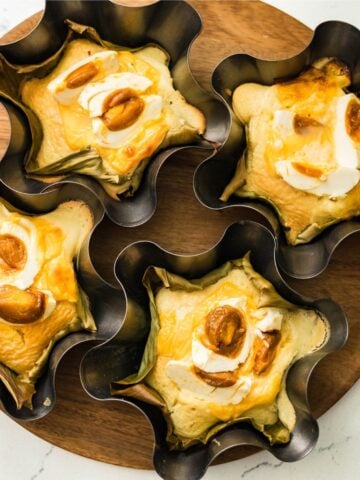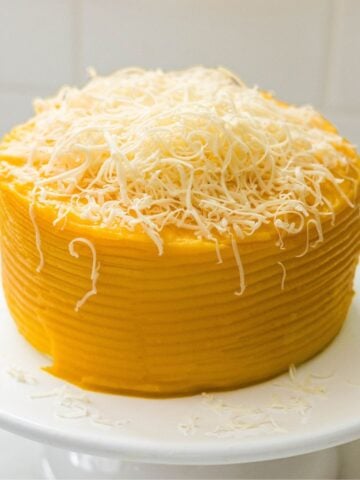
Believe it or not, I had never tried inutak before making this recipe, and neither had some of my friends. That made me even more curious to make it myself.
Inutak is a soft, sticky Filipino rice cake made with glutinous rice flour and coconut milk, finished with a creamy topping that browns under the broiler.
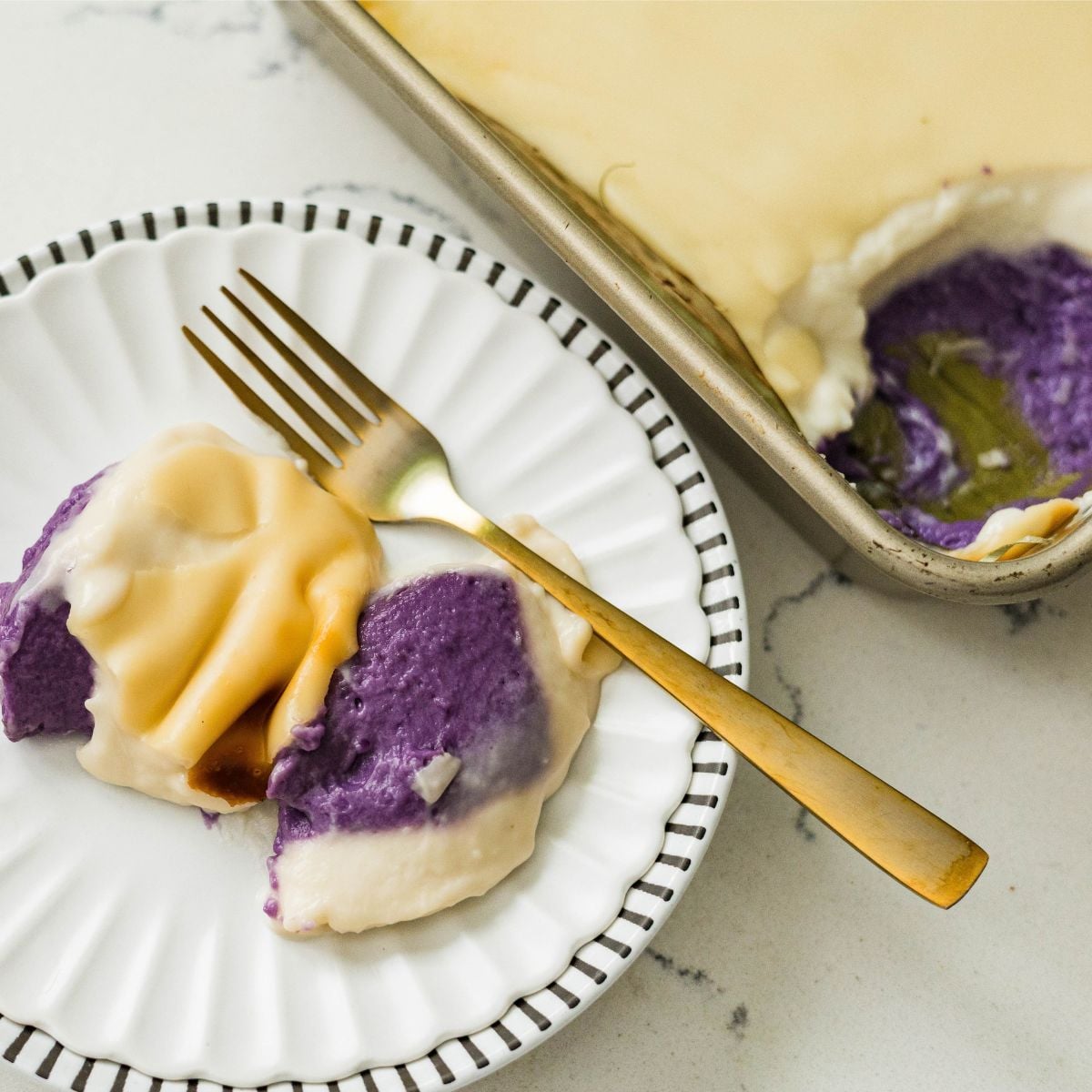
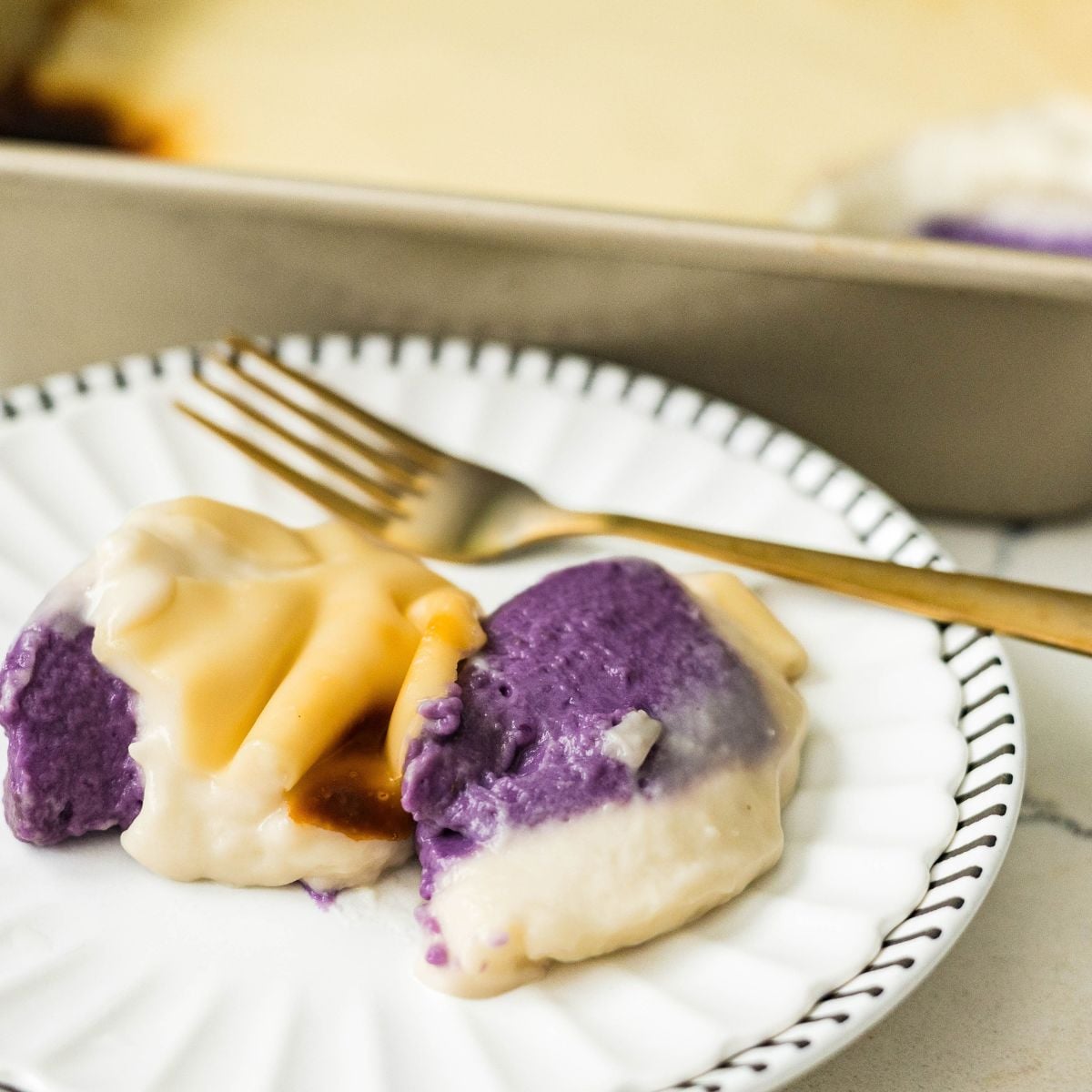
I loved the idea of it right away, and of course I had to add ube. My version has three layers: ube on the bottom, a plain coconut layer in the middle, and a pudding-thick coconut topping broiled until it's golden with dark, blistered spots.
The base cooks on the stove until it's thick, so the broiler only has to brown the top. There's no long bake and no waiting on a cake to set.
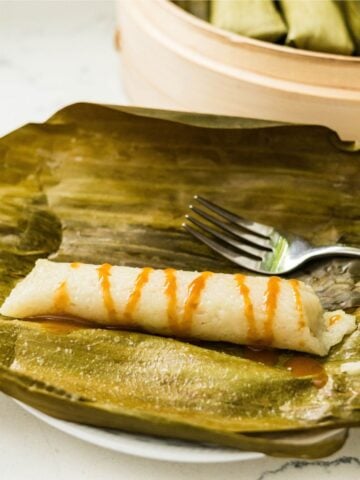
If you have banana leaves left over from my suman malagkit, this is a good way to use them.
Save This Recipe 💌
Jump to:
Why You'll Love This Inutak
- Three layers in one pan. Ube on the bottom, a plain coconut layer in the middle, and a creamy coconut topping on top. Every slice shows all three.
- No long bake. The base cooks on the stove until it's thick, so the broiler only needs 5 to 8 minutes to brown the top. You don't have to wait on a cake to set in the oven.
- Soft and chewy. Cooking the base just until it's thick and glossy keeps the inside soft, while the topping turns golden with dark, blistered spots.
- Pantry ingredients. Glutinous rice flour, coconut milk, milk, and condensed milk make the base. Ube halaya and ube extract add the purple layer, and you can find both at most Asian grocery stores.
- Twelve pieces from an 8 by 8 pan. That's enough to share at a party or keep around for merienda.
- It keeps for a few days. Store it in the fridge for 3 to 4 days, then warm a piece in the microwave for 10 to 15 seconds to soften it back up.
What Is Inutak
Inutak is a Filipino rice cake made from glutinous rice flour and coconut milk, cooked into a soft, sticky base and topped with a layer of sweet coconut cream that browns in the oven. It's often made with a purple ube layer underneath, so each slice shows bands of purple and white.
The name is usually explained by its texture. Utak means "brain" in Tagalog, and inutak is said to be named for how soft and wobbly it is. There's no direct English name, so it's usually just described as a soft glutinous rice cake.
Inutak is most closely associated with Taguig and Pasig, where it's sold as a local specialty. Like suman and puto, it belongs to kakanin, the group of Filipino snacks and desserts made from rice.
Ingredients You'll Need
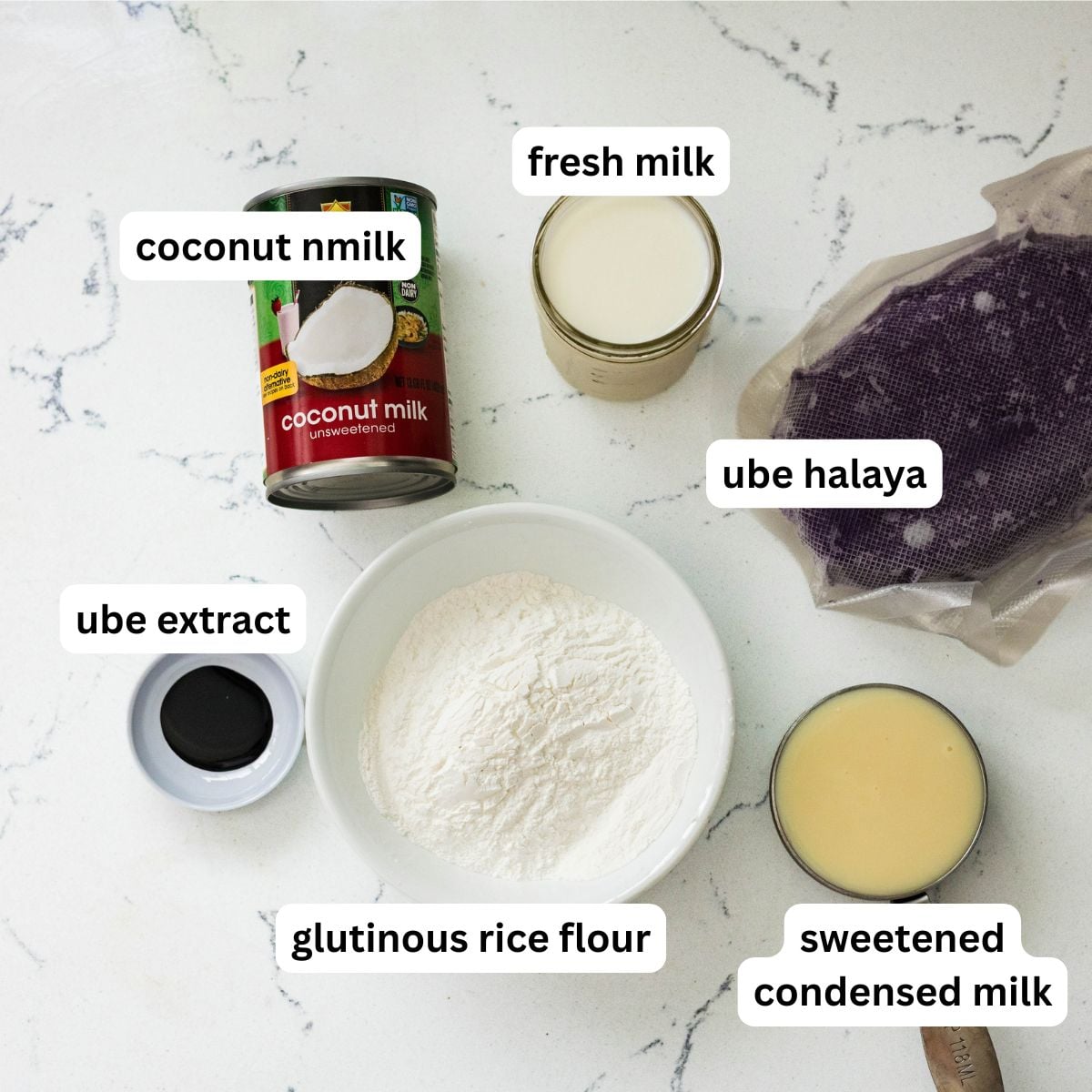
- Glutinous rice flour. It's also sold as sweet rice flour, and it's what makes inutak soft and chewy. Regular rice flour won't work, since it cooks up firm and crumbly instead of sticky. Weigh it if you can. Scooping straight from the bag packs in more flour than the recipe needs, and too much makes the inutak firm.
- Coconut milk. It's the main liquid and the main flavor. It cooks with the flour into the soft, rich base.
- Fresh milk or evaporated milk. Either one works. Fresh milk keeps the base lighter, while evaporated milk makes it a little richer and creamier.
- Sweetened condensed milk. It sweetens the base and helps give it a smooth, glossy texture as it cooks.
- Salt. A small pinch keeps the coconut and condensed milk from tasting flat.
For the ube layer:
- Ube halaya. It gives the bottom layer its flavor, color, and a little extra body. Store-bought or homemade both work. You can use my ube halaya if you want to make your own.
- Ube flavoring. The small amount of ube halaya alone won't make the layer deep purple. A little extract brings out both the color and the aroma.
For the topping:
- Coconut milk and condensed milk. They cook together into the sweet, creamy top layer that browns under the broiler.
- Cornstarch slurry. Cornstarch mixed with water thickens the topping to the texture of pudding. That keeps it sitting on top as its own layer, instead of soaking into the base.
- Vanilla extract. It rounds out the coconut flavor. Stir it in after the topping comes off the heat, so the aroma doesn't cook off.
- Salt. A pinch balances the sweetness.
For the pan:
- Banana leaves. They line the pan, keep the inutak from sticking without any grease, and add a light, grassy aroma. If you have frozen leaves, see where to find banana leaves in my suman post. If you don't have any, lightly grease the pan instead.
See recipe card for quantities.
How to Make Inutak
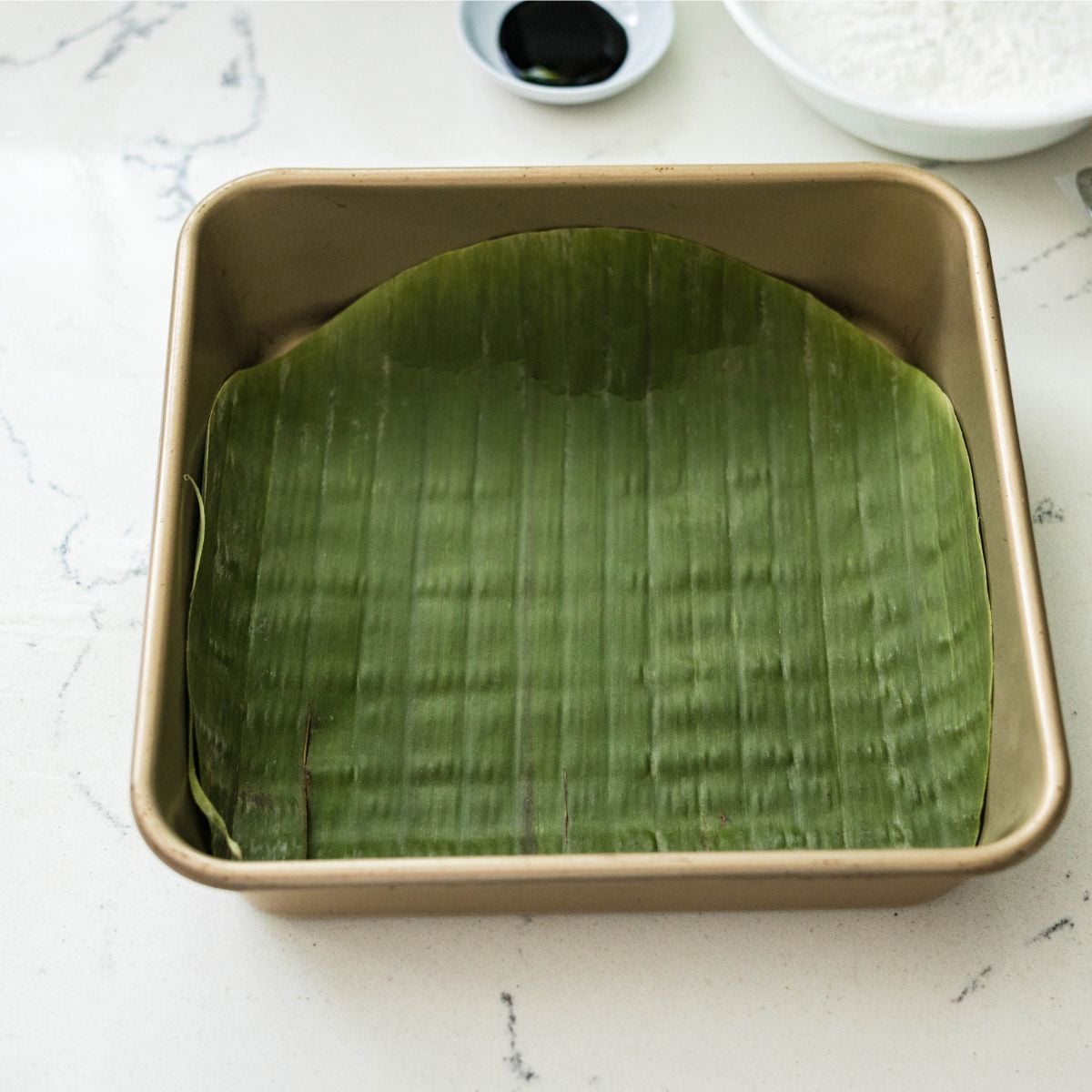
- Prepare the pan. Line an 8 by 8 inch pan with banana leaf. There's no need to grease it. If you don't have banana leaves, lightly grease the pan instead.
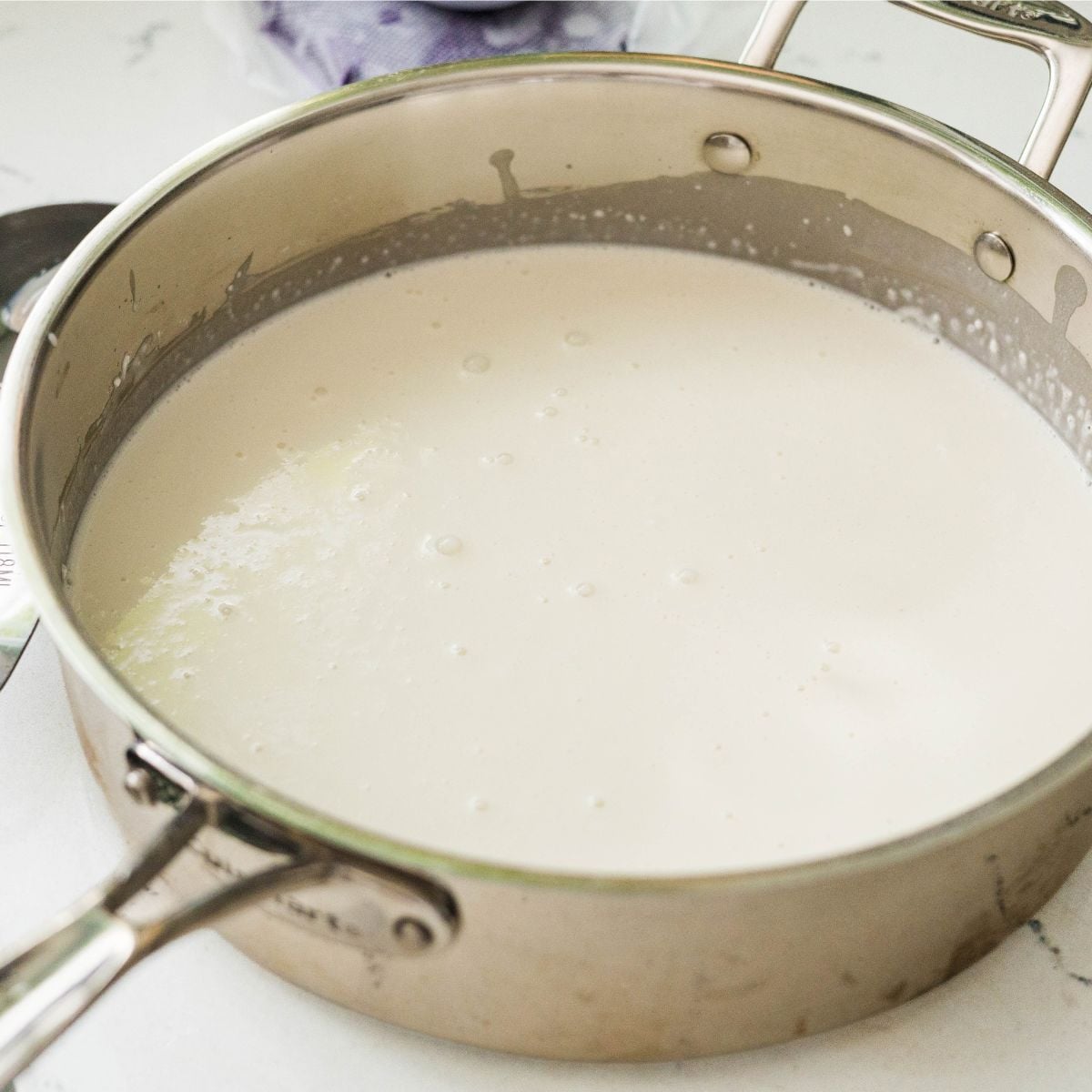
- Whisk the base. In a large bowl, whisk together the glutinous rice flour, coconut milk, milk, condensed milk, and salt until smooth, with no lumps of flour left. Pour half of the mixture into a nonstick pan, and leave the other half in the bowl.
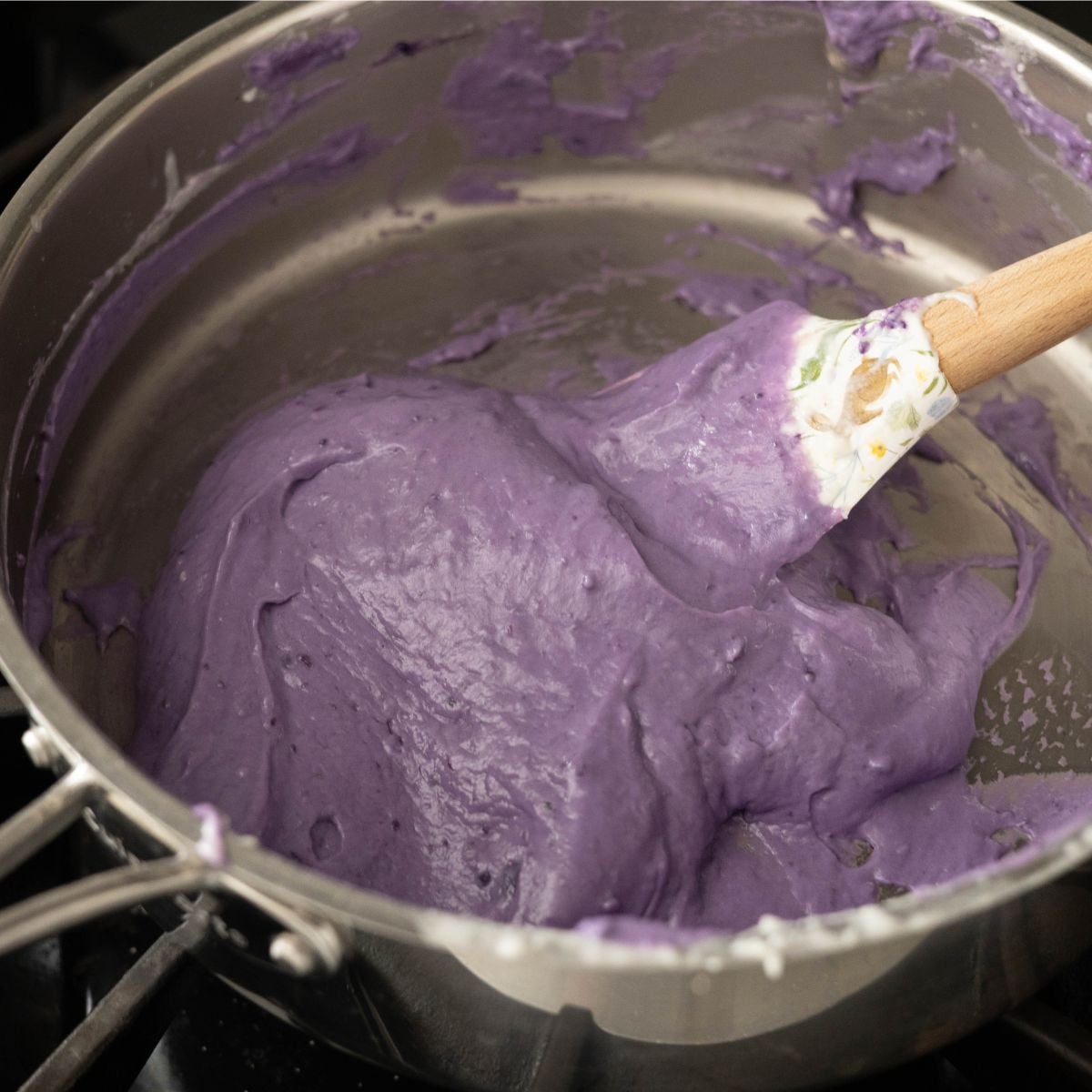
- Cook the ube layer. Add the ube halaya and ube flavoring to the mixture in the pan. Cook over medium-low heat, stirring constantly so the bottom doesn't burn, for about 8-10 minutes, until it's evenly purple, very thick, sticky, and glossy, and your spatula leaves a trail through it. It should still be soft enough to spread.
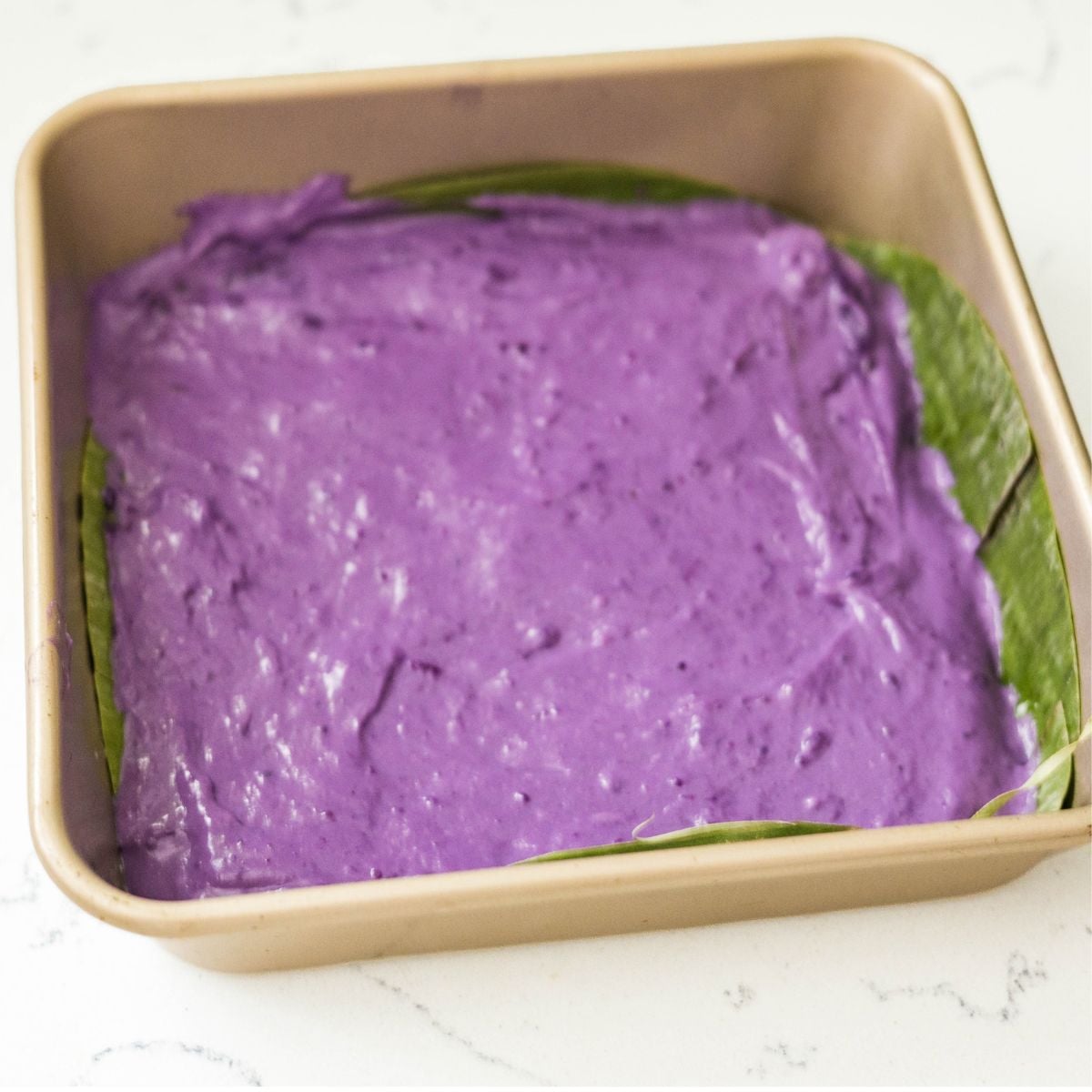
- Spread the ube layer. Spread the ube mixture evenly in the bottom of the lined pan.
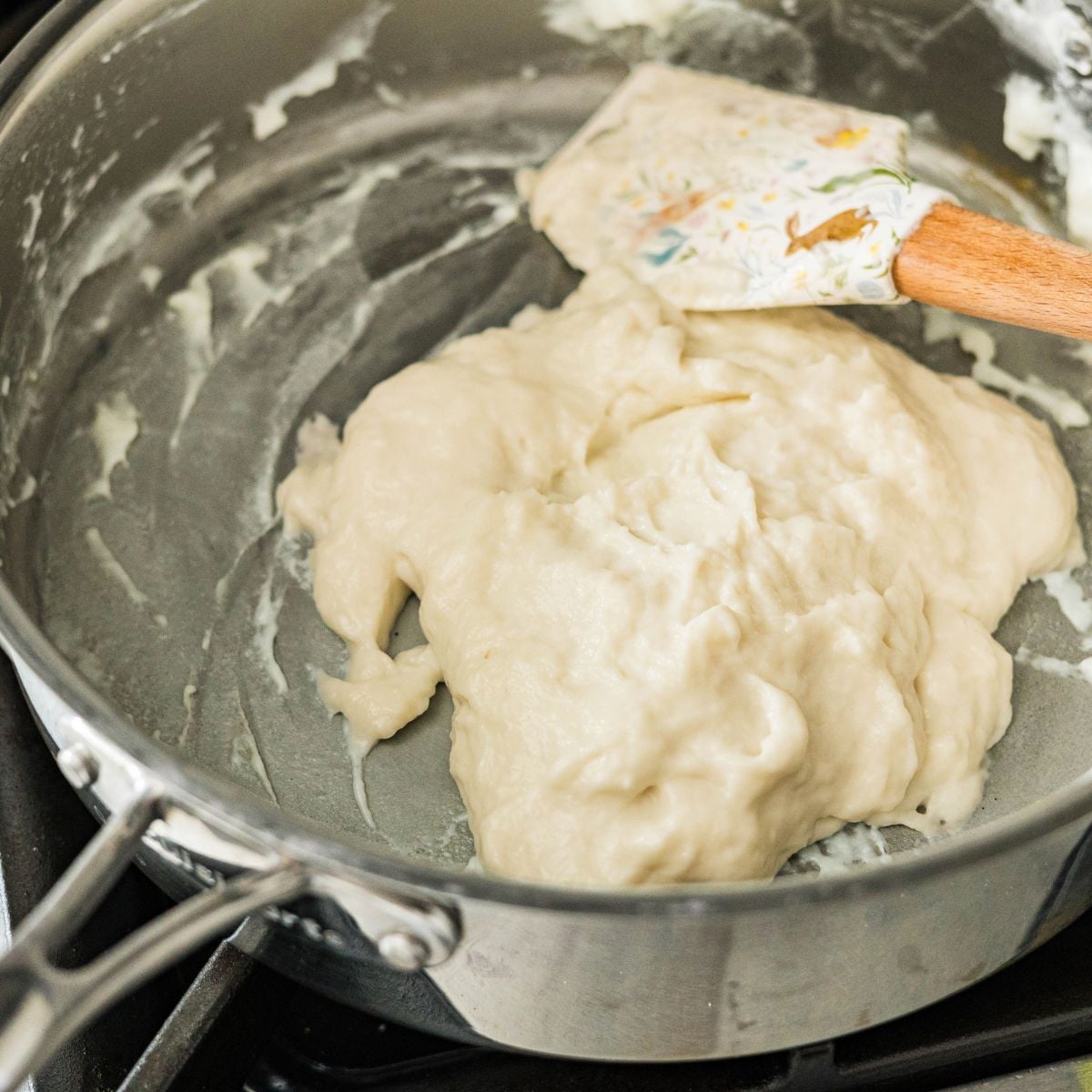
- Cook the plain layer. Whisk the remaining mixture in the bowl again, since the flour settles, then pour it into the pan. Cook it the same way for about 8-10 minutes, until it's thick, sticky, and glossy.
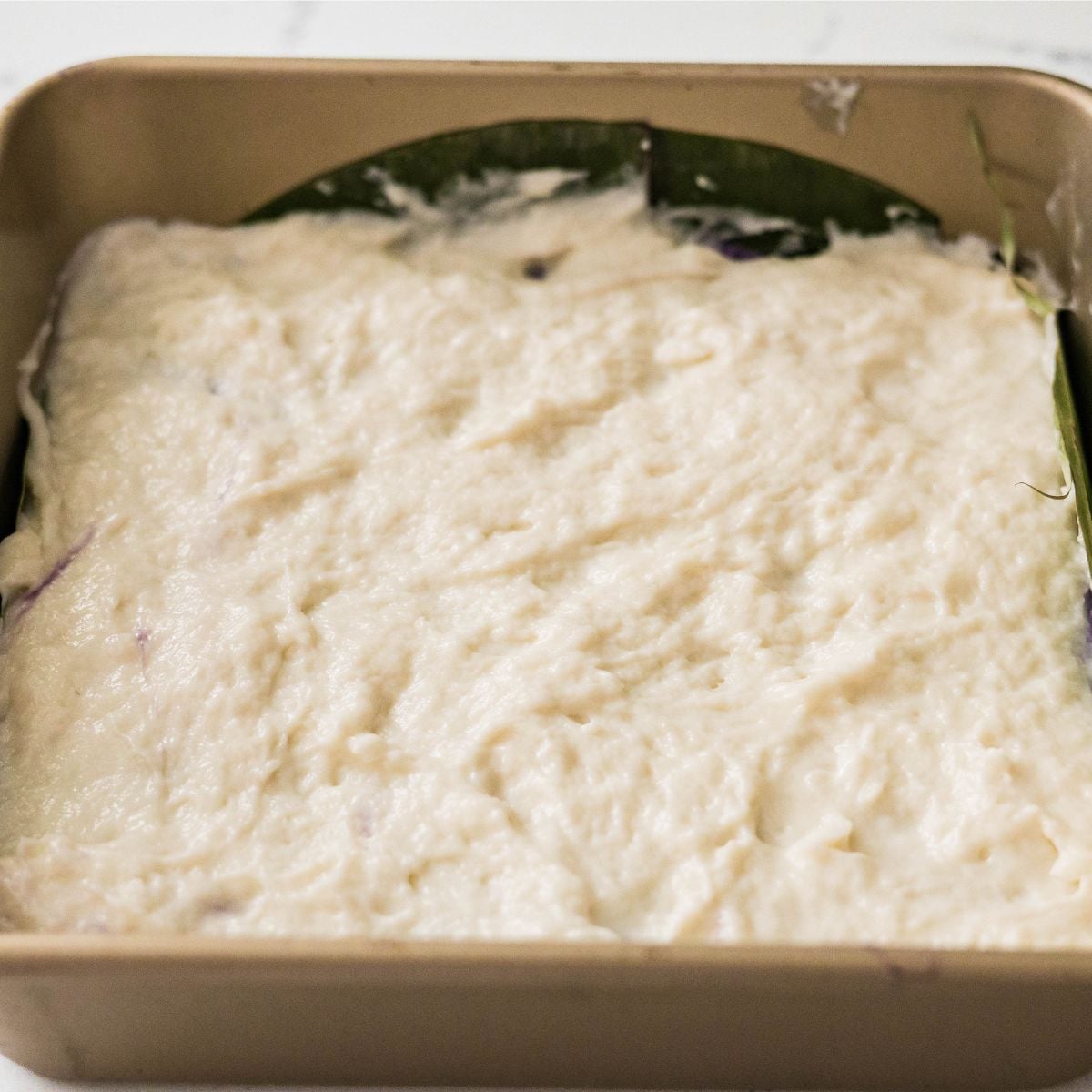
- Spread the plain layer. Spread the plain mixture evenly over the ube layer.
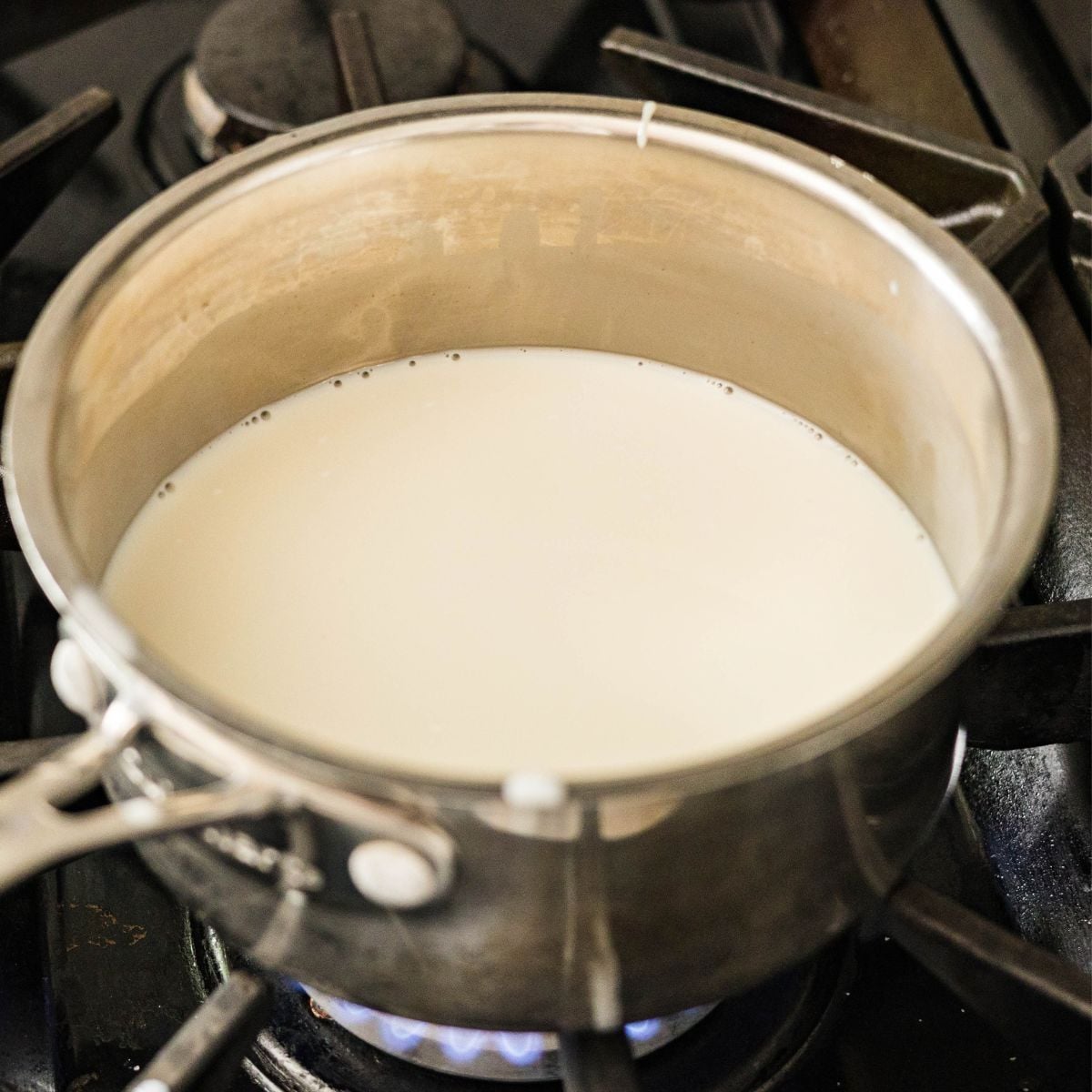
- Cook the topping. In a small saucepan, combine the coconut milk, condensed milk, and salt. Cook over medium-low heat for about 5 minutes, stirring. Stir the cornstarch slurry, then pour it in while stirring, and keep cooking until it's thick like pudding. Take it off the heat and stir in the vanilla.
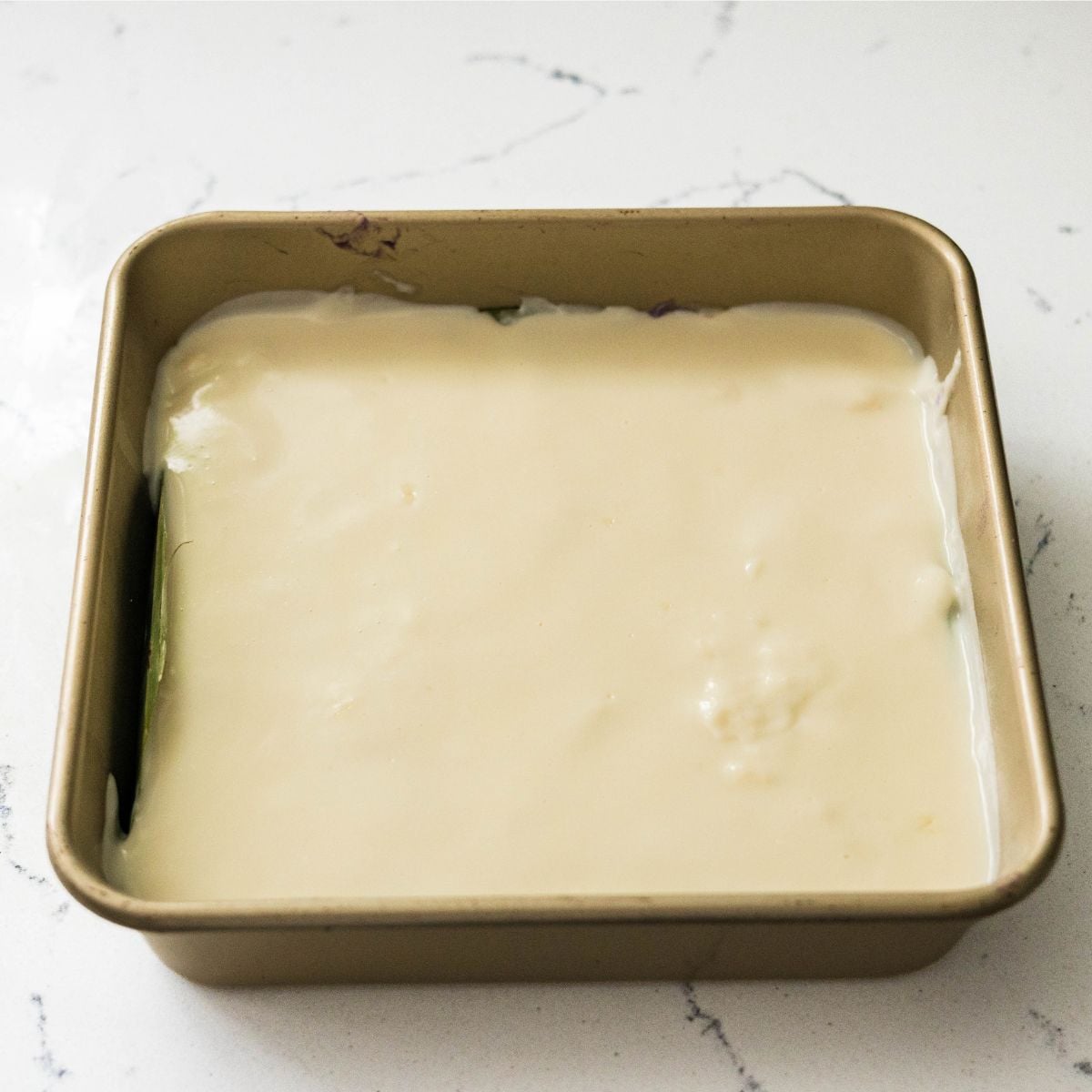
- Add the topping. Pour the topping over the plain layer and spread it evenly to the edges.
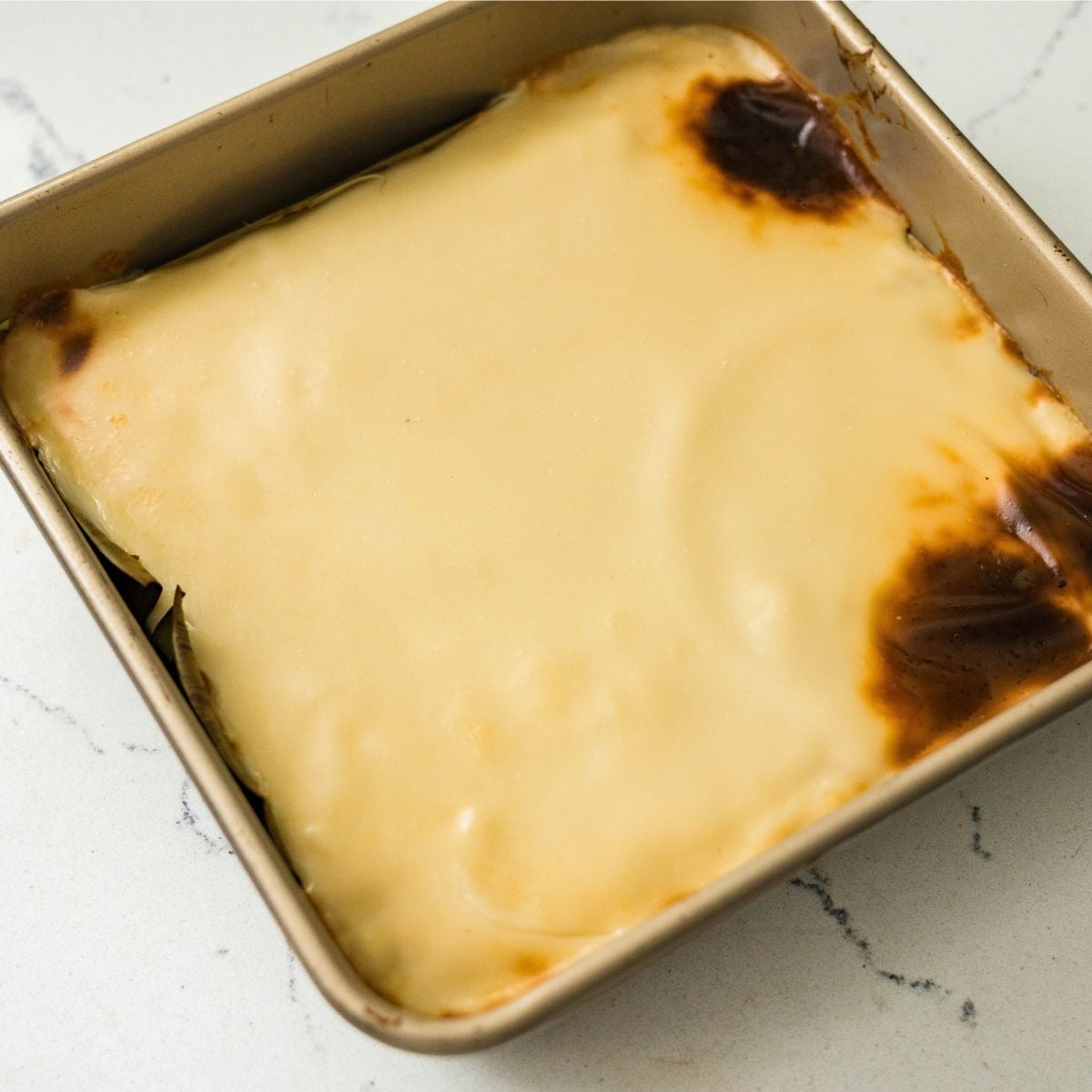
- Broil. Set an oven rack in the upper-middle position, not the very top slot, and turn on the broiler. Broil for 5 to 8 minutes, until the top is browned and blistered in spots. Start watching closely at 3 to 4 minutes, since the condensed milk and coconut topping can brown fast.
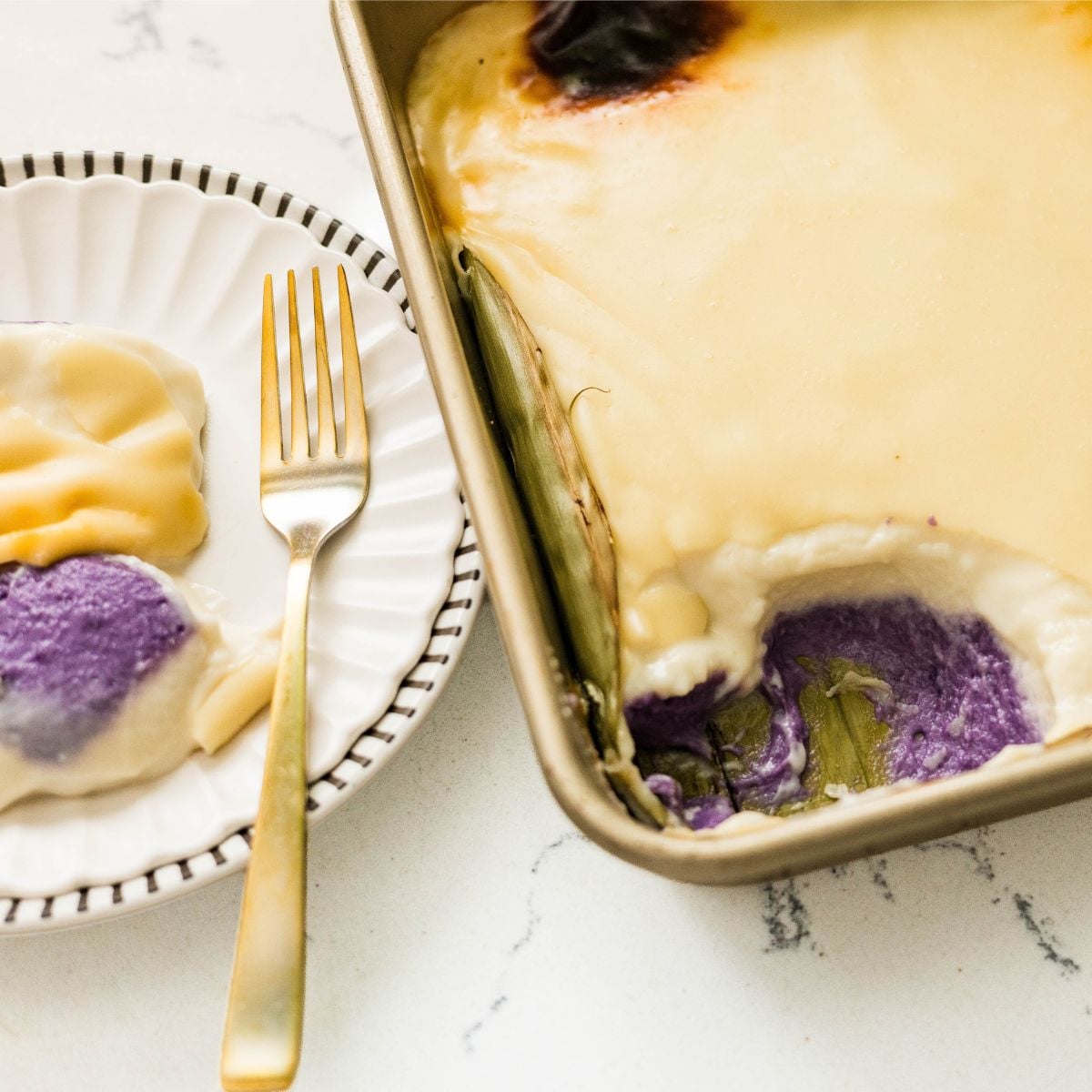
- Cool and slice. Let the inutak cool for at least 30 minutes before slicing. It firms up as it cools. Cut it into 12 pieces and serve warm or at room temperature.
Tips for Making Inutak
- Weigh the glutinous rice flour. The recipe uses 103 grams. A cup scooped straight from the bag can weigh much more, and extra flour makes the inutak firm instead of soft.
- Whisk the second half again before cooking it. Glutinous rice flour sinks to the bottom while the first half cooks. Whisking again keeps the plain layer smooth instead of lumpy.
- Stir constantly on medium-low heat. The mixture thickens from the bottom first, and it can scorch fast. Constant stirring keeps it smooth and stops brown flecks from showing up in the layers.
- Stop while it's still spreadable. It's ready when it's thick, glossy, and your spatula leaves a trail. If you cook it past that point, it gets too stiff to spread evenly and the finished inutak turns firm.
- Spread each layer while it's warm. The cooked mixture is much easier to spread when it's hot. As it cools, it gets stickier and harder to smooth out.
- Cook the topping until it's thick like pudding. A runny topping soaks into the plain layer. A thick one stays on top as its own layer and browns evenly under the broiler.
- Watch the broiler closely. Start checking at 3 to 4 minutes. Condensed milk browns fast, and a few dark, blistered spots can turn into a burnt top in less than a minute.
- Let it cool before slicing. Give it at least 30 minutes. Warm inutak is too soft to cut cleanly, and it firms up as it cools.
Variations
- Swirl the layers. Instead of stacking the ube and plain layers, spoon both into the pan and drag a spatula through them once or twice for a marbled look. Don't overmix, or the colors blend into one light purple.
- Make it plain. Skip the ube halaya and flavoring and cook the whole base as one white layer. It's the simplest version, with just coconut and milk flavor under the browned topping.
- Try a pandan layer. Swap the ube for a few drops of pandan extract in the bottom layer. You'll get a green and white inutak with a light, grassy, vanilla-like aroma.
- Add macapuno. Scatter drained macapuno strings over the plain layer before the topping goes on, for chewy pockets of coconut in every slice.
Serving and Storage
- Serving: Inutak is softest warm or at room temperature. Let it cool for at least 30 minutes before slicing, so the pieces hold their shape.
- Fridge: Store leftovers covered, or in an airtight container, in the fridge for 3 to 4 days. It firms up quite a bit when it's cold, which is normal for glutinous rice.
- Serving leftovers: Let chilled pieces sit out for 15 to 20 minutes before eating. Or warm a slice in the microwave for 10 to 15 seconds. If it still feels firm, add another 5 to 10 seconds.
- Freezing: I haven't tested freezing inutak yet, so I can't say how the texture holds up. For now, I'd stick to the fridge.
Recipe FAQs
Yes. The base and topping both cook on the stove, so the broiler only browns the top.
Usually it's one of two things: too much flour, or a base cooked past the spreadable stage. Weigh the flour if you can, since a packed cup holds much more than 103 grams. Take the base off the heat as soon as it's thick and glossy and your spatula leaves a trail. Also remember that inutak firms up in the fridge, so let chilled pieces warm up before eating.
No. Inutak needs glutinous rice flour, also sold as sweet rice flour, to get its soft, sticky texture. Regular rice flour cooks up firm and crumbly instead.
Both are layered Filipino rice cakes, and both often have an ube layer. Sapin-sapin is steamed in several brightly colored layers and usually topped with latik. Inutak has a softer, stickier texture and a creamy coconut topping that's browned under the heat.
Yes. Despite the name, glutinous rice flour doesn't contain gluten. "Glutinous" refers to its sticky texture. If you're cooking for someone with celiac disease, check the labels on your flour, ube halaya, and extracts.
More Filipino Kakanin
Looking for other recipes like this? Try these:
- Filipino Puto: Soft steamed rice cakes, a classic for merienda.
- Ube Cassava Cake: Grated cassava and coconut milk baked into a chewy cake with ube.
- Chocolate Champorado: Sweet rice cooked into a chocolate porridge.
- Royal Bibingka Cornbread: Bibingka flavors in a cornbread you can make in a regular oven.
- Maja Blanca Pancakes: The coconut and corn flavors of maja blanca, made as pancakes.

Did you try this recipe?
Share how it turned out in the comment box below, and if you loved it, share it on Facebook, Pinterest & Instagram.
Thank you!

Inutak Recipe
Equipment
- 8 by 8 inch baking pan
- Large mixing bowl and whisk
- Nonstick pan or saucepan
Ingredients
Base
- 1 cup glutinous rice flour 103 grams
- 2 cups full-fat coconut milk
- 1 cup fresh milk or evaporated milk 230 grams
- ½ cup sweetened condensed milk 163 grams
- Small pinch of salt
Ube layer
- ¼ cup ube halaya 76 grams
- 1 teaspoon ube flavoring
Topping
- 1 cup fulll-fat coconut milk 220 grams
- ⅓ cup sweetened condensed milk 92 grams
- 2 teaspoons cornstarch, mixed with 1 tablespoon
- 1 teaspoon vanilla extract
- Pinch of salt
For the pan:
- Banana leaves, to line the pan (or butter or oil, to grease it)
Instructions
- Line an 8 by 8 inch pan with banana leaf. There's no need to grease it. If you don't have banana leaves, lightly grease the pan instead.Banana leaves, to line the pan (or butter or oil, to grease it)
- In a large bowl, whisk together the glutinous rice flour, coconut milk, milk, condensed milk, and salt until smooth. Pour half of the mixture into a nonstick pan, and leave the other half in the bowl.1 cup glutinous rice flour, 2 cups full-fat coconut milk, 1 cup fresh milk or evaporated milk, ½ cup sweetened condensed milk, Small pinch of salt
- Add the ube halaya and ube flavoring to the mixture in the pan. Cook over medium-low heat, stirring constantly, for 8 to 10 minutes, until it's evenly purple, very thick, sticky, and glossy, and your spatula leaves a trail. It should still be soft enough to spread.¼ cup ube halaya, 1 teaspoon ube flavoring
- Spread the ube mixture evenly in the bottom of the lined pan.
- Whisk the remaining mixture again, then pour it into the pan. Cook it the same way for 8 to 10 minutes, until it's thick, sticky, and glossy.
- Spread the plain mixture evenly over the ube layer.
- In a small saucepan, combine the coconut milk, condensed milk, and salt for the topping. Cook over medium-low heat for about 5 minutes, stirring. Stir the cornstarch slurry, pour it in while stirring, and cook until it's thick like pudding. Take it off the heat and stir in the vanilla.1 cup fulll-fat coconut milk, ⅓ cup sweetened condensed milk, 2 teaspoons cornstarch, mixed with 1 tablespoon, 1 teaspoon vanilla extract, Pinch of salt
- Pour the topping over the plain layer and spread it evenly to the edges.
- Set an oven rack in the upper-middle position, not the very top slot, and turn on the broiler. Broil for 5 to 8 minutes, until the top is browned and blistered in spots. Start watching closely at 3 to 4 minutes.
- Let the inutak cool for at least 30 minutes before slicing. Cut it into 12 pieces and serve warm or at room temperature.
Save This Recipe 💌
Notes
- Flour: Weigh it if you can. A cup scooped straight from the bag can hold much more than 103 grams, and extra flour makes the inutak firm.
- Milk: Fresh milk keeps the base lighter, and evaporated milk makes it a little richer.
- Base doneness: Stop cooking each layer while it's still spreadable. Overcooked base is hard to spread and turns firm.
- Broiling: Condensed milk browns fast, so stay close to the oven after the first 3 minutes.
- Storage: Keep it covered, or in an airtight container, in the fridge for 3 to 4 days. It firms up when cold.
- Reheating: Let chilled pieces sit out for 15 to 20 minutes, or microwave a slice for 10 to 15 seconds. Add 5 to 10 more seconds if it's still firm.