I usually think of Basque cheesecake as something you bake in a round springform pan, the way I make my salted caramel Basque cheesecake. Then one day I wanted cheesecake and didn't feel like digging mine out. The loaf pan was right there, so I used it instead. That's how this loaf pan Basque cheesecake started.
I liked it better than I expected.
The parchment fits easily, there's no springform ring to latch, and once the cheesecake is chilled you can lift the whole thing out of the pan. It also gives you even slices instead of wedges, which I especially like for a cheesecake this rich.
Now I make it whenever I want a smaller batch. You still get that deeply caramelized top and creamy center, just in a simpler size that's easy to bake, chill, and slice.
Jump to:
- Why You'll Love This Loaf Pan Basque Cheesecake
- What Is Basque Burnt Cheesecake
- Why a Loaf Pan Works
- Ingredients You'll Need
- Why I Use a Blender
- How to Make Loaf Pan Basque Cheesecake
- Rose's Top Tips
- Why Your Basque Cheesecake Sinks
- Substitutions
- Variations
- How to Store and Freeze
- Recipe FAQs
- More Cheesecake and Creamy Desserts
- Did you try this recipe?
- Loaf Pan Basque Cheesecake
Why You'll Love This Loaf Pan Basque Cheesecake
- No springform needed. One pan, one piece, lined with parchment. When the cheesecake is chilled you lift it out by the paper instead of unlatching a ring and hoping the base comes away clean.
- The blender does the work. I mix the batter in a blender because it's faster than dragging out a mixer, and there's nothing to cream or fold.
- No crust and no water bath. Basque cheesecake is meant to bake hot and uncovered, so you skip the two steps that make regular cheesecake a project.
- You choose the slice size. A 9x5 gives you 6 large slices, 8 standard ones, or 10 smaller portions, which is useful for something this rich.
- Better the next day. It needs at least 4 hours in the fridge and it's happy overnight, so this is a dessert you make ahead instead of rushing on the day.
- Eight ingredients. Cream cheese, sugar, eggs, heavy cream, flour, vanilla, salt, and calamansi juice. Nothing you need a specialty store for except the calamansi, and lemon works in its place.
What Is Basque Burnt Cheesecake
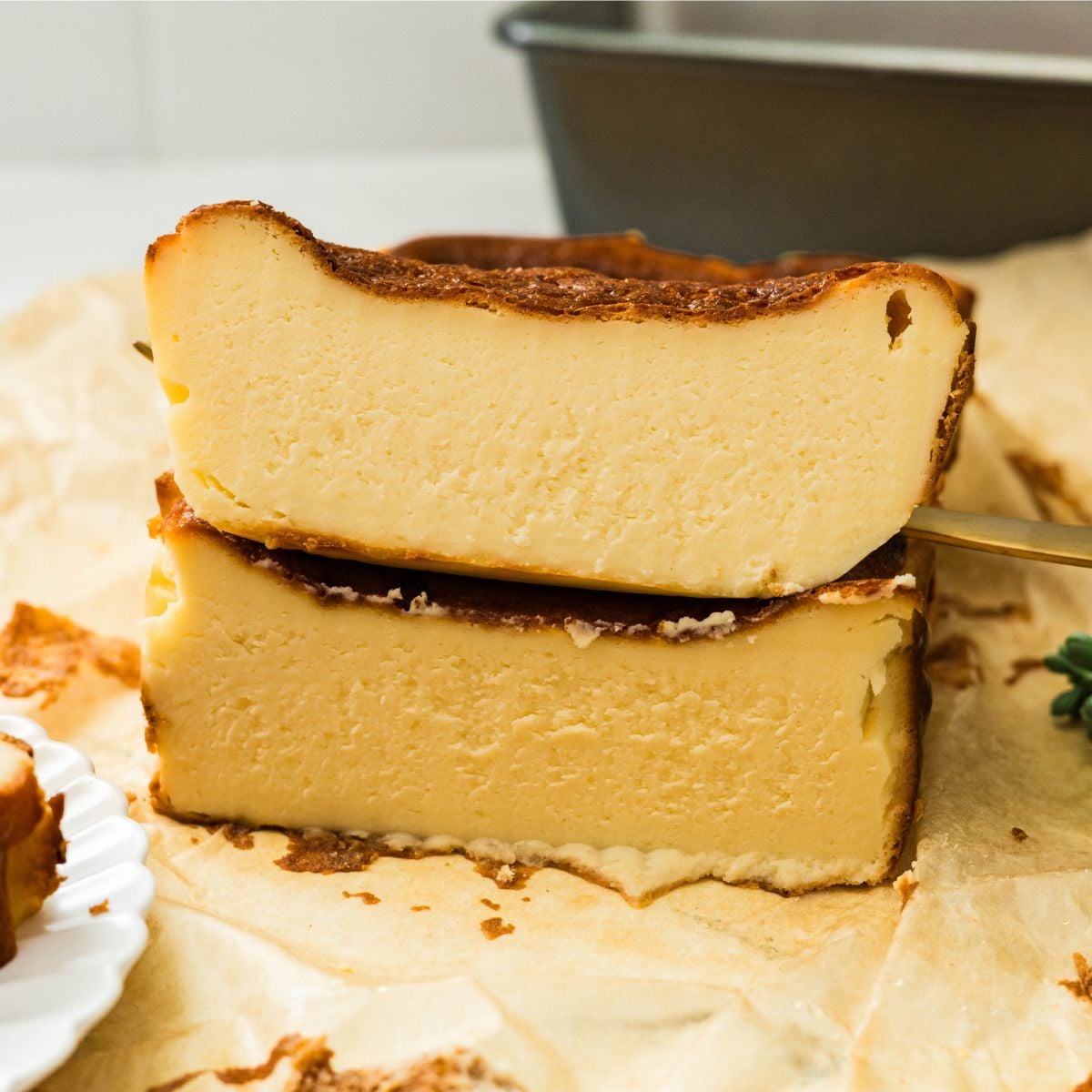
Basque burnt cheesecake is a crustless cheesecake baked at high heat until the top turns dark and caramelized while the center stays soft and custardy. It bakes in a parchment-lined pan with the paper crumpled up the sides, so the edges come out rustic rather than smooth.
It started at La Viña in San Sebastián, Spain. The burnt top isn't a mistake. That's where the flavor is, closer to caramel than to the pale cheesecake most people grew up with.
Unlike a New York cheesecake, it isn't meant to set firm. It comes out of the oven still jiggling and finishes setting in the fridge.
Why a Loaf Pan Works
A 9x5 loaf pan holds about a third less surface area than a 9-inch round, so the same batter sits noticeably deeper. That's the one thing that changes everything else.
It bakes differently. A deeper center takes longer to set, which is why this one comes out of the oven at 30 to 38 minutes still jiggling hard in the middle. It finishes in the fridge, not the oven.
The parchment is the handle. One sheet pressed into the corners and standing well above the rim. The batter climbs as it bakes and sinks back as it cools, and when it's cold you lift the whole cheesecake out by the paper.
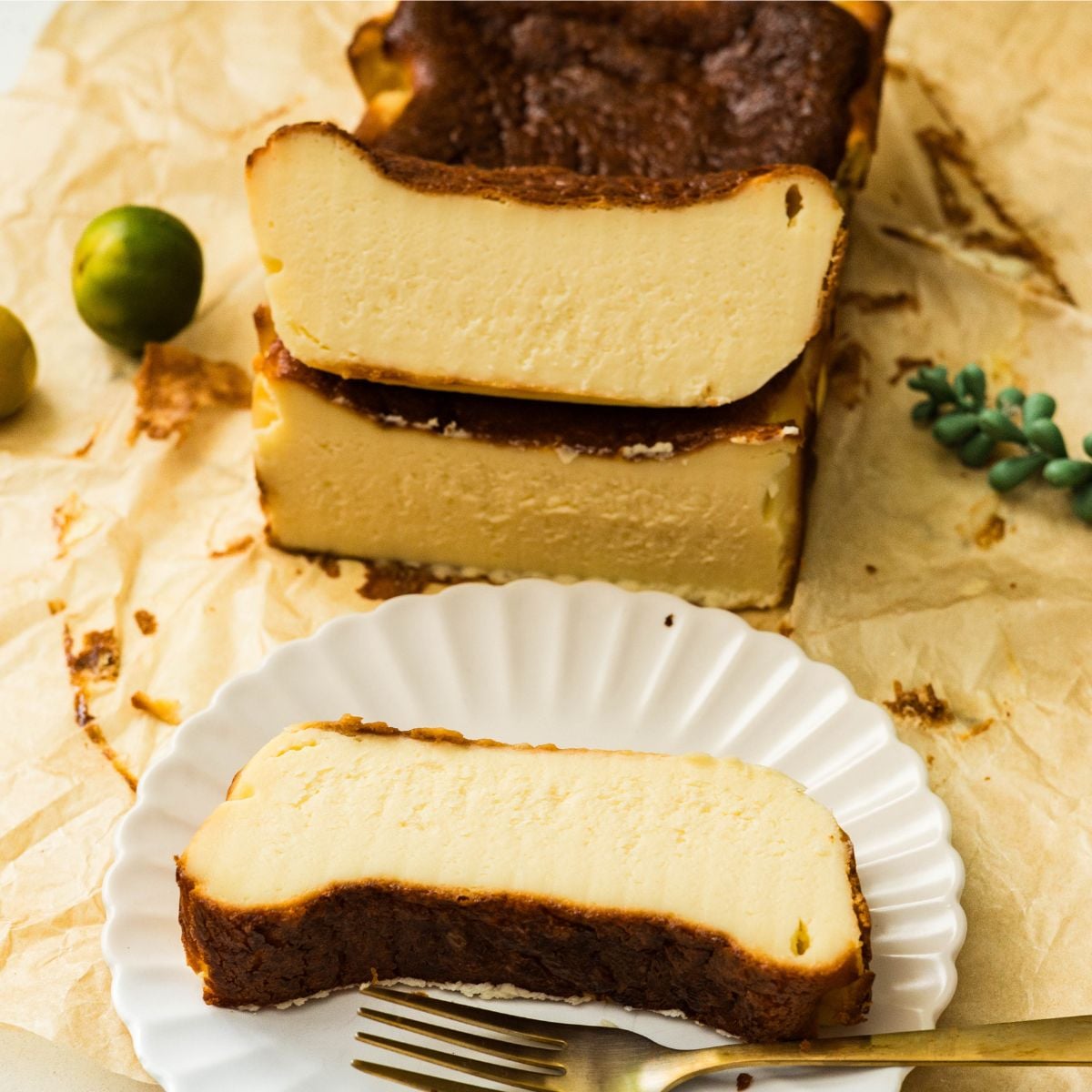
You get slices, not wedges. Straight sides mean every piece is the same width from end to end, with a stripe of dark caramelized top instead of a wide lid.
Ingredients You'll Need
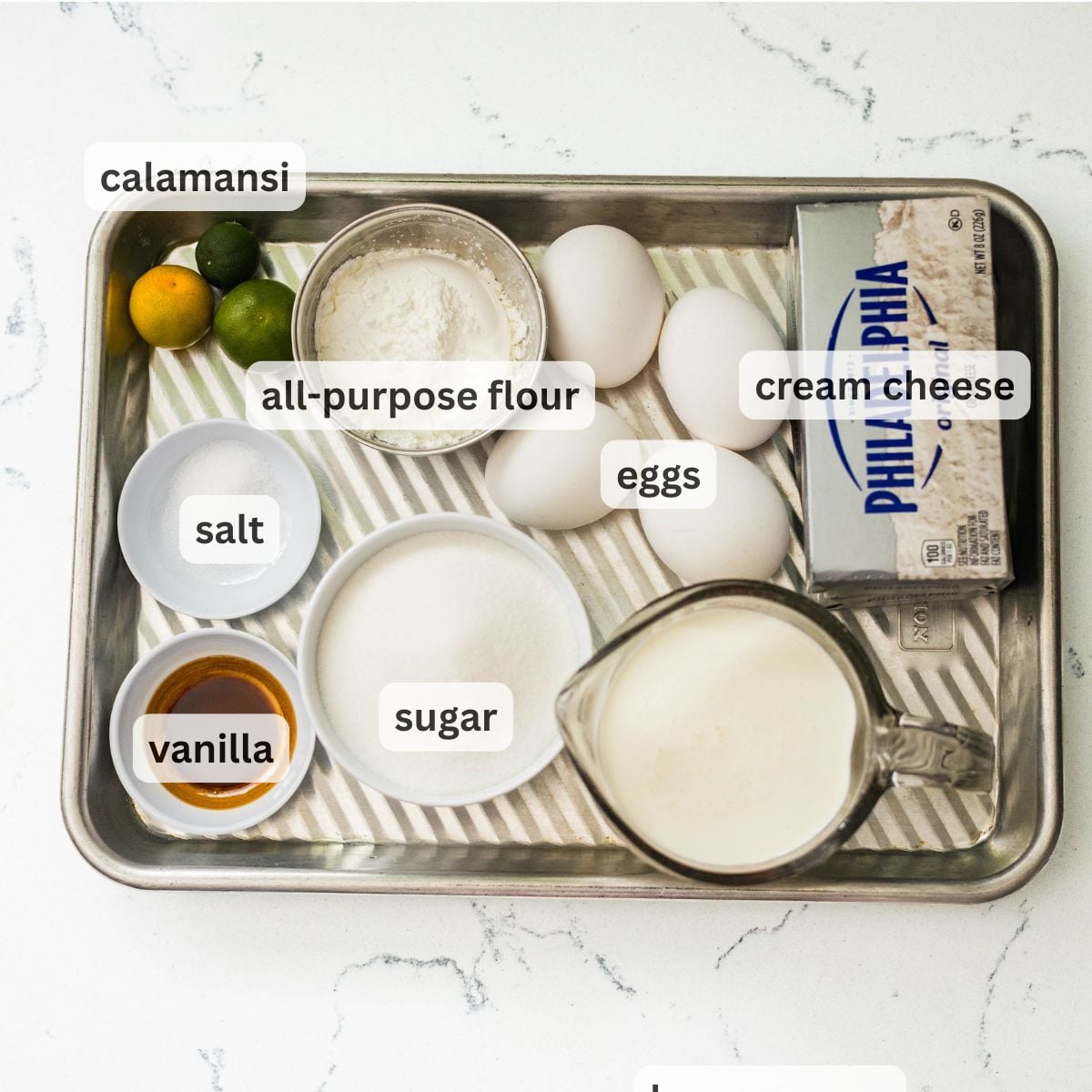
- Cream cheese. Full fat blocks, not the spreadable tub kind, which has more water and will loosen the batter. Let it soften so it blends smooth without overworking.
- Sugar. Sweetens, and it's what caramelizes on top under high heat. Cutting it back gives you a paler cheesecake, not just a less sweet one.
- Eggs. The whole structure. There's no crust holding anything together, so the eggs set the custard as it chills.
- Heavy cream. Keeps the center soft. Milk has too much water and gives you a firmer, more ordinary cheesecake texture.
- All-purpose flour. Just enough to keep the batter from splitting as it bakes. More than this and you lose the custardy middle.
- Vanilla. Rounds out the caramelized top so it tastes toasted rather than scorched.
- Salt. Keeps a cheesecake this rich from tasting flat.
- Calamansi juice. Fresh, from the small Filipino citrus that tastes somewhere between a lime and a mandarin. It brings the acidity that cuts through all that cream cheese. Lemon works if you can't find it.
See recipe card for quantities.
Why I Use a Blender
I mix this batter in my Vitamix, everything in at once. There's no butter to cream and nothing to fold, so a blender does what a mixer would and does it faster. It's also one thing to wash instead of three.
The part that makes it work is room temperature cream cheese. Cold cream cheese is stiff and the blades have to fight it. Softened, it goes smooth in seconds and you don't get lumps hiding in the batter.
Blend only until it's combined. I don't let mine run long, because a high-speed blender can churn heavy cream toward butter, and that isn't a risk worth taking for a few extra seconds of spinning.
How to Make Loaf Pan Basque Cheesecake
- Heat the oven and line the pan. Preheat to 425°F with a rack in the middle. Line a 9x5 loaf pan with one sheet of parchment, pressed into the corners and standing well above the rim. Creases are fine. That paper is how the cheesecake comes out later.
- Blend the batter. Put the softened cream cheese, sugar, eggs, heavy cream, flour, vanilla, salt, and calamansi juice into the blender and blend just until combined and smooth. Don't let it run longer than that.
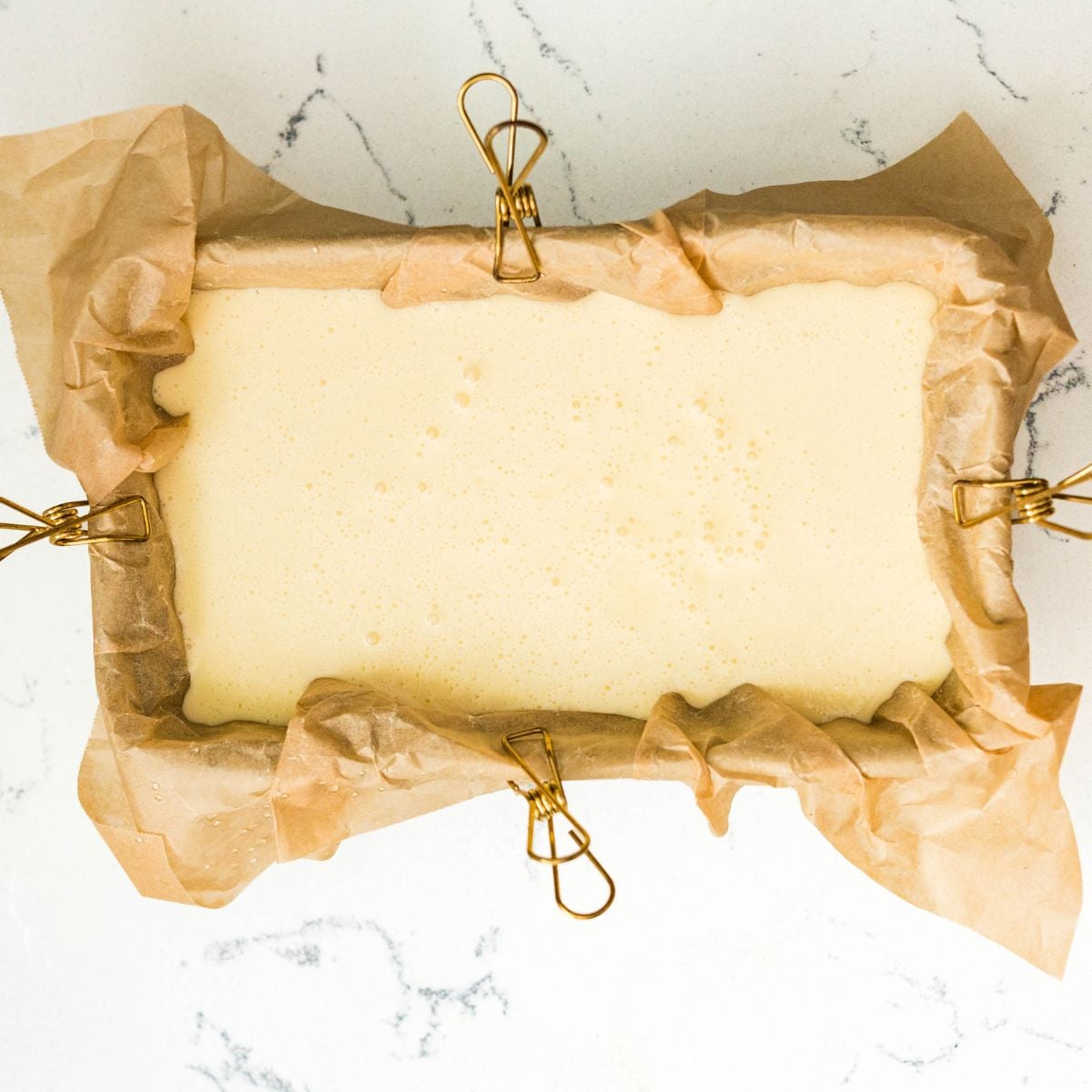
- Pour and bake. Pour the batter into the lined pan. I pour mine straight from the blender, but if you see any bits of cream cheese still in there, run it through a fine mesh strainer first. Bake for 30 to 38 minutes. The top should be very dark brown, almost burnt-looking, while the center still jiggles noticeably when you move the pan.
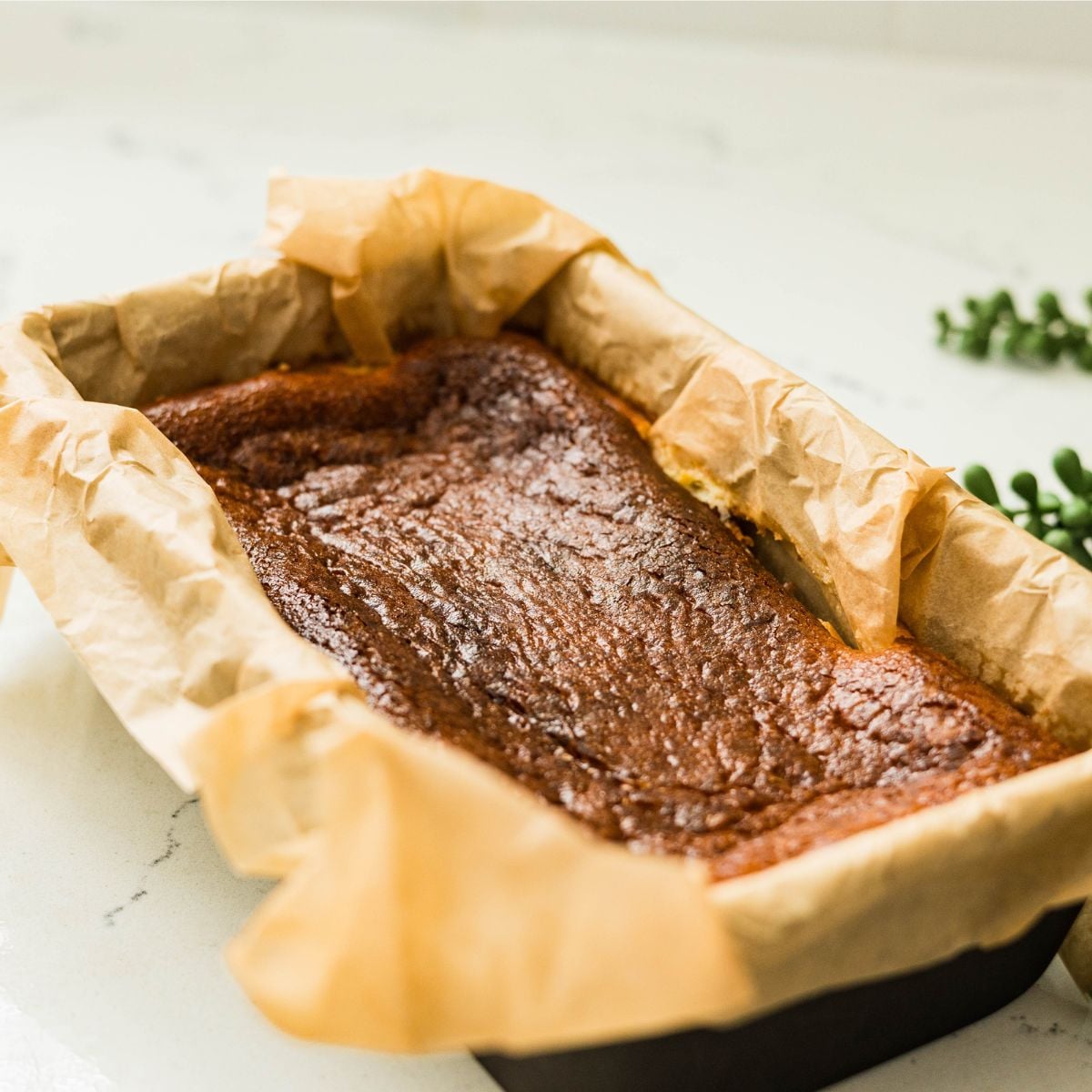
- Cool on the counter. Let it sit for 1 hour. It will sink as it cools, which is supposed to happen.
- Chill. Refrigerate at least 4 hours, or overnight. This is when the center sets. Slicing it warm gives you a puddle.
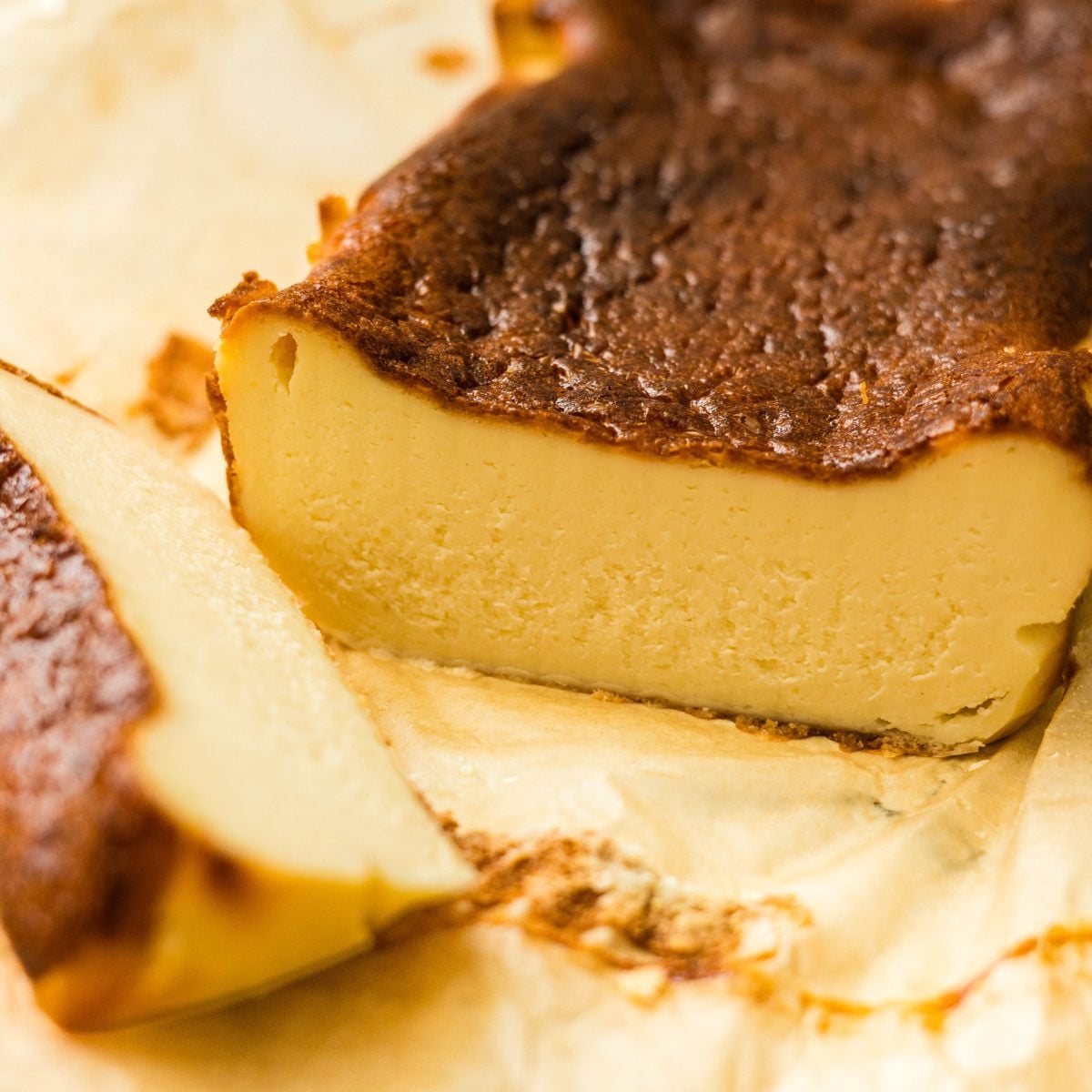
- Lift and slice. Lift the cheesecake out by the parchment and slice with a clean knife. Cut into 6 large slices, 8 standard ones, or 10 smaller portions.
Rose's Top Tips
- Start with room temperature cream cheese. Cold blocks are stiff, and the blender has to fight them. Soft cream cheese goes smooth in seconds without extra spinning.
- Blend only until combined. A high-speed blender can churn heavy cream toward butter if you let it run, and the batter needs nothing more than smooth.
- Strain if you see lumps. I pour straight from the blender, but if any bits of cream cheese are still floating, a fine mesh strainer catches them before they bake into the slice.
- Give the parchment height. Let it stand well above the rim. The batter climbs while it bakes, and that overhang is what you grab to lift the cheesecake out later.
- Let the top go darker than feels right. That deep brown is the flavor, not a burnt mistake. Pulling it early gives you a pale cheesecake that tastes like plain cream cheese.
- Don't slice it early. It needs the full 4 hours in the fridge, and overnight is better. A warm Basque cheesecake will not hold a slice.
Why Your Basque Cheesecake Sinks
It's supposed to. Mine does every time.
The batter puffs in a hot oven as the eggs expand and the center is still loose. When it comes out and cools, that air contracts and the middle settles back down, usually lower than the edges. That dip is the shape of a Basque cheesecake, not a failure.
What it isn't: a sign you underbaked it, overmixed it, or opened the oven at the wrong moment.
The one thing worth watching is how much jiggle you pulled it at. A center that's still very loose sinks deeper and stays softer after chilling, which some people prefer. If you'd rather have a firmer middle and a shallower dip, take it closer to 38 minutes than 30 next time.
Substitutions
- Lemon for calamansi. Same amount of juice. Calamansi is more floral and lemon is sharper, but both do the same job of cutting the cream cheese.
- Cornstarch for flour. Common in Basque recipes and it makes the recipe gluten free, though cornstarch thickens more per spoonful so you'd use less. I haven't tested it here, so I can't give you the number.
- Half-and-half for heavy cream. Less fat means a firmer, more ordinary cheesecake texture and a center that won't stay as soft. It works, but you lose the thing that makes a Basque a Basque. Untested in this recipe.
- A different loaf pan. An 8.5x4.5 holds the batter deeper, so expect it to need longer and stay looser in the middle. Mine is a 9x5 and that's the timing in the card.
- A 9-inch round springform. If yours isn't buried, the batter works there too. It bakes shallower and faster, so start checking well before 30 minutes.
Variations
- Leave out the calamansi. The recipe works as a plain Basque cheesecake. You'll lose a little brightness against the cream cheese, which is the only thing that acid is doing here.
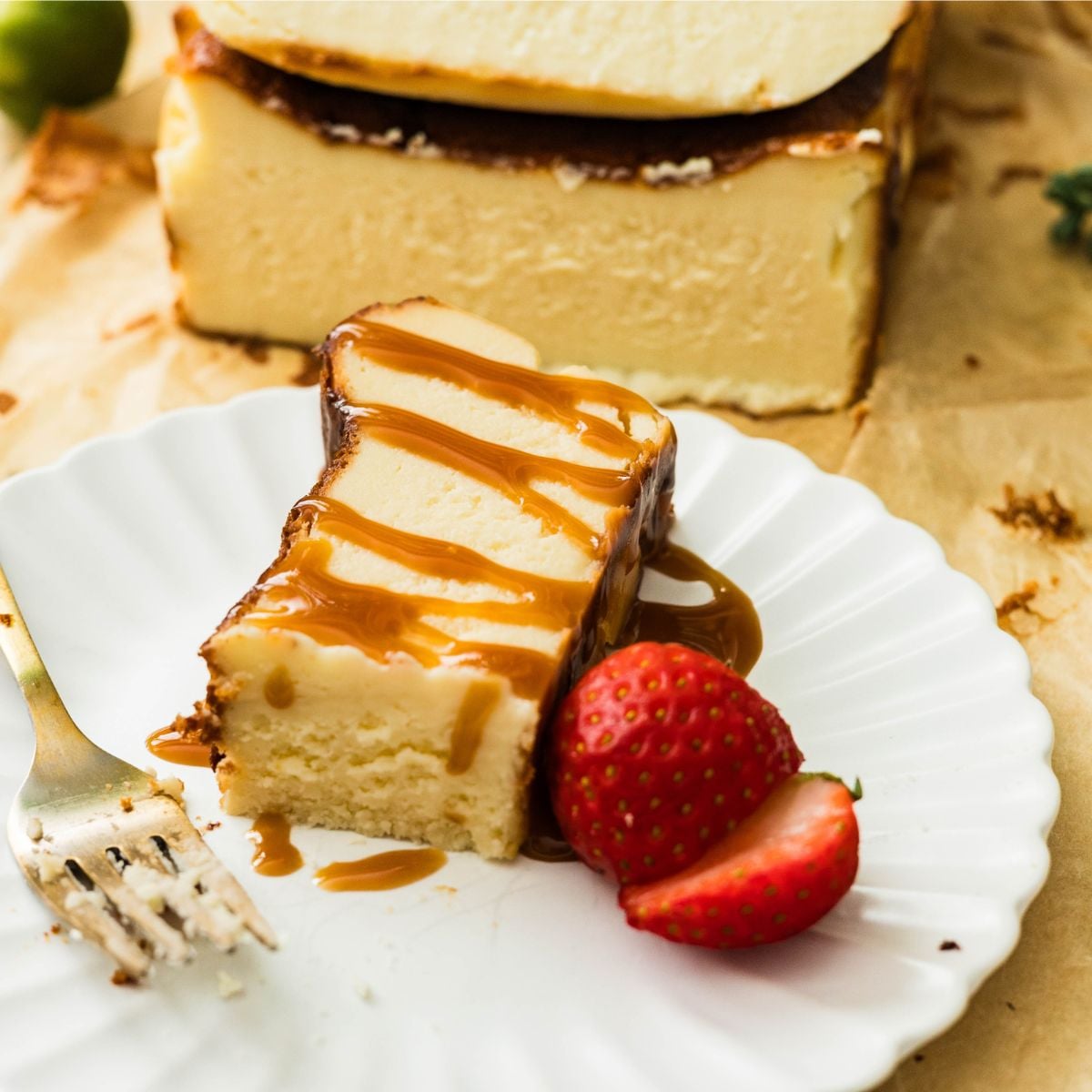
- Caramel and berries. A drizzle of caramel and a few strawberries turn a slice into a plated dessert. If you want the caramel baked into the cheesecake instead of poured over it, that's my salted caramel Basque cheesecake.
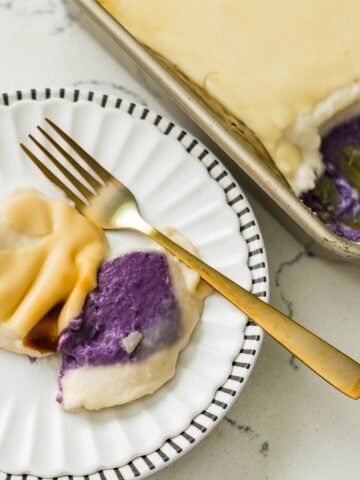
- Make it purple. Same method, different flavor, in my ube Basque cheesecake.
How to Store and Freeze
In the fridge. Mine keeps 4 to 5 days covered, still on its parchment or in an airtight container. The texture is at its best from the second day on, once the center has fully set.
Freezing. It freezes for 1 to 2 months. Whole works best, since fewer cut surfaces means less drying out, but you can freeze it sliced if you'd rather pull out one piece at a time. Wrap it well and thaw in the fridge rather than on the counter, which keeps the surface from weeping.
Serving. Straight from the fridge it slices cleanest. Let a slice sit out 15 or 20 minutes if you want the center softer.
Recipe FAQs
Go by the top and the jiggle, not the clock. The surface should be very dark brown, almost burnt-looking, and the center should still move noticeably when you nudge the pan. A Basque cheesecake that looks set in the oven will be firm and dry once chilled.
No. Basque cheesecake bakes hot and uncovered, which is the whole point. A water bath would keep the top from caramelizing.
It's caramelized, not carbonized. The sugar and dairy brown hard at 425°F, which tastes closer to caramel than to scorched. If yours tastes bitter rather than toasty, your oven likely runs hot.
It came out too early. The center should be loose in the oven but not liquid, and 4 hours minimum in the fridge is what sets it. If it's still soupy after a full overnight chill, add a few minutes next time.
Yes. Beat the cream cheese smooth first, then add the rest and mix on low so you don't work air into the batter. I use a blender because it's faster, not because a mixer fails.
More Cheesecake and Creamy Desserts
Looking for other recipes like this? Try these:
- Salted Caramel Basque Cheesecake: The round springform version, with caramel baked into the batter instead of drizzled on the plate.
- Ube Burnt Cheesecake: Same burnt top, purple center, for anyone who wants the Filipino flavor built in.
- Ube Sopapilla Cheesecake Bars: Cream cheese filling between crescent dough, cut into squares for a crowd.
- Cream Cheese Flan with Eggnog: Custard and cream cheese in one, with the caramel on the bottom where flan keeps it.
- Ube Leche Flan: Silky, purple, and another make-ahead dessert that gets better after a night in the fridge.
- Calamansi Muffins: Somewhere to use the rest of the calamansi.

Did you try this recipe?
Share how it turned out in the comment box below, and if you loved it, share it on Facebook, Pinterest & Instagram.
Thank you!

Loaf Pan Basque Cheesecake
Equipment
- 9x5 loaf pan
- parchment paper
- Blender
- fine mesh strainer (optional)
Ingredients
- 16 ounces 452 g cream cheese, room temperature (2 blocks)
- 164 grams granulated sugar about ¾ cup plus 1 tablespoon
- 4 large eggs
- 1 ¼ cups 300 ml heavy cream
- 40 grams all-purpose flour about ⅓ cup
- 1 teaspoon vanilla extract
- ½ teaspoon salt
- 1 tablespoon fresh calamansi juice or lemon juice
Instructions
- Preheat the oven to 425°F with a rack in the middle. Line a 9x5 loaf pan with one sheet of parchment, pressed into the corners and standing above the rim.
- Add the cream cheese, sugar, eggs, heavy cream, flour, vanilla, salt, and calamansi juice to a blender. Blend just until smooth and combined. Do not over-blend.16 ounces 452 g cream cheese, room temperature (2 blocks), 164 grams granulated sugar, 4 large eggs, 1 ¼ cups 300 ml heavy cream, 1 teaspoon vanilla extract, ½ teaspoon salt, 1 tablespoon fresh calamansi juice, 40 grams all-purpose flour
- Pour the batter into the lined pan. If any bits of cream cheese remain, pour it through a fine mesh strainer first.
- Bake 30 to 38 minutes, until the top is very dark brown and the center still jiggles noticeably.
- Cool on the counter for 1 hour. The center will sink as it cools.
- Refrigerate at least 4 hours or overnight. Lift out by the parchment and slice.
Save This Recipe 💌
Notes
- Slice size: 8 large slices, 10 standard, or 12 smaller portions.
- Room temperature cream cheese blends smooth in seconds. Cold cream cheese makes the blender work harder and leaves lumps.
- Don't over-blend. A high-speed blender can churn heavy cream toward butter.
- The sink is normal. The center settles as it cools, which is the shape of a Basque cheesecake.
- Storage: 4 to 5 days covered in the fridge. Freezes 1 to 2 months, best frozen whole. Thaw in the fridge.
- Lemon works in place of calamansi, same amount.