

I meant to steam this one. Leche flan usually goes into a llanera and sits over simmering water, and that was the plan right up until I found out none of my pans would fit. So I baked it in a water bath instead. The texture came out smoother than I expected, and it was a lot less fussing.
The eggnog was leftover to begin with. I bought a carton to test a Ninja Creami eggnog ice cream and had just enough left to turn into this eggnog flan.
Here is what makes it different from most flan recipes you will find: no condensed milk, no evaporated milk, no cans at all. The eggnog does that job by itself. Five ingredients total, and two of them are the sugar and water for the caramel.
The cream cheese is the other change. It gives the custard a denser set, closer to cheesecake than a classic ube leche flan, and it goes into the blender with everything else.

Save This Recipe 💌
Jump to:
- Why You'll Love This Eggnog Flan
- Ingredients
- How to Make Eggnog Flan
- How to Unmold It Without Losing the Caramel
- Steamed Llanera Version
- Variations
- Rose's Quick Tips
- Troubleshooting
- What to Serve With Eggnog Flan
- Storage and Make-Ahead
- Recipe FAQs
- More Filipino Holiday Desserts
- Did you try this recipe?
- Eggnog Flan with Cream Cheese
Why You'll Love This Eggnog Flan
- Five ingredients, and no cans. Most flan recipes call for both condensed and evaporated milk. The eggnog covers the sweetness and the dairy on its own, so the only other things you need are eggs, cream cheese, and the sugar and water for the caramel.
- It uses up the eggnog you already bought. A carton goes further than most people plan for, and this takes most of one.
- The cream cheese changes the set. You get a denser, sliceable custard closer to cheesecake, which holds its edge when you cut it instead of slumping on the plate.
- Better on day two. The caramel keeps dissolving in the fridge, so the sauce is looser and there is more of it the longer it sits. Make it the night before a Christmas dinner and it is done before the day starts.
- No special equipment. A blender, a small pot for the caramel, a cake pan, and a larger tray to hold the water. No llanera, no torch, no steamer.
- Whole eggs, nothing separated. No leftover whites sitting in the fridge waiting for a use.
Ingredients
Here's what you'll need:

For the Caramel
- Sugar. Plain granulated. It melts down into the caramel layer that ends up on top after you flip the flan, and it keeps loosening in the fridge, so what starts as a hard sheet in the pan turns into sauce by the time you serve it.
- Water. Just a splash, so the sugar dissolves evenly instead of scorching in patches. Without it you get dark spots and pale spots in the same pan, and the dark ones turn bitter.
For the Flan
- Eggnog. Store-bought is what I used, and it does more work here than in most recipes. It is the dairy and the sugar and the spice all at once, which is why there is no condensed milk on this list. Use one you would actually drink, since the flavor comes through undiluted. A very thin or very sweet eggnog will change how the custard sets.
- Cream cheese. Full-fat, and softened before it goes in. It gives the custard a denser set, closer to cheesecake than a plain flan, and it holds a clean edge when you slice it. Leave it out and you get a looser, more classic flan texture, which is fine, just not this recipe. Softened cream cheese blends much more easily; cold cream cheese can leave small lumps.
- Whole eggs. All of them, no separating. The whites help the custard set firmly enough to flip without slumping, and there is enough fat from the cream cheese and eggnog that you do not get the rubbery texture whites sometimes cause on their own.
See recipe card for quantities.
How to Make Eggnog Flan
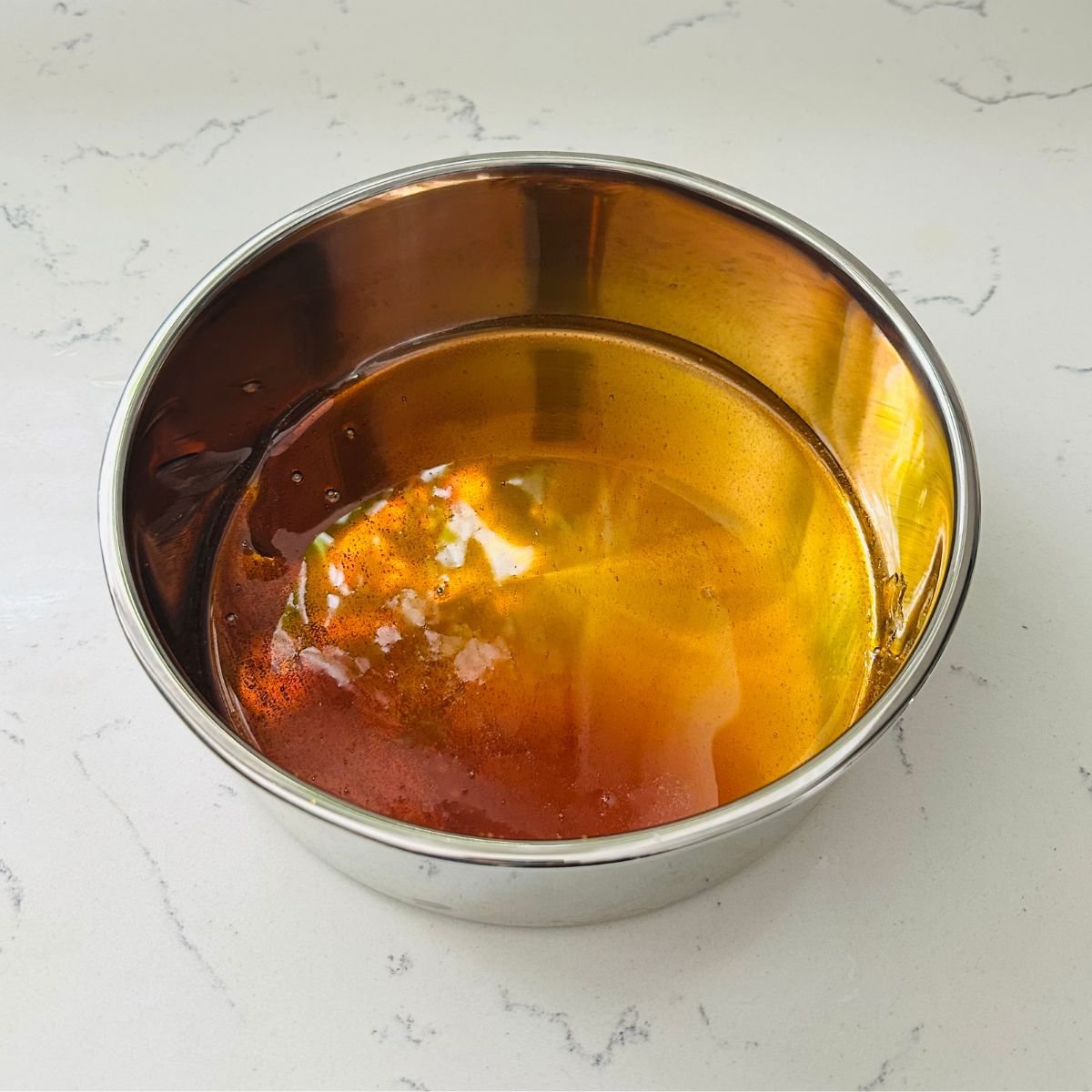
- Make the caramel. Combine the sugar and water in a small pot and cook over medium heat without stirring until it turns deep amber. Pour it straight into your cake pan and swirl right away to coat the bottom. The caramel is extremely hot and it sets fast, so have the pan next to the stove before you start. If it hardens before you finish swirling, that is fine. It melts again in the oven.

- Blend the custard. Add the eggnog, softened cream cheese, and eggs to a blender. Blend on low just until smooth. Low speed matters here more than it sounds like it should: High speed incorporates excess air, which can leave bubbles or small holes in the finished flan.
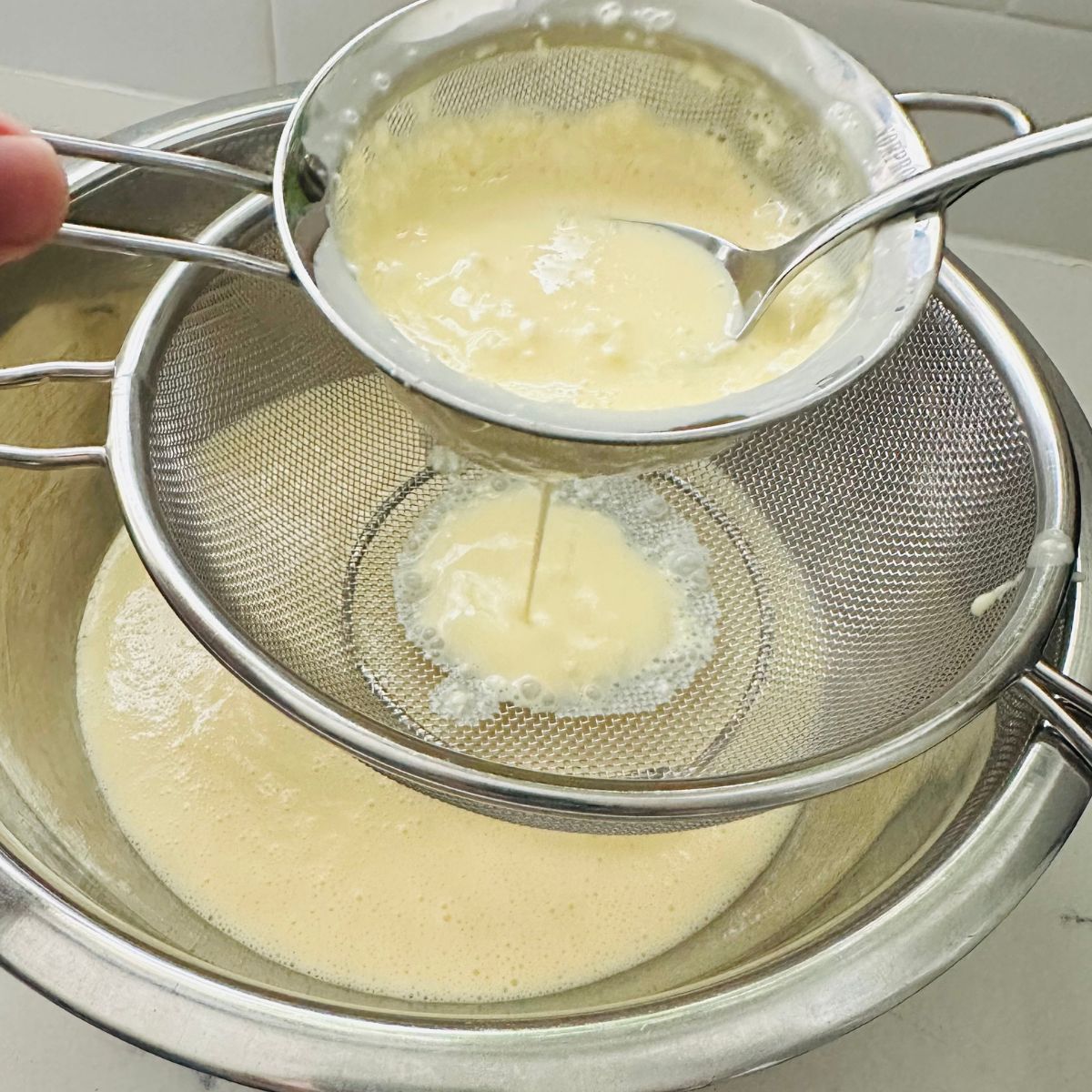
- Strain twice. Pour the mixture through a fine mesh strainer once into a bowl, then a second time straight into the caramel-lined pan. The first pass catches cream cheese that never fully broke down, the second catches the foam that formed while you poured. This is the difference between a silky flan and a slightly grainy one.

- Bake in a water bath. Cover the pan tightly with foil, then set it inside a larger tray and pour in hot water until it comes about halfway up the sides of the cake pan. Bake at 350°F for 60 to 75 minutes. The foil keeps the top from browning and stops water from splashing in, and the water bath keeps the custard from hitting a hard heat on the outside while the center is still raw. Start checking at 60 minutes. It is done when the edges are set and the center still moves as one piece when you nudge the pan, like gelatin, not like liquid.

- Chill, then flip. Let the flan cool briefly, then refrigerate it within 2 hours of coming out of the oven. Chill for at least 4 to 6 hours, preferably overnight. Run a thin knife all the way down the sides, set a rimmed plate wider than the pan on top, and flip in one motion. Use a plate with a lip, because the caramel comes out as sauce and it will run off a flat one.

How to Unmold It Without Losing the Caramel
This is the part people get nervous about, and it is the only step where you can actually lose the dessert. A few things make it go smoothly.
Chill it fully first. A flan that is still slightly warm in the center will crack or sag when you flip it. Four hours is the minimum, overnight is safer. The extra time also gives the caramel longer to dissolve into sauce, which is what you want pooling around the base.
Run the knife all the way down. A thin paring knife, pressed against the side of the pan so you are not cutting into the custard, and all the way to the bottom. Most flans that stick are stuck at the bottom edge, not the top, so a shallow pass around the rim does nothing.
Use a plate with a rim. The caramel comes out as liquid, and there is more of it than you expect. A flat plate sends it over the edge and onto the counter. Pick something wider than your cake pan with at least a small lip.
Flip in one motion. Set the plate face down over the pan, hold both together, and turn it over in one go. Hesitating halfway is how you get a flan that lands off-center. Then leave the pan sitting on top for a few seconds and let it release on its own before you lift.
If the caramel is stuck, set the bottom of the cake pan in an inch of hot water for 30 to 60 seconds. That softens the layer that welded itself to the pan without warming the custard. Then flip again. Do not leave it sitting in the hot water any longer than it takes, because you will start melting the edges of the flan itself.
If some caramel stays behind, pour a little hot water into the empty pan, swirl it over the stuck bits until they dissolve, and spoon that over the flan. It thins the caramel slightly, but it is better than leaving a third of your sauce in the sink.
Steamed Llanera Version
Steaming is how I usually make leche flan, and it's how I'd have made this one if my pans had fit the steamer. The custard behaves the same either way. What changes is how the heat reaches it and how closely you have to watch.
Divide it between llaneras. This recipe makes a large amount of custard, so it won't fit one standard llanera. Split it across 2 of them and expect the timing to drop compared to a single large pan.
Caramelize the sugar directly in the llanera if that's how you normally do it, holding it over low heat until it goes amber, then tilting to coat. It's faster than making the caramel in a separate pot and pouring it over.
Cover each one tightly with foil. This matters more when steaming than baking. Condensation collects on the lid and drips, and a few drops of water on the surface leaves pockmarks in the finished flan.
Keep the water at a bare simmer. A hard boil rocks the molds and forces the custard to set too fast on the outside, which is where the bubbles and the rubbery edge come from. You want steam, not agitation.
Steam for about 50 minutes, checking at the earlier end. Same doneness cue as the baked version: the center should move as one piece when you nudge it, not slosh. Then cool, chill, and unmold exactly the same way.
The one real difference in the result: steamed flan tends to come out slightly softer than baked. Not worse, just a looser set. With the cream cheese in this custard I'd expect it to still slice cleanly, but it'll be closer to a classic leche flan texture than to cheesecake.
Variations
- Add rum. Blend in 2 tablespoons for a boozier holiday version.
- Adjust the spice. Store-bought eggnogs vary a lot in how much nutmeg they carry. If yours tastes mild straight from the carton, add a pinch of nutmeg or cinnamon to the blender.
- Make it sweeter. This flan is less sweet than the condensed-milk versions people are used to. A few tablespoons of sugar in the blender brings it closer to that. Again, taste before you pour.
- Individual flans. Divide the custard among ramekins and they'll bake much faster than the full pan. Start checking at the halfway mark and go by the same cue: the center moves as one piece. These are easier to serve at a party and they unmold with less drama.
- Skip the cream cheese. You'll get a softer, more classic eggnog flan, closer to what you'd find on a Christmas table in the Philippines. Less sliceable, still good. Just don't expect the same clean edge.
Rose's Quick Tips
- Blend on low. High speed whips air into the custard, and every bubble you put in becomes a hole in the finished slice.
- Strain twice. The first pass catches cream cheese that never fully broke down. The second catches the foam that forms while you pour.
- Send the second strain straight into the pan. One less transfer means one less chance to reintroduce air.
Troubleshooting
- Holes or bubbles through the custard. Air got in, either from blending too fast or from skipping a strain. It can also come from baking too hot, which makes the custard expand and set around its own steam. Blend on low, strain twice, and keep the oven at 350°F rather than raising the temperature to speed things up.
- The center never set. The center never set. It most likely needed more baking time. Keep the water bath about halfway up the sides of the pan so the custard cooks gently and evenly.
- It tastes eggy. That's overbaking. Custard past its set point starts pushing the egg flavor forward. Pull it when the center still moves as one piece, and chill it fully, since the flavor mellows as it cools.
- Lumps of cream cheese in the finished flan. The cream cheese was too cold to break down. Let it sit out until it's genuinely soft before it goes in the blender, not just out of the fridge. The double strain is your safety net here, but it can't fix cream cheese that never softened.
- The caramel seized before you could swirl it. Normal, and not a problem. Caramel sets fast once it leaves the heat. It melts again in the oven and pools under the flan either way. What matters is that you poured it in before it went past amber into dark brown, which is where it turns bitter.
- The caramel burned. It goes from amber to burnt in about fifteen seconds and there's no rescuing it. Start over. Next time have the cake pan sitting right next to the stove before you turn on the heat, so you're not looking for it during the window when it matters.
- The flan cracked when you flipped it. It wasn't cold enough. A flan that's still slightly warm in the center hasn't finished firming up and won't hold its shape through the turn. Give it the full chill, and overnight if you can.
What to Serve With Eggnog Flan
- Fresh berries. Raspberries or strawberries cut against the richness. This flan is dense, and a few tart berries on the plate keep a second slice from feeling like too much.
- Coffee. I like serving a cold slice with black coffee. The bitterness balances the rich custard and caramel.
- Christmas cookies. If you're building a dessert table rather than serving one thing, crinkles or gingerbread give people something to pick at next to a plated dessert.
- Whipped cream. Optional, and honestly not necessary. There's already cream cheese in the custard and caramel sauce on the plate. Add it if you want the look, skip it if you want the flan to be the thing people taste.
Storage and Make-Ahead
This is a dessert that wants to be made ahead, not one that tolerates it. The chill isn't optional, so you're already committing to at least a few hours between baking and serving. You may as well use them.
- Make it 1 to 2 days ahead. Bake it, cool briefly, then cover and refrigerate it in the pan. Leave it unmolded until you're ready to serve. The caramel keeps dissolving the whole time it sits, so day two gives you more sauce than day one, and the spice reads clearer once it's fully cold.
- Cool it completely before covering. Foil or plastic over a warm flan traps condensation, and that water drips back onto the surface and marks it.
- Keeps for up to 4 days in the fridge, covered. After that the custard starts to weep and the edges dry out.
- Once it's flipped, keep it cold. Leftover slices go back in the fridge, covered, with the caramel sauce spooned over them. Don't leave it sitting out on a dessert table for hours. It's an egg custard.
- On freezing: I'd skip it. Baked custard tends to go grainy when it thaws, and the water it releases thins out the caramel. If you're making this for something specific, make it the day before rather than weeks ahead.
Recipe FAQs
It's less sweet than the condensed-milk version most people know, which is deliberate. Eggnog is already sweetened, and adding a can on top of it buries the spice.
Yes. Two tablespoons blended in with everything else is enough to taste without loosening the set. Spiked eggnog works too, though you have less control over the amount.
It was overbaked. Custard pushed past its set point starts tasting of egg. Pull it when the center still moves as one piece rather than sloshing, and chill it completely, since the flavor mellows as it cools.
Almond and oat versions will set softer and may not hold a clean slice, since there's less fat and protein doing the work. If you try it, add an extra egg to help the custard hold.
An 8 inch round, at least 2 inches deep. This recipe makes a large amount of custard, so a shallow pan will overflow once it's in the water bath.
Yes, but whisk gently rather than vigorously, since the goal is to combine without beating in air. Make sure the cream cheese is very soft and strain twice, because hand-mixing leaves more behind for the strainer to catch.

More Filipino Holiday Desserts
Looking for other recipes like this? Try these:
- Ube Leche Flan. The version this one departs from. Same custard technique, same caramel, purple yam instead of eggnog, and a softer set without the cream cheese.
- Ninja Creami Eggnog Ice Cream. What to do with the rest of the carton. Between this and the flan you'll get through a full quart without buying anything else.
- Ube Crinkle Cookies. For a dessert table rather than a plated dessert. They hold up on a platter for hours, which flan does not.
- Homemade Dulce de Leche. If the caramel step is the part you liked, this is the same instinct with less timing pressure.

Did you try this recipe?
Share how it turned out in the comment box below, and if you loved it, share it on Facebook, Pinterest & Instagram.
Thank you!

Eggnog Flan with Cream Cheese
Equipment
- 1 Blender
- 1 8-inch round cake pan
- 1 Large baking tray (for the water bath)
- 1 Fine mesh strainer
- 1 Small pot (for caramel)
- 1 Aluminum foil
- 1 MIxing Bowl
- 1 Oven
- 1 Thin knife (for loosening the flan before flipping)
Ingredients
For the Caramel
- ⅓ cup sugar
- 1 tablespoon water
For the Flan
- 3½ cups eggnog
- 6 oz cream cheese softened
- 5 whole eggs
Instructions
- Combine sugar and water in a small pot and cook over medium heat until it turns deep amber. Carefully pour into your cake pan and swirl quickly to coat the bottom before it solidifies.⅓ cup sugar, 1 tablespoon water
- Add eggnog, softened cream cheese, and eggs to a blender. Blend on low until smooth and fully combined.3½ cups eggnog, 6 oz cream cheese, 5 whole eggs
- Strain the mixture into a bowl to remove lumps and air bubbles.
- Strain again directly into the caramel-coated cake pan for the smoothest texture.
- Cover tightly with foil. Place the cake pan inside a larger tray filled with hot water (bain-marie). Bake at 350°F for 60–75 minutes, or until the edges are set and the center has a slight jiggle.
- Let the flan cool briefly, then chill for 4–6 hours, preferably overnight. Run a thin knife around the edges and flip onto a plate to release the glossy caramel top.
Rose Sioson says
Tasted like Christmas and reminded me of leche flan from back home — but even silkier. Hope you like this one too!