Crinkles were never a Christmas thing for me. They were just cookies, sitting in the bakery case next to the pandesal and the ensaymada, year round. It took moving here to find out the rest of the world treats them as a December cookie.
Chocolate crinkles are fudgy in the middle, almost like a brownie, with a powdered sugar shell that cracks open as they bake. One bowl, no mixer, about 30 minutes of chilling, and one batch makes 18 to 24. I still make them in July.
Save This Recipe 💌
I bring them to the office and hand them out to neighbors, and they're gone before I've finished the tin. Same thing happens with my ube crinkles, which is the purple version and the one people ask about first.
Jump to:
Why You'll Love These
- One bowl, no mixer. Cocoa, oil, and eggs stirred together by hand. No creaming butter, no waiting for it to soften, nothing to wash except the bowl you mixed in.
- The middle stays fudgy. These bake like a brownie, not a cookie. You pull them while the centers still look slightly underdone and they set as they cool, which is what keeps them soft for days.
- The powdered sugar coat is the whole look. Roll them heavily, and roll again right before baking if you want them whiter. A thin dusting disappears into the dough as it bakes.
- The dough freezes. One batch gives you 18 to 24. Roll the balls, freeze them on a tray, then bag them. Bake straight from frozen with an extra minute or two, which means fresh cookies on about fifteen minutes' notice.
- Not just a December cookie. They're a year-round bakery staple in the Philippines, and there's no reason they shouldn't be here too.
What Are Chocolate Crinkles?
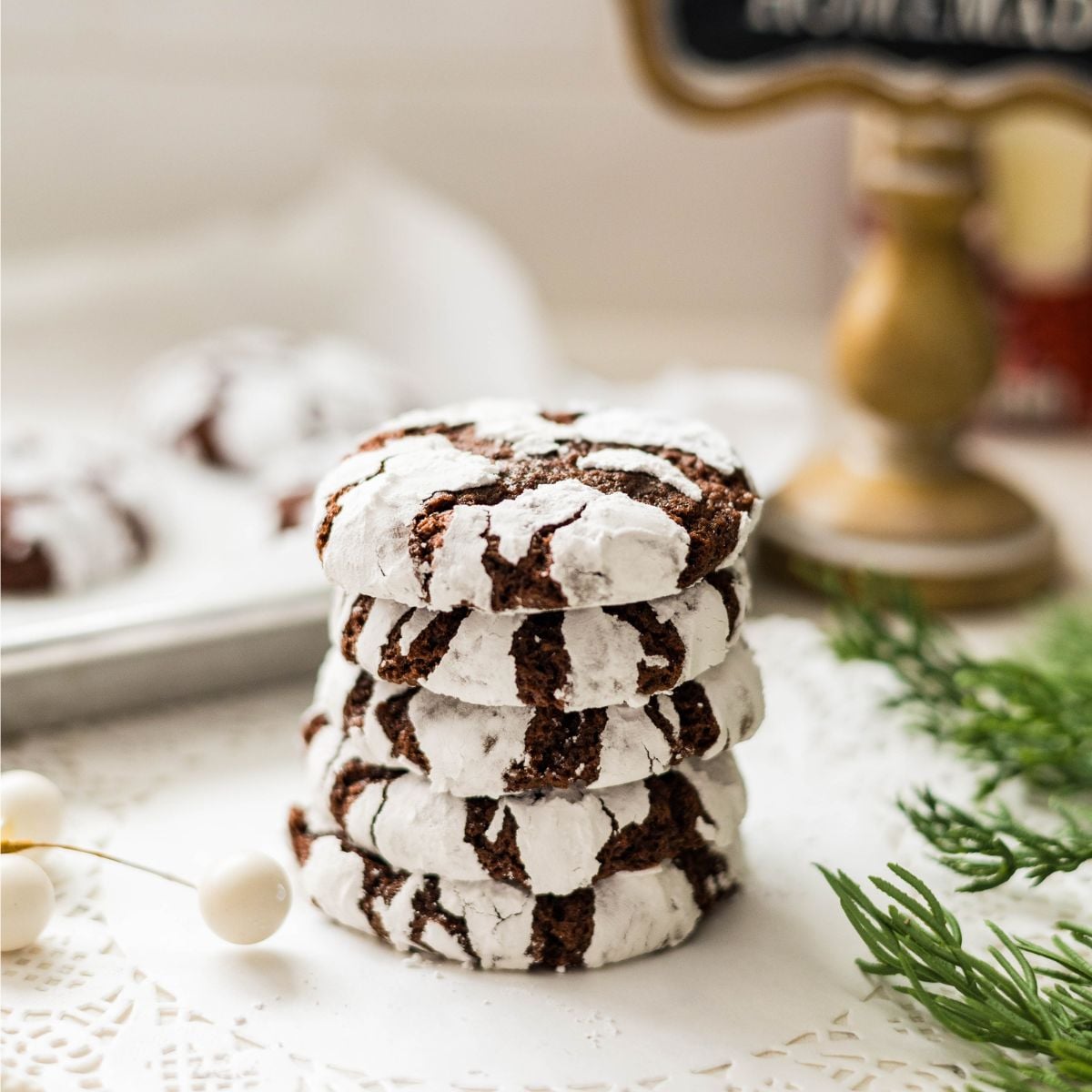
Chocolate crinkles are soft chocolate cookies rolled in powdered sugar before baking. As they spread in the oven the surface dries and splits, and the sugar settles into the cracks, which is where the name comes from. The inside stays fudgy, closer to a brownie than a cookie.
The first published recipe appeared in a Betty Crocker cookbook in the early 1950s, credited to Helen Fredell of Saint Paul, Minnesota. They've also been called black and whites and cookies in the snow, and it's that snowy look that made them a Christmas cookie in the US.
In the Philippines they never got filed under Christmas. They sit in bakery cases year round, next to the pandesal and the ensaymada, and nobody thinks of them as seasonal. That's how I grew up eating them, and it's still how I make them.
Ingredients
- All-purpose flour: Spoon it into the cup and level it off rather than scooping. Packed flour is the fastest way to a dry, cakey crinkle instead of a fudgy one.
- Natural unsweetened cocoa powder: Use natural, not Dutch-process. Natural cocoa is slightly acidic, and that acidity reacts with the baking powder to give the lift that forces the crack. Dutch-process is alkalized, so you lose some of the rise and some of the crackle.
- Granulated sugar: Sweetness, and it goes in the dough as well as on the outside. Keep some aside for rolling.
- Baking powder: The lift. Check that yours isn't expired, since old baking powder is a common reason crinkles come out flat and smooth.
- Salt: Cocoa without salt tastes flat. A half teaspoon does a lot here.
- Vegetable oil: Instead of butter, which is why there's no creaming step and no waiting for anything to soften. Oil stays liquid at room temperature, so these stay soft for days rather than firming up overnight.
- Eggs: Structure and richness. Room temperature blends more evenly into the oil and sugar.
- Vanilla extract: Rounds out the cocoa.
- Powdered sugar: The outer coat. Be generous, a thin dusting disappears into the dough as it bakes.
See recipe card for quantities.
Swaps & Add-Ins
- Peppermint. Half a teaspoon of peppermint extract with the vanilla turns these into the version people expect in December. Crushed candy cane pressed on top after baking works too, though it softens overnight.
- Mini chocolate chips. Half a cup folded in at the end. They stay put in the fudgy center instead of sinking, and you get chocolate on chocolate without changing the dough.
- Espresso powder. A teaspoon with the dry ingredients. It doesn't taste like coffee, it just makes the cocoa read deeper. This is the one I'd add if you only add one.
- Cinnamon and cayenne. A teaspoon of cinnamon and a pinch of cayenne for the Mexican chocolate version. Add the cayenne cautiously, a pinch goes further in a small cookie than you'd think.
- Dutch-process cocoa. You can use it, but pair it with a quarter teaspoon of baking soda alongside the baking powder, since Dutch cocoa has no acidity to react with. Expect a darker cookie with slightly less dramatic cracking.
- Double sugar roll. Some bakers roll in granulated sugar before the powdered sugar. The coarse crystals pull more moisture off the surface, which dries the top faster and gives you deeper cracks. I don't do it, but it's a real technique if you want more dramatic crackling.
- Short on time? Roll the dough into slightly smaller balls and freeze them for 10 minutes instead of chilling the whole batch for 30. Not as good, but it works when you need cookies now.
How to Make Chocolate Crinkle Cookies
- Whisk the dry ingredients. Flour, cocoa powder, baking powder, and salt in a bowl. Set aside.
- Mix the wet ingredients. Beat the granulated sugar and oil until smooth, then add the eggs one at a time until the mixture lightens and thickens. Stir in the vanilla. No mixer needed, a whisk and some effort is enough.
- Bring the dough together. Add the dry ingredients to the wet and fold until just combined. Stop as soon as the streaks disappear. The dough will be sticky and loose, closer to brownie batter than cookie dough, and that's correct.
- Chill at least 30 minutes. Cover and refrigerate. The dough is too soft to roll otherwise, and warm dough spreads into flat cookies with no cracks. An hour is better if you have it, and it holds in the fridge up to two days.
- Roll in powdered sugar. Scoop the chilled dough into balls and roll each one generously in powdered sugar. Be heavier-handed than feels reasonable. A thin coat gets absorbed into the dough as it bakes and you lose the contrast. If you want an even whiter finish, roll a second time right before they go in the oven.
- Bake at 350°F for about 11 minutes. Parchment-lined sheet, one tray at a time on the middle rack. Pull them when the edges are set and the centers still look slightly underdone. They finish setting as they cool.
- Rest 5 minutes on the pan. They're fragile straight from the oven and will tear if you move them too soon. Transfer to a rack after that. The centers will sink a little as they cool, which is normal.
Rose's Tips
- Don't rush the chill. Thirty minutes is the minimum, an hour is better. This dough is sticky by design, and warm dough spreads before the surface can set, which gives you flat cookies with no cracks. It also holds in the fridge up to two days if you want to bake in stages.
- Roll heavier than feels reasonable. A thin dusting of powdered sugar gets absorbed into the dough as it bakes and you lose the contrast. If you want them whiter, roll a second time right before they go in the oven.
- Use a cookie scoop. Uniform balls bake evenly and crack the same way. Hand-rolled cookies of different sizes come out of the same tray at different stages of done.
- Pull them early. Take them out when the edges are set and the middles still look slightly underdone. They finish setting on the pan, and this is the whole difference between fudgy and dry.
- One tray at a time, middle rack. Crowded racks bake unevenly and the cracks come out lopsided. Parchment rather than a greased pan, since powdered sugar can scorch on bare metal.
- The centers sink as they cool. That's normal, not a mistake. Everyone thinks they've done something wrong the first time.
Why Your Crinkles Didn't Crack
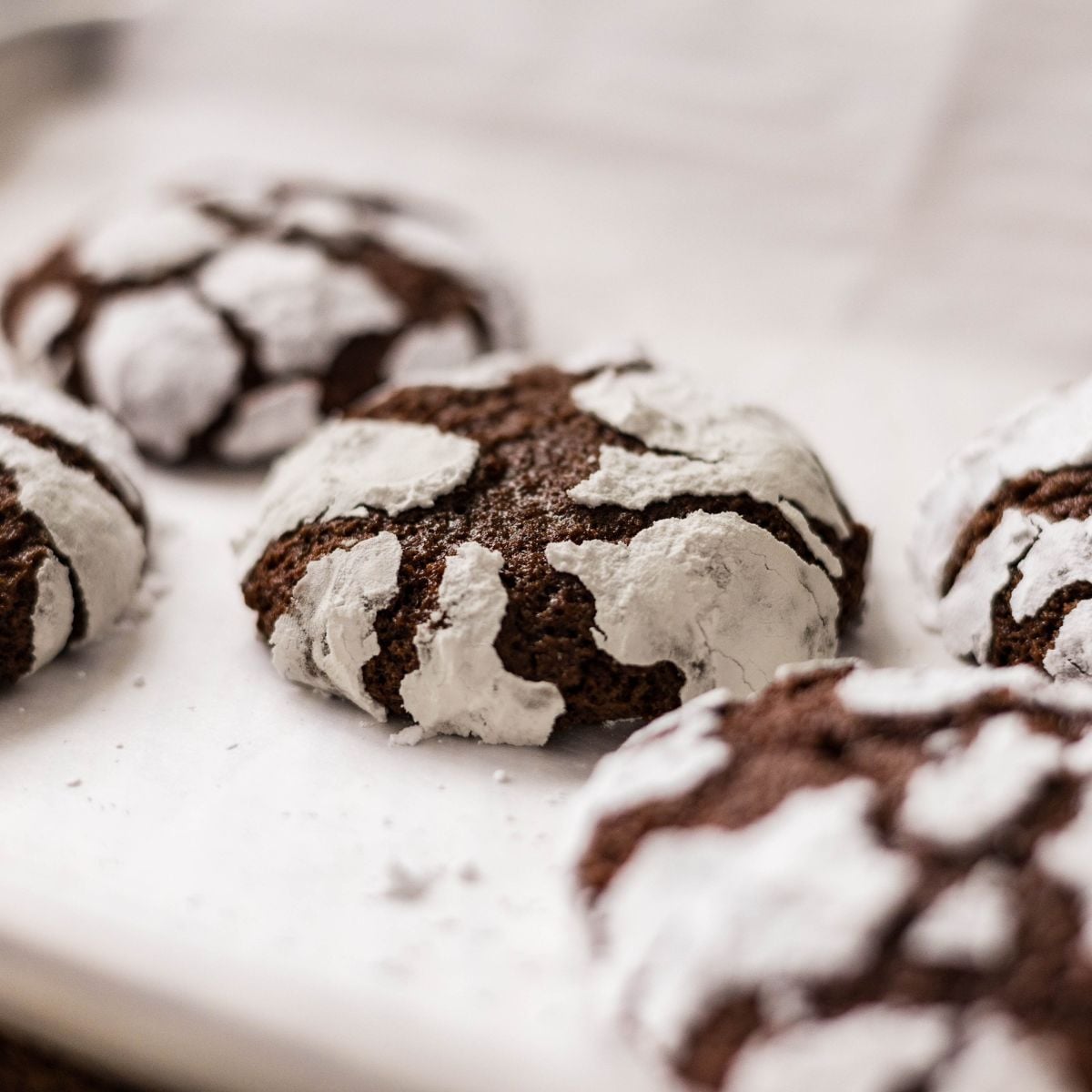
Crinkles crack because the surface dries out before the inside finishes rising. The dough underneath keeps expanding, the dried top can't stretch with it, and it splits. Everything below is a version of that not happening.
The dough wasn't cold enough. This is the usual answer. Warm dough spreads fast and flat, so the cookie is done spreading before the top has a chance to set and split. Chill at least 30 minutes, and if your kitchen is warm, put the rolled balls back in the fridge for 10 minutes before they bake.
The sugar coat was too thin. Powdered sugar draws moisture off the surface, which is what dries it. A light dusting gets absorbed into the dough and does nothing. Roll them heavily, and roll a second time right before baking if you want more.
Your baking powder is old. It loses strength after about six months open. Without the lift there's nothing pushing up against the surface, so nothing splits. Drop half a teaspoon into hot water. If it doesn't fizz, replace it.
You used Dutch-process cocoa. Dutch cocoa is alkalized and has no acidity to react with baking powder, so you get less rise. Natural unsweetened cocoa is what this recipe is built for. If Dutch is all you have, add a quarter teaspoon of baking soda alongside the baking powder.
They came out flat as well as smooth. Same causes, usually warm dough or overmixing. Fold the dry ingredients in just until the streaks disappear and stop.
Make Ahead & Freezing
- Chill the dough up to 2 days. After mixing, cover and refrigerate. It firms up more the longer it sits, which makes it easier to roll, and it holds fine for a couple of days if you want to bake in stages.
- Freeze the rolled balls. Roll into balls, freeze on a sheet pan until solid, then transfer to a bag. They keep 3 months. Roll in powdered sugar right before baking rather than before freezing, since the coating goes damp in the freezer.
- Bake from frozen. Straight from the bag onto the sheet, add 1 to 2 minutes. No thawing needed, which means fresh cookies on about fifteen minutes' notice.
- Baked cookies keep a week. Airtight at room temperature. They stay soft the whole time, since the oil in the dough doesn't firm up the way butter does. Add a slice of bread to the container if your kitchen is dry.
- Don't refrigerate baked cookies. The fridge dries them out faster than the counter does.
Recipe FAQs
Yes. This dough is deliberately sticky and there's no rolling it warm. More importantly, warm dough spreads before the surface can set, which gives you flat cookies with no cracks. Thirty minutes is the minimum and an hour is better. It also holds in the fridge up to two days if you want to bake in stages.
You can, but natural unsweetened cocoa is what this recipe is built for. Natural cocoa is slightly acidic and reacts with the baking powder to give the lift that forces the crack. Dutch-process is alkalized, so you get less rise and less dramatic cracking. If Dutch is all you have, add a quarter teaspoon of baking soda alongside the baking powder.
The coat was too thin and got absorbed into the dough as it baked. Roll them heavily, more than feels reasonable, and roll a second time right before they go in the oven if you want a whiter finish.
Pull them at about 11 minutes, when the edges are set and the centers still look slightly underdone. They finish setting on the pan as they cool. Waiting for the middles to look done in the oven is how you end up with dry crinkles.
They're supposed to. Crinkles deflate slightly in the middle as they cool, which is what gives you that fudgy brownie texture. It isn't a sign anything went wrong.
Yes, up to 3 months. Roll into balls, freeze on a sheet pan until solid, then bag them. Roll in powdered sugar right before baking rather than before freezing, since the coating goes damp in the freezer. Bake straight from frozen and add a minute or two.
In the US, mostly. The powdered sugar looks like snow, which is how they became a holiday staple here. In the Philippines they're a year-round bakery cookie and nobody thinks of them as seasonal.
More Cookie Recipes To Try
- Ube Crinkle Cookies
- Matcha Chocolate Chip Cookies
- Brown Butter Oatmeal Chocolate Chip Cookies
- Marbled Ube Cream Cheese Brownie Bars

Did you try this recipe?
Share how it turned out in the comment box below, and if you loved it, share it on Facebook, Pinterest & Instagram.
Thank you!


Chocolate Crinkle Cookies
Equipment
- 1 ice cream scoop (2 tablespoon size)
Ingredients
- 1 cups All-purpose flour
- 1 teaspoons baking powder
- ¼ teaspoon salt
- 1 cups white sugar
- ½ cup unsweetened cocoa powder
- ¼ cup vegetable oil or avocado oil
- 2 pcs eggs large
- 1 teaspoons Vanilla extract
- ½ cup Confectioners’ sugar/ powdered sugar for coating
Instructions
- In a bowl, whisk together the all-purpose flour, cocoa powder, baking powder, and salt. Set aside.1 cups All-purpose flour, 1 teaspoons baking powder, ½ cup unsweetened cocoa powder, ¼ teaspoon salt
- In a separate large bowl, mix together the granulated sugar and vegetable oil until well combined.1 cups white sugar, ¼ cup vegetable oil or avocado oil
- Add the eggs one at a time, beating well after each addition. Stir in the vanilla extract.2 pcs eggs , 1 teaspoons Vanilla extract
- Gradually add the dry ingredients to the wet ingredients, mixing until just combined. The result should be a thick, fudgy dough.
- Cover the bowl with plastic wrap and refrigerate the dough for at least 30 minutes. Chilling helps the dough firm up and makes it easier to handle.
- Using an ice cream scoop, portion out the chilled dough and roll it into balls. Make sure they are evenly sized.
- Place the rolled dough balls on the prepared baking sheets, leaving enough space between them.
- Pop the baking sheets into the freezer for another 30 minutes. Chilled dough helps the crinkles keep their shape while baking.
- After chilling, preheat your oven to 350°F (175°C) and line baking sheets with parchment paper.
- Roll each dough ball in powdered sugar until generously coated and place them in the baking sheet leaving enough space between them.½ cup Confectioners’ sugar/ powdered sugar for coating
- Bake in the preheated oven for 11 minutes, or until the edges are set but the centers are still soft.
- Allow the chocolate crinkles to cool on the baking sheets for a few minutes before transferring them to a wire rack to cool completely.