Filipino pork menudo is a tomato-based pork stew with potatoes, carrots, bell peppers, and raisins, one of the most common dishes at Filipino gatherings and one of the best weeknight stews you can make with affordable ingredients. My husband won't touch liver, so I use liver spread stirred right into the sauce instead of cubed liver in the pot. He's never noticed, and honestly, the flavor is there either way.
The pork marinates briefly in calamansi and soy sauce before going into the pot, which builds the flavor base for the whole sauce. It takes about an hour, reheats well, and tastes significantly better on day two.
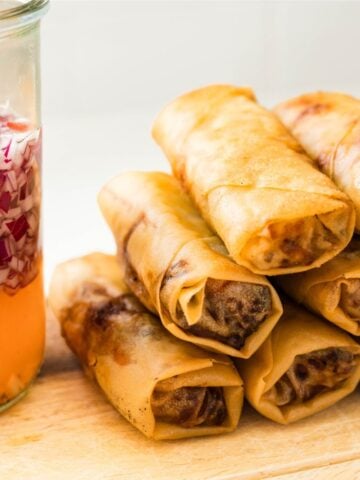
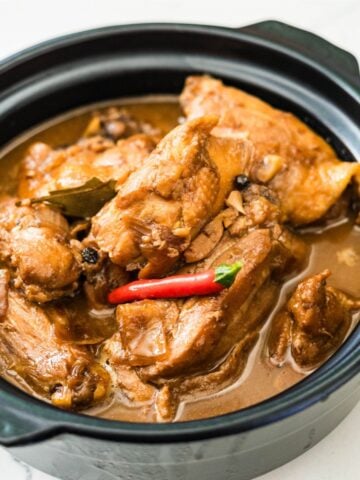
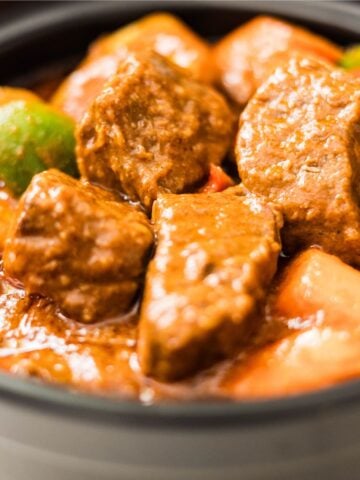
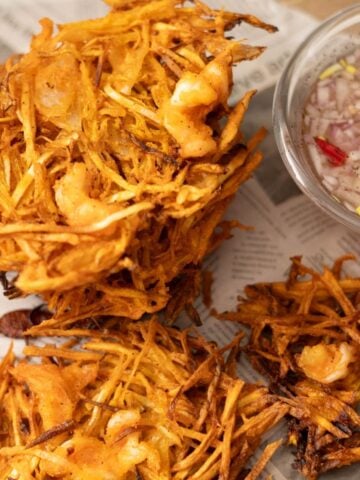
It's a staple at Filipino celebrations alongside chicken bistek, pata humba, Filipino guisantes, and chicken asado, the kind of spread that shows up at every birthday and fiesta table.

Save This Recipe 💌
Jump to:
What is Filipino Pork Menudo?
Menudo comes from the Spanish word for "small bits," a nod to the uniform, bite-sized pieces the dish is known for. Brought to the Philippines during Spanish colonization, Filipino cooks made it their own with soy sauce, fish sauce, calamansi, and sweet additions like raisins that have become signatures of the local version.
It's a staple at birthdays, fiestas, and family gatherings across the Philippines. Every household has their own spin, some add liver, hot dogs, or garbanzo beans, but the heart of the dish is always the same: tender pork in a rich tomato sauce with potatoes and carrots.
Filipino Menudo vs Mexican Menudo
Filipino menudo is a pork stew with potatoes, carrots, and bell peppers in a rich tomato sauce. Mexican menudo is a soup made with tripe, hominy, and a spicy red chili broth.
The Filipino version is hearty and sweet-savory, while the Mexican version is spicy and served with lime. Filipino menudo is built to go with rice, while Mexican menudo pairs well with tortillas.
Both are comfort foods, but they're worlds apart in flavor and style.
What is Menudo-Cut?
I remember my mom always telling the butcher "menudo-cut" whenever she bought pork for this dish. It means small, uniform cubes, and there's a real reason for it, not just tradition.
- More surface area. Smaller cubes soak up more of the tomato-based sauce as they simmer.
- Even cooking. Uniform cubes cook at the same rate, so you don't end up with some pieces still tough while others have gone dry.

Ingredients You'll Need
- Garlic and Onion: The aromatic base.
- Pork Shoulder or Pork Belly: Kasim pork gives you meatier, leaner pieces that hold their shape well during the long simmer.
- Calamansi or Lemon Juice: For the marinade. Calamansi is the traditional choice and gives a more distinctly Filipino flavor, it's smaller, slightly sweeter, and less astringent than lemon. Find it at Filipino or Asian grocery stores. Lemon is a fine substitute.
- Soy Sauce: Goes into the marinade and forms the flavor backbone of the sauce. Reserve the marinade after the pork comes out and add it to the pot, all that calamansi and soy sauce is too good to discard.
- Liver Spread: My shortcut for traditional menudo flavor without visible liver cubes in the pot. Stir a few tablespoons into the sauce, it blends in completely. Find it in the canned goods aisle at Filipino or Asian grocery stores.
- Tomato Paste and Fresh Tomatoes: Tomato paste adds depth and helps thicken the sauce; fresh tomatoes add brightness and natural acidity. Canned diced tomatoes work if you don't have fresh.
- Tomato Sauce: The liquid base of the stew. Use a plain tomato sauce rather than a seasoned pasta sauce for better control over the final flavor.
- Bay Leaves (Laurel): The earthy, slightly herbal aroma present in the background of almost every Filipino braise.
- Oyster Sauce: Adds umami depth and a touch of sweetness to the sauce.
- Sugar: A small amount to balance the acidity of the tomatoes.
- Potatoes: Yukon Gold or any waxy potato holds its shape better than russet during the long simmer. Cut the same size as the pork.
- Carrots: Cut the same size as the potatoes so they finish at the same time.
- Bell Peppers: Red and green both, for color and sweetness. Add in the last few minutes so they stay slightly crisp rather than going limp.
- Raisins: The sweetness that balances the salty soy sauce and the acidity of the tomatoes. Same principle as in Filipino picadillo, a Spanish colonial influence that stayed and makes the dish taste like itself rather than just a generic pork stew.
Substitution and Addition
- Chicken: Swap for pork for a lighter version.
- Filipino Red Hot Dogs: Another traditional party menudo addition. Sliced into rounds and added with the vegetables, they add a smoky, slightly sweet element. Find them at Filipino or Asian grocery stores. Vienna sausage is a similar substitute.
- Garbanzo Beans (Chickpeas): A traditional addition for party or special occasion menudo. A can of drained chickpeas added with the potatoes and carrots adds heartiness and a slightly nutty flavor that works well with the tomato sauce.
- Chorizo: Add for a smoky, spicy kick.
- Pineapple: Add chunks for a tropical sweet and sour flavor.
How to Make Filipino Pork Menudo
- Marinate the Pork. Combine the pork pieces with calamansi or lemon juice and soy sauce in a bowl. Toss to coat and let sit for at least 30 minutes, up to a few hours if you have time. The acid tenderizes the meat slightly, and the soy sauce starts building the flavor base. Don't discard the marinade when you're done, reserve it to add to the pot.
- Brown the Pork. Heat oil in a large, heavy pot or Dutch oven over medium-high heat. Remove the pork from the marinade (reserve the liquid) and sear in batches until browned on the outside, about 3 to 4 minutes per side. Don't crowd the pan or the pork will steam rather than sear. Set the browned pork aside. The brown bits left in the pan are flavor, don't wash them out.
- Sauté the Aromatics. Reduce heat to medium. In the same pot, cook the garlic until golden, about 1 minute. Add the onion and cook until soft and translucent, 2 to 3 minutes.
- Add Tomato Paste. Add the tomato paste and cook, stirring, for about 1 minute until it darkens slightly. This cooks off the raw tomato flavor and deepens the color and richness of the final sauce.
- Build the Sauce. Add the fresh tomatoes and cook until they soften and begin to break down, 3 to 4 minutes. Return the browned pork to the pot. Pour in the reserved marinade, tomato sauce, and enough water to just cover the pork. Add the bay leaves. Bring to a boil, skimming any foam that rises to the surface.
- Simmer the Pork. Reduce heat to medium-low, cover, and simmer for 35 to 45 minutes until the pork is tender. Check every 15 minutes and add a splash of water if the liquid is reducing too quickly. The pork is ready when it yields easily to a fork but still holds its shape.
- Add the Vegetables. Add the potatoes, carrots, raisins, and hot dogs if using. Stir to combine. Cover and simmer for another 10 to 15 minutes until the potatoes and carrots are tender.
- Finish the Sauce. Stir in the liver spread, oyster sauce, sugar, salt, and pepper. Add the bell peppers and cook for 2 to 3 minutes, just enough to soften them slightly while keeping some texture. Taste and adjust seasoning.
- Check the Consistency. The finished menudo should have a thick, rich sauce that coats the meat and vegetables, not thin or watery. If it's too thin, simmer uncovered for 5 to 10 minutes to reduce. Mashing a few potato pieces against the side of the pot also helps thicken it naturally.
- Serve. Remove bay leaves. Serve hot over steamed white rice.
Variations
- Chicken Menudo: Replace pork with bone-in chicken thighs for a lighter version. Reduce simmering time to 25 to 30 minutes. The sauce and vegetables stay the same. For another easy tomato-based chicken dinner, try my Chicken with Pork and Beans.
Beef Menudo: Use beef chuck or stew meat for a richer, more substantial version. Increase simmering time to 60 to 90 minutes until the beef is fully tender.
Menudo with Hard-Boiled Eggs: Add halved hard-boiled eggs in the last few minutes of cooking. Common in some household versions and makes the dish more filling.
Menudo with Chorizo: Add sliced Filipino-style chorizo (chorizo de Bilbao or chorizo Macau) with the vegetables. Adds a smoky, slightly spiced dimension.
Sweet Menudo: Add pineapple chunks in the last few minutes for a tropical sweet-sour flavor that works well against the savory sauce.
Spicy Menudo: Add sliced siling labuyo or bird's eye chili with the aromatics, or stir in chili flakes at the end.
What to Serve with Pork Menudo
- Steamed Rice: A classic pairing that soaks up the tomato sauce, making every bite flavorful.
- Garlic Fried Rice: More savory than plain rice, and a great match for the rich sauce.
- Classic Pandesal: Soft and fluffy Filipino bread rolls, ideal for dipping into the sauce or enjoying as a side.
- Atchara: The sweet and tangy pickled papaya side dish cuts through the richness of the menudo and offers a refreshing contrast.
Rose's Tips
- Reserve the marinade. Don't pour it out after removing the pork. Add it to the pot with the tomato sauce - it carries the calamansi and soy sauce flavor that the whole dish is built around.
- Aim for thick sauce, not soupy. Menudo should finish with a rich, thick gravy that coats the meat rather than a watery broth. Simmer uncovered at the end if you need to reduce it. If you accidentally over-reduce, add a splash of water.
- Cut everything the same size. Uniform pieces - pork, potatoes, carrots - cook evenly and look better on the plate. The menudo cut principle applies to all the vegetables too, not just the meat.
- Bell peppers go in at the end. Two to three minutes is enough. They should be slightly softened but still hold their shape and color.
- This tastes better the next day. Like adobo, caldereta, and picadillo, menudo improves significantly after a night in the fridge. The pork absorbs more sauce, the flavors deepen and meld, and the sauce thickens further. If you're making it for a gathering, the day before is ideal.
- Don't rush the pork simmer. Forty-five minutes at medium-low is what transforms pork shoulder from chewy to tender. High heat makes it tough. Keep the lid on and be patient.
Storage
Store leftovers in an airtight container in the fridge for up to 3 days. The sauce thickens further as it chills - add a small splash of water when reheating and stir gently over medium-low heat.
Menudo freezes well for up to 2 months. The potatoes will be slightly softer after freezing but the overall dish holds well. Thaw overnight in the fridge and reheat slowly on the stove.
Recipe FAQs
Traditional Filipino pork menudo does include pork liver - it adds savory depth and helps thicken the sauce. This recipe skips it to make the dish more accessible, but you can add it.
Completely different dishes. Mexican menudo is a tripe and hominy soup in spicy red chili broth. Filipino menudo is a sweet-savory pork stew in tomato sauce with potatoes, carrots, and raisins. They share a Spanish name and nothing else.
Pork shoulder (kasim) for leaner, meatier texture. Pork belly (liempo) for richness. Combining both - about 60% shoulder and 40% belly - gives the best result. Avoid lean loin cuts which dry out during the long simmer.
Uniform 1 to 1.5-inch cubes, cut the same size so everything cooks evenly. When you ask a Filipino butcher for "menudo cut," this is what you'll get.
Calamansi (or lemon) acid slightly tenderizes the meat and adds a citrusy brightness that stays in the background of the finished sauce. The marinade liquid is then reserved and added to the pot - don't discard it.
Yes, and it's better for it. Menudo improves significantly overnight as the flavors deepen. Make it the day before, refrigerate, and reheat gently before serving. It's one of the best make-ahead Filipino dishes for gatherings.
More Pork Recipes

Did you try this recipe?
Share how it turned out in the comment box below, and if you loved it, share it on Facebook, Pinterest & Instagram.
Thank you!


Filipino Pork Menudo
Equipment
- 1 medium pot or sauce pan
Ingredients
- 2 tablespoon cooking oil
- 1 tablespoon garlic, crushed
- 1 medium onion, choped
- 1 ½ pound pork shoulder, butt or belly (with less fat) cubed, "menudo cut"
- 2 tablespoon calamansi/ lemon juice
- ¼ cup soy sauce
- 2 medium tomato, diced
- ¼ cup tomato paste
- 2 pieces bay/ aurel leaves
- 2 medium potato, cubed
- ½ cup red bell pepper cubed
- ½ cup green bell pepper cubed
- 1 cup carrots, cubed
- ¼ cup oyster sauce
- 1 teaspoon sugar
- 2 tablespoon liver spread/ liver pate
- ¼ cup raisins (optional)
- salt and pepper
Instructions
- Marinate the pork. Combine pork with calamansi juice and soy sauce in a bowl. Toss to coat and marinate for at least 30 minutes.1 ½ pound pork shoulder, butt or belly (with less fat) , 2 tablespoon calamansi/ lemon juice, ¼ cup soy sauce
- Brown the pork. Heat oil in a large pot over medium-high heat. Remove pork from marinade (reserve the liquid) and sear in batches until browned, 3 to 4 minutes per side. Set aside.2 tablespoon cooking oil, 1 ½ pound pork shoulder, butt or belly (with less fat)
- Sauté the aromatics. In the same pot, cook garlic until golden, about 1 minute. Add onion and cook until soft, 2 to 3 minutes.1 tablespoon garlic, crushed, 1 medium onion, choped
- Add tomato paste. Stir in tomato paste and cook for 1 minute until it darkens slightly.¼ cup tomato paste
- Build the sauce. Add fresh tomatoes and cook until softened, 3 to 4 minutes. Return the pork to the pot. Pour in the reserved marinade, and enough water to cover the pork. Add bay leaves and bring to a boil.1 ½ pound pork shoulder, butt or belly (with less fat) , 2 medium tomato, diced, 2 pieces bay/ aurel leaves
- Simmer the pork. Reduce heat to medium-low, cover, and simmer for 35 to 45 minutes until tender.
- Add the vegetables. Stir in potatoes, carrots, raisins, bell pepper and hot dogs (if using). Cover and simmer for 10 to 15 minutes until tender.2 medium potato, cubed, ½ cup red bell pepper cubed, 1 cup carrots, cubed, ¼ cup raisins, ½ cup green bell pepper cubed
- Finish the sauce. Stir in liver spread, oyster sauce, sugar, salt, and pepper. Add bell peppers and cook for 2 to 3 minutes. Taste and adjust seasoning.¼ cup oyster sauce, 1 teaspoon sugar, salt and pepper, 2 tablespoon liver spread/ liver pate
- Check the consistency. Simmer uncovered for 5 to 10 minutes if the sauce needs to thicken.
- Serve. Remove bay leaves. Serve hot over steamed white rice.