

I like lechon paksiw more than the lechon. It’s my excuse to buy Cebuchon at the Asian store, feast or no feast.
Lechon paksiw is what Filipino families do with leftover roast pork after a party. You simmer it in vinegar and Mang Tomas lechon sauce until the crackling softens and the sauce turns thick and glossy. It takes 40 minutes, and it tastes even better the next day.
The one step that makes or breaks it is the vinegar. Let it boil for a few minutes before you stir, or the whole pot comes out sharp and sour.
Got leftover lechon from the holidays? Use that. No party? Cebuchon or lechon kawali works just as well.
Serve it with garlic fried rice to soak up the sauce and a side of atchara to cut the richness. If you like vinegar-braised dishes, beef adobo is next on the list. Cooking for the holidays? Pork menudo is another saucy pork dish that belongs on the same table.

Jump to:
What Is Lechon Paksiw?
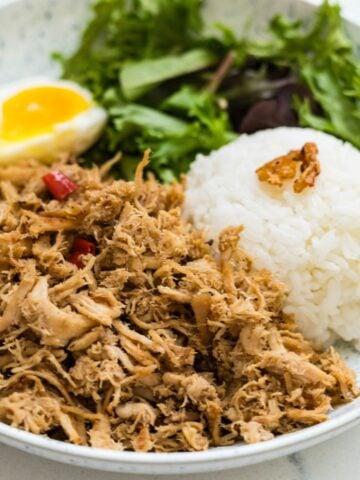
Lechon paksiw is leftover lechon simmered in vinegar, garlic, and lechon sauce until the meat is tender and the sauce turns thick, sweet, and tangy.
The name comes from two words. Lechon is a whole roasted pig, the centerpiece of Filipino fiestas, birthdays, Christmas, and New Year. Paksiw is a cooking method: meat or fish simmered in vinegar with garlic and aromatics. It’s one of the oldest ways to keep food from spoiling in Filipino cuisine, which is why paksiw dishes keep for days.
Put the two together and leftovers become a different dish. The crackling skin goes soft and silky, the meat soaks up the sauce, and the flavor keeps building as it sits.
The sauce is where versions differ. Old-school lechon sauce is made with pork liver, and that’s what gives traditional paksiw its body. Mang Tomas doesn’t contain liver, so the liver spread option in the substitutions section is worth trying if you want that richer flavor. If you’re using Cebu-style lechon, which is stuffed with lemongrass and herbs, a stalk of lemongrass in the pot keeps that aroma going.
What Is Mang Tomas?
Mang Tomas is a bottled lechon sauce from the Philippines and the most common shortcut for lechon paksiw. In the US it’s sold as Mang Tomas All Purpose Sauce. In the Philippines the label says All-Around Sarsa.
It’s thick, sweet, and tangy, with a peppery finish. Filipinos use it as a dipping sauce for lechon, lechon kawali, and fried foods, and it works as a ready-made base for paksiw because it’s already seasoned and thickened.
The main ingredients are sugar, vinegar, breadcrumbs, onion, garlic, and black pepper. The breadcrumbs are what make the sauce thick. Unlike old-school homemade lechon sauce, Mang Tomas doesn’t contain liver. If you want that deeper, richer flavor, stir in a little canned liver spread (see Substitutions and Additions below).
You’ll find it at Filipino and Asian grocery stores, and many regular US supermarkets now carry it too. If you like heat, there’s also a hot and spicy version.
Ingredients
Here’s what each ingredient does. Exact amounts are in the recipe card.

- Leftover lechon: Use any cut you have, belly, ribs, pata, even the head. Everything softens in the simmer, so the bony, less popular pieces work as well as the belly. Keep some skin in the mix, since it turns silky and helps thicken the sauce.
- Mang Tomas: This is the shortcut. It’s already seasoned and sweetened, so it does the work of a homemade lechon sauce in one pour. It doesn’t contain liver, though, so add liver spread if you want the older, richer version.
- White cane vinegar: Cane vinegar is the standard in Filipino kitchens and gives the dish its tang without tasting harsh. Distilled white vinegar works in a pinch, but it’s sharper, so let it boil a little longer before stirring.
- Brown sugar: Balances the vinegar and gives the sauce its glossy, slightly caramel finish. Skip it and the sauce leans sour, especially with a sharper vinegar.
- Oyster sauce: Adds savory depth that Mang Tomas alone doesn’t have. Since the lechon and Mang Tomas are already seasoned, taste before adding any salt.
- Garlic: Sautéed first, it builds the base of the sauce. Don’t let it brown too far, or it turns bitter.
- Onion: Cooks down into the sauce and adds natural sweetness, which softens the vinegar.
- Whole black peppercorns: Whole peppercorns give a gentle heat and keep the sauce smooth. Ground pepper works, but it makes the sauce look muddy and the heat hits harder.
- Bay leaves: Add an earthy note that balances all that richness. Pull them out before serving.
Substitution and Additions
- No leftover lechon? Lechon kawali (crispy fried pork belly) works just as well. Add a stalk of lemongrass to the simmer to bring back some of the roasted aroma you’d get from whole lechon. Store-bought Cebuchon is the easiest option, since it’s already roasted and seasoned.
- No Mang Tomas? Use homemade lechon sauce, or mix liver spread with a little vinegar, brown sugar, and breadcrumbs. The breadcrumbs thicken it the way bottled sauce would, and the liver spread gives it body.
- Want a richer sauce? Stir in about 2 tablespoons of canned liver spread (Reno is the easiest to find). Mang Tomas has no liver, and this brings back the deep, savory flavor of old-school lechon paksiw.
- Want heat? Add a couple of siling haba (long green chilies) with the vinegar so they soften and flavor the sauce gently. For more kick, use chili flakes or slice the chilies open.
- Sweeter sauce? Add a little more brown sugar near the end. Adding it late lets you taste first, since the lechon and Mang Tomas already bring some sweetness.
- More tang? Add extra vinegar after the first boil, not before. Vinegar added at the start cooks down and mellows. Added later, it stays bright.
How To Make Lechon Paksiw

- Sauté Aromatics: Cook the onion and garlic in a wok or large skillet over medium heat until the onion softens and the garlic smells fragrant. Don’t let the garlic brown too far, or it turns bitter in the sauce.

- Add Pork: Add the chopped leftover lechon and let it sit for a few minutes so the edges pick up some color. This brings back some of the roasted flavor the meat lost in the fridge.

- Add the vinegar and let it boil. Pour in the vinegar and bring it to a boil uncovered. Don’t stir for about 3 minutes. This cooks off the raw, sharp edge so the finished dish doesn’t come out too sour. Then stir in the Mang Tomas, brown sugar, oyster sauce, bay leaves, peppercorns, and water.

- Simmer low and slow. Lower the heat and simmer for about 30 minutes, stirring now and then so the thick sauce doesn’t stick to the bottom. It’s ready when the sauce has thickened and coats the meat. Taste and adjust with a little sugar for sweetness, a splash of vinegar for tang, or salt if needed.

- Serve hot. Spoon it over steamed rice or garlic fried rice with plenty of sauce. If you can wait, it’s even better the next day.
Rose's Tips for the Best Lechon Paksiw
- Let the vinegar boil before you stir. Stirring right away traps the raw acidity in the sauce, and that’s the most common reason lechon paksiw comes out too sour. A few minutes of boiling uncovered cooks off the sharp edge and leaves the tang.
- Freeze leftover lechon in portions. After a party, pack extra lechon in 2-cup freezer bags. One bag is about right for a small batch, so you can make lechon paksiw on a weeknight without waiting for the next celebration.
- Make it a day ahead if you can. The meat keeps absorbing the sauce overnight, and the flavors settle into each other. It’s the rare dish that’s better as leftovers than fresh.
- Reheat low with a splash of water. The sauce firms up in the fridge from the gelatin in the skin. Gentle heat and a little water loosen it again without drying out the meat. High heat makes the pork tough.
What to Serve with Lechon Paksiw
Lechon paksiw is rich, sweet, and tangy, so pair it with something to soak up the sauce and something fresh or sharp to cut through it.
- Garlic fried rice: The dry, separate grains soak up the sauce better than fresh rice, and the garlic stands up to the vinegar. Plain steamed rice works too. Just make plenty.
- Atchara: Cold, crunchy pickled papaya resets your palate between bites of fatty pork. It’s the most common side next to lechon for a reason.
- Java rice: Turmeric and butter make it a little richer than garlic rice, which works when you’re serving lechon paksiw as part of a bigger holiday spread.
- Ginisang sayote: A quick chayote stir fry that’s mild and fresh, with enough crunch to balance the soft, saucy pork.
- Lumpiang shanghai: Crispy, bite-size spring rolls add the crunch the plate is missing. They’re also the easiest way to make a weeknight meal feel like a party.
- Chicken pancit bihon: If you’re feeding a crowd, pancit and lechon paksiw together look like a proper Filipino celebration table.
Storage
- Fridge: Cool it, then store in an airtight container for up to 3 to 4 days. The sauce firms up as it chills, which is normal. That’s the gelatin from the skin.
- Freezer: Freeze in portions for up to 2 months. Leave the sauce on the meat so it doesn’t dry out, and leave a little room in the container since the liquid expands.
- Reheating: Thaw overnight in the fridge, then warm it on the stove over low heat with a splash of water to loosen the sauce. Heat it until it’s steaming hot all the way through (165°F), stirring so the bottom doesn’t scorch.
Recipe FAQs
Yes. Lechon kawali (crispy fried pork belly) is the best substitute, and store-bought Cebuchon works too. The method is the same. If you’re using lechon kawali, add a stalk of lemongrass to the simmer to bring back some of the roasted aroma.
Yes. Use homemade lechon sauce, or mix canned liver spread with a little vinegar, brown sugar, and breadcrumbs. The breadcrumbs thicken the sauce the way Mang Tomas would, and the liver spread gives it body.
Usually because the vinegar was stirred too soon. Next time, let it boil uncovered for about 3 minutes before stirring. If the dish is already done and still too sour, add a little brown sugar and simmer longer. The acidity mellows as it cooks.
Simmer it uncovered a few minutes longer, stirring so it doesn’t stick. The skin releases gelatin as it cooks, and the sauce keeps thickening as it cools. If it gets too thick, loosen it with a splash of water.
Up to 3 to 4 days in an airtight container. The pork is already a leftover, so make lechon paksiw within a few days of the party rather than waiting until the lechon is near the end of its fridge life.
Yes. Freeze it in portions with the sauce for up to 2 months. Thaw overnight in the fridge and reheat on the stove over low heat with a splash of water until it’s steaming hot all the way through.
Cebuchon is a smaller, oven-ready version of lechon inspired by Cebu-style roast pig, with crispy skin and seasoned, juicy meat. Many Asian stores in the US sell it, so you can get lechon flavor without roasting a whole pig.

More Saucy Filipino Pork Dishes
- Pork Spare Ribs Caldereta
- Filipino Pork Menudo
- Pork Binagoongan with Eggplant
- Bicol Express (Pork in Spicy Coconut Sauce)
- Ginataang Baboy (Pork in Coconut Milk)
- Pork Tinumis

Did you try this recipe?
Share how it turned out in the comment box below, and if you loved it, share it on Facebook, Pinterest & Instagram.
Thank you!


Easy Lechon Paksiw With Mang Tomas Sauce
Equipment
- skillet or wok
Ingredients
- 6 cups leftover lechon chopped
- 1 cup Mang Tomas sauce
- ½ cup white cane vinegar
- ¼ cup brown sugar
- 2 tablespoon oyster sauce
- 6 cloves garlic crushed
- 1 cup onion chopped
- 1 teaspoon whole peppercorns
- 2 bay leaves
- 1 cup water
Instructions
- Sauté the aromatics: Heat a wok or large skillet over medium heat. Cook the onion and garlic until the onion softens and the garlic smells fragrant, without letting the garlic brown.6 cloves garlic, 1 cup onion
- Brown the lechon: Add the chopped lechon and cook for a few minutes, letting the edges pick up some color.6 cups leftover lechon
- Boil the vinegar: Pour in the vinegar and bring it to a boil uncovered. Don’t stir for about 3 minutes.½ cup white cane vinegar
- Add the sauce: Stir in the Mang Tomas, brown sugar, oyster sauce, bay leaves, peppercorns, and water.1 cup Mang Tomas sauce, ¼ cup brown sugar, 2 tablespoon oyster sauce, 1 teaspoon whole peppercorns, 1 cup water, 2 bay leaves
- Simmer: Lower the heat and simmer for about 30 minutes, stirring occasionally, until the sauce thickens and coats the meat.
- Taste and adjust: Add a little sugar, vinegar, or salt to taste. Remove the bay leaves.
- Serve: Serve hot with steamed rice or garlic fried rice.
Save This Recipe 💌
Notes
- Let the vinegar boil uncovered before stirring. Stirring too early is the most common reason lechon paksiw tastes too sour.
- Mang Tomas doesn’t contain liver. For a richer, old-school sauce, stir in about 2 tablespoons of canned liver spread with the Mang Tomas.
- Using lechon kawali instead of lechon? Add a stalk of lemongrass to the simmer.
- Store in an airtight container in the fridge for up to 3 to 4 days, or freeze for up to 2 months.
- Reheat over low heat with a splash of water until steaming hot.


Rose Sioson says
Sweet, tangy, and packed with flavor—this Easy Lechon Paksiw with Mang Tomas Sauce is a delicious way to enjoy leftover lechon! Hope you all love it as much as we do. Let me know if you try it!