Filipino adobo doesn't have just one fixed recipe. Every region, every household, sometimes every cook in that household, has their own version. The only two things that never change are vinegar and garlic. Everything else is fair game.
Sugar is one of the things people mess with most. A spoonful to soften the vinegar's bite is common in a lot of households. My move is kecap manis, an Indonesian sweet soy sauce, doing that same job but going deeper, with oyster sauce backing it up.
The method stays simple: marinate, brown, simmer. But what comes out of the pot is a sauce with more layers than a basic adobo, one that actually clings to the chicken instead of pooling at the bottom of the pan.

Save This Recipe 💌
Jump to:
What Is Filipino Adobo?
Adobo is a Filipino dish and cooking method where meat is simmered in vinegar, soy sauce, garlic, bay leaves, and black peppercorns. Chicken adobo is the most common version, but pork, beef, seafood, and even vegetables can be cooked this way.
The technique is older than Spanish colonization. The Spanish gave it the name adobo, but the dish itself is Filipino.
There’s no single right way to make it. Some versions are tangier, some sweeter, some dry and sticky, and some extra saucy for spooning over rice.
What Does Chicken Adobo Taste Like?
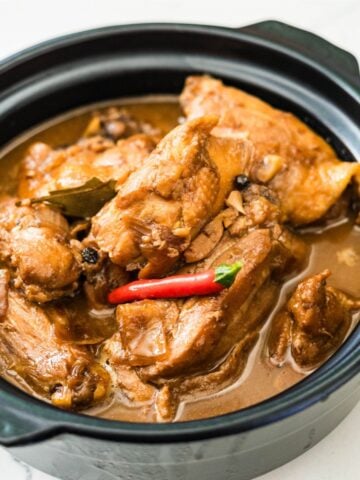
Chicken adobo is savory, tangy, and full of garlic flavor. Soy sauce brings saltiness, vinegar adds that signature tang, and bay leaves plus peppercorns give it a subtle warmth.
This version is a little richer and slightly sweeter than a more classic adobo because of the kecap manis and oyster sauce. The sauce turns glossy and clings to the chicken instead of staying thin.
Ingredients
- Chicken thighs or drumsticks - Bone-in, skin-on is the traditional and best choice. The bones add collagen to the sauce as it simmers, giving it body and a slight silkiness that boneless chicken can't produce. The skin crisps up during browning and renders fat into the pan that becomes part of the sauce's base. Boneless thighs work and cook faster, but the sauce will be thinner. Avoid chicken breast - it dries out before the sauce has time to develop properly.
- Dark soy sauce - Deeper color and a slightly less salty, more intense flavor than regular soy sauce. Filipino brands Datu Puti and Silver Swan are the traditional choices, thinner in body and with a flavor that's distinctly Filipino. Kikkoman works as a substitute but produces a slightly different result. If you're watching sodium, Kikkoman's less-sodium version is the easiest swap, just add it gradually since the flavor concentration is a little different from the Filipino brands.
- Kecap manis (sweet soy sauce) - Indonesian sweet soy sauce, thick and dark, sweetened with palm sugar. Adds sweetness, body, and a molasses-like depth that rounds out the saltiness of the dark soy.
- Oyster sauce - Adds umami richness and helps the sauce emulsify into a glaze rather than staying thin and watery.
- Cane vinegar - The traditional Filipino vinegar for adobo, made from fermented sugarcane syrup. Milder and less sharp than white distilled vinegar, which is why it's preferred - it provides the necessary acidity without the harsh edge. I use Datu Puti brand or look for sukang maasim or sukang iloko at Filipino grocery stores. Coconut vinegar is another traditional option with a similar mild profile. White vinegar works as a substitute but use about 20% less since it's sharper.
- Garlic - Eight cloves or more, crushed. Crushing rather than mincing releases more flavor and leaves larger pieces that are easy to find in the finished sauce. Adobo should taste noticeably garlicky.
- Black peppercorns - Whole, not ground. They add warmth and a subtle heat as they simmer without making the dish uniformly spicy.
- Bay leaves - Six dried bay leaves. Essential for the distinctive adobo background note. Remove before serving.
- Brown sugar - Optional, if you want more sweetness on top of what the kecap manis already brings. One tablespoon balances the saltiness and vinegar, and helps the sauce caramelize during the final reduction. Adjust to taste, or skip it if you'd rather let the kecap manis do that job on its own.
See recipe card for quantities.
How to Make Filipino Chicken Adobo
- Marinate. Combine the chicken with dark soy sauce, kecap manis, oyster sauce, garlic, peppercorns, and bay leaves in a bowl or zip-lock bag. Toss to coat evenly. Marinate for at least 30 minutes at room temperature, or up to overnight in the fridge. The longer the marinade, the deeper the flavor penetration.
- Remove and pat dry. Lift the chicken out of the marinade and shake off the excess. Pat the pieces dry with paper towels. Reserve the marinade - don't discard it. Dry chicken browns; wet chicken steams. This step is the difference between a properly seared crust and pale, flabby skin.
- Brown in batches. Heat oil in a wide, heavy pan or Dutch oven over medium-high heat. Add the chicken in a single layer, skin-side or smooth-side down, without crowding. Work in two batches if needed - a crowded pan drops the temperature and steams the chicken instead of browning it. Sear 3-4 minutes per side until golden brown. Transfer to a plate.
- Add vinegar first, don't stir. Pour the cane vinegar into the empty pan and let it come to a boil over medium heat. Do not stir, do not cover. Let the vinegar boil undisturbed for 2-3 minutes. This is the most important technique step in adobo: boiling the vinegar before stirring or adding other liquids cooks off its harsh raw edge. Vinegar that's stirred or covered before boiling permeates the sauce with a sharp, unpleasant sourness that doesn't cook out. Wait for the boil, then proceed.
- Build the braise. Add the reserved marinade and water to the pan. Stir to combine and scrape up any browned bits stuck to the bottom - that fond is flavor. Return the browned chicken to the pan. Add the brown sugar. Bring to a boil.
- Simmer. Reduce heat to medium-low, cover, and simmer for 20-25 minutes until the chicken is cooked through and tender, turning the pieces once halfway through.
- Reduce and glaze. Uncover the pan, increase heat to medium-high, and simmer for 5-10 more minutes until the sauce reduces and thickens to your liking. For a saucier adobo, stop reducing earlier. For a sticky, glazed finish, reduce further until the sauce coats the back of a spoon and the chicken is beginning to caramelize in it. Taste and adjust: more soy sauce for salt, a splash of vinegar for tang, a pinch of sugar for sweetness.
- Serve. Remove the bay leaves. Serve over steamed white rice with the sauce spooned generously on top. Garnish with chopped green onions.
Rose's Tips
- Pat the chicken dry before browning. Marinade left on the surface prevents browning. Shake off the excess and pat dry with paper towels before the chicken goes in the pan.
- Brown in batches. Crowded chicken steams rather than sears. Give each piece room in the pan - two batches for 2 lbs of chicken in a standard 12-inch pan.
- The vinegar rule. Add vinegar and let it boil completely undisturbed before stirring or adding other liquids. This cooks off the harsh raw edge. Stir too early and the sharpness never fully mellows out of the finished sauce. This holds true whether you're making it with chicken thigh, pork, or adobong atay.
- Reserve the marinade. It becomes the sauce. Don't pour it down the drain.
- Taste before adding salt. Between the dark soy sauce, kecap manis, and oyster sauce, the dish is likely already salty enough. Taste the sauce before adding any additional salt.
- Sauce consistency is a personal call. Some people prefer adobo with plenty of saucy broth to spoon over rice. Others want it reduced to a sticky, almost dry glaze. Both are correct - adjust by simmering longer or shorter.
- It's better the next day. Adobo improves overnight as the sauce absorbs further into the chicken and the flavors deepen. Make it ahead for gatherings or meal prep - reheat gently on the stove with a splash of water if the sauce has thickened too much.
Variations
- Adobong Puti (White Adobo): This Batangas version skips the soy sauce and leans on vinegar, garlic, and salt instead. The flavor is lighter, brighter, and more tangy.
- Adobo sa Gata (Coconut Milk Adobo): A Bicol-style adobo made with coconut milk, so it turns creamy, rich, and slightly sweet.
- Adobong Dilaw (Yellow Adobo): This Kapampangan version gets its yellow color and earthy flavor from turmeric. It’s often made with pork and feels a little different from the darker soy-based versions. There’s also a related variation using shredded chicken, often called chicken pastil.
- Liver Adobo: This version has a deeper, richer flavor with a savory base and a slight natural sweetness.
- Seafood Adobo: Shrimp, squid, or mussels work well here. The result is lighter than meat-based adobo but still full of that savory, tangy flavor.
- Dry Adobo: For a drier version, keep reducing the sauce until it almost disappears and the chicken is coated in a dark, sticky glaze. You can finish it under the broiler for even more caramelization.
- Spicy Adobo: Add 2 to 3 sliced bird’s eye chilis with the aromatics if you want heat. The spice works really well with the sweetness from the kecap manis.
- Chicken Adobo with Pineapple: Add pineapple chunks to the braise for a sweeter version that balances the vinegar nicely. The pineapple also helps keep the chicken tender.
Leftover Transformations
- Adobo Flakes: Repurpose leftover adobo into crispy flakes, adding savory crunch to rice, salads, or sandwiches.
- Adobo Fried Rice: Give leftovers with a quick and flavorful adobo fried rice, combining rice, vegetables, and eggs.
- Adobo tacos - Shred the chicken, warm in the sauce, serve in small corn tortillas with pickled onions and a squeeze of lime. The tangy adobo works remarkably well in a taco format.
Adobo Side Dishes
- Garlic Fried Rice (Sinangag): Enhance the flavor of your pork adobo or chicken adobo by serving it with garlic fried rice. This easy side dish can be prepared in minutes, adding a delightful garlicky touch to your meal.
- Cucumber Salad: A refreshing cucumber salad with a hint of vinegar and olive oil pairs perfectly with the rich adobo sauce. This Filipino-inspired salad adds a crisp and tangy contrast to the savory flavors of chicken and pork adobo.
- Steamed Rice: No Filipino meal is complete without steamed rice. Serve your chicken adobo or pork adobo with fluffy steamed rice to soak up the delicious adobo sauce.
- Atchara: The cool, tangy crunch of pickled green papaya cuts through the richness of the adobo.
Check out my list of recommended sides that perfectly balance this dish's savory flavor.
Storage and Freezing
Store leftovers in an airtight container in the refrigerator for up to 4 days. The sauce thickens in the fridge - add a splash of water when reheating on the stove over medium-low heat.
Adobo freezes exceptionally well - up to 3 months. The vinegar acts as a natural preservative and the flavors hold through freezing. Thaw overnight in the fridge and reheat on the stove.
Adobo tastes better after a day in the fridge. If you're making it for a gathering, cook it the day before and reheat before serving.
Recipe FAQs
They share a name and almost nothing else. Filipino adobo is a vinegar-and-soy-sauce braise that predates Spanish colonization. Spanish and Mexican adobo typically refers to a chili-based sauce or paste using dried peppers, cumin, and oregano. No chilis, no tomatoes, no dried peppers in the Filipino version.
Either the vinegar was stirred or covered before it fully boiled (the most common cause), or the ratio of vinegar to soy sauce is off. Make sure to let the vinegar boil undisturbed for 2-3 minutes before adding anything else. A tablespoon of brown sugar or kecap manis stirred in at the end can also correct an overly sharp sauce.
Yes, but use about 20% less - white distilled vinegar is sharper than cane or coconut vinegar. Start with ¾ cup instead of 1 cup and taste as you go.
Kecap manis is Indonesian sweet soy sauce - thick, dark, and sweetened with palm sugar. Find it at Asian grocery stores or online. Substitute with 1 tablespoon regular soy sauce plus 1 teaspoon brown sugar per tablespoon called for.
Bone-in is better for flavor - the bones add collagen to the sauce as it simmers, giving it body and a slight silkiness. Boneless thighs work and cook faster (reduce simmer time to 15-18 minutes) but produce a thinner sauce. Never use chicken breast - it dries out before the sauce develops.
Yes - adobo is one of the best dishes to make ahead. The flavors deepen overnight and the sauce absorbs further into the chicken. Cook it the day before, refrigerate, and reheat gently on the stove before serving.
Add 2-3 sliced bird's eye chilis (siling labuyo) to the marinade or to the pan with the aromatics. Adjust the quantity to your heat tolerance.
Yes. Substitute pork belly or shoulder cut into 2-inch pieces. Increase the simmer time to 45-60 minutes until the pork is fully tender. Everything else stays the same.
The vinegar mellows overnight, and the chicken keeps soaking up the sauce as it sits. Reheat it low and slow rather than microwaving, and it'll taste even more balanced than it did fresh.
Neither, they're just different. Pork adobo gets richer from the fat rendering into the sauce, especially with pork belly. Chicken adobo is lighter and cooks faster, and the skin adds its own richness if you brown it well. Come down to what you're in the mood for, not one being objectively better than the other.
More Adobo Recipes



Did you try this recipe?
Share how it turned out in the comment box below, and if you loved it, share it on Facebook, Pinterest & Instagram.
Thank you!


Filipino Chicken Adobo with Kecap Manis
Equipment
- 1 MIxing Bowl
- 1 medium pot or dutch oven
Ingredients
- 2 pounds boneless chicken thighs
- 8 cloves garlic, crushed
- ½ cup dark soy sauce
- ¼ cup kecap manis or sweet soy sauce
- 3 tablespoon oyster sauce
- 1 cup cane vinegar
- 1 teaspoon black peppercorns
- 6 pieces bay leaves
- 2 tablespoon cooking oil
- ½ cup water
- 1 tablespoon brown sugar optional
Instructions
- In a bowl, combine chicken, soy sauce, sweet soy sauce, oyster sauce, and garlic.2 pounds boneless chicken thighs , 8 cloves garlic, crushed, ½ cup dark soy sauce, ¼ cup kecap manis or sweet soy sauce, 3 tablespoon oyster sauce
- Let it marinate for at least 30 minutes. For better flavor absorption, marinate for a few hours or overnight in the refrigerator.
- Heat oil in a wide pan over medium heat.2 tablespoon cooking oil
- Add the chicken.2 pounds boneless chicken thighs
- Remove any excess liquid from the pan and set it aside. Allow the chicken to brown slightly on all sides.
- Pour in the mixture.
- Add water, peppercorn, vinegar, sugar and bay leaves then bring to a boil.1 cup cane vinegar, 1 teaspoon black peppercorns, 6 pieces bay leaves, ½ cup water, 1 tablespoon brown sugar
- Reduce heat to low, cover, and let it simmer for about 20 minutes or until the chicken is tender.
- Season with salt to achieve the desired balance of flavors.
- Once the chicken is cooked and the sauce has thickened, remove from heat.
- Serve Chicken Adobo hot over steamed rice.
Save This Recipe 💌
Notes
- You can use any part of the chicken for this dish. The cooking time may vary depending on your choice.
- Taste it first before adding salt. We used various soy sauce on this dish and it may already be salty enough.
- For a slightly caramelized finish, you can uncover the pan and increase the heat to medium-high during the last few minutes of cooking.
- Garnish with chopped green onions or fresh cilantro for a burst of freshness.