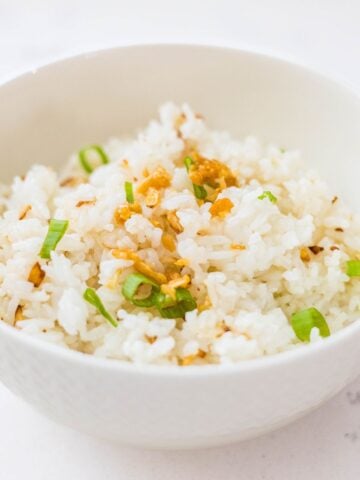
If you grew up in a Filipino household, the smell of garlic hitting hot oil first thing in the morning means one thing: sinangag. Sinangag na dilis takes that foundation further, crispy anchovies tossed through garlicky day-old rice for a breakfast, or honestly any-time-of-day, dish that's bold, savory, and done in 20 minutes.
This version uses Korean-style stir-fried anchovies, the kind that comes in a plastic tub from Asian grocery stores. I had some leftover from a KBBQ night my kids refused to touch. They're already seasoned and slightly sweet, which gives the rice a different edge than traditional dried dilis. If you've got the classic dried or fried anchovies on hand instead, those work here too, just expect a saltier, less sweet result.

Save This Recipe 💌
Jump to:
What is Sinangag na Dilis?
Sinangag is Filipino garlic fried rice, usually made with day-old rice and garlic-infused oil. It's the base of silog breakfasts and shows up with tapa, tocino, or longganisa.
Dilis are small dried or fried anchovies. In fried rice, they add a punchy salty, savory flavor that garlic alone can't.
Put them together and you get sinangag na dilis, garlicky fried rice topped with crispy anchovies, often served silog-style with a fried egg and calamansi or atchara on the side. A small dish of spiced vinegar for dipping is the other classic pairing, and it's the one I usually reach for.
Why You'll Love This Recipe
- Done in 20 minutes. Once the rice is hot and the anchovies are crispy, the rest comes together fast.
- Leftover rice, transformed. Day-old rice turns into something totally different here. Each grain stays separate and coats in that garlicky anchovy oil.
- The anchovies do the seasoning. No need to measure out soy sauce or salt. They bring the saltiness and umami on their own.
- Works for any meal. A Filipino breakfast classic, a quick lunch, or an easy side with grilled chicken or pork.
Ingredients

- Stir-Fried Anchovies: Korean-style, seasoned and slightly sweet. Traditional dried or fried dilis works too, just expect a saltier, less sweet result.
- Cooked Rice: Day-old is best. Fresh rice has too much moisture and steams instead of frying.
- Garlic and Shallots: The aromatic base the whole dish builds on.
- Dark Sweet Soy Sauce: Adds depth and color. Regular soy sauce works for a less sweet version.
- Gochujang: Korean chili paste for a bit of heat. Sriracha or any hot sauce works as a substitute.
- Sesame Oil: A finishing oil for nutty aroma, added at the very end so the heat doesn't cook it off.
- Eggs: Scrambled into the rice for extra protein and texture.
- Cabbage: Adds crunch and a serving of vegetables. Bok choy or napa cabbage both work too.
- Lime or Lemon: A squeeze at the end brightens the whole dish.
- Green Onions: For garnish.
- Salt and Pepper: To taste, but go light since the anchovies and soy sauce are already salty.
See recipe card for quantities.
How to Make Sinangag na Dilis

- Sauté Aromatics: Heat a wok over medium-high heat and add a bit of oil. Add garlic and shallots, cooking until fragrant and slightly golden.

- Add the Anchovies: Toss in the stir-fried anchovies and cook for a couple of minutes until they are crispy and aromatic.

- Mix in the Rice: Add the cooked rice and stir well to combine, making sure every grain is coated with the flavor from the anchovies. Add the dark sweet soy sauce, gochujang, sesame oil, salt, and pepper. Stir well to ensure everything is evenly mixed.

- Create a Well: Push the rice to the sides of the wok, creating a well in the center. Crack the eggs into the well, scramble, and then mix them into the rice.

- Add the Cabbage: Toss in the cabbage and cook until just tender but still crunchy.

- Finish with Green Onions and Lime: Stir in the green onions and finish with a squeeze of lime or lemon for brightness. Serve hot!
Rose's Tips
- Day-old rice is non-negotiable for texture. Freshly cooked rice has too much moisture. It steams in the wok instead of frying, and you end up with a clumped, mushy result. Overnight in the fridge, the starches firm up and the grains dry out slightly, so they coat evenly in oil and stay separate when stir-fried. If you only have fresh rice, spread it on a baking sheet and refrigerate uncovered for at least 1 hour to dry it out.
- Use the highest heat you have. Fried rice needs high heat to stir-fry rather than steam. If the pan isn't hot enough when the rice goes in, the moisture lowers the temperature and you get steamed rice instead of fried.
- Season at the end, not the beginning. Anchovies are salty. Dark soy sauce is salty. Add the soy sauce and gochujang, toss everything together, and taste before reaching for the salt shaker. You may not need it at all.
- Sesame oil goes in last. It's a finishing oil, not a cooking fat. Added too early, the heat destroys its delicate aroma.
Variations
- Classic garlic sinangag: Skip the anchovies and gochujang, double the garlic.
- Spicier: Double the gochujang or add chili garlic sauce.
- Nasi goreng kampung style: Swap gochujang for sambal oelek and top with crispy fried shallots.
- Extra veggie: Add diced carrots, peas, or bell peppers with the cabbage.
- Without eggs: Skip the scrambled egg and serve a fried egg on the side.
What to Serve With Sinangag na Dilis
Serve it silog-style as dilisilog with a fried egg on top, plus a small dish of spiced vinegar like sinamak or pinakurat for dipping, which is how I usually eat it. For a bigger meal, pair it with tocino or longganisa, or serve it as a side with grilled chicken like inasal or Bicol Express.
How to Store Leftovers
To store leftovers, let the fried rice cool completely before transferring it to an airtight container. Refrigerate for up to 3 days. Reheat in a wok or skillet over medium heat, adding a splash of water or broth to bring back moisture.
Recipe FAQs
Sinangag is Filipino garlic fried rice, day-old rice stir-fried in garlic-infused oil until fragrant and lightly crispy. It's one of the most fundamental dishes in Filipino cooking, served at almost every breakfast and used as the base for silog meals (sinangag + itlog + protein). The garlic is always generous, and the goal is grains that are separate, coated, and nutty from the browned garlic oil.
Dilis is the Filipino word for anchovies — specifically small, dried or fried anchovies that are a common ingredient across Filipino cooking. They appear as a snack, a soup ingredient, a topping for rice, and a flavoring for stir-fries. In this recipe, they're the protein and the primary seasoning of the fried rice.
Dilisilog is the name for the full Filipino breakfast plate: dilis (anchovies) + sinangag (garlic fried rice) + log (itlog, or egg). It's one of dozens of silog combinations in Filipino breakfast culture — each named for whatever protein accompanies the garlic rice and egg. Tocilog (tocino + sinangag + itlog), longsilog (longganisa), bangsilog (bangus/milkfish) the format is endlessly adaptable.
Technically yes, but the texture will suffer. Fresh rice has too much moisture, which means it steams rather than fries and tends to clump. If you need to use fresh rice, spread it on a sheet pan and refrigerate uncovered for at least an hour to dry it out before using. Day-old cold rice from the fridge gives the best result with the least effort.
Substitute with sriracha (use about half the amount - it's thinner and spicier), chili garlic paste, or a pinch of chili flakes. Or omit it entirely, the anchovies and garlic carry plenty of flavor on their own. The gochujang adds warmth and a subtle fermented depth, but the dish works without it.
Yes. Shrimp works particularly well alongside the anchovies - add raw, peeled shrimp after the aromatics and cook until just pink before adding the rice. Diced cooked pork or chicken stirred in with the rice is another easy addition.
More Filipino Fried Rice and Breakfast Recipes
Looking for other recipes like this? Try these:



Did you try this recipe?
Share how it turned out in the comment box below, and if you loved it, share it on Facebook, Pinterest & Instagram.
Thank you!


Anchovies Fried Rice (Sinangag na Dilis)
Equipment
- 1 wok
Ingredients
- 2 tablespoon avocado oil or any neutral oil
- 5 cloves garlic, crushed
- 1 shallots, chopped
- 1 ½ cup Stir Fried Anchovies
- 4 cups cooked rice
- 1 tablespoon Dark Sweet Soy Sauce
- 1 tablespoon Sesame Oil
- 1 tablespoon gochujang
- 4 eggs eggs scrambled
- green onions chopped
- 2 cups cabbage chopped
- 1 lime or lemon, juice
- salt
- pepper
Instructions
- Sauté Aromatics: Heat your wok: Heat a wok over medium-high heat and add a bit of oil. Add garlic and shallots, cooking until fragrant and slightly golden.2 tablespoon avocado oil, 5 cloves garlic, crushed, 1 shallots, chopped
- Add the Anchovies: Toss in the stir-fried anchovies and cook for a couple of minutes until they are crispy and aromatic.1 ½ cup Stir Fried Anchovies
- Mix in the Rice: Add the cooked rice and stir well to combine, making sure every grain is coated with the flavor from the anchovies.4 cups cooked rice
- Add the dark sweet soy sauce, gochujang, sesame oil, salt, and pepper. Stir well to ensure everything is evenly mixed.1 tablespoon Dark Sweet Soy Sauce, 1 tablespoon Sesame Oil, 1 tablespoon gochujang, salt, pepper
- Create a Well: Push the rice to the sides of the wok, creating a well in the center. Crack the eggs into the well, scramble, and then mix them into the rice.4 eggs eggs
- Add the Cabbage: Toss in the cabbage and cook until just tender but still crunchy.2 cups cabbage
- Finish with Green Onions and Lime: Stir in the green onions and finish with a squeeze of lime or lemon for brightness. Serve hot!green onions, 1 lime or lemon, juice
Save This Recipe 💌
Notes
- Use day-old cold rice for best texture. Fresh rice turns mushy.
- If using fresh rice, spread on a baking sheet and chill uncovered 1 hour to dry it out.
- Cook on the highest heat so the rice fries, not steams.
- Season at the end. Anchovies and soy are salty, taste first before adding salt.
- Save a handful of anchovies to sprinkle on top for extra crunch.
- Add sesame oil last right before serving to keep the aroma.