

I spotted ube ice cream at Trader Joe's and bought it on reflex, the way you do when something from home turns up in a store you did not expect to carry it.
Then I made my own, and the whole recipe came down to one decision. This no churn ube ice cream is built on ube halaya, not extract.
Extract gets you purple. Halaya gets you ube. If your jam is on the mild side you can add a few drops of extract to deepen the color, but the flavor should be coming from the jam.
The rest is short: three ingredients, one bowl, six hours in the freezer, no machine. It scoops soft straight from the cold.
Now it is what I make when I want dessert ready ahead of time. On warm turon, next to halo-halo, or spooned over ube pancakes.
If you already have a jar of halaya open, here are ten other things to do with halaya.

Save This Recipe 💌
Jump to:
- Why You’ll Love It
- What Is Ube, and What Does It Taste Like?
- Which Ube Should You Use?
- Ingredients
- How to Make No Churn Ube Ice Cream
- Why No Churn Works Without a Machine
- Variations
- What to Serve It With
- Storage
- Rose's Tips and Troubleshooting
- Recipe FAQs
- More Ube Recipes To Try Next
- Did you try this recipe?
- 3 Ingredient No Churn Ube Ice Cream
Why You’ll Love It
- Three ingredients, one bowl. Cream, condensed milk, and ube halaya. No custard base, no tempering egg yolks, no thermometer.
- The halaya does the flavor work. Most no churn versions lean on extract or powder, which gets you the color and not much else. Starting from jam means the ube taste is actually there.
- No machine and no stirring schedule. Whipped cream carries the air an ice cream maker would beat in, so you mix once and walk away.
- It scoops straight from the freezer. The sugar in the condensed milk keeps it soft enough to serve cold, so nobody is standing around waiting for it to thaw.
What Is Ube, and What Does It Taste Like?
Ube (pronounced oo-beh) is a purple yam grown across the Philippines and used almost entirely in desserts. The skin is rough and brown. The flesh inside is deep violet, and that color is natural, not added.
The flavor is milder than the color suggests. People reach for vanilla first, then something nutty, usually pistachio or white chocolate, with a faint coconut edge behind it. It is closer to a soft, sweet dessert flavor than to anything earthy or starchy, which surprises people who expect a root vegetable to taste like one.
That mildness matters for ice cream. Ube does not overpower dairy the way chocolate or coffee does, so it sits in the cream rather than fighting it. It also means a weak halaya disappears entirely once you fold it into whipped cream and condensed milk, which is why the jar you start with decides how the finished batch tastes.
In Filipino kitchens most ube goes through halaya first, a jam of boiled and mashed ube cooked down with coconut milk, condensed milk, and butter. From there it becomes cakes, pandesal, halo-halo, and ice cream.
Ube vs Taro vs Purple Sweet Potato
These three get swapped constantly, and only one of them makes ube ice cream taste like ube.
| Ube | Taro | Purple sweet potato | |
|---|---|---|---|
| Plant | Dioscorea alata, a true yam | Colocasia esculenta, unrelated | Ipomoea batatas, a sweet potato |
| Flesh | Deep violet all the way through | Cream or white with purple flecks | Purple, but often paler and streaky |
| Taste | Mild, sweet, vanilla and nutty | Starchy and closer to savory | Distinctly sweet potato |
| Used for | Desserts | Mostly savory dishes | Both |
Taro is the one that surprises people. It is barely purple inside, mostly white with fine specks. If you have had a violet taro milk tea, that color came from added coloring or from ube, not from the taro itself.
Purple sweet potato is the one that causes actual problems in this recipe. It is genuinely purple and it is genuinely sweet, so a bag of it will make something good. It just will not taste like ube. Fresh ube is hard to find in the United States, and a fair amount of what sits under a "purple yam" label is Okinawan or Stokes sweet potato.
Which is the practical case for starting from halaya rather than chasing down a fresh root. A jar labeled ube halaya is ube. A loose purple tuber might not be.
Which Ube Should You Use?
Ube comes in four forms and they are not interchangeable. This is the decision that determines whether your ice cream tastes like ube or only looks like it.
Ube halaya (jam). What this recipe uses. Halaya is already cooked ube, reduced with coconut milk, condensed milk, and butter, so it brings flavor along with fat and sugar that both help a no churn base. The color lands soft lilac rather than saturated violet. Sweetness varies a lot by brand, so taste the jar before you fold it in.
Ube extract. Concentrated flavoring with purple coloring added. It gives you the vivid color people expect from ube desserts. On its own it reads thin, because you get the flavor note without anything behind it. A few drops alongside halaya is where it earns its place.
Ube powder. Dehydrated ube you rehydrate and cook into a paste first. Concentrated flavor without extra liquid, which matters because water means ice crystals. Costs you a cooking step, and strength varies widely by brand.
Fresh or frozen ube. Steam, mash, cool completely, then fold in. The starch and moisture make the finished ice cream freeze harder. Frozen grated ube from a Filipino market is the realistic version of this.
Halaya is the only one of the four that gives flavor, fat, and sugar at the same time, and all three matter in a base with no eggs and no machine. That is why it is the base here.
If your halaya tastes mild, add extract before you add more jam. More jam changes the texture. A few drops does not.
Ingredients
This is an overview. Exact amounts are in the recipe card.
- Heavy whipping cream. Use the full-fat kind, at least 36 percent milkfat. The fat is what lets it whip to stiff peaks and hold the air once it's frozen, and that trapped air is doing the job an ice cream maker would otherwise do.
- Sweetened condensed milk. Doing two things at once. It sweetens, and the sugar lowers the freezing point so the ice cream stays soft enough to scoop straight from the freezer. Swap in regular milk or cream and you lose that, and it freezes into a solid block.
- Ube halaya. The flavor and most of the color. Taste your jar first, since brands run anywhere from mildly sweet to candy sweet, and adjust from there. If it's stiff, warm it for ten seconds so it folds in without leaving lumps.
- Ube extract, optional. A few drops deepen the purple and sharpen the ube note if your halaya is on the mild side. Add it here rather than adding more jam, because extra jam changes the texture and extract doesn't.
Substitutions and Additions
- No halaya, only extract. It works, but adjust for it. Halaya brings sugar and body along with flavor, so taking it out leaves a base that's less sweet and looser than intended. Start with one teaspoon of extract, taste before freezing, and expect a brighter purple with a thinner ube flavor behind it.
- Cheese. Grated cheddar or quick-melt folded through the base, the way Filipino ube ice cream is often sold. The salt cuts the sweetness of the condensed milk, which is most of the point.
- Toasted coconut. Toast it first and let it cool completely. Untoasted flakes go soft and disappear into the base, and warm ones will deflate the whipped cream.
- A pinch of salt. A quarter teaspoon, folded in with the condensed milk. Sweetened condensed milk and halaya are both sugar-forward, and the salt keeps the whole thing from reading flat.
- Vanilla. Half a teaspoon. Ube is mild and vanilla-adjacent already, so this rounds it out rather than competing with it.
How to Make No Churn Ube Ice Cream

- Combine everything in the chilled bowl. Heavy cream, sweetened condensed milk, ube halaya, and ube extract if you're using it. Warm a stiff halaya for about ten seconds so it blends in smoothly instead of staying in lumps.

- Whip to stiff peaks. Beat on high until the mixture holds its shape when you lift the beaters, and until the color runs evenly purple. This is the step doing the job an ice cream maker would, so don't stop while it's still slumping.

- Freeze at least six hours. Transfer to a freezer-safe container and smooth the top. Press plastic wrap flat against the surface before the lid goes on, so ice crystals don't form on top. Overnight sets it more evenly than six hours.

- Scoop and serve. It should scoop soft straight from the freezer. If yours runs cold, give it five minutes on the counter.
Why No Churn Works Without a Machine
An ice cream maker does two jobs. It beats air into the base, and it keeps the base moving while it freezes so ice crystals stay small. Small crystals read as smooth. Large ones read as icy.
A no churn base gets both without the machine, just in a different order.
The air comes from the whipped cream. Whipping traps air in a network of fat, and that network holds once it's frozen. It's the same aeration a machine would beat in, done up front instead of during freezing.
The smoothness comes from sugar. Sweetened condensed milk carries a lot of it, and dissolved sugar lowers the freezing point of the base. Some of the water stays unfrozen even at freezer temperature, so the ice crystals that do form stay small and stay separated. That's also why this scoops soft straight from the freezer instead of setting into a block.
Between them, that's why the machine isn't needed here. The catch is that both depend on getting step two right. Under-whip and there isn't enough air in the network to hold, and it'll set denser and icier than it should.
No Churn vs Churned: Which Is Better?
Churned ice cream is denser. That's the honest difference, and whether it's better depends on what you're after.
A machine incorporates air gradually while freezing, which produces a tighter, more substantial texture. Some people prefer that and find no churn too light. A no churn base is airier by design, closer to a frozen mousse than to a scooped pint.
For ube specifically the lighter texture works in its favor. Ube is a mild flavor, more vanilla and nutty than assertive, and a lighter base lets it come through rather than burying it under fat. If you want the denser version and own a machine, a churned base is worth it. If you don't, you aren't settling for a lesser recipe here.
Variations
- Ube macapuno. Fold in about a cup of drained macapuno strips after the base is whipped. Drain them well, since the syrup carries enough water to leave ice crystals through the batch.
- Ube keso. Fold in grated cheddar or quick-melt cheese, the way ube ice cream is often sold in the Philippines. The salt cuts the sweetness of the condensed milk, which is most of the point.
- Ube coconut. Swap a few tablespoons of the cream for coconut cream, or fold in toasted coconut flakes. Toast the flakes and cool them completely first, since warm ones deflate the whipped cream and untoasted ones go soft and vanish into the base.
- Ube cheesecake swirl. Layer the base with softened cream cheese beaten smooth, then drag a knife through a few times. Don't overmix it in or you lose the contrast that makes it worth doing.
- Ube turon a la mode. Not a change to the base, just the way to serve it. A scoop on warm ube turon while the wrapper is still crisp.
- Soft serve style. Pull it at around three hours instead of six. Softer, closer to scoopable straight from the container, and it won't keep as well.
What to Serve It With
- Ube crinkles. Sandwich a scoop between two of them while they're still soft.
- Hot pandesal. Ice cream in bread, straight out of the oven. If you haven't had it this way, start here.
- Warm ube brownies. The temperature difference is the whole appeal.
- Ube champorado. Unexpected, but a scoop melting into hot rice porridge works.
- Halo-halo. A scoop on top is where most Filipinos first met this flavor.
Storage
- Best within two weeks. It can be kept frozen longer, but the texture and flavor gradually decline and ice crystals may develop.
- Use a shallow container rather than a deep one. It freezes through more evenly, and you're scooping across the surface instead of digging down through refrozen layers.
- Return it to the freezer promptly. Every partial thaw and refreeze makes bigger ice crystals than the last, which is the usual reason a batch that started smooth turns grainy by the end.
- It should scoop straight from the freezer. The sugar in the condensed milk keeps it soft enough to serve cold. If yours needs five minutes on the counter, your freezer runs cold or the base was under-whipped.
Rose's Tips and Troubleshooting
- Taste the halaya before you commit to it. Brands run from mildly sweet to candy sweet, and once it's folded into condensed milk there's no walking it back. If your jar is on the sweet side, that's the batch where the pinch of salt earns its place.
- Go by the peaks, not the clock. Halaya is heavy and sugar-loaded, so an all-in-one base takes longer to reach stiff peaks than plain cream would. Stop when the mixture holds its shape as you lift the beaters, however long that takes.
- Warm a stiff halaya for about ten seconds. Cold jam stays in lumps no matter how long you whip, and chasing those lumps is how you over-beat everything around them.
- Fix mild flavor with extract, not more jam. Extra halaya adds sugar and weight and changes how the base freezes. A few drop of extract adds flavor and color without touching the texture.
If something goes wrong
- Icy or grainy. Almost always under-whipped cream, or cream under 36 percent milkfat. Not enough air got trapped, so there was nothing holding the structure while it froze. Can also happen if wet add-ins went in undrained.
- Frozen too hard to scoop. Check what went into the base. Cutting the condensed milk, or swapping some of it for regular milk, removes the sugar that keeps this soft. Fresh or frozen ube in place of halaya does the same thing, since it brings starch and water instead of sugar.
- Too soft even after overnight. Usually deflated cream. Either it was over-folded after whipping, or it never reached stiff peaks to begin with.
- Pale instead of purple. Halaya alone gives a soft lilac, which is what real ube looks like. If you want the saturated violet people expect from ube desserts, that comes from extract. A few drops is enough.
- Halaya sitting in streaks. Under-folded. Keep going until the color runs even and then stop, since the next stroke past that is the one costing you air.
Recipe FAQs
Yes, but it changes the recipe. Steam or boil the ube, mash it, and cool it completely before folding it in, since warm ube deflates whipped cream. Expect a firmer set, because fresh ube brings starch and water where halaya brings sugar and fat, and sugar is what keeps this soft. Frozen grated ube from a Filipino market is the practical version of this.
Yes, with adjustments. Halaya carries sugar and body along with flavor, so removing it leaves a base that's less sweet and looser than intended. Start with a teaspoon of extract, taste before freezing, and add more in small amounts. Expect a brighter purple and a thinner ube flavor behind it.
Usually because something removed sugar from the base. Sugar lowers the freezing point, which is why sweetened condensed milk is doing more here than sweetening. Cutting it back, swapping part of it for regular milk, or replacing halaya with fresh ube all firm up the result. Made as written, this should scoop straight from the freezer.
Under-whipped cream, nearly every time. The air trapped in whipped cream is what an ice cream maker would otherwise beat in, so if the cream never reached stiff peaks there's nothing holding the structure as it freezes.
You'll get a softer lilac rather than a saturated violet, and however much flavor your particular jar of halaya carries. That pale purple is what ube actually looks like without added color. If your halaya tastes mild, a few drops of extract fixes the flavor and the color at once.
Taste the jar first. Sweetness and thickness vary a lot between brands. If it's very sweet, add a quarter teaspoon of salt with the condensed milk to balance it. If it's stiff, warm it about ten seconds so it blends without lumps. If it tastes mild, reach for extract rather than adding more jam.
Filipino and Asian grocery stores carry it in jars, usually shelved with Filipino sweets rather than with the jams. Good Shepherd is the Baguio-made one most people compare against. You can also make your own, which is the only way to control exactly how sweet it ends up.
More Ube Recipes To Try Next
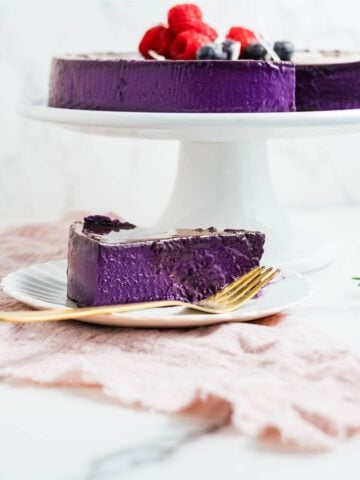
- Ube basque cheesecake. The burnt top gives you a caramelized edge against the halaya, which is a different kind of contrast than most ube desserts go for.
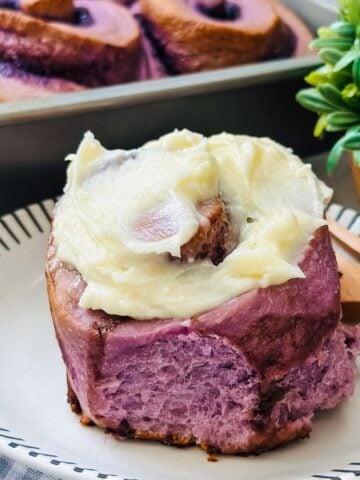
- Ube rolls. Soft rolls with halaya worked through the dough. Split one warm and put a scoop inside, since ice cream in bread is standard practice at home.
- Ube sopapilla cheesecake. Crescent dough, cream cheese, and halaya, assembled in about ten minutes. The one to make when people are already on their way over.
- Ube turon. Saba bananas and halaya rolled in lumpia wrapper and fried until the sugar caramelizes. Put a scoop on top while the wrapper is still crisp and eat it fast.

Did you try this recipe?
Share how it turned out in the comment box below, and if you loved it, share it on Facebook, Pinterest & Instagram.
Thank you!


3 Ingredient No Churn Ube Ice Cream
Equipment
- 1 electric mixer, hand mixer or whisk
- 1 airtight ice cream container
Ingredients
- 2 cups heavy whipping cream
- 1 can sweetened condensed milk
- ½ cup ube jam/ ube halaya
- 2 tablespoon ube extract
Instructions
- Chill: Place a large mixing bowl and the beaters of an electric mixer in the refrigerator for about 15-20 minutes to chill.
- Whip Cream: Pour the heavy whipping cream into the chilled mixing bowl. Using the chilled beaters, beat the cream on high speed until stiff peaks form. This usually takes about 2-3 minutes.2 cups heavy whipping cream
- Combine: Gently fold in the condensed milk, ube halaya and ube extract until well combined. Be careful not to deflate the whipped cream too much; you want to maintain that airy texture.1 can sweetened condensed milk, ½ cup ube jam/ ube halaya, 2 tablespoon ube extract
- Freeze: Transfer the mixture into a freezer-safe container. Smooth out the top with a spatula. Cover the container with a lid or plastic wrap to prevent ice crystals from forming.
- Chill: Place the container in the freezer and let the ice cream freeze for at least 6 hours, or preferably overnight, until firm.
- Serve: Once the ice cream is fully frozen, scoop it into bowls or cones and serve immediately. Enjoy your delicious homemade ube ice cream!

Anna says
When is the ube jam added in? The same time as the condensed milk and ube extract?
Rose Sioson says
Yes, that is correct!