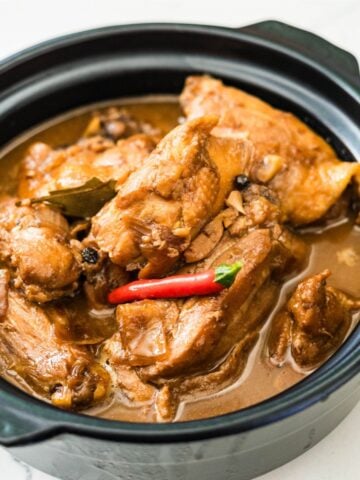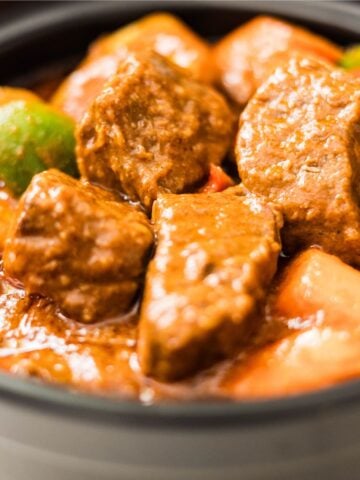
Ginataang Baboy tastes like it simmered all day, even when it didn't. Tender pork, coconut milk, ginger, garlic, and just enough heat, all it takes is a mountain of rice.
This dish is why I learned to love spicy food. I grew up around coconut trees, so gata was in everything.
Love Bicol Express? This is the same family, just simpler and more weeknight-friendly. Keep it mild with chilies on the side, or go bigger with Thai chilies or chili garlic.
More coconut milk dishes worth trying: Laing, Gising-Gising, and this coconut pumpkin soup.

Save This Recipe 💌
Jump to:
- Why You'll Love This Recipe
- What is Ginataan?
- Ginataang Baboy vs Bicol Express: What's the Difference?
- Rose's Tips
- Ingredients You'll Need
- How to Make Ginataang Baboy
- How to Know When It's Done
- Troubleshooting Common Problems
- Variations to Try
- What to Serve with Ginataang Baboy
- Storage Instructions
- Recipe FAQs
- More Recipes with Coconut
- Did you try this recipe?
- Ginataang Baboy (Pork in Coconut Milk)
Why You'll Love This Recipe
- A rich, creamy sauce that coats the pork in every bite
- Easy to adjust the heat, mild or spicy, your call
- Filipino comfort food without a long ingredient list
- Simple steps, nothing complicated
- Good for a weeknight or a table full of people
What is Ginataan?
Ginataan pronounced gee-nah-ta-an) refers to Filipino dishes cooked in coconut milk. The word comes from gata, which means coconut milk, and it’s used for both savory dishes and desserts across the Philippines.
For savory recipes like ginataang baboy, coconut milk simmers into a rich, creamy sauce that softens the meat and carries all the aromatics- garlic, ginger, and chili into every bite.
Ginataang Baboy vs Bicol Express: What's the Difference?
Both are creamy pork dishes from the Philippines, and they're often confused. Here's the difference:
| Ginataang Baboy | Bicol Express | |
|---|---|---|
| Main flavoring | Fish sauce (patis) | Shrimp paste (bagoong alamang) |
| Heat level | Adjustable, can be mild | Always spicy (lots of chilies) |
| Origin | Throughout Philippines | Bicol region |
| Sauce | Creamy, can be soupy or thick | Thick, often cooked until oil separates |
Bicol Express is essentially ginataang baboy's spicier cousin. It uses shrimp paste instead of fish sauce and traditionally includes a lot more chilies. If you love this recipe and want more heat and umami, try adding a tablespoon of sautéed shrimp paste (bagoong alamang) - you'll basically have Bicol Express.
Rose's Tips
- Simmer, never boil This is the most important rule. Boiling coconut milk causes it to curdle and separate. Keep the heat low - you want gentle bubbles, not a rolling boil.
- Add coconut cream at the end The rich coconut cream only needs 10-15 minutes. Adding it too early means more time for it to break down.
- Lower the heat before adding cream When you add the coconut cream, reduce the heat first. Then stir it in gently.
- Use full-fat coconut milk Light coconut milk doesn't have enough fat to create a rich, creamy sauce. Always use full-fat. Good brands include Aroy-D and Chaokoh.
- Don't cover the pot during the final simmer Leaving the lid off lets the sauce reduce and thicken naturally.
- Stir occasionally This prevents the bottom from scorching and helps the sauce reduce evenly.
Ingredients You'll Need
- Pork shoulder: Leaner than belly, but both work.
- Coconut milk: Full-fat only. Don't shake the can, this keeps the thin milk and thick cream separated so you can use each one at the right stage.
- Coconut cream: Use the thick layer that rises to the top of the can.
- Oil: Neutral oil like vegetable oil for sautéing.
- Garlic: Adds depth and aromatic flavor.
- Onion: Balances the richness.
- Ginger: Adds warmth and a bit of bite.
- Fish sauce: Adds a touch of umami and saltiness.
- Chili: Fresh or dried, for heat (optional).
- Sugar: Balances the savory flavors.
- Beef powder or bouillon: Adds umami depth.
- Bok choy: Adds texture and freshness.
- Salt and pepper: To taste, for seasoning.
Substitutions and Additions
- Pork shoulder - Swap in pork belly, chicken thighs, or beef.
- Bok choy - Swap with spinach or kale.
- Chili -Skip for a milder dish or add more for an extra kick.
- Beef powder - Omit, or replace with chicken bouillon.
- Lemongrass- Adds citrusy fragrance
How to Make Ginataang Baboy
- Brown the Pork: Heat oil in a large pot or deep pan over medium-high heat. Add the pork pieces in a single layer (work in batches if needed). Sear until browned on all sides, about 3-4 minutes. This develops deep flavor. Don't move the pork too much while browning - let it develop a nice crust.
- Sauté the Aromatics: Push the pork to the side or remove temporarily. Add the ginger and cook until fragrant. Add the garlic and onion, sauté until soft and aromatic.
- Add Liquid and Simmer: Add the thin coconut milk (the watery part from the can), water, beef powder, fish sauce, sugar, and black pepper. Stir to combine. Bring to a simmer, then reduce heat to low. Cover and cook for 45-60 minutes, stirring occasionally, until the pork is fork-tender. Check occasionally and add more water if the liquid gets too low. This is where patience pays off. Don't rush this step - the pork needs time to become tender.
- Add Coconut Cream: Once the pork is tender, reduce heat to low. Stir in the coconut cream (the thick part from the can). Add the sliced chilies. Simmer uncovered for 10-15 minutes, stirring occasionally, until the sauce thickens and becomes glossy.
- Add Greens: If using bok choy, spinach, or malunggay, add them in the last 2-3 minutes. Cook just until wilted.
- Taste and Adjust: Taste the sauce. Add more fish sauce if it needs salt, more chilies if you want heat, or a pinch of sugar to balance.
- Serve: Serve hot over steamed white rice. Garnish with extra sliced chilies if desired.
How to Know When It's Done
Look for these signs:
- Pork is fork-tender - slides easily off a fork
- Sauce is thick and glossy - coats the back of a spoon
- Oil is starting to separate - you'll see small pools of coconut oil around the edges (this is good!)
- Color is rich and creamy - not watery or pale
Troubleshooting Common Problems
Sauce is curdled or separated You probably boiled it too hard or added coconut cream too early. You can try to fix it by adding a splash of fresh coconut milk and stirring gently over very low heat. For future batches, keep the heat low and add cream only at the end.
Pork is tough It didn't cook long enough. Return to a simmer and cook another 15-30 minutes. Pork shoulder needs 45-60 minutes minimum to become tender.
Sauce is too thin Remove the lid and simmer longer to reduce. Or, remove the pork and boil the sauce (just the sauce, not with meat) until thickened, then return the pork.
Sauce is too thick Add a splash of coconut milk or water and stir to loosen.
Not enough flavor Add more fish sauce (for salt/umami), a squeeze of calamansi or lime (for brightness), or more chilies (for heat).
Variations to Try
Ginataang Baboy with Kalabasa (Squash) -Add 1-2 cups cubed squash when you add the coconut cream. Cook until squash is tender, about 10-15 minutes.
Ginataang Baboy with Sitaw (String Beans) -Add string beans cut into 2-inch pieces in the last 5-7 minutes of cooking.
Bicol Express Style -Add 1-2 tablespoons sautéed shrimp paste (bagoong alamang) instead of fish sauce. Double the chilies.
Ginataang Baboy with Papaya -Add 1-2 cups of unripe, sliced green papaya when you add the coconut cream. Cook until just tender, about 8-10 minutes, it softens faster than squash.
Ginataang Baboy with Langka (Jackfruit)- Add 1 cup young jackfruit (from a can, drained) when you add the coconut cream.
Chicken Version (Ginataang Manok) -Substitute chicken thighs for pork. Reduce initial cooking time to 25-30 minutes.
Seafood Version -Use shrimp or fish instead of pork. Skip the long simmer - cook seafood in the sauce for just 5-10 minutes.
What to Serve with Ginataang Baboy
- Steamed White Rice: A must-have to soak up the creamy coconut sauce and balance the flavors.
- Garlic Fried Rice: Adds a savory, aromatic touch that complements the richness of the ginataan.
- Atchara (Pickled Papaya) - The tangy crunch cuts through the richness.
- Fried plantains – A sweet and crispy side that pairs beautifully with the savory flavors.
- Grilled Eggplant (Inihaw na Talong): Smoky grilled eggplant pairs well with the creamy sauce and adds a different texture to your meal.
- Tomato and Onion Salad: Fresh and tangy, this salad helps balance the richness of the coconut milk and pork.
Storage Instructions
Refrigerator: Let cool completely, then transfer to an airtight container. Keeps for up to 5 days. The flavor actually improves after a day or two as everything melds together.
Freezer: Store in freezer-safe containers for up to 2 months. Thaw overnight in the refrigerator.
Reheating: Warm gently on the stovetop over low heat. The sauce may have thickened - add a splash of coconut milk or water to loosen it. Avoid microwaving if possible, as it can cause the sauce to separate.
Pro tip: Ginataang baboy often tastes better the next day. Make a big batch!
Recipe FAQs
Pork shoulder (kasim) is the most common choice - it has good marbling and becomes very tender. Pork belly (liempo) is richer and fattier. Both work well. Avoid lean cuts like tenderloin, which can dry out.
Yes! Chicken thighs work great. Reduce the initial simmering time to about 25-30 minutes since chicken cooks faster than pork.
Three rules: (1) Simmer gently, never boil. (2) Add coconut cream only in the last 10-15 minutes. (3) Lower the heat before stirring in the cream.
Absolutely. It tastes even better the next day after the flavors have melded. Just reheat gently over low heat, adding a splash of coconut milk if the sauce has thickened too much.
Coconut cream is thicker and richer - it's the fatty layer that rises to the top. Coconut milk is thinner. For this recipe, you use both: thin milk for simmering, cream for finishing.
Yes. Full-fat canned coconut milk works perfectly. Don't shake the can - the thick cream on top is your finishing cream, and the thin liquid below is for simmering.



Did you try this recipe?
Share how it turned out in the comment box below, and if you loved it, share it on Facebook, Pinterest & Instagram.
Thank you!


Ginataang Baboy (Pork in Coconut Milk)
Equipment
- 1 Deep Skillet or Pot
Ingredients
- 2 tablespoon oil (olive, avocado or coconut oil)
- 5 cloves garlic crushed
- ½ cup medium onion diced
- 2 tablespoon ginger sliced in sticks
- 1½ pounds pork shoulder cut in bite size pieces
- 1 15 oz coconut milk
- 2 tablespoon fish sauce
- 4 pieces thai chili diced
- 1 teaspoon sugar
- 1 teaspoon beef powder/ buillion optional
- 2 bunches of bokchoy optional
- Salt and pepper to taste
Instructions
- Heat oil in a large pan and sauté garlic, onion, and ginger until aromatic.2 tablespoon oil, 5 cloves garlic crushed, ½ cup medium onion diced, 2 tablespoon ginger
- Add the pork shoulder and cook until browned on all sides.1½ pounds pork shoulder cut in bite size pieces
- Pour in the coconut milk, fish sauce, and chili (if using), then bring to a simmer.1 15 oz coconut milk, 2 tablespoon fish sauce, 4 pieces thai chili diced
- Add sugar, beef powder, and season with salt and pepper to taste.1 tsp sugar, 1 tsp beef powder/ buillion, Salt and pepper to taste
- Cover and cook for 30-40 minutes until the pork is tender.
- Stir in the bok choy and cook until wilted, about 2 minutes.2 bunches of bokchoy
- Serve hot with steamed rice.
Save This Recipe 💌
Notes
- Don't skip the two-stage method: Simmering pork in thin coconut milk first, then finishing with cream, prevents curdling and creates a richer sauce.
- Simmer, never boil: Boiling causes coconut milk to separate and curdle.
- Tastes better the next day: Make ahead and let flavors meld overnight.
- Adjust heat to preference: Start with fewer chilies and add more at serving if needed.