Cottage cheese lives in my fridge year-round at this point. It is the base of most of the Ninja Creami ice creams I make, and it goes into my egg casserole too. It blends into something thick and smooth without the waxiness heavy cream leaves behind.
So when I ran out of sour cream for mashed potatoes, it was the obvious thing to reach for.
The first batch had curds in it. Visible ones.
That is the part most recipes skip past. Cottage cheese does not melt down into hot potatoes the way sour cream does. You have to blend it smooth on its own first, before it goes anywhere near the pot.
Once I started doing that, the curds disappeared completely. What was left was that same tang sour cream gives you, and a softer, creamier mash.
These cottage cheese mashed potatoes take about 30 minutes and they taste like mashed potatoes. Not like cottage cheese.

Save This Recipe 💌
Jump to:
- Why You'll Love This Recipe
- Ingredients
- How To Make Whipped Cottage Cheese Mashed Potatoes
- Troubleshooting
- Variations
- What to Serve With Cottage Cheese Mashed Potatoes
- Make Ahead, Storage, and Reheating
- Rose's Top Tips
- Recipe FAQs
- More Easy Vegetable Recipes to Try
- Did you try this recipe?
- Whipped Cottage Cheese Mashed Potatoes
Why You'll Love This Recipe
- No cottage cheese texture at all. Blending it smooth before it goes in the pot is the whole difference. Skip that step and you get curds suspended in your mashed potatoes, which is exactly what nobody wants.
- The tang sour cream gives you, without buying sour cream. Cottage cheese does the same job here. If you already keep it around, that's one less thing on the grocery list.
- Softer and creamier than a plain mash. The blended cottage cheese thins out with the half-and-half and coats everything instead of sitting in it.
- About 30 minutes, start to finish. Most of that is the potatoes boiling, which is hands-off time you can use for whatever else is happening at 6 PM.
Ingredients
Here's what you'll need:

- Yukon gold potatoes. They have enough starch to go fluffy and enough moisture to stay creamy, so they mash smooth without turning pasty. Russets work and give you a fluffier result, but they drink up more dairy and go gluey faster if you overmix. Peel them either way. The skin doesn't soften enough to disappear into a mash this smooth.
- Garlic, crushed. It boils right along with the potatoes and mashes in with them, so it goes soft and mellow instead of sharp. Crush the cloves rather than mincing. Minced garlic is small enough to scatter in the water and you lose most of it when you drain.
- Cottage cheese. Blend it smooth before it goes anywhere near the potatoes. Full-fat or low-fat both work. Fat-free blends thin and watery and you'll taste it. Curd size doesn't matter once it's blended, so buy whatever's on sale.
- Half-and-half, warmed. Cold dairy hitting hot potatoes cools them down and tightens the starch, which is how you end up with a stiff mash. Thirty seconds in the microwave is enough. Whole milk works if that's what's open, just slightly less rich.
- Butter. Goes in before the cottage cheese so it melts into the potatoes on its own. Salted or unsalted is fine, just hold back on the added salt if you're using salted.
- Salt and pepper. Salt the boiling water too, not just the finished mash. Potatoes season from the inside out and there's no fixing a bland mash at the end.
See recipe card for quantities.
Substitutions and Additions
- Sour cream or Greek yogurt in place of the cottage cheese. Both bring the same tang and neither needs blending, so this is the shortcut if you don't feel like getting the blender out. Cream cheese works too but it's much thicker, so add an extra splash of half-and-half.
- Whole milk in place of the half-and-half. Slightly less rich and you may want a touch more butter to make up for it. Skim goes watery, so if that's all you have, cut the amount by about a third.
- Olive oil in place of the butter. This gives the potatoes a more savory flavor and slightly less richness. Use a mild olive oil rather than a strongly peppery one.
- Chives or green onions, stirred in at the end rather than cooked. They stay sharp and give the mash something to cut against the richness. Parsley works if that's what you have, though it's more color than flavor.
- Shredded cheddar or parmesan, about half a cup, folded in while the potatoes are still hot enough to melt it. This turns the mash into a heavier side dish, so it plays better next to something plain than next to something rich.
How To Make Whipped Cottage Cheese Mashed Potatoes

- Boil the Potatoes: Peel the potatoes and cut them into even chunks, about an inch and a half. Put garlic and potatoes in a pot, cover with cold water, and salt it well. Bring to a boil and cook until a fork slides through with no resistance. Starting in cold water matters. Potatoes dropped into boiling water cook on the outside before the centers are done.

- Drain and Mash: Drain the potatoes and return them to the empty pot. Leave them uncovered off the heat for about 5 minutes so the excess water steams off, then mash with a masher or a hand mixer on low. Add the butter and mash until melted and incorporated. Stop while there's still a little texture, since you'll mix more in the next step and overworked potatoes turn gluey.

- Add the Blended Cottage Cheese: Blend the cottage cheese on its own until completely smooth with no curds left, then fold it in along with the warmed half-and-half. An immersion blender straight in the container is easiest. Give it a full minute and look closely, because any grain you can still see will end up in your potatoes.

- Season to Taste: Add salt and pepper, mix until combined, then taste and adjust. Cottage cheese varies a lot in saltiness between brands, so this one genuinely needs tasting rather than measuring.

- Serve Hot: Garnish with chopped green onions or a little more black pepper. Mashed potatoes stiffen as they sit, so serve them right away or hold them covered somewhere warm.
Troubleshooting
- Gluey or stretchy: Overmixing, and it's the one you can't undo. Mashing releases starch, and past a certain point that starch turns the mash elastic. Mash on low or by hand, stop while there's still a little texture, and fold rather than beat. Adding more butter to a gluey batch just makes it looser and still stretchy.
- Watery or loose: Water left in after draining, which is what the 5-minute steam dry in step 3 prevents. If it's already loose, put the pot back on low and stir gently for a minute or two to cook some off. Fat-free cottage cheese blends thinner and carries more water in, so check that too.
- Visible curds: The cottage cheese wasn't blended long enough. Curds don't melt into hot potatoes the way sour cream does, so whatever goes in stays there. Blend a full minute and hold the container up to the light first. If you see grain, keep going.
- Stiff and heavy: Cold dairy hitting hot potatoes tightens the starch. Warm the half-and-half first. If it's already stiff, fold in a splash more warm half-and-half. Mashed potatoes also firm up as they sit, so it may just mean they waited too long.
Variations
- Cheesy mashed potatoes. Fold in about half a cup of shredded cheddar or parmesan while the potatoes are still hot enough to melt it. This makes the mash noticeably heavier, so it works better next to something plain than next to something already rich.
- Herbed mashed potatoes. Stir chopped chives, thyme, or rosemary in at the end rather than cooking them. They stay sharp and cut against the richness. Go light on rosemary, which takes over fast.
- Loaded mashed potatoes. Top with crisped bacon, sharp cheddar, and green onions. Turns a side dish into something closer to a main, and it holds up well if you're feeding people who want more than potatoes.
What to Serve With Cottage Cheese Mashed Potatoes
Mashed potatoes want something with sauce or fat to soak up, plus something green to cut against them. Four that work:
- Soy garlic chicken. The sauce is the point here. It pools around the potatoes and they take it in, which is the whole reason to put a mash next to a saucy chicken in the first place.
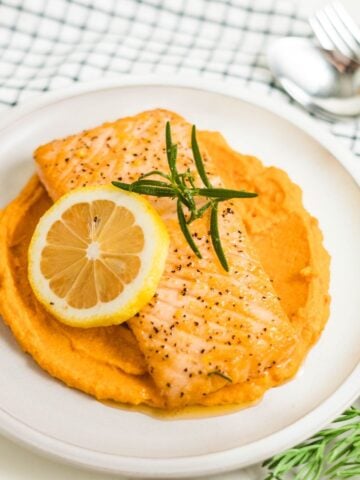
- Baked blackened salmon. The spice crust and the tang from the cottage cheese play off each other, and a mild creamy side gives the blackening somewhere to land.
- Crack green beans. You want something with snap on the plate. Two soft things next to each other gets boring fast.
- Simple green salad. A sharp vinaigrette resets your palate between bites. This is the one I'd add if the rest of the meal is already rich.
Make Ahead, Storage, and Reheating
- Making them ahead: Make these up to two days out. Cool completely, then refrigerate in an airtight container. They'll firm up a lot in the fridge, which is normal and comes back with heat and a little liquid. To hold them for an hour or two, keep them in a covered bowl set over barely simmering water and stir occasionally. They stay soft without drying at the edges the way they do in a warm oven.
- Storing leftovers: Airtight container in the fridge, up to 3 days. The cottage cheese and half-and-half shorten the window compared to a plain butter mash, so I wouldn't push past that.
- Reheating: Stovetop is best. Low heat, a splash of warm milk or half-and-half, stir gently until they loosen. Add liquid slowly, since you can't take it back out. Microwave works in a hurry. Cover and heat in 30-second bursts, stirring between each. Straight through gives you hot edges and a cold middle. For a crowd, spread them in a baking dish, dot with butter, cover with foil, and warm at 325°F.
- Freezing: You can, but manage expectations. Cottage cheese mashes come out grainier after thawing than a plain mash, because the dairy separates. Freeze up to 2 months, thaw overnight in the fridge, and reheat on the stovetop with extra liquid and plenty of stirring.
Rose's Top Tips
- Blend the cottage cheese longer than you think you need to. Hold the container up to the light before you use it. Any grain you can still see will be in your potatoes, and nothing you do afterward will smooth it out.
- Skip fat-free cottage cheese. It blends thin and watery and carries that water into the mash. Full-fat and low-fat both work, so buy whichever's on sale.
- Cut the potatoes the same size. Uneven chunks means the small ones are falling apart while the big ones are still firm in the middle, and you end up with lumps no amount of mashing fixes.
- Salt the boiling water, not just the finished mash. Potatoes season from the inside out. Salting at the end sits on the surface and never gets there, which is why a bland mash is hard to rescue.
Recipe FAQs
Yes, if you want a smooth mash. Cottage cheese doesn't melt into hot potatoes the way sour cream does, so whatever texture goes into the pot is the texture you get. If you'd rather skip the blender, use sour cream or Greek yogurt instead.
Not as cottage cheese. Blended and folded into potatoes with butter, it reads as tang, close to what sour cream gives you. Nobody at the table asks what's in it.
I wouldn't. It blends thin and watery and carries that extra water into the mash, which is one of the main causes of loose mashed potatoes. Full-fat and low-fat both work well.
Yukon gold. Enough starch to go fluffy, enough moisture to stay creamy. Russets work and come out fluffier, but they absorb more dairy and turn gluey faster if you overmix.
Yes, for this recipe. The skin doesn't break down enough to disappear into a mash this smooth, so you end up with bits of peel in it. Leave them on if you want a rustic, chunkier mash, but that's a different dish.
A food processor or immersion blender both work, and an immersion blender used straight in the cottage cheese container is the least cleanup. Without any of those, switch to sour cream or Greek yogurt, neither of which needs blending.
More Easy Vegetable Recipes to Try



Did you try this recipe?
Share how it turned out in the comment box below, and if you loved it, share it on Facebook, Pinterest & Instagram.
Thank you!


Whipped Cottage Cheese Mashed Potatoes
Equipment
- 1 medium pot for boiling potatoes
- 1 food processor or blender optional for cottage cheese
- 1 potato masher or hand mixer optional for mashing potatoes
Ingredients
- 2 small Yellow Potatoes peeled
- 3 cloves Garlic crushed
- ¼ cup Cottage Cheese as is or blended
- 3 tablespoon Half-and-Half warm
- 3 tablespoon Butter
- Salt
- Pepper
Instructions
- Boil the Potatoes: Start by peeling and cubing your potatoes. Place them in a large pot of salted water and 1 garlic clove and bring to a boil. Cook the potatoes for about 15-20 minutes or until they are fork-tender.2 small Yellow Potatoes, 3 cloves Garlic
- Mash the Potatoes: Drain the potatoes and return them to the pot. Use a potato masher or hand mixer to mash them until smooth. Add butter.3 tablespoon Butter
- Add Cottage Cheese: Stir in the cottage cheese and half-and-half. Continue mashing or mixing until the cottage cheese is fully incorporated, and the potatoes are creamy.¼ cup Cottage Cheese, 3 tablespoon Half-and-Half
- Season: Add salt and pepper to taste. Mix until everything is well combined.Salt, Pepper
- Serve: Garnish with green onions or a sprinkle of pepper for extra flavor, and serve hot!