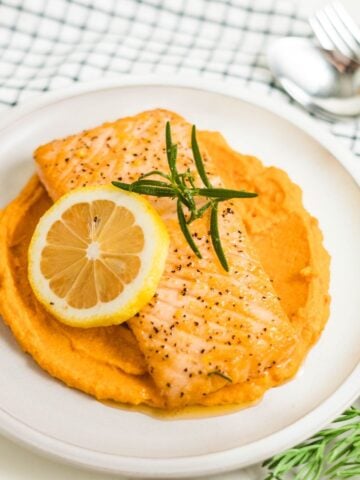
My son will eat salmon any night of the week. I'm the one who got tired of it, or more specifically tired of garlic butter salmon, which is what I default to when I'm not thinking.
So I went the other direction. Cajun seasoning, brown sugar, and enough heat to actually char something.
Blackening usually means a screaming hot cast iron pan, which also means smoke, an alarm going off, and a skillet to scrub. I bake it instead and finish it under the broiler for two minutes. That last part is what gives you a crust rather than just seasoned salmon.
Four ingredients, about 20 minutes, and one pan to wash.

Save This Recipe 💌
Jump to:
Why This Recipe Works
- The broiler does what the oven can't. Baking alone gives you seasoned salmon. Two minutes under the broiler at the end is what toasts the spices into an actual crust.
- Brown sugar in the rub. It caramelizes under that broiler heat and helps the crust form. Without it you get spice sitting on top of fish rather than fused to it.
- Four ingredients. Salmon, Cajun seasoning, brown sugar, olive oil. Nothing to shop for beyond the fish if you keep a jar of Cajun blend around.
- No cast iron, no smoke alarm. Traditional blackening means a screaming hot skillet and a kitchen full of smoke. You give up a little crust on the underside and you get your evening back.
Ingredients
Here's what you'll need:

- Salmon fillets. Thicker is better here. A thin fillet cooks through before the broiler has time to do anything, so aim for pieces around an inch and a half at the center. Frozen works, but thaw it fully in the fridge overnight and pat it dry. Wet salmon steams instead of crusting, and the seasoning slides off.
- Cajun seasoning. I use Slap Ya Mama, which runs hot. If you're cooking for kids or you'd rather control the heat yourself, use a milder blend or mix your own from smoked paprika, garlic powder, onion powder, dried oregano, dried thyme, cayenne, salt, and pepper. Whichever you use, taste it first. Most Cajun blends are salt-forward, and that changes how much you need.
- Brown sugar. Not optional and not just for sweetness. It caramelizes under the broiler, which is a large part of how the crust forms. Skip it and the spices sit on top of the fish rather than fusing into it.
- Olive oil. Brushed on, not mixed into the rub. The oil goes on first so the seasoning has something to stick to, and it keeps the spices from scorching in the two minutes under the broiler.
See recipe card for quantities.
How To Make Baked Blackened Salmon
- Preheat to 425°F. Line a rimmed baking sheet with foil or parchment. Move an oven rack to the upper third, since that's where it needs to be for the broiler at the end.

- Pat the salmon dry. Both sides, with paper towels, and take your time with it. Wet fish steams instead of crusting, and the seasoning slides off. If you're using frozen fillets, thaw them fully in the fridge first and pat them dry after.

- Oil, then season. Brush the fillets with olive oil. Mix the Cajun seasoning and brown sugar together, then press the mixture onto the top and sides of each fillet. Pressing matters more than sprinkling. You want it packed on, not dusted.
- Bake 8 to 10 minutes. The salmon should be nearly done and still a shade underdone in the thickest part. It finishes under the broiler.
- Broil 2 to 3 minutes. Switch the oven to broil and watch it the whole time. The sugar and spices go from crusted to burnt in under a minute, so don't walk away. Pull it when the top looks dark and dry.
- Check the temperature. 125 to 130°F in the thickest part gives you medium, which is where restaurants land. FDA guidance is 145°F if you prefer it firmer. Either way it climbs a few degrees off the heat.
- Rest 3 minutes, then serve with lemon.

Variations
- Other fish. Cod, tilapia, or mahi-mahi all take the same rub. Mahi is firmer and milder, so it holds the crust without competing with the seasoning. My blackened mahi-mahi is the stovetop version if you want the cast iron crust after all.
- On the grill. Skin side down over direct heat, spice side up, then flip for the last two minutes to char the top. Closer to real blackening than the oven gets, and no smoke in the kitchen.
- Air fryer. 390°F for 8 to 10 minutes. The circulating air does something similar to the broiler, so you can skip that step. Watch the sugar.
- Honey or maple instead of brown sugar. Brush it on after the bake and before the broil rather than mixing it into the rub. Liquid sweeteners burn faster than brown sugar does.
- Lemon and fresh herbs. Thyme or parsley scattered on after it comes out, with a squeeze of lemon. Acid cuts the heat from the Cajun blend and it's the one addition I make most often.
What To Serve With This
- Creole rice. Same flavor family, and rice is the thing that makes a spicy fillet feel like a full dinner rather than a piece of fish.
- Mashed potatoes. Creamy and mild. This is the one my kids reach for when the salmon runs hot.
- Cucumber salad. Cold and vinegary. Does more against Cajun heat than any cooked vegetable will.
- Coleslaw. Same logic, more substantial. Skip the sweet dressing since the brown sugar crust already brings sweetness.
- Roasted asparagus. Fast, roasts alongside the salmon, and it takes char well.
- Green salad with a sharp vinaigrette. Acid resets your palate between bites.
How to Store and Reheat Leftovers
Fridge. Airtight container, up to 3 days.
Reheating. Low and slow, 300°F for about 5 minutes, covered. High heat squeezes the fat out and you end up with something dry and chalky. Skip the microwave entirely. It cooks unevenly and the smell takes over the kitchen.
The better move. Reheated salmon is never as good as it was the first night, and there's no technique that changes that. Eat it cold instead. Flake it into a salad, fold it into tacos with the coleslaw you already made, or put it over rice with a squeeze of lemon. The Cajun crust holds up cold in a way it doesn't reheated.
Freezing. Cooked salmon freezes for up to 2 months but the texture suffers. If you know you won't finish it, freezing the raw fillets is the better call.
Rose's Top Tips
- Do not walk away during the broil. Two minutes is not a suggestion to check on later. Brown sugar under direct heat goes from crusted to burnt in under a minute, and there is no saving it. Stand at the oven.
- Pull it before it looks done. Salmon climbs 5 degrees or so after it leaves the oven. If you wait until it looks exactly right on the pan, it's overcooked by the time it hits the plate.
- Buy the thickest fillets you can find. A thin piece cooks through before the broiler has time to build a crust, so you end up with dry salmon and no char. Center-cut is worth asking for.
- Mix your own blend and make extra. Store-bought is fine, but a homemade Cajun blend takes five minutes and keeps for months in a jar. It's good on shrimp, chicken thighs, and roasted potatoes, so you'll use it.
Recipe FAQs
Not in the strict sense. Blackening is a New Orleans technique that uses a screaming hot cast iron skillet, and the dark crust comes from the spices toasting where the fish meets the pan. This version gets you most of the way there with a hot oven and a two-minute broil, minus the smoke and the pan to scrub.
Less than you'd think. The blends overlap heavily, and both usually start with paprika, garlic powder, onion powder, oregano, thyme, and cayenne. Blackening blends often add sugar. The char people associate with blackened food comes from the cooking method, not the jar.
FDA guidance is 145°F, which gives you firm, fully opaque salmon. Most restaurants pull it at 125 to 130°F for medium, which is softer and moister in the middle. It climbs a few degrees off the heat either way, so pull it below your target.
Yes, and it's what I usually do. Thaw it fully in the fridge overnight, then pat both sides dry before seasoning. Wet fish steams instead of crusting and the rub slides off.
You can, but you'll get seasoned baked salmon rather than anything with a crust. The broil is the step doing the work in this recipe.

More Seafood Recipes To Try

Did you try this recipe?
Share how it turned out in the comment box below, and if you loved it, share it on Facebook, Pinterest & Instagram.
Thank you!


Baked Blackened Salmon
Equipment
- 1 baking pan or tray
Ingredients
- 2 Salmon fillets
- 1 teaspoon Slap Yo Mama Cajun Seasoning
- 2 teaspoon Brown sugar
- 2 tablespoon Olive Oil
Instructions
- Preheat to 425°F. Move an oven rack to the upper third. Line a rimmed baking sheet with foil or parchment.
- Pat the salmon dry on both sides with paper towels. If using frozen fillets, thaw fully in the fridge first, then pat dry.
- Season. Brush the fillets with olive oil. Mix the Cajun seasoning and brown sugar together, then press the mixture onto the top and sides of each fillet. Press it on rather than sprinkling.1 teaspoon Slap Yo Mama Cajun Seasoning, 2 teaspoon Brown sugar, 2 tablespoon Olive Oil, 2 Salmon fillets
- Bake 8 to 10 minutes, until the salmon is nearly cooked through and still slightly underdone in the thickest part.
- Broil 2 to 3 minutes. Switch the oven to broil and stay at the oven. The sugar goes from crusted to burnt in under a minute. Pull it when the top is dark and dry.
- Check the temperature. 125 to 130°F in the thickest part for medium, or 145°F per FDA guidance for fully cooked. It climbs a few degrees off the heat.
- Rest 3 minutes, then serve with lemon.