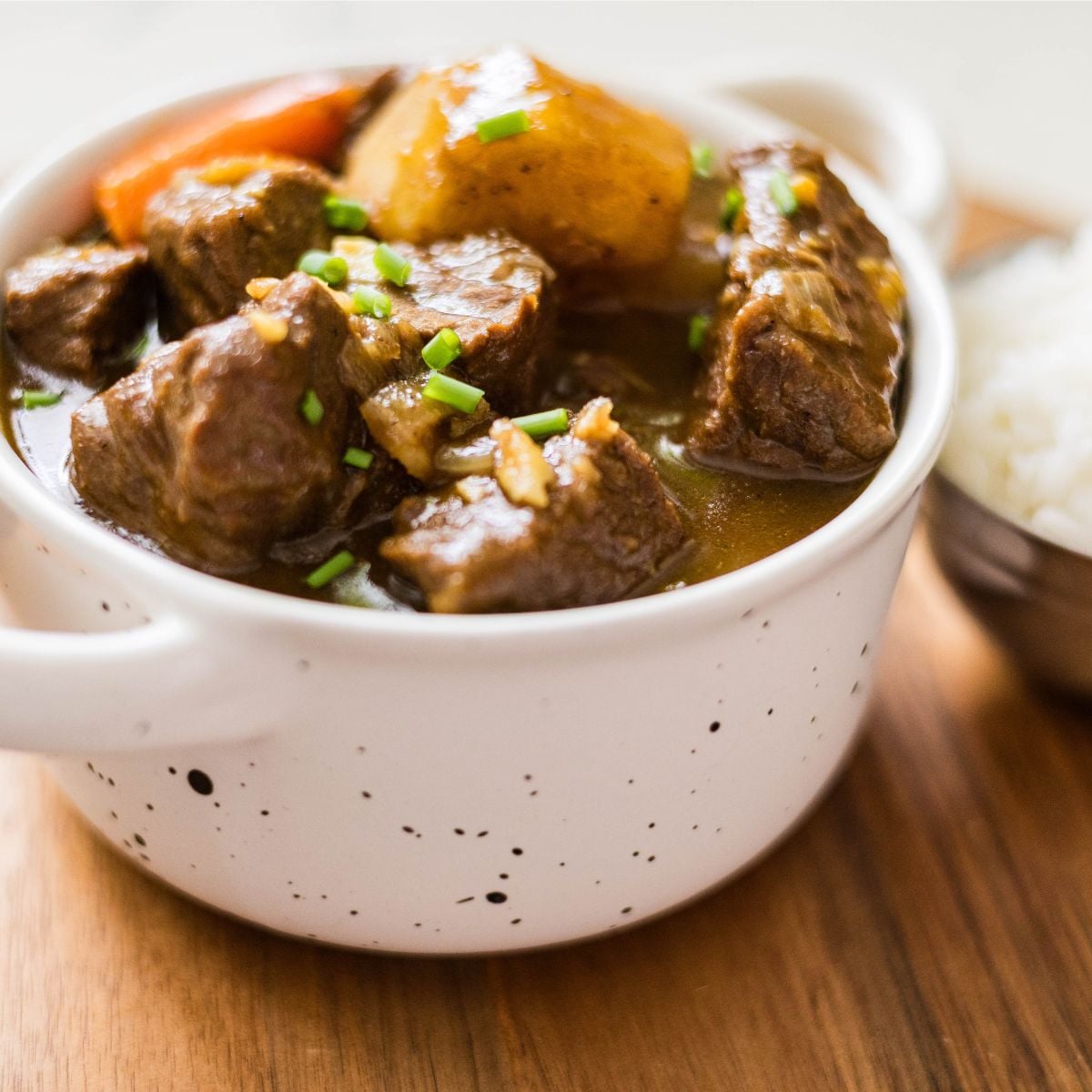
My family fell for Japanese curry at CoCo Ichibanya in Japan, and this is the pot I make when we want to go back there for an hour.
It's beef chuck simmered until it gives, potatoes and carrots, and a thick curry sauce that sits on rice instead of running off it.
The whole thing runs on boxed Japanese curry roux. I keep S&B Golden Curry, Vermont Curry, and Java Curry in the pantry, and any Asian grocery carries at least one of them.
The step I'd tell you not to skip is frying the potatoes before they go in. Ten extra minutes, and they hold their shape through the simmer instead of dissolving into the sauce.
Serve it over short-grain rice with something crunchy and pickled on the side. A jammy soft-boiled egg on top is how we eat it at home.
Save This Recipe 💌
Jump to:
What Is Japanese Curry?
Japanese curry, or kare, isn't much like Indian or Thai curry. It's thick enough to hold its shape next to a scoop of rice, mild rather than hot, and a little sweet.
The sauce is closer to a stew than anything you'd find on a curry house menu in London or Bangkok. That thickness is the point. It's built to sit on short-grain rice without running to the edge of the plate.
It got there by an unlikely route. The British Royal Navy brought Indian-style curry to Japan during the Meiji period, and over the next few decades it was reworked into something milder, sweeter, and thickened with a flour-based roux. By the early 1900s it had become ordinary weeknight food, and today it turns up in school cafeterias, family restaurants, and chains like CoCo Ichibanya.
You'll see it three ways in Japan: over rice as kare raisu, over thick noodles as curry udon, and stuffed into fried bread as kare pan. This recipe is the first one.
Ingredients
Here's what you'll need:
- Beef chuck. The right cut here, and worth buying as a roast you cut yourself rather than pre-cut stew meat, which is often a mix of scraps that cook unevenly. Chuck has the fat and connective tissue to stay tender through an hour of simmering. Lean cuts like sirloin or round go tough and dry no matter how long you cook them. Cut it into 1½-inch pieces so they hold together in the pot and still fit on a spoon.
- Japanese curry roux. The shortcut that makes this a weeknight dish. Half a box, about 3.2 to 3.5 ounces, is right for four cups of liquid. I keep a few brands because they taste noticeably different. S&B Golden Curry is more savory and spiced. Vermont Curry is milder and sweeter, which is the one my kids reach for. Java Curry sits between them. Check the back of your box, since the block count and box size vary by brand.
- Yellow onion. Two of them, and cook them longer than feels necessary. The sweetness that comes out of slow-cooked onions is most of what makes Japanese curry taste the way it does. Rushing them gives you a flatter sauce that no amount of roux fixes.
- Garlic and ginger. Fresh, added after the onions have softened. Both burn fast, and burnt garlic turns the whole pot bitter. A minute in the pan is plenty.
- Yukon Gold potatoes, fried before adding. This is the step most recipes skip and the reason mine hold up. Frying the chunks until golden sets the outside so they absorb sauce without dissolving into it during the simmer. Russets fall apart faster, so if that's what you have, cut them larger and add them later. Worth the extra ten minutes.
- Carrots. Cut into large chunks on a diagonal so they don't disappear. They add sweetness alongside the onion, and going in late keeps them from turning to mush.
- Beef broth. Gives the most depth. Water with a spoonful of beef powder, like Knorr, is the practical weeknight version and honestly close enough that I use it often. Four cups either way.
- Grated apple. Optional but genuinely worth it. It adds a rounded sweetness that reads as characteristically Japanese curry rather than just sugar. One small apple grated straight into the pot, Fuji or Gala. A teaspoon of honey does something similar if you don't have one.
- Worcestershire sauce and ketchup. These two are doing more than they look like they are. Worcestershire brings a savory backbone and ketchup adds sweetness plus a little acid to cut the richness. A tablespoon each. Skip them and the sauce tastes flatter and one-note, closer to the box instructions than what you want.
- Neutral oil. For frying the potatoes and searing the beef. Anything with a high smoke point works.
See recipe card for quantities.
How To Make Japanese Beef Curry
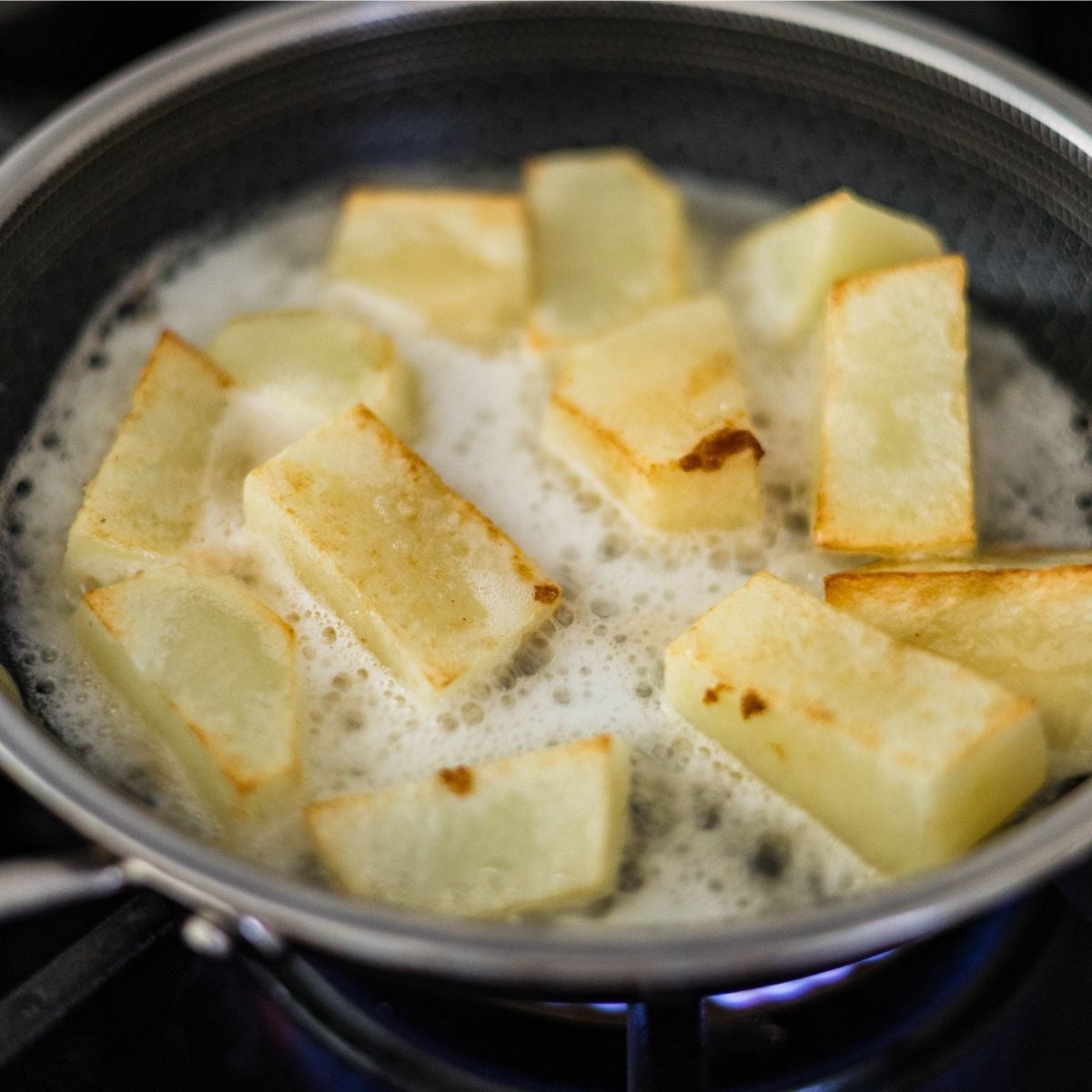
- Fry the potatoes. Heat oil in a large pot or Dutch oven over medium heat. Add the potato chunks and cook until lightly golden on the outside, 8 to 10 minutes. They don't need to be cooked through. Remove and set aside. Frying sets the outside so they hold their shape through the simmer instead of dissolving into the sauce.
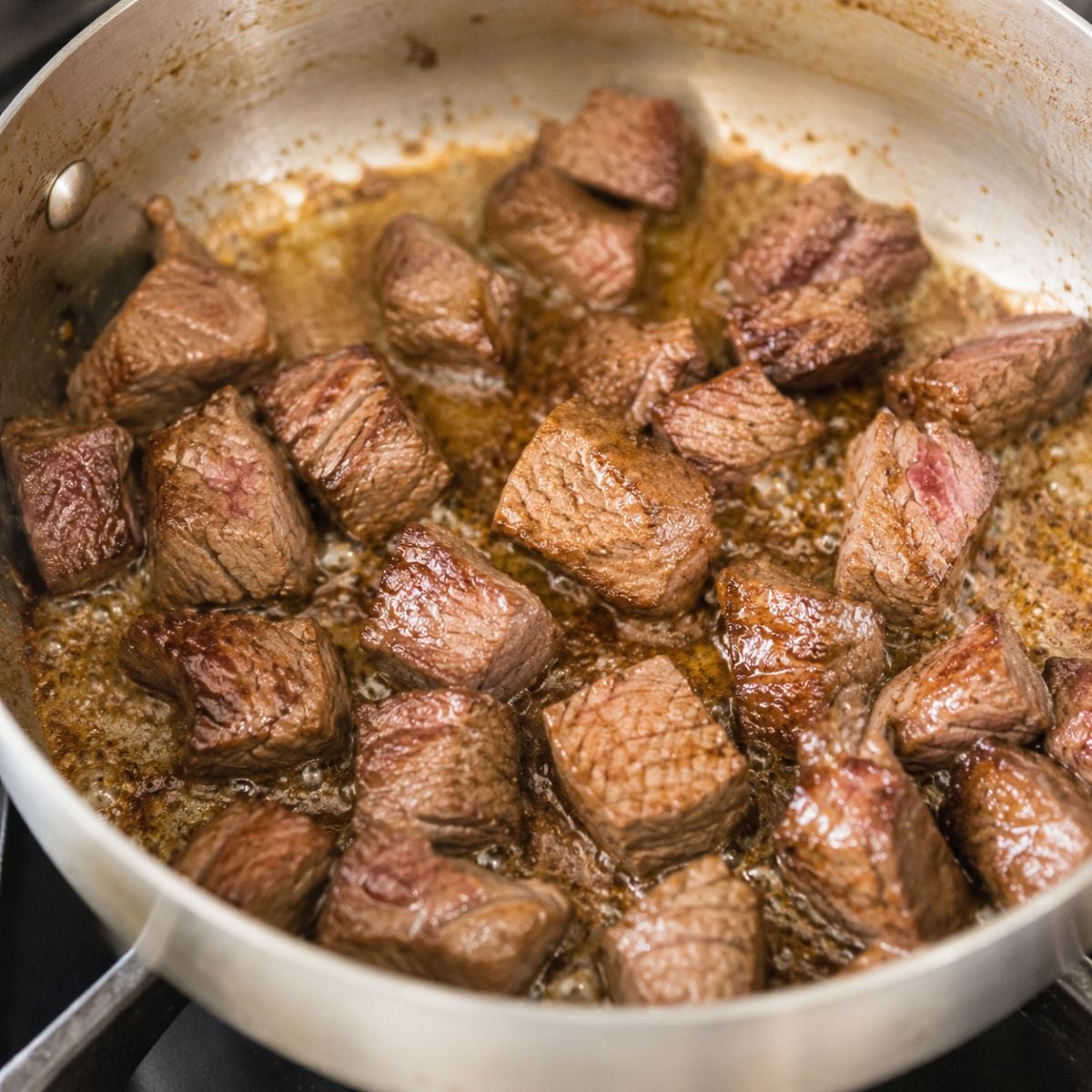
- Sear the beef. Pat the chuck dry and season with salt and pepper. Raise the heat to medium-high and brown the pieces in batches, 3 to 4 minutes per batch, without crowding the pot. Crowded beef steams instead of browning, and the browned bits left behind are where a lot of the flavor comes from. Set the beef aside.
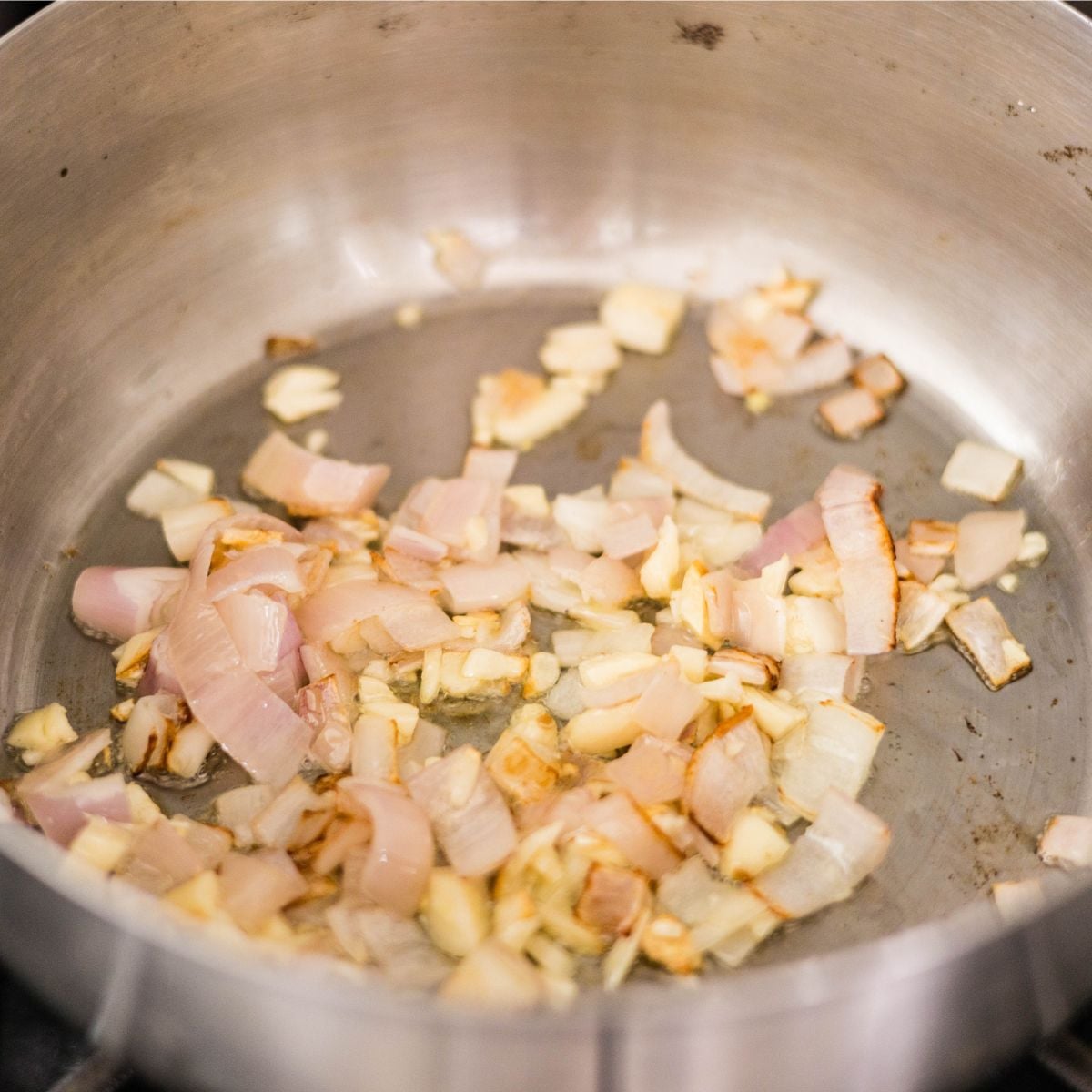
- Cook the aromatics. Lower the heat to medium and add the onions. Cook 8 to 10 minutes, stirring now and then, until soft and lightly golden. Longer is better if you have the time, since this is the sweetness that makes Japanese curry taste the way it does. Add the garlic and ginger and cook 1 more minute until fragrant, keeping them moving so they don't burn.
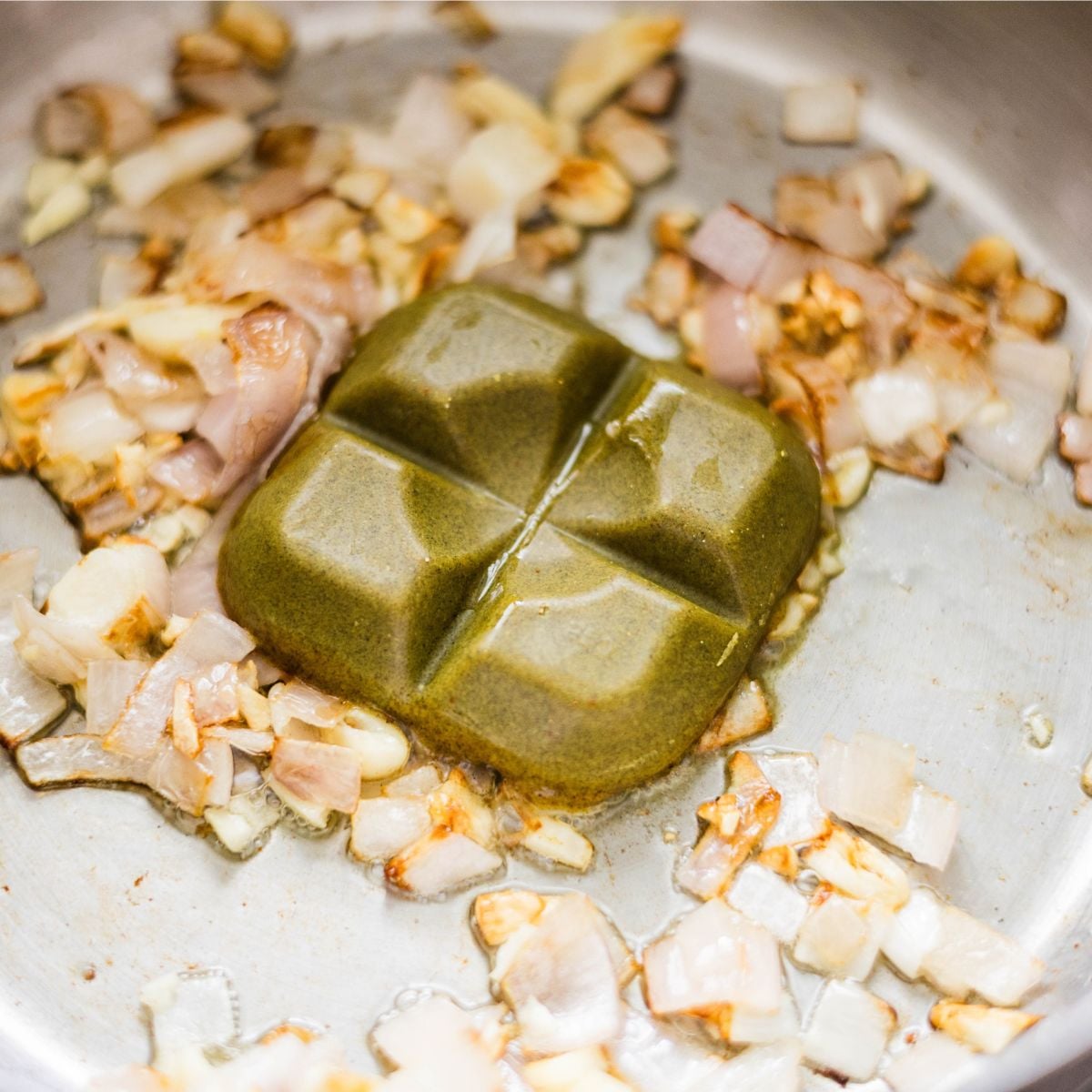
- Melt in the roux. Break the roux into pieces and add it to the pot. Stir it into the onions over low heat until it softens and coats everything, about 2 minutes. Keep the heat low. Roux scorches fast in a dry pan, and this is the one moment in the recipe where you shouldn't walk away.
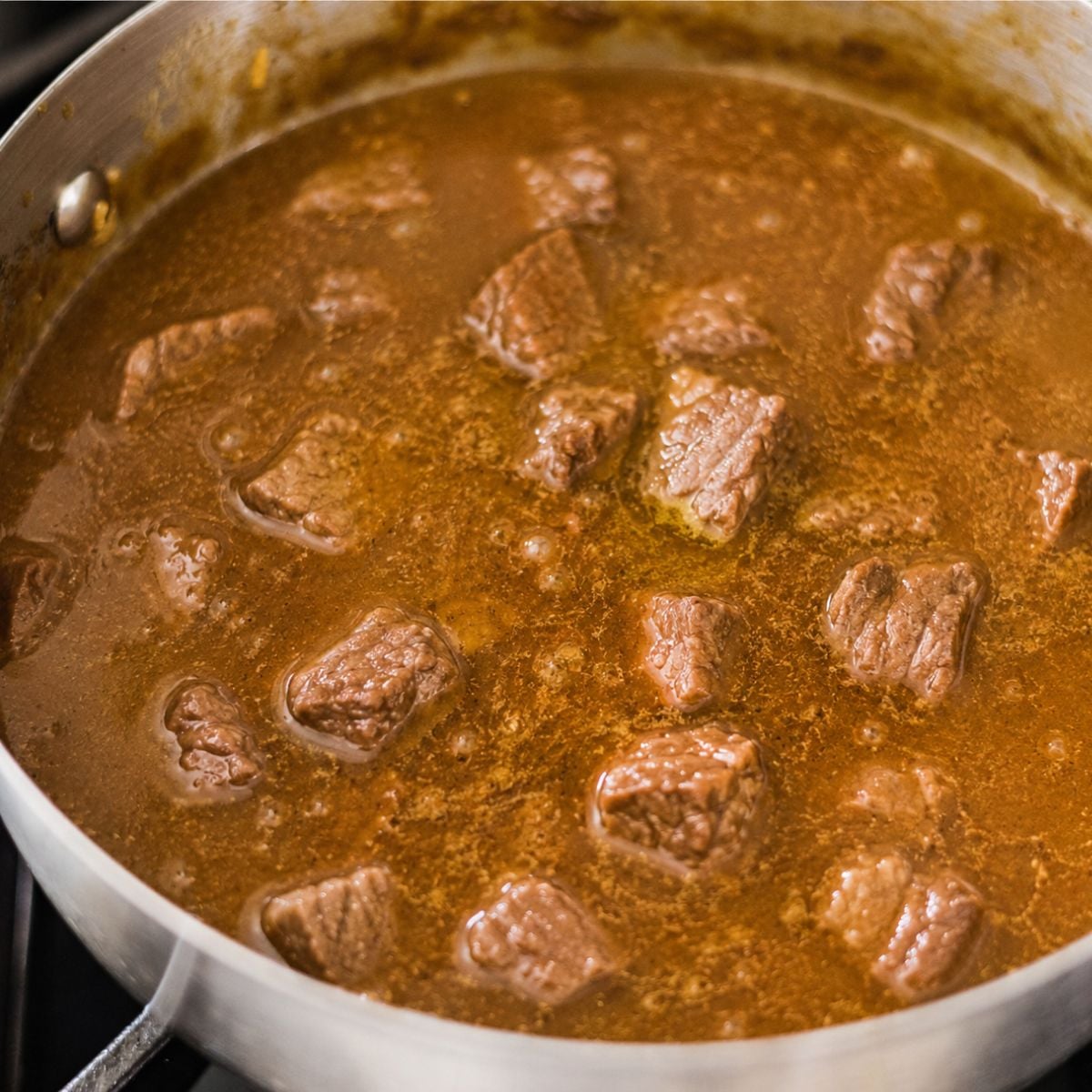
- Add the beef and broth. Return the beef and any juices from the plate, stirring to coat it in the roux. Pour in the broth slowly, stirring as you go until the roux dissolves smoothly with no lumps. Add the grated apple, Worcestershire sauce, and ketchup.
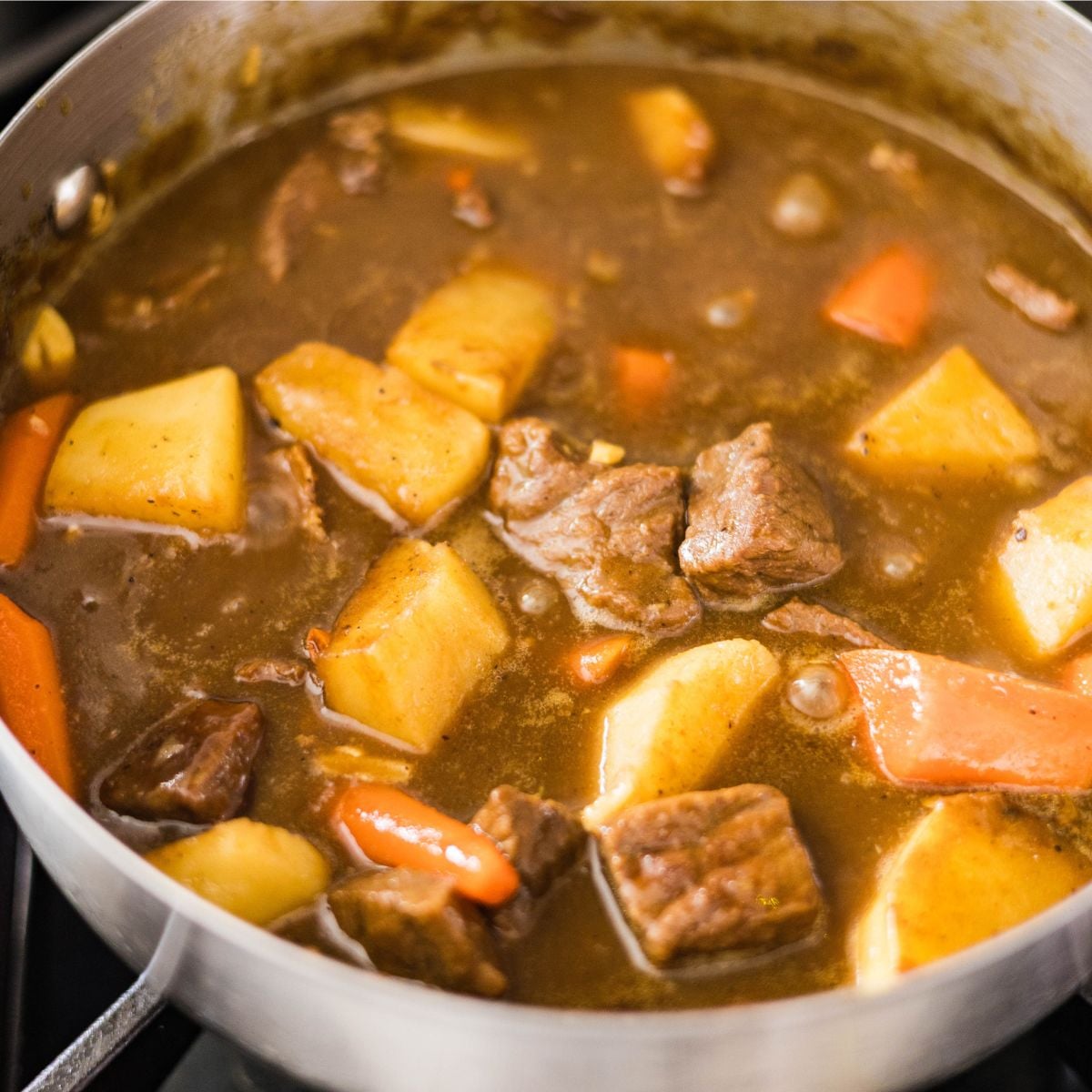
- Simmer, then add the vegetables. Bring to a gentle boil, then reduce the heat, cover, and simmer 45 to 60 minutes, until the beef gives easily when pressed with a spoon. Stir every 15 minutes or so and scrape along the bottom, since a roux-thickened sauce will catch there if it sits. Add the carrots and simmer 10 minutes, then the fried potatoes for 5 minutes more, until both are tender. Skim any fat off the surface.
- Rest and serve. Take the pot off the heat and let it sit 10 minutes. The sauce tightens and the flavors settle. Serve over Japanese short-grain rice with fukujinzuke or pickled ginger on the side.
Rose's Top Tips
- Melt the roux into the onions before the liquid goes in. Most recipes stir it in at the end. Cooking it with the aromatics first gives the sauce a deeper, more toasted flavor. Keep the heat low while you do it, and scrape the bottom of the pot when you stir during the simmer so nothing catches.
- Cook the onions longer than feels necessary. Eight to ten minutes minimum, and more if you have it. Slow-cooked onions are where most of the sweetness in Japanese curry comes from. Rushing them gives you a flatter sauce that no amount of roux will fix.
- Fry the potatoes first. This is the step that keeps them from breaking down into the sauce. Frying sets the outside so they absorb curry flavor while holding their shape. Ten extra minutes, and it's the difference between potato chunks and potato mush.
- Pour the broth in slowly. With the roux already in the pot, dumping the liquid in all at once is how you get lumps. Add it in stages and stir between each one so the roux has a chance to dissolve.
- Let it sit before serving. Ten minutes off the heat. The sauce tightens as it cools and the flavors settle. If you can wait, you should.
- Day two is better. This reheats well and the sauce deepens overnight. Make a big batch on Sunday and Monday is sorted.
Troubleshooting
Scorched on the bottom. The heat was too high when the roux went in, or the pot went too long without stirring. Don't scrape the burnt layer up into the sauce, since that flavor spreads through everything. Move the curry to a clean pot and leave the scorched bit behind.
Lumps in the sauce. The broth went in too fast. Pour it in stages and stir between each one so the roux dissolves as it goes. To fix lumps that already formed, press them against the side of the pot with the back of a spoon, or fish out the stubborn ones.
Sauce too thin. Simmer uncovered a few more minutes. Roux keeps thickening as it cooks and again as it cools, so pull it slightly looser than you want it on the plate.
Sauce too thick. Add hot broth or water a little at a time over low heat until it loosens. Japanese curry thickens a lot as it sits, so this is normal rather than a mistake.
Potatoes fell apart. Either they didn't get fried first, or they went in too early. They only need about 5 minutes at the end, since frying already cooked them most of the way through.
Beef still tough after an hour. It needs more time, not more heat. Chuck goes through a stage where it tightens before the connective tissue breaks down. Cover it and give it another 15 to 20 minutes, and keep the simmer gentle. A hard boil makes it tougher, not faster.
Variations
- Mix two roux brands. Half a box each of two different brands gives you more depth than either one alone. S&B and Vermont together is what I reach for most, since S&B brings the spice and Vermont brings the sweetness. Keep the total roux the same as the recipe calls for.
- Make it spicier. Use the hot version of your roux, or stir a teaspoon of S&B curry powder in with the onions before the roux goes in. Adding it early lets it bloom in the fat, which spreads the heat through the sauce instead of leaving it on top.
- Swap in chicken. Bone-in thighs work best, since the bones add body to the sauce the way the beef does. Cut the simmer to 20 to 25 minutes, and check earlier than that if you're using boneless.
- Katsu curry. Serve the sauce over rice with a breaded, fried cutlet on top. My Japanese chicken karaage works if you want the crispy version without breading a cutlet from scratch. This is the most-ordered thing at most curry shops in Japan for a reason.
- Curry udon. Thin leftover curry with a little broth or dashi and pour it over udon noodles. The sauce is thick enough that it needs loosening or it just sits on top of the noodles. This is what I do every single time there are leftovers.
- Curry fried rice. Stir chilled leftover curry into day-old rice in a hot wok. The rice absorbs the sauce and crisps at the edges. Works best with a smaller ratio of curry to rice than you'd think.
What to Serve With Japanese Beef Curry
- Japanese short-grain rice. Not optional as far as I'm concerned. The sticky, slightly firm grains are what this sauce was built for, and the whole reason Japanese curry is thickened the way it is. Long-grain or jasmine will work, but the sauce runs off instead of sitting on top and the dish eats differently.
- Fukujinzuke. The sweet, crunchy pickled vegetable relish they give you at curry shops in Japan. Most Asian grocery stores carry it, usually near the pickles in a bright red package. It cuts the richness and adds the texture the curry doesn't have on its own.
- Pickled ginger. Does the same job if fukujinzuke isn't easy to find. A small pile on the side of the plate is all you need. The sharpness resets your palate between bites of a heavy sauce.
- A jammy soft-boiled egg. One on top of each bowl. The yolk loosens into the sauce as you eat and adds richness, and it makes a plain bowl of curry look like something you planned.
- Shredded cabbage. A small pile of finely shredded raw cabbage on the side is standard at curry restaurants and costs you two minutes. Something cold and crunchy next to an hour-long braise does more than it sounds like it would.
Storage
In the fridge. Store leftover curry in an airtight container for up to 4 days. The sauce thickens as it cools, sometimes to the point where it barely moves in the container. That's normal. Add a splash of water or broth when reheating and stir over medium-low heat until it loosens and warms through.
Store the rice separately. Rice sitting in curry overnight goes soft and soaks up sauce you wanted on the plate. Keep them in different containers and combine when you serve.
In the freezer. Cool completely, then freeze in a freezer-safe container for up to 3 months. Thaw overnight in the fridge and reheat on the stove. The potatoes soften more after freezing since the fried exterior doesn't survive the freeze-thaw, so if you know you're freezing a batch, leave the potatoes out and add fresh ones when you reheat.
Day two is the good day. This is one of those dishes that improves overnight. The sauce deepens and the beef keeps absorbing flavor. If you're making it ahead for something, making it the day before isn't a compromise.
Leftovers are worth planning for. Thinned with broth over udon noodles, or stirred into day-old rice in a hot wok, leftover curry turns into a second dinner that doesn't feel like leftovers. Both are in the variations above.
Recipe FAQs
S&B Golden Curry and Vermont Curry are the most widely available and both are good. S&B is more savory and aromatic. Vermont is milder and slightly sweeter, which is the one my kids reach for. Java Curry from House Foods sits between them. Box sizes and block counts vary by brand, so check the back before you measure. I often use half a box each of two brands in the same pot.
Chuck is ideal because it breaks down over a long simmer. Buy it as a roast and cut it yourself if you can, since pre-cut stew meat is often a mix of scraps that cook at different rates. Brisket or beef shank also work. Skip lean cuts like round or sirloin, which dry out instead of getting tender.
Frying sets the outside so they hold their shape through the simmer instead of breaking apart into the sauce. You get pieces that absorb curry flavor and still look like potatoes at the end. It's ten extra minutes and it's the step I'd tell you not to skip.
No, but it makes the sauce taste rounded rather than just sweet, which is characteristic of Japanese curry. If you don't have one, a teaspoon of honey does something similar.
Most recipes stir it in at the end. I melt it into the onions first because cooking it in the fat gives the sauce a deeper, toasted flavor. It does mean the roux sits in the pot for the full simmer, so keep the heat low when it goes in and scrape the bottom when you stir. If you'd rather play it safe, dissolve the roux in a ladle of hot broth and add it in the last 10 minutes instead.
Yes. Sear the beef and cook the onions on the stove first, then transfer everything except the roux and potatoes to the slow cooker. Low for 7 to 8 hours or high for 4 to 5. Add the fried potatoes and the roux, dissolved in a little hot liquid, in the last 30 minutes.
Yes, and it's the fastest route. Sear the beef on sauté, cook the onions, then pressure cook the beef and broth for 25 minutes with a 10-minute natural release. Switch back to sauté, add the carrots and potatoes for a few minutes, then stir in the roux and simmer until it thickens.
More Recipes You'll Love

Did you try this recipe?
Share how it turned out in the comment box below, and if you loved it, share it on Facebook, Pinterest & Instagram.
Thank you!

Japanese Beef Curry
Equipment
- Large pot or Dutch oven
Ingredients
- 2 pounds beef chuck cut into 1½-inch cubes
- 2 tablespoons neutral oil divided
- 1 large yellow onion chopped
- 6 cloves garlic minced
- 1 teaspoon grated ginger
- 2 medium carrots cut into chunks
- 2 medium Yukon Gold potatoes cut into chunks
- 4 cups beef broth or water
- 1 small apple peeled and grated, optional
- 1 teaspoon Worcestershire sauce
- 1 tablespoon ketchup
- 1 teaspoon salt
- ½ teaspoon ground black pepper
- ½ box Japanese curry roux
For Serving
- Cooked Japanese short-grain rice
- Fukujinzuke or pickled ginger optional
Instructions
- Heat the oil in a large pot or Dutch oven over medium heat. Add the potato chunks and fry until lightly golden on the outside, 8 to 10 minutes. They do not need to be cooked through. Remove and set aside.
- Pat the beef dry and season with salt and pepper. Raise the heat to medium-high and brown the pieces in batches, 3 to 4 minutes per batch, without crowding the pot. Set aside.
- Lower the heat to medium. Add the onions and cook 8 to 10 minutes, stirring occasionally, until soft and lightly golden. Add the garlic and ginger and cook 1 minute more, until fragrant.
- Break the curry roux into pieces and add to the pot. Stir over low heat until it softens and coats the onions, about 2 minutes. Keep the heat low so it doesn't scorch.
- Return the beef and any juices to the pot, stirring to coat. Pour in the beef broth slowly, stirring as you go, until the roux dissolves smoothly. Add the grated apple, Worcestershire sauce, and ketchup.
- Bring to a gentle boil, then reduce the heat, cover, and simmer 45 to 60 minutes, until the beef gives easily when pressed with a spoon. Stir every 15 minutes and scrape along the bottom of the pot. Add a splash of broth if the sauce reduces too far.
- Add the carrots and simmer 10 minutes. Add the fried potatoes and cook 5 minutes more, until both are tender. Skim any fat from the surface.
- Remove from the heat and let the curry rest 10 minutes before serving. Serve over Japanese short-grain rice with fukujinzuke or pickled ginger.
- Remove from the heat and let the curry rest 10 minutes before serving. Serve over Japanese short-grain rice with fukujinzuke or pickled ginger.