

If you have ever had enoki mushrooms in hot pot and wondered what else to do with them, enoki beef rolls are the answer, and they are simpler than they look.
The enoki keep a bit of bite and pick up the broth, which is why my kids eat them faster than the beef.
I make this with the hot pot beef chuck rolls from Costco, straight from the freezer. No thawing, no oil, no sautéing anything first.
If you love easy Japanese beef dishes, try my Japanese beef curry next
Save This Recipe 💌
Jump to:
What Are Enoki Beef Rolls?
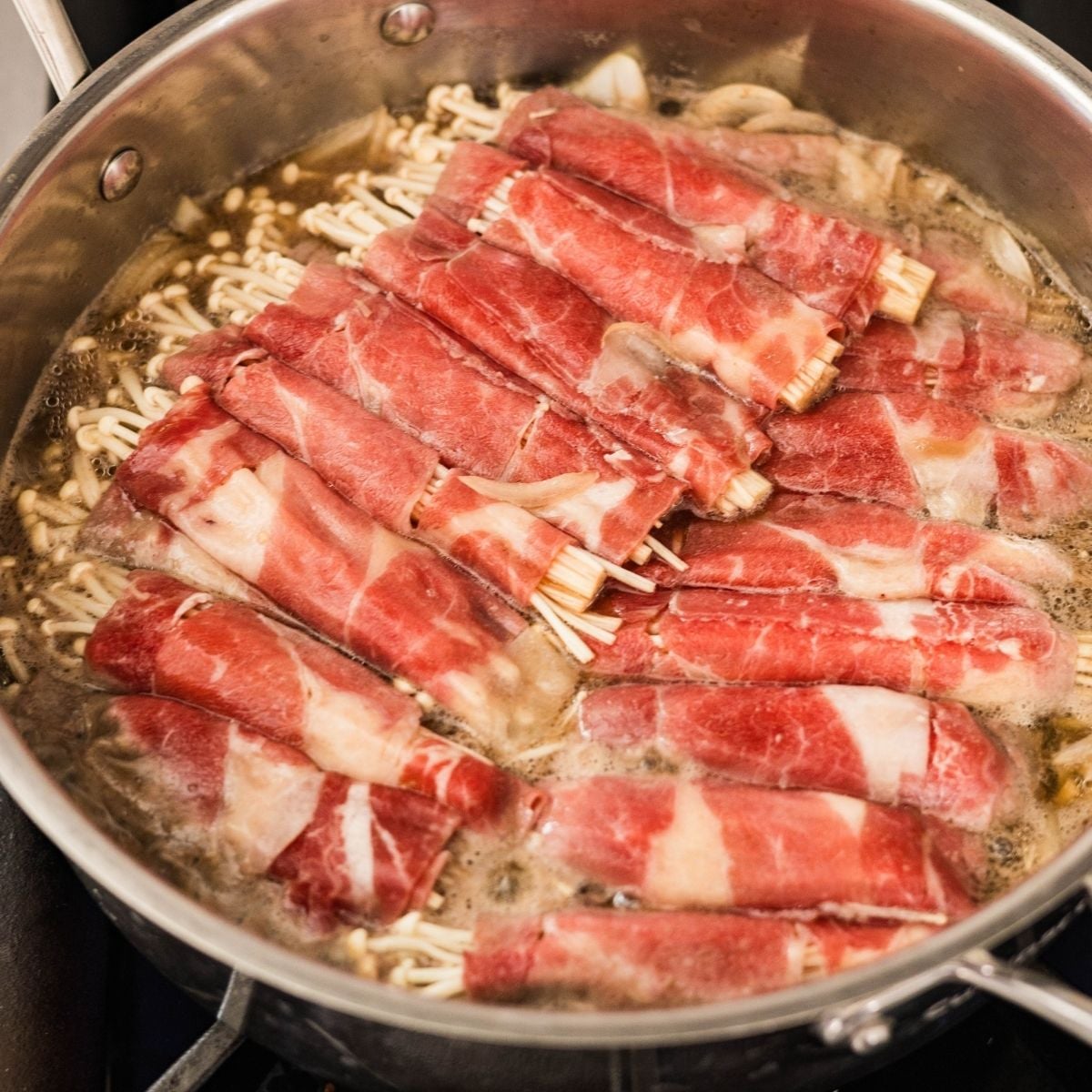
Enoki beef rolls are bundles of enoki mushrooms wrapped in thinly sliced beef and simmered in a sweet and savory dashi broth with onions. They are a Japanese dish, usually served over rice, and they show up as both a starter and a main.
The broth uses the same familiar flavor profile as gyudon: dashi, soy sauce, mirin, sake, and a little sugar. The mushrooms hold their shape inside the beef and soak up the broth as they cook.
Why You'll Love This
- No thawing. The beef goes in frozen, so there is nothing to plan around at 5:30 and nothing sitting on the counter.
- One pan, no oil. The onions go in raw at the bottom, which means no sauté step and no second pan to wash.
- The rolls hold together. Frozen beef keeps its shape while you fill it, so nothing tears and nothing unravels in the broth.
- About 12 minutes of cooking. Most of it is hands off, and it lines up with the rice.
- Pantry broth. Six ingredients, and five of them keep for months once you have them.
- Leftovers hold up. Stored in the broth, they reheat without drying out, which is not true of most quick beef dishes.
Ingredients
Here's what you'll need:
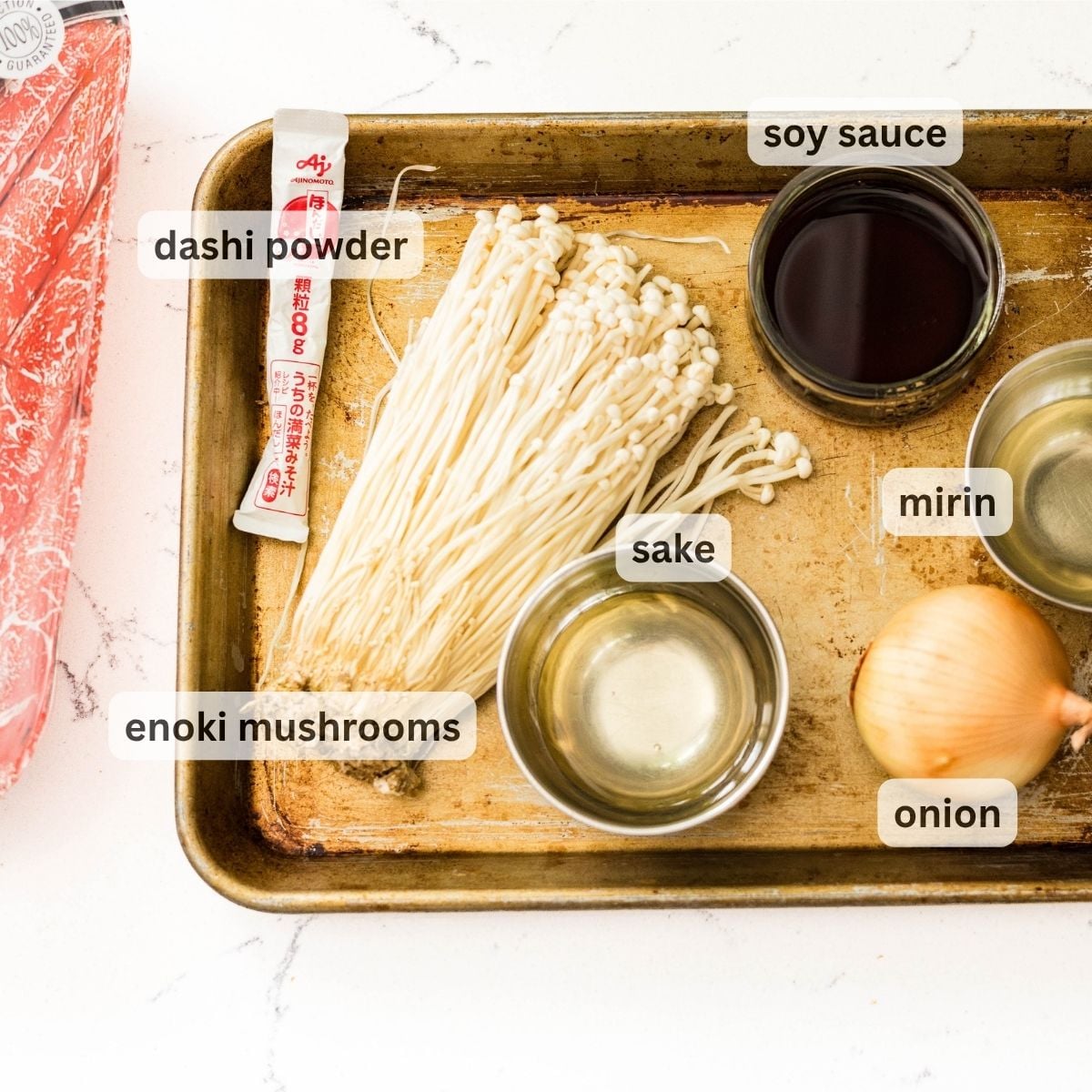
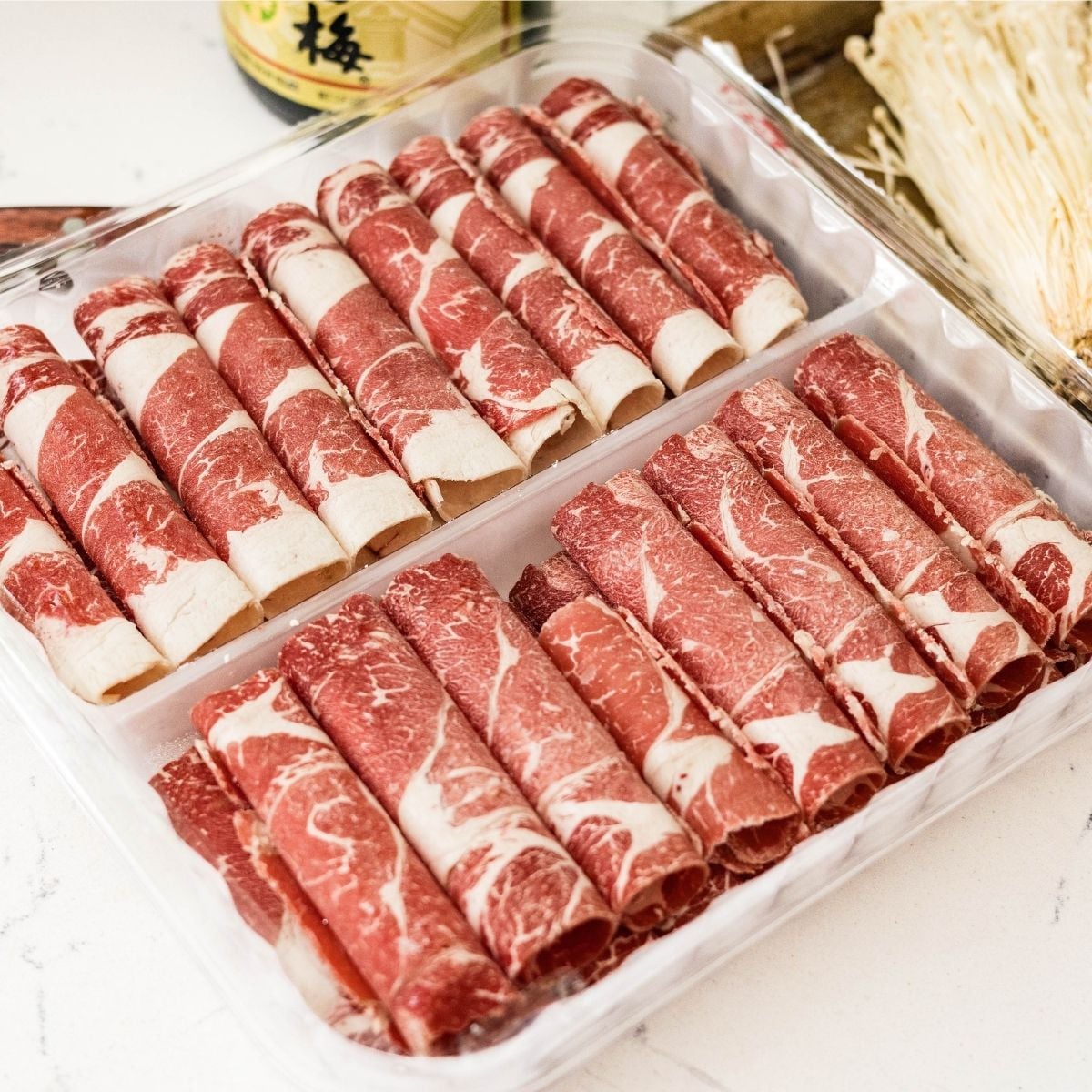
- Frozen thinly sliced beef chuck. I use the 16 ounce hot pot beef chuck rolls from Costco because they come already rolled and the package is exactly what this recipe needs. Shabu shabu or sukiyaki beef works the same way, and thinly sliced ribeye gives you more fat in the pan.
- Enoki mushrooms. I use two bundles for a pound of beef, which is more enoki than many versions call for, because my kids eat the mushrooms right out of the pan.
- Sweet yellow onion. These go in raw at the bottom of the pan and soften in the broth while the beef cooks above them. They also keep the thin beef off direct pan heat, which is the real reason this recipe uses an onion bed.
- Dashi powder. One teaspoon is the backbone of the broth. Skip it and the broth tastes flat no matter how much soy sauce you add.
- Mirin and sake. Mirin brings sweetness and gloss, sake keeps the beef from tasting heavy. If you only keep one, keep the mirin.
- Soy sauce. Regular, not low sodium. If low sodium is what you have, add another half tablespoon after you taste it at the end.
- Brown sugar. Brown sugar adds a slightly deeper, caramel-like sweetness to the broth. White sugar works too and gives it a cleaner, lighter sweetness.
- Ginger, optional. Goes into the sauce with everything else. A teaspoon lifts the broth without turning it into a ginger dish.
- A spoonful of chili garlic oil over the finished rolls is worth it if you keep a jar in the fridge.
See recipe card for quantities.
How To Make Enoki Beef Rolls
- Keep the beef frozen. Leave it in the freezer until you are ready to fill the rolls. It softens faster than you expect once it is out, and soft beef is what causes torn slices.
- Prep the enoki. Trim off and discard the tough root ends. Rinse the mushrooms under cold water, pat them dry, then pull them apart into small, thin bundles. Patting them dry keeps the broth from thinning out.
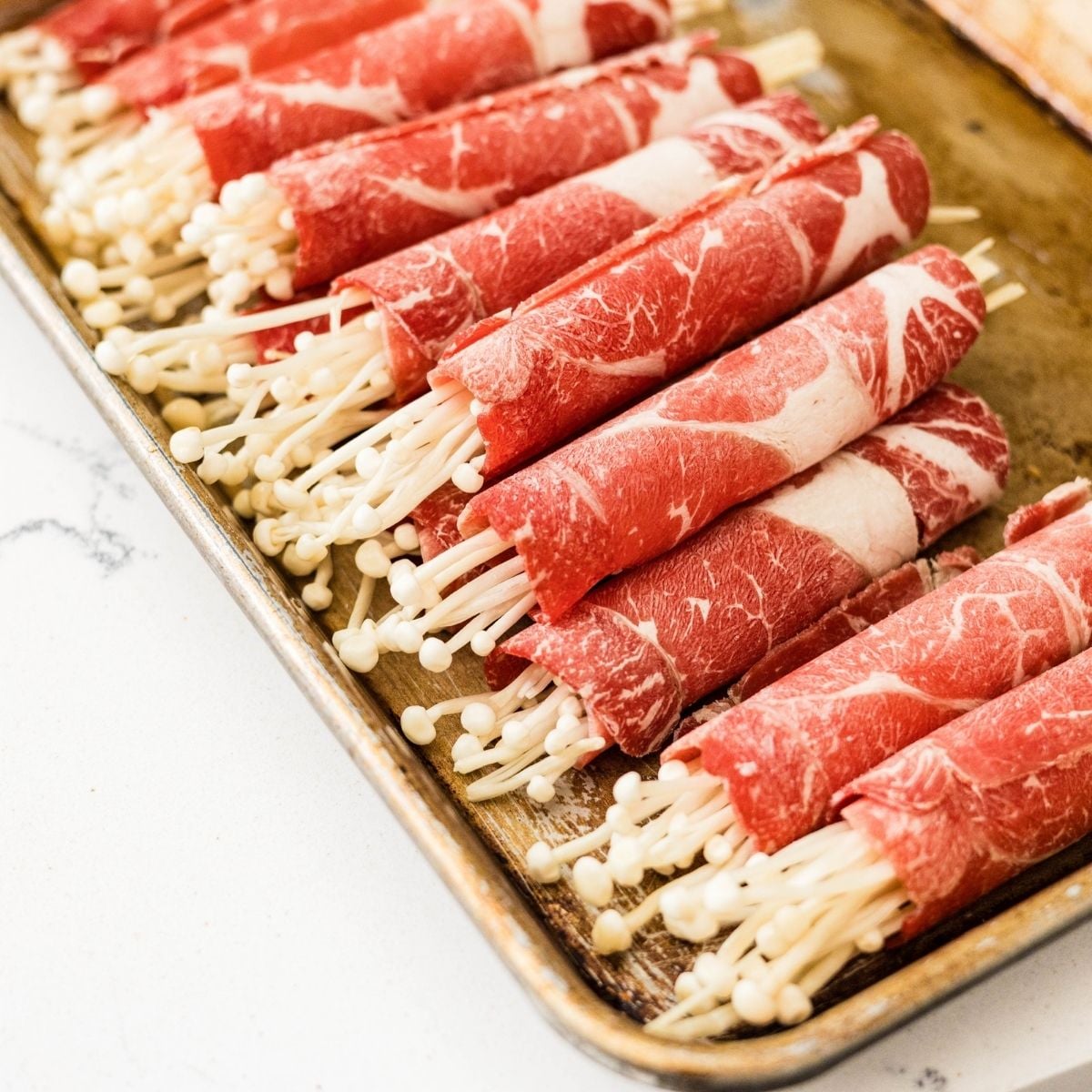
- Fill the rolls. Tuck a bundle of enoki into the center of each frozen beef roll. Repeat with the rest of the beef and mushrooms.
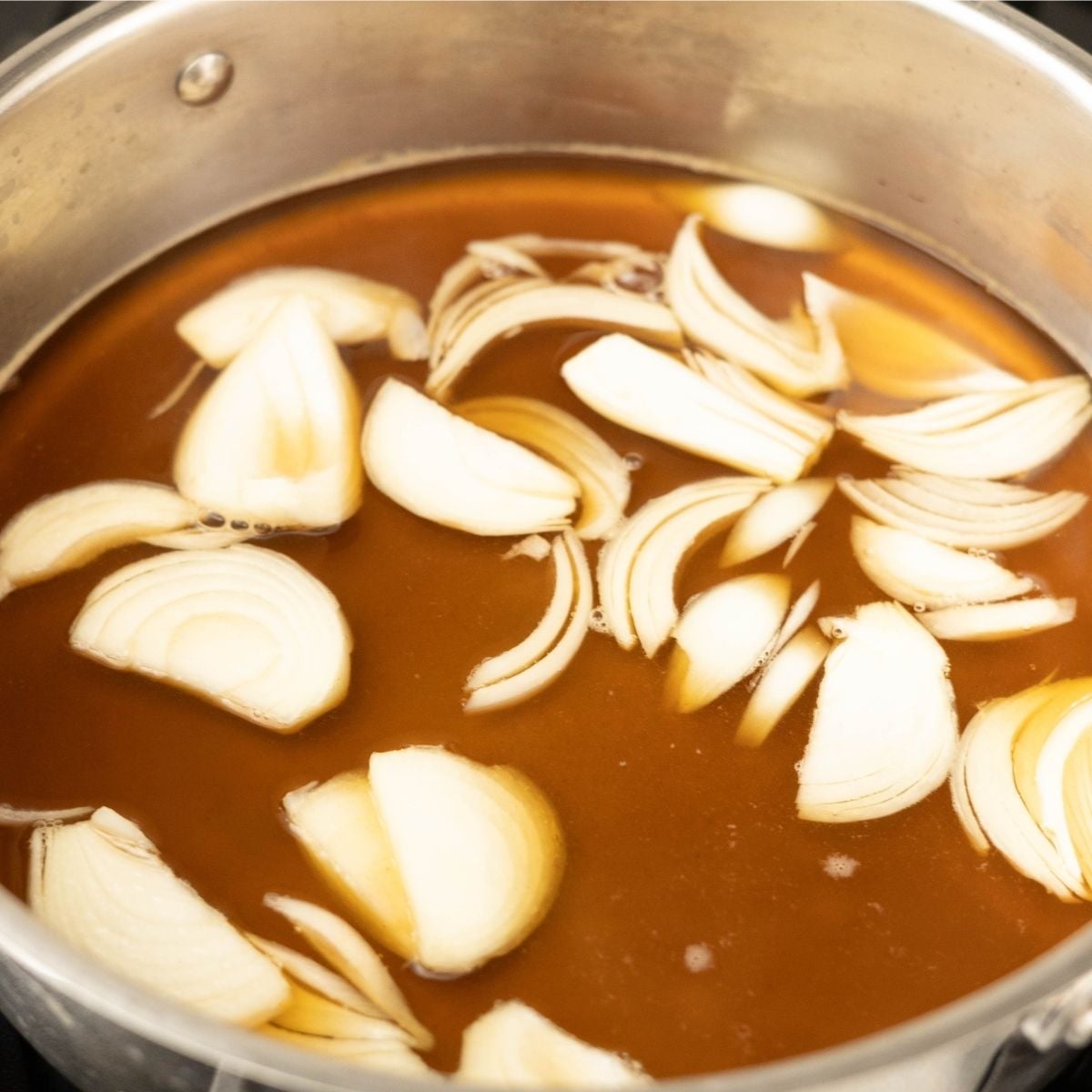
- Make the broth. In a large skillet or shallow pan, stir together the water, dashi powder, mirin, sake, soy sauce, brown sugar, and ginger if you are using it. Stir until the sugar dissolves, then scatter the sliced onions across the bottom of the pan in an even layer and bring it to a gentle simmer over medium heat.
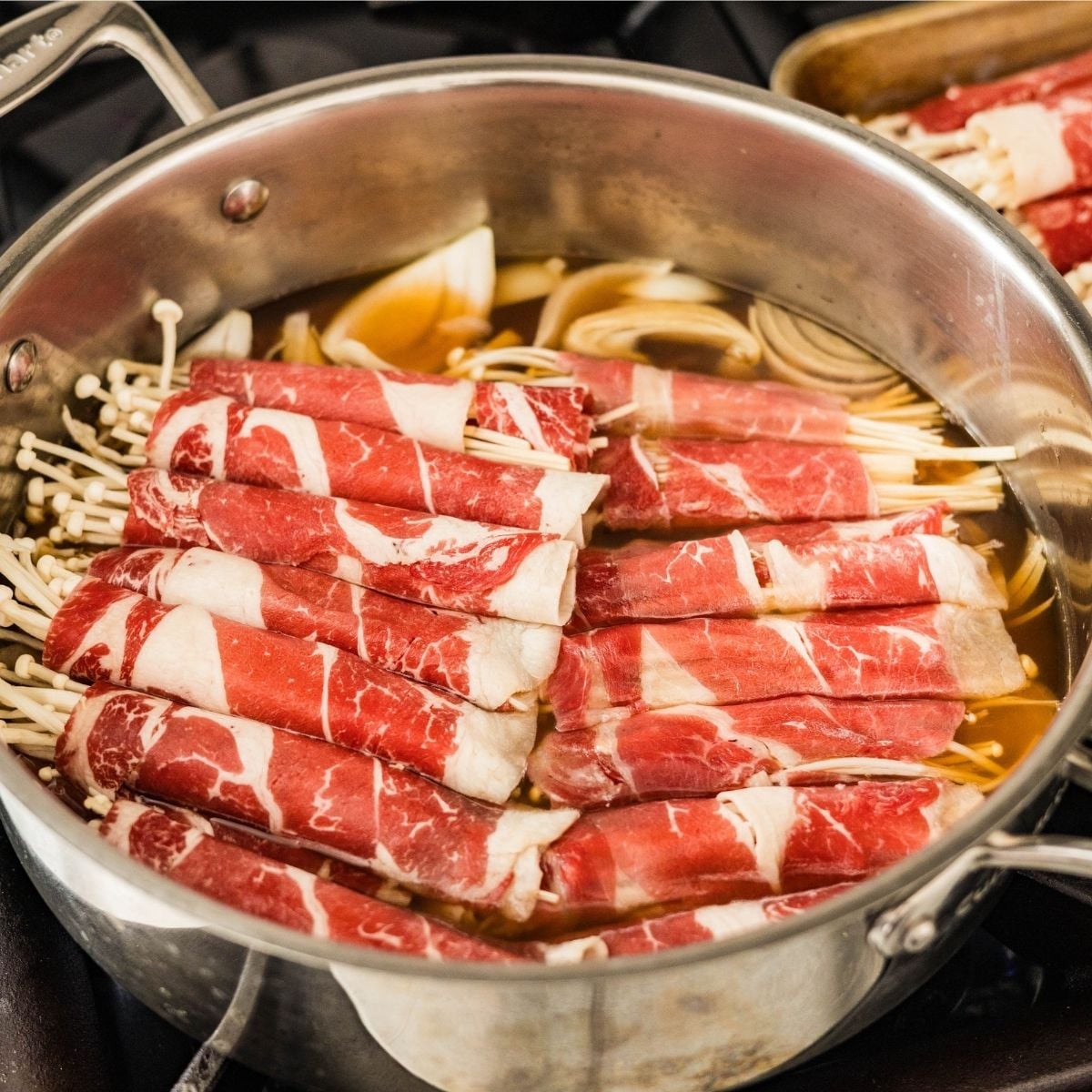
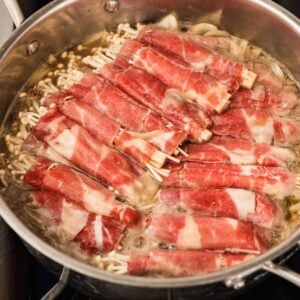
- Add the beef rolls. Arrange them over the onions in a single layer, seam side down, so they cook evenly and stay closed.
- Simmer. Cover and cook over medium low for 6 to 8 minutes, turning the rolls once or twice. Take the lid off and simmer another 2 to 4 minutes, until the beef is cooked through and the broth has reduced slightly.
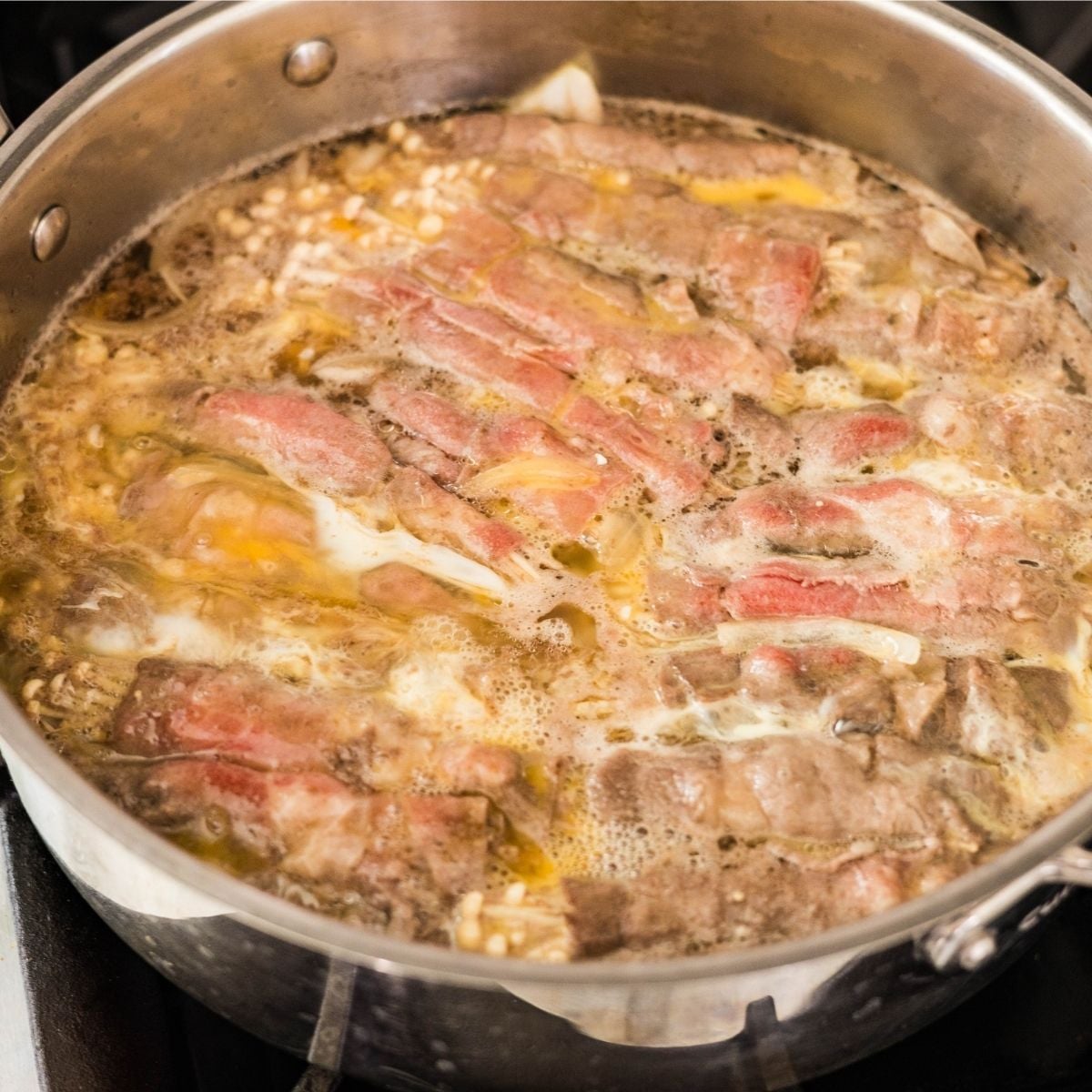
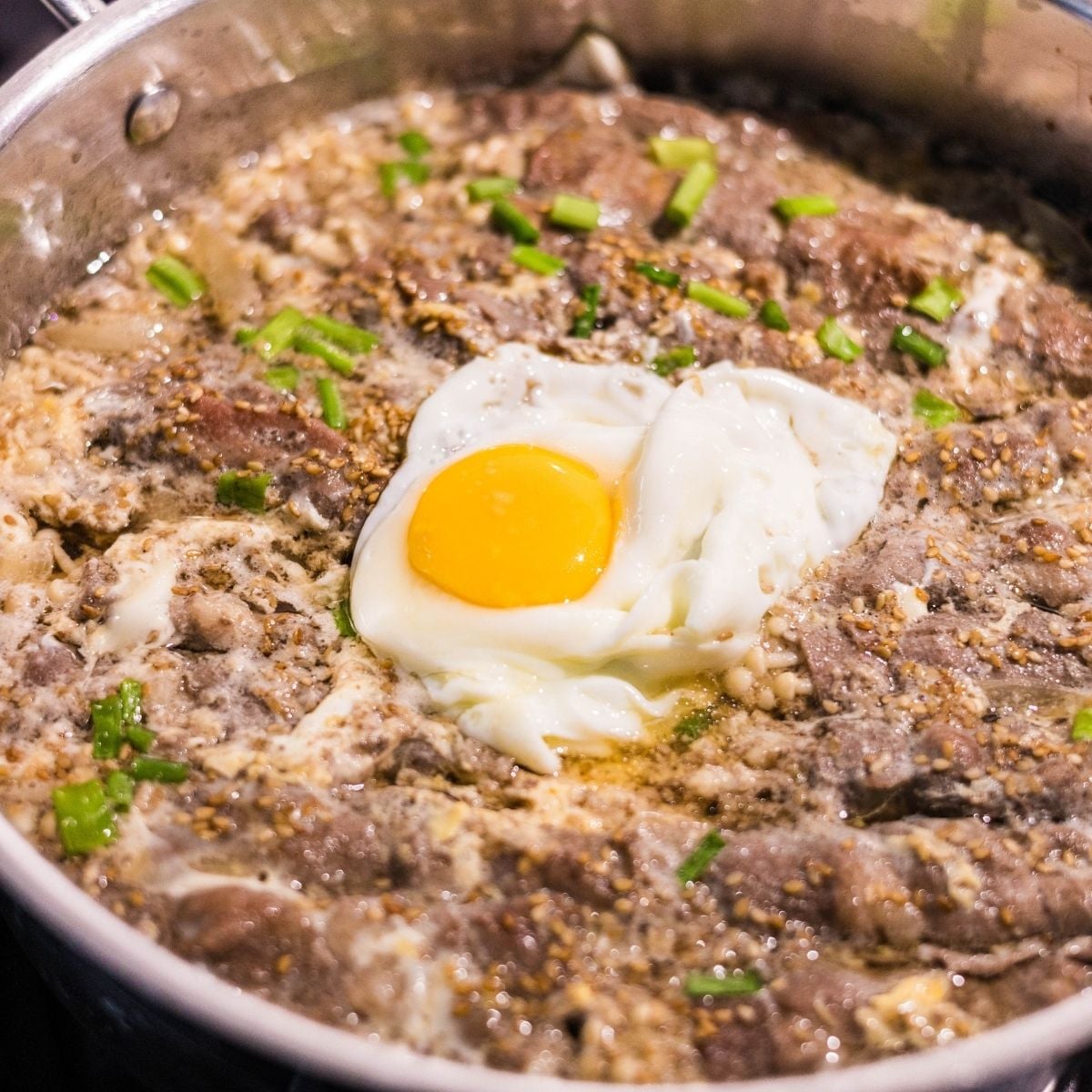
- Add the egg and serve. Pour the beaten egg over the rolls, cover, and cook for about a minute until it is just set. Spoon the broth over everything and serve hot with steamed rice.
Rose's Top Tips
- Check the seam. Frozen rolls cook from the outside in, so the overlap is the last part to lose its pink. That is the spot to look at when you think they are done.
- Listen to the enoki. They should be soft and slippery, not squeaky. Squeaky means a few more minutes covered.
- Do not wait for a glaze. A cup and a half of liquid over a 12- minute simmer stays loose on purpose, and you want enough left to spoon over rice.
- Cut the bundles thinner than feels necessary. A thick bundle cooks unevenly and makes the roll bulge open.
- Already thawed? Lay the slices flat, roll them tightly around the mushrooms, and shorten the covered simmer to about 4 minutes.
What to Serve With Enoki Beef Rolls
- Steamed rice, and enough of it to catch the broth. This is genuinely the main answer.
- Filipino garlic fried rice if you want it to feel like a bigger meal without adding another protein.
- Stir fried garlic green beans, which take about as long as the rolls and cut the sweetness of the broth.
- A simple cucumber salad, since something cold and crisp balances the simmer.
- Miso soup if you want the full set meal.
Variations
- Pork instead of beef. Thinly sliced pork shoulder or pork belly sold for hot pot rolls the same way and takes the same simmer. Pork belly renders more fat into the broth, so skim it or use a leaner cut if you want the broth clean.
- Make it spicy. A teaspoon of gochugaru or a spoonful of chili crisp stirred into the sauce before it simmers. Adding heat at the end sits on top instead of working into the broth.
- Gluten free. Swap the soy sauce for tamari and check the dashi powder label, since many instant dashi blends contain wheat. Mirin and sake are usually fine but worth reading.
- Add vegetables. Napa cabbage or bok choy goes in with the onions at the bottom and cooks in the same time. Anything denser, like carrots, needs to be sliced thin or it will still be firm when the beef is done.
- Richer broth. Cut the water to one cup and add a tablespoon of mirin for something closer to a sukiyaki simmer. The rolls will need turning more often since there is less liquid covering them.
Storage and Reheating
Leftovers keep in the fridge for up to 4 days. Store the rolls in the broth rather than draining them. They dry out fast without it and there is no fixing that afterward.
Reheat gently on the stovetop with the broth over medium heat, or covered in the microwave. If the broth soaked in overnight, add a splash of water first.
Do not freeze the cooked rolls. The enoki turn mushy and lose the texture that makes them worth using.
Recipe FAQs
No, but it is easier. Frozen rolls hold their shape and do not tear. If yours is thawed, roll the slices around the mushroom bundles and cut the covered simmer to about 4 minutes.
Usually the beef was too warm when you filled it, or the rolls went into the pan seam side up. Keep the beef cold and set them seam side down.
An equal amount of mirin, though the broth comes out sweeter. Dry sherry also works.
Water plus sugar, roughly three parts water to one part sugar. Non-alcoholic mirin is sold at most Asian markets if you want to skip the alcohol entirely.
Mild, and much less mushroomy than the usual button or cremini. The texture is what people notice: thin, slightly chewy strands closer to noodles than to a sliced mushroom. That is why this dish works for people who think they do not like mushrooms.
Not for the same result. Enoki have a thin, noodle-like texture that holds up to the simmer. Shimeji is the closest substitute. Sliced shiitake works in the broth but will not stay inside a roll.
They keep about a week in the fridge in their bag. Add them to soup near the end of cooking, or use them in a chicken and mushroom stir fry.
More Asian Weeknight Dinners

Did you try this recipe?
Share how it turned out in the comment box below, and if you loved it, share it on Facebook, Pinterest & Instagram.
Thank you!

Easy Enoki Beef Rolls
Equipment
- Large skillet or shallow pan, 11 to 12 inches, with a lid
Ingredients
- 16 ounces frozen thinly sliced beef chuck | shabu shabu or sukiyaki cut kept frozen
- 2 bundles enoki mushrooms (root ends trimmed) separated into small bundles
- 1 cup sweet yellow onion sliced
- 2 large eggs beaten
For the broth
- 1½ cups water
- 1 teaspoon dashi powder
- 2 tablespoons mirin
- 2 tablespoons sake
- 2 tablespoons soy sauce
- 2 tablespoons brown sugar
- 1 teaspoon ginger (grated) optional
- 2 tablespoon green onion thinly sliced, for garnish
Instructions
- Keep the beef in the freezer until you are ready to fill the rolls. Frozen beef holds its shape and does not tear.16 ounces frozen thinly sliced beef chuck | shabu shabu or sukiyaki cut
- Trim off and discard the tough root ends of the enoki. Rinse under cold water, pat dry, and separate into small, thin bundles.2 bundles enoki mushrooms (root ends trimmed)
- Tuck a bundle of enoki into the center of each frozen beef roll. Repeat with the remaining beef and mushrooms.16 ounces frozen thinly sliced beef chuck | shabu shabu or sukiyaki cut, 2 bundles enoki mushrooms (root ends trimmed)
- In a large skillet or shallow pan, stir together the water, dashi powder, mirin, sake, soy sauce, brown sugar, and ginger until the sugar dissolves. Scatter the onions across the bottom of the pan in an even layer and bring to a gentle simmer over medium heat.1½ cups water, 1 teaspoon dashi powder, 2 tablespoons mirin, 2 tablespoons sake, 2 tablespoons soy sauce, 2 tablespoons brown sugar , 1 teaspoon ginger (grated)
- Arrange the beef rolls over the onions in a single layer, seam side down.16 ounces frozen thinly sliced beef chuck | shabu shabu or sukiyaki cut, 1 cup sweet yellow onion
- Cover and simmer over medium low for 6 to 8 minutes, turning the rolls once or twice.
- Uncover and simmer for another 2 to 4 minutes, until the beef is cooked through and the broth has reduced slightly.
- Pour the beaten eggs over the rolls, cover, and cook for 1 minute until just set. Top with sliced green onion, spoon the broth over the rolls, and serve hot with steamed rice.2 large eggs, 2 tablespoon green onion
Save This Recipe 💌
Notes
- Beef: Frozen thinly sliced beef chuck sold for hot pot or shabu shabu. Costco sells it as hot pot beef chuck rolls in a 16 ounce package, and Asian markets carry the same thing labeled shabu shabu or sukiyaki beef. Thinly sliced ribeye works and gives a richer broth.
- Keep it frozen: Fill the rolls straight from the freezer. Thawed beef goes tacky, sticks to itself, and tears. If yours is already thawed, roll the slices around the mushroom bundles and cut the covered simmer to about 4 minutes.
- Enoki: Separate into bundles no thicker than a finger. A thick bundle stays raw in the middle and makes the roll bulge open.
- Substitutions: Mirin can replace the sake, though the broth comes out sweeter. Tamari works for the soy sauce, but check the dashi label too, since many instant dashi blends contain wheat.
- The egg is optional: Skip it and simmer the rolls an extra minute or two instead.
- Make-ahead: Fill the rolls up to a day ahead, cover, and keep them in the fridge. Mix the broth ahead and refrigerate it separately for up to 3 days.
- Storage: Up to 4 days in the fridge, stored in the broth rather than drained. They dry out quickly without it.
- Reheating: Gently on the stovetop with the broth over medium heat, or covered in the microwave. Add a splash of water if the broth soaked in overnight.
- Freezing: Do not freeze the cooked rolls. The enoki turn mushy.
- Serving: Steamed rice, and enough of it to catch the broth.

Rose Sioson says
Quick tip: trim the enoki root and split it into small bundles before wrapping. Start the rolls seam side down and let them brown before turning, since that sear keeps them sealed.