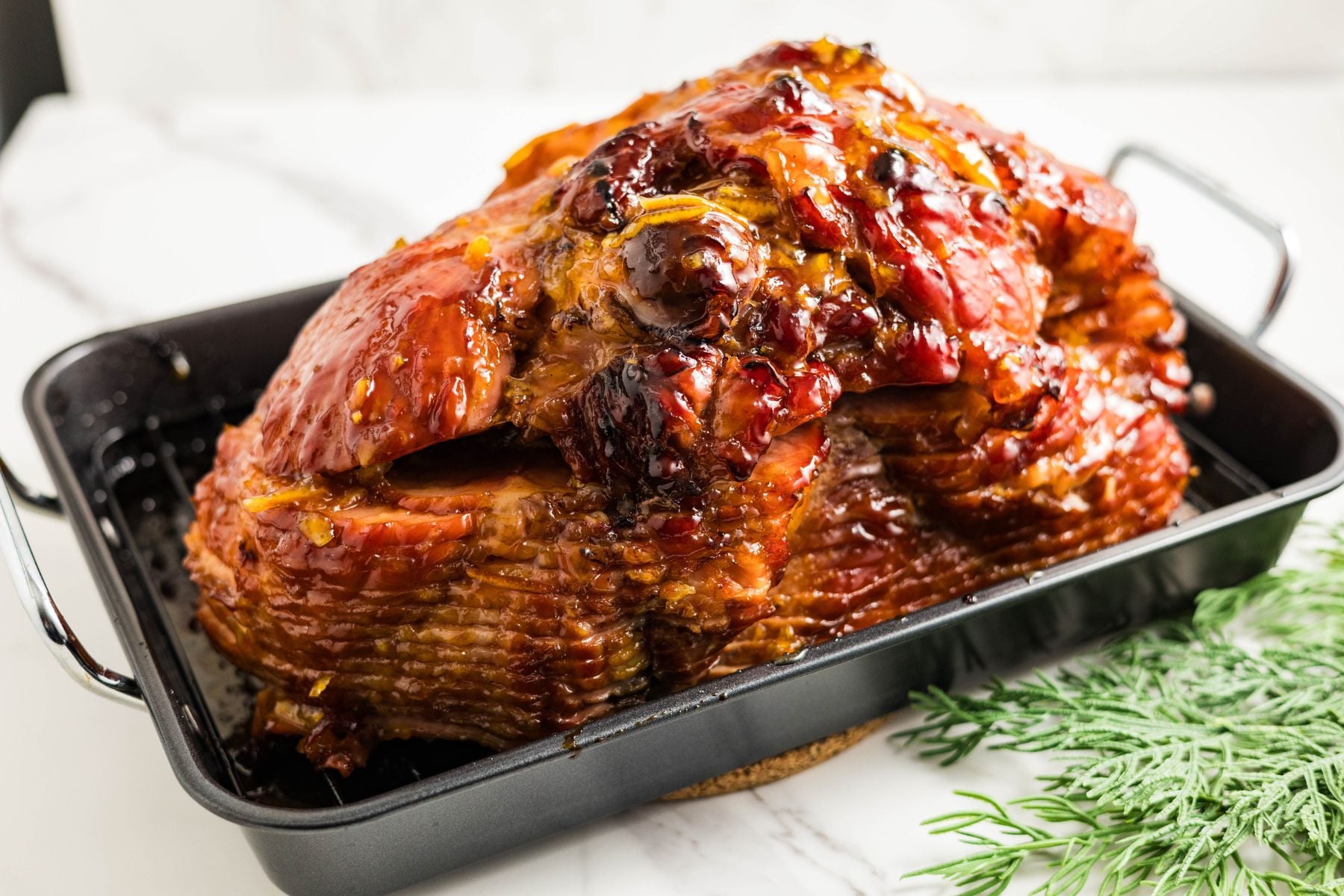
I made this the first time because I had half a jar of orange marmalade to use up and an 8-pound spiral ham from Costco taking up most of the fridge. The maple syrup went in because it was sitting right next to the marmalade.
That accident is now the ham people ask me to bring.
Here is what I worked out after making it a few times: the marmalade is doing more than adding orange flavor. The peel brings pectin with it, so the glaze sets and grips the slices instead of running off and pooling in the bottom of the pan. That is the thing that goes wrong with most spiral ham glazes, and this one fixes it without any extra step.
This orange maple glazed ham takes a little under two hours, and almost all of that is the oven doing the work. The lemon juice keeps the sweetness in check, and the last twenty minutes uncovered is where the edges go sticky and dark.
Build a holiday plate around it with old-fashioned sweet potato casserole, or serve it on a Sunday and eat the leftovers all week.
Save This Recipe 💌
Jump to:
Why This Glazed Ham Works
- Almost entirely hands-off. The ham is already fully cooked, so you are warming it through, not cooking it. That makes the timing forgiving and keeps you out of the kitchen for most of the two hours.
- The glaze actually stays on. Pectin from the orange peel sets the glaze as it cools, so it grips the cut slices instead of sliding into the bottom of the pan.
- Sweet, but held in check. Maple and marmalade together would read as syrup. A tablespoon of lemon juice pulls it back.
- Simple glaze ingredients. Everything is easy to find, with no specialty-store run in the middle of a holiday week.
- Feeds 12 to 16 from an 8-pound bone-in ham. The leftovers are as much the point as the dinner is.
- Bourbon is optional and always was. It adds warmth at the back of the glaze, and the recipe holds up fine without it.
Ingredients You’ll Need
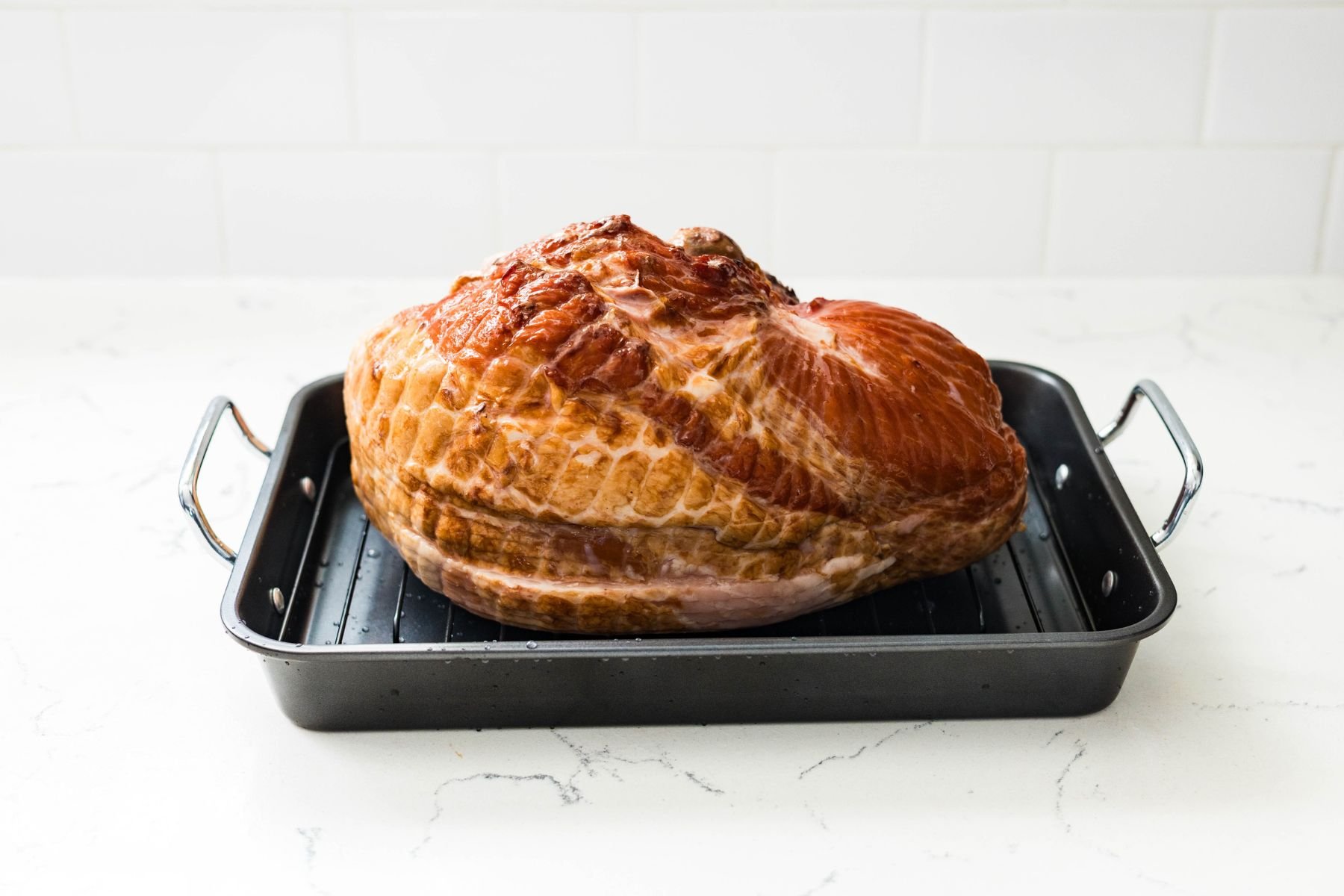
- Spiral ham, 8 pounds, fully cooked and bone-in. The bone keeps the meat around it from drying out and gives you something to make soup with later. Boneless works but heats faster and comes out drier, so pull it earlier and check the temperature sooner.
- Orange marmalade. The peel and pectin help the glaze thicken and cling to the ham. Orange jam can work in a pinch, but it won't give you quite the same citrusy texture and bite.
- Pure maple syrup. Use real maple syrup rather than pancake syrup for the best maple flavor.
- Fresh lemon juice. One tablespoon, and do not skip it. Maple and marmalade together read as straight sugar without something acidic pulling against them. Bottled works in a pinch but tastes duller.
- Butter. Gives the glaze its shine and helps it spread thin instead of sitting in clumps. Salted or unsalted, it does not matter much here since the ham brings plenty of salt.
- Cinnamon. A small amount, about a quarter teaspoon. Enough to warm the citrus, not enough to make it read as a spice ham.
- Bourbon, optional. It mellows as the glaze simmers and adds a little warmth behind the orange. Leave it out and the recipe still works.
See recipe card for quantities.
What Ham to Buy
Look for fully cooked on the label. Most supermarket hams are, but "fresh ham" is raw pork leg and needs an entirely different cook time and a higher final temperature. Check before you get to the register.
Spiral-cut saves you carving and lets the glaze reach between the slices. The tradeoff is that all those exposed surfaces dry out faster, which is why this recipe keeps the ham covered for most of the bake. An uncut half ham stays juicier if you are willing to score and slice it yourself.
Shank or butt portion both work. Shank is the tapered end, easier to carve, slightly leaner. Butt is the wider upper cut with more marbling and a trickier bone. If the label just says "half ham," it is one of these two.
How much to buy: about half a pound per person for bone-in, or a third of a pound for boneless. An 8-pound bone-in ham feeds 12 to 16, and that is before you account for leftovers, which you will want.
If you are buying at Costco, the Kirkland spiral hams usually run 8 to 10 pounds, which is right in range for this glaze quantity.
Easy Swaps and Add-Ins
- No bourbon? Apple juice or an extra squeeze of lemon. Both keep the glaze from going one-note.
- No marmalade? Apricot preserves are the closest match. They are sweeter and have less bite, so add an extra teaspoon of lemon juice and simmer a minute longer to thicken.
- Want heat? A pinch of cayenne in the glaze. It stays in the background and cuts the sweetness the way the lemon does.
- Honey instead of maple? It works, but honey browns faster. Watch the last twenty minutes more closely or the edges will go past caramelized.
How to Make Orange Maple Glazed Ham
- Prepare the ham. Preheat the oven to 325°F. Place the spiral ham cut-side down in a roasting pan and pat the outside dry so the glaze sticks better.
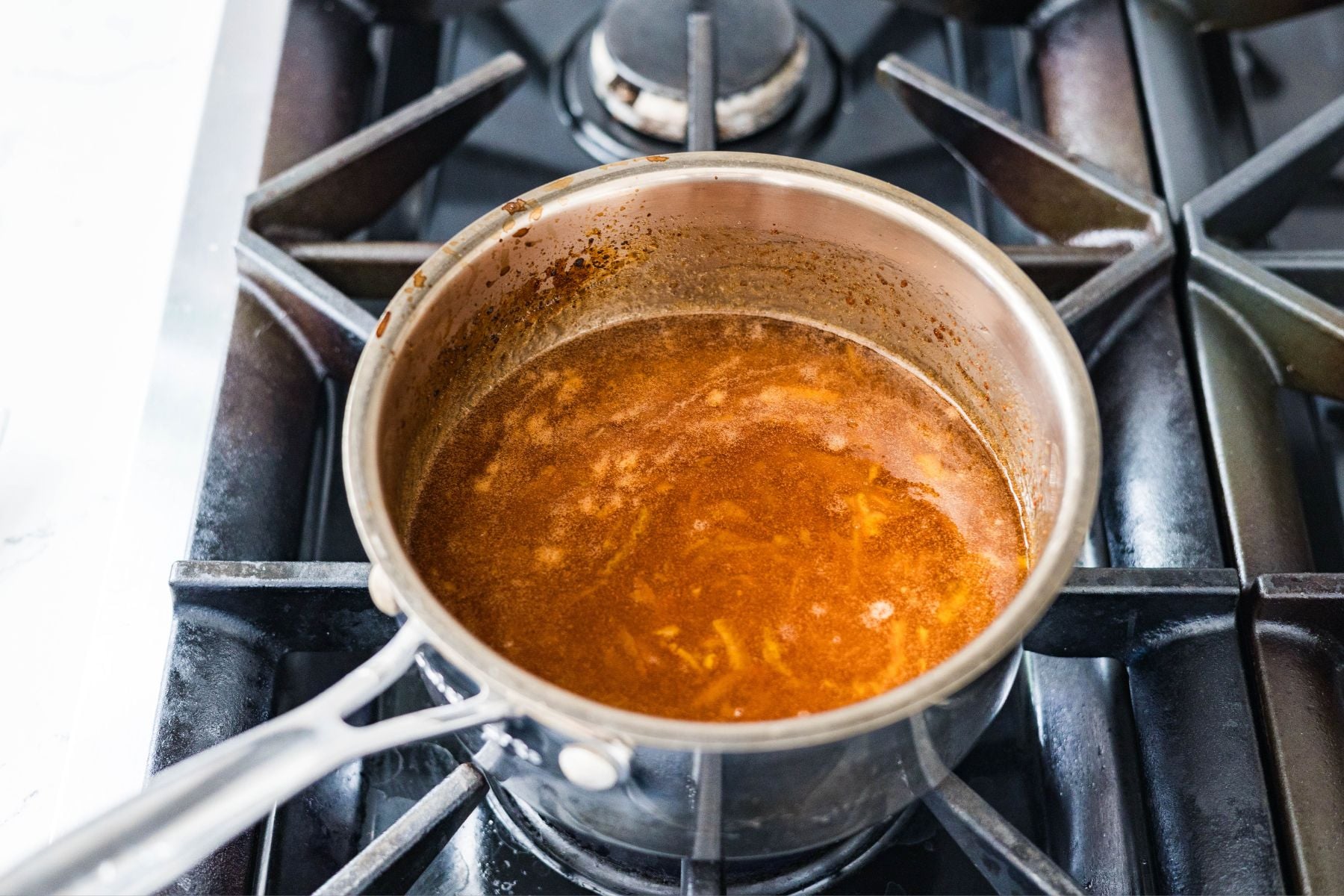
- Make the orange maple glaze. Combine the marmalade, maple syrup, butter, lemon juice, cinnamon, and bourbon, if using, in a small saucepan. Simmer over medium-low heat for 5 to 7 minutes, stirring, until smooth, glossy, and thick enough to coat the back of a spoon. Reserve about one-third of the glaze for the final coating.
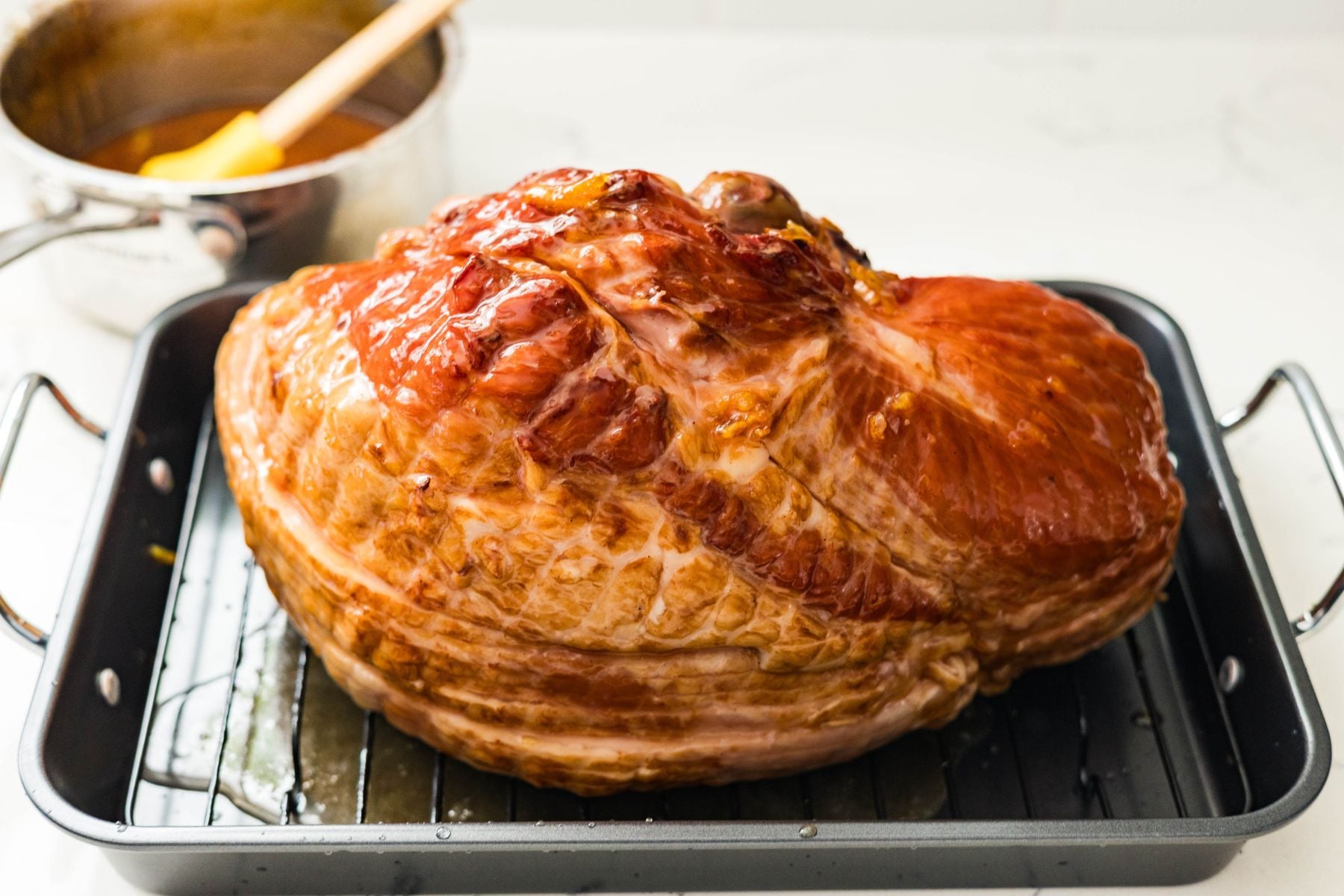
- Glaze the ham. Brush the ham generously with some of the glaze, working a little between the spiral slices. Pour ½ to 1 cup water or orange juice into the bottom of the roasting pan. Save enough glaze for basting as the ham heats.
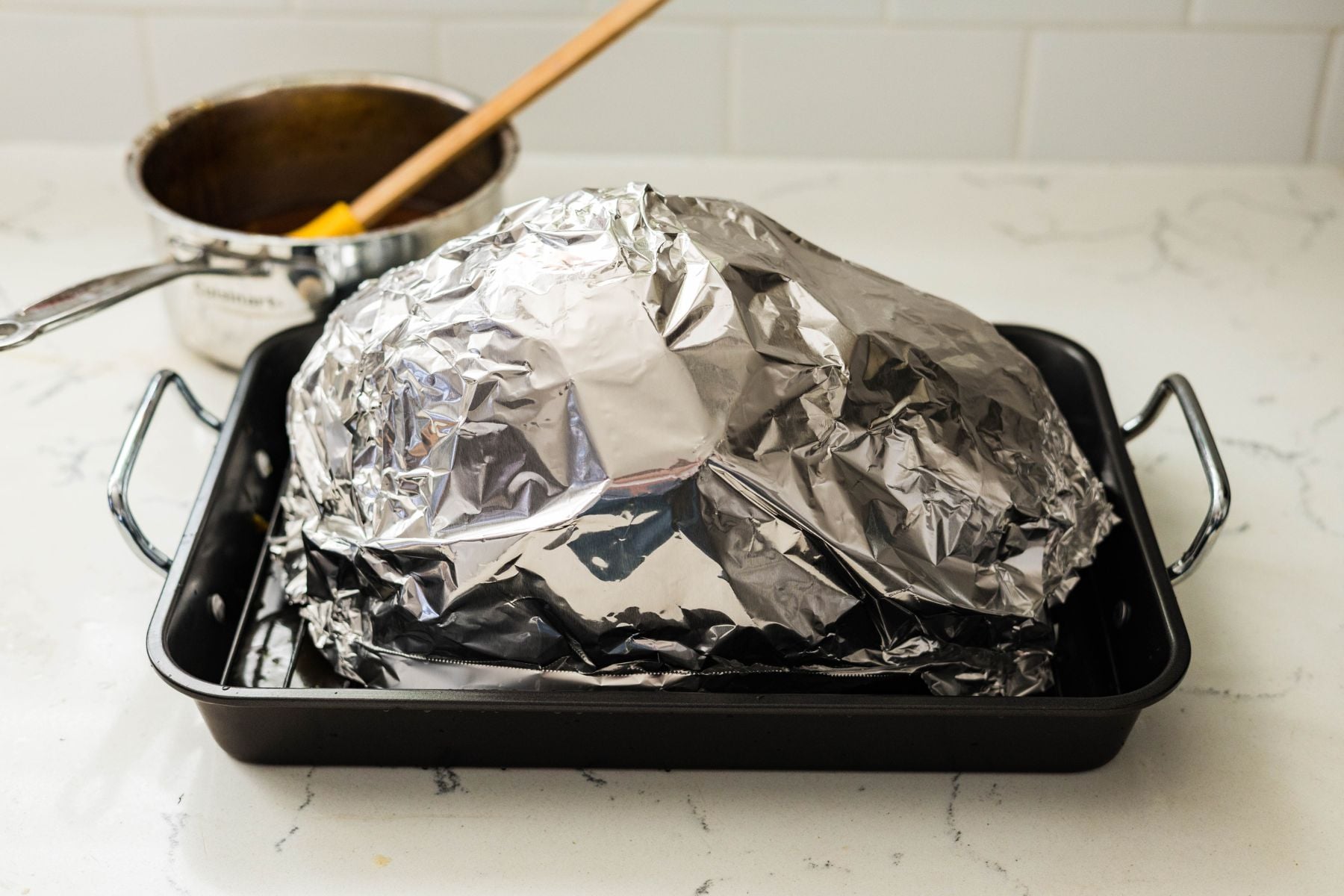
- Cover and bake. Loosely tent the ham with foil and bake for about 12 to 15 minutes per pound, basting with more glaze about every 30 minutes. Start checking the temperature early and heat until the thickest part approaches 140°F.
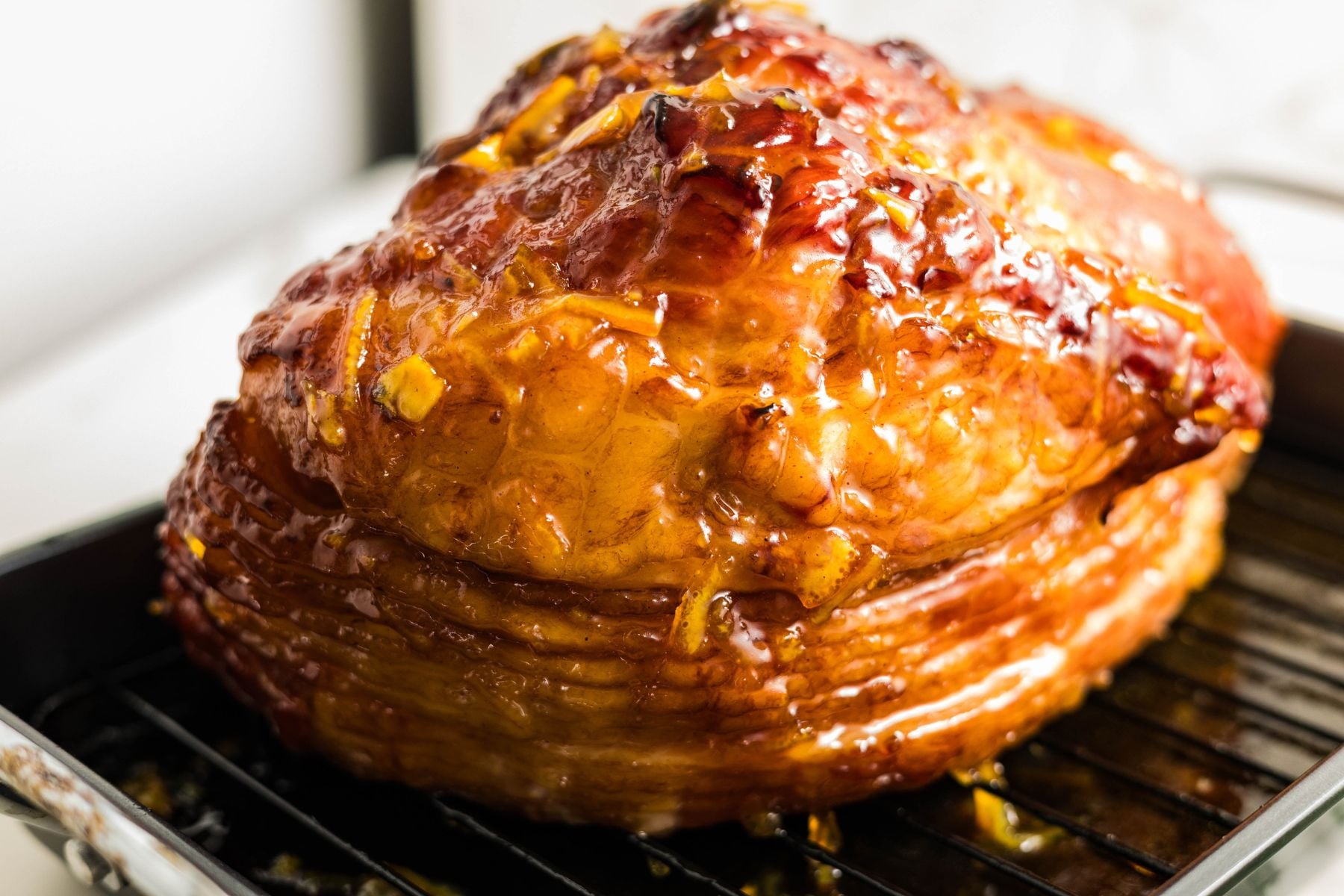
- Add the final glaze. During the last 20 minutes, remove the foil and brush the reserved glaze generously over the ham. Return it to the oven uncovered until the glaze is sticky and caramelized and the center reaches 140°F.
- Rest and serve. Remove the ham from the oven and let it rest for about 10 minutes before serving. Spoon any extra glaze over the slices if desired.
How Long to Cook a Spiral Ham
Plan on 12 to 15 minutes per pound at 325°F, covered, until the center reaches 140°F. An 8-pound ham will take roughly 1 hour 40 minutes to 2 hours.
Use temperature as your guide, not just time. Ham shape can affect cooking time, so insert an instant-read thermometer into the thickest part without touching the bone. Start checking about 20 minutes early.
Rough guide at 325°F:
- 5 to 6 pounds: 1 to 1½ hours
- 7 to 8 pounds: 1½ to 2 hours
- 9 to 10 pounds: 2 to 2½ hours
The final 20 minutes uncovered for glazing are included in these times.
Because spiral ham is already fully cooked, you're reheating it rather than cooking it from raw. For a fully cooked ham packaged in a USDA-inspected plant, heat it to 140°F. Going much higher can dry it out, especially since the exposed slices of a spiral ham lose moisture quickly.
If the ham finishes early, remove it from the oven and loosely tent it with foil. It can rest for about 30 minutes without a problem.
If Your Ham Is Not Spiral-Cut
An uncut half ham works with this glaze, and it comes out juicier than spiral does. You just have to give the glaze somewhere to sit.
Trim the fat cap down to about a quarter inch if it is thicker than that. Then score it in a crosshatch: shallow diagonal cuts about an inch apart, running one direction and then the other, deep enough to cut through the fat but not into the meat. Those cuts open up as the ham heats and catch the glaze instead of letting it slide off a smooth surface.
Add roughly 2 to 3 minutes per pound to the times above. Heat has to travel through solid meat rather than between slices, so an uncut 8-pound ham runs closer to 2 hours 15 minutes. Same 140°F target, same thermometer, same uncovered finish.
Bake it cut side down, the same as spiral, and carve after the ten-minute rest by slicing down to the bone and then along it to release the pieces.
The tradeoff is worth knowing: you do the carving, but the meat holds far more moisture because there is no exposed surface for it to escape from.
Recipe Tips and Troubleshooting
- Let the ham sit out 30 minutes before it goes in. A ham straight from the fridge has a cold center that takes an extra half hour to catch up, and by the time it does, the outer slices have been in the heat too long. Thirty minutes on the counter narrows that gap. Longer than an hour is not worth it.
- Cover loosely, not tightly. Foil pressed flat against the ham steams it and turns the edges soft. Tent it so there is air space and a little room for steam to escape, and the meat stays moist without going soggy.
- Put liquid in the pan. A cup of water or orange juice in the bottom of the roasting pan does two jobs: it adds steam, and it keeps the sugary drippings from scorching onto a dry pan. Most burnt-glaze problems start here, not on the ham itself.
- Hold back a third of the glaze. The final uncovered stretch is the only time the glaze can set and darken. If you have used it all up basting, there is nothing left to build that sticky layer with.
If something goes wrong
- Glaze is too dark, or the pan is smoking. The drippings are burning, not the ham. Add liquid to the pan and tent the ham loosely with foil. Next time, start with the liquid in there.
- Glaze is sliding off. The glaze was too thin when it went on, or the ham surface was wet. Simmer the glaze another two minutes until it coats a spoon, and pat the outside of the ham dry before the first layer.
- Ham tastes too sweet. More lemon juice in the glaze. Add it a teaspoon at a time and taste as you go, since you can't take it back out.
- Edges are dry. Overheating is usually the cause. Since the ham is already fully cooked, going much beyond 140°F can dry it out quickly.
- Glaze set too firm between bastings. Thirty seconds over low heat and it pours again. This is normal, not a mistake.
What to Serve With Orange Maple Glazed Ham
The glaze is sweet, citrusy, and salty, so I like balancing it with creamy sides, roasted vegetables, and something fresh.
- Old-fashioned sweet potato casserole. A holiday classic that belongs next to glazed ham. The creamy sweet potatoes work especially well with the salty meat and orange-maple glaze.
- Boursin mac and cheese. Creamy and savory enough to balance the sweetness of the ham, and always a good choice when you're feeding a holiday crowd.
- Roasted Brussels sprouts. Let the edges get really browned. That little bit of bitterness is exactly what a sweet glazed ham needs.
- Crack green beans. An easy green side that works especially well when the rest of the plate is rich and creamy.
- Arugula and pomegranate salad. Peppery greens and tart pomegranate give the plate something fresh and bright between bites of ham.
Slow Cooker Method
If the oven is full, the slow cooker handles this well. You trade the caramelized edges for a more forgiving cook, which on a holiday afternoon is a fair deal.
Buy for the pot, not the table. A 6-quart slow cooker fits a ham up to about 7 pounds. Anything larger will not close, and a lid that does not seal defeats the point.
Place the ham cut side down. Pour about half a cup of water or orange juice into the bottom so it does not stick and scorch. Cook on low for 4 to 5 hours until the center reads 140°F. Same target as the oven, same thermometer, same rule about pulling it on temperature rather than on the clock.
Hold the glaze until the last 30 minutes. This is the part people get wrong. A slow cooker traps moisture, so glaze added at the start thins out, slides to the bottom, and the sugar in it burns against the crock. Brush it on near the end and let it set in the residual heat.
For sticky edges, finish it in the oven. Move the ham to a roasting pan, brush on the reserved glaze, and give it 10 to 15 minutes at 400°F uncovered. This is the only way to get real caramelization out of a slow cooker ham, and it takes almost no time if the oven has freed up by then.
If the ham is slightly too big for the pot, cover the crock tightly with foil and set the lid on top of that. Not ideal, but it works.
Make Ahead, Storage, and Leftovers
The glaze keeps two days. Make it ahead, store it in a sealed jar in the fridge, and reheat it gently until it pours again before you use it. This is the piece I would always do in advance, because it is the only part of the recipe that needs your attention at the stove.
Baking the ham ahead is not the shortcut it looks like. Reheating can dry out a spiral ham, so I prefer baking it as close to serving time as possible. If you're serving within two hours, it can rest loosely tented after baking. Otherwise, refrigerate it promptly and reheat before serving.
Leftovers keep 3 to 4 days in the fridge in an airtight container. Slices dry out faster than a chunk does, so if you know you are not eating it all within a day or two, leave part of it uncarved.
Freezing: up to 2 months. Wrap portions tightly, press the air out, and freeze in meal-sized amounts rather than one large block. Thaw overnight in the fridge. The texture holds up better than you would expect, though the glaze loses some of its shine.
Reheating Leftover Ham
Low heat and a lid. That is the whole method.
Put the slices in a baking dish with a splash of water or orange juice in the bottom, cover tightly with foil, and warm at 300°F for 10 to 15 minutes until just heated through. Reheat leftover ham to 165°F in the center. The liquid turns to steam under the foil and keeps the slices from drying, which is exactly what a hot uncovered oven does to them in about five minutes.
If you have leftover glaze, brush a little on before the foil goes over. It wakes the ham back up and covers for whatever moisture the fridge took out.
Microwave version: cover the plate, use half power, and go in 30-second bursts. Full power turns ham rubbery faster than almost anything else in the fridge.
Skillet version, and my preference for a couple of slices: a dry nonstick pan over medium, 30 to 45 seconds a side. The edges crisp slightly and the glaze re-caramelizes. This is the best thing to do with ham you are putting on a sandwich or over rice.
Take out only what you are eating. Warming the whole container and putting the rest back means that ham goes through the heat twice, and the second pass is what makes it tough.
What to Do With the Ham Bone
Do not throw it out. There is more meat clinging to it than it looks like, and the bone is the actual reason to buy bone-in.
For stock: cover it with water in a large pot, add an onion halved, two or three bay leaves, and a few peppercorns. Simmer uncovered for about 2 hours. Strain, and pick off any meat still attached. You will get a smoky, salty broth that is worth more than most of what you can buy.
Salt at the end, never at the start. Ham stock is already salty and it concentrates as it reduces. Season the finished dish, not the pot.
What to use it in: split pea soup and white bean soup are the classics and they are classics for a reason. It also carries a pot of beans, a lentil soup, or a pot of rice cooked in the broth instead of water. If you want something closer to home, the broth works under pork and green peas in place of plain water.
If you are not cooking this week: the bone freezes up to 3 months. Wrap it tight, or break it down first if it will not fit. Frozen stock keeps about 4 months.
Recipe FAQs
Both. Baste during the bake so the glaze works into the slices, then save about a third for the last 20 minutes uncovered. That reserved layer is the only one that sets and darkens, because it needs direct heat with the foil off. Glaze applied only at the end sits on the surface. Glaze applied only at the start disappears into the pan.
Two causes. The glaze was too thin when it went on, or the ham surface was wet. Simmer the glaze until it coats the back of a spoon and holds a line when you drag a finger through it, and pat the outside of the ham dry before the first layer. Spiral ham is smooth and already moist, so there is nothing for a runny glaze to grab.
Keep it covered for most of the bake, baste every 30 minutes, and pull it at 140°F. The last one matters most. Your ham came fully cooked, so every degree past 140 is moisture leaving the meat, and spiral cuts lose it faster because all those slices are exposed surface.
140°F in the thickest part, away from the bone. Fully cooked hams from USDA-inspected plants only need reheating to that. If your label does not say fully cooked, or it is a fresh ham, that is raw pork leg and needs 145°F with a three-minute rest.
About half a pound per person for bone-in, or a third of a pound for boneless. An 8-pound bone-in ham feeds 12 to 16. Buy on the generous side, since the leftovers are half the reason to make a ham.
Yes, in equal amounts. Honey browns faster than maple does, so watch the final 20 minutes more closely or the edges go past caramelized into burnt. The flavor comes out floral rather than woody, which is a fair trade if honey is what you have.
Yes, and it comes out juicier. Score the fat cap in a crosshatch about an inch apart so the glaze has somewhere to sit, and add 2 to 3 minutes per pound since heat has to travel through solid meat instead of between slices. Same 140°F target.
No. It cooks off during the simmer and leaves a little warmth behind the orange, but the glaze works without it. Apple juice or an extra squeeze of lemon fills the gap if you want the liquid.
More Holiday Recipes to Try
Looking for other recipes like this? Try these:

Did you try this recipe?
Share how it turned out in the comment box below, and if you loved it, share it on Facebook, Pinterest & Instagram.
Thank you!


Orange Maple Glazed Ham
Equipment
- 1 Roasting rack depends on the size of your ham
- 1 thermometer
- Aluminum foil
- basting brush
Ingredients
- 8 lb spiral-cut ham fully cooked
- 1 cup orange marmalade
- ½ cup pure maple syrup
- 4 oz bourbon optional
- Juice of 1 lemon
- 2 tablespoons butter
- ¼ teaspoon cinnamon
Instructions
- Prepare the ham. Preheat the oven to 325°F. Place the fully cooked spiral ham cut-side down in a roasting pan and pat the surface dry.8 lb spiral-cut ham
- Make the glaze. In a small saucepan, combine the orange marmalade, maple syrup, butter, lemon juice, cinnamon, and bourbon, if using. Simmer over medium-low heat for 5 to 7 minutes, stirring, until smooth and slightly thickened. Reserve about one-third of the glaze for the end.1 cup orange marmalade, ½ cup pure maple syrup, 4 oz bourbon, Juice of 1 lemon, ¼ teaspoon cinnamon, 2 tablespoons butter
- Glaze the ham. Brush the ham generously with the glaze, working a little between the spiral slices. Pour ½ to 1 cup water or orange juice into the bottom of the roasting pan.
- Cover and bake. Loosely tent the ham with foil and bake for about 12 to 15 minutes per pound, basting with more glaze about every 30 minutes.
- Caramelize the glaze. During the last 20 minutes, remove the foil and brush the ham generously with the reserved glaze. Continue baking uncovered until the glaze is sticky and caramelized and the thickest part of the ham reaches 140°F.
- Rest and serve. Remove the ham from the oven and let it rest for about 10 minutes before serving. Spoon extra glaze or pan juices over the slices, if desired.
Save This Recipe 💌
Notes
- Use a fully cooked spiral ham. This recipe reheats the ham rather than cooking raw pork.
- Pat the ham dry before glazing. A dry surface helps the orange-maple glaze stick instead of sliding off.
- Reserve about one-third of the glaze. Save it for the final 20 minutes so you get a thick, sticky, caramelized coating.
- Keep the ham loosely covered for most of the bake. This helps prevent the exposed spiral slices from drying out.
- Add ½ to 1 cup water or orange juice to the roasting pan. It keeps the sugary drippings from scorching and adds moisture while the ham heats.
- Bake at 325°F for about 12 to 15 minutes per pound. Use this only as a guide and start checking the temperature early.
- Heat to 140°F. Insert the thermometer into the thickest part of the ham without touching the bone.
- Baste about every 30 minutes. Brush some glaze over the top and between the slices as the ham reheats.
- Uncover for the final 20 minutes. Brush generously with the reserved glaze and let it caramelize.
- Rest for about 10 minutes before serving. This also gives the glaze a few minutes to set.
- If the glaze gets too thick, warm it gently over low heat until it becomes brushable again.
- Watch the glaze closely near the end. Maple syrup and marmalade contain plenty of sugar and can go from caramelized to burnt quickly.