You’re making a gorgeous salad, pulling out ingredients, and then — boom — decision time: balsamic glaze or balsamic vinegar?
They sound similar. They look almost the same. But they’re definitely not interchangeable (unless you want dessert-level sweetness in your marinade).

Save This Recipe 💌
Let’s settle this once and for all: What’s the real difference between balsamic glaze and vinegar?
Here’s your no-nonsense, slightly-sassy kitchen guide to figuring it out.
Jump to:
What Is Balsamic Vinegar?
Balsamic vinegar is the OG.
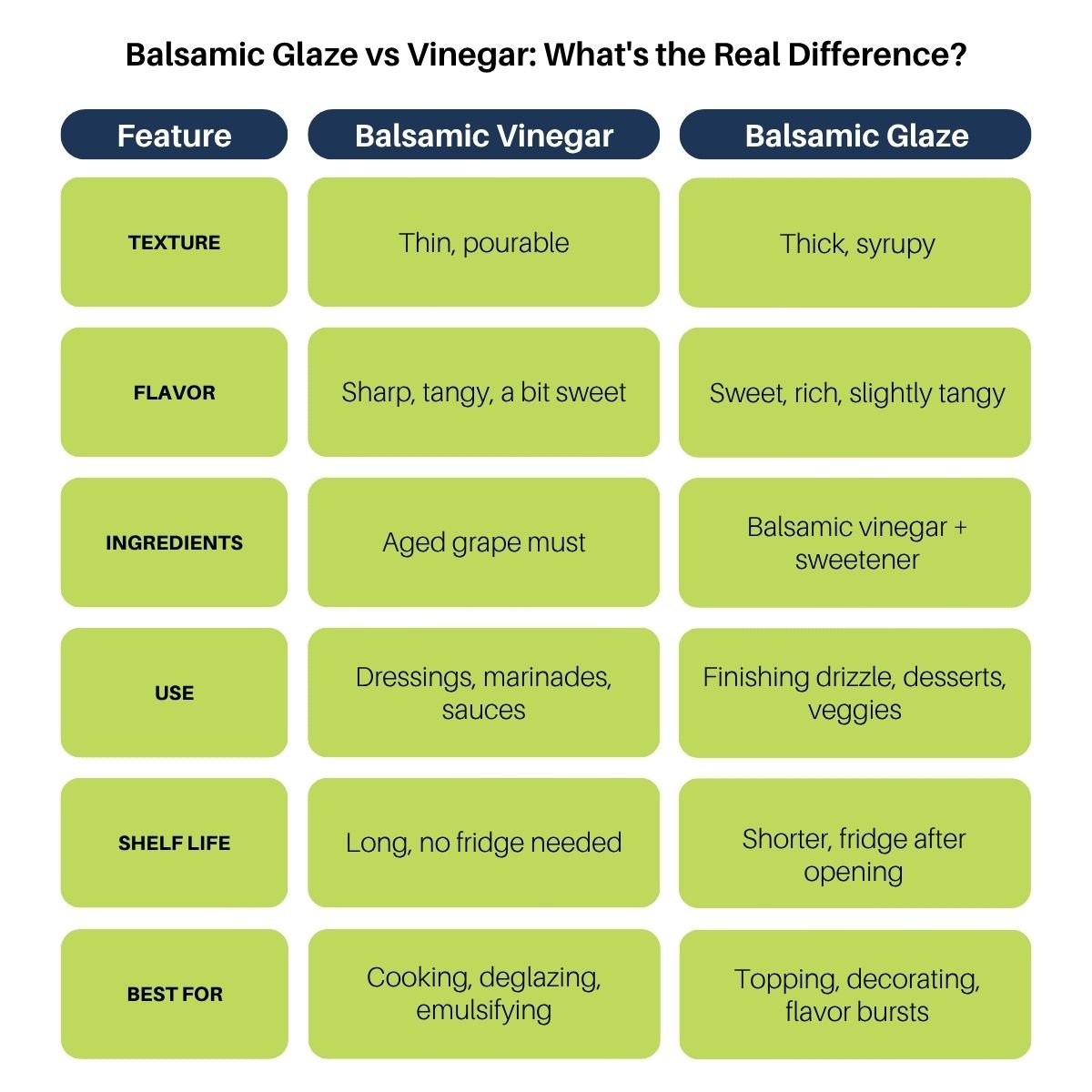
It's made from freshly crushed grape must that's been aged in wooden barrels — sometimes for decades. Traditional balsamic vinegar comes from Modena, Italy, and it's got the bold, tangy flavor to prove it.
Key Facts:
- Thin and pourable
- Bold, acidic with a slightly sweet finish
- Great for salad dressings, marinades, reductions
- Can be aged 12, 18, or even 25 years
What Is Balsamic Glaze?
Balsamic glaze is basically balsamic vinegar’s sweet, syrupy cousin. It’s made by simmering balsamic vinegar down until it thickens — often with a touch of sugar or honey added to enhance the sweetness.
Think of it like a reduction with flair. Less zing, more cling.
Key Facts:
- Thick and glossy
- Sweet, mellow, and a little tangy
- Perfect for drizzling on caprese, roasted veggies, or even strawberries
- Often called balsamic reduction
👩🍳 When to Use Balsamic Vinegar vs Glaze
Use Balsamic Vinegar When
- Making vinaigrettes or salad dressings
- Deglazing pans for sauces
- Marinating meat, tofu, or roasted veggies
- Wanting tang over sweetness
Use Balsamic Glaze When
- Drizzling over mozzarella, tomatoes, and basil
- Finishing grilled chicken, steak, or eggplant
- Adding flair to charcuterie boards
- Making strawberries or vanilla ice cream taste ✨fancy✨
Can You Swap One for the Other?
Not really — but here’s the deal:
Can I substitute balsamic glaze for vinegar?
You can, but expect your dish to lean sweet. Glaze isn’t ideal in recipes that rely on vinegar’s acidity (like vinaigrettes or marinades).
Can I make balsamic glaze from vinegar?
Yes! Simmer balsamic vinegar until it reduces by half. Add a spoonful of honey, maple syrup, or brown sugar if you want a richer, sweeter glaze.
Storage Tips
- Balsamic vinegar: Pantry-friendly. Keep it in a cool, dark place.
- Balsamic glaze: Store-bought glaze should be refrigerated after opening. Homemade glaze? Definitely fridge it.
If it smells like a science experiment or looks funky, toss it.
Bonus: Homemade Balsamic Glaze Recipe
Want to DIY your own balsamic glaze? Here’s a quick method:
Ingredients:
- 1 cup balsamic vinegar
- 1–2 tablespoon honey or brown sugar (optional)
Instructions:
- Pour vinegar into a small saucepan.
- Simmer on low for 10–15 minutes, stirring occasionally.
- Remove from heat when it coats the back of a spoon.
- Cool and store in a jar in the fridge.
Boom — restaurant-style drizzle at home!
Common Questions About Balsamic Glaze vs Vinegar
Nope! Vinegar is sharp and acidic; glaze is sweet and syrupy. Totally different flavor vibes.
Yes — especially if you're cooking. You can also reduce vinegar into a glaze.
Pretty much. A reduction is typically just vinegar cooked down; glaze might include added sweeteners.
Vinegar is lower in sugar. Glaze has added sweeteners, so check labels if you're watching sugar intake.
So… balsamic glaze vs vinegar? It’s not a competition — it’s a collaboration.
- Vinegar is your bold, tangy base.
- Glaze is your sweet, glossy finisher.
Together, they bring serious flavor drama to your kitchen lineup. Keep both on hand and use them like a pro — one to cook, one to impress.