
I make pinakbet often enough that I always have squash left over. The Filipino vegetable stew only needs a few chunks of kalabasa, and a whole kabocha is a lot more than a few chunks.
So the other half sat in my fridge, and I wasn't about to waste it.
Soup was the obvious answer, but I didn't want to run the oven for 45 minutes to get there. I cut the squash into chunks, dropped them into the pot with onion and garlic, and simmered everything in broth until the squash was soft enough to blend. About 15 minutes. This kabocha squash soup was done before a roasted version would have come out of the oven.
That works because kabocha isn't butternut. Kabocha is naturally sweet and starchy, so you can get a rich, creamy soup without roasting it first.

Save This Recipe 💌
Jump to:
- What is Kabocha Squash?
- Ingredients
- How to Cut Kabocha Squash
- Do You Peel Kabocha Squash?
- How to Make Kabocha Squash Soup
- Substitutions and Additions
- If Your Soup Is Too Thick
- Rose's Top Tip
- Variations
- Storage and Reheating
- What to Serve With Kabocha Squash Soup
- Recipe FAQs
- More Soup Recipes to Warm You Up
- Did you try this recipe?
- Kabocha Squash Soup (No Roasting, 30 Minutes)
What is Kabocha Squash?
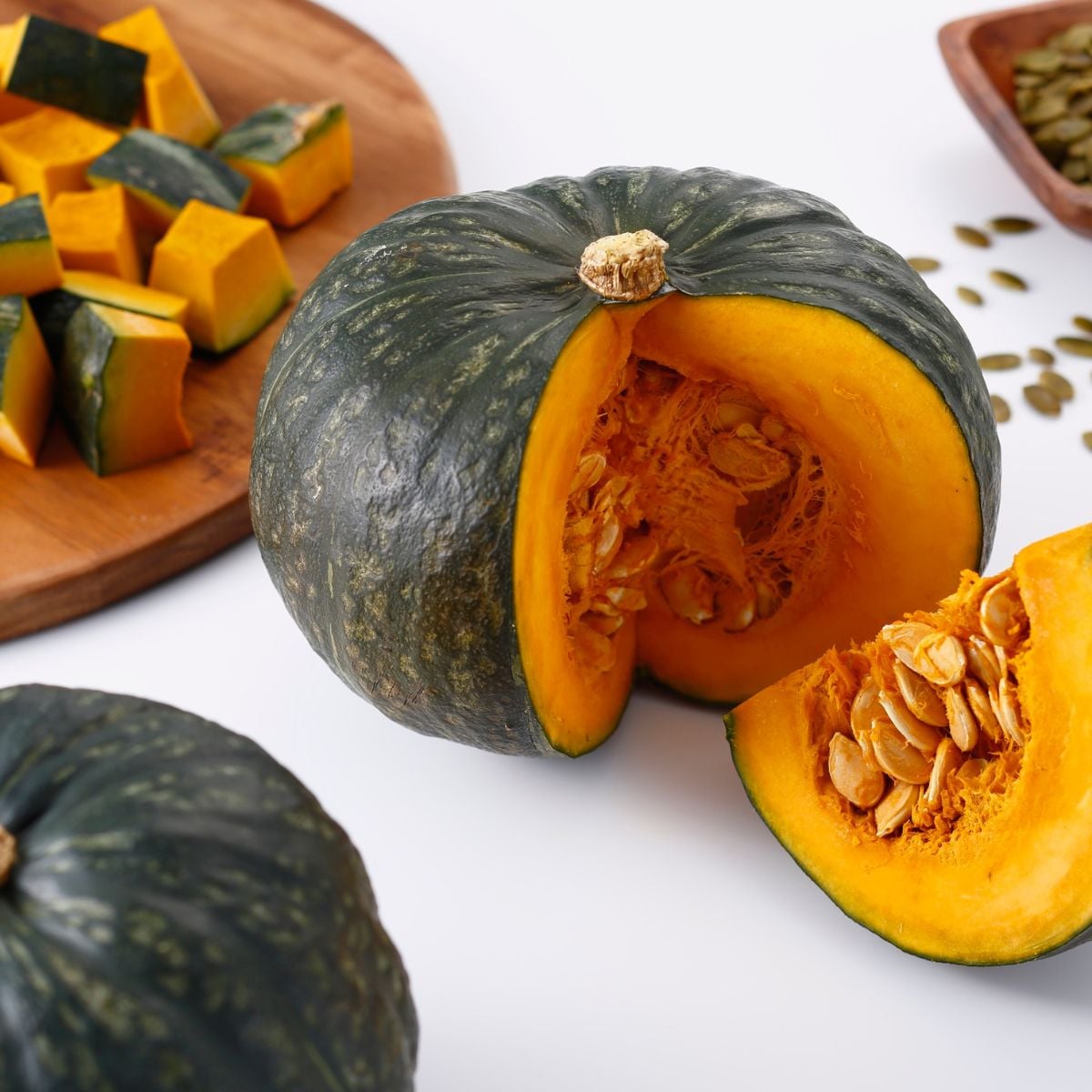
Kabocha is a Japanese winter squash with dark green skin and deep orange flesh. If you grew up eating Filipino food, it's the kalabasa in your pinakbet and your ginataang gulay.
Here's what matters for soup: kabocha is drier and starchier than butternut. Butternut is watery enough that it thins itself out as it cooks. Kabocha doesn't. It blends into something closer to a puree, which is why this recipe uses more broth than a butternut recipe would, and why you may still want to thin it at the end.
The skin is edible and soft enough to blend once it's simmered, so peeling is optional. The beta-carotene that gives the flesh its color is concentrated near the skin.

Ingredients
- Kabocha squash. Half a medium squash is what's left after pinakbet and it's enough for four bowls. Kabocha varies a lot in size, so if yours runs bigger, add broth to match rather than cutting the squash down.
- Olive oil. For softening the onion and garlic. Butter works and gives a rounder finish, but it browns faster, so watch the heat.
- Yellow onion. This is most of the savory backbone. Kabocha is sweet on its own, and without the onion the soup tastes flat and closer to a dessert than dinner. Don't skip it.
- Garlic. Adds warmth without taking over. Add it after the onion has softened.
- Chicken broth. Start with less than you think and hold the rest back. Kabocha is starchy enough that it drinks up more liquid than butternut would, but how much depends on your squash, so it's easier to thin at the end than to fix a soup you've already flooded. Vegetable broth works for a vegetarian version, though it's milder and you'll want more salt.
- Salt and pepper. Season after blending, not before. The soup tastes noticeably less sweet once it's smooth, so anything you judged early will be wrong.
- Heavy cream. This softens the starchiness and keeps the texture from going pasty. Full-fat coconut milk swaps in one for one and works well here since kabocha already leans toward coconut in Filipino cooking. Skip the cream entirely and the soup is still good, just thicker and more squash-forward.
See the recipe card below for full quantities.
How to Cut Kabocha Squash
Kabocha is dense and round, which is a bad combination on a cutting board. Most of the risk comes from the squash rolling, not from the knife.
Soften it. Pierce the skin in a few spots, then microwave the whole squash 2 to 3 minutes. Piercing lets steam escape so pressure doesn't build inside. The skin gives noticeably after this.
Give it a flat side. Slice a thin piece off one side and set the squash on that cut surface. A rolling squash is where knives slip. This step does more for safety than anything else here.
Use a heavy chef's knife. Eight inches or longer, not serrated.
Rock, don't press. Set the tip into the flesh near the stem and rock the blade down, working the handle toward the board. Pressing straight down is how a blade wedges and jumps. Cut around the stem, not through it.
Scoop and chop. Seeds and pulp out with a metal spoon, which holds up better than plastic. Cut into chunks of roughly equal size so they finish together.
Do You Peel Kabocha Squash?
No. The skin is edible and softens completely after 15 minutes in simmering broth, so it blends right in. I leave it on. It saves the fussiest step, and the deepest orange color sits just under the skin.
Peeling gets you a brighter, more uniform soup, which is a real reason to do it if the photos matter. It won't change the texture once blended.
If you peel, do it after cutting. A flat wedge is much easier to work than a whole round squash.
How to Make Kabocha Squash Soup
- Sauté the aromatics. Heat olive oil in a soup pot over medium. Cook the chopped onion until soft and translucent, about 5 minutes, then add the garlic and cook 1 minute more. Garlic goes in second because it burns in about half the time and turns bitter.
- Add the squash. Stir in the kabocha chunks and let them sit in the oil for a minute or two. This isn't browning, just picking up the flavor from the pot before the liquid goes in.
- Pour in the broth. Add enough to just cover the squash. Hold the rest back. It's easier to thin at the end than to fix a soup you've already flooded.
- Simmer until tender. Bring to a simmer, cover, and cook 15 to 18 minutes, until a fork slides through a chunk with no resistance. Underdone kabocha blends grainy, so give it the extra couple of minutes if you're unsure.
- Blend. Use an immersion blender right in the pot, or work in batches in a countertop blender. If you're using a countertop blender, vent the lid and fill it no more than halfway. Hot soup expands and will push the lid off a sealed jar.
- Season. Salt and pepper to taste now, not earlier. Blending changes how sweet the soup reads, so anything you judged before this point will be off.
- Finish with cream. Stir in the cream and warm gently without a hard boil to keep the soup smooth.
Substitutions and Additions
If You Don't Have Kabocha
- Butternut. The easiest to find. Less sweet and much wetter, so start with less broth than the recipe calls for or you'll end up thin.
- Acorn. Similar sweetness, but denser and more fibrous. Give it an extra 5 minutes in the pot and check with a fork before blending.
- Sugar pumpkin. Closest match to kabocha in texture. Only sugar or pie pumpkins, not carving pumpkins, which are watery and bland.
- Sweet potato. Not squash, but it works. Sweeter and softer, so it cooks faster and you'll want more salt and pepper to balance it.
Ingredient Swaps
- Coconut milk for heavy cream. Full-fat, one for one. Makes the soup dairy-free and leans it toward the way kalabasa is cooked in Filipino kitchens.
- Vegetable broth for chicken broth. Makes it vegetarian. It's milder than chicken broth, so taste and add more salt at the end.
- Butter for olive oil. Rounder finish. Watch the heat, since butter browns faster than oil.
Additions
- Ginger. Grate a knob in with the garlic. Cuts the sweetness and is the single addition I'd suggest first.
- Curry powder. A teaspoon or two, bloomed in the oil before the squash goes in. Pairs well with the coconut milk swap.
- Chili. Flakes, cayenne, or a spoon of sambal stirred in at the end. Kabocha is sweet enough to take real heat.
- Smoked paprika. A different direction from the others. Adds depth without adding sweetness.
If Your Soup Is Too Thick
This happens a lot with kabocha and it isn't a mistake. Kabocha is starchier and drier than butternut, so the same broth gets you a thicker soup.
Add broth a splash at a time over low heat, stirring between additions. Go slower than feels necessary. Thinning is easy, and there's no fixing a soup you've watered down.
Two things first. The soup thickens as it cools, so judge it hot. And cream thins it, so stir that in before you decide.
Out of broth? Water works. Add salt after.
If It's Too Thin
Simmer uncovered 5 to 10 minutes to cook off liquid. Stir now and then, since thick soup catches on the bottom faster than you'd expect.
Rose's Top Tip
Cut your squash into chunks of roughly the same size. It sounds fussy, and it's the one thing that decides whether this soup is smooth or grainy.
- Kabocha is dense, so a big chunk and a small chunk finish minutes apart.
- Pull the pot when the small ones are done and the big ones blend into starchy specks that never break down.
- Blending longer won't fix it. The problem is undercooked squash, not under-blended soup.
Even chunks, fork-tender all the way through, and it blends smooth on the first pass.
Variations
- Roasted kabocha squash soup. Roast the halved squash cut side down at 400°F for 40 to 45 minutes, scoop the flesh from the skin, then add it to the sautéed aromatics and simmer 5 minutes instead of 18. Sweeter and a little caramelized, but it costs about 45 minutes plus cooling, which is why the main recipe skips it.
- Coconut curry kabocha soup. Bloom a tablespoon of curry powder in the oil after the garlic, swap full-fat coconut milk for the cream, and finish with lime. The acid keeps the sweetness from flattening out. Dairy-free, and the one I make most after the original.
- Ginger kabocha soup. Grate a thumb of fresh ginger in with the garlic. It cuts through the sweetness without changing the soup's character. The simplest change here and the one I'd try first.
- Miso kabocha soup. Whisk a tablespoon of white miso into a ladle of hot soup, then stir it back into the pot off the heat. Don't boil after. The savoriness balances the squash and you'll need less salt.
Storage and Reheating
Cool the soup completely before it goes in the container. Sealing it warm traps steam, and the condensation waters down the top layer.
Fridge. Airtight container, up to 4 days. It thickens overnight as the starch sets, which is normal. Thin it with a splash of broth when you reheat.
Freezer. Up to 3 months. Freeze it before the cream goes in if you can, since dairy separates in the freezer and the soup comes back grainy. If it's already in, freeze it anyway and just plan on blending after thawing.
Reheating. Low heat on the stovetop, stirring often. This soup is thick enough to catch and scorch on the bottom of the pot, and once it does you'll taste it in the whole batch. In the microwave, go in one-minute bursts and stir between each. Either way, don't let it boil once the cream is in.
What to Serve With Kabocha Squash Soup
This soup is sweet and thick, so what it needs most is something salty and something with crunch. A bowl on its own gets one-note by the third spoonful.
- Bread you can dunk. Pandesal is what I reach for, since the slight sweetness works with the squash instead of fighting it. Salt bread is the better choice if you'd rather go the other direction.
- Something toasted and cheesy. Garlic bread or a grilled cheese. The salt is the whole point here.
- A sharp salad. Anything with acid in the dressing. Arugula with pomegranate does it, and so does a plain green salad with a lemony vinaigrette.
- Toasted pepitas on top. Not a side, but the crunch matters more than you'd think in a fully blended soup.
- Rice. Garlic fried rice turns this into a full meal rather than a starter, which is how I usually serve it on a weeknight.
Recipe FAQs
They behave differently, so it depends on what you want. Kabocha is sweeter, drier, and closer to chestnut in flavor, and it blends into something dense and almost custardy. Butternut is milder and much wetter, so it thins itself as it cooks. For soup, kabocha gives you more body and needs more broth. Butternut is easier to find and easier to cut.
No. The skin is edible and blends right into the soup after simmering. Peeling gets you a brighter, more even color, which matters if you're photographing it, but it doesn't change the texture.
Yes, and it skips the hardest step. Frozen kabocha chunks are common at Asian markets and go straight into the pot without thawing. Add 3 to 5 minutes to the simmer and check with a fork before you blend.
The squash was undercooked, not under-blended. Kabocha has to be fork-tender all the way through before it will break down smoothly, and uneven chunks are the usual cause since the big ones finish minutes after the small ones. Blending longer won't fix it. Simmer another few minutes and try again.
Both. It keeps 4 days in the fridge and 3 months in the freezer. Freeze it before adding the cream if you can, since dairy separates and comes back grainy. If the cream is already in, blend it smooth after thawing.
Not as written, but the swaps are easy. Use vegetable broth instead of chicken broth and full-fat coconut milk instead of cream, one for one. Coconut works well with kabocha, so this isn't a compromise version.
More Soup Recipes to Warm You Up



Did you try this recipe?
Share how it turned out in the comment box below, and if you loved it, share it on Facebook, Pinterest & Instagram.
Thank you!


Kabocha Squash Soup (No Roasting, 30 Minutes)
Equipment
- soup pot
- immersion blender, any blender
Ingredients
- 1 Kabocha squash 2-3 lbs, or substitute with butternut squash, sweet potato, acorn squash, or even pumpkin (sugar variety only)
- 1 tablespoon olive oil
- ¼ cup onion chopped
- 2 cloves garlic minced
- 4 cups chicken broth or vegetable broth
- ½ cup heavy cream or milk or a plant-based alternative like coconut milk, cashew cream, or oat milk for a vegan option
- Salt and pepper to taste
Instructions
- Cut the kabocha squash in half vertically and scoop out the seeds and stringy pulp with a spoon.1 Kabocha squash
- (OPTIONAL) If preferred, roast the prepared squash halves in a preheated 400°F (200°C) oven for about 40-45 minutes, or until the flesh is tender when pierced with a fork.
- Heat a large pot over medium heat and add a bit of olive oil. Sauté chopped onion and minced garlic until softened and fragrant.1 tablespoon olive oil, ¼ cup onion, 2 cloves garlic
- If not roasting, add chopped kabocha squash directly to the pot with the sautéed onion and garlic.1 Kabocha squash
- Add broth and simmer: Pour in chicken broth to cover the squash and bring the mixture to a simmer. Let it cook for about 10-15 minutes to allow the flavors to meld together.4 cups chicken broth
- Use an immersion blender or transfer the soup in batches to a blender and blend until smooth and creamy.
- Season the soup with salt and pepper to taste, adjusting as needed.Salt and pepper to taste
- Stir in heavy cream to add richness and creaminess to the soup. Heat through gently, but do not let it boil.½ cup heavy cream or milk
- Ladle the soup into bowls and garnish with a drizzle of cream, a sprinkle of freshly ground black pepper, and a few fresh herbs if desired. Enjoy your delicious homemade Kabocha Squash Soup!
Save This Recipe 💌
Notes
- Kabocha skin is edible, so peeling is optional. Leave it on for less prep, or peel it for a brighter, more uniform-colored soup.
- Cut the squash into even-sized chunks so they cook at the same rate and blend smoothly.
- Kabocha varies in size and is naturally quite starchy. Start with less broth and add more after blending until the soup reaches your preferred consistency.
- Make sure the squash is completely fork-tender before blending. Undercooked pieces can make the soup grainy.
- For easier cutting, pierce the whole squash a few times and microwave for 2–3 minutes to slightly soften it.
- For a vegetarian version, use vegetable broth. For a dairy-free version, replace the heavy cream with full-fat coconut milk.
- Add the cream after blending and warm gently without a hard boil for the smoothest texture.
- Leftovers keep refrigerated in an airtight container for up to 4 days. Thin with a splash of broth when reheating.
- To freeze, preferably freeze the soup before adding the cream for up to 3 months. Add the cream after thawing and reheating.