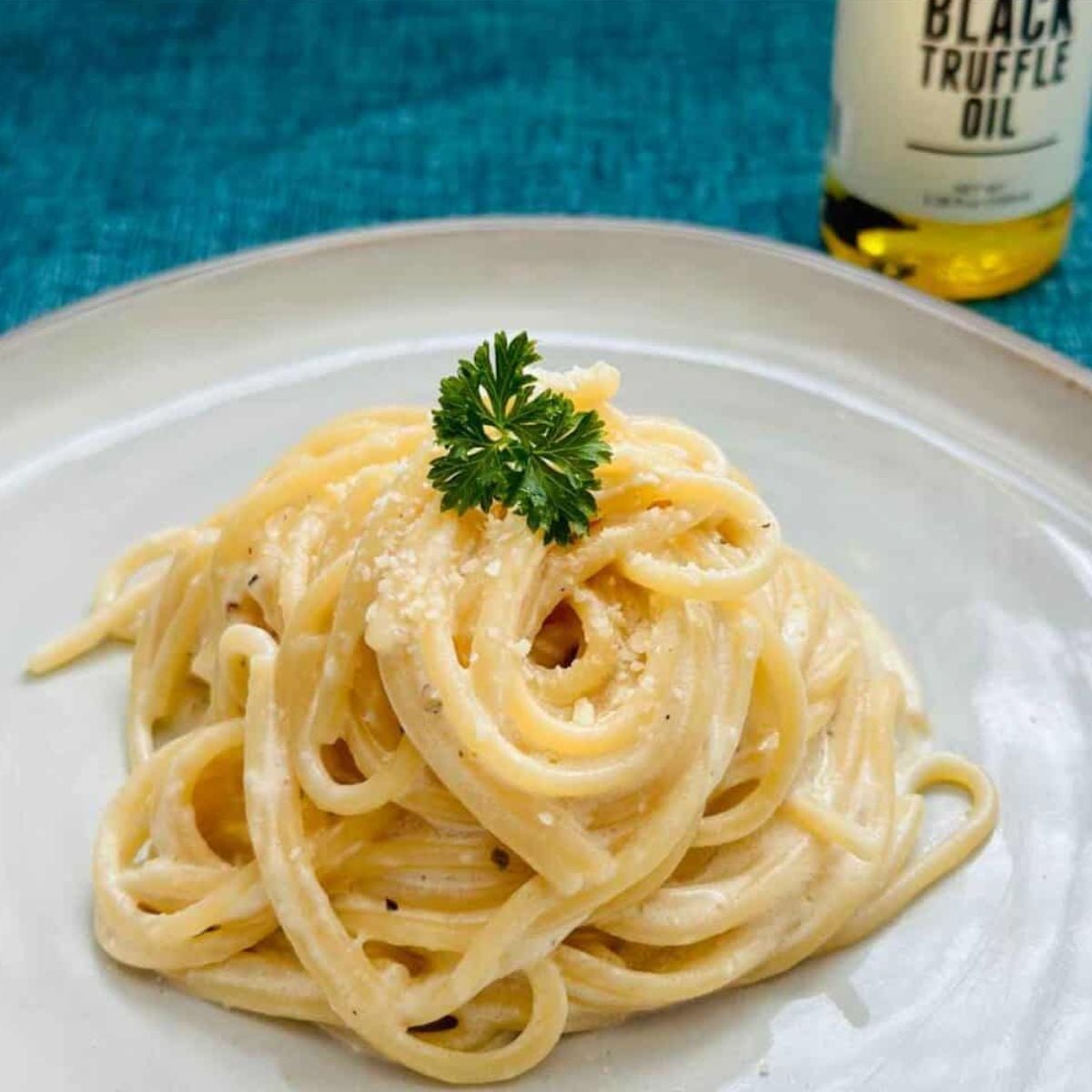
I cooked truffle oil into the sauce for a long time before I found out you're not supposed to.
Truffle oil is a finishing oil. What you're paying for is aroma, and aroma is the first thing heat destroys. Pour it in with the cream and you get expensive butter sauce. Stir it in after the pan is off and you smell it before the plate reaches the table.
The bottle I use isn't fancy, either. Grocery store truffle oil, nothing special, and it still works if you treat it right. The oil matters less than when you add it.
The rest is butter, garlic, mushrooms, cream, and parmesan, done in the time it takes the pasta water to boil. If you want another pasta that comes together this fast, my anchovies and shrimp pasta is the one I make most, and a green salad on the side is worth it since this is rich.
Save This Recipe 💌
Jump to:
Why This Recipe Works
- The truffle oil goes in off the heat. Most recipes have you cook it into the sauce, which boils off the aroma you paid for. Take the pan off the burner first and you can actually smell it.
- Cheap truffle oil is fine. Grocery store oil, not a specialty bottle. Technique matters more than the brand here.
- The mushrooms get browned properly. No salt until they've released their water and started to color. That's where the earthiness comes from, and it's the step most recipes rush past.
- Twenty minutes, one pan. The pasta water takes longer to boil than the sauce takes to make.
- Five ingredients. Butter, garlic, cream, parmesan, truffle oil. Nothing you'd have to look for.
Black or White Truffle Oil?
I picked up both while shopping and ended up comparing them side by side. Short version: for this pasta, black is the one.
Black truffle oil is earthier and stronger. It stands up to cream, butter, and parmesan without disappearing underneath them, which is exactly what you need in a sauce this rich.
White truffle oil is more delicate and reads slightly garlicky. It's better drizzled over something mild where it doesn't have to compete, like scrambled eggs, risotto, or fish.
Either works here. White just gets buried a little.
How much to use: start with a teaspoon for two servings and taste. Brands vary enormously in strength, and truffle oil goes from lovely to overwhelming faster than almost anything else in your kitchen. You can always add more after tasting, and you can't take it out.
Ingredients
Here's what you'll need:
- Long pasta: Linguine, fettuccine, or spaghetti. Long shapes hold a cream sauce better than short ones, since the sauce coats the strands instead of pooling inside the shapes.
- Butter: For the pan, after the mushrooms. Browns the garlic and gives the sauce a base before the cream goes in.
- Garlic: Minced. Goes in after the butter and only needs 30 seconds, since burnt garlic in a delicate sauce is unfixable.
- Heavy cream or half and half: Cream gives you a thicker sauce, half and half a lighter one. Either works, and half and half is what I use when the truffle oil is doing enough heavy lifting on its own.
- Parmesan: Grate it yourself from a block. Pre-grated parmesan is coated in anti-caking agents that stop it melting, and you'll get a grainy sauce instead of a smooth one. This is not a corner worth cutting.
- Black truffle oil: The finishing ingredient, added off the heat. A grocery store bottle is fine. Start with a teaspoon for two servings and taste from there.
- Salt, black pepper, and parsley: Salt the pasta water properly, since that's the only chance to season the pasta itself. Cracked pepper and chopped parsley at the end.
See the recipe card for quantities.
Substitutions and Add-Ins
- Shallot instead of garlic: Softer and slightly sweet, and it sits under the truffle rather than competing with it. Mince one small shallot and cook it a minute longer than you would garlic.
- Half and half instead of heavy cream: Lighter, and the sauce won't coat as thickly. Fine here since the truffle oil is carrying the flavor anyway. Add a little extra pasta water to compensate.
- Add a protein: Grilled chicken or shrimp on top rather than stirred in, so the sauce stays clean. Shrimp especially, cooked separately in butter and spooned over.
- Pecorino instead of parmesan: Saltier and sharper. Use a little less, and taste before adding salt.
- A drizzle of balsamic glaze: Sounds odd with truffle and works anyway. A thin drizzle over the plated pasta cuts the richness. Worth trying once.
- Peas or spinach: Stirred in at the very end with the pasta. Not traditional, but if you want a vegetable in it without adding a step, this is the easiest way.
How To Make Truffle Pasta
- Boil the pasta. Salted water, cooked to al dente. Reserve a cup of the pasta water before you drain it. You will need it, and it's the thing people forget.
- Brown the butter and garlic. Butter in a pan over medium heat. Add the minced garlic and cook until it turns lightly golden and smells sweet, about a minute. Don't let it go past golden.
- Build the sauce. Pour in the cream and add the parmesan. Stir until the cheese melts into the cream and the sauce is smooth. Keep the heat at medium, since a hard simmer will split it.
- Toss the pasta in. Add the drained pasta and toss to coat. Splash in reserved pasta water a little at a time until the sauce loosens and clings to the noodles rather than sitting under them.
- Season. Salt and cracked black pepper, tasting as you go. The parmesan is already salty, so start light.
- Take the pan off the heat, then add the truffle oil. Off the burner first. Wait a few seconds, then drizzle in the oil and toss. Heat destroys the aroma, so this only works after the pan is off. Start with a teaspoon, taste, and add more if you want it stronger.
- Serve immediately. More parmesan, chopped parsley, and a final crack of pepper.
Rose's Top Tips
- Off the heat before the truffle oil goes in. Not low heat, off. The aroma is volatile and it starts leaving the moment the oil hits a hot pan. This is the one thing that separates a truffle pasta you can smell from one you can't.
- Start with a teaspoon and taste. Truffle oil brands vary enormously in strength, and it goes from lovely to overpowering fast. You can always add more once it's tossed. You cannot take it back out.
- Grate the parmesan yourself. Pre-grated is coated with anti-caking agents that stop it melting cleanly, and you get a grainy sauce instead of a smooth one. Five minutes with a box grater is worth it here.
- Save more pasta water than you think. A cup minimum. It's what loosens the sauce and helps it cling, and there's no substitute once the pot is down the drain.
- Keep the heat at medium for the cream. A hard simmer splits a cream sauce and there's no bringing it back. Gentle and slow.
- Watch the garlic. In butter it goes from golden to burnt in about fifteen seconds, and burnt garlic in a delicate sauce ruins the whole pan.
Variations
- Mushroom truffle pasta: Cremini or baby bella, sliced and browned in the pan before the butter and garlic. Don't salt them until they've released their water and started to color, or they steam instead of browning. Adds about 8 minutes and turns this into a full meal.
- Truffle pasta with shrimp: Cooked separately in butter and spooned over rather than stirred in, so the sauce stays clean and the shrimp keeps its own flavor.
- Cacio e pepe style: Skip the cream entirely. Pasta water, parmesan, and a lot of cracked pepper, with the truffle oil off the heat at the end. Lighter and closer to what you'd get at an Italian place.
- With peas or spinach: Stirred in at the very end with the pasta. Easiest way to get a vegetable in without adding a step.
- With a balsamic drizzle: A thin line over the plated pasta. Sounds wrong with truffle and cuts the richness nicely.
What to Serve With Truffle Pasta
This is rich and it's mostly cream, cheese, and butter. What it needs alongside is acid and something green, not more richness.
- A simple green salad: Arugula especially, with a sharp lemon vinaigrette. The peppery bite works against the truffle rather than getting lost in it.
- Caesar salad: More substantial than a green salad and the anchovy and lemon cut through the cream. Go easy on the dressing since the pasta is already heavy.
- Roasted asparagus: Lemon and olive oil, nothing else. Ready in the time the pasta water takes to boil.
- Garlic bread or a crusty baguette: For the sauce left in the bowl, which is the best part.
- A crisp white wine: Sauvignon Blanc or an unoaked Chardonnay. Acidity is what you want here, not more butter.
Storage and Reheating
Fridge: Airtight container for up to 3 days. The sauce thickens considerably as it sits and the pasta absorbs most of it, which is normal.
Reheating: Low heat in a skillet with a splash of cream, milk, or water. Stir as it comes back together. Cream sauces separate if you rush them, so keep the heat gentle and give it a minute.
Skip the microwave if you can. It heats unevenly and cream sauce splits into oil and solids. If it's your only option, half power in short bursts with a stir between each.
The truffle fades. This is the honest part. Truffle aroma is volatile, and by day two most of it has gone. A small drizzle of fresh oil after reheating, off the heat, brings it back.
Don't freeze it. Cream sauces break on thawing and pasta goes mushy. There's nothing to recover.
Recipe FAQs
Not really, or at least not this kind. Truffle oil is a finishing oil, and what you're paying for is the aroma, which heat drives off within seconds. Add it after the pan is off the burner and toss. That one change is the difference between tasting truffle and just tasting cream.
Start with a teaspoon for two servings, toss, and taste. Brands vary enormously in strength, and it goes from good to overpowering quickly. Adding more is easy, taking it out isn't.
Black for this recipe. It's earthier and stronger, so it holds up against cream and parmesan. White is more delicate and better drizzled over something mild, like eggs or risotto, where it doesn't have to compete.
No. I use a grocery store bottle and it works. When you add it matters far more than what you paid for it.
You can, but the sauce comes out grainy. Pre-grated cheese is coated with anti-caking agents that stop it melting smoothly. Grating from a block takes five minutes and it's the difference between a silky sauce and a gritty one.
Long shapes. Linguine, fettuccine, or spaghetti. Cream sauce coats strands well and pools inside short shapes instead of clinging.
Most of it isn't. It's usually olive oil infused with a synthetic compound that mimics the aroma. That's not a knock, since it's what makes the flavor affordable, but it's why the aroma is fragile and why you don't cook it.
Yes. Use pasta water and parmesan instead, closer to a cacio e pepe, with the truffle oil off the heat at the end. Lighter, and the truffle comes through more clearly without cream muting it.
More Pasta Recipes To Try
- Boursin Macaroni and Cheese: A whole round of Boursin melted into the sauce. The easiest creamy pasta on the site and my most-made one.
- Anchovies and Shrimp Pasta: Salty, garlicky, mostly pantry. The opposite of this in every way except how fast it comes together.
- Garlic Noodles: Butter, garlic, parmesan, and soy. Same weeknight energy, different direction.
- Creamy Kielbasa Pasta: Another cream sauce, this one smoky rather than earthy. Good when you want something heartier.


Did you try this recipe?
Share how it turned out in the comment box below, and if you loved it, share it on Facebook, Pinterest & Instagram.
Thank you!


Creamy Truffle Pasta
Equipment
- 1 sauce pan
- 1 medium pot (for cooking pasta)
Ingredients
- 8 ounce of your favorite pasta spaghetti, angel hair, fettuccine
- 1 clove garlic, minced
- ⅓ stick good salted butter
- ¾ cup heavy or half and half cream
- 1 tablespoon truffle-infused oil. Add more depending on your taste
- ¼ cup Grated Parmesan cheese
- Salt and black pepper to taste
- Fresh parsley, chopped (for garnish)
Instructions
- Bring a large pot of salted water to a boil. Cook the pasta to al dente according to the package, then reserve 1 cup of pasta water before draining.8 ounce of your favorite pasta
- While the pasta cooks, melt the butter in a large pan over medium heat. Add the garlic and cook about 1 minute, until lightly golden and fragrant.⅓ stick good salted butter, 1 clove garlic, minced
- Pour in the cream and add the parmesan. Stir until the cheese melts and the sauce is smooth. Keep the heat at medium so it doesn't split.¾ cup heavy or half and half cream, ¼ cup Grated Parmesan cheese
- Add the drained pasta and toss to coat. Add reserved pasta water a splash at a time until the sauce clings to the noodles.
- Season with salt and black pepper to taste.Salt and black pepper to taste
- Remove the pan from the heat. Drizzle in the truffle oil and toss. Taste and add more if you want it stronger.1 tbsp truffle-infused oil. Add more depending on your taste
- Serve immediately, topped with extra parmesan, chopped parsley, and cracked black pepper.Fresh parsley, chopped (for garnish)
Save This Recipe 💌
Notes
- Truffle oil goes in off the heat. Take the pan off the burner before the oil goes in. The aroma is volatile and heat drives it off within seconds. This is the difference between tasting truffle and tasting cream.
- Start with 1 teaspoon and taste. Brands vary a lot in strength. You can add more after tossing, you can't take it out.
- Grate the parmesan from a block. Pre-grated is coated with anti-caking agents that stop it melting cleanly, and the sauce comes out grainy.
- Reserve a full cup of pasta water. It's what loosens the sauce and helps it cling. Once the pot is drained there's no substitute.
- Keep the cream at medium heat. A hard simmer splits a cream sauce and it won't come back.
- Watch the garlic. In butter it goes from golden to burnt in about fifteen seconds.
- Black truffle oil over white. Black is earthier and stands up to cream. White is more delicate and gets buried here.
- Any long pasta works. Linguine, fettuccine, or spaghetti. Cream sauce clings to strands better than it does to short shapes.
- To add mushrooms: Slice and brown them in the pan before the butter and garlic. Don't salt until they've released their water and started to color. Adds about 8 minutes.
- Storage: Up to 3 days in the fridge. Reheat gently with a splash of cream or milk. The truffle aroma fades by day two, so a small drizzle of fresh oil after reheating brings it back.