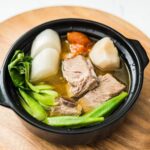
Sinigang na Baboy (Pork Sinigang with Spareribs)
Sinigang na baboy made with St. Louis spareribs simmered until tender in a sour tamarind broth. Sinigang mix does the souring work, the vegetables go in by stage so nothing overcooks, and the whole thing cooks in one pot in about an hour.
Servings: 6 people
Calories: 420kcal
Ingredients
- 2½ pounds St. Louis pork spare ribs cut into serving pieces
- 6 cups water or more as needed
- 1 cup onion quartered
- 2 pieces medium tomatoes quartered
- 2 tablespoons fish sauce plus more to taste
- 3 pieces small gabi
- 1 small radish sliced
- 1 packets sinigang mix adjust to taste
- 2 long green chili peppers
- 2-3 bunches bokchoy
- 6 pieces okra
- 1 small eggplants sliced (optional)
- 1 cup sitaw cut into 2-inch pieces (optional)
Instructions
- Parboil the pork: Place the ribs in a large pot and cover with water. Boil 5 to 10 minutes until scum rises. Drain, rinse the pork, and rinse the pot.2½ pounds St. Louis pork spare ribs
- Boil the pork: Return the pork to the pot with fresh water. Bring to a boil and skim any foam.6 cups water
- Add the aromatics: Add the onion and tomatoes. Lower the heat, cover, and simmer 45 minutes to 1 hour until the pork is tender. Add water if needed.1 cup onion, 2 pieces medium tomatoes
- Add the gabi: Add the taro and simmer 15 to 20 minutes until fork tender.3 pieces small gabi
- Add the vegetables: Add the radish and cook 5 minutes. Add the whole okra and simmer 4 to 5 minutes more. Add eggplant and sitaw here if using.1 small radish, 6 pieces okra, 1 small eggplants, 1 cup sitaw
- Season the broth: Stir in the fish sauce and sinigang mix. Taste and add more mix, half a packet at a time, if you want it more sour.2 tablespoons fish sauce, 1 packets sinigang mix
- Add the chilies and greens: Add the long green chilies and bok choy. Cover, turn off the heat, and let sit 2 minutes until the greens wilt.2 long green chili peppers, 2-3 bunches bokchoy
- Serve: Taste and adjust with fish sauce or more mix. Serve hot with steamed rice and fish sauce on the side.
Notes
Pork cut: St. Louis spareribs come from the belly side of the rib, so more fat renders into the broth than with baby backs. Pork belly, shoulder, or neck bones all work. Keep it bone-in if you can, since the bones do most of the work on the broth.
Parboiling: Don't skip it. Boiling the pork for 5 to 10 minutes, then draining and starting over with fresh water, is what gets you a clear broth. Skimming alone doesn't fully replace it.
Gabi: Cut the taro the same size as the radish pieces so they finish together. It thickens the broth slightly as the edges break down. Frozen cubed taro works and saves the peeling, which matters because raw taro can leave your hands itchy.
Okra: Leave the pods whole and trim only the very top of the cap without cutting into the pod. Cut okra releases mucilage that turns the whole broth slippery.
Sourness: One packet of sinigang mix is a starting point. Brands vary in strength, so taste and add half a packet at a time. Add the sour after the pork is tender, since acid slows down how quickly meat softens.
Optional vegetables: Eggplant cut into thick rounds and sitaw cut into two-inch pieces both work here. Add them with the okra.
Greens: Bok choy goes in with the heat off and wilts in about 2 minutes. Kangkong is the traditional green if you can find it. Pechay or spinach work the same way.
Storage: Cool within 2 hours and refrigerate up to 3 days in shallow containers. Freeze the broth and pork without vegetables up to 2 months. Reheat on the stove and add a splash of water if the broth has thickened.
Nutrition
Calories: 420kcal | Carbohydrates: 8g | Protein: 28g | Fat: 30g | Fiber: 2g
