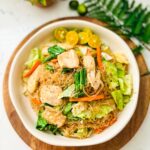
Easy Chicken Pancit Bihon
A quick, authentic Filipino pancit bihon recipe made with tender chicken, rice noodles, and crisp vegetables in a savory garlic sauce.
Servings: 8 people
Calories: 503kcal
Equipment
- 1 large pan or wok
Ingredients
- 12 oz Rice Sticks Thin Rice Noodles
- 3 tablespoon Olive Oil
- 2 cups Chicken Thighs or Chicken Breast sliced
- 1 tablespoon Garlic minced
- 1 cup Onion chopped
- 3 cups Chicken Broth
- ¼ cup Soy Sauce
- 2 tablespoon Oyster Sauce
- 1 tablespoon Fish Sauce
- 2 cups Carrot julliened
- 1 cup Green Beans sliced
- 3 cups Bok Choy chopped
- 3 cups Cabbage shredded
- 1 teaspoon Black Pepper
- ¼ cup Lemon Juice or Calamansi Juice
- Green Onions
Instructions
- Soak the noodles: Soak the thin rice noodles (rice sticks) in warm water for about 10 minutes until soft. Drain and set aside.12 oz Rice Sticks
- Cook the chicken: In a large skillet, add oil and the sliced chicken breast. Cook over medium heat until the chicken is no longer pink and the sausage is slightly caramelized, about 5-7 minutes. Remove and set aside.3 tablespoon Olive Oil, 2 cups Chicken Thighs or Chicken Breast
- Sauté the aromatics: Add more olive oil to the skillet if needed. Sauté the minced garlic and sliced onion until fragrant and the onion becomes translucent.1 cup Onion, 1 tablespoon Garlic
- Add Broth: Pour in the soy sauce, oyster sauce, fish sauce (if using), and chicken broth or chicken stock. Stir well to combine all the ingredients.¼ cup Soy Sauce, 2 tablespoon Oyster Sauce, 1 tablespoon Fish Sauce, 3 cups Chicken Broth
- Cook the noodles: Add the soaked rice noodles to the pan. Toss everything together, making sure the noodles soak up the sauce and flavors. Cook for another 10-15 minutes until the noodles are tender.12 oz Rice Sticks
- Add the vegetables: Toss in the julienned carrots, shredded cabbage, green beans, and chopped bok choy. Stir-fry the vegetables for 3-4 minutes until they start to soften but still have a bit of crunch.2 cups Carrot, 1 cup Green Beans, 3 cups Cabbage, 3 cups Bok Choy
- Combine everything: Return the cooked chicken to the pan.
- Season and serve: Season with black pepper and a squeeze of lemon juice or calamansi juice. Garnish with chopped green onions.1 teaspoon Black Pepper, ¼ cup Lemon Juice or Calamansi Juice , Green Onions
- Enjoy: Serve hot and enjoy your savory, flavorful pancit!
Notes
-
Soak, don’t boil the noodles.
Pancit bihon should be flexible but not fully soft before cooking. They finish cooking in the sauce. -
Slice the chicken thin.
Thin strips cook faster and stay tender. Thick chunks = dry chicken. -
Add broth gradually.
Bihon noodles absorb liquid quickly. Start with less broth and add more as needed. -
Vegetables go in stages.
Firmer veggies first (carrots, green beans), softer ones last (cabbage, bok choy). -
Don’t over-stir.
Gentle tossing keeps the noodles from breaking. -
Finish with citrus.
Calamansi or lemon juice at the end brightens everything and balances the savory sauce. -
Taste before adding salt.
Soy sauce, oyster sauce, and fish sauce already bring plenty of saltiness. -
For parties:
This recipe doubles easily — just use a wide pan or wok so the noodles cook evenly. -
Leftovers tip:
Reheat with a splash of broth or water to bring the noodles back to life.
Nutrition
Calories: 503kcal | Carbohydrates: 88.2g | Fat: 9g | Saturated Fat: 1.8g | Cholesterol: 31mg | Sodium: 1023mg | Potassium: 609mg | Fiber: 8.8g | Sugar: 4.2g | Iron: 7mg
